Image source: Bing (Web (fair-use with source credit))
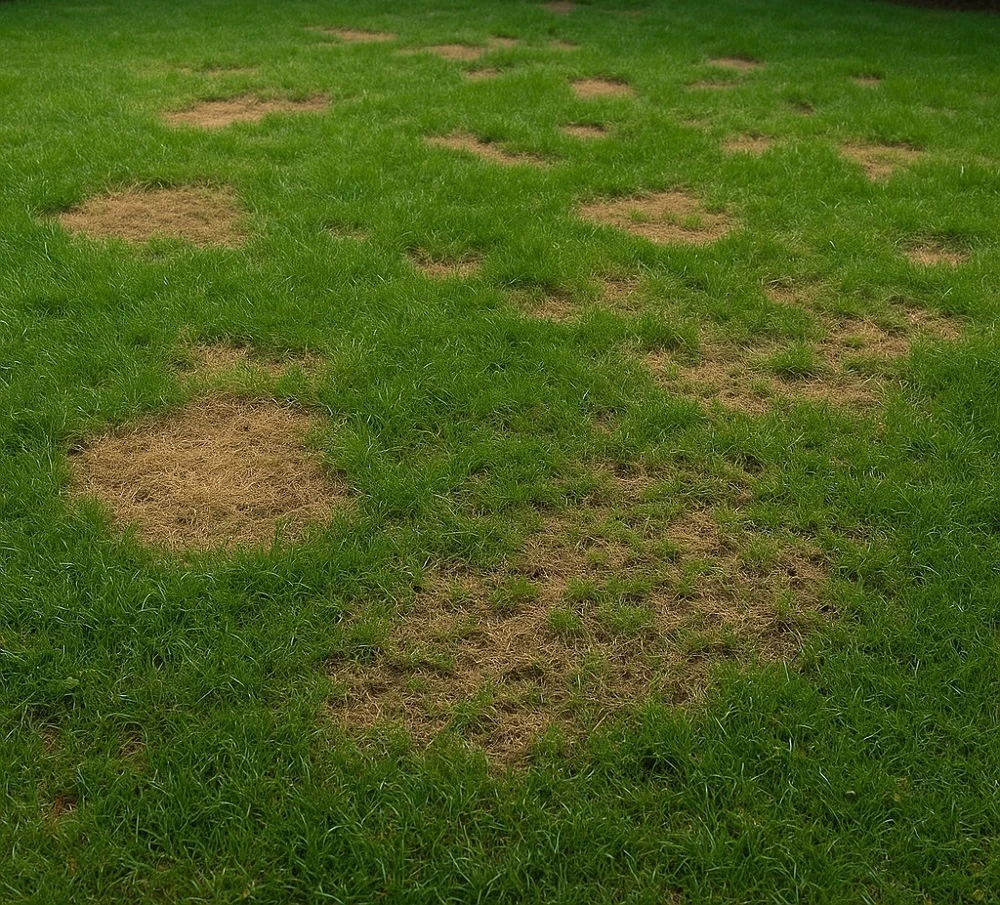
If you've noticed brown patches spreading across your lawn and heard that lime might be the fix, you're not alone. The question "does lime kill grubs" comes up constantly in lawn care forums and garden centers every summer. The short answer is no, not reliably, and relying on it as your primary defense can cost you your entire lawn if you're dealing with a serious infestation.
Here's what's actually happening. Lime is a soil amendment, not a pesticide. It raises soil pH and adds calcium, which helps grass grow stronger, but it doesn't contain ingredients that target or eliminate grub populations.
The confusion likely comes from older gardening advice and the fact that healthier lawns can sometimes tolerate more grub damage. If you're staring at dead grass and wondering what to do, let's walk through what actually works.
Quick Answer
Lime does not kill grubs. Garden lime raises soil pH and improves turf health. It has no reliable insecticidal effect on white grubs.
For active grub infestations, use proven treatments like beneficial nematodes or targeted insecticides. Apply lime only if a soil test shows your pH is below 6.0. Treating grubs and amending soil are two separate lawn care tasks.
The Real Answer: Does Lime Actually Kill Grubs?
No, lime does not kill grubs in any meaningful or reliable way. This is one of the most persistent myths in home lawn care, and it leads people to waste time, money, and entire growing seasons while their turf gets torn apart from below.
Let's break down what lime actually is. Garden lime, whether calcitic or dolomitic, is crushed limestone. Its job is to neutralize acidic soil.
When your soil pH drops too low, grass can't absorb nutrients efficiently, even if you're fertilizing regularly. Lime fixes that problem. It makes your lawn healthier over time, but it doesn't poison, suffocate, or repel grubs.
The confusion probably stems from a few places. Older agricultural texts sometimes mentioned lime as part of general pest management programs, but always alongside actual insecticides, not as a replacement. Some people also confuse lime with diatomaceous earth, which does have physical insect-killing properties.
Others see "lime" on a product label and assume it's the same as the lime sold for lawns, when it might be a completely different formulation.
Here's the practical reality. If you have five or more grubs per square foot, your lawn is at risk of serious damage. Applying lime won't reduce that number.
You need a product specifically designed to target scarab beetle larvae, and you need to apply it at the right point in their life cycle.
What Lime Does to Your Lawn (And What It Doesn't)
Lime's actual function is straightforward chemistry. When you spread calcium carbonate over acidic soil, it reacts with water and hydrogen ions to raise the pH. This unlocks nutrients like nitrogen, phosphorus, and potassium that were chemically bound up and unavailable to grass roots.
Over three to six months, you'll typically see thicker growth, better color, and improved response to fertilizer.
Dolomitic lime adds magnesium as well, which is helpful if your soil is deficient. Calcitic lime is pure calcium carbonate. Both come in powdered or pelletized forms, with pellets being easier to spread and less dusty.
Neither type has pesticidal properties.
What lime won't do is kill grubs, prevent grubs, or make your lawn resistant to grub damage. A healthy lawn can tolerate more stress, including some grub feeding, but that's not the same as pest control. Think of it this way.
Eating a good diet helps you fight off illness, but you wouldn't skip antibiotics for a bacterial infection and just eat more vegetables.
The table below shows what lime actually addresses versus what it doesn't.
| What Lime Does | What Lime Doesn't Do |
|---|---|
| Raises acidic soil pH | Kill grubs or other lawn pests |
| Adds calcium (and magnesium if dolomitic) | Prevent grub infestations |
| Improves nutrient availability | Replace insecticide applications |
| Strengthens grass root systems over time | Work immediately as a pest treatment |
| Reduces moss growth in acidic lawns | Repel adult beetles from laying eggs |
Why People Think Lime Kills Grubs
This myth has legs because it contains a grain of truth wrapped in a misunderstanding. Healthier lawns do recover from grub damage faster. If someone applies lime, improves their soil, and then notices their lawn bouncing back, they might credit the lime for solving the grub problem.
In reality, the grubs likely matured and left on their own schedule, and the improved soil helped the grass recover.
Another source of confusion is hydrated lime, which is calcium hydroxide. It's more caustic than garden lime and can irritate or desiccate soft-bodied organisms on contact. Some old-school gardeners used it as a general-purpose yard treatment and attributed broad pest-killing powers to it.
But hydrated lime breaks down quickly in soil, and it doesn't penetrate deep enough to reach grubs feeding on roots six inches down.
There's also the problem of mislabeled advice online. A lot of content conflates lime with other soil amendments or simply repeats the myth without checking whether any research supports it. University extension services have been clear on this point for decades.
Lime is for pH. Insecticides and biological controls are for grubs.
What Actually Kills Grubs: Proven Methods That Work
If you've confirmed you have a grub problem, you need treatments with actual evidence behind them. The options fall into two categories: biological controls and chemical insecticides. Both work, but they have different timelines, costs, and environmental profiles.
Biological controls use living organisms to attack grubs. The two most common are beneficial nematodes and milky spore disease.
Beneficial nematodes, specifically Heterorhabditis bacteriophora, are microscopic worms that seek out grubs in the soil and release bacteria that kill them within 24 to 48 hours. You mix them with water and spray them onto the lawn in late summer or early fall when grubs are small and actively feeding. They need moist soil and temperatures above 60°F to work effectively.
Milky spore, caused by the bacterium Paenibacillus popilliae, is specific to Japanese beetle grubs. It takes two to three years to establish in the soil, but once it does, it can provide control for a decade or more. It's a long-term investment, not a quick fix.
Chemical insecticides fall into preventive and curative categories.
Preventive products like imidacloprid, chlorantraniliprole, and clothianidin are applied in early summer before beetle eggs hatch. They target young grubs when they're most vulnerable. Chlorantraniliprole, sold under the trade name Acelepryn, has become a popular choice as of 2026 because of its lower toxicity to bees and other beneficial insects compared to older neonicotinoid options.
Curative products like trichlorfon (Dylox) and carbaryl (Sevin) kill existing grubs on contact. These are your best bet if you're finding large, mature grubs in spring or fall. Trichlorfon works fast, often within one to three days, but it breaks down quickly too, so timing matters.
Here's a quick comparison of the main grub treatment options.
| Treatment Type | Active Ingredient | Application Timing | Time to Results | Environmental Impact |
|---|---|---|---|---|
| Beneficial nematodes | Heterorhabditis bacteriophora | Late summer/early fall | 1-2 weeks | Very low |
| Milky spore | Paenibacillus popilliae | Spring or fall | 2-3 years to establish | Very low |
| Preventive insecticide | Chlorantraniliprole | June-July | Prevents damage | Low-moderate |
| Preventive insecticide | Imidacloprid | June-July | Prevents damage | Moderate (bee concerns) |
| Curative insecticide | Trichlorfon (Dylox) | August-October or March-May | 1-3 days | Moderate |
| Curative insecticide | Carbaryl (Sevin) | August-October or March-May | 1-7 days | Higher (broad-spectrum) |
How to Tell If You Really Have a Grub Problem
Before you spend money on any treatment, confirm that grubs are actually the culprit. Brown patches in a lawn can come from drought stress, fungal disease, dog urine, compacted soil, or a dozen other causes. Grub damage has a few telltale signs.
First, try pulling up a section of damaged turf near the edge where brown meets green. If the sod lifts easily like a loose carpet, grubs have likely chewed through the roots. Healthy grass resists lifting because the root system holds it in place.
Second, look for irregular brown patches that expand over time, especially during dry periods. Grub damage often looks worse in late summer and early fall when larvae are largest and feeding heavily. The patches won't green up with watering, which helps distinguish grub damage from simple drought stress.
Third, check for animal activity. Skunks, raccoons, and birds tearing up your lawn at night or early morning are often after grubs. If you see digging concentrated in specific areas, that's a strong indicator.
Finally, do the dig test. Cut a one-square-foot section of sod about three inches deep in a damaged area and peel it back. Count the grubs you find.
If you see more than five to ten per square foot, treatment is warranted. Replace the sod section when you're done and water it back into place.
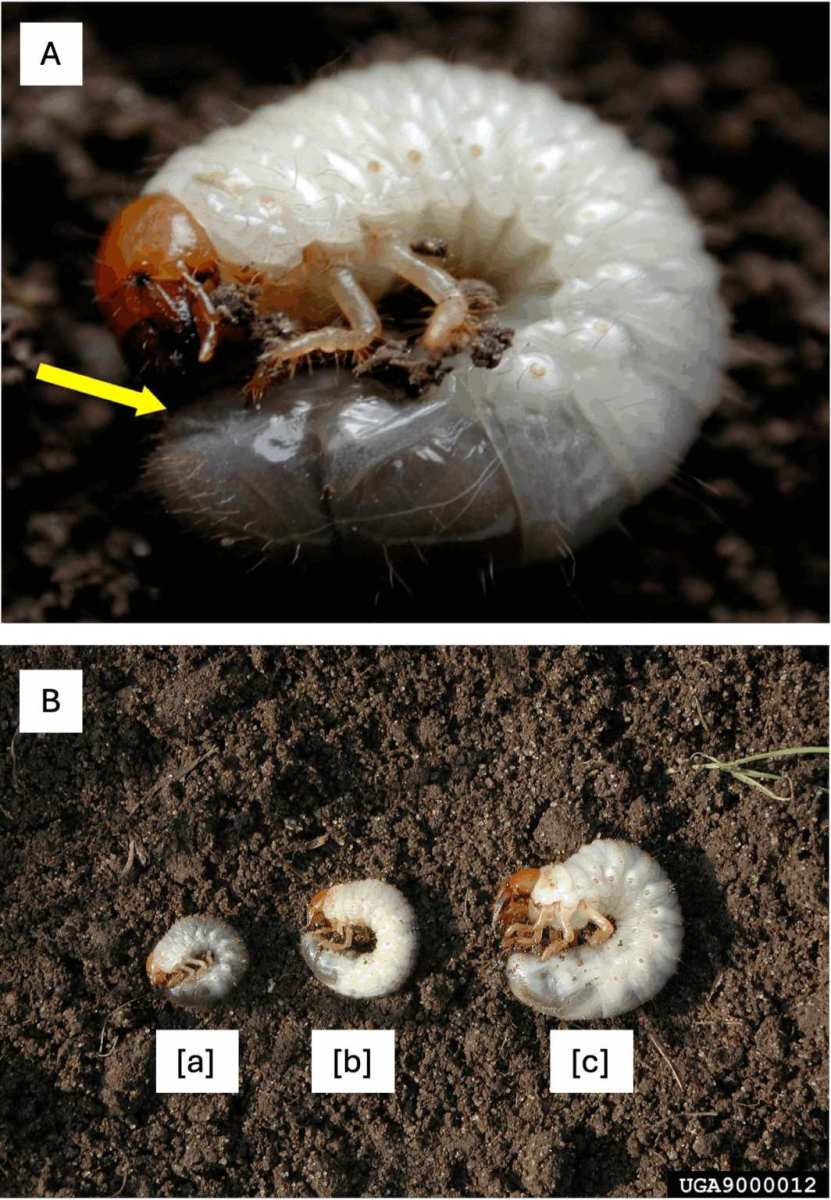
Image source: Bing (Web (fair-use with source credit))
White grubs are C-shaped, creamy white, with brown heads and six legs near the head end. They range from a quarter inch to over an inch long depending on species and age. Japanese beetle grubs are the most common in the Eastern and Midwestern United States, while European chafers dominate in the Northeast and Great Lakes regions.
If your grub count is below five per square foot and your lawn is otherwise healthy, you can probably skip treatment. Most turfgrass can tolerate light grub feeding without lasting damage. Focus on proper watering, mowing, and fertilization to keep the lawn resilient.
When to Treat for Grubs: Timing Matters More Than Product
You could buy the best grub killer on the market and still get poor results if you apply it at the wrong time. Grub life cycles dictate when treatments work, and missing the window means wasted effort and a lawn that keeps deteriorating.
Adult beetles lay eggs in mid to late summer, usually July through August depending on your region. Those eggs hatch within two weeks, and the tiny larvae start feeding on grass roots almost immediately. This is the sweet spot for preventive insecticides.
The grubs are small, close to the surface, and vulnerable. Products like chlorantraniliprole and imidacloprid work best when applied in June or July, before or just as eggs are hatching.
If you miss that window and discover grubs in late summer or fall, switch to curative treatments. Trichlorfon and carbaryl target larger, actively feeding larvae. Apply them in August through October when grubs are still near the surface before they burrow deeper for winter.
Spring treatments can work too, but they're less ideal. Overwintered grubs move back up to the root zone in March and April, but they're larger and harder to kill. They also stop feeding soon as they pupate into adult beetles.
Spring curative applications can reduce numbers, but you're often treating the tail end of the problem rather than preventing it.
Beneficial nematodes have their own timing requirements. They need soil temperatures above 60°F and moist conditions to move through the soil and find hosts. Late August through early October is usually the best window in most climates.
Apply them in the evening since UV light kills nematodes on contact, and water the lawn before and after application.
Here's a simple timing guide based on treatment type.
| Treatment | Best Application Window | Target Grub Stage |
|---|---|---|
| Chlorantraniliprole (preventive) | June-July | Eggs and newly hatched larvae |
| Imidacloprid (preventive) | June-July | Eggs and newly hatched larvae |
| Trichlorfon (curative) | August-October | Small to medium larvae |
| Carbaryl (curative) | August-October | Small to medium larvae |
| Beneficial nematodes | Late August-October | Actively feeding larvae |
| Milky spore | Spring or fall (any time ground isn't frozen) | Establishes in soil over years |
Lime's Real Job: Soil Health, Not Pest Control
Now that we've cleared up what lime doesn't do, let's talk about what it's actually good for. If your soil is too acidic, lime is one of the most cost-effective amendments you can apply. It just won't touch your grub problem.
Most cool-season grasses, including Kentucky bluegrass, tall fescue, and perennial ryegrass, prefer a soil pH between 6.0 and 7.0. Warm-season grasses like Bermuda and zoysia do well in a similar range. When pH drops below 5.5, nutrient availability plummets.
Your grass can't access the nitrogen and phosphorus in your fertilizer, no matter how much you apply. You're literally pouring money onto the ground.
Acidic soil also favors moss, weeds like plantain and sorrel, and certain fungal diseases. If you've noticed moss taking over shady areas or your lawn just won't respond to fertilizer, low pH could be the culprit. A soil test is the only way to know for sure.
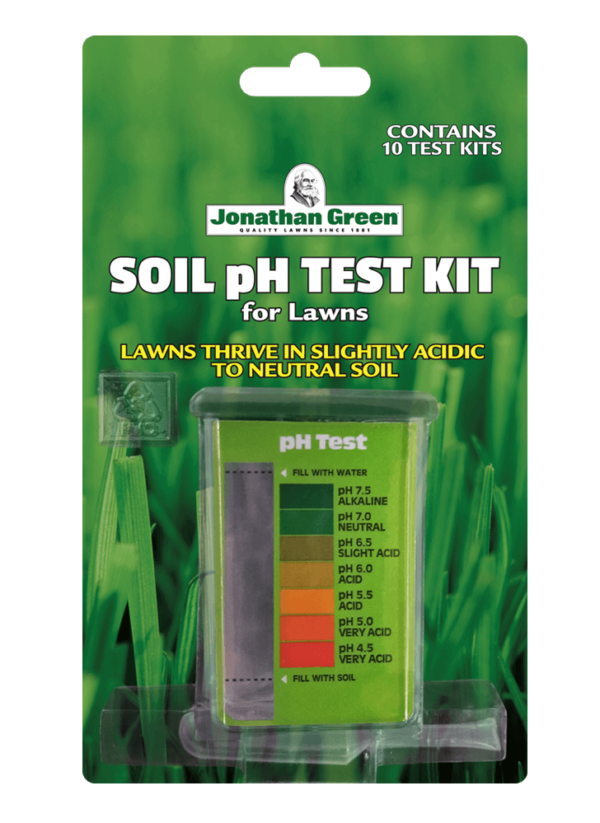
Image source: Bing (Web (fair-use with source credit))
Home soil test kits give you a rough idea, but sending a sample to a university-affiliated lab gives you precise numbers and specific lime recommendations based on your soil type. Most extension offices offer testing for $15 to $30. You'll get a report telling you exactly how many pounds of lime per 1,000 square feet to apply.
Calcitic lime is the standard choice unless your soil is also low in magnesium. Dolomitic lime covers both deficiencies. If your soil test shows adequate magnesium, stick with calcitic.
There's no benefit to adding magnesium you don't need, and excess magnesium can actually tighten certain soil types.
Lime works slowly. Don't expect overnight results. It takes three to six months for the full pH adjustment to happen, which is why fall application gives you a head start on spring growth.
You can apply lime any time the ground isn't frozen, but fall and early spring are the most common windows.
How to Apply Lime Properly If Your Soil Needs It
If your soil test comes back recommending lime, the application process is straightforward but worth doing right. Spreading too much can push your pH too high, creating a whole new set of nutrient availability problems.
Start by calculating your lawn's square footage. Most residential lots range from 2,000 to 10,000 square feet of actual turf. Your soil test report will recommend a specific application rate, usually between 25 and 50 pounds per 1,000 square feet for a single application.
If your pH is very low, the lab might recommend splitting the total into two applications six months apart rather than dumping it all at once.
Use a broadcast spreader for large lawns or a drop spreader for smaller, more precise areas. Broadcast spreaders cover ground faster but require careful overlap to avoid striping. Drop spreaders put material directly below the unit, giving you cleaner edges near flower beds and walkways.
Pelletized lime is easier to handle than powdered forms. It flows through spreaders more consistently, creates less dust, and is less likely to blow onto sidewalks or into planting beds. The tradeoff is cost.
Pelletized lime runs about two to three times more per bag than powdered.
Apply lime to dry grass, then water it in. This washes the particles off the grass blades and into the soil where they need to work. Avoid applying before heavy rain, which can wash the product off slopes and into storm drains.
Don't mix lime with ammonium-based fertilizers in the same spreader or at the same time. The chemical reaction releases nitrogen gas, wasting your fertilizer and reducing its effectiveness. If you need to fertilize and lime in the same season, space the applications at least two weeks apart.
Here's a quick reference for common lime application rates based on soil test recommendations.
| Current Soil pH | Typical Recommendation (lbs per 1,000 sq ft) | Lime Type |
|---|---|---|
| 5.0-5.5 | 50-75 (split into two applications) | Calcitic or dolomitic |
| 5.5-6.0 | 25-50 | Calcitic or dolomitic |
| 6.0-6.5 | 0-25 (maintenance) | Calcitic or dolomitic |
| Above 6.5 | None needed | N/A |
Safe Grub Treatment Options: Chemical vs. Biological
Choosing between chemical and biological grub control comes down to your priorities. Do you need fast results, or are you willing to invest in long-term, low-impact solutions? Both approaches have legitimate uses.
Biological controls are the go-to for homeowners who want to avoid synthetic chemicals. Beneficial nematodes are the most effective option for active infestations. They're safe around children, pets, bees, and other wildlife.
The downside is they require more careful handling and application. They're living organisms, so they need to be kept cool until use, applied in the evening, and watered in immediately. They also have a shorter shelf life than chemical products.
Milky spore is another biological option, but it's specific to Japanese beetle grubs and takes years to establish. It works best in regions where Japanese beetles are the dominant grub species. If you're dealing with European chafers or masked chafers, milky spore won't help.
Chemical insecticides offer faster, more predictable results. Chlorantraniliprole has become the preferred preventive option as of 2026 because it targets grubs specifically while posing minimal risk to pollinators when applied correctly. It's a good choice if you've had recurring grub problems and want reliable prevention.
Trichlorfon is the standard curative treatment for active infestations. It works within days and breaks down relatively quickly in soil. Carbaryl is another curative option, but it's broader-spectrum, meaning it kills beneficial insects along with grubs.
That's a tradeoff worth considering if you're trying to maintain a healthy ecosystem in your yard.
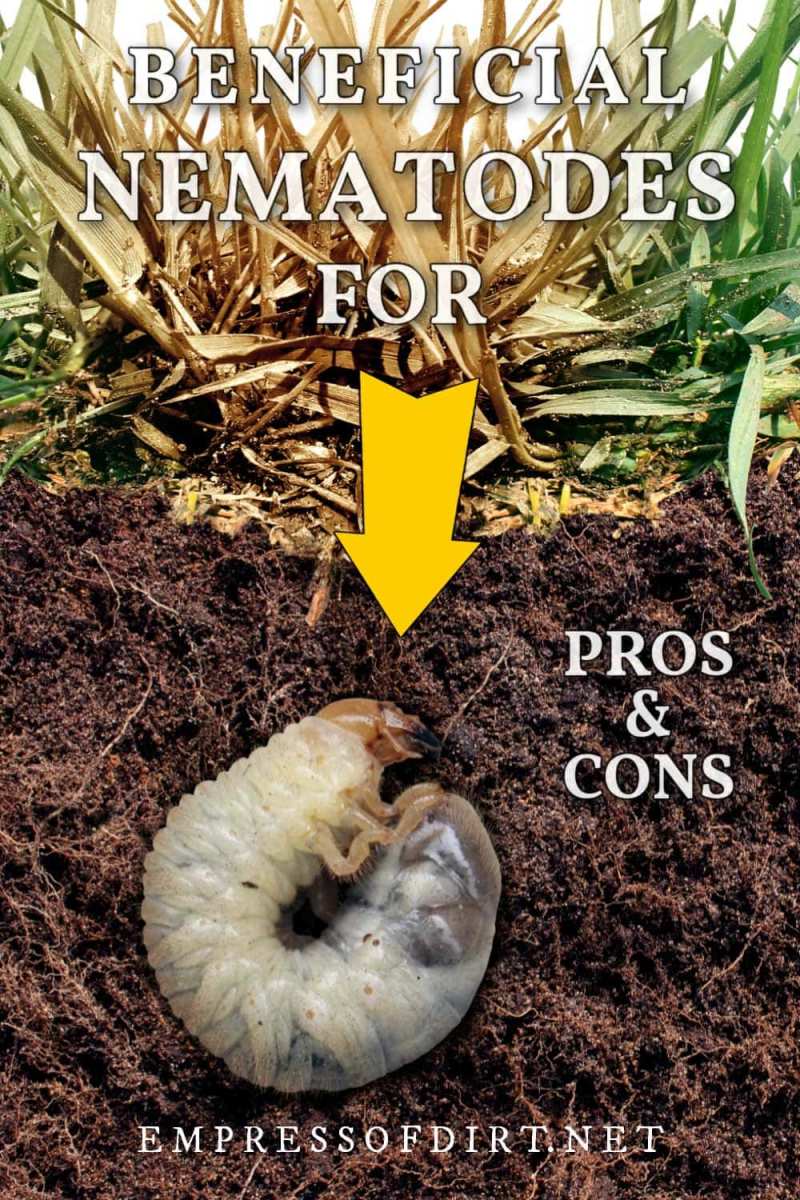
Image source: Bing (Web (fair-use with source credit))
Whatever you choose, read the product label completely. In the United States, the label is a legal document. You're required to follow the application rates, timing, and safety precautions exactly as written.
More product does not mean better results. Over-applying insecticides can damage your lawn, harm non-target organisms, and in some cases violate state pesticide regulations.
If you're unsure which approach fits your situation, your local cooperative extension office can provide region-specific recommendations based on the grub species common in your area and the products registered for use in your state.
Mistakes That Make Grub Damage Worse
The biggest mistake is treating grubs with lime and waiting for results. While you wait, those larvae keep feeding. By the time you realize lime isn't working, the damage can be severe enough to require full lawn renovation.
Another common error is applying grub control products at the wrong time. Spraying preventive insecticides in September is too late. The grubs have already hatched and started feeding.
You've spent money on a product that works best before the problem starts.
Overwatering after applying beneficial nematodes is another misstep. Nematodes need moist soil, but saturating the lawn washes them below the root zone where grubs are feeding. A light watering is enough.
Think damp, not flooded.
Skipping the soil test before applying lime is risky too. If your pH is already 6.5 or higher, adding lime pushes it toward alkaline territory. That locks up iron and manganese, causing yellowing and poor growth.
You've created a new problem while trying to fix something that wasn't broken.
Finally, ignoring the threshold is a mistake in both directions. Treating a lawn with two grubs per square foot wastes money and introduces unnecessary chemicals. Not treating a lawn with fifteen grubs per square foot guarantees damage.
The five-to-ten grubs per square foot guideline exists for a reason. Use it.
When to Call a Lawn Care Professional
If your grub count exceeds fifteen per square foot or the damage covers more than half your lawn, it's time to bring in a pro. Professional lawn care companies have access to commercial-grade products and equipment that aren't available to homeowners. They can also identify grub species accurately and tailor treatment accordingly.
Another reason to call a pro is if you've tried curative treatments and the grubs come back the following year. That suggests either a timing issue, a product resistance problem, or a larger population in the surrounding area that keeps re-infesting your lawn. A professional can assess the broader picture and set up a multi-year management plan.
Cost is a factor, of course. Professional grub treatments typically run $50 to $150 per application depending on lawn size and region. But compare that to the cost of reseeding or sodding a destroyed lawn, which can run into the thousands.
Prevention is almost always cheaper than repair.
Costs: Lime vs. Grub Treatments vs. Lawn Repair
Understanding the cost breakdown helps you make smarter decisions. Lime is cheap. A 40-pound bag runs $5 to $15 and covers roughly 1,000 square feet.
Even if you need two applications, you're looking at $20 to $60 total for an average lawn.
Grub treatments vary more. Beneficial nematodes cost $25 to $50 per application for a typical yard. Chemical insecticides range from $15 to $40 for DIY application.
Professional service adds labor but often includes follow-up monitoring.
Lawn repair is where costs escalate fast. Reseeding a damaged area runs $0.10 to $0.30 per square foot for seed and starter fertilizer. Sod costs $0.50 to $1.50 per square foot installed.
For a 5,000-square-foot lawn, you're looking at $250 to $750 for seed or $2,500 to $7,500 for sod.
The math is clear. Spending $30 on proper grub control now saves you from spending hundreds or thousands on lawn repair later.
Frequently Asked Questions
Can I apply lime and grub control at the same time?
Yes, but use separate spreaders or applications. Lime and granular insecticides can be applied on the same day, but don't mix them in the same spreader. The different particle sizes lead to uneven distribution.
Apply one, then the other, and water both in.
How long does it take for lime to work on soil pH?
Lime takes three to six months to fully adjust soil pH. Fall applications give you the best head start for spring growth. You won't see immediate changes in grass color or growth after liming.
Will lime kill other lawn pests like chinch bugs or sod webworms?
No. Lime has no reliable effect on chinch bugs, sod webworms, or other common lawn insects. Each pest requires specific identification and targeted treatment.
Don't rely on lime as a general pest solution.
Is hydrated lime different from garden lime for grub control?
Hydrated lime is more caustic than garden lime, but neither product provides reliable grub control. Hydrated lime can burn grass and skin on contact. Stick with calcitic or dolomitic garden lime for soil amendment purposes.
How often should I test my soil pH?
Test your soil every two to three years, or whenever you notice poor lawn response to fertilizer. If you've applied lime recently, wait at least six months before retesting to get accurate results.
Bottom Line: What to Do About Grubs in Your Lawn
Lime is a soil amendment, not a grub killer. If your soil test shows low pH, apply lime to improve growing conditions. If you have grubs, use proven treatments like beneficial nematodes, milky spore, or targeted insecticides applied at the right time in the life cycle.
The two tasks aren't mutually exclusive. You can lime your lawn for soil health and treat for grubs as a separate project. Just don't confuse one for the other.
Your lawn will thank you for using the right tool for each job.