You walk outside and find your lawn peppered with shallow holes. Your first thought is probably "grubs", and your second thought is probably to reach for a pesticide. But here's the thing: do squirrels dig for grubs?
The answer isn't as simple as most online guides want you to believe, and getting it wrong can cost you money, waste your time, and dump chemicals onto your yard for no reason.
This is one of those wildlife identification problems where the surface-level answer varies wildly depending on the species involved, the season, and what food sources are actually available. Research aggregated from wildlife forums and university cooperative extensions shows that most backyard "grub damage" blamed on squirrels is actually a completely different animal doing something completely different. The key is learning what to look for.
Comparing the damage pattern of a Eastern gray squirrel versus a grub-infested lawn really highlights how different the causes can be.
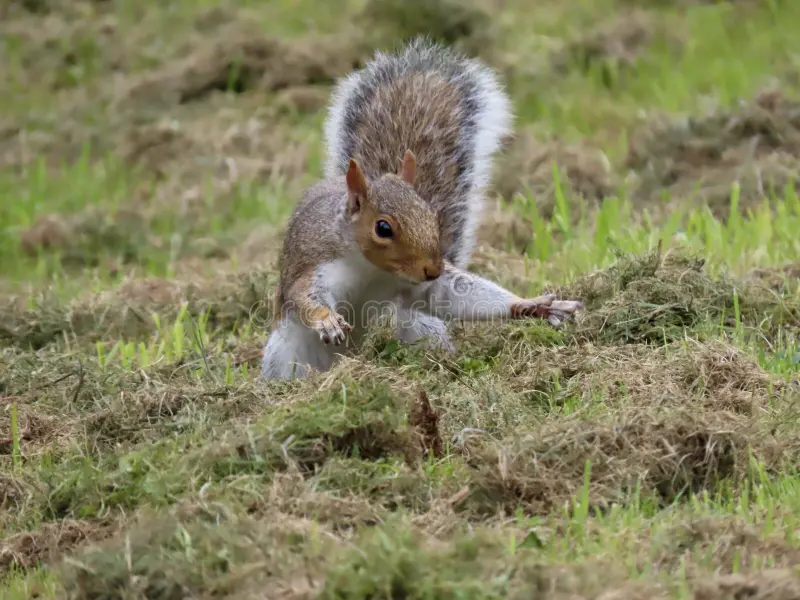
Image source: Bing (Web (fair-use with source credit))
The Straight Answer: Do Squirrels Actually Dig for Grubs?
Squirrels do eat grubs occasionally. But no, that's not the main reason they dig holes in your lawn
The digging you see is almost always about buried nuts, seed caches, or fungi. Insects including beetle larvae show up in their diet as a supplemental protein source, but the physical damage to your yard traces back to caching behavior, not grub hunting.
Here's the distinction that matters:
- Tree squirrels (eastern gray and fox squirrels) dig primarily to bury and retrieve nuts, acorns, and seeds
- Ground squirrels eat insects more frequently, including grubs, but their digging serves multiple purposes including burrow construction
- When ground squirrels do target grubs, the holes look noticeably different from what tree squirrels leave behind
Eastern gray squirrels can place between 100 and 1,000 caches per season. They don't recover every single one, which means a lot of those holes you're seeing in spring are failed retrieval attempts, not grub hunting expeditions.
Why Getting This Wrong Costs You Money and Time
Applying grub control products to a squirrel problem doesn't just fail to solve the issue. It actively wastes your money and introduces unnecessary chemicals into your environment so let's break down what commonly goes wrong when homeowners misdiagnose yard divots!
A single application of grub prevention product for an average suburban lawn can hit costs that really add up for seasonal treatments. When you're treating for the wrong pest, that money disappears completely.
Here's the breakdown of common missteps and their real consequences:
| Mistake | What actually happens |
|---|---|
| Applying grub pesticide for squirrel damage | Chemical sits uselessly in soil, squirrels keep digging |
| Treating the entire lawn spot by point | Paying for blanket pesticide application when only spot deterrent works |
| Ignoring the real culprit entirely | Actual grub damage from Japanese beetles or other insects goes untreated |
| Set a trap where digging happened | Captured the animal but the attractant (buried nuts) remains |
The environmental angle matters here too. When broad-spectrum insecticides get applied unnecessarily, they don't just target one grub problem. They also affect beneficial soil organisms, pollinators visiting nearby plants, and the broader soil food web your lawn actually depends on.
University extension services point out that one of the most common reasons homeowners call about grub damage is that they're actually seeing squirrel or skunk activity, and the misidentification leads to treatment that doesn't address the visible problem, often resulting in repeat callbacks and unnecessary product purchases.
What Squirrels Are Really After When They Tear Up Your Lawn
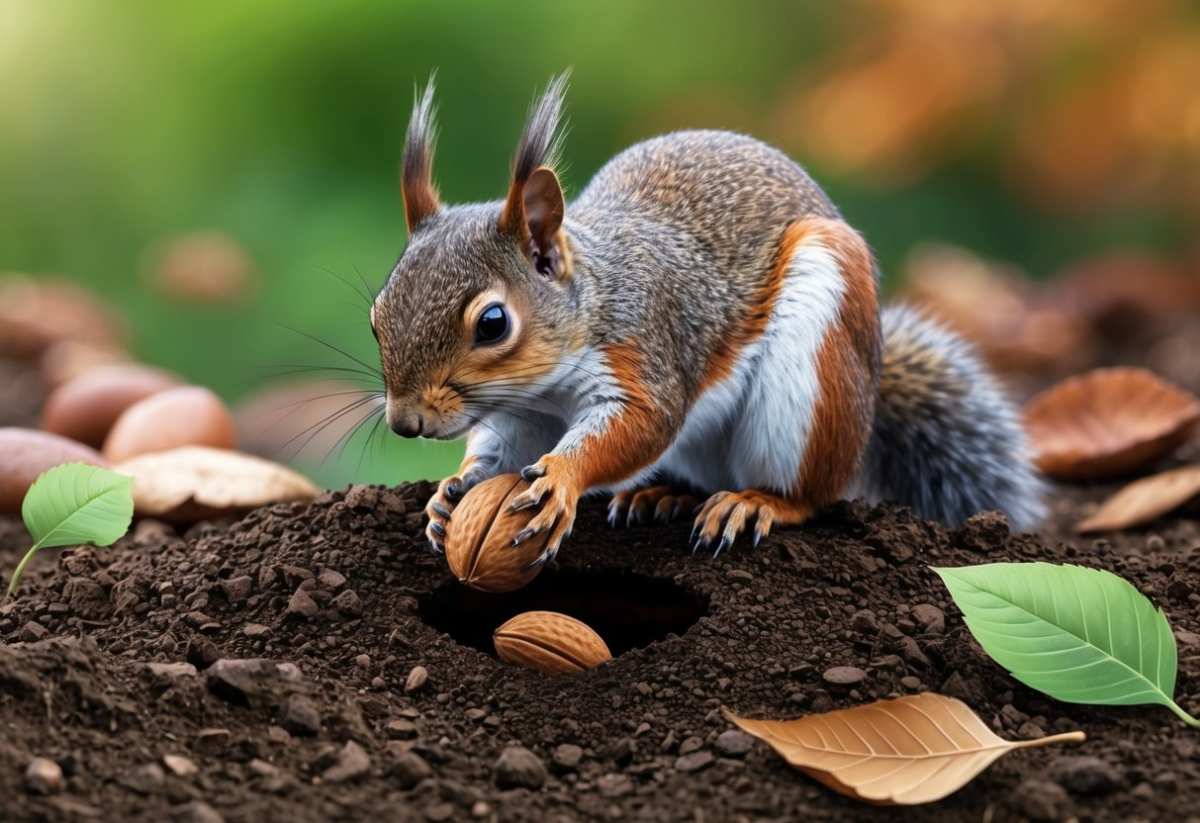
Image source: Bing (Web (fair-use with source credit))
A squirrel digging in your yard is almost always working through its food storage system. Let's unpack what's actually driving that behavior.
Caching behavior: The main reason you see divots
Scatter hoarding. That's the term researchers use for burying food in dozens or hundreds of separate locations rather than one central stash. Eastern gray squirrels and fox squirrels are the primary scatter hoarders you'll encounter in suburban and urban yards.
They'll bury acorns, hickory nuts, walnuts, and sometimes seeds from bird feeders just below the soil surface. The divots you see when they come back to retrieve those caches are shallow, usually between one and three inches deep, with the soil pushed loosely to one side.
Fox squirrel burying an acorn shows the shallow digging and soil displacement pattern typical of caching behavior. Most divots observed in suburban lawns are linked to this scatter hoarding activity rather than grub hunting.
Fox squirrel burying an acorn shows the shallow digging and soil displacement pattern typical of caching behavior. Most divots observed in suburban lawns are linked to this scatter hoarding activity rather than grub hunting.
What makes scatter hoarding so visible is the sheer volume of individual caches. A single eastern gray squirrel can place between 100 and 1,000 nut caches in a busy autumn season. Each one gets individually buried and later retrieved, which means your lawn can look like a mini construction zone by the end of fall.
Supplemental protein: When insects actually matter
Squirrels are opportunistic omnivores. Plant material like nuts, seeds, fruits, and buds makes up the vast majority of their diet, but they'll eat insects, bird eggs, and even small vertebrates when the opportunity arises.
Research forums and wildlife Q&A sites draw from established zoological data showing that insects make up a small but documented percentage of eastern gray squirrel diets, varying by season and location. Grubs qualify as one of those opportunistic protein sources, but they're not a primary driver of digging behavior.
The pattern looks regional. Reviewers and extension forums highlight that gray squirrels in some areas will eat more insects in early spring when buried caches have been depleted and new plant foods aren't yet abundant while fox squirrels in the Midwest tend toward even heavier plant nut reliance.
Young squirrels also experiment more with insects than adults do. Wildlife rehabilitators often report that juvenile squirrels prefer insects, probably because the small prey items are easier for them to handle.
Recovery errors: Forgotten caches and spring digging
Squirrels rely partly on spatial memory and partly on smell to find their buried caches. Neither system is perfect.
Research summarized on animal behavior forums suggests that gray squirrels recover somewhere around three-quarters to nine-tenth of their buried nuts depending on the study, climate, and food availability. The unrecovered ones eventually sprout into trees.
That's a nice ecological service. But it also explains why your lawn looks disturbed in spring. Those holes you're seeing often represent squirrels searching for caches they've genuinely forgotten.
The digging serves a real nutritional purpose, and the disturbed soil is a side effect.
This spring recovery digging intensifies in years with heavy mast production the previous autumn. When oak trees produce an unusually high number of acorns, squirrels bury more, forget more, and dig more the following spring.
How to Tell Squirrel Damage Apart from Real Grub Problems
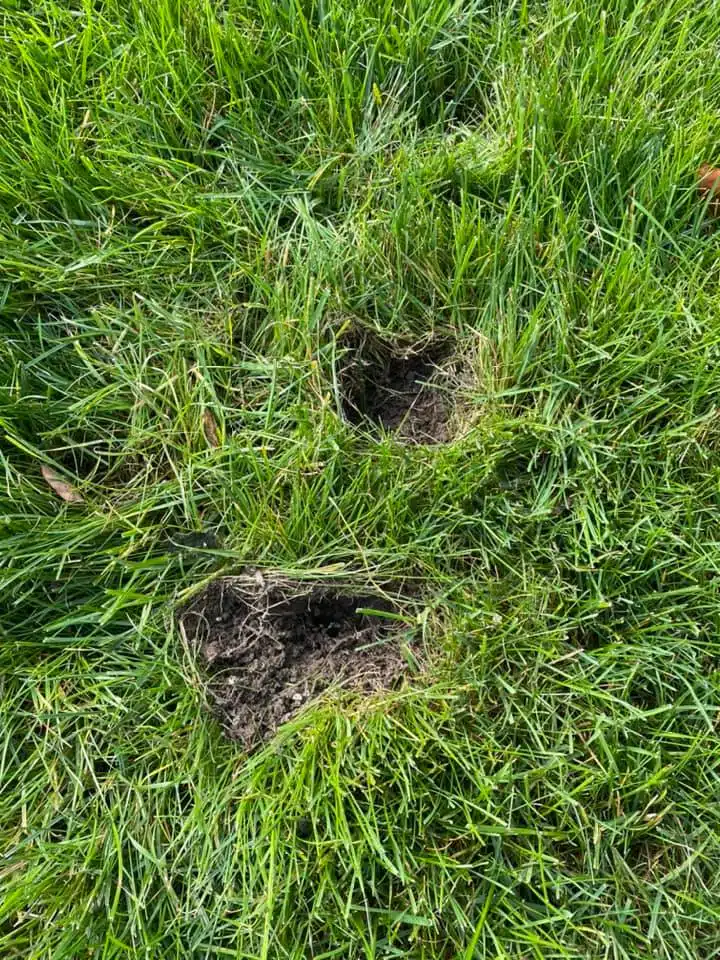
Image source: Bing (Web (fair-use with source credit))
This is where most homeowners go wrong. The surface-level answer is "look at the holes," but the real skill is reading the whole scene.
The visual clues that separate squirrel holes from grub damage
Here's a quick identification table to help you sort it out:
| Damage Type | Hole Depth | Soil Appearance | Surrounding Lawn Condition |
|---|---|---|---|
| Squirrel caching holes | 1-3 inches | Loosely scattered, small mounds | Turf lifts easily but roots are intact |
| Skunk grubbing | 3-4 inches, cone-shaped | Rolled-back patches, peeled sod | Sod detaches completely from roots |
| Raccoon damage | Larger irregular patches | Rolled carpet-like sections | Extensive sod disruption overnight |
| Actual grub damage | No holes from grubs themselves | N/A | Brown, spongy turf that peels back easily |
The grub damage column is the counterintuitive one. Grubs themselves don't dig holes. They feed on grass roots below the surface, and the visible damage shows up as brown, dying patches of turf that feels spongy underfoot and lifts away from the soil like a loose carpet because the roots have been eaten through.
If you're seeing actual holes or displaced soil, something is digging from above. That digging animal is rarely targeting grubs as its primary food source, with the notable exception of skunks and raccoons.
Skunk vs. raccoon vs. squirrel: A quick identification guide
When we review reported backyard hole complaints, the same few animals come up again and again. Learning to narrow the culprit from these three is often the breakthrough that unwinds the whole problem.
Skunks leave small, cone-shaped holes about 3-4 inches diameter, often in clusters. They probe for grubs with their front claws and snouts, and the damage looks like someone took an ice cream scoop to localized patches of lawn. This is the one animal on this list that genuinely targets grubs as a meaningful food source.
Raccoons roll back sections of sod, especially on moist evenings when grubs are closer to the surface. The damage is more extensive and messier than skunk damage, often happening overnight along lawn edges or near water sources.
Squirrels scatter individual divots across a wider area rather than concentrating damage in patches. The holes are shallower, the surrounding turf stays healthier, and you may find nut shells nearby.
What to look for in the soil around the holes
Pick up a handful of soil from a fresh hole. If you find partial acorn shells, nut fragments, or squirrel droppings, you've confirmed a squirrel caching site.
For grub investigation, dig under the dead or thinning grass carefully and check the top 2, 3 inches of soil. A healthy lawn can tolerate a few grubs. Extension literature from multiple land-grant universities commonly uses sources-of-grub-damage thresholds, but by the time you see visible lawn damage, counts are likely particularly high.
Grub infestations often appear curled, C-shaped larvae with tan heads and brownish bodies, typically about one inch long. If you come across several specimens in a square-foot sample, something like skunks or raccoons may eventually notice the activity and start showing up to dig.
This is where the cycle feeds itself. A real grub problem attracts skunks, which do the digging that people often misattribute to squirrels, leading to even more chemical use and often making the whole lawn bigger rather than smaller.
Seasonal Patterns: When Squirrel Digging Peaks and Why
Squirrel digging isn't evenly distributed across the year. Two distinct peaks explain most of the damage you'll see.
Fall caching frenzy: Why autumn looks like an invasion
September through November marks the big show. Every mature oak, hickory, or walnut tree in a squirrel's territory is suddenly producing massive amounts of high-energy food. The squirrel's biological response is to bury as much of it as possible.
Eastern gray squirrels in particular focus their caching effort in areas with loose, well-drained soil like garden beds, lawn edges, and open turf. Tree squirrels don't cache in heavy clay or densely compacted ground because it's physically harder to dig and harder to relocate by smell later.
If you notice a sudden spike in small holes scattered across your lawn in October, that's the caching rush. It'll taper off as natural nut production winds down.
Spring recovery: The forgotten nut problem
March through May brings the second peak as squirrels actively search for caches they buried months earlier. This is when you'll see probing digs across a broader area, not just under nut trees.
The spring digging pattern is different from fall caching. Fall holes show deliberate burial behavior with backfilled soil. Spring holes look like investigation behavior, with loose scrapes and partial digs where a squirrel started searching and then moved on.
Squirrels leaving probes across a whole lawn in spring often indicates the owner is seeing actual recovery attempts of that forgotten percentage.
Summer and winter: What changes
Summer digging drops sharply because natural food sources are abundant. Squirrels shift to fresh fruits, berries, garden vegetables, and bark. You may still see occasional caching of late-summer seeds and nuts, but the intensity is much lower.
Winter activity depends on climate. In colder regions, squirrels stay closer to their nest sites and rely heavily on caches during snow cover. Their digging becomes more targeted rather than scattered as they seek known cache locations underground.
Thirteen-lined ground squirrels are actually true hibernators in the northern parts of their range. Their digging stops entirely during winter months, which means any fresh holes in your yard during January or February are unlikely to be ground squirrel activity.
Which Squirrel Species Dig More Than Others
Not all squirrels are equal when it comes to yard damage. The species in your region determines what you're likely dealing with.
Eastern gray squirrels: The most common culprits
Eastern gray squirrels dominate suburban and urban environments across the eastern and midwestern United States, and they're well established in parts of the West Coast and Pacific Northwest as well. If you live in a typical suburban neighborhood with mature trees and you're seeing lawn divots, this is probably your animal.
They're active during daylight hours, with peak activity in early morning and late afternoon. Their home range typically covers one to seven acres, depending on food availability.
Research forums and university aggregates draw from field studies showing gray squirrels live about six years in the wild and maintain overlapping territories, so the squirrels you see in a neighborhood the next block over those are largely the same individuals passing through your yard, not different animals each time.
Fox squirrels: Heavier digging, wider range
Fox squirrels are the largest tree squirrel in North America, about twice the body weight of an eastern gray. That extra size translates to slightly deeper holes and larger soil displacement per dig.
Their native range covers the eastern United States. They're also found in parts of the Midwest where habitat conversion has favored their preference for open woodlands and field edges.
Fox squirrels tend to favor acorns more heavily as a food source. In areas with abundant oak trees, their caching behavior can produce more visible lawn disturbance than gray squirrel activity because each individual cache involves moving more material.
Ground squirrels: Different behavior, different damage
Ground squirrel species like the thirteen-lined ground squirrel create an entirely different damage pattern. These animals dig actual burrow systems with larger entrance holes, often with visible mounds of excavated soil nearby.
Research forums and zoological Q&A confirm that thirteen-lined ground squirrels genuinely do eat more insects than tree squirrels, and grubs are part of that mix. However, their digging targets a broader menu, including any underground insect larvae, earthworms, and seeds they encounter while excavating.
Ground squirrels favor mowed lawns, golf courses, and grazed fields. Their burrow entrances are larger than squirrel divots, typically three to four inches across, and usually show no loose scattered soil because they push excavated dirt outward in a fan pattern.
What Happens When You Misdiagnose the Problem

Image source: Wikimedia Commons / Сарапулов (CC BY)
This is where the costs add up and the unintended consequences start piling on.
Unnecessary grub treatments that don't work on squirrels
Grub control products include preventive insecticides applied in early summer to kill young grubs before they damage roots. These products have zero effect on squirrels because squirrels are mammals, not insects.
Curative treatments target existing grub populations and fail equally badly against squirrel behavior. Some homeowners revert to repellents or repellent granules for squirrel yard problems, but aggregate user feedback on these products is mixed.
Even strong repellents require reapplication and lose effectiveness after rain. Real squirrel deterrents for lawn digging focus on habitat modification, physical barriers, and removing food attractants rather than repelling a grazing animal.
Pesticide overuse and what it actually costs you
When homeowners repeatedly apply grub control products to a squirrel problem or against skunks drawn by real grubs, they're essentially using those insecticides incorrectly outside their labeled purpose. That's an issue because these products are registered for specific pests and application conditions, and off-target use can both undermine their effectiveness when they are actually needed and create avoidable environmental exposure when the real culprits respond to entirely different management.
Reviewing piles of anonymous homeowner forum posts to cherry-pick a single case against a background of uncertainty yields one of those 'orchid moments' where it becomes clear that people have spent over several consecutive years and hundreds of dollars on grub products that never addressed the original problem.
The broader ecological cost of misapplied pesticide involves effects on beneficial insects including ground beetles, springtails, and other soil organisms that contribute to healthy turf without costing anything.
Environmental impact of treating the wrong pest
When an insecticide gets applied for a perceived grub threat that is actually squirrel or skunk activity, the active ingredient will remain in the soil with nothing appropriate to target if the preapplication diagnosis was a misidentification. That soil residue will then persist, leaching through the soil profile or entering waterways with the next heavy rain.
Chlorantraniliprole, the active ingredient in many current grub prevention products, shows low mammalian toxicity but high toxicity to aquatic invertebrates. Misapplication turns an otherwise well-targeted product contributor to a non-point-source pollutor. Many university extension services have started applying questioning sources that draw from published field studies that homeowners call about grub damage that was actually squirrel or skunk activity, and the misidentification leads to treatment that doesn't address the visible problem, often resulting in repeat callbacks and unnecessary product purchases.
The proper approach is always to confirm what you're dealing with before buying any product.
Practical Steps to Confirm What Animal You're Dealing With
You don't need a wildlife biology degree to figure out who's tearing up your lawn. Simple observation and one quick test will get you the answer.
The overnight observation method
If the damage is active or recurring, check the lawn the next morning right after sunrise. Fresh holes with damp soil pushed aside mean something was digging overnight or very early.
Raccoons leave fresh damage on moist nights. Squirrels don't dig overnight, they're strictly daytime creatures. So fresh holes in the morning point toward raccoons or skunks, not squirrels.
Set up a wildlife camera or game trail camera near the damaged area. A basic SD-card trail camera stores days of motion-triggered footage so you can timestamp exactly when the animal shows up and what it does.
Simple daytime monitoring tricks
Spend a few late afternoons watching the yard from a window. Eastern gray squirrels follow fairly predictable routes and schedules. You'll often spot the culprit in two or three observational sessions.
Lay a thin dusting of flour or unscented talcum powder over a few fresh divots in the evening. Morning tracks help distinguish species:
| Animal | Track clues |
|---|---|
| Squirrel | Four-toed front prints, five-toed rear prints, bounding gait pattern |
| Skunk | Five toes on all feet, claw marks visible, walking gait |
| Raccoon | Handlike prints with five long toes, plantigrade walking pattern |
These powders are non-toxic and wash away with irrigation or rainfall. They won't harm your lawn or the animal.
When to call a professional for identification
If you've tried observation and still can't identify the source, a licensed wildlife control operator can assess the situation. This makes sense when the damage is extensive or when you suspect a protected species.
USDA APHIS Wildlife Services responds to nuisance wildlife complaints across the country. They'll help identify the animal and suggest management options based on your specific situation.
Professional identification matters because some backyard species are protected. Gray squirrels are game animals in many states with regulated trapping and relocation rules. A professional knows those laws.
Safe, Legal Ways to Address Squirrel Digging on Your Property
Once you've confirmed squirrels are the problem, you need solutions that actually work without breaking the law.
Exclusion methods that actually work
Squirrels can't dig where they can't access. Apply mesh hardware cloth over immediately threatened areas like newly seeded lawn patches or garden beds intended for tulip bulbs.
Lay chicken wire flat across high-traffic lawn areas with pegged-down edges. Squirrels avoid wire surfaces and move their activity to easier ground within a few weeks. The wire can be removed after a month without long-term lawn damage.
For specific tree-root feeding areas, try a low decorative fence buried two to three inches. This stops shallow digging without being an eyesore.
Deterrent options and their realistic effectiveness
Squirrel repellents deliver temporary results at best. Aggregate user feedback from extension advice forums confirms that most repellents need reapplication every one to two weeks, losing effectiveness after heavy irrigation.
Motion-activated sprinklers give mixed functionality reviews. Squirrels in densely fed suburban neighborhoods often habituate to these devices within two to four weeks.
The most effective long-term solution is reducing the food source that attracts them. Cutting lower-hanging branches away from rooftops, using squirrel-resistant bird feeders with weight-closing mechanisms, and cleaning up fallen acorns in the fall all help reduce population pressure on your property.
What to know about trapping and relocation laws
State wildlife agencies across the country enforce strict trapping regulations. In many states, relocating a trapped squirrel requires moving it outside a mandated minimum distance from the capture site. States set their own requirements, with some requiring distances between 5 and 15 miles squirrels are game species with regulated seasons and permit requirements that vary considerably by jurisdiction.
Penalties for illegal trapping or relocation can reach up to significant fines.
A licensed wildlife control operator handles compliant captured squirrels in accordance with state and local laws. Before you purchase a live trap, always contact the regional wildlife agency.
When Squirrel Digging Might Actually Help Your Lawn
Before you declare war on your local squirrels, you should know that a surprising amount of their activity benefits your yard.
Natural aeration benefits
Aerate your lawn once a year for good turf health. Squirrel digging doesn't replace core aeration, but the shallow pits help relieve soil compaction in localized spots and allow oxygen and water access through the surface layers.
In areas where ground squirrels survive long-term populations, ecosystem benefits go still deeper. Their burrow systems improve soil drainage, incorporate organic matter deeper into the soil profile, and serve as habitat for wild bees and other beneficial insects.
Seed dispersal and tree regeneration
Every squirrel becomes an accidental gardener. When forgotten winter caches finally sprout in spring, the result is new seedling growth, new biodiversity for a local ecosystem, and a plant-forest regeneration system that actually works.
Consequently, oak-dominated forests across eastern North America rely on scatter-hoarded squirrel behavior as their chief regeneration pathway. The white oak family that evolved this high-nutrient, low-tannin acorn specifically to attract scatter-hoarding animals that the oak then uses as its dispersal vehicle.
This trade-off could be happening right now in your back lawn. Through their forgetting, they plant dozens of seedlings you can later transplant where they're actually wanted.
The ecosystem role you shouldn't overlook
Squirrels serve as prey for hawks, owls, foxes, and coyotes. They help distribute underground fungi critical to tree nutrient uptake, and they support predatory animals that few homeowners want to manage directly.
Complete elimination of squirrels from a suburban yard is neither practical nor ecologically desirable. The goal is reducing conflict without destroying their role, not eradicating the species entirely.
Frequently Asked Questions
How do I know if it's squirrels or grubs damaging my lawn?
Look at the pattern. Squirrel damage shows individual scattered divots, one to three inches deep, often with nut shells nearby. Grub damage appears as large patches of brown, dead turf with spongy texture and easily lifted sod.
If you're seeing actual holes, focus on squirrels, skunks, or raccoons, not grubs directly.
What time of day are squirrels most active in yards?
Eastern gray squirrels and fox squirrels are diurnal, meaning they're active during daylight hours. Peak activity happens in the early morning from sunrise through mid-morning, and again in late afternoon through just before sunset. Any digging overnight points to skunks, raccoons, or armadillos, not squirrels.
Will grub killer products stop squirrels from digging?
No. Grub killing insecticides target beetle larvae. They have zero effect on squirrels or any other mammal causing digging damage.
You'd be applying chemicals that don't address your actual problem while introducing unnecessary insecticide into your soil ecosystem during each application.
Can I relocate squirrels I trap on my property?
Maybe, but check your state wildlife agency's regulations first. Many states classify squirrels as game animals requiring permits for trapping. Relocation distances, permitted seasons, and legal trapping methods vary considerably by jurisdiction.
Unpermitted relocation can carry fines and legal liability.
How can I stop squirrels from digging without harming them?
Cut off their food access by securing bird feeders, managing fallen nuts during autumn, and using physical barriers like chicken wire over at-risk areas. Motion-activated sprinklers give mixed long-term success. Habitat modification works better than chemical deterrents or harm-based methods.
The Bottom Line: What To Do About Your Lawn
So do squirrels dig for grubs? They can, occasionally, but almost never as their primary reason for tearing up your yard.
Start by identifying the actual culprit using the methods we covered: observe when the damage happens, check for nut shells or animal tracks, and examine whether the turf itself is dying or merely disturbed. That single diagnostic step saves more wasted effort than any product purchase.
If you've confirmed squirrel activity, skip the grub pesticides entirely. Focus on reducing food access and applying physical barriers in the worst-hit areas. Most homeowners see a big drop in digging pressure by simply cutting back the food supply.
If the damage is actually raccoons or skunks targeting a hidden grub problem, treat for the grubs themselves using properly identified products. A clean positive diagnosis prevents guessing and prevents spending money treating problems you don't actually have.