So you've spotted damage in your lawn or garden and you're trying to figure out what's behind it. Maybe you've heard voles eat grubs and you're wondering if that's what's happening on your property. The truth is a little more nuanced than a simple yes or no, and getting it wrong can send you down an expensive, ineffective treatment path.
Here's what our research shows: voles are primarily herbivores, but they will opportunistically eat insects, including grubs, when the chance arises. The real problem is that most people misdiagnose their lawn damage entirely. Vole damage and grub damage look nothing alike once you know what to check for, and treating for the wrong pest wastes time and money.
Let's walk through exactly what voles eat, how to identify what's actually happening in your yard, and what to do about it.
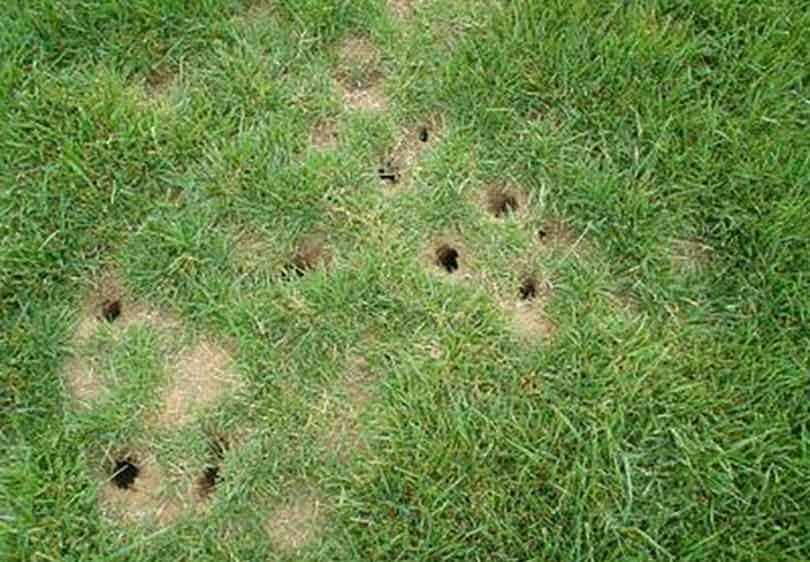
Image source: Bing (Web (fair-use with source credit))
Quick Answer
Do voles eat grubs? Yes, but only occasionally. Voles are herbivores that mainly eat plant roots, bulbs, seeds, and bark.
They may eat grubs if they encounter them while tunneling. Grubs are not a primary food source for voles. If you have lawn damage, voles and grubs cause very different problems.
Why Getting This Right Actually Matters
Misidentifying your pest is the single most common mistake homeowners make with lawn and garden damage. You end up spending money on grub control products when you actually have voles, or setting vole traps when grubs are the real culprit. Neither approach works, and the damage keeps getting worse while you're chasing the wrong fix.
The stakes are real. Vole populations can explode quickly. A single meadow vole (Microtus pennsylvanicus) can produce multiple litters per year with three to six young each.
Left unchecked, they'll girdle fruit trees, destroy flower bulbs, and tunnel through entire sections of turf. Grubs, meanwhile, chew through grass roots and cause patches of dead lawn that peel back like carpet. Both problems compound over time if you don't address the right one.
Getting the diagnosis correct means you spend your time and money on the solution that actually works. That's why understanding what voles eat, and what they don't, matters more than most people realize.
The Short Answer: Do Voles Eat Grubs?
Voles do eat grubs, but it's opportunistic, not habitual. Their diet is overwhelmingly plant-based. Think of it this way: if a vole is tunneling through soil and bumps into a grub, it might eat it.
But voles aren't hunting grubs the way moles do. They're not insectivores.
Research on vole feeding behavior consistently shows that plant material makes up the vast majority of their diet. Roots, bulbs, tubers, seeds, bark, and green vegetation are what they're after. Insects, including grubs, show up in stomach content analyses but in small quantities.
It's supplemental protein, not a dietary staple.
This distinction matters because if you're seeing lawn damage and assuming grubs are the cause simply because voles might eat them, you've got the relationship backwards. Voles cause their own damage independently. They're not a sign of a grub problem, and they're not a solution to one either.
What Voles Actually Eat (And Why It's Mostly Not Grubs)
Voles are built for a plant-based diet. Their ever-growing incisors are designed for gnawing through roots, bark, and tough plant fibers. Their digestive systems are adapted to process cellulose-heavy material.
Everything about their biology points toward herbivory.
Here's what a typical vole diet looks like throughout the year:
- Spring and summer: Grasses, clover, dandelion roots, garden vegetables, flower bulbs (tulips and crocus are favorites), and seeds.
- Fall: Seeds, grains, bark from young trees and shrubs, and any remaining green vegetation.
- Winter: Bark, roots found under snow cover, stored seeds, and dormant plant material. This is when vole damage to trees and shrubs becomes most visible.
Insects, earthworms, and grubs appear in the diet as minor supplements. Studies examining vole stomach contents find animal matter in a small percentage of samples, usually less than five to ten percent of total volume. That's consistent with opportunistic feeding, not targeted hunting.
The meadow vole and pine vole (also called the woodland vole, Microtus pinetorum) are the two species most commonly responsible for lawn and garden damage in North America. Both follow this same pattern. Pine voles spend more time underground and feed heavily on root systems, while meadow voles create the surface runways most people notice in overgrown grass.

Image source: Wikimedia Commons / Wikimedia Commons contributor
If you're trying to figure out whether voles are responsible for damage in your yard, their diet tells you exactly where to look. Check plant roots for gnawing. Inspect flower bulbs that failed to come up in spring.
Look for bark damage at the base of young trees, especially damage that occurs right at or just below the soil line. Those are the signs of vole feeding, not grub activity.
How to Tell Vole Damage Apart From Grub Damage
This is where most people get tripped up. Vole damage and grub damage look completely different once you know what you're checking for. The confusion usually happens because both problems show up as dead or dying patches in your lawn, and people assume all lawn damage has the same cause.
Here's a side-by-side breakdown:
| Feature | Vole Damage | Grub Damage |
|---|---|---|
| Surface signs | Visible runways (narrow paths) through grass, often 1-2 inches wide | No runways; grass feels spongy underfoot |
| Turf condition | Grass in runways is clipped short and may be dead in narrow strips | Grass pulls up easily, like loose carpet, because roots are chewed through |
| Holes | Small, open entry holes (1.5-2 inches) with no surrounding soil mound | No entry holes; damage is from below |
| Root inspection | Gnaw marks on roots and bulbs, clean angled cuts | Roots are partially or fully consumed; grubs visible in soil |
| Timing | Damage often worse in early spring after winter activity under snow | Damage most visible in late summer through fall |
| Other signs | Vole droppings near runways, gnawed bark on trees and shrubs | Increased bird activity (starlings, crows) feeding on grubs, skunks or raccoons digging |
The quickest way to start your diagnosis is to look for surface runways. Meadow voles create narrow, worn paths through grass where they travel repeatedly. These runways are most visible in early spring when snow melts and reveals the network.
If you see them, you have voles. It's that straightforward.
Grub damage doesn't create any surface pattern. Instead, you'll notice irregular brown patches that expand over time. The grass in these patches will feel loose because the roots have been severed.
If you can grab a handful of turf and lift it like a rug, grubs are almost certainly the cause.
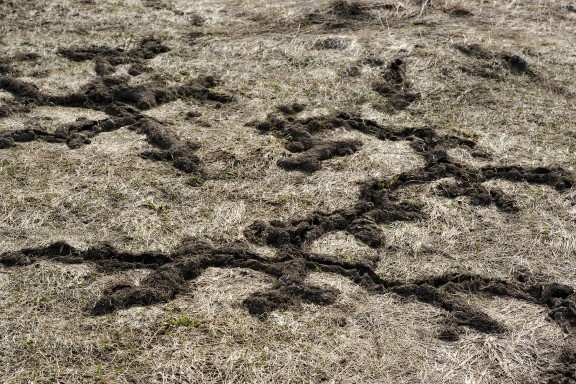
Image source: Bing (Web (fair-use with source credit))
There's also a simple test you can do right now. Cut a one-foot square section of turf at the edge of a damaged area and peel it back. Check the top two to three inches of soil.
If you see white, C-shaped larvae (grub bodies), you've got a grub problem. If the soil looks normal but you find gnawed roots and small tunnels, voles are your issue. Do this in a few different spots to get a clear picture.
The Real Reason You're Probably Asking This Question
Most people searching "do voles eat grubs" aren't asking out of pure curiosity. They've found damage in their yard and they're trying to connect the dots. Maybe they've seen voles or evidence of voles, and they've also heard that grubs cause lawn problems.
They're wondering if the two are related.
Here's the honest answer: voles and grubs can absolutely be present in the same yard at the same time. They occupy overlapping habitats. But one doesn't cause the other, and finding voles doesn't mean you have a grub problem.
They're separate issues that require separate solutions.
The confusion gets worse because some pest control advice online treats all lawn damage as a single category. It isn't. Voles are rodents.
Grubs are insect larvae. The treatments for each are completely different. Applying a grub killer won't stop voles.
Setting vole traps won't kill grubs. You need to identify which pest you're dealing with before you do anything else.
There's also a seasonal factor. Vole damage often shows up most visibly in early spring, after months of winter tunneling under snow cover. Grub damage peaks in late summer and fall when larvae are largest and feeding most aggressively.
If you're seeing damage at a particular time of year, that timing itself is a clue.
What to Check First When You See Lawn or Garden Damage
Start with a visual inspection. Walk your property and look for the specific signs we covered above. Surface runways point to voles.
Spongy, peeling turf points to grubs. Gnawed bark at the base of trees points to voles. Visible larvae in the soil points to grubs.
Here's a practical checklist to work through:
- Look for surface runways in grassy areas, especially along fences, foundations, and garden edges.
- Check for entry holes about 1.5 to 2 inches across, open with no dirt piled around them.
- Inspect the base of trees and shrubs for gnawing damage at or below the soil line.
- Lift sections of damaged turf and examine the top few inches of soil for grubs.
- Dig around failed flower bulbs to check for gnawing or consumption.
- Note the timing of when damage first appeared and whether it's getting worse.
If you find grubs during your inspection, count how many are present per square foot. Extension guidelines generally suggest treatment thresholds of five to ten grubs per square foot for most turfgrass types. Below that level, healthy grass can usually outgrow the damage.
Above it, you'll want to take action.

Image source: Bing (Web (fair-use with source credit))
If you find vole runways and gnawed plant material but no significant grub population, focus your efforts on vole control. Don't waste money on insecticides that won't address the actual problem. This is where accurate diagnosis pays off directly.
When Voles and Grubs Are Both Causing Problems at Once
It's entirely possible to have both pests active in the same yard. This is more common than most people realize, especially in properties with mature lawns, gardens, and nearby wooded areas. When both are present, the damage can compound quickly.
Voles tunnel through weakened turf, and grubs continue destroying roots underneath.
In these cases, you need to address both problems, but in the right order. Start with whichever pest is causing the most visible damage. If vole runways are widespread and active, handle the vole problem first.
If large sections of turf are dying from root loss, prioritize grub treatment.
Timing matters here too. Grub control products work best when applied while grubs are small and actively feeding, typically mid to late summer. Vole control can happen year-round but is most effective in fall and early spring when vegetation is sparse and voles are actively foraging.
Planning your approach around these windows gives you the best results.
How to Confirm Which Pest You're Dealing With
If your initial inspection isn't giving you a clear answer, there are a few more steps you can take. For voles, try the apple slice test. Place small pieces of apple in suspected runways or near entry holes.
Check them the next morning. If they're gone or show small bite marks, voles are active in that area.
For grubs, the turf lift test we described earlier is the most reliable method. You can also look for increased wildlife activity. Skunks, raccoons, and birds digging in your lawn are often feeding on grubs below the surface.
If you see this kind of digging combined with spongy turf, grubs are almost certainly present.
Another option is to consult your local cooperative extension office. Many offer free or low-cost pest identification services. You can bring in photos, physical samples, or describe what you're seeing, and they'll help you confirm the culprit.
This is especially useful if you're dealing with an unfamiliar species or unusual damage patterns.
Common Mistakes People Make When Diagnosing Lawn Damage
The biggest mistake is assuming all lawn damage has the same cause. Brown patches in your yard could be voles, grubs, fungal disease, drought stress, dog urine, or a dozen other things. Jumping to conclusions based on a single symptom leads to wasted effort and ongoing damage.
Another common error is treating for grubs based solely on the presence of other insects in the yard. Finding a few beetles or earthworms doesn't mean you have a grub infestation. You need to actually find the larvae in the soil at damaging levels before investing in treatment.
People also tend to underestimate vole activity because the animals themselves are rarely seen. Voles are small, fast, and mostly active at dawn and dusk. You might never see one, but the evidence of their feeding is all over your property if you know where to look.
Don't rule out voles just because you haven't spotted the animal itself.
Finally, waiting too long is a mistake that costs real money. Both vole and grub damage gets worse over time. Vole populations grow.
Grub feeding intensifies as larvae mature. The earlier you identify and address the problem, the less damage you'll deal with and the cheaper the fix will be.
What to Do Once You Know It's Voles
Vole control focuses on habitat modification, exclusion, and population reduction. Start by removing the conditions that attract them. Voles love dense ground cover, heavy mulch near foundations, and overgrown grass.
Keep lawns mowed, clear vegetation away from tree bases, and reduce mulch depth to two inches or less around gardens.
Exclusion works well for high-value plants. Hardware cloth buried six inches deep around tree trunks and garden beds prevents voles from accessing roots and bulbs. For individual trees, cylindrical guards made of quarter-inch mesh hardware cloth protect against bark gnawing.
Trapping is effective for small populations. Standard mouse snap traps baited with peanut butter or apple, placed perpendicular to runways with the trigger end in the path, work well. Set them in active runways and check daily.
Chemical repellents containing thiram or capsaicin can deter voles from feeding on bulbs and bark, but they need reapplication after rain. Rodenticides are an option in severe cases but come with risks to non-target wildlife and pets. Always follow label instructions carefully and check local regulations, as some areas restrict rodenticide use.
What to Do Once You Know It's Grubs
Grub management depends on the severity of the infestation and your tolerance for chemical treatments. For light infestations (fewer than five grubs per square foot), improving lawn health through proper watering, fertilization, and aeration may be enough. Healthy grass can tolerate some grub feeding without visible damage.
For moderate to heavy infestations, chemical treatments are the most reliable option. Curative insecticides containing trichlorfon or carbaryl work on existing grubs but need to be applied while grubs are actively feeding, typically late summer through early fall. Water the lawn after application to move the product into the root zone where grubs are feeding.
Preventive products containing imidacloprid or chlorantraniliprole are applied earlier in the season (late spring to early summer) and work by killing grubs as they hatch. These are most effective when you know you have a recurring grub problem.
Biological controls are worth considering for organic approaches. Milky spore disease (Paenibacillus popilliae) targets Japanese beetle grubs specifically and can provide long-term suppression, though it takes a few years to establish. Beneficial nematodes (Heterorhabditis bacteriophora) are another option that can reduce grub populations when applied correctly in moist soil during warm weather.
When to Call in a Professional
If you've gone through the identification steps and still can't determine what's causing the damage, or if the problem is widespread across a large property, it's worth bringing in a pest management professional. They have the experience to diagnose quickly and can access commercial-grade treatments that aren't available to homeowners.
Professionals are also the right call when vole damage extends to valuable landscaping, orchards, or young trees. The economic threshold for professional intervention is lower when you're protecting mature plantings that would be expensive to replace.
Look for licensed pest control operators with experience in wildlife management, not just insect control. Voles are wildlife, and the approach to managing them differs from standard pest insect protocols. Ask specifically about their experience with rodent and grub identification before hiring.
Frequently Asked Questions
Can voles and grubs be in the same yard at the same time?
Yes, absolutely. Voles and grubs share overlapping habitats and can both be active in the same property. They're independent pests though, so having one doesn't cause or prevent the other.
You may need to address both problems separately.
Do voles eat grubs enough to control a grub population?
No. Voles eat grubs only opportunistically and in small quantities. They won't make a meaningful dent in a grub infestation.
If you have a significant grub problem, you need targeted grub control, not the hope that voles will handle it.
What time of year is vole damage most visible?
Vole damage is often most apparent in early spring, after months of winter tunneling under snow cover. The snow protects voles from predators and gives them free rein to feed on roots and bark. When the snow melts, the damage is suddenly visible.
How many grubs per square foot is considered a problem?
Extension guidelines generally use a threshold of five to ten grubs per square foot for most cool-season turfgrasses. Warm-season grasses can often tolerate slightly higher numbers. Below the threshold, healthy lawn usually recovers on its own.
Will treating for grubs get rid of voles?
No. Grub control products target insect larvae and have no effect on voles. Voles are rodents, and their diet is primarily plant-based anyway.
Using grub insecticides won't reduce vole populations or stop vole damage.
What's the fastest way to tell voles from grubs?
Look for surface runways in your grass. If you see narrow, worn paths where the grass is clipped short and dead in strips, you have voles. If the turf feels spongy and pulls up easily with no roots attached, you have grubs.
The two damage types rarely overlap in appearance.
The Bottom Line
Voles do eat grubs, but only occasionally and in small amounts. They're herbivores first and foremost, and their damage comes from feeding on roots, bulbs, bark, and plant material, not from any meaningful interaction with grub populations. If you're dealing with lawn or garden damage, the most important step is correctly identifying which pest you're facing before you spend a dime on treatment.
Check for surface runways and gnawed plant material to confirm voles. Lift sections of turf and look for C-shaped larvae in the soil to confirm grubs. The two problems require completely different solutions, and treating for the wrong one just lets the real damage continue.
Act early, diagnose accurately, and match your treatment to the actual pest. That's the approach that saves your lawn, your garden, and your wallet.
Common Mistakes People Make When Diagnosing Lawn Damage
One of the biggest mistakes we see is treating for grubs based purely on the time of year. Yes, grub damage peaks in late summer and fall, but that doesn't automatically mean every brown patch in August is grubs. You could be looking at drought stress, fungal disease, or vole damage from the previous spring that's only now becoming obvious.
Another error is over-relying on bird activity as a grub indicator. Starlings and crows do feed on grubs, but they also pull up turf looking for earthworms, insects, and other food. Birds digging in your lawn isn't proof of a grub problem.
You still need to lift the turf and count what's actually down there.
People also tend to ignore vole damage because the animals are rarely seen. Meadow voles are small, secretive, and most active during low-light hours. You might never spot one in your yard.
But the runways, gnawed roots, and clipped grass are right there if you look. Don't rule out voles just because you haven't seen the culprit.
Finally, there's the trap of waiting for the problem to fix itself. Vole populations don't crash without intervention, and grubs don't just disappear. Some years are worse than others depending on weather and food availability, but neither pest resolves on its own.
The longer you wait, the more extensive the repair work becomes.
What to Do Once You Know It's Voles
Vole control works best when you combine several approaches. Single-method treatments rarely get the job done because these animals reproduce quickly and adapt to changes in their environment. You'll see better results with a layered strategy.
Here's what effective vole management looks like:
- Habitat modification first. Mow regularly, eliminate tall grass corridors, and pull mulch back from tree bases and garden edges. Open, trimmed landscapes are less attractive to voles because they're exposed to predators.
- Protect high-value plants. Wrap young tree trunks with hardware cloth cylinders buried two to three inches deep. Use mesh bulbs cages for tulips, crocus, and other preferred bulbs.
- Trap actively used runways. Standard mouse snap traps work well when placed perpendicular to the runway with the trigger in the path. Check and reset them daily for best results.
- Use repellents as a supplement. Capsaicin-based repellents can deter feeding on treated surfaces but wash off in rain. Plan to reapply every seven to ten days or after any significant rainfall.
Avoid relying solely on rodenticides unless you're dealing with a severe, widespread infestation and other methods have failed. Secondary poisoning of owls, hawks, and neighborhood pets is a real concern with anticoagulant rodenticides, and many states have tightened restrictions on their use in recent years.
What to Do Once You Know It's Grubs
Grub treatment depends on the severity and your comfort level with different product types. For small populations under the treatment threshold, improving lawn health through deep, infrequent watering and proper fertilization often allows grass to outgrow the damage. Healthy turf with an extensive root system tolerates more feeding than stressed, shallow-rooted lawns.
When treatment is warranted, timing is everything. Curative products work best when grubs are small and actively feeding, typically mid to late summer. Apply in the evening and water lightly afterward to move the product into the soil profile where grubs are feeding.
Don't expect instant results. It takes several days to see reduced feeding activity.
Preventive treatments are applied in late spring or early summer before eggs hatch. Products like chlorantraniliprole (sold as GrubEx) are lower in toxicity to non-target organisms and have a wide application window. They're most effective when you've had grubs before and expect reinfestation.
For organic options, beneficial nematodes (Heterorhabditis bacteriophora) offer solid results when applied correctly. Keep the soil moist before and after application, apply in the evening to avoid UV exposure, and make sure soil temperatures are above 60°F. Milky spore takes longer to establish but can provide multi-year control of Japanese beetle grubs specifically.
When to Call in a Professional
There are situations where professional intervention makes sense. If you're dealing with damage across multiple acres, valuable landscaping, or recurring infestations that aren't responding to your efforts, a licensed pest operator can apply commercial-grade products and assess the full scope of the problem.
Look for operators who specialize in both wildlife and insect management. Voles are rodents, grubs are insects, and the treatment protocols are completely different. You need someone experienced with both, not just a general lawn sprayer who applies the same products to every job.
Professionals also have access to monitoring tools and application equipment that most homeowners don't. They can apply treatments at the right depth, at the right time, and at rates that actually get results. For large properties or severe infestations, this expertise often pays for itself in reduced damage and faster resolution.
Ask about their approach to integrated pest management. Good operators won't just spray chemicals. They'll assess habitat conditions, recommend cultural changes, and use targeted treatments only where needed.
If someone quotes you a one-size-fits-all treatment plan without inspecting your property, get a second opinion.
The Bottom Line
Voles do eat grubs, but only as an occasional snack, not as a dietary staple. They're herbivores primarily, and the damage they cause to roots, bulbs, and bark has nothing to do with grub activity. These are two separate pests that sometimes share the same yard but require completely different solutions.
The key takeaway is simple: identify the actual problem before you act. Spend time inspecting your property, looking for the specific signs we've covered. Lift turf squares, check for runways, examine plant roots, and count grubs if you find them.
A few minutes of careful diagnosis saves you from weeks of wasted effort and wasted money.
Once you know what you're dealing with, act decisively. Voles need habitat modification, exclusion, and targeted trapping. Grubs need properly timed insecticide or biological control applications.
Neither problem resolves itself, and neither responds to the wrong treatment.
Your lawn and garden are worth the effort of getting this right. Accurate diagnosis plus appropriate treatment equals a healthier property with less damage and fewer headaches going forward.
Frequently Asked Questions
Can voles help control a grub problem in my yard?
No. Voles eat grubs so rarely that they won't make any noticeable difference in a grub population. If you've got a serious grub infestation, you need targeted treatments, not the hope that voles will handle it.
What's the easiest way to tell voles and grubs apart?
Check for surface runways in your lawn. Narrow, dead strips of grass with small holes nearby point to voles. If the turf lifts up easily with no roots attached and you see white C-shaped larvae in the soil, that's grubs.
Are voles active year-round?
Yes, voles stay active all winter. They tunnel under snow cover and feed on roots, bark, and stored seeds. The damage often goes unnoticed until spring when the snow melts and reveals the runways and gnawed plants.
How fast can vole populations grow?
Very fast. A single meadow vole can produce four to six litters per year with three to six young each. Populations can build from a small group to dozens of animals in a single season if conditions are favorable.
Do I need to treat if I only find a few grubs?
Not necessarily. Most turfgrass can tolerate five or fewer grubs per square foot without visible damage. Above that threshold, treatment makes sense.
Base your decision on actual counts, not just the presence of a few larvae.
Is it safe to use grub control products if I also have voles?
Yes, grub-specific insecticides don't harm voles. But remember, treating for grubs won't fix vole damage, and controlling voles won't eliminate grubs. Address each pest with the appropriate method for your situation.
The Bottom Line
Voles do eat grubs, but only occasionally and in small amounts. They're primarily herbivores, and their damage to roots, bulbs, and bark is independent of any grub activity. The real takeaway is that accurate diagnosis matters more than anything else.
Spend a few minutes inspecting your property before you start any treatment. Look for runways, lift turf squares, and identify what's actually causing the damage. That simple step prevents wasted money and keeps your lawn and garden healthier in the long run.