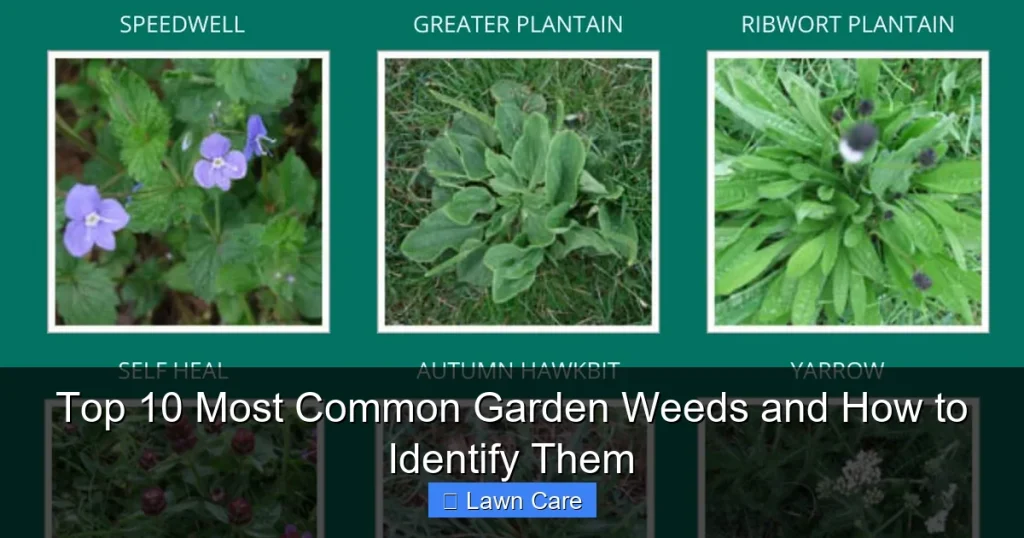
Tired of unwanted guests in your garden? This guide breaks down the top 10 most common garden weeds, complete with easy identification tips. Learn to spot these persistent plants and equip yourself with the knowledge to effectively manage them, ensuring a healthier, more beautiful garden.
Welcome, fellow garden enthusiasts! If you’re anything like me, you love the satisfaction of a well-tended garden, bursting with vibrant flowers and delicious vegetables. But let’s be honest, there’s one aspect of gardening that can be a real pain: weeds. These unwelcome guests seem to pop up everywhere, stealing precious nutrients, water, and sunlight from your cherished plants. Knowing your enemy is half the battle, and that’s exactly what we’re here to do today.
We’ll dive into the world of common garden weeds, helping you identify the top 10 offenders that frequently invade our yards and flowerbeds. With a little bit of know-how, you’ll be able to spot them from a mile away and tackle them before they get out of hand. Let’s get digging – or rather, let’s get identifying!
## Understanding the Weed Menace: Why Identification Matters
Before we get to our list, let’s chat about why knowing your weeds is so crucial. It’s not just about pulling out anything that doesn’t look like your prize-winning petunias. Different weeds have different life cycles and growth habits. Some are annuals, meaning they complete their life cycle in one year and spread through seeds. Others are perennials, living for many years and often spreading through roots, rhizomes, or tubers, making them much harder to eradicate. Understanding these characteristics helps you choose the most effective control methods. For instance, a weed with a deep taproot requires a different approach than one that spreads via shallow runners. Ignoring this can lead to frustration and wasted effort, and can even impact the health of your lawn, similar to how Zoysia grass can develop specific issues that need targeted solutions.
The Impact of Weeds
Weeds aren’t just unsightly; they actively compete with your desired plants. They can:
- Deprive plants of nutrients: Weeds are often aggressive feeders, sucking up essential minerals from the soil.
- Consume water: Especially in dry periods, weeds can hog the water supply, leaving your plants thirsty.
- Block sunlight: Dense weed growth can shade out young seedlings and smaller plants.
- Harbor pests and diseases: Some weeds can act as hosts for insects and pathogens that can then spread to your garden plants. Identifying common lawn diseases is important, and weeds can contribute to their spread.
- Reduce crop yield: In vegetable gardens, weeds can significantly impact the amount and quality of your harvest.
By accurately identifying weeds, you can also prevent common lawn care mistakes that might inadvertently encourage their growth.
## Our Top 10 Garden Invaders
Here are some of the most common weeds you’re likely to encounter. Let’s get to know them!
### 1. Dandelion (Taraxacum officinale)
Ah, the classic dandelion! You probably recognize this one instantly. Dandelions are known for their bright yellow, composite flowers that later transform into that iconic fluffy white seed head, perfect for making wishes.
How to Identify Dandelions:
- Leaves: Deeply toothed or lobed leaves that grow in a basal rosette (all emerging from the base of the plant). They look a bit like a lion’s teeth, hence the name “dandelion.”
- Flowers: Bright yellow, ray-like florets forming a single flower head atop a hollow, leafless stem.
- Roots: A thick, deep taproot that can be several inches long, making them notoriously difficult to pull out completely.
- Seeds: After flowering, the yellow head turns into a spherical puffball of seeds, each attached to a feathery parachute (pappus) that allows wind dispersal.
Dandelions are hardy perennials that thrive in lawns, gardens, and even cracks in pavement. They spread primarily by seed, but their deep taproot allows them to survive and regrow even if the top part is removed.
2. Crabgrass (Digitaria spp.)
Crabgrass is a common enemy of a lush, green lawn. This warm-season annual weed loves the heat and can quickly take over bare patches in your lawn during the summer months.
How to Identify Crabgrass:
- Growth Habit: Spreads horizontally with crab-like legs (hence the name), forming dense mats that can smother desirable grasses.
- Leaves: Broad, somewhat coarse, and light green in color. They tend to feel a bit rough to the touch.
- Stems: Stems are low-growing and branch out from a central base.
- Seed Heads: Look like fingers or a crab’s claws emerging from the plant’s base, usually appearing in late summer.
Crabgrass germinates when soil temperatures reach about 55°F (13°C). It dies back with the first frost, but its seeds can remain viable in the soil for years. Preventing crabgrass before it germinates is key.
3. Clover (Trifolium spp.)
White clover is perhaps the most common type found in lawns. While it does fix nitrogen in the soil, which can be beneficial, it also spreads aggressively and can be unsightly in a manicured lawn.
How to Identify Clover:
- Leaves: Compound leaves, typically with three leaflets (though sometimes four or more). Each leaflet is often heart-shaped or slightly notched at the tip and may have a lighter green “watermark” or chevron pattern.
- Flowers: Small, dense clusters of white, pinkish, or reddish florets that attract bees.
- Growth Habit: Low-growing and spreads via creeping stems (stolons) that root at the nodes, allowing it to form dense patches.
Clover is a perennial that thrives in compacted or nutrient-poor soils. Its ability to fix nitrogen means it can often outcompete grasses that rely on available nitrogen.
4. Purslane (Portulaca oleracea)
Purslane is a succulent weed that loves hot, dry conditions. Its fleshy leaves and stems make it quite distinctive.
How to Identify Purslane:
- Leaves: Fleshy, thick, rounded, and somewhat spoon-shaped. They are usually smooth and can be green or reddish.
- Stems: Thick, reddish-green, and spreading close to the ground. They have a somewhat fleshy appearance.
- Flowers: Small, yellow, five-petaled flowers that typically open only in direct sunlight and close in the evening or on cloudy days.
- Growth Habit: Forms a low-growing, mat-like ground cover.
Purslane is an annual that is a prolific seeder. Its ability to store water makes it very drought-tolerant, and it can pop up in vegetable gardens, flower beds, and even sidewalk cracks.
5. Chickweed (Stellaria media)
Common chickweed is a low-growing annual that forms dense, mat-like patches, especially in cool, moist conditions. It’s often seen in early spring or late fall.
How to Identify Chickweed:
- Leaves: Small, oval-shaped leaves, light green in color, arranged oppositely along the stem.
- Stems: Thin, weak, and often hairy, with a distinct line of hairs running down one side.
- Flowers: Tiny, white, star-shaped flowers with five petals that are deeply notched, often looking like ten petals.
- Growth Habit: Forms a dense, mat-like ground cover that can smother smaller seedlings.
Chickweed thrives in moist, shaded areas and can quickly spread via seeds. It’s a common sight in vegetable gardens and around the bases of shrubs.
6. Lambsquarters (Chenopodium album)
Lambsquarters is a common annual weed that can grow quite tall, sometimes reaching several feet. It’s often found in cultivated fields and gardens.
How to Identify Lambsquarters:
- Leaves: The lower leaves are typically toothed and somewhat triangular or ovate. The upper leaves are smaller, narrower, and often have smooth edges. The leaves often have a powdery, whitish coating, especially when young.
- Stems: Sturdy and can be ribbed, often with green or reddish streaks.
- Flowers: Small, inconspicuous greenish flowers that grow in dense clusters in the upper leaf axils and at the top of the plant.
- Growth Habit: Erect and can grow quite tall, making it noticeable.
Lambsquarters is a prolific seeder and can germinate throughout the growing season. It’s a significant competitor for nutrients and water.
7. Pigweed (Amaranthus spp.)
“Pigweed” is a general term that can refer to several species, but common amaranth is a widespread and troublesome annual weed. It’s known for its rapid growth and ability to produce a large number of seeds.
How to Identify Pigweed:
- Leaves: Typically ovate to lance-shaped, with smooth or slightly wavy margins. They can be green or reddish, and sometimes have a somewhat glossy appearance.
- Stems: Can be erect and stout, often with reddish or purplish coloration.
- Flowers: Small, greenish flowers that are borne in dense, spiky clusters (spiciform inflorescences) at the top of the plant and in the upper leaf axils.
- Growth Habit: Erect, upright growth that can reach significant heights.
Pigweed thrives in disturbed soil and full sun. It competes heavily for resources and can significantly reduce crop yields.
8. Mallow (Malva spp.)
There are several mallow species, but they share common characteristics. They often have a sprawling or erect growth habit and distinctive fan-shaped leaves.
How to Identify Mallow:
- Leaves: Round to kidney-shaped, with several lobes and a toothed margin, often resembling a maple leaf. They are usually hairy.
- Flowers: Often showy, with five petals that can be white, pink, or purplish. They have a distinctive wheel-like or mallow shape.
- Growth Habit: Can be erect or spreading, depending on the species.
- Fruit: Develops into a distinctive, flat, disc-shaped or wheel-like structure composed of several segments.
Mallow is often found in disturbed areas, gardens, and fields. It can be an annual, biennial, or perennial depending on the species.
9. Thistle (Cirsium spp. and Carduus spp.)
Thistles are notoriously spiky and can be very difficult to manage due to their deep root systems and prolific seed production. There are many types, but they share a prickly nature.
How to Identify Thistle:
- Leaves: Lance-shaped, deeply lobed, and always have sharp, spiny edges. They are typically green on top and may have a lighter underside.
- Flowers: Distinctive, often showy, purple or pinkish-purple flower heads, usually with a spiny involucre (the leafy structure at the base of the flower).
- Stems: Can be winged with spiny projections, depending on the species.
- Roots: Many thistles have extensive taproots or creeping root systems, making them perennial and hard to eradicate.
Thistles are aggressive competitors and can spread rapidly through both seeds and root fragments. Some species, like Canada thistle, are particularly invasive.
10. Bindweed (Convolvulus spp.)
Field bindweed is a creeping perennial vine that can be a gardener’s nightmare. It has beautiful, trumpet-shaped flowers but a tenacious root system that can spread aggressively.
How to Identify Bindweed:
- Leaves: Arrowhead-shaped or triangular leaves with basal lobes that point downwards.
- Flowers: Small, white or pale pink, trumpet-shaped flowers that are typically open during the day.
- Stems: Vining and twining, with the ability to climb over other plants or spread along the ground.
- Roots: Extensive, deep, and creeping root system that can regenerate from small fragments, making it very difficult to get rid of.
Bindweed is a persistent perennial that spreads both by seed and by its root system. It can choke out desirable plants and is very challenging to control.
- Understanding weed identification is the first step to effective control. Knowing what you’re dealing with helps in choosing the right removal strategy.
- Many common weeds spread via seeds, runners, or tubers. This knowledge informs prevention methods like mulching and regular weeding.
- Dandelions are recognizable by their bright yellow flowers and puffball seed heads. They have a deep taproot that makes them difficult to pull.
- Crabgrass is a common summer annual that thrives in sparse lawns. It has coarse, spreading stems and can quickly take over.
- Clover is known for its three-leaflet leaves and white or pinkish flowers. While it can fix nitrogen, it often outcompetes desirable grass.
- Purslane has fleshy, succulent leaves and stems, often growing low to the ground. It’s a prolific seeder and tolerates dry conditions well.
- Chickweed forms dense mats of small, oval leaves and tiny white flowers. It prefers cool, moist conditions and can smother smaller plants.
Quick Answers to Common Questions
What is the most common weed in lawns?
The most common lawn weeds vary by region and grass type, but crabgrass and dandelions are consistently among the most prevalent and troublesome.
How can I identify a weed if I’m unsure?
Observe its leaf shape, flower color, growth habit (upright, spreading, vining), and root system if possible. Comparing these features to descriptions and images of common weeds is a good starting point.
Are all weeds bad for my garden?
While most garden weeds compete with desired plants, some, like clover, can fix nitrogen in the soil. However, even beneficial weeds can become problematic if they spread aggressively or outcompete your main plants.
What is the best time to pull weeds?
The best time to pull weeds is when they are young and before they have set seed. Pulling after a rain or watering when the soil is moist makes it easier to remove the entire root system.
Can I use household items to kill weeds?
Some household items like vinegar or boiling water can kill weeds, but they are non-selective and can also harm desirable plants. Their effectiveness on perennial weeds with deep roots is also limited.
📑 Table of Contents
Effective Weed Management Strategies
Now that you can identify these common weeds, let’s talk about how to deal with them. The best approach is often a combination of methods, focusing on prevention and proactive control.
Prevention is Key
* **Healthy Lawn and Garden:** A dense, healthy lawn is your best defense against many weeds. Keep your grass mowed at the proper height, fertilize regularly, and water deeply and infrequently. This makes it harder for weed seeds to germinate and establish. Killing weeds and growing grass effectively means creating an environment where grass thrives.
* **Mulching:** Apply a layer of mulch (2-4 inches) around your plants. This blocks sunlight, preventing weed seeds from germinating, and also helps retain soil moisture. Using mulch is a fantastic strategy.
* **Avoid Disturbing Soil Unnecessarily:** Tilling can bring dormant weed seeds to the surface, giving them a chance to sprout.
* **Prevent Weeds from Going to Seed:** If you see weeds, pull them before they flower and produce seeds. This prevents them from spreading further next year.
Control Methods
* **Hand-Pulling:** This is most effective for young weeds or those with shallow root systems. It’s best done when the soil is moist. Make sure to get as much of the root as possible, especially for weeds like dandelions with taproots.
* **Hoeing:** A hoe can be used to cut weeds off at the soil line. This is effective for annual weeds but may not kill perennial weeds that can regrow from their roots.
* **Herbicides:** Chemical herbicides can be effective, but it’s important to use them judiciously and according to label directions. Consider selective herbicides that target specific types of weeds (e.g., broadleaf weeds) without harming your grass. Organic or natural herbicides are also an option for those seeking a more eco-friendly approach.
* **Smothering:** For larger areas infested with weeds, landscape fabric or thick layers of cardboard can be used to block light and kill the weeds underneath.
* **Corn Gluten Meal:** This natural pre-emergent herbicide can help prevent weed seeds from germinating.
Remember that tackling persistent perennial weeds often requires repeated efforts. For example, nutsedge can be particularly challenging due to its tuberous root system.
Conclusion
Visual guide about Top 10 Most Common Garden Weeds and How to Identify Them
Image source: img-s-msn-com.akamaized.net
Tackling garden weeds might seem like an endless battle, but by familiarizing yourself with the most common culprits, you’re already well on your way to winning. Early identification and consistent, appropriate action are your most powerful tools. A healthy, thriving garden is less susceptible to weed invasion, so focus on building strong soil and happy plants. With a little patience and persistence, you can keep these unwanted guests in check and enjoy a beautiful, productive garden all season long!
Frequently Asked Questions
What’s the difference between an annual and a perennial weed?
Annual weeds complete their life cycle in one growing season, spreading by seeds. Perennial weeds live for multiple years, often spreading through roots or rhizomes, making them harder to eradicate.
How do weeds spread so quickly?
Weeds spread primarily through seeds, which can be carried by wind, water, animals, or even human activities. Many also spread vegetatively through runners, roots, or tubers.
Should I worry about weeds in my vegetable garden?
Absolutely. Weeds compete fiercely with vegetables for nutrients, water, and sunlight. Controlling them is crucial for a successful harvest.
Is it better to pull weeds by hand or use herbicides?
Hand-pulling is effective for small infestations and offers a non-chemical solution, but it can be labor-intensive. Herbicides can be more efficient for larger areas but require careful selection and application to avoid harming desirable plants or the environment.
How can I prevent weeds from coming back next year?
Focus on creating a healthy, dense lawn or garden bed. Practices like mulching, avoiding soil disturbance, and preventing current weeds from going to seed are key to long-term weed control.
Are there natural ways to get rid of common garden weeds?
Yes, several natural methods exist, including hand-pulling, hoeing, mulching, solarization (using clear plastic to heat the soil), and using organic herbicides derived from natural sources.