
Do robins eat grubs? Yes, they absolutely do, these birds are opportunistic feeders that will snap up white grubs, Japanese beetle larvae, and other lawn-damaging insects when the conditions are right. But the real story is more nuanced than most people expect, and understanding that nuance matters if you're trying to protect your lawn.
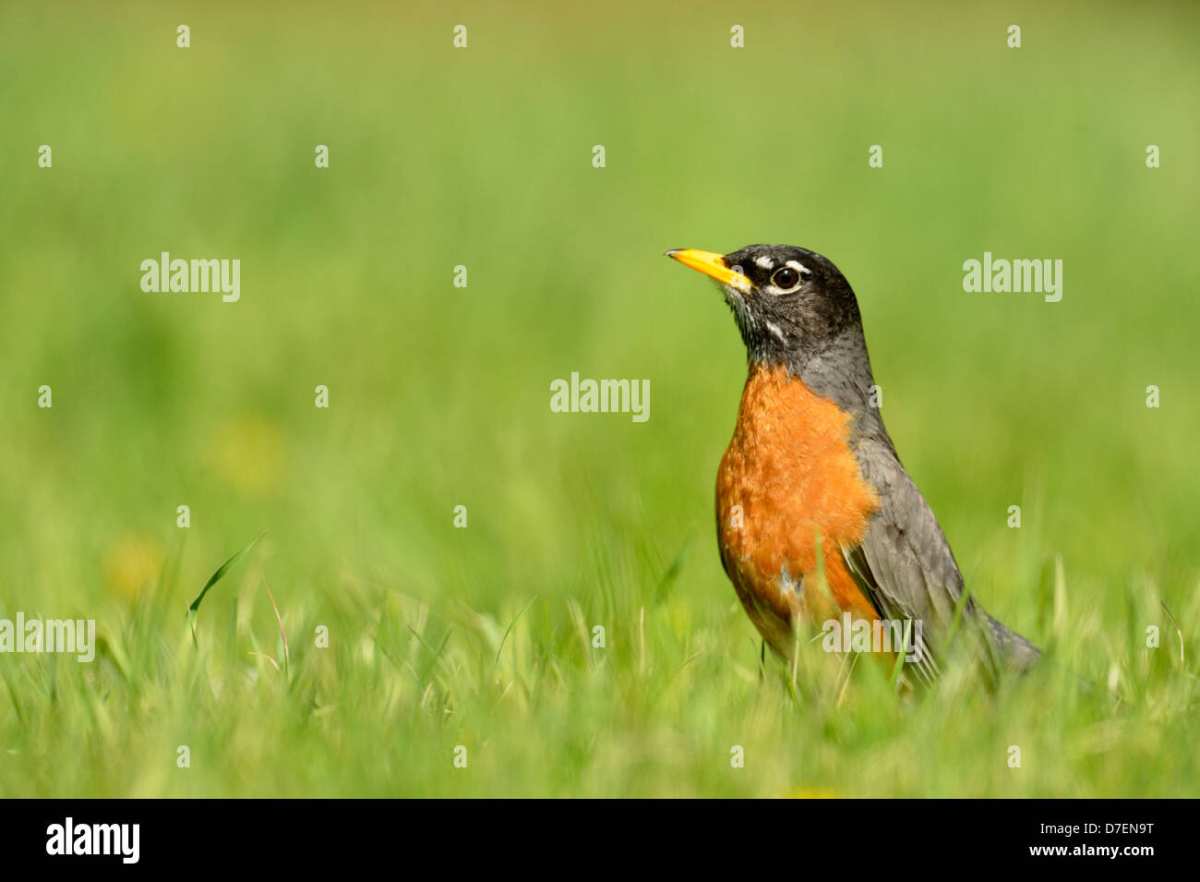
Research from the Cornell Lab of Ornithology shows that American Robins shift their diet heavily toward invertebrates during breeding season, with earthworms and insect larvae making up the bulk of what they feed their young. Per University of Kentucky entomology extension data, the grub damage treatment threshold sits at roughly 5 to 10 grubs per square foot of turf. So the real question isn't whether robins eat grubs, it's whether they can eat enough of them to actually matter.
Quick Answer
Robins do eat grubs, including Japanese beetle larvae, European chafer grubs, and June bug larvae. They forage by sight, tilting their heads to spot movement in the soil surface. Grubs make up part of their diet during spring and early summer, though earthworms remain their preferred prey.
A single robin can consume hundreds of invertebrates daily when feeding nestlings. However, robins alone rarely eliminate a serious grub infestation.
What Robins Really Eat — And Where Grubs Fit In
Here's where the confusion starts. Most people see a robin hopping across the lawn and assume it's pulling up grubs. More often, it's actually hunting earthworms, that classic head-tilt-and-stare behavior targets worm movement near the soil surface, not larvae buried deeper down.
The American Robin (Turdus migratorius) is an opportunistic ground forager. Its diet shifts dramatically based on the season, the time of day, and what's available in the habitat.
Primary food sources for American Robins:
- Earthworms and other annelids (spring through early summer)
- Beetle grubs and larvae (present but secondary)
- Caterpillars and other soft-bodied insects during breeding season
- Berries, fruits, and small fruits (late summer through winter)
- Occasionally small lizards or frogs in some regions
The Cornell Lab of Ornithology notes that when robins are feeding nestlings, protein-rich invertebrates dominate their foraging activity, as many as 4 to 5 feeding trips per hour at peak times. Grubs are on the menu, but they're not the first thing a robin reaches for.
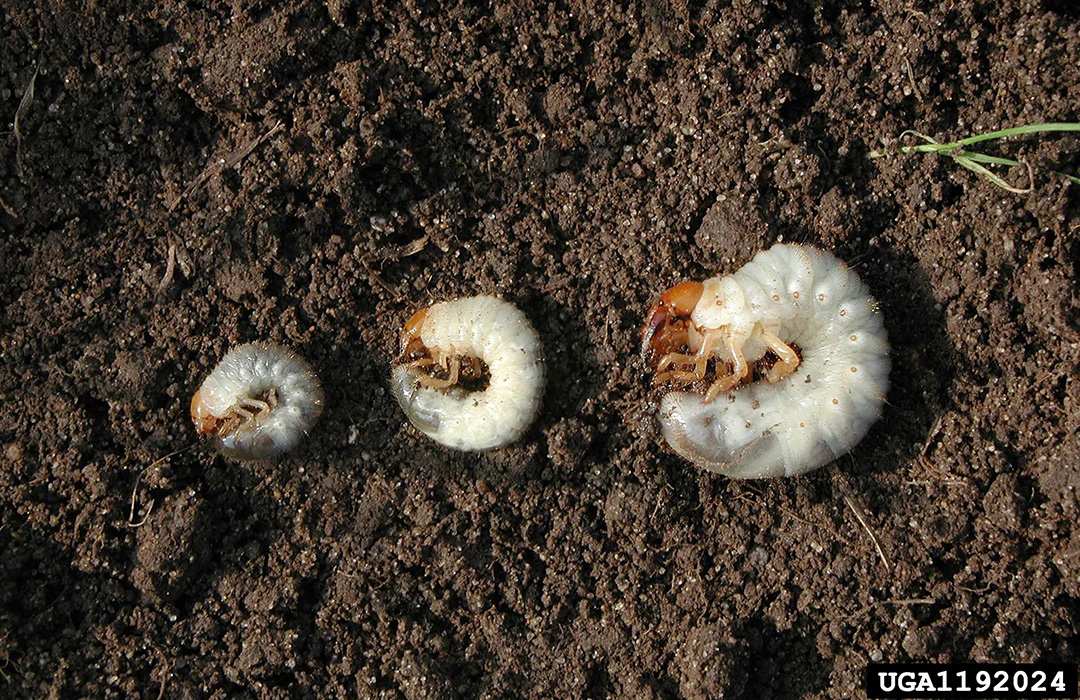
White grubs become a more attractive option during early spring, before earthworms become active at the surface, or during brief dry spells when worms burrow deeper. Late-stage grubs (third instar), which are the largest and most visible, are the ones robins actually manage to catch, according to Colorado State University's turf entomology program. First and second instar grubs are typically too small and burrowed too deep for robins to bother with.
That timing matters, because third instar grubs are also the ones doing the most structural damage to your lawn roots, which means robins are showing up for the most destructive stage but often too late to prevent the visible browning.
Why Robins Target Your Lawn (It's Not Just About Grubs)
Robins don't forage randomly. They pick specific patches of turf based on soil texture, moisture levels, and ease of probing. In aggregate, university extension observations from across the Midwest consistently show robins prefer short, well-watered lawns where they can move freely and spot prey movement against bare soil.
Conditions that draw robins to your lawn:
- Recently watered or rain-softened soil that allows easy probing
- Short mown grass that gives clear sight lines across the turf surface
- Mixed soil with organic matter that supports high earthworm activity
- Morning feeding windows when dew makes worms and larvae more active near the surface
In dry conditions, robins will actually move to different foraging grounds entirely, damp woodland edges, shaded garden beds, or compost heaps. So if you're seeing robins on your lawn, it's a solid sign the soil conditions underneath are favorable for worm and grub activity, whether you've noticed visible damage yet or not.
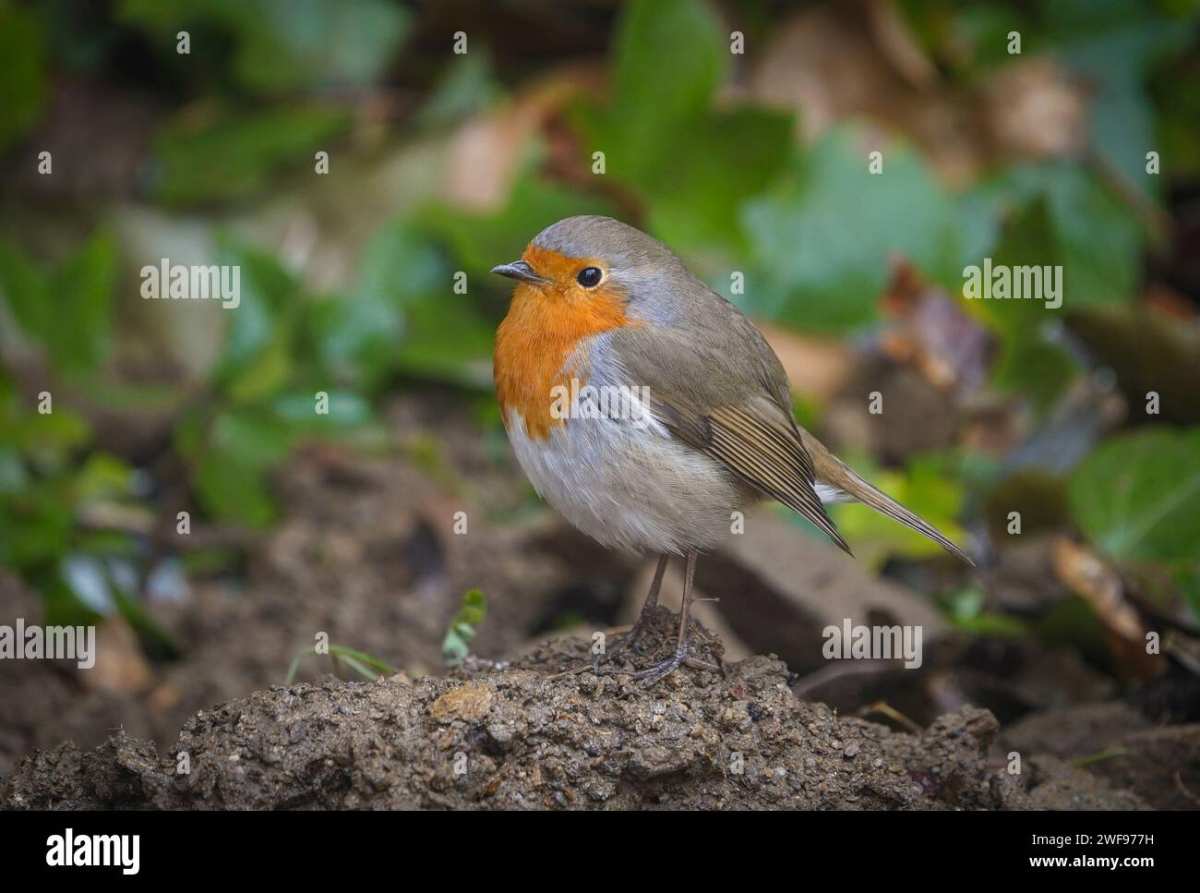
That's another key point worth keeping in mind: those confident hopping patrol sessions across open turf that most people picture are an American Robin behavior. The European Robin (Erithacus rubecula), common across the UK and continental Europe, tends to forage more in leaf litter, under hedges, and around garden edges rather than out in the middle of a lawn. So whether robins are actually targeting your grub problem depends partly on which species you're dealing with and where you're located.
In North America, the ground-probing lawn patrol behavior you're seeing is almost certainly American Robins. In the UK and Europe, European Robins contribute to invertebrate control in gardens overall, but they're less likely to work across open expanses of turf in the same way.
The feeding strategy itself is worth understanding. Robins are visual hunters. They run a few steps, stop, tilt their head to look along the soil surface, and then strike.
That pause-and-peck method delivers the most benefit against prey that moves near the surface. Grubs that are resting deeper in the root zone, below the top inch of soil, are simply out of reach. This means the grub control robins provide is uneven, concentrated in the patch where the larvae happen to be feeding shallowly that particular day.
How Effective Are Robins at Controlling Grub Infestations?
Let's be honest about the scale here. One American Robin foraging across your lawn might take dozens of grubs per day during peak feeding. That sounds impressive until you consider that a moderate infestation can mean 10 to 20 grubs per square foot across an entire yard.
Can robins eliminate a grub problem on their own?
- Light infestations (under 5 grubs per sq ft), sometimes, especially with regular robin activity over several weeks
- Moderate infestations (5 to 10 per sq ft), robins will help but won't bring numbers below damage threshold
- Heavy infestations (10+ per sq ft), robins alone won't make a meaningful dent
The math is pretty straightforward. A typical suburban lawn of 5,000 square feet with 10 grubs per square foot contains roughly 50,000 grubs. Even a resident robin pair working 6 hours daily and consuming 30 to 40 grubs per hour during the active feeding window would barely scratch that population over the course of a month.
Timed observations from university research settings give a clearer picture. Researchers tracking foraging robins in turf grass settings recorded grub consumption rates of approximately 12 to 15 larvae per hour for experienced adult birds in grub-dense trial plots. That's helpful, but it falls well short of bringing an established infestation under control without supplementary measures.
What robins do well is suppress early-stage grub populations before they reach damaging levels, essentially serving as a visible indicator that beetle egg laying took place the previous summer, since their sustained foraging activity signals decent grub activity in the top layer of soil.
What to Do If You're Counting on Robins for Grub Control
If you're seeing robins on your lawn and hoping they'll handle a grub problem, there's a practical path forward that works with the birds rather than against them. The key is using robin activity as one signal within an integrated approach, then knowing when to step in yourself.
Bird-supported grub management strategy:
Inspect first, Pull back a 1-foot square section of turf to a depth of 2 to 3 inches. Count the grubs you find. Under 5 per square foot is generally manageable. Over 10 means you need to intervene regardless of how many birds are visiting.
Evaluate the timing, Grubs are most vulnerable and most accessible to birds in late summer and early fall when they're largest and actively feeding near the root zone. Spring grubs are migrating deeper and are harder for robins to reach, so relying on birds in spring is less reliable.
Support the birds, Robins that feel safe in a yard will forage more consistently. Ensure a clean water source is available. Pesticide-free lawns are a major draw. A small area of the left-uncut meadow or wildflower strip near the lawn gives robins resting cover where they can watch the turf between foraging runs.
Supplement when needed, If grubs are over the damage threshold, consider targeted beneficial nematodes (Heterorhabditis bacteriophora). These microscopic roundworms seek out and kill grubs in the soil without harming the birds or the broader ecosystem. Apply them according to university recommendation timing, typically late August through September when grubs are still small.
Monitor the following year, If you've attracted robin activity using water and shelter, they tend to return to the same feeding territory across seasons. Consistent bird presence in spring, particularly if you see the head-tilt hunting behavior across multiple mornings, tells you invertebrate populations are active and a proactive inspection is warranted before summer damage appears.
The mistake people make is assuming that either birds OR chemicals are the only choices. Integrated Pest Management (IPM), as outlined by USDA cooperative extension guidelines, treats biological controls like bird predation as one layer within a broader strategy. Birds reduce early-stage pressure, and targeted intervention handles escalation.
Neither approach alone solves heavy infestations. Used together, grub problems rarely get to the point where you see brown patches in September, which is the real goal.
One more practical note: if you do use a broad-spectrum insecticide, you're likely to drive robins away from that lawn entirely. They won't forage in treated turf because the insect population collapses, and some active ingredients can poison the birds directly through the grub consumption. If you've built up a robin population in your yard and then blanket-spray for grubs, you'll essentially undo the natural control you worked to establish.
That's the lawn care equivalent of calling an exterminator and then wondering why the neighborhood cats stopped patrolling your garage.
Other Birds That Are Better at Eating Grubs Than Robins
Robins get most of the credit, but several other bird species are far more aggressive grub predators. If you're serious about biological control, these are the birds worth attracting.
Top grub-eating birds compared:
| Bird Species | Grub Consumption | Foraging Method | Best Habitat |
|---|---|---|---|
| European Starling | Very high — probes deeply into soil | Group foraging, aggressive digging | Open lawns, pastures |
| American Crow | High — tears up turf to reach larvae | Powerful bill, tears sod | Large open areas |
| Blue Jay | Moderate to high — caches grubs | Probes and digs | Woodland edges, suburban yards |
| Northern Flicker | High — specialized ground woodpecker | Deep probing with long tongue | Open ground near trees |
| American Robin | Moderate — surface-level only | Visual hunting, shallow probing | Short lawns, gardens |
| Blackbird (Common) | Moderate — similar to robin | Ground foraging | Gardens, field edges |
Starlings are the standout performers. They forage in flocks, probe deeper into the soil than robins can manage, and will systematically work across a grub-infested lawn. The downside is they're invasive in North America and can become a nuisance in large numbers.
Crows and flickers offer a better balance, effective grub control without the flock behavior problems.
How to Attract Robins (and Other Grub-Eating Birds) to Your Yard
Attracting robins isn't complicated, but it does require thinking like a bird. They need food, water, safety, and nesting sites within a reasonable territory.
Key attractants for robins:
- Water source, A shallow birdbath (1 to 2 inches deep) with a rough surface for grip. Moving water, even a simple dripper, dramatically increases visitation rates.
- Reduced mowing, Letting grass grow slightly longer (3 to 4 inches) supports more invertebrate life and gives robins easier access to prey.
- Native berry plants, Serviceberry, elderberry, dogwood, and winterberry provide fall and winter food that keeps robins in the area year-round.
- Pesticide-free zones, Even targeted grub treatments reduce the insect base that robins depend on. A chemical-free lawn is the single biggest factor in consistent robin activity.
- Nesting platforms, Robins prefer sheltered horizontal surfaces. A simple wooden shelf under an eave, 6 to 10 feet off the ground, can encourage nesting.
For grub-specific foraging, timing matters. Robins are most active on lawns in early morning when dew brings invertebrates to the surface. Watering the lawn lightly in the evening can boost next-morning foraging activity by softening the top layer of soil.
When Robins Aren't Enough — Safe Alternatives for Grub Control
Sometimes the grub population is simply too high for birds to manage. That's when you need to step in with methods that won't undo the ecological balance you've built.
Bird-safe grub control options:
- Beneficial nematodes (Heterorhabditis bacteriophora), Microscopic worms that parasitize and kill grubs in the soil. Apply in late summer when grubs are small and near the surface. Safe for birds, pets, and humans.
- Milky spore (Paenibacillus popilliae), A bacterial disease specific to Japanese beetle grubs. Takes 2 to 3 years to establish fully but provides long-term control. Completely harmless to other organisms.
- Neem oil (azadirachtin), A botanical insect growth regulator that disrupts grub molting. Low toxicity to birds and breaks down quickly in soil.
What to avoid:
- Imidacloprid and other neonicotinoids, toxic to birds that eat treated grubs or seeds
- Trichlorfon (dylox), broad-spectrum organophosphate with high avian toxicity
- Carbaryl (Sevin), harmful to earthworms and ground-feeding birds
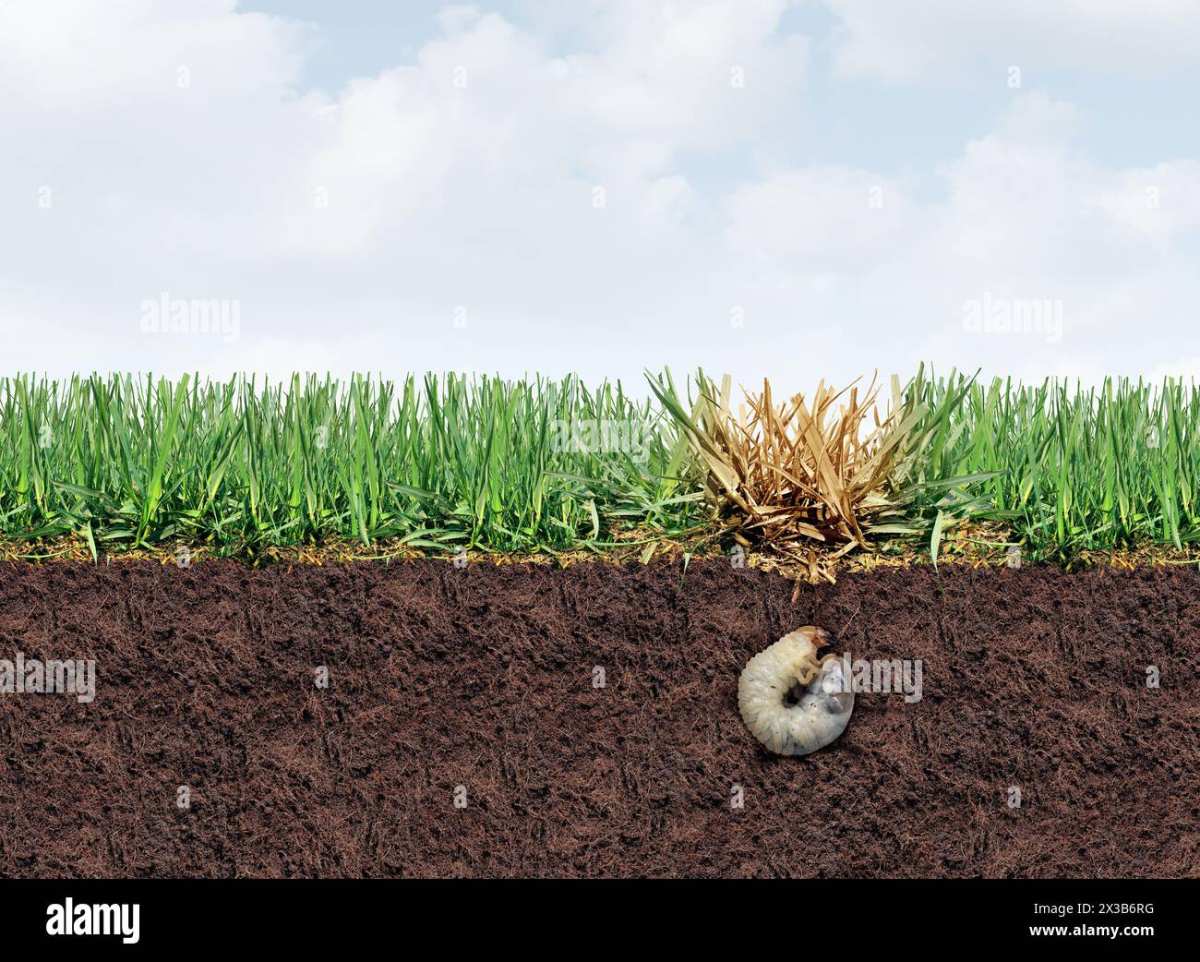
The key principle is targeted intervention. Spot-treat the areas where grub counts exceed the 5 to 10 per square foot threshold rather than broadcasting chemicals across the entire lawn. This preserves insect populations in untreated zones where birds can continue foraging naturally.
Common Mistakes People Make with Birds and Lawn Grubs
Even well-intentioned homeowners undermine their own grub control efforts. These are the patterns that show up repeatedly.
Mistake 1: Assuming robins will fix an established infestation
Robins are preventative maintenance, not emergency response. By the time you see brown patches, the grub population is already beyond what birds can handle.
Mistake 2: Using grub pesticides and expecting birds to stay
Broad-spectrum insecticides kill the food source. Robins will abandon a treated lawn within days. You lose both the chemical benefit (temporary) and the biological benefit (long-term).
Mistake 3: Confusing grub damage with drought stress
Grub-damaged turf pulls up easily in sheets because the roots are severed. Drought-stressed grass stays anchored. If you can roll back the sod like carpet, grubs are the likely culprit.
Mistake 4: Attracting birds with feeders instead of habitat
Seed feeders don't draw robins. They're insect and fruit eaters. A bird feeder full of sunflower seeds will attract finches and cardinals while the robins ignore it entirely.
Mistake 5: Treating the whole lawn when only patches are affected
Grub infestations are often localized. Spot-check multiple areas before deciding on treatment scope.
The Legal Side: What You Need to Know About Protecting Robins
This catches people off guard. Robins are protected under federal law in both the US and UK, and violating those protections carries real consequences.
United States:
The Migratory Bird Treaty Act (MBTA) makes it illegal to pursue, hunt, capture, or kill American Robins, or to disturb active nests with eggs or chicks. Violations can result in fines up to $15,000 and potential jail time. This applies even on your own property.
United Kingdom:
The Wildlife and Countryside Act 1981 protects European Robins and their nests. It's an offense to intentionally kill, injure, or take a robin, or to damage an active nest. Penalties include fines up to £5,000 per offense.
Practical implications:
- You cannot remove an active robin nest, even if it's in an inconvenient location
- Pesticide applications that poison robins may constitute a legal violation
- Nest box maintenance should occur outside breeding season (typically September through January in most regions)
The takeaway is straightforward. If you're encouraging robins to your yard for grub control, you're also taking on a legal obligation to protect them. That means keeping cats indoors during nesting season, avoiding pesticide drift near nesting sites, and tolerating the small cosmetic damage that comes with ground-foraging birds.
Realistic Expectations: What Robins Can and Can't Do for Your Lawn
Robins are a helpful piece of the puzzle, not the whole picture. They'll reduce grub numbers slightly and give you an early warning that larvae are active in your soil. What they won't do is save a lawn already under heavy attack.
Think of them as one layer in a broader strategy. Combine their natural foraging with proper lawn care, targeted treatments when needed, and patience. That approach consistently outperforms relying on any single method.
Frequently Asked Questions
Do robins eat grubs in the spring?
Yes, but less reliably than in late summer. Spring grubs are often deeper in the soil and harder for robins to reach. Early-season foraging focuses more on earthworms and surface insects that are easier to catch.
What other birds eat grubs besides robins?
European Starlings, American Crows, Northern Flickers, and Blue Jays all eat grubs. Probing birds like flickers and starlings are particularly effective because they access larvae buried deeper than robins can manage.
Will attracting robins eliminate my grub problem?
Not on their own for established infestations. Robins work best as preventative support. If grub counts exceed 10 per square foot, you'll need additional intervention like beneficial nematodes or targeted treatments.
Are robins protected by law?
Yes. American Robins are protected under the Migratory Bird Treaty Act in the US. European Robins are protected under the Wildlife and Countryside Act 1981 in the UK.
It's illegal to harm them or disturb active nests in both countries.
How do I tell if grub damage is from grubs or drought?
Grab a handful of brown turf and pull. If it lifts easily like a carpet with no roots holding it down, grubs are the likely cause. Drought-stressed grass stays firmly rooted even when it's dry and brown.