You rolled out of bed, looked at your yard, and half your turf looks like someone started peeling it back on purpose. The first question that comes up is whether raccoons eat grubs, and the short answer is yes, they absolutely do. But just saying "yes" misses the bigger picture of why this happens, how it gets misidentified, and what it actually costs you to fix.
Here's what most people don't realize. Raccoons tearing up your lawn isn't really a grub problem. It's a raccoon problem that grubs started.
The grub treatment threshold most extension programs use is around 5 to 10 grubs per square foot before it's considered worth treating. Raccoons will zero in on far fewer grubs than that because they don't need many to make the nighttime effort worthwhile.
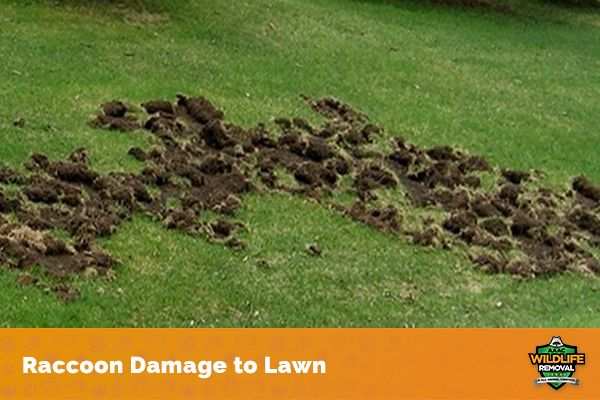
Image source: Bing (Web (fair-use with source credit))
Quick Answer
Yes, raccoons eat grubs. White grubs are a natural food source and raccoons dig them out at night. The damage raccoons cause is often mistaken for grub damage.
Confirming the difference matters because the fixes are completely different. Stopping raccoons means removing attractants, not just treating your soil.
Why Getting This Right Matters More Than You Think
Misdiagnosing your lawn damage is the single biggest money-waster in this whole situation. We've seen case after case where homeowners spend between $150 and $400 on grub-specific insecticide applications, only to wake up to the same rolled-up turf the following night. The grubs were there, sure.
But the raccoons were the ones physically destroying the lawn, and killing grubs after-the-fact doesn't stop an animal that's already learned your yard is a reliable buffet.
Here's the practical reality. Once raccoons have established a feeding pattern in your yard, they'll keep coming back for several nights, sometimes weeks, even if you reduce the grub population. That's because they remember where the easy food was.
You're not dealing with an isolated incident. You're dealing with learned behavior.
The stakes go beyond your sod bill, too. Raccoons are a primary rabies vector species in the eastern and central United States as of 2026. Interacting with them directly, or worse, trying to corner or handle one that's gotten into your yard or garage, carries real health risks.
Getting the identification right, understanding what you're dealing with, and choosing the appropriate response is genuinely a safety issue, not just a landscaping annoyance.
Do Raccoons Actually Eat Grubs? The Straight Answer
Yes. Raccoons (Procyon lotor) eat white grubs, and they go after them enthusiastically. Grubs make up one component of a raccoon's omnivorous diet, which also includes insects, small rodents, eggs, birdseed, fruit, garbage, and compost.
They're opportunistic feeders, which means they'll take the easiest available food source on any given night.
White grubs are the larval stage of beetles like Japanese beetles, June beetles (also called June bugs), European chafers, and masked chafers. They live in the top few inches of soil and feed on grass roots during their active period. Raccoons locate them using their incredibly sensitive front paws.
Zoological research on raccoon cognition has documented that their forepaw sensitivity is among the highest of any mammal, and much of their brain's sensory processing power is dedicated to touch rather than sight.
So when a raccoon is peeling back your sod, it's not guessing. It's feeling for those soft-bodied larvae curled up just under the surface. A single raccoon can consume dozens of grubs in one feeding session, which is remarkable when you consider that typical treatment thresholds don't call for intervention until you're seeing 5 to 10 grubs per square foot.
Raccoons don't wait for an infestation. They exploit even a modest grub population.
The feeding window matters, too. Peak raccoon grubbing activity occurs from September through November in most of the United States, though it can extend into spring in warmer southern regions. That's when grub larvae are largest and closest to the surface, making them the easiest and most calorie-dense target.
If you're seeing lawn damage in October specifically, raccoons should be high on your suspect list.
How to Tell Raccoon Damage Apart from Grub Damage
This is where people get tripped up constantly, and it's the reason so many grub treatments fail to solve the actual problem. Raccoon damage and grub damage look completely different up close. But at a glance, from a kitchen window first thing in the morning, both of them just look like "bad lawn."
Grub damage (the kind caused directly by larvae eating roots) shows up as irregular brown patches that feel spongy underfoot. The turf lifts up easily because the roots have been severed, almost like peeling back a carpet. The grass comes up in sheets, and you'll see the grubs themselves curled in a C-shape in the soil underneath.
The damage develops gradually over weeks and doesn't usually appear overnight.
Raccoon damage is more dramatic and more localized. You'll see sections of sod that have been rolled, peeled, or flipped back, often in strips about 1 to 2 inches wide. The turf looks like someone took a paint roller to it and then pried it up at the edges.
There may be small, shallow holes where a raccoon used its snout to probe for grubs. The damage appears suddenly, usually overnight, and tends to be concentrated in specific areas rather than spread evenly across the lawn.
Here's a practical test. If you can grab a section of damaged turf and it rolls up like a welcome mat with the soil and roots still attached, that's raccoon work. If the turf crumbles in your hand because the roots are gone and the soil underneath is full of grubs, that's direct grub damage.
Both can exist in the same yard at the same time, which is exactly why this gets confusing.
| Feature | Grub Damage | Raccoon Damage |
|---|---|---|
| Appearance | Irregular brown patches | Rolled, peeled, or flipped sod strips |
| Speed of onset | Gradual, over weeks | Sudden, overnight |
| Turf texture | Spongy, lifts in sheets | Rolled back in strips, roots intact |
| Grub presence | Visible in soil underneath | May or may not be present |
| Pattern | Spread across lawn | Concentrated in specific areas |
| Season | Summer through fall | Peak September–November |
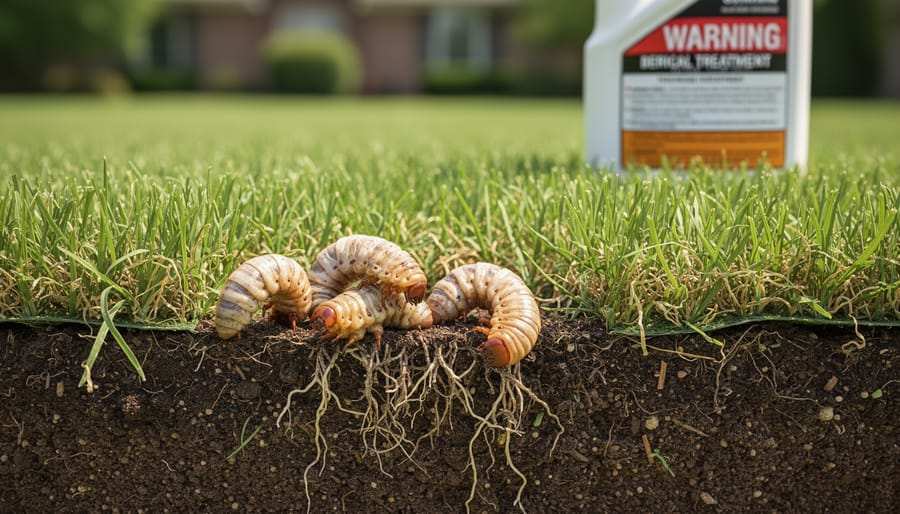
Image source: Bing (Web (fair-use with source credit))
The Real Culprit: Raccoons vs. Skunks vs. Armadillos vs. Birds
Raccoons aren't the only animals that go after grubs in your lawn. Getting the right identification matters because each animal requires a different management approach, and the damage patterns are distinct enough that you can usually tell them apart with a close look.
Skunks cause damage that's often confused with raccoons, but the pattern is different. Skunks create small, cone-shaped holes about 3 to 4 inches across, like someone used an apple corer on your lawn. They probe with their snouts and don't roll back large sections of turf.
Skunk damage tends to be more scattered and less dramatic than raccoon damage. If your lawn looks like it's been poked full of small holes rather than peeled back, you're probably dealing with skunks.
Armadillos are increasingly common in the southeastern and south-central United States, and their damage is more destructive than either raccoons or skunks. They dig larger, deeper holes, sometimes 3 to 5 inches wide and several inches deep, as they root through soil for grubs and other invertebrates. Armadillo damage looks more like someone took a trowel to random spots across the yard.
Their range has been expanding northward, so if you're in the mid-South and seeing deep, scattered holes, armadillos are a strong possibility.
Birds like crows, starlings, and grubs will also feed on grubs, but their damage is minimal. You might see small pecking holes or areas where they've pulled up loose turf, but it's rarely significant enough to warrant concern on its own. Bird activity is more of a clue that grubs are present rather than a primary cause of lawn damage.
Raccoons remain the most common culprit for the dramatic rolled-sod pattern, especially in suburban areas across the eastern and central United States. Their dexterous front paws give them the ability to peel back turf in a way that other animals simply can't replicate. If you're seeing strips of sod rolled back like a carpet, raccoons are almost certainly your problem.
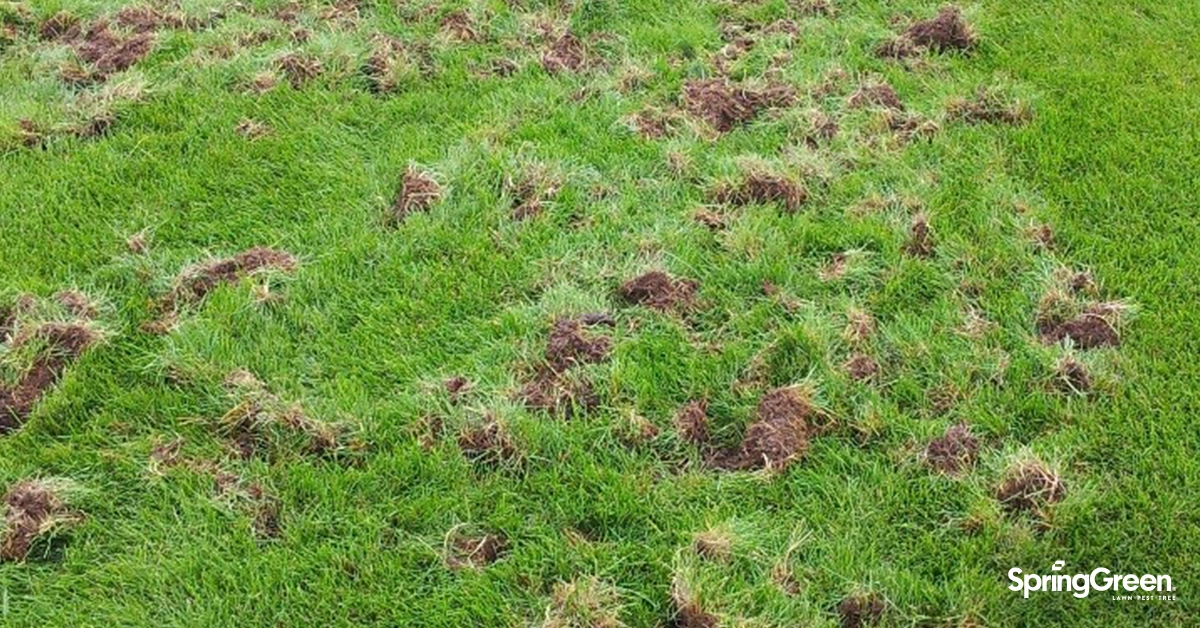
Image source: Bing (Web (fair-use with source credit))
Why Fall Is Peak Season for Raccoon Grubbing
If you're seeing this damage in September, October, or November, the timing itself is a clue. Fall is when white grubs are at their largest and most accessible. They've been feeding on grass roots all summer, and by early fall they're plump, protein-rich, and positioned in the top few inches of soil where raccoons can reach them easily.
Raccoons are also building fat reserves for winter during this period. They're actively seeking high-calorie food sources, and grubs fit the bill perfectly. A single grub doesn't offer much, but a lawn with even a moderate grub population represents a concentrated food source that a raccoon can exploit efficiently.
It's the caloric equivalent of finding a vending machine after a long walk.
Spring grubbing happens too, but it's less common. By spring, grubs have moved deeper into the soil to pupate, making them harder to reach. Raccoons are more likely to target other food sources in spring, like bird nests, garbage, or emerging vegetation.
If you're seeing lawn damage in April or May, it's less likely to be grub-related raccoon activity and more likely to be something else entirely, like skunks or even a drainage issue.
The seasonal pattern also explains why this problem seems to come and go. A homeowner might experience severe raccoon grubbing one fall, nothing the next year, and then a recurrence the third year. That variability tracks with grub population cycles, weather conditions, and whether raccoons in your area have "discovered" your lawn as a food source.
Once they have, they tend to return to the same spots year after year, especially if there's a resident female with kits who's teaching her young where to feed.
How to Confirm Raccoons Are the Problem (Step-by-Step)
Don't guess. Confirm. A few minutes of detective work up front saves you hundreds of dollars on the wrong treatment.
Here's the process that pest control and wildlife management professionals recommend.
Step 1: Inspect the Damage Pattern Up Close
Go out during daylight and look at the rolled sections. Raccoon damage has that distinctive peeled-back appearance, with strips of sod flipped to one side. The turf usually remains connected at one edge, like a rug someone grabbed and rolled.
If you're seeing scattered small holes instead, you're probably looking at skunks.
Step 2: Check for Tracks
Raccoon tracks are unmistakable once you know what to look for. They have five toes on both front and hind feet, and the front prints look almost like tiny human hands. In soft soil near the damaged area, you'll often find clear impressions.
The front paw print is about 1.5 to 3 inches long. Skunk tracks are similar but smaller with more prominent claw marks.
Step 3: Roll Back the Turf and Count Grubs
Cut a 1-square-foot section at the edge of a damaged area and fold it back. Count the grubs you find. If you see fewer than 5 grubs per square foot but still have significant animal digging, that confirms the animal is the primary cause, not the grubs themselves.
Even a handful of grubs can attract a raccoon's attention.
Step 4: Set Up Motion-Activated Monitoring
A basic trail camera or motion-activated security camera pointed at the damaged area will give you a definitive answer within a night or two. Raccoons are nocturnal, so you'll catch them between dusk and dawn. If you don't have a camera, sprinkle a thin layer of flour or sand across the damaged area before bed.
You'll have clear footprints by morning.
Step 5: Look for Other Raccoon Activity
Check your garbage cans for knocked-over lids, your compost pile for disturbance, and your roof or soffits for entry points. Raccoons that are grubbing your lawn are likely accessing other food sources on your property, too. Multiple signs point to a resident raccoon or family group rather than a one-time visitor.
Fixing the Damage: Repairing Torn-Up Turf
The good news is that raccoon-damaged turf can almost always be saved if you act fast. Unlike true grub damage where the roots are gone and the grass is dead, raccoon-rolled sod usually has intact roots. It just needs to be pressed back into contact with the soil.
Start by flattening the rolled sections back into place. Use a lawn roller (you can rent one from most home improvement stores for about $30 to $50 per day) or simply walk the sections down with firm, even pressure. Water the repaired area thoroughly after resetting the sod.
That rehydration kick helps the roots reestablish contact with the soil.
For sections where the turf has dried out or crumbled, you'll need to replace it with new sod pieces. Cut the damaged portion out with a sharp spade, lay fresh sod into the gap, and tamp it down. Match the grass species as closely as possible so the repair blends in.
New sod typically costs between $0.30 and $0.80 per square foot at retail as of 2026.
Water the repaired lawn daily for the first 10 to 14 days, then taper back to normal watering frequency. Avoid heavy traffic on the repaired areas for about three weeks while the roots knit back together. A light application of starter fertilizer can speed recovery, but skip weed control products until the new grass has been mowed at least two or three times.
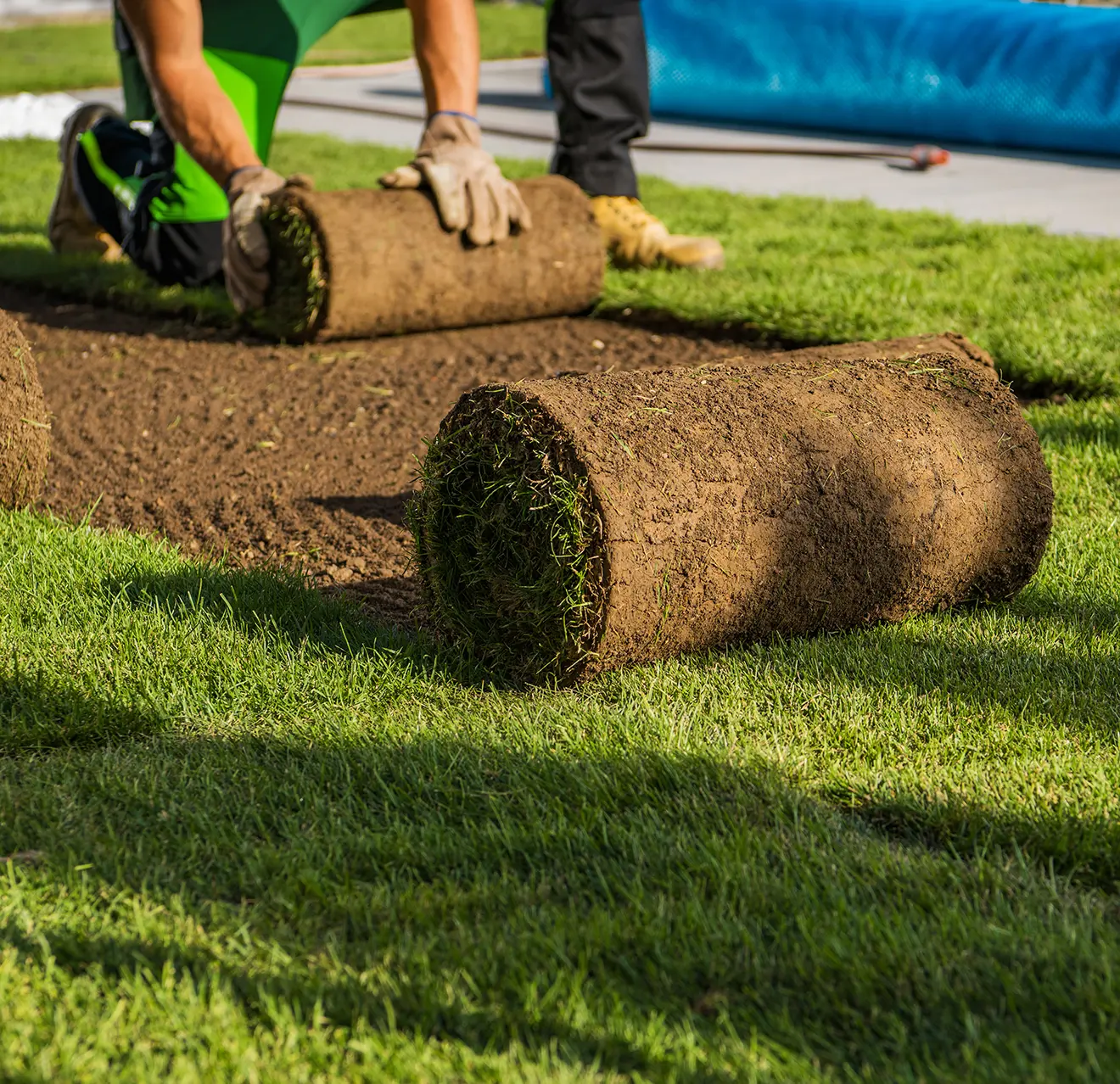
Image source: Bing (Web (fair-use with credit))
Stopping Raccoons from Coming Back
Repairing the cosmetic damage is the easy part. The harder challenge is convincing raccoons that your lawn is no longer worth their effort. This requires a combination of food source reduction, exclusion, and active deterrence.
Reduce the Grub Population
This is step one, even though it's not sufficient on its own. Apply a targeted grub control product appropriate for the season and your grub species. Biological controls like beneficial nematodes (Heterorhabditis bacteriophora) can reduce grub populations without broad-spectrum chemicals.
These microscopic roundworms parasitize grubs in the soil and are available at most garden centers.
For severe grub infestations, a curative insecticide applied in late summer or early fall can knock back numbers quickly. Follow label directions precisely, and keep in mind that killing grubs won't immediately remove raccoons that have already established your yard as regular feeding territory.
Remove Other Attractants
Raccoons are on your property for more than just grubs. Secure garbage can lids with bungee cords or weighted lids. Bring pet food indoors at night.
Pick up fallen fruit from trees. Cover compost piles or switch to enclosed composters. Bird feeders are a major raccoon attractant, so either remove them entirely during peak raccoon season or mount them on raccoon-proof poles with baffles.
Install Temporary Exclusion
If raccoons are hitting one specific area repeatedly, a temporary fence can break the pattern. A 2-foot-high wire mesh barrier around the damaged section works because raccoons don't jump well when they can't see what they're landing on. Stake the mesh securely at the base so they can't push underneath.
Use Active Deterrents
Motion-activated sprinklers, like the Orbit Yard Enforcer or similar products, are one of the most effective raccoon deterrents available. They connect to a garden hose and blast a sudden spray of motion-triggered water when an animal enters the detection zone. Most homeowners report significant reduction in raccoon visits within the first week of installation.
Motion-activated lights and ultrasonic repellents have mixed results according to aggregate user reviews. Raccoons habituate to consistent noise and light patterns fairly quickly. The sprinkler approach works better because it's unpredictable and physically unpleasant without causing harm.
Grub Control That Actually Works Alongside Wildlife Management
Here's where the strategy gets nuanced. You need to reduce grubs enough that your lawn stops being a raccoon magnet, but you also need to do it in a way that doesn't create new problems.
Beneficial nematodes are the best first-line option for most homeowners. They're safe around pets, children, and beneficial insects. Apply them in late summer when grubs are small and most vulnerable.
Water the lawn before and after application, and apply in the evening since nematodes are sensitive to UV light. They work by entering grubs and releasing bacteria that kill the host within 24 to 48 hours.
Milky spore disease (Paenibacillus popilliae) targets Japanese beetle grubs specifically. It's a long-term solution that can persist in soil for 10 to 15 years after application. The downside is that it takes two to three years to build up effective populations, so it's not a quick fix.
It also works best in regions where summer soil temperatures consistently reach 60°F or above.
Chemical insecticides like trichlorfon (dylox) offer fast knockdown of existing grub populations. These are curative products, meaning they work on grubs that are already present. Apply them in late summer or early fall when grubs are actively feeding near the surface.
Preventive products containing imidacloprid or chlorantraniliprole need to be applied in early summer before eggs hatch, so timing is critical.
The key insight is that grub control and wildlife deterrence work together. Neither one alone is usually enough. Reduce the food source while simultaneously making your yard less hospitable to raccoons, and you'll see results within a few weeks.
When to Call a Professional
Most raccoon grubbing situations are manageable on your own. But there are specific scenarios where professional help is the right call.
Call a licensed wildlife removal specialist if raccoons have moved from your lawn into your attic, crawlspace, or chimney. That's a different problem entirely, and it requires professional exclusion techniques like one-way doors and proper sealing of entry points. Raccoons in the home pose health risks from droppings, parasites, and potential rabies exposure.
You should also call a professional if you see a raccoon displaying unusual behavior. Daytime activity, disorientation, aggression, or a raccoon that approaches humans without fear are all potential signs of rabies or distemper. Don't attempt to handle or capture the animal yourself.
Contact your local animal control agency or state wildlife department.
If the damage is extensive and recurring despite your best efforts, a pest management professional can assess the full picture. They can identify grub species, recommend targeted treatments, and install more robust exclusion systems. Professional wildlife removal typically costs between $200 and $600 depending on the scope and your region.
That's a worthwhile investment when you're dealing with a persistent problem that's costing you more in repeated lawn repairs.
Safety and Legal Considerations You Can't Ignore
Raccoons are a primary rabies vector species in the eastern and central United States. Never attempt to handle, corner, or capture one without professional training. If you see a raccoon behaving oddly (daytime wandering, disorientation, unprovoked aggression), call your local animal control or state wildlife agency immediately.
Most states have strict regulations on trapping and relocating raccoons. Many require a permit, and several states prohibit relocation entirely because it spreads disease and often results in the animal's death. Always check with your state wildlife agency before setting any type of trap.
Raccoon droppings can roundworm eggs that are harmful to humans. If you find latrine areas (accumulated droppings on a flat surface like a deck or woodpile), clean them with proper PPE and dispose of the material according to local health guidelines.
Real Scenarios: What Homeowners Actually Deal With
Suburban Maryland, October. A family noticed rolled-up sod appearing every other night for two weeks. They treated for grubs first, assuming that was the problem. The raccoons kept coming.
A trail camera confirmed two adult raccoons feeding at night. They installed a motion-activated sprinkler and stopped leaving pet food on the porch. Damage stopped within four days.
Rural Ohio, late September. A homeowner found deep, scattered holes across the front yard, not the raccoon-style roll pattern. The holes were 4 inches wide. This was armadillo or skunk activity, not raccoons.
A flour tracking test confirmed skunks. Removing the brush pile near the property line eliminated the skunks' daytime shelter and the digging stopped.
Frequently Asked Questions
Will getting rid of grubs stop raccoons?
Reducing grub populations helps, but it won't immediately stop raccoons that have learned your lawn is a food source. Combine grub control with active deterrents for the fastest results.
Can I use mothballs or ammonia to repel raccoons?
These are not recommended. Mothballs contain pesticides that can contaminate soil and groundwater. Ammonia is a respiratory irritant that poses risks to pets and children.
Neither is consistently effective, according to extension program assessments.
What time of night are raccoons most active?
Raccoons typically begin foraging shortly after sunset and remain active until dawn. Peak grubbing activity occurs in the first few hours after dark.
Does homeowners insurance cover raccoon lawn damage?
Generally no. Most policies exclude damage caused by vermin and wildlife. Raccoon damage to the home's structure may be covered, but lawn and landscaping damage almost never is.
How fast can I repair rolled-up turf?
If you press the sod back into place the same day and water it immediately, most turf recovers fully within two to three weeks. Sod that has dried out for more than 24 hours usually needs replacement.
Are raccoons more likely to return the following year?
Yes. Daughter raccoons often establish territories overlapping their mother's home range and she frequently passes knowledge of reliable feeding sites to them. Without intervention, damage patterns commonly recur at the same properties.
Final Verdict: What to Do First
Don't reach for a grub product the morning after you find your lawn torn up. Step back and confirm what's actually happening.
Identify the animal correctly using damage patterns and, if possible, a camera. Repair the turf immediately so you're not losing more grass to desiccation. Then, and only then, apply a targeted grub treatment appropriate for the season and your region.
Layer on deterrents, remove other food sources, and break the pattern before raccoons establish your yard as their regular route. That integrated approach addresses both the immediate damage and the behavior driving it.