Do Japanese beetles come from grubs? If you've ever torn up a patch of dead lawn and found fat, white, C-shaped larvae curled in the soil, you've already seen the answer. The connection between those underground pests and the metallic green-and-copper beetles skeletonizing your roses every July is direct and predictable.
Japanese beetles (Popillia japonica) have a single-generation annual life cycle, meaning every beetle flying around your yard this summer started as a grub in that same lawn roughly 12 months ago. Understanding that timeline is everything. It's the difference between a fix that actually works and throwing money at the wrong problem while the damage gets worse.
Quick Answer
Yes, Japanese beetles emerge from grubs. The grub is the larval stage of the Japanese beetle life cycle. Grubs live underground for roughly 10 months feeding on grass roots.
They pupate in late spring and emerge as adult beetles in early summer. The adult beetles then lay eggs that hatch into new grubs, repeating the cycle.
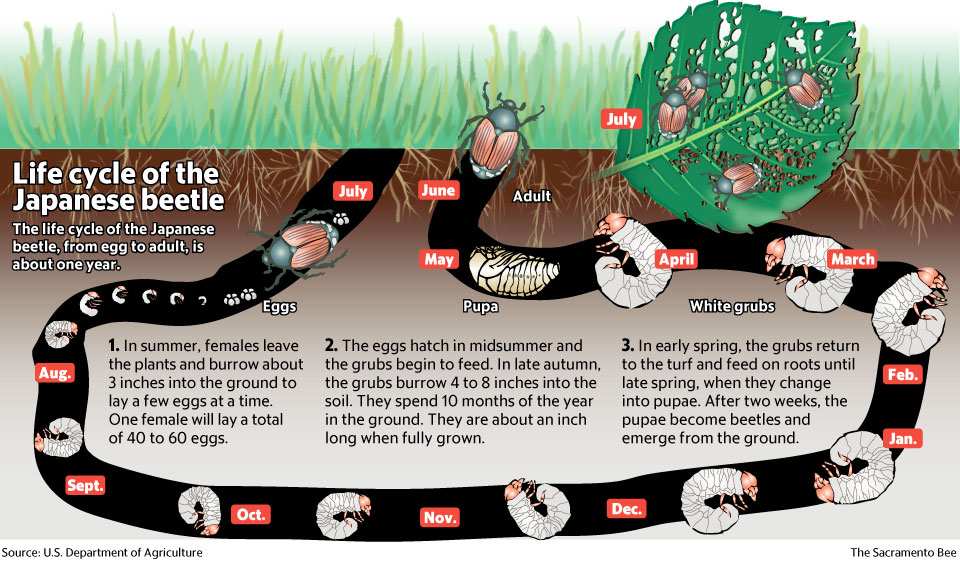
Image source: Bing (Web (fair-use with source credit))
The Full Japanese Beetle Life Cycle: From Grub to Beetle and Back
Most people only see Japanese beetles during their brief adult phase. That's the part that's obvious. Shiny beetles swarming your grapevines or turning lacy skeletons out of your birch leaves.
But the real story starts underground, months before you ever spot a single beetle.
Adult Japanese beetles typically emerge from the soil between late June and mid-July, depending on your latitude and that year's soil temperatures. They live above ground for about four to six weeks. During that window, females dig back into the soil to lay 40 to 60 eggs, usually in clusters six inches below the surface.
Those eggs hatch within 10 to 14 days.
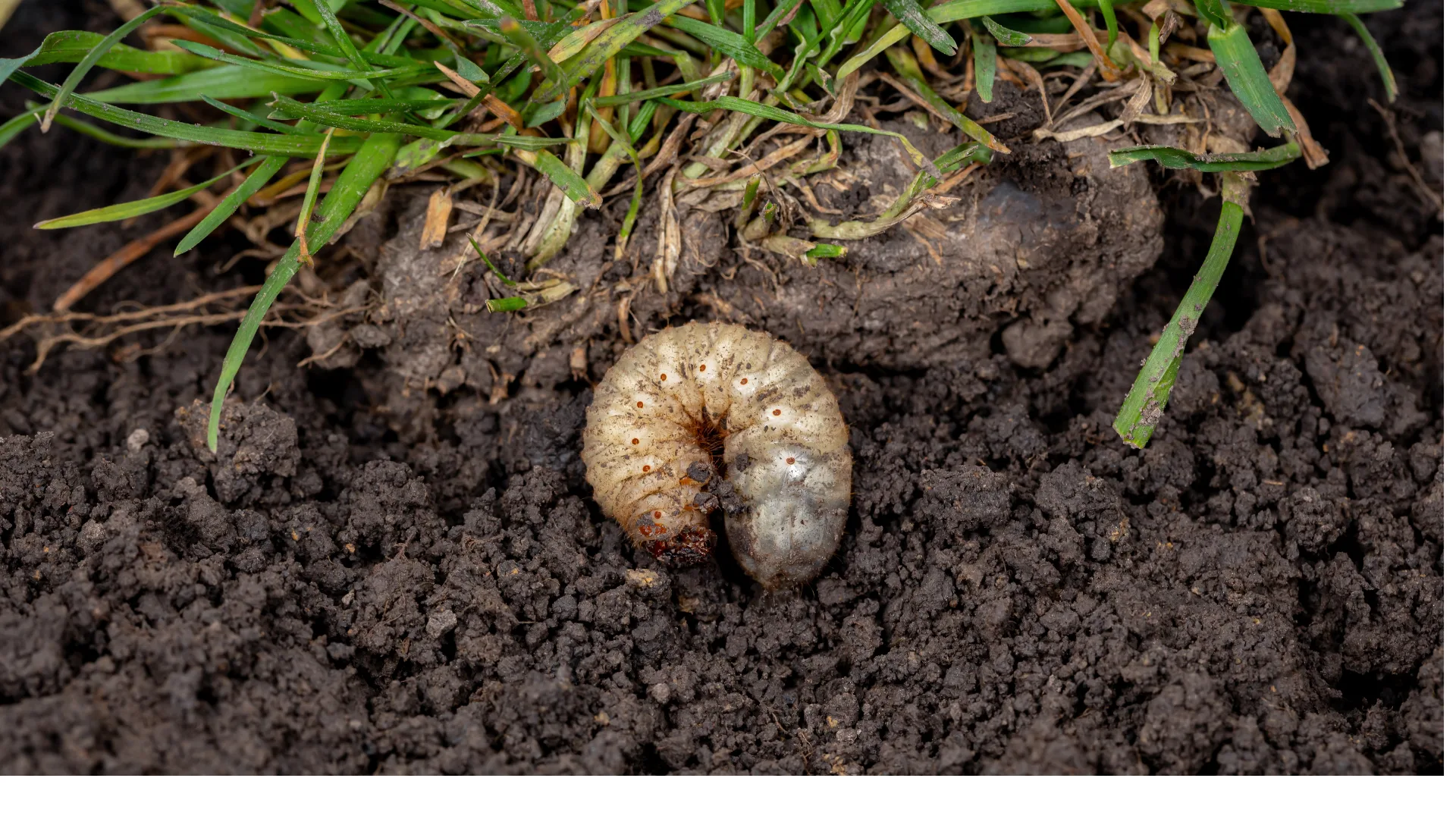
Image source: Bing (Web (fair-use with source credit))
The newly hatched larvae are what we call first-instar grubs. They're tiny, about an eighth of an inch long, and they start feeding on fine grass root hairs immediately. By August they've molted into the second instar, and by September they're third-instar grubs.
That's the stage most people discover. Third-instar Japanese beetle grubs reach roughly three-quarters of an inch in length and are eating aggressively as they bulk up for winter.
When soil temperatures drop below about 50°F in late October or November, grubs stop feeding. They burrow deeper into the soil, sometimes as far down as six inches or more, and enter a dormant state. They'll stay there through the winter.
Once soil temperatures climb back above 50°F in early spring, those same grubs start feeding again. That spring feeding round lasts roughly four to six weeks before the grubs move into the pupal stage, transforming physically into adults. The new beetles then emerge to start the whole cycle over.
Here's the complete timeline broken down:
| Stage | Timing | What's Happening |
|---|---|---|
| Egg | July to mid-August | Laid in soil clusters, hatch in 10–14 days |
| Larva (1st instar) | August to September | Feeding on fine root hairs, 1/8 inch |
| Larva (2nd instar) | September to October | Growing, increasing root damage |
| Larva (3rd instar) | October, then April to May | Full size, 3/4 inch, most destructive feeding |
| Overwintering | November to March | Dormant below frost line |
| Pupa | Late May to mid-June | Transformation stage in soil |
| Adult | Late June to early August | Mating, feeding, egg-laying, visible damage |
This life cycle is remarkably consistent. The one variable is latitude. In southern areas like Georgia or Tennessee, beetles can emerge as early as May.
Up in Minnesota or New England, peak emergence might not hit until late July. Wherever you are, the cycle follows soil temperature, not the calendar.
The Grub Stage: What's Happening Underground
Grubs spend roughly 10 months of the year living underground. That's the longest and most destructive phase of the Japanese beetle life cycle. While the adults get all the attention, the grubs are quietly doing structural damage to your turf's root system.
What grub damage actually looks like can fool people. It shows up as irregular brown patches that start small and spread over weeks. The problem is that this pattern mimics drought stress, fungal disease, and dog urine spots.
If you see browning turf in late summer or early fall, the simplest test is to grab a corner of the affected area and pull. Healthy roots hold the turf in place. Grub-damaged turf peels back like a carpet because the roots have been severed underneath.
The interesting thing is that moderate grub populations often don't cause visible damage. Healthy turfgrass with adequate water and moderate fertility can tolerate several grubs per square foot without showing symptoms. The trouble starts when populations exceed the threshold where root destruction outpaces the grass's ability to regenerate.
Most university extension programs use a benchmark of 10 or more Japanese beetle grubs per square foot as the point where treatment becomes necessary.
But here's where it gets tricky. Your lawn may contain a mix of grub species, not just Japanese beetles. European chafers, Oriental beetles, and June beetles all produce similar-looking larvae.
They have overlapping life cycles but slightly different timing windows. Before choosing any treatment, you need to confirm you're actually dealing with Japanese beetle grubs.
Here's how to tell Japanese beetle grubs apart from lookalikes:
- Chevron raster pattern: Japanese beetle larvae have a distinct V-shaped or chevron arrangement of spines on their underside near the abdomen. You'd need a 10x hand lens to see it clearly. This is the most reliable visual identifier.
- Head capsule color: Japanese beetle grubs have a tan to light brown head capsule. Some lookalike species show darker, reddish-brown heads.
- Body shape: The typical C-shape is shared across all white grub species, so that alone won't differentiate them. But Japanese beetle grubs tend to be slightly more uniform in width along their body compared to some other species.
If you're digging up grubs and they don't match these characteristics, you could be dealing with a different species that calls for a different treatment approach. That's why proper identification matters before you invest in any product.
Adult Beetle Emergence: Why Summer Is Peak Chaos
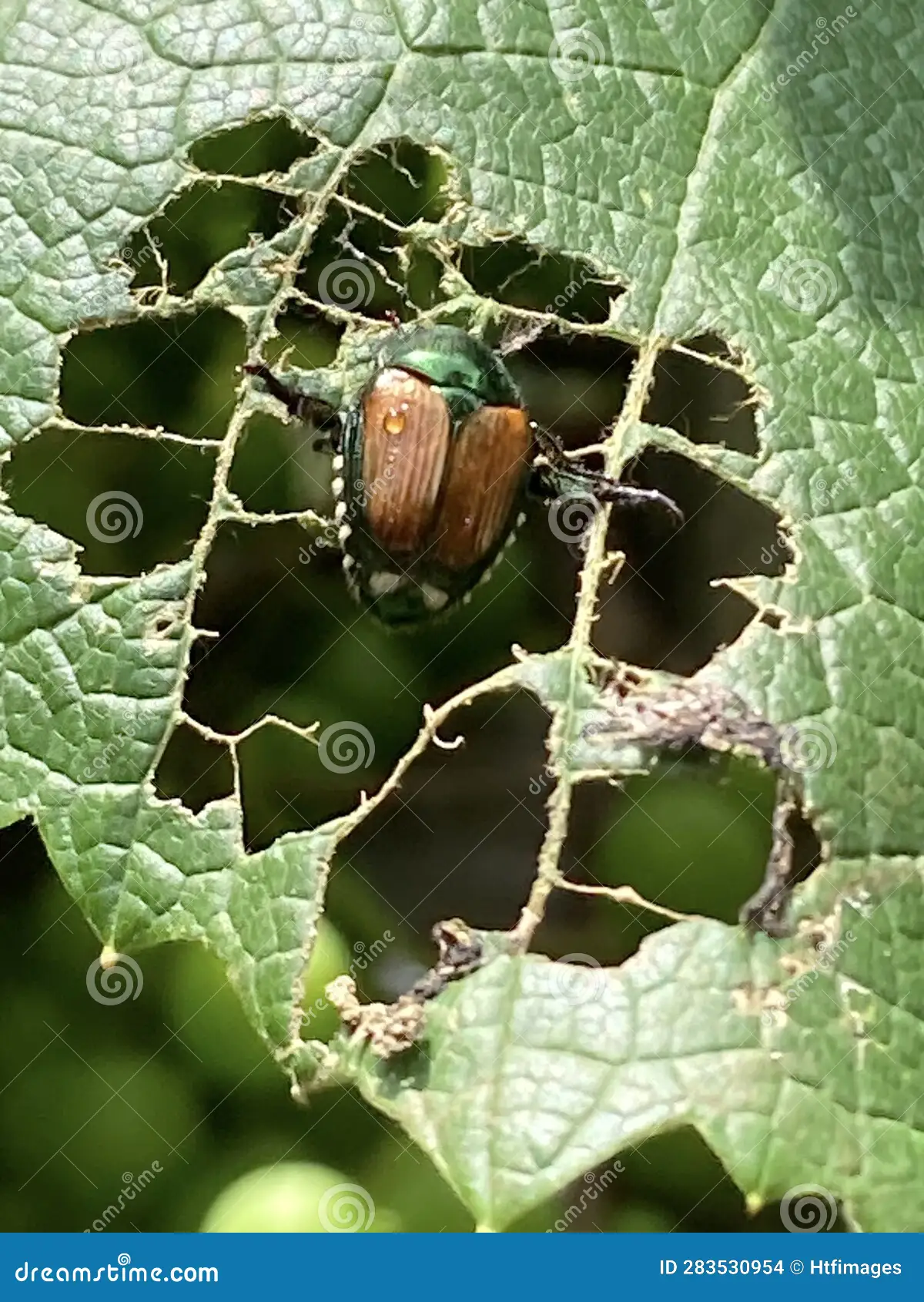
Image source: Bing (Web (fair-use with source credit))
Adult Japanese butterflies are striking insects. About a half-inch long with metallic green bodies and coppery-bronze wing covers. They feed on over 300 plant species, and the damage pattern is distinctive.
Rather than chewing holes, adults scrape the tissue between leaf veins, leaving behind skeletonized foliage that turns brown and drops off.
Peak adult activity runs from late June through early August in most of the eastern and midwestern United States. The beetles are most active on warm, sunny days. They release aggregation pheromones that draw more beetles to the same feeding sites.
That's why a single plant can be covered with dozens of beetles while its neighbor two feet away looks untouched.
Female beetles feed for a few days, mate, then burrow back into the soil to lay eggs. They prefer moist, well-irrigated turf for egg-laying because dry soil reduces egg survival. Keeping irrigation moderate during peak beetle flight can help disrupt breeding., but once you see adults actively feeding, the window for current-season grub control has already closed.
The eggs are being laid right now, and they'll hatch into the next generation's grub population.
That's the frustrating cycle. The beetles you see in July are the grubs that survived from last year. Meanwhile, the eggs they're laying this month become next year's grub problem.
You're always fighting damage from the previous generation while the next one gets established.
Why Trapping Backfires So Often
Japanese beetle traps use a combination of pheromones (sexual attractant) and floral scent lures. They work extremely well at attracting beetles. That's exactly the problem.
Research from multiple university studies, including work at the University of Kentucky, has shown that traps placed near valued plants often attract more beetles than they catch. Beetles land on nearby vegetation on their way to the trap, creating more feeding damage in the immediate area. If you use traps at all, place them at least 30 feet from anything you care about protecting, and position them upwind of your garden.
The general recommendation is to treat trap use as a community-wide suppression tool, not a single-yard solution.
Grub Damage vs. Adult Beetle Damage: Two Different Problems
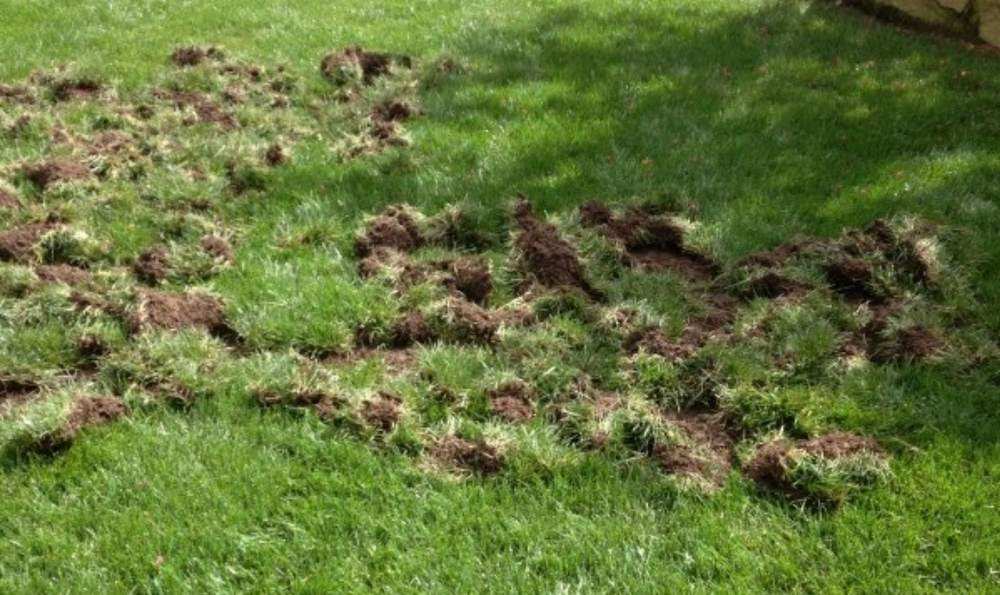
Image source: Bing (Web (fair-use with source credit))
This is the single biggest source of confusion for homeowners, and it leads to wasted money and ongoing frustration. Grub damage and adult beetle damage are caused by two different life stages, require two different treatment approaches, and happen in two completely different seasons. Treating one does not solve the other.
Grub damage gives you:
- Irregular brown patches in turf that feel spongy underfoot
- Turf that rolls back easily because roots are severed
- Damage appearing in late August through October and again in April
- Secondary damage from skunks, raccoons, and birds digging up grubs at night
- No visible insects above ground during the damage period
Adult beetle damage gives you:
- Skeletonized leaves on roses, grapes, lindens, Japanese maples, and other preferred plants
- Metallic green-and-copper beetles visible on foliage during feeding
- Damage appearing in late June through August
- Flower and fruit damage on susceptible species
- Frass and insect activity plainly visible without digging
Notice the seasonal gap. Your lawn shows grub damage in September. By the time you react, those same grubs have already become adults and left the soil the following July.
The beetles you see on your roses in July are laying eggs that won't show visible grub damage until September at the earliest. They're six months apart.
That's why year-round prevention plans need to target both stages at their respective windows. Preventive grub control in late summer stops the underground feeding stage. Adult management in early summer requires different tools.
Image source: Bing (Web (fair-use with source credit))
Why Treating One Stage Won't Fix the Other
Products designed to kill grubs in the soil do nothing to adult beetles flying around your property. Conversely, spraying beetles on your roses won't touch a single grub underground. That sounds obvious, but people apply one treatment and expect it to solve everything.
Curative grub control (fall or spring) kills the larvae in the soil before they reach full size and do heavy winter root damage. The products labeled "curative" use active ingredients like trichlorfon that work on contact and by ingestion. They kill existing grubs within days.
But they don't stick around in the soil. If you wait until the following summer, those beetles are long gone and the next egg-laying cycle has already begun. Curative grub control is used when you already have active grub damage.
Preventive grub control (fall targeting the following year) keeps larvae from surviving to become next summer's adults. Products like chlorantraniliprole (the active ingredient in GrubEx) should be applied in mid-to-late summer when eggs are tiny and newly hatched. They stop larvae from reaching destructive size.
They don't help if you're already looking at large grubs eating aggressively, because the active ingredient isn't strong enough against third-instar larvae., The timing depends entirely on what problem you're actively fighting.
Adult beetle management requires spraying susceptible plants, physical removal, or adjusting cultural practices like trap placement and irrigation timing. It's a separate toolkit. Neem oil repels and disrupts beetle feeding but breaks down quickly in sunlight, so it needs reapplication every 5 to 7 days during peak season.
Carbaryl-based products like Sevin kill on contact but also affect pollinators and should be avoided on flowering plants.
The practical takeaway is that a one-and-done treatment approach won't work with Japanese beetles. Successful control means intervening at specific windows with stage-specific products or methods. Skip a window and that generation reproduces, starting the problem over again next year.
How to Tell If Your Grubs Are Actually Japanese Beetles
Not every white grub in your lawn is a Japanese beetle. Several scarab species produce nearly identical-looking larvae, and treating for the wrong one wastes time and money. European chafers, Asiatic garden beetles, and masked chafers are common lookalikes across much of the eastern and midwestern United States.
The most reliable way to confirm species is examining the raster pattern. That's the arrangement of hairs and spines on the underside of the grub's last abdominal segment. Japanese beetles show a distinctive V-shaped or chevron pattern.
European chafers have two parallel rows of spines instead. You'll need at least a 10x hand lens to see the difference clearly.
If you don't have magnification handy, timing offers a clue. European chafers lay eggs earlier in summer, often in June, so their grubs are larger by fall. Japanese beetle eggs hatch in August, meaning their grubs are smaller at that point.
A quarter-inch grub in September is more likely a Japanese beetle. A full three-quarter-inch grub in the same month probably isn't.
What to Do About Japanese Beetle Grubs
Effective grub control comes down to timing and matching the right tool to the right life stage. Miss the window and even the best product underperforms.
When to Treat: The Critical Windows
Late July through August is the prime window for preventive control. Eggs are hatching and larvae are small first instars, the most vulnerable stage. Chlorantraniliprole-based products work best here because they're systemic and persist in the soil long enough to catch newly hatched grubs over several weeks.
September through early October is your curative window. If you've already found damaging grub populations, faster-acting ingredients like trichlorfon can knock them down before they burrow deep for winter. The soil needs to be moist for either application.
Dry soil reduces product movement and grub exposure.
April through early May offers a second curative opportunity. Grubs return to the root zone and feed actively before pupating. Treatment during this window can reduce the population before they transform into adults, though it's less effective than fall application because grubs are larger and tougher by spring.
Biological Control Options
Milky spore (Paenibacillus popilliae) is a soil-dwelling bacterium that infects and kills Japanese beetle grubs specifically. It doesn't harm other grub species, earthworms, or beneficial insects. Once established, milky spore can persist in the soil for 10 to 15 years.
The catch is that it takes two to three years to build up enough concentration in the soil to provide meaningful control. It also performs poorly in colder climates. USDA research indicates milky spore is most effective in USDA hardiness zones 5 and warmer, where soil temperatures support bacterial reproduction.
Beneficial nematodes (Heterorhabditis bacteriophora) are microscopic roundworms that seek out and kill grubs in the soil. They work faster than milky spore, often showing results within days of application. Nematodes need moist soil and temperatures between 60 and 90°F to be active.
Apply them in the evening because UV light kills them quickly. Keep the soil damp for at least a week after application so they can move through the soil profile.
Chemical Control: What Works and What Doesn't
Chlorantraniliprole remains the go-to preventive ingredient as of 2026. It's low in toxicity to mammals and birds, and it targets small larvae effectively. It won't rescue a lawn that's already being torn up by large grubs in October.
Trichlorfon is the main curative option for active infestations. It works fast but breaks down quickly in soil, so timing matters. Apply it when grubs are feeding near the surface and soil temperatures are above 50°F.
Imidacloprid, once the dominant preventive grub product, faces increasing restrictions. Several states and municipalities have limited its use due to concerns about pollinator exposure and water contamination. Check your state's current regulations before purchasing any product containing this active ingredient.
Mistakes That Make Japanese Beetle Problems Worse
The most common mistake is treating at the wrong time. Applying preventive grub control in spring when you should have applied it the previous summer means you're already behind. The grubs causing damage now hatched months ago.
Overwatering during beetle flight season is another easy error. Female beetles seek moist soil for egg-laying. If you're irrigating heavily in July while adults are active, you're essentially rolling out a welcome mat for the next generation.
Using Japanese beetle traps near your garden ranks high on the list of counterproductive moves. As mentioned earlier, traps attract beetles from a wide radius. Many of those beetles stop to feed on nearby plants before ever reaching the trap.
If you use traps, place them far from anything you want to protect.
Skipping identification is a quiet mistake that costs people every year. Applying milky spore for European chafer grubs won't work because the bacterium is specific to Japanese beetles. Taking five minutes to confirm what species you're dealing with saves an entire season of ineffective treatment.
When to Call a Professional vs. DIY
If your grub count exceeds 15 per square foot across large sections of lawn, or if you're seeing repeated annual damage despite treatment, a licensed lawn care professional can access commercial-grade products and application equipment that outperform consumer options. They can also identify grub species accurately and time applications precisely.
DIY works well for moderate infestations under 10 grubs per square foot, small lawns, and homeowners who can commit to the correct seasonal timing. Consumer-available products like chlorantraniliprole granules are effective when applied properly. The key is reading the label thoroughly and calibrating your spreader so you're applying the correct rate per square foot.
Frequently Asked Questions
How long does it take for a grub to become a Japanese beetle?
The full life cycle takes roughly 12 months. Eggs hatch in about two weeks. The grub stage lasts approximately 10 months.
Pupation takes one to three weeks before the adult emerges.
Can I have grub damage without seeing adult beetles?
Yes. Grubs can cause significant root damage while adult beetles are nowhere in sight. The beetles may have emerged from a neighboring property, or your grub population could be a different species entirely.
Will grub control products kill adult beetles?
No. Soil-applied grub control products target larvae underground. Adult beetles live above ground and are not affected by treatments applied to turf.
Is milky spore safe for pets and children?
Yes. Milky spore (Paenibacillus popilliae) is a naturally occurring bacterium that targets only Japanese beetle grubs. It poses no risk to humans, pets, wildlife, or beneficial insects.
What time of year should I apply grub prevention?
Late July through mid-August is the ideal window for preventive products. This timing catches newly hatched larvae when they're most vulnerable and before they cause significant root damage.
Do Japanese beetle grubs come back every year?
If left untreated, yes. Each generation of adults lays eggs that produce the next year's grub population. Without intervention at the right life stage, the cycle repeats annually.