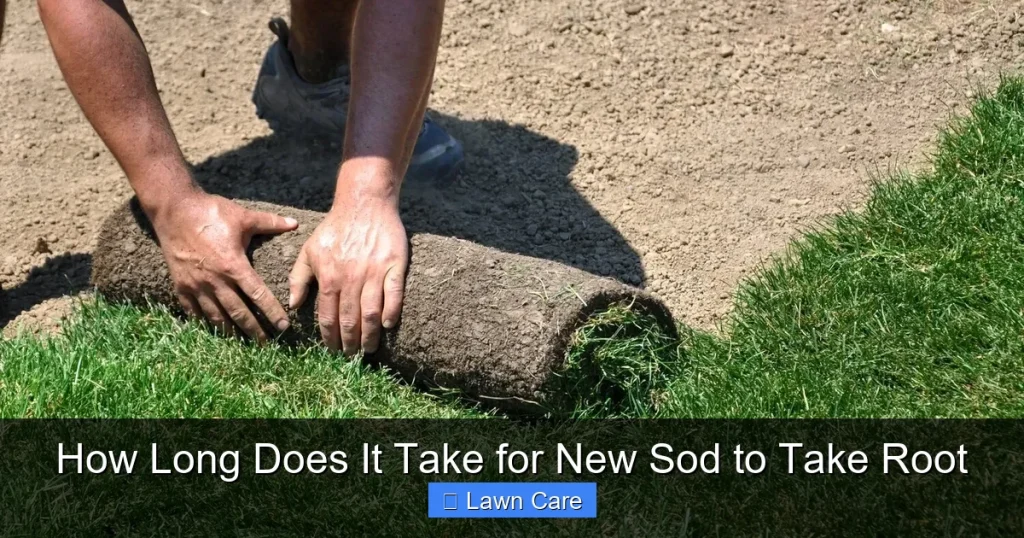
New sod typically takes 7 to 21 days to begin rooting, with full establishment in 4 to 6 weeks. Proper watering, soil prep, and post-installation care are key to helping your sod develop strong roots quickly and thrive.
Key Takeaways
- Initial rooting begins within 7 to 14 days: You’ll start seeing roots anchoring into the soil during this time, especially with consistent moisture.
- Full establishment takes 4 to 6 weeks: Sod is considered fully rooted when it resists lifting and blends seamlessly with the soil.
- Watering is the most critical factor: Frequent, light watering in the first two weeks prevents drying and supports root growth.
- Soil preparation matters: Leveling, tilling, and adding compost before laying sod creates an ideal environment for roots.
- Avoid heavy foot traffic early on: Wait at least 2 to 3 weeks before walking on new sod to prevent damage.
- Grass type affects rooting speed: Warm-season grasses like Bermuda root faster in summer, while cool-season types like Kentucky bluegrass take longer in cooler temps.
- Signs of successful rooting include firm turf and new green growth: Gently tug on a corner—if it resists, roots are forming.
How Long Does It Take for New Sod to Take Root?
If you’ve just laid new sod or are planning to, you’re probably wondering: How long does it take for new sod to take root? The good news is that sod establishes much faster than grass grown from seed. While seeded lawns can take months to mature, properly cared-for sod begins rooting in as little as one week and is usually fully established within four to six weeks.
In this guide, you’ll learn exactly what to expect during the rooting process, how to speed it up, and what mistakes to avoid. Whether you’re installing Bermuda, St. Augustine, or Kentucky bluegrass sod, these steps will help you grow a lush, healthy lawn that lasts.
Understanding the Sod Rooting Timeline
Sod rooting happens in stages, and each phase has different care needs.
Days 1–7: The Critical First Week
During the first week, sod is most vulnerable. The grass blades are still connected to roots, but those roots haven’t yet reached the soil beneath. Your job is to keep the sod moist—without drowning it.
– Water lightly 2–3 times per day, especially in hot or windy weather.
– The goal is to keep the top 1–2 inches of soil consistently damp.
– Avoid puddling, which can lead to rot or fungus.
Days 8–14: Early Root Development
By the second week, roots should begin growing downward into the soil. You might not see them, but they’re there.
– Reduce watering frequency slightly, but maintain deep moisture.
– Water once or twice daily, depending on weather.
– Check for rooting by gently tugging on a corner. If it lifts easily, roots haven’t anchored yet.
Weeks 3–4: Stronger Anchoring
Roots are now actively spreading through the soil. The sod should feel firmer underfoot.
– Transition to deeper, less frequent watering (every 2–3 days).
– This encourages roots to grow deeper in search of moisture.
– You can begin light foot traffic, but avoid heavy use.
Weeks 5–6: Full Establishment
At this point, the sod is considered rooted. It should resist lifting and blend naturally with the surrounding soil.
– Water as you would a mature lawn—deeply and infrequently.
– Mow for the first time (if grass is 3+ inches tall), but never more than 1/3 of the blade.
– Resume normal lawn activities.
Step-by-Step Guide to Helping Sod Take Root Faster
Follow these steps to give your sod the best chance at quick, strong root development.
Step 1: Prepare the Soil Properly
Great sod starts with great soil. Before laying sod:
– Remove weeds, rocks, and debris.
– Till the soil to a depth of 4–6 inches.
– Level the area with a rake to prevent pooling.
– Add 1–2 inches of compost or topsoil to improve drainage and nutrients.
– Lightly water the soil before laying sod to create a moist base.
Pro Tip: A soil test can reveal nutrient deficiencies. Fix them before installation for faster rooting.
Step 2: Lay Sod Correctly
How you install sod affects how fast it roots.
– Lay sod within 24 hours of delivery to prevent drying.
– Stagger seams like brickwork to avoid gaps.
– Press down each piece firmly to ensure soil contact.
– Use a lawn roller (half-full of water) to eliminate air pockets.
Step 3: Water Immediately and Consistently
Watering is the #1 factor in sod success.
– Water within 30 minutes of laying the first piece.
– Soak the sod and top 1–2 inches of soil.
– For the first week, water 2–3 times daily—early morning, midday, and late afternoon in hot climates.
– After week one, shift to once daily, then every other day.
Example: In 90°F (32°C) weather, you may need to water three times a day. In cooler temps (70°F/21°C), twice may be enough.
Step 4: Avoid Foot Traffic
New sod needs time to anchor.
– Keep people, pets, and equipment off the lawn for at least 2 weeks.
– After 3 weeks, light walking is usually safe.
– Wait 4–6 weeks before hosting events or playing sports.
Step 5: Mow and Fertilize at the Right Time
Don’t rush these steps.
– First mowing: Wait until grass is 3+ inches tall and roots are firm (usually week 3 or 4).
– Never cut more than 1/3 of the blade at once.
– First fertilizer application: Apply a starter fertilizer 4–6 weeks after installation to support growth.
Factors That Affect Sod Rooting Time
Not all sod roots at the same speed. Several factors influence how quickly your lawn establishes.
Grass Type
Different grasses have different rooting speeds:
– Bermuda grass: Roots quickly in warm weather—often in 7–10 days. Learn more about how long it takes to grow Bermuda grass.
– St. Augustine: Takes 10–14 days to root. See our guide on how long St. Augustine sod takes to root.
– Kentucky bluegrass: Slower in cool weather—may take 2–3 weeks.
– Perennial ryegrass: Fast germinator, but sod forms roots in 10–14 days. Check out how long perennial ryegrass takes to grow.
Weather Conditions
Temperature and sunlight play big roles.
– Warm-season grasses (Bermuda, Zoysia) root fastest in summer.
– Cool-season grasses (fescue, bluegrass) prefer spring or fall.
– Extreme heat or cold slows root development.
Soil Quality
Compacted, dry, or nutrient-poor soil delays rooting.
– Aerate compacted soil before laying sod.
– Add organic matter to improve structure.
– Ensure good drainage—soggy soil suffocates roots.
Watering Habits
Too much or too little water is a common mistake.
– Underwatering dries out roots.
– Overwatering causes shallow roots and disease.
– Use a moisture meter or screwdriver test to check soil dampness.
Troubleshooting Common Sod Problems
Even with the best care, issues can arise. Here’s how to fix them.
Sod Is Drying Out or Turning Brown
This usually means underwatering or hot weather.
– Increase watering frequency.
– Water early and late to reduce evaporation.
– Use shade cloth in extreme heat.
Sod Lifts Easily After 2 Weeks
Roots haven’t anchored—likely due to poor soil contact or dry conditions.
– Re-roll the affected area with a lawn roller.
– Water more consistently.
– Avoid walking on it until it firms up.
Patches of Yellow or Dead Grass
Could be disease, overwatering, or pests.
– Check for fungal signs (white or gray mold).
– Reduce watering if soil is soggy.
– Inspect for grubs or insects.
Weeds Appearing in New Sod
Weeds can sneak in through soil or wind.
– Hand-pull small weeds.
– Avoid herbicides for the first 6 weeks.
– Maintain thick grass to crowd out future weeds.
When Can You Walk on New Sod?
Patience pays off. Here’s a general timeline:
– Days 1–14: No foot traffic.
– Weeks 3–4: Light walking (e.g., checking irrigation).
– Weeks 5–6: Normal use, including mowing and light play.
Rushing this step can tear delicate roots and create bare spots.
Conclusion
So, how long does it take for new sod to take root? Most sod begins rooting within 7 to 14 days and is fully established in 4 to 6 weeks. The secret to success lies in proper soil prep, consistent watering, and giving your lawn time to settle.
By following the steps in this guide—watering wisely, avoiding traffic, and choosing the right grass for your climate—you’ll enjoy a thick, green lawn that lasts for years. Remember, sod is an investment. Treat it well in the first few weeks, and it will reward you with beauty and durability.
Whether you’re installing Bermuda, St. Augustine, or another variety, the principles remain the same: keep it moist, keep it protected, and let nature do the rest.