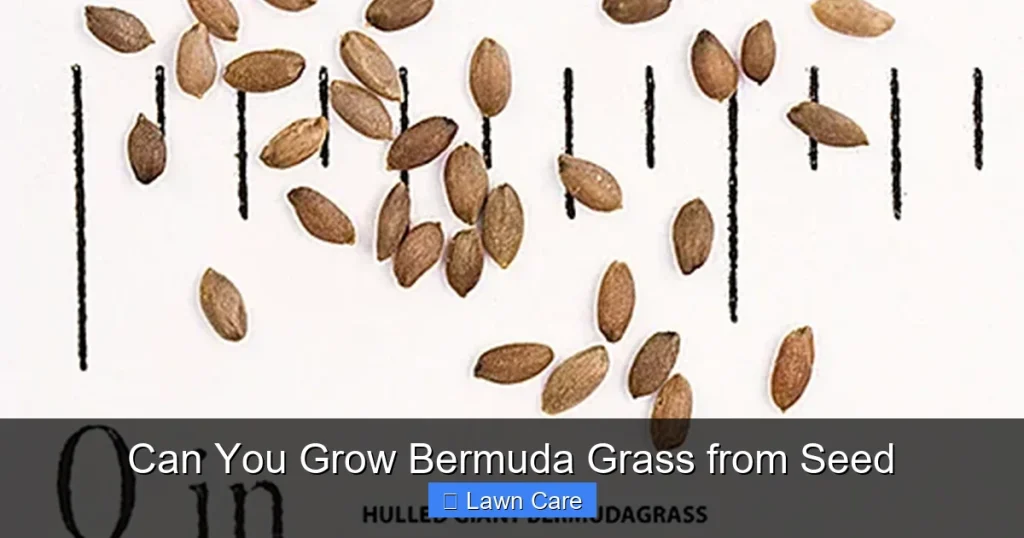
Yes, you can absolutely grow Bermuda grass from seed! While it’s often propagated vegetatively, seeding is a viable and often more economical option for establishing a new lawn. Success hinges on choosing the right time, preparing the soil properly, and providing consistent moisture during germination.
## Can You Grow Bermuda Grass from Seed? The Ultimate Guide
Thinking about a new lawn or a patch-up job for your existing one? You’ve probably heard about Bermuda grass. It’s a popular choice for many homeowners, especially in warmer climates, thanks to its drought tolerance, heat resistance, and ability to recover quickly from damage. But when you’re planning your lawn project, a common question pops up: “Can you grow Bermuda grass from seed?” The short answer is a resounding yes!
While many people associate Bermuda grass with sod or plugs because of its vigorous growth habits, starting from seed is a completely achievable and often more budget-friendly option. It requires a bit of patience and attention to detail, but with the right approach, you can successfully cultivate a lush, green Bermuda grass lawn from tiny seeds. Let’s dive into everything you need to know to make your Bermuda grass seeding project a success.
## Understanding Bermuda Grass and Seeding
Bermuda grass (Cynodon dactylon) is a warm-season perennial grass. This means it thrives in hot weather and goes dormant, turning brown, during cooler months. Its aggressive, spreading nature makes it incredibly resilient, but it also means it can be a bit of a garden invader if not managed properly. When it comes to seeding, it’s important to understand that not all Bermuda grass varieties are created equal.
### Different Types of Bermuda Grass
There are two main categories of Bermuda grass relevant to seeding: common Bermuda grass and hybrid Bermuda grass.
* Common Bermuda Grass: This is the type most often found in seed bags. It’s genetically diverse, meaning that if you plant common Bermuda grass seed, the individual plants in your lawn might have slightly different characteristics in terms of color, texture, and growth rate. It’s hardy and adaptable but might not have the uniform, refined appearance of some of the newer varieties.
* Hybrid Bermuda Grass: These varieties, like ‘Tifway’ or ‘Celebration’, are developed through cross-breeding and are known for superior traits such as finer texture, darker green color, and better disease resistance. However, hybrid Bermuda grasses are typically sterile and are propagated vegetatively through sod or plugs, not from seed. So, if you’re looking to seed your lawn, you’ll be working with common Bermuda grass varieties.
### Why Choose Seeding?
Seeding is often the most economical way to establish a new lawn over a large area. While it takes longer to achieve a mature, established lawn compared to sod, the cost savings can be significant. It’s also a great option for overseeding or repairing bare patches in an existing lawn. If you’re looking for a quick, established lawn, sod might be your preference. But for a more DIY-friendly and budget-conscious approach, seeding is definitely on the table.
## The Best Time to Plant Bermuda Grass Seed
Timing is everything when it comes to successfully growing Bermuda grass from seed. Because it’s a warm-season grass, it needs consistently warm soil and air temperatures to germinate and establish. Planting too early or too late can lead to poor germination rates and a struggling new lawn.
### Soil Temperature is Key
The golden rule for planting Bermuda grass seed is to wait until the soil temperature is consistently between 65°F and 85°F (18°C to 29°C). This typically occurs in late spring or early summer in most regions where Bermuda grass thrives. You can measure soil temperature with a simple soil thermometer.
### Air Temperature Matters Too
Along with warm soil, you’ll want to see air temperatures consistently in the 70s and 80s Fahrenheit (20s Celsius). Avoid planting during extreme heat waves, as young seedlings can easily dry out. Conversely, planting too early in the spring when temperatures are still erratic and frost is a possibility will likely result in the seeds not germinating or the young grass dying off.
### When to Avoid Planting
* Too Early in Spring: When there’s still a risk of frost.
* Late Summer/Fall: When temperatures are beginning to cool down and the grass won’t have enough time to establish before winter dormancy. For areas experiencing this, you might consider other grass types or wait until the following spring.
* During Drought Conditions: While Bermuda grass is drought-tolerant once established, newly germinated seeds need consistent moisture.
Knowing when to plant is a critical first step in how to grow Bermuda grass from seed. For a more in-depth look at ideal planting windows, you might find information on [when can I plant bermuda grass seed](https://lawnhelpful.com/when-can-i-plant-bermuda-grass-seed/) helpful.
## Preparing Your Soil for Seeding
A well-prepared seedbed is crucial for good seed-to-soil contact and healthy root development. Think of it as building a strong foundation for your future lawn. Rushing this step can significantly hinder germination and the establishment of your Bermuda grass.
### Step 1: Clear the Area
* Remove Debris: Start by thoroughly clearing the area of any rocks, sticks, weeds, or old grass.
* Deal with Existing Weeds: If you have a significant weed problem, consider using a non-selective herbicide like glyphosate. Wait the recommended time period after application before moving on to the next steps. If you are concerned about the chemicals, you can manually remove weeds, but this is much more labor-intensive for a large area.
### Step 2: Loosen the Soil
Bermuda grass needs loose soil to allow its roots to penetrate easily.
* Tilling: For new lawns or heavily compacted soil, tilling the top 4-6 inches of soil is recommended. This breaks up compacted layers and incorporates air.
* Aeration: If you’re working with an existing lawn that has some grass but is thin or compacted, core aeration can be very beneficial. It pulls out plugs of soil, creating channels for air, water, and nutrients to reach the root zone.
### Step 3: Amend the Soil
* Add Organic Matter: Incorporate a few inches of compost or well-rotted manure into the loosened soil. This improves soil structure, fertility, and water retention.
* Soil Testing: It’s a good idea to get a soil test done. This will tell you the pH of your soil and identify any nutrient deficiencies (like phosphorus or potassium) that need to be addressed. Bermuda grass prefers a slightly acidic to neutral pH, ideally between 6.0 and 7.0. Your local extension office can usually help with soil testing.
* Fertilizer: Based on your soil test, you might need to add a starter fertilizer. Look for a fertilizer with a higher phosphorus content (the middle number on the N-P-K ratio) to encourage strong root development.
### Step 4: Rake and Level
Once you’ve incorporated amendments and fertilizers, use a rake to smooth the soil surface. Remove any remaining clumps or debris. Create a fine, level seedbed. This ensures that the tiny Bermuda grass seeds will have good contact with the soil, which is essential for germination. Avoid creating a powdery fine surface, as this can lead to erosion. A slightly firm surface is ideal.
## Seeding Your Bermuda Grass Lawn
With your soil prepped and the timing just right, it’s time for the main event: planting the seed! This is where careful application makes a big difference in achieving an even, healthy stand of grass.
### Choosing the Right Seed
As mentioned, you’ll likely be working with common Bermuda grass seed. Look for high-quality seed from a reputable supplier. Some seed blends are coated with a starter fertilizer and moisture-retaining material, which can be beneficial. Pay attention to the percentage of pure seed and the germination rate listed on the bag.
### Application Techniques
* Seed Spreader: For larger areas, a broadcast or rotary spreader is the most efficient way to achieve an even distribution of seed. Set the spreader according to the seed manufacturer’s recommendations.
* Hand Seeding: For smaller areas or patching, you can spread the seed by hand. It’s helpful to divide your seed into two equal halves and spread one half walking in one direction (e.g., north-south) and the second half walking perpendicular to the first direction (e.g., east-west). This helps ensure even coverage.
### Seed-to-Soil Contact
This is critical! The seeds need to be in firm contact with the soil to absorb moisture and sprout.
* Light Raking: After spreading the seed, lightly rake the area to gently push the seeds into the soil. You don’t want to bury them too deeply; about 1/8 to 1/4 inch is ideal.
* Rolling: For larger areas, using a lawn roller filled with water can further improve seed-to-soil contact. Be careful not to compact the soil too much.
### Seeding Rates
Follow the recommended seeding rate on your seed bag. Over-seeding can lead to competition between seedlings, while under-seeding will result in a thin lawn. A typical seeding rate for common Bermuda grass is around 1 to 2 pounds per 1,000 square feet.
If you’re wondering [can I just throw Bermuda grass seed down](https://lawnhelpful.com/can-i-just-throw-bermuda-grass-seed-down/), the answer is no. Proper preparation and application are key.
## Watering and Early Care
The period after seeding is the most critical for germination and initial growth. Consistent moisture is absolutely vital. This is not the time to be shy with watering, but you also don’t want to drown your seeds.
### The Importance of Constant Moisture
* Frequent, Light Watering: For the first 7-14 days, or until seedlings are about an inch tall, you’ll need to water lightly two to three times a day. The goal is to keep the top layer of soil consistently moist, but not waterlogged. Think of it like a damp sponge.
* Avoid Runoff: If water starts pooling or running off, you’re watering too much or too heavily. Reduce the duration or frequency.
* Adjust for Weather: On hot, windy days, you’ll need to water more frequently. During cooler, overcast periods, you might be able to water less.
### Mowing New Bermuda Grass
You’ll need to be patient before you can mow your new lawn.
* First Mowing: Wait until the grass reaches about 1.5 to 2 inches in height.
* Mower Height: Set your mower to its highest setting for the first few mowing sessions.
* Sharp Blades: Always use a sharp mower blade. Dull blades can tear the young grass, making it susceptible to disease.
* Don’t Bag Clippings: For the first few mows, leave the clippings on the lawn. They are a good source of nutrients and will help protect the young grass.
### Fertilizing New Grass
If you used a starter fertilizer during soil preparation, you might not need to fertilize again for several weeks. Once the grass has been mowed a few times, you can begin a regular fertilization schedule appropriate for Bermuda grass. Avoid high-nitrogen fertilizers too early, as this can encourage top growth at the expense of root development.
## Common Challenges and Troubleshooting
Even with the best intentions, you might encounter a few bumps in the road when growing Bermuda grass from seed. Here are some common issues and how to address them.
### Poor Germination
* Cause: Inconsistent moisture, poor seed-to-soil contact, planting at the wrong time, or old seed.
* Solution: Ensure consistent moisture, re-rake to improve contact if needed, and double-check your planting calendar. If germination is very poor, you might need to reseed.
### Weedy Lawns
* Cause: Weeds were present in the soil, or weed seeds blew in. Pre-emergent herbicides cannot be used on newly seeded lawns.
* Solution: Hand-pulling is the best method for young lawns. Once the Bermuda grass is well-established, you can consider appropriate post-emergent herbicides. Also, a dense, healthy lawn is the best defense against weeds.
### Bare Patches
* Cause: Uneven seeding, poor soil conditions, or localized pest/disease issues.
* Solution: Identify the cause. If it’s just thin coverage, you can overseed those areas once the main lawn is established. For other issues, address them specifically. You may find reading about [can you overseed with bermuda grass](https://lawnhelpful.com/can-you-overseed-with-bermuda-grass/) beneficial for spot repairs.
### Dormancy and Color
* Cause: Bermuda grass naturally goes dormant and turns brown in cooler weather. It’s not dead!
* Solution: This is normal for warm-season grasses. It will green up again in the spring as temperatures rise. If your grass is struggling to green up in the spring, it might be an indication of an underlying issue or that it simply hasn’t received enough warmth. Check resources on [how long does it take for bermuda grass to grow from seed](https://lawnhelpful.com/how-long-does-it-take-for-bermuda-grass-to-grow-from-seed/) to set realistic expectations.
## Conclusion: Your Bermuda Grass Seed Dream is Possible!
So, to answer the big question directly: Yes, you can grow Bermuda grass from seed! While it takes more time and consistent attention than laying sod, the process is rewarding and significantly more cost-effective for establishing large areas or filling in gaps.
The key to success lies in diligent preparation, precise timing, and unwavering commitment to watering during the critical germination and establishment phases. By understanding the needs of this resilient warm-season grass and following these guidelines, you’ll be well on your way to enjoying a beautiful, healthy Bermuda grass lawn. Remember, patience is a virtue when it comes to growing grass from seed, but the results are well worth the effort. Happy seeding!
- Bermuda grass can indeed be grown from seed, offering a cost-effective way to establish a new lawn or repair an existing one.
- Timing is crucial; the best time to plant Bermuda grass seed is when soil temperatures consistently reach 65°F (18°C) and are expected to remain warm.
- Proper soil preparation is essential, involving loosening the soil, ensuring good drainage, and adding necessary nutrients.
- Consistent moisture is key for germination, requiring frequent watering without waterlogging the soil.
- Seed varieties matter; hybrid varieties are typically not available as seed and offer superior traits, so choose seeded varieties carefully.
- While seeding is possible, Bermuda grass grown from sod or plugs tends to establish faster and may offer a more uniform look initially.
[FEATURED_IMAGE_PLACEHOLDER]
Quick Answers to Common Questions
Can I plant Bermuda grass seed in the fall?
It’s generally not recommended to plant Bermuda grass seed in the fall. As a warm-season grass, it needs consistently warm soil and air temperatures to germinate and establish. Planting in the fall means the grass won’t have enough time to develop a strong root system before winter dormancy sets in, leading to poor survival rates.
What is the difference between hybrid Bermuda grass seed and common Bermuda grass seed?
Hybrid Bermuda grasses are developed for superior traits but are typically sterile and propagated by sod or plugs, not seed. Common Bermuda grass is what you’ll find as seed. It’s genetically diverse, meaning individual plants may vary slightly in appearance and growth habits, but it’s hardy and readily available as seed.
How often should I water newly seeded Bermuda grass?
For the first 7-14 days, or until seedlings reach about an inch tall, you’ll need to water lightly two to three times a day. The goal is to keep the top layer of soil consistently moist, but not waterlogged. Adjust watering frequency based on weather conditions.
Will Bermuda grass grow in shade?
Bermuda grass is a sun-loving grass. While it can tolerate very light shade, it performs best and grows most vigorously in full sun. Prolonged shade will lead to thinning and potential death of the grass.
When will I see germination after planting Bermuda grass seed?
Germination time for Bermuda grass seed can vary depending on soil temperature and moisture levels, but typically it takes anywhere from 7 to 21 days. Consistent warmth and moisture are the most significant factors influencing how quickly your seeds will sprout.
Frequently Asked Questions
How long does it take for Bermuda grass seed to grow into a lawn?
Establishing a full lawn from Bermuda grass seed can take several months to a full growing season. While germination might occur within a few weeks, it takes time for the grass to thicken and mature into a dense lawn. Patience is key for seeded lawns.
Can I overseed my existing lawn with Bermuda grass seed?
Yes, you can overseed an existing lawn with Bermuda grass seed, especially if it’s a warm-season grass lawn that has thinned. The best time to do this is during the active growing season for Bermuda grass, which is late spring through early summer. Proper soil preparation and consistent watering are still crucial for overseeding success.
What are the benefits of growing Bermuda grass from seed?
The primary benefit of growing Bermuda grass from seed is cost-effectiveness. Seed is significantly cheaper per square foot than sod, making it a more budget-friendly option for establishing a new lawn over a large area or for repairing bare patches.
Are there any drawbacks to growing Bermuda grass from seed?
The main drawback is the time it takes for the lawn to establish and mature. It requires more patience compared to sod, and maintaining consistent moisture during the germination and early growth phases is critical. Also, seeded common Bermuda grass may result in a less uniform appearance than hybrid varieties propagated by sod.
Should I use a starter fertilizer when seeding Bermuda grass?
Yes, using a starter fertilizer is highly recommended when seeding Bermuda grass. These fertilizers typically have a higher phosphorus content, which is essential for promoting strong root development in young grass seedlings. Incorporating it into the soil during preparation helps give your new lawn the best start.
How do I know if my Bermuda grass seed has germinated?
You will start to see tiny green sprouts emerging from the soil surface. Initially, these sprouts will be very delicate. Consistent light watering will help protect them. If you’re unsure, you can carefully scrape away a small amount of the topsoil to check for newly sprouted seeds.