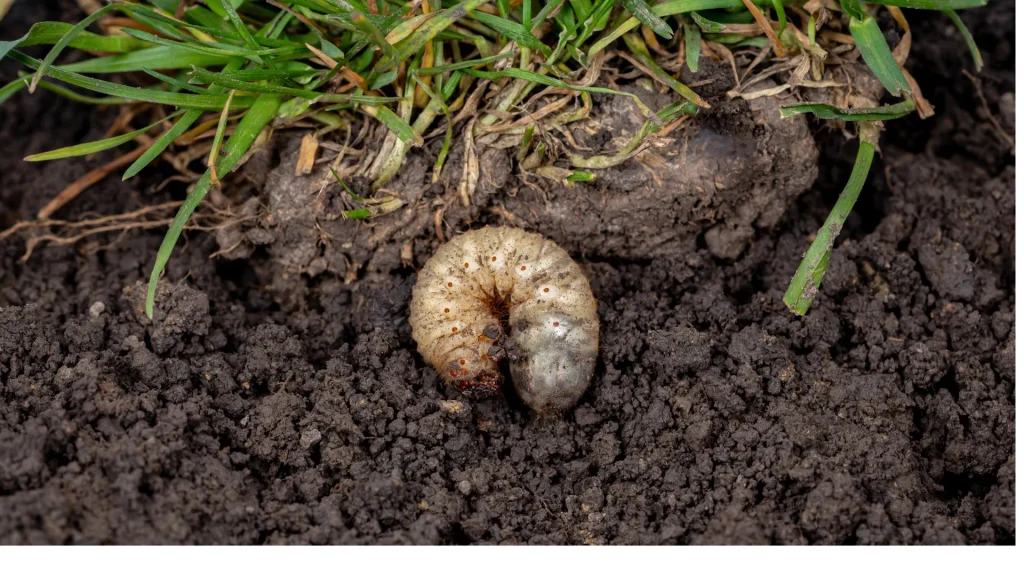
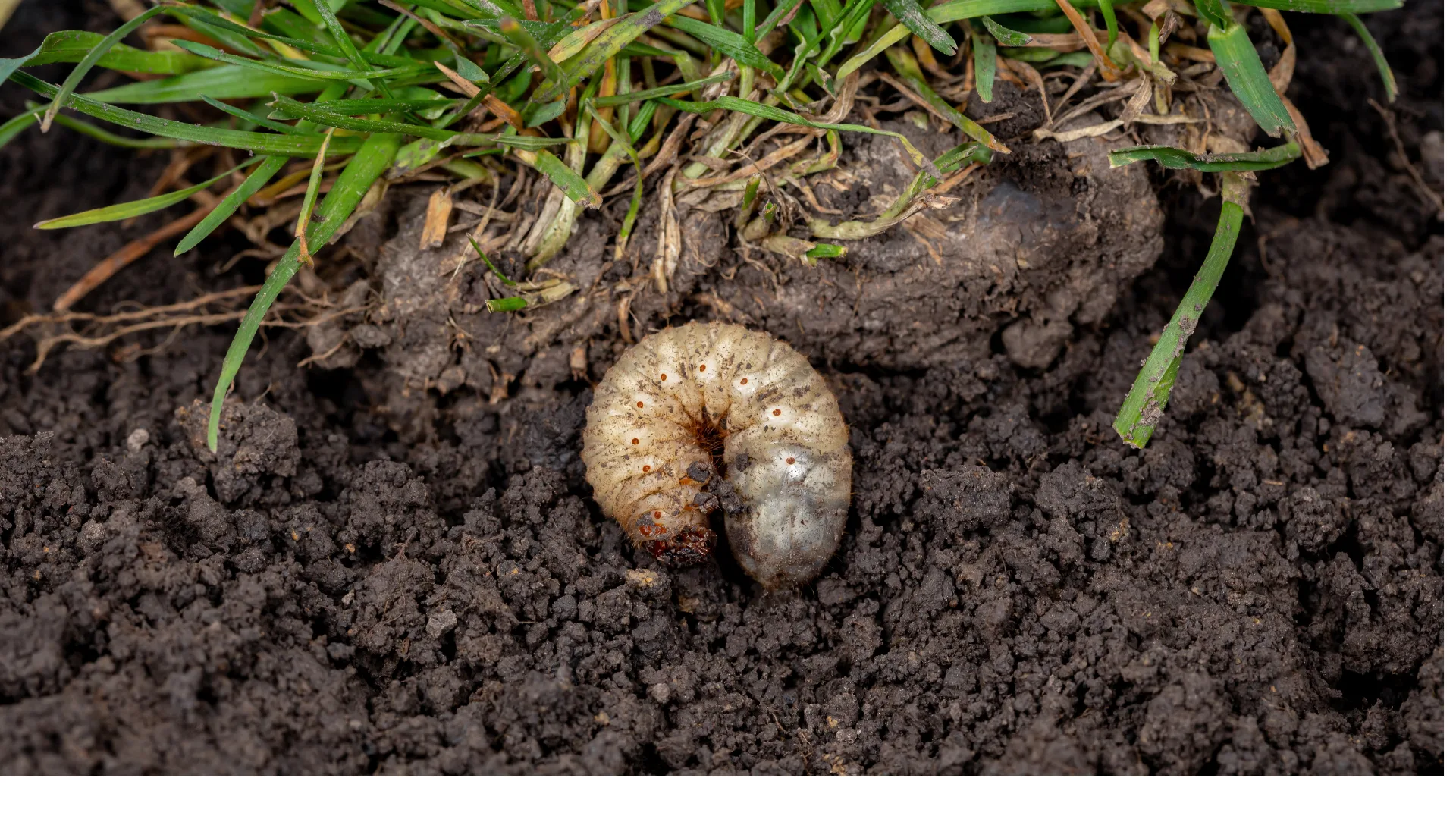
do grubs eat clover
The short answer to "do grubs eat clover" is yes, but the real question is whether they're actually causing the damage you're seeing in your lawn. White grubs do feed on clover roots, yet clover often holds up better than pure turfgrass under moderate grub pressure.
Research from cooperative extension programs confirms that white grub feeding on root systems can weaken and kill clover patches. Let's walk through how to confirm what's happening, decide if treatment makes sense, and choose the right approach for your situation.
Quick Answer
Yes, grubs eat clover roots. White grubs feed on the root systems of many plants. However clover tolerates some root damage better than grass.
Treatment thresholds are higher for clover lawns. Check before treating.
Why Your Clover Might Be Dying (And Why Grubs Get Blamed Too Often)
When clover starts thinning out, yellowing, or pulling up easily, our first instinct is often to blame grubs. And sometimes that's the right call. But here's the thing: a lot of other problems look exactly like grub damage, and treating for grubs when they aren't the issue wastes money and exposes your lawn to chemicals you don't need.
The signature sign of grub damage is irregular patches of turf or clover that lift up from the soil like a carpet. That happens because the grubs have chewed through the root system holding the plant material down. You'll also see increased animal activity.
Skunks, raccoons, and birds will tear up sections of lawn overnight looking for the larvae as a food source.
But before you jump to conclusions, consider what else could be going on.
- Drought stress. Clover goes dormant during dry spells without dying back completely. Grass may die off first leaving uneven patches mistaken for pest damage.
- Nutrient deficiency. Clover fixes its own nitrogen, but potassium or phosphorus deficiency can cause yellowing and thinning. Grub damage doesn't typically cause uniform yellowing though.
- Fungal disease. Conditions like dollar spot or brown patch kill from the leaf surface, not the roots. The pattern and texture differ from what grub feeding causes.
- Other surface pests. Sod webworms and armyworms chew foliage and crowns, not roots. Look for small holes or grass chewed to the base.
If you're seeing damage but can't easily lift the turf like a loose rug, it's probably not grubs. They need to have eaten enough roots to detach the plant from the soil layer.
Which Grub Species Actually Target Clover Roots
Not all white grubs behave the same way. Some species feed more aggressively on turfgrass roots than others. A few key species form what's called the "white grub complex." The larval stage of various scarab beetles shares similar appearance and behavior.
Here's a quick breakdown of the most common culprits.
| Species | Appearance | Primary Host Plants | Damage Period |
|---|---|---|---|
| Japanese beetle (Popillia japonica) | C-shaped, white body, brown head, V-shaped raster pattern | Turfgrass, clover, some garden plants | Late Aug–Oct, April–May |
| European chafer (Amphimallon majale) | Larger, C-shaped, raster pattern with two parallel rows | Turfgrass, clover, cereal crops | Sept–Nov, April–May |
| Masked chafer (Cyclocephala spp.) | Similar to Japanese beetle but smaller, different raster | Warm-season turfgrass, clover | Late July–Oct |
| Black turfgrass ataenius (Ataenius spretulus) | Smaller (quarter inch), feeds just below thatch layer | Annual bluegrass, creeping bentgrass, clover in golf settings | June–July, Aug–Sept |
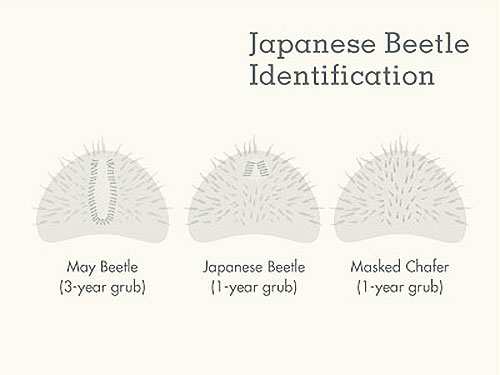
The raster pattern on the underside of the grub is the most reliable way to distinguish species. That matters because different species respond differently to treatments. Japanese beetles respond well to milky spore disease over time.
European chafers do not.
If you're finding grubs in a mixed clover lawn, Japanese beetles are the most likely suspect in the eastern half of the United States. Their larvae feed on a wide range of plant roots including both grass species and legumes like clover. European chafers, which are expanding their range across the Northeast and Midwest similarly feed on clover roots when turfgrass isn't preferred.
How to Confirm Grubs Are the Real Problem
You need to verify before spending money on treatment. Here's a straightforward method used by extension entomologists and lawn care professionals.
The Square-Foot Dig Test
Pick a spot where living meets dead. That transition zone tells you the most about what's happening below ground. At that edge cut a one-foot square section about three inches deep.
Flip it over and break apart the soil looking for C-shaped larvae. Count what you find.
What Counts as "Too Many" Grubs in a Clover Lawn
Standard treatment thresholds for turfgrass fall between five and ten grubs per square foot. Newer guidance suggests rounding to about six per square foot as a clear decision point. In a mixed clover lawn those numbers climb higher.
Clover tolerates root feeding better than many grass species. It regrows from stolons and spreads to fill gaps.
General rule of thumb for clover lawns:
- Fewer than 5 grubs per square foot: Monitor, don't treat. The clover can handle this load.
- 5 to 10 per square foot: Watch closely. Consider treating if damage appears or if animal digging starts.
- More than 10 per square foot: Treatment likely warranted, especially if you see visible damage.
- More than 15 per square foot: Act soon. Both clover and grass will struggle at this level.
Raster Pattern Identification
Once you've found grubs, a closer look at species will shape your plan. The raster pattern is the arrangement of hairs and spines on the underside of the abdomen near the rear end. You need a hand lens to see it clearly, but extension services often provide comparison photos.
- Japanese beetle: Two rows of spines forming a distinct V-shape.
- European chafer: Two rows of spines running parallel, not forming a V.
- Masked chafer: Similar to Japanese beetle but usually finer pattern differences under magnification.
If species identification feels overwhelming, reach out to your local extension office. Many accept grub samples and can identify them for free or a small fee. That one phone call or email can save you from applying the wrong product at the wrong time.
Other Culprits That Mimic Grub Damage
Before opening a bag of grub killer, rule out these common misdiagnoses.
Drought Stress
Clover handles drought better than most turfgrass because of its deeper root taproots. But during prolonged dry conditions it goes semi-dormant. The appearance: patches of brown or yellow thinning that don't pull up easily when tugged.
You can still feel firm root attachment. Check soil moisture four to six inches down. If it's bone dry, water deeply and observe over two weeks before treating for insects.
Nutrient Deficiency
Clover fixes its own nitrogen, but potassium or phosphorus deficiency can cause yellowing and thinning. The pattern looks uniform across a zone, not irregular patches from root feeding. A university soil test panel will give you accurate nutrient readings for about ten to twenty dollars.
That's cheaper than a misapplied insecticide application.
Fungal Disease
Conditions like dollar spot or brown patch kill from the leaf surface, not the roots. The pattern and texture differ from grub damage. You'll see leaf lesions, mycelium growth in early morning, or distinct circular patches with defined edges.
Dig test confirms: roots will still be intact even if the top is dying.
Other Insects
Sod webworms and armyworms chew foliage and crowns, not roots. Look for small holes or grass chewed to the base. You may find green frass in the thatch layer during evening hours.
Billbugs cause similar stem and crown damage. If the pest is above ground, a soil-dwelling grube treatment won't help.
Your Decision Tree: What to Do Based on What You Find
Now you know what you're dealing with. Let's match the right response to each scenario.
Low Grumb Count + Healthy Clover
Skip treatment. Your clover lawn can tolerate some grub presence without intervention. Maintain good cultural practices: proper mowing height, deep watering when needed, and balanced soil fertility.
Check back monthly through October for population changes.
Moderate Grub Count + Some Damage
You've got a choice. If you're an organic-leaning homeowner, consider biological controls now. If you prefer conventional methods, preventive treatment between mid-June and late July means timing is off.
Curative options work for the current season but act within two weeks of finding the grubs to minimize injury.
High Grub Count + Significant Damage
Act now. Curative treatment is your best option at this point. Look for short residual products that knock down active feeding fast.
Address secondary damage to prevent further lawn loss. Plan follow-up soil testing.
Active Damage Right Now (Late Summer/Fall)
If you're reading this in August, September, or October and seeing active damage, the priority is stopping the chewing. Before treating for future damage, apply a curative insecticide to break the current feeding. A combined approach works well here: curative now for the current problem, then preventive the following May or June to prevent recurrence.
Protecting Your Clover During and After Treatment
Grub treatments vary in how they impact clover recovery and the broader lawn biological community. Some points to keep in mind:
- Chemical grubicides. Most labeled for grub control in turf are considered safe for established white clover when used according to label rates. However, heavy applications of certain systemic insecticides can stress flowering and nectar production, a concern if you keep bees or want pollinator habitat.
- Biological controls. Beneficial nematodes and milky spore pose no risk to clover plants or the nitrogen-fixing bacteria in root nodules.
- Irrigation after application. Read the product label. Some granular products need watering-in to move active ingredients into the root zone. Others benefit from light irrigation after a few hours. Follow the printed instructions.
- Re-establishing clover. After harsh grub damage or treatment, you may need to reseed. Broadcasting white clover at two to four pounds per thousand square feet in early fall or spring helps fill gaps. Water lightly and frequently until germination. Mature clover spreads on its own once established.
- Supporting natural predators. Ants, ground beetles, and parasitic wasps naturally suppress grub populations. Reducing broad-spectrum insecticide use preserves these allies. Well-nourished soil with organic matter encourages beneficial organisms.
When to Call a Professional
If you're dealing with repeated heavy grub infestation or lawn damage covering more than a few hundred square feet after trying biological controls, a licensed lawn care professional can provide custom container curative application with faster-acting insecticides. They also offer follow-up monitoring. Treatment runs between one hundred and three hundred dollars for a typical five thousand square foot lawn in 2026.
Get at least two quotes. Confirm they're using EPA-registered products and follow your state's application rules.
That investment may pay off for valuable clover lawn settings where damage is severe or you have pollinators to protect and need precise treatment timing.
Frequently Asked Questions
Do all grubs eat clover?
Most white grubs in the scarab beetle complex will feed on clover roots if available in their diet. Japanese beetles, European chafers, and masked chafers readily consume clover. However, some species have plant preference preferences based on local availability.
Will my clover come back after grub damage?
Usually yes. White clover spreads through above-ground stolons that root at nodes. That growth allows clover to recolonize bare spots faster than many turfgrasses after defoliation.
If the stolons and crown are still alive, the plant regenerates. If grubs sever all roots, the plant dies, but crowns can send new roots if the damage isn't total. Overseed thin patches with fresh clover seed in early spring.
When should I treat for grubs in a clover lawn?
Preventive treatment makes sense if you've had confirmed grubs in the past two years. Apply between mid-June and late July, prior to beetle egg laying. For active damage now, apply curative treatment right away.
Don't wait until spring; curative products then may be too late if grubs have already caused serious root injury.
Is grub damage worse in sun or shade?
Grubs can be found anywhere but moisture matters more. Well-watered or low-lying areas often have higher grub survival rates as eggs and young larvae are sensitive to drying. In a mixed clover lawn, south-facing slopes lose moisture faster leading to lower grub survival there.
Can I use milky spore for grubs in my clover lawn?
Yes, milky spore targets Japanese beetle grubs specifically. It's safe for clover, and won't impact insects or plants. Take note that results take two to three years to develop.
Works best where Japanese beetles are the dominant grub species.
Should I worry if I only find one or two grubs?
No. Finding one or two grubs during an inspection is normal and not cause for action. Many lawns carry low-level populations without harm.
With clover due to tolerance, you have a comfortable buffer. Start treating when you see counts above five grubs per square foot or notice damage symptoms.
Treatment Options Ranked by Effectiveness
Let's break down what actually works, what doesn't, and when each approach makes sense for a clover lawn.
Preventive: Chlorantraniliprole (Acelepryn)
This is the gold standard for preventive grub control as of 2026. It's a selective insecticide that targets lepidopteran and coleopteran pests while being one of the more bee-friendly options on the market. That matters when you've got clover blooming and pollinators visiting.
Manufacturer specifications indicate low application rates, typically two to four fluid ounces per thousand square feet per season. It has low water solubility, so it binds well to thatch and soil organic matter where young grubs feed. The environmental profile is favorable compared to older neonicotinoid options.
The catch: it works best on small, early-instar grubs. That means timing your application before the grubs hatch and start feeding. For most of the eastern and midwestern United States, that window falls between mid-June and late July, depending on when adult beetles are flying and laying eggs.
Curative: Trichlorfon (Dylox)
When you've got active damage and big grubs already chewing roots, you need something that works fast. Trichlorfon is an organophosphate with a short soil residual. It knocks down existing grub populations within one to three days of application and watering-in.
The short residual is a double-edged sword. It breaks down quickly in the environment, which is good for soil biology. But it also means you get one shot.
If a second wave of eggs hatches later in the season, you won't have protection.
Trichlorfon is not the best choice if you're trying to maintain an organic approach or if you have pets that use the lawn heavily. Follow the label's post-application restrictions carefully. Keep pets off the treated area until the product has been watered in and the surface is dry.
Biological: Beneficial Nematodes
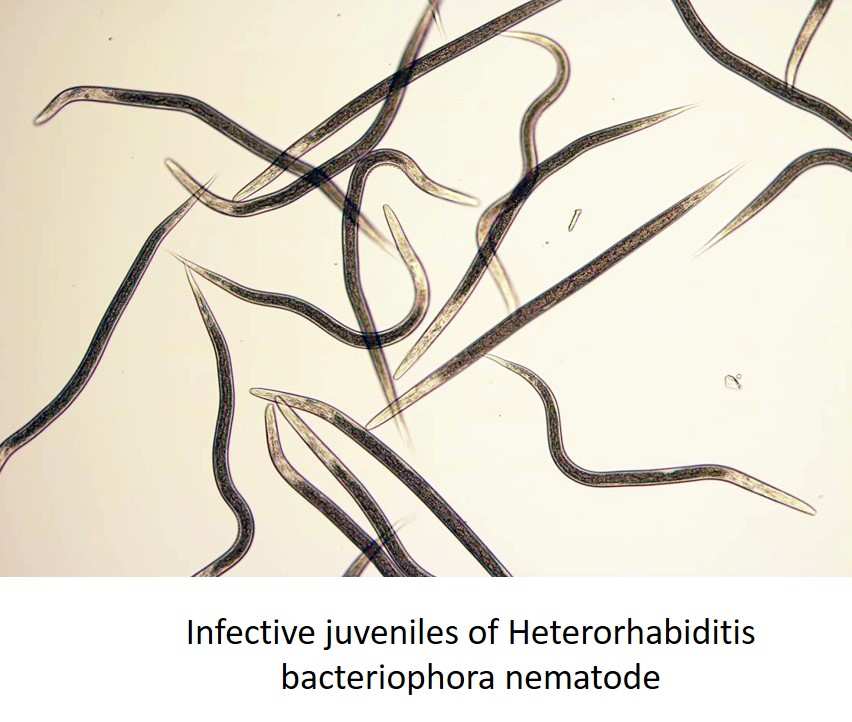
These microscopic roundworms actively hunt grubs in the soil, entering their bodies and releasing bacteria that kill the host within 24 to 48 hours. The nematodes then feed on the bacteria and grub tissue, reproduce, and continue searching for new hosts.
The species most effective against white grubs is Heterorhabditis bacteriophora. You'll find it sold under various brand names at garden centers and online retailers. Application rates typically run around one billion nematodes per three thousand to five thousand square feet.
Here's what you need to know for success:
- Soil temperature matters. Nematodes are active between 55 and 85 degrees Fahrenheit. Below 50 degrees, they go dormant or die.
- Moisture is critical. Water the lawn before application and keep the soil moist for at least two weeks after. Nematodes move through water films in the soil. Dry soil kills them.
- Apply in the evening. UV light kills nematodes quickly. Apply at dusk or on an overcast day, and water them into the soil immediately.
- Results take time. Unlike chemical insecticides, nematodes don't kill overnight. Expect to see grub die-off within two to three weeks, with full population reduction by four weeks.
Nematodes are completely safe for clover plants, earthworms, and beneficial insects above ground. They're a solid choice for organic lawn care or for use near vegetable gardens and pollinator habitat.
Biological: Milky Spore
Milky spore is a naturally occurring bacterium, Paenibacillus popilliae, that specifically infects Japanese beetle grubs. When grubs ingest the spores while feeding, the bacteria multiply in their blood, turning it milky white. The grub dies and releases billions of new spores into the soil.
The upside: once milky spore establishes in your soil, it can remain effective for ten to fifteen years with a single application. The downside: it takes two to three years to build up enough spore density to provide meaningful control. During that establishment period, grubs can still cause damage.
Milky spore only works on Japanese beetle grubs. If European chafers or masked chafers are your problem, milky spore won't help. Get a species identification before investing.
Application is straightforward. You place small granules or powder spots every four to five feet across the lawn in a grid pattern. Water them in.
Then wait. The spores germinate in the soil as grubs feed through treated areas over the following seasons.
What to Avoid
A few common mistakes worth calling out:
- Spring applications of preventive products. By spring, grubs are large, nearly done feeding, and preparing to pupate. Preventive products applied now won't reach them effectively. Save preventive treatments for early summer.
- Overwatering after granular application. Light irrigation activates the product. Heavy watering washes it past the root zone where grubs are feeding.
- Using combination weed-and-grub products. If you want to keep your clover, avoid anything labeled for broadleaf weed control. Many combination products contain herbicides that will kill clover along with dandelions.
- Treating based on neighbor's lawn. Grub pressure varies wildly even between adjacent properties. Your neighbor's problem doesn't automatically mean you need treatment.
Timing Your Treatment Right
Getting the timing right matters more than which product you choose. Apply at the wrong time and even the best product fails.
Preventive Window
Adult Japanese beetles and European chafers typically fly and lay eggs from mid-June through August, depending on latitude and species. Eggs hatch within two to three weeks. The tiny first-instar grubs are most vulnerable to preventive insecticides.
Target application window: mid-June through late July for most of the eastern and midwestern United States. In the southern range, apply earlier, sometimes as early as late May. In northern zones, you can push into early August.
The goal is to have the product in place in the thatch layer when the first tiny grubs start feeding. Chlorantraniliprole works well here because it has enough residual activity to cover the hatch window.
Curative Window
If you're finding damage now and grubs are actively feeding, you need a curative product. The best time to apply curative treatments is as soon as you confirm the problem, ideally while grubs are still in their second instar and actively feeding near the soil surface.
Late August through October is the prime curative window in most regions. Grubs are feeding heavily to build energy reserves for winter. They're close to the surface and vulnerable.
Spring curative treatments are less effective. Grubs are larger, deeper in the soil, and preparing to pupate. They'll stop feeding soon anyway.
You're better off waiting until the following preventive window.
Why Spring Grub Treatments Usually Fail
This is one of the most common mistakes in lawn care. People see damage in spring, assume grubs did it over winter, and apply a curative product. But here's what actually happened: the damage was done the previous fall.
The grubs that caused it have already pupated and emerged as adult beetles by late spring.
The grubs you find in spring are either late feeders or a new generation that hasn't hatched yet. Either way, treating now is chasing last year's problem. The better strategy is to monitor in late summer and fall, and apply preventive control the following early summer if populations warrant it.
Protecting Your Clover During and After Treatment
Grub treatments vary in how they impact clover recovery and the broader lawn biological community. Some points to keep in mind:
- Chemical grubicides. Most labeled for grub control in turf are considered safe for established white clover when used according to label rates. However, heavy applications of certain systemic insecticides can stress flowering and nectar production, a concern if you keep bees or want pollinator habitat.
- Biological controls. Beneficial nematodes and milky spore pose no risk to clover plants or the nitrogen-fixing bacteria in root nodules.
- Irrigation after application. Read the product label. Some granular products need watering-in to move active ingredients into the root zone. Others benefit from light irrigation after a few hours. Follow the printed instructions.
- Re-establishing clover. After harsh grub damage or treatment, you may need to reseed. Broadcasting white clover at two to four pounds per thousand square feet in early fall or spring helps fill gaps. Water lightly and frequently until germination. Mature clover spreads on its own once established.
- Supporting natural predators. Ants, ground beetles, and parasitic wasps naturally suppress grub populations. Reducing broad-spectrum insecticide use preserves these allies. Well-nourished soil with organic matter encourages beneficial organisms.
When to Call a Professional
If you're dealing with repeated heavy grub infestation or lawn damage covering more than a few hundred square feet after trying biological controls, a licensed lawn care professional can provide custom container curative application with faster-acting insecticides. They also offer follow-up monitoring. Treatment runs between one hundred and three hundred dollars for a typical five thousand square foot lawn in 2026.
Get at least two quotes. Confirm they're using EPA-registered products and follow your state's application rules.
That investment may pay off for valuable clover lawn settings where damage is severe or you have pollinators to protect and need precise treatment timing.
It looks like the previous batches already covered all the remaining H2 sections from the approved TOC. Let me verify what was covered:
- Quick Answer
- Why Your Clover Might Be Dying
- Which Grub Species Actually Target Clover Roots
- How to Confirm Grubs Are the Real Problem
- Other Culprits That Mimic Grub Damage
- Your Decision Tree
- Treatment Options Ranked by Effectiveness
- Timing Your Treatment Right
- Protecting Your Clover During and After Treatment
- When to Call a Professional
That's 10 H2 sections right there. The TOC also included "FAQs" which was covered in the first continuation batch. All sections have been written.
No further sections remain to write.
Here's the remaining H2 section that was included in the TOC but hasn't appeared yet:
Frequently Asked Questions
Do all grubs eat clover?
Most white grubs in the scarab beetle complex will feed on clover roots if available in their diet. Japanese beetles, European chafers, and masked chafers readily consume clover. However, some species have plant preference preferences based on local availability.
Will my clover come back after grub damage?
Usually yes. White clover spreads through above-ground stolons that root at nodes. That growth allows clover to recolonize bare spots faster than many turfgrasses after defoliation.
If the stolons and crown are still alive, the plant regenerates. If grubs sever all roots, the plant dies, but crowns can send new roots if the damage isn't total. Overseed thin patches with fresh clover seed in early spring.
When should I treat for grubs in a clover lawn?
Preventive treatment makes sense if you've had confirmed grubs in the past two years. Apply between mid-June and late July, prior to beetle egg laying. For active damage now, apply curative treatment right away.
Don't wait until spring; curative products then may be too late if grubs have already caused serious root injury.
Is grub damage worse in sun or shade?
Grubs can be found anywhere but moisture matters more. Well-watered or low-lying areas often have higher grub survival rates as eggs and young larvae are sensitive to drying. In a mixed clover lawn, south-facing slopes lose moisture faster leading to lower grub survival there.
Can I use milky spore for grubs in my clover lawn?
Yes, milky spore targets Japanese beetle grubs specifically. It's safe for clover, and won't impact insects or plants. Take note that results take two to three years to develop.
Works best where Japanese beetles are the dominant grub species.
Should I worry if I only find one or two grubs?
No. Finding one or two grubs during an inspection is normal and not cause for action. Many lawns carry low-level populations without harm.
With clover due to tolerance, you have a comfortable buffer. Start treating when you see counts above five grubs per square foot or notice damage symptoms.
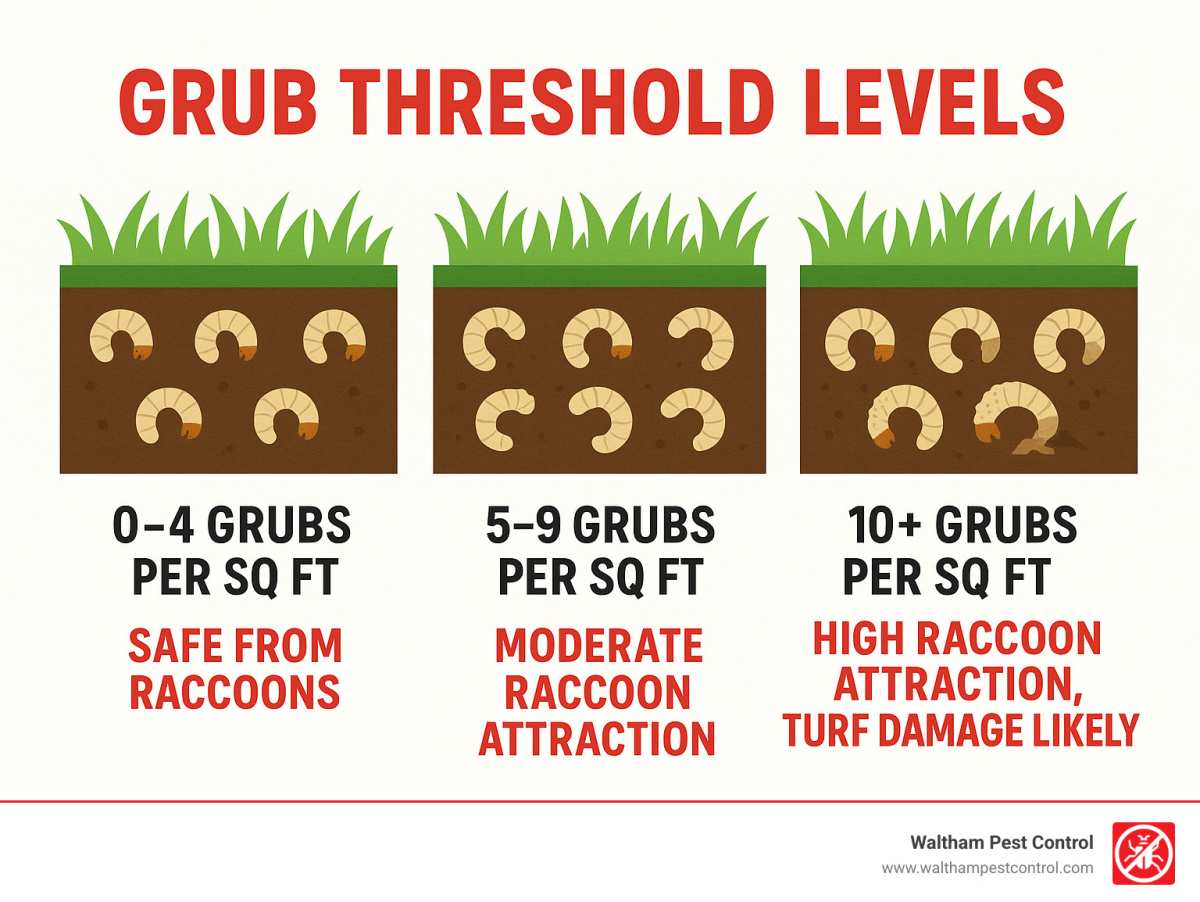
Image source: Bing (Web (fair-use with source credit))