
If you've found a fat, C-shaped larva in your lawn and you're wondering do grubs bite, you're not alone. This is one of the most common pest questions homeowners ask every summer, usually right after they've pulled back a patch of dead grass and found a handful of pale grubs wriggling in the soil. The short answer is more nuanced than most articles give it, and getting it wrong can lead to either unnecessary panic or ignoring a real problem.
Here's what tends to surprise people. Grubs aren't out to get you, but they absolutely can make contact with human skin during gardening, and some species can cause irritation or a mild pinch. The bigger concern is what they're doing underground.
The economic threshold for turf damage is around 5 to 10 grubs per square foot, and once they cross that line, your lawn can peel back like carpet. Let's separate the myths from the actual risks.

Image source: Bing (Web (fair-use with source credit))
Quick Answer
Do grubs bite people? No, white grubs don't bite humans in the way mosquitoes or ticks do. They have no interest in your blood. Their chewing mouthparts are built for roots, not skin.
However, handling larger larvae can cause a mild pinch that surprises people. Most skin irritation blamed on grubs usually comes from other soil insects or contact with setae, the tiny hairs on some species. The real threat grubs pose is to your lawn, not to your skin.
What Grubs Actually Are (And Why People Worry)
White grubs are the larval stage of scarab beetles, a large family that includes Japanese beetles, June bugs, European chafers, and dozens of other species across North America. They spend most of their lives underground, curled in that distinctive C-shape, feeding on the roots of turfgrass and other plants. Most of the grub species you'll encounter are between a quarter inch and an inch and a half long, with creamy white bodies, tan or brown heads, and three pairs of legs near the front.
The confusion around biting usually starts because people lump all "lawn bugs" together. Grubs are often found alongside other soil-dwelling insects that do bite or sting, like beetle larvae from different families, fleas, or ground wasps. When someone pulls up sod and gets a skin reaction, the nearest visible culprit is usually the grub, even though it's rarely the actual cause.
Understanding what grubs are and what they're built to do makes it much easier to assess the real risk honestly.
Can Grubs Bite or Hurt You? Breaking Down the Real Risks
Let's be direct about what white grubs can and cannot do. They possess chewing mouthparts called mandibles, which they use to sever and consume plant roots. These mandibles are strong enough to grind through grass roots all day long, but they lack the specialized anatomy that biting insects use to pierce skin or draw blood.
A grub's mouth opens and closes sideways, designed for scissoring through fibrous material, not for puncturing.
That said, if you pick up a particularly large grub, like a mature Japanese beetle larva or a green June beetle larva, and it tries to feed on your finger, you might feel a brief pinch. It won't break the skin in most cases, and it won't cause lasting pain. Think of it more like a rubber band snap than an actual bite.
Grasshoppers and some beetle adults deliver far more noticeable pinches than any grub you'll find in your yard.
The irritation story is a bit different. Some species have tiny hair-like structures called setae on their bodies. If you're sensitive and handle enough of them, you might get mild contact dermatitis, redness, or itchiness.
This isn't a bite. It's a physical irritation similar to what you'd get from handling certain caterpillars or rough-textured leaves. If your skin turns red after gardening, the grubs in your soil are worth considering as a culprit, but they're not biting you.
Here's the risk breakdown most people actually care about:
- Direct bite to human skin: Grubs cannot bite through skin. They lack piercing-sucking mouthparts.
- Pinch from mandibles: Possible with large species, but mild and superficial.
- Skin irritation: Occasional contact dermatitis in sensitive individuals, usually from setae or secondary irritants in soil.
- Secondary pests: Raccoons, skunks, and birds that tear up lawns looking for grubs can create a mess and occasionally carry diseases or parasites.
- Lawn destruction: The actual primary risk, potentially requiring full lawn renovation.
Grub Species That Cause the Most Confusion
Not all white grubs are created equal, and the species in your yard determines both the damage potential and the likelihood of any skin contact issue. Japanese beetle grubs are probably the most widespread pest species in the eastern United States. They're small, typically under an inch, and while they can deliver a faint pinch if you really provoke them, they're essentially harmless to people.
Their damage to turf, however, is severe and well-documented.
European chafer grubs are another major pest, particularly in the Northeast and Midwest. They're slightly larger than Japanese beetle grubs and tend to cause damage earlier in the fall. Their mandibles are proportionally bigger, so the pinch factor is marginally higher, but we're still talking about a sensation most adults would barely register.
Green June beetle larvae are the ones most likely to surprise you. They're larger, more active, and they actually come to the surface at night, crawling on sidewalks and patios. Their mandibles are more developed, and a determined pinch from a full-grown green June beetle larva can feel genuinely sharp, though it still won't break skin in the vast majority of cases.
May and June beetle larvae, from the genus Phyllophaga, are among the largest grubs you'll encounter, sometimes exceeding two inches. These are the ones that could theoretically deliver the most noticeable pinch simply due to their size and jaw strength. Even so, entomologists and turf professionals handle them bare-handed regularly without issue.
The real takeaway is that species identification matters far more for lawn management than for personal safety.
What Grub Mandibles Can (and Can't) Do
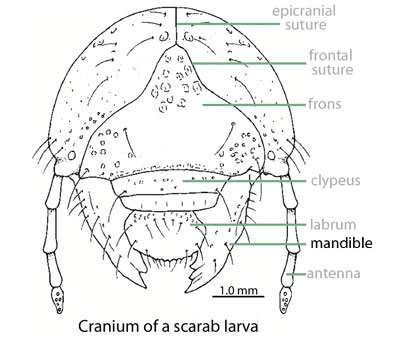
Image source: Bing (Web (fair-use with source credit))
Grub mandibles are fascinating pieces of biological engineering, but they're specialized for a very specific job. They're broad, flat, and ridged, designed to clamp down on grass root fibers and shear them apart through lateral movement. If you look at a close-up image of a scarab larva's mouthparts, you'll see they resemble tiny mill blades rather than fangs or stingers.
There's no hollow channel for injecting venom, no sharp stylet for piercing, and no mechanism for anchoring into flesh.
When a grub "pinches" you, what's actually happening is the mandibles closing on the outer layer of your skin with enough pressure to trigger a nerve response. It's purely mechanical. The grub isn't trying to bite you.
It's either reflexively attempting to feed on whatever it's gripping or defending itself against what it perceives as a threat. Either way, the force is minimal compared to what the same mandibles exert on a grass root.
This distinction matters because it reframes the entire "do grubs bite" question. Grubs don't bite because biting isn't part of their behavioral repertoire. They feed on roots, they burrow through soil, and they occasionally pinch when handled.
That's the full scope of their interaction with human skin. Everything else you've heard about grubs biting is either a case of mistaken identity or an exaggerated reaction to a harmless pinch.
Skin Irritation From Grubs: What's Actually Happening
If you've handled grubs and later noticed redness, itching, or small bumps on your hands or arms, you're not imagining things. But the cause is almost never a bite. The most common explanation is contact with setae, the microscopic hair-like projections on the body surface of some scarab larvae.
These setae can mechanically irritate sensitive skin, similar to fiberglass or certain plant hairs. The reaction is usually mild, localized, and resolves on its own within a few hours.
Another possibility is that the irritation comes from something else entirely in the same environment. Soil harbors bacteria, fungi, and other microorganisms that can cause contact dermatitis. If you've been digging in grub-infested soil, you've also been exposing your skin to all of these.
Grubs get blamed because they're the most visible organism, but the actual irritant could be anything from fungal spores to residual fertilizer granules.
There's also a less common but documented phenomenon with certain scarab species where the mandibular secretions can cause a mild chemical irritation. This isn't venom in the way a bee sting works. It's more like the defensive secretions some millipedes produce, which can stain or slightly irritate skin.
The effect is temporary and doesn't require medical attention in the vast majority of cases. If you experience significant swelling, spreading redness, or signs of infection after handling grubs, that warrants a visit to your doctor, but it would be an unusual reaction.
The practical advice here is straightforward. If you're doing extensive gardening in grub-heavy soil, wear gloves. Not because grubs will bite you, but because prolonged contact with any soil organism can irritate sensitive skin.
Wash your hands thoroughly afterward, and if you notice a rash, treat it like any other contact dermatitis with cool compresses and over-the-counter hydrocortisone if needed. The grubs themselves are almost certainly not the direct cause of anything more serious than mild, temporary irritation.
The Real Danger: Lawn Damage, Not Bites
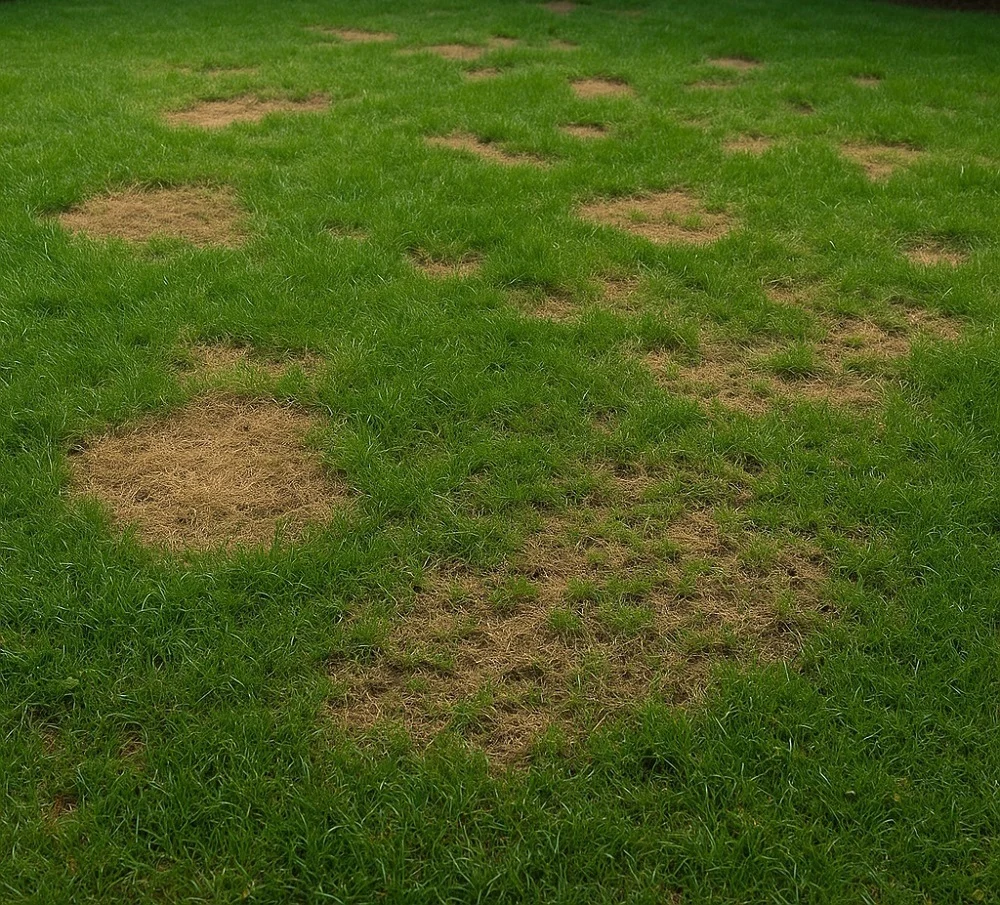
Image source: Bing (Web (fair-use with source credit))
The damage you should actually worry about happens underground, long before you see any brown patches on the surface. White grubs feed on grass roots, severing the plant's ability to take up water and nutrients. In our research, turf extension services consistently report that visible damage typically appears when grub populations exceed 5 to 10 larvae per square foot, depending on the grass species and overall lawn health.
A well-maintained, deeply rooted Kentucky bluegrass lawn can tolerate slightly more pressure than a thin, drought-stressed fescue lawn.
The tricky part is that grub damage often looks like other problems. Irregular brown patches that peel back easily can mimic drought stress, fungal disease, or dog urine damage. The simplest diagnostic test is the "tug test." Grab a handful of the brown grass near the edge of a damaged area and pull.
If the sod lifts away from the soil like loose carpet with little resistance, that's classic grub damage. The roots have been chewed through, and the turf no longer anchors to the ground.
Timing matters for recognition. In most regions, the heaviest feeding occurs from August through October, when grubs are in their final larval stage and at peak size. Damage from this fall feeding might not show up until the following spring, when the weakened grass fails to green up after winter.
That delay confuses people. They're looking at April damage and trying to find grubs, but by then the larvae have already pupated and emerged as adult beetles.
Secondary damage from wildlife is often the first obvious sign homeowners notice. Raccoons, skunks, and armadillos in the southern states will tear up lawns at night, peeling back sod to feast on grubs. Birds, particularly starlings and crows, will peck through thatch to extract larvae.
If your lawn looks like a small excavator went through it overnight, you probably have a grub population high enough to attract predators. That damage can exceed what the grubs themselves caused, and it's often what finally pushes homeowners to take action.
When Grubs Signal a Bigger Problem in Your Yard
Finding a few grubs while gardening isn't cause for alarm. Healthy soil contains all kinds of insect larvae, and a low-level grub population is part of a functioning ecosystem. The problems start when certain conditions create a perfect storm for population explosions.
Understanding these triggers helps you anticipate trouble instead of just reacting to damage.
Moisture is the biggest factor. Scarab beetles preferentially lay eggs in well-watered, moist soil. If you irrigate your lawn regularly, you're inadvertently creating an ideal egg-laying environment.
This is one reason golf courses and well-maintained residential lawns tend to suffer more severe grub damage than neglected properties. The beetles are smart about where they deposit their offspring, and your sprinkler system is rolling out the welcome mat.
Sunlight plays a role too. Adult beetles prefer to lay eggs in sunny, open turf areas rather than shaded locations. South-facing lawns with full sun exposure consistently show higher grub pressure.
If your property has large open areas with minimal tree cover, you're in a higher-risk category for grub infestations, and proactive monitoring in late June through July can catch egg-laying activity before the next generation establishes.
Thatch accumulation compounds the issue. A thick thatch layer, anything over half an inch, provides insulation and protection for both eggs and newly hatched larvae. It also makes it harder for treatments to reach the grubs where they live, in the root zone just below the soil surface.
If your lawn has heavy thatch and you're already seeing wildlife digging, you're likely dealing with a population well above the damage threshold.
How to Identify Grubs vs. Other Lawn Pests

Image source: Bing (Web (fair-use with source credit))
Correct identification saves you time, money, and unnecessary pesticide applications. White grubs from scarab beetles share a distinctive appearance: C-shaped body, creamy white to grayish color, brown head capsule, six legs clustered near the head. But they're not the only larvae you'll find in lawn soil, and several common lookalikes cause different problems or none at all.
The raster pattern is the gold-standard identification tool. This is the arrangement of tiny hairs, spines, and bare areas on the underside of the grub's last abdominal segment, visible with a hand lens. Each scarab species has a unique raster pattern.
Purdue University Extension and similar programs publish detailed visual guides showing these patterns, and learning to read them lets you identify grubs down to the species level without sending samples to a lab.
Here's a quick comparison of common lawn larvae you might confuse with white grubs:
| Feature | White Grub (Scarab) | Cutworm (Noctuid Moth) | Wireworm (Click Beetle) | Boring Beetle Larva |
|---|---|---|---|---|
| Shape | C-shaped, plump | Straight, smooth | Straight, thin, waxy | Straight, elongated |
| Color | Creamy white/brown head | Varies, often dark tan | Yellow-orange to copper | Creamy white |
| Legs | 6 legs near head | 6 legs + prolegs | 6 legs near head | Small or absent |
| Body texture | Soft, wrinkled | Smooth, firm | Hard, segmented | Narrow, hard |
| Distinguishing trait | Brown head capsule, raster pattern | Curls when disturbed | Very hard body, shiny | Found in wood/stems |
Cutworms are probably the most common misidentification. They feed on grass stems at the soil surface rather than on roots, and they're often found curled in a tight spiral just below the ground. Wireworms are thin, hard-bodied, and move quickly when exposed.
Neither causes the same type of root damage as white grubs, so treating for the wrong pest wastes your effort.
If you're still unsure, collect a sample and bring it to your local extension office. Most county extension services offer free pest identification. They can confirm the species, tell you whether the population level warrants treatment, and recommend timing for intervention if needed.
When to Treat Grubs (And When to Leave Them Alone)
Treatment decisions should be based on actual grub counts, not on the mere presence of larvae. The standard economic thresholds established by university turf programs provide solid guidance. For cool-season grasses like Kentucky bluegrass, tall fescue, and perennial ryegrass, the general benchmark is finding 5 to 10 grubs per square foot in a sod-lifting test.
Warm-season grasses like Bermuda, zoysia, and St. Augustine can sometimes tolerate slightly higher numbers, but the same sampling method applies.
To do a proper count, cut a one-square-foot section of turf about 2 inches deep in several areas of your lawn. Peel it back and count the grubs you find in the root zone and soil. Average your counts across multiple sample sites.
If you're finding 3 or fewer grubs per square foot consistently, the population is below treatment threshold. Let them be. Natural predators and environmental pressures will likely keep them in check.
Timing your treatment to the grub life cycle is just as important as the decision to treat. Preventative insecticides, typically containing imidacloprid or clothianidin, work best when applied in late June to early July, just before adult beetles lay eggs. The insecticide needs to be in the root zone when the tiny larvae hatch and begin feeding.
Apply too late, and the grubs are too large and deep for preventative products to reach them effectively.
Curative treatments are your option when you discover an active infestation in late summer or early fall. Products containing trichlorfon or carbaryl work faster and can kill larger larvae, but the window is narrow. Once grubs move deep into the soil for winter dormancy, typically by late October in northern regions, chemical treatments become much less effective.
Spot-treating only the visibly damaged areas rather than the whole lawn can reduce chemical use and protect beneficial insects in unaffected zones.
Biological controls deserve serious consideration. Beneficial nematodes, specifically Heterorhabditis bacteriophora, actively hunt and kill white grubs in the soil. They're most effective against small, early-stage larvae in late summer.
Milky spore disease, Paenibacillus popilliae, targets Japanese beetle grubs specifically and can provide long-term suppression, though it takes 2 to 4 years to fully establish in the soil. Neither will deliver instant results, but they're far gentler on the surrounding ecosystem.
Safe Grub Control Methods That Actually Working
The most effective grub management combines cultural practices with targeted treatments. No single method is a silver bullet, but a layered approach keeps populations below damage thresholds without turning your yard into a chemical zone.
Cultural controls come first. If you're currently watering your lawn daily, cut back. Allowing the top few inches of soil to dry between irrigations makes the environment less attractive for egg-laying beetles.
Overseeding with endophyte-enhanced turfgrass varieties can also help. These grasses contain beneficial fungi that make the plants less palatable to some insect pests, including certain grub species. It's not a complete solution, and the specific effects on grub feeding are still being studied, but the overall resilience benefit is well-documented.
Mowing height matters more than most people realize. Taller grass, around 3 to 4 inches for most cool-season lawns, develops deeper root systems that can withstand more feeding pressure. Short, stressed turf with shallow roots will show damage at much lower grub populations.
Proper fertilization, based on a soil test rather than guesswork, keeps grass vigorous enough to outgrow moderate root loss.
When chemical treatment is truly necessary, read the label completely and follow it precisely. This isn't just legal advice. The label is the instruction manual written specifically for that product's chemistry, and deviating from it usually means either reduced effectiveness or unnecessary environmental impact.
Apply granular products with a spreader calibrated to the recommended rate, then water in lightly to move the active ingredient into the root zone. Liquid formulations should be applied with enough carrier water to achieve penetration to the root zone, typically a quarter to half inch of irrigation or rainfall after application.
Beneficial nematode application has specific requirements that trip people up. These are living organisms, not chemicals, and they need to be applied in cool, moist conditions, ideally in the evening or on an overcast day. UV light kills them quickly, and dry soil sends them into dormancy or death.
Store them refrigerated until use, mix them with water according to package directions, and keep the soil consistently moist for at least two weeks after application. When conditions are right, nematode applications can reduce grub populations by 50 to 75 percent within a few weeks.
Protecting Kids, Pets, and Beneficial Insects During Treatment
Any time you apply pest control products to your yard, you think about who else is out there. Kids play on lawns, dogs eat grass and dig holes, and beneficial organisms like earthworms and ground beetles are quietly doing good work in the same soil. Responsible grub control means protecting all of them.
For chemical insecticides, the re-entry interval on the label tells you how long to keep people and pets off the treated area, usually until granules have been watered in and the turf has dried. Keep dogs from eating treated grass clippings, and remove outdoor toys and water bowls before application. Granular products can cling to fur, so keep pets off the lawn until watering is complete.
If you notice any signs of distress during or after application, contact your veterinarian or the number on the product label right away.
Protecting pollinators is critical, especially with neonicotinoid products. These systemic insecticides can express in pollen and nectar of flowering plants near treated turf. Avoid applying near blooming clover, dandelions, or other flowering weeds in your lawn.
Better yet, mow off blooms before treatment to reduce exposure. This single step dramatically cuts risk to bees and other pollinating insects visiting your yard.
Biological controls are inherently safer for non-target organisms. Beneficial nematodes attack specific insect hosts and leave earthworms, pets, and people completely unharmed. Milky spore disease is similarly specific to Japanese beetle grubs.
These options minimize collateral damage, though they require more patience and precise timing to deliver results.
Common Mistakes People Made With Grubs
The most expensive mistake is treating when you shouldn't. If your tug test reveals only 2 to 3 grubs per square foot and there's no wildlife damage, skip the treatment. You'll save money and preserve the natural predator community that provides free pest control year-round.
Applying the wrong product at the wrong time ranks as a frequent and frustrating mistake. Using a preventative insecticide in September when grubs are already large enough to cause visible damage gives you minimal control. You'd need a curative product instead.
Check the active ingredient and intended use on the label before purchasing.
Skipping the watering step after granular application wastes the entire treatment. The insecticide needs to move from the granule down into the root zone where grubs are feeding. Without irrigation or rainfall within 48 hours, much of the product sits on the surface and degrades without ever reaching the target.
Ignoring the re-entry interval on product labels creates unnecessary exposure risk. Most products specify that people and pets should stay off treated turf until it has been watered in and dried. Treating the lawn and then letting kids or dogs play on it the same afternoon defeats the purpose of following safety guidelines.
Always check the label for specific instructions and follow them precisely.
When to Call a Professional
If you've confirmed grub counts well above 10 per square foot across multiple test sites and you're seeing spreading brown patches, it may be time to call a licensed pest control professional. They have access to professional-grade products, calibrated application equipment, and the expertise to time treatments correctly for your specific region and grub species.
Professionals are also worth hiring if you have a large property, persistent re-infestation despite your own treatment efforts, or concerns about applying chemicals near water features or environmentally sensitive areas. They can conduct a thorough site assessment and recommend an integrated pest management plan rather than just dumping product on the problem.
Look for companies that employ certified applicators through your state's department of agriculture. Ask about their approach to integrated pest management and whether they offer biological or reduced-chemical options alongside conventional treatments.
Frequently Asked Questions
Do grubs bite dogs or cats?
Grubs don't bite pets. If your dog eats grubs, they might get an upset stomach from the larvae themselves or from anything the grubs consumed in the soil. Large quantities could cause vomiting or diarrhea in some dogs.
Most pets leave grubs alone after an initial curious taste.
Can grubs crawl onto you while you're sitting on the lawn?
Green June beetle larvae sometimes crawl on surfaces at night, usually when soil conditions are saturated after heavy rain. They're generally just passing through. If they're moving from one location to another, a grub might end up on a sidewalk or patio, but it won't seek out human skin.
You'll notice them more than they'll notice you.
What does a grub bite look like?
Since grubs don't actually bite, a true "grub bite" doesn't exist. Skin irritation from soil contact, other insects, or allergic reactions to plant material is often mistakenly labeled as a grub bite. If you've got unexplained marks on your skin, check for other culprits like chiggers, fleas, or contact dermatitis from grass or plants.
Grubs simply don't leave bite marks.
Are grubs harmful to touch?
Handling grubs is generally safe for most people. Wash your hands afterward simply because garden soil contains all sorts of bacteria and microorganisms you don't want to transfer to your mouth or food. Some species can cause mild skin irritation in sensitive individuals, so if you have known skin sensitivities, wearing thin gloves during heavy garden work is a reasonable precaution.
How quickly can grubs destroy a lawn?
A large population, say 20 or more grubs per square foot, can kill significant turf sections within a few weeks during peak fall feeding. The damage accelerates when the lawn is already stressed by drought, heat, or poor nutrition. A healthy, well-maintained lawn tolerates moderate grub pressure far better than a neglected one.
Do grubs come back every year?
Not necessarily. Grub populations fluctuate based on weather, natural predators, and egg-laying pressure from adult beetles. A bad one year doesn't lock you into a permanent problem.
Some regions experience strong Japanese beetle pressure on a roughly 2 to 3 year cycle. Consistent monitoring gives you the data to spot real trends versus a single bad season.
The Bottom Line on Grubs and Your Family's Safety
Grubs don't bite, they don't sting, and they don't pose a direct physical threat to you, your children, or your pets. Any pinch you might feel is superficial and harmless. The real story with white grubs is what's happening beneath the surface, where their root-feeding behavior can decimate a lawn left unchecked.
Focus your energy on proper identification, regular monitoring using the square foot sampling method, and treatment decisions based on actual population counts rather than fear. The treatment threshold of 5 to 10 grubs per square foot gives you a concrete data point to work from rather than guessing.
Choose your control method based on the severity of the infestation, your comfort with different approaches, and your commitment to protecting the beneficial organisms sharing your soil. Start with cultural practices, consider biological controls for moderate problems, and reserve chemical treatments for situations where the damage is real and imminent.
Your family's safety around grubs isn't really about the grubs at all. It's about following label directions on any product you use, keeping kids and pets off treated areas as directed, and remembering that the biggest critter risk in a grub-infested lawn is the raccoons tearing it apart at 2 a.m.