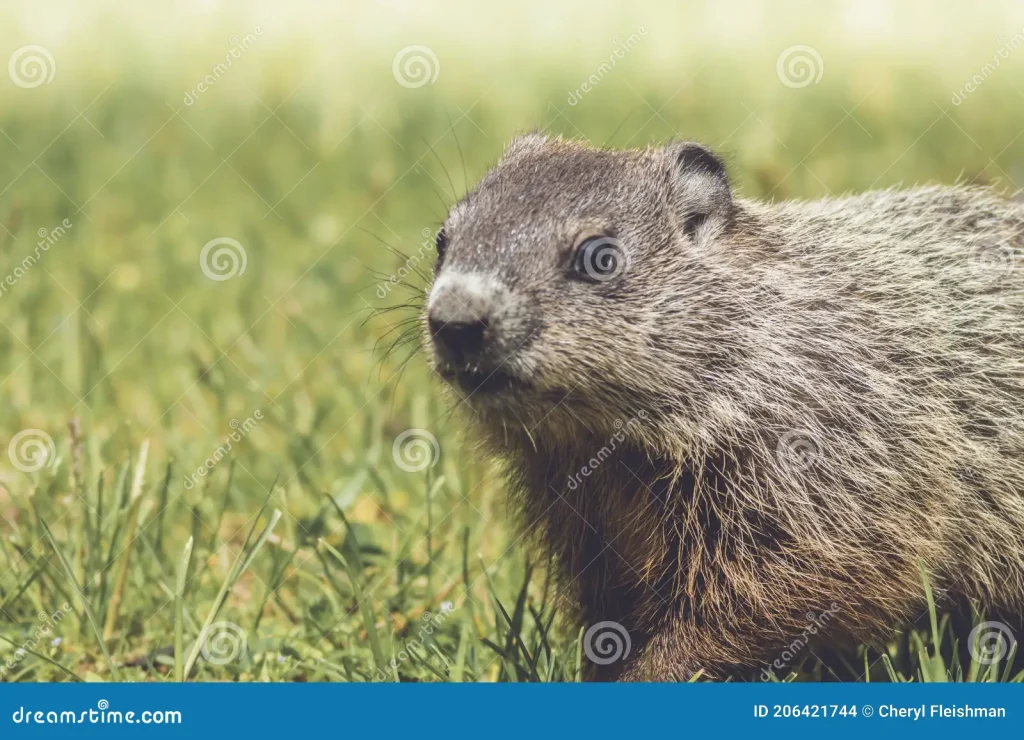
If you've spotted a groundhog waddling through your yard and noticed patches of dead grass, you've probably wondered whether the two are connected. The question "do groundhogs eat grubs" comes up constantly among homeowners dealing with lawn damage, and the answer isn't as straightforward as most people assume. Getting this wrong can send you down the wrong pest-control path entirely.
Here's what the research actually shows. Groundhogs (Marmota monax) are overwhelmingly herbivorous, with plant matter making up roughly 95% or more of their diet. They're not built like grub hunters, and they don't actively dig through soil the way skunks or moles do.
Understanding what groundhogs actually eat, and why they occasionally consume insect larvae, will help you figure out what's really damaging your lawn and how to handle it.
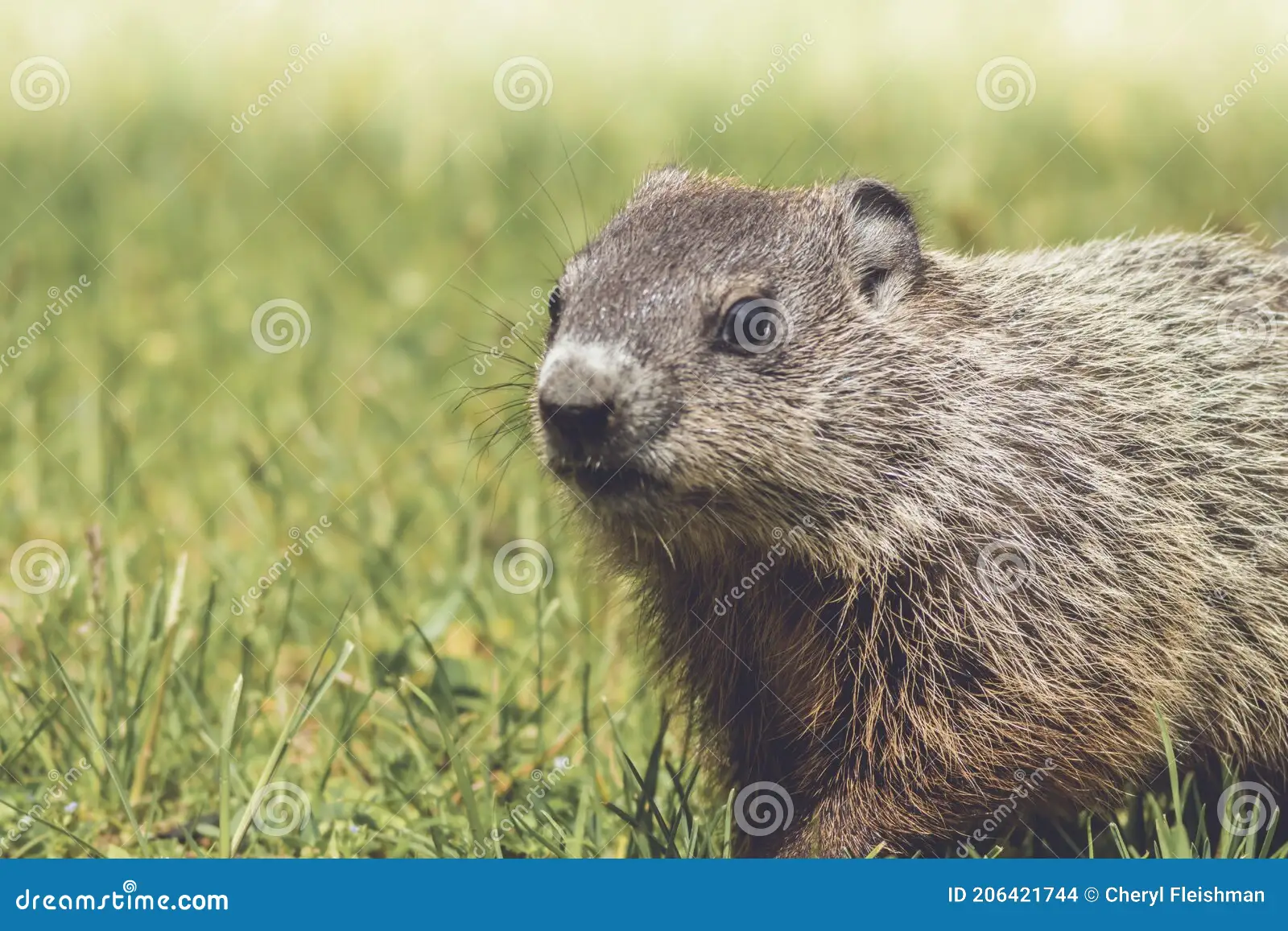
Image source: Bing (Web (fair-use with source credit))
Quick Answer
Groundhogs are primarily herbivores. They eat grasses, clover, dandelions, garden vegetables, and agricultural crops. They do not actively hunt grubs as a food source.
Any insect consumption is incidental and minimal. If you have grub damage in your lawn, groundhogs are not the solution. You need to target the grubs directly or attract animals that actually eat them.
What Groundhogs Actually Eat
A groundhog's diet is almost entirely plant-based. They're selective grazers that prefer tender, green vegetation, and they'll eat up to a full pound of plant matter per day during peak foraging season. That's a lot of greenery for an animal that typically weighs between 5 and 14 pounds.
Their preferred foods include:
- Grasses and clover (their staple food sources in open yards)
- Dandelions, plantain, and other broadleaf weeds
- Garden vegetables like beans, peas, carrots, lettuce, and squash
- Alfalfa and soybeans (major agricultural targets)
- Bark, twigs, and buds during early spring when green vegetation is scarce
- Fruits and berries when available in late summer
Groundhogs are hindgut fermenters, meaning their digestive system is specifically adapted to break down fibrous plant material. Their teeth, jaw structure, and gut anatomy all point to a life spent grazing, not hunting. They emerge from hibernation in late winter or early spring (timing varies by latitude) and immediately seek out fresh green growth to rebuild the body weight they lost during their months-long fast.
As summer progresses, their food intake increases dramatically. They're packing on fat reserves for the next hibernation cycle, which means they spend most of their waking hours eating whatever tender vegetation they can find within about 50 to 150 feet of their burrow entrance.
So Do Groundhogs Really Eat Grubs?

Image source: Wikimedia Commons / Сарапулов (CC BY)
The honest answer is yes, but barely, and not in any way that matters for pest control. Groundhogs are classified as opportunistic omnivores, which means they technically can and occasionally do consume animal matter. That might include insects, grubs, snails, or even small birds or eggs if they stumble across them while foraging.
But here's the critical distinction. Groundhogs don't dig for grubs. They don't seek them out.
They don't have the behavioral adaptations or physical tools that dedicated grub predators use. If a groundhog happens to ingest a grub while munching through a patch of clover or turning over a garden bed, that's incidental consumption, not a feeding strategy.
Image source: Wikimedia Commons / Сарапулов (CC BY)
The idea that groundhogs eat grubs probably gained traction because people see two things happening at once: groundhogs in the yard and grub damage in the lawn. It's an easy assumption to make. But correlation isn't causation, and the groundhog's burrowing behavior has nothing to do with hunting insect larvae.
They dig for shelter, nesting, and hibernation, not for food.
Research published in the Journal of Mammalogy and dietary studies from university extension programs consistently show that animal matter makes up a negligible portion of groundhog stomach contents. We're talking less than 5% in most analyses, and often close to zero. The grubs people hope groundhogs will eat are simply not on the menu in any meaningful way.
What Animals Actually Control Grub Populations
If you're dealing with a grub problem, you need to look at animals that actually target them. Several species are far more effective at reducing grub numbers, and understanding which ones work will save you time and money.
Skunks are probably the most visible grub predators in residential areas. They dig small, cone-shaped holes in lawns to extract grubs from the soil. If you're seeing this type of damage, skunks are likely doing your grub control for you, whether you appreciate the lawn disruption or not.
Moles are insectivores that actively hunt earthworms, grubs, and other soil-dwelling invertebrates. Their tunneling is extensive, and while they can damage lawns aesthetically, they're genuinely reducing grub populations as they feed.
Raccoons will tear up sections of turf to get at grubs, often causing more visible damage than skunks. They're strong enough to peel back sod in large patches.
Birds like starlings, grackles, and robins pick grubs from the soil surface, especially after rain when larvae move closer to the top. Encouraging bird activity in your yard can provide modest grub control.
Beneficial nematodes (Heterorhabditis bacteriophora) are microscopic worms you can apply to your lawn. They enter grubs and release bacteria that kill them from the inside. This is one of the most effective biological control methods available, and it targets grubs specifically without harming other wildlife.
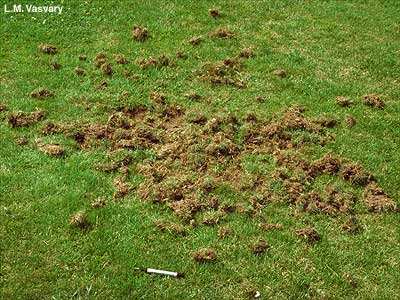
Image source: Bing (Web (fair-use with source credit))
Groundhogs don't belong on this list. Relying on them to manage grubs is like relying on a cow to catch mice. It's not what they do, and waiting for it to happen will only let your grub problem get worse.
What This Means for Your Lawn and Garden
Here's where things get practical. Grub damage and groundhog damage look different, and knowing how to tell them apart will point you toward the right solution.
Grub damage shows up as irregular brown patches of dead grass that peel back easily from the soil. The roots have been eaten, so the sod lifts like a carpet. You'll often see skunk or raccoon digging on top of these patches, since those animals are following the food source.
The damage typically appears in late summer and early fall when grubs are largest and feeding most aggressively.
Groundhog damage looks completely different. You'll see a burrow entrance, usually 10 to 12 inches wide, often near a structure, fence line, or woodpile. The surrounding vegetation will be cropped short near the burrow, and if you have a garden, you'll find clean, angled cuts on stems and partially eaten vegetables.
Groundhogs don't kill grass in patches. They eat it down in a grazing pattern radiating from their burrow.
If you're seeing both types of damage, you likely have two separate problems that need two separate solutions. Treating for grubs won't deter groundhogs, and deterring groundhogs won't fix your grub issue.
The most effective approach is to identify which problem is causing the most damage and address it first. For grubs, that means applying beneficial nematodes in late summer when larvae are young and vulnerable, or using a targeted insecticide if the infestation is severe (typically more than 5 to 10 grubs per square foot). For groundhogs, you'll need exclusion methods, which we'll cover in the next section.
Protecting Your Garden from Groundhogs
Since groundhogs are attracted to your yard by food, not grubs, your defense strategy needs to focus on removing what they actually want. They're looking for tender vegetables, clover, and easy meals within a short walk of their burrow.
Exclusion fencing is the most reliable method. Use hardware cloth or welded wire mesh buried at least 12 inches into the ground and extending 3 to 4 feet above the surface. Bend the bottom foot of fencing outward in an L-shape to prevent digging underneath.
Groundhogs are capable climbers, so the fence needs to be tall enough and ideally have an outward-angled section at the top.
Remove food sources where possible. Keep garden areas clean, harvest vegetables promptly, and reduce clover and broadleaf weeds near known burrow sites. This won't eliminate groundhogs, but it makes your yard less attractive compared to neighboring properties.
Habitat modification helps too. Groundhogs prefer burrows near cover, so clearing brush piles, woodpiles, and dense vegetation near garden areas reduces the spots where they feel safe establishing a home.
Live trapping is an option in many areas, but regulations vary significantly by state and municipality. Some jurisdictions require permits, and many prohibit relocation of trapped wildlife due to disease transmission concerns. Always check with your state's wildlife agency before setting traps.
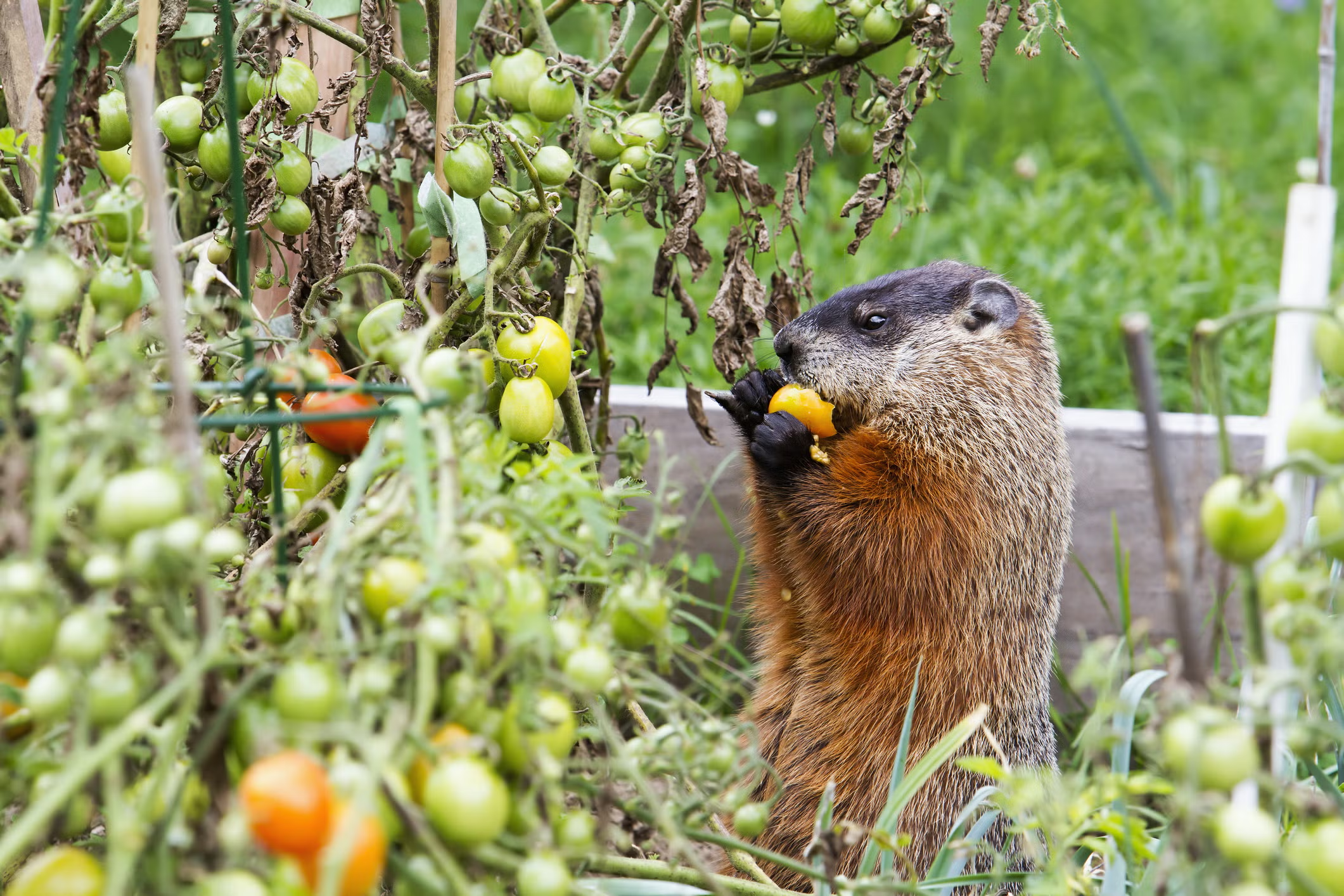
Image source: Bing (Web (fair-use with source credit))
Repellents and deterrents have mixed results. Commercial repellents containing predator urine or capsaicin may work temporarily, but groundhogs often habituate to them. Motion-activated sprinklers can be effective early on, especially if you move them around regularly so the animals don't learn the pattern.
The bottom line is that protecting your garden from groundhogs requires physical barriers and consistent effort. There's no shortcut, and hoping they'll eat your grubs instead of your tomatoes isn't a strategy.
Safe and Legal Groundhog Management
Groundhogs sit in a complicated spot legally. They're classified as nuisance wildlife in most states, which means homeowners have more flexibility in dealing with them than they would with protected species. That said, the rules vary widely depending on where you live, and getting them wrong can result in fines.
Trapping regulations are the first thing you need to check. Many states require a permit or license to trap groundhogs, even on your own property. Some allow trapping only during specific seasons, often excluding periods when females might have dependent young (typically late spring through midsummer).
A few states classify groundhogs as fur-bearing animals with regulated harvest seasons.
Relocation restrictions are even more common. As of 2026, the majority of eastern and midwestern states either prohibit or strongly discourage relocating trapped groundhogs. The primary concern is disease transmission, particularly rabies and tularemia.
Many jurisdictions require that trapped animals be euthanized on-site or released immediately on the same property where they were caught.
Burrow fumigation using gas cartridges is legal in most areas, but it has limitations. The burrow system can extend 15 to 50 feet with multiple entrances, and getting the fumigant to reach all chambers requires sealing every exit. Groundhogs often dig new entrances or retreat to sealed-off sections, making this method hit-or-miss.
Groundhogs can carry rabies, though they're not among the most common vectors. Any direct contact, including bites or scratches, should be treated as a medical concern. Never handle a groundhog with bare hands, and keep pets away from active burrows.
If you notice a groundhog behaving unusually (aggressive, disoriented, active during daylight in a way that seems uncoordinated), contact your local animal control or state wildlife agency.
When DIY methods aren't working or the situation involves multiple animals, structural risks, or legal complexity, hiring a licensed wildlife control operator is the smart move. They know the local regulations, have the right equipment, and can resolve the problem without putting you at legal or physical risk.
Final Takeaway: Should You Rely on Groundhogs for Grub Control?
No. Absolutely not. This is one of those cases where a persistent myth causes real wasted effort.
Groundhogs are herbivores that occasionally ingest insect larvae by accident while eating plants. They do not hunt grubs, they do not reduce grub populations, and their presence in your yard has nothing to do with the condition of your lawn's root system.
If you're dealing with grub damage, target the grubs directly. Beneficial nematodes applied in late summer are effective and environmentally safe. Milky spore disease (Paenibacillus popilliae) works well against Japanese beetle grubs specifically, though it takes a few years to establish in the soil.
Chemical insecticides containing chlorantraniliprole are another option for severe infestations, applied when grubs are small and actively feeding near the soil surface.
If you're dealing with groundhog damage, focus on exclusion and habitat modification. Fencing works. Removing food sources helps.
Trapping may be necessary, but only after you've confirmed it's legal in your area.
The two problems require two separate solutions. Treating one won't fix the other, and waiting for groundhogs to eat your grubs while they devour your garden is a losing strategy. Identify what's actually causing the damage, pick the right tool for that specific problem, and you'll save yourself a season of frustration.
Frequently Asked Questions
Do groundhogs eat anything besides plants?
Groundhogs are classified as opportunistic omnivores, so they technically can consume animal matter. In practice, over 95% of their diet is plant-based. Any insect or grub consumption is incidental, not a deliberate feeding behavior.
What's the difference between grub damage and groundhog damage?
Grub damage appears as brown patches of dead grass that lift easily from the soil because the roots have been eaten. Groundhog damage shows up as burrow entrances, cropped vegetation near the burrow, and clean-cut damage on garden plants. The two look nothing alike once you know what to watch for.
Will getting rid of grubs make groundhogs leave?
Probably not. Groundhogs are in your yard for the plants, not the insects. Removing grubs might reduce visits from skunks and raccoons, but groundhogs will stay as long as there's tender vegetation to eat.
Are groundhogs dangerous to pets?
Groundhogs can carry rabies and may bite if cornered or handled. Dogs are the most likely to have negative encounters, since they'll investigate burrows and try to dig. Keep pets away from active groundhog holes and make sure rabies vaccinations are current.
When is the best time to apply grub control?
Late summer to early fall is ideal. Grubs are small, actively feeding, and close to the soil surface during this window. Beneficial nematodes and most insecticides work best when applied in August or September, depending on your region.
Can I use one treatment to handle both grubs and groundhogs?
No. Grub control targets insect larvae in the soil. Groundhog management requires physical barriers, habitat changes, or trapping.
These are completely different problems that need separate approaches.