You've walked outside and noticed it. Your cherry tree leaves drooping like they've given up halfway through the day. It's unsettling, especially when you've been watering it regularly and everything looked fine last week.
The truth is, drooping leaves are a symptom, not a disease. The real question is what's causing it, and the answer changes depending on what else you're seeing. Let's walk through it step by step so you can figure out exactly what your tree needs.
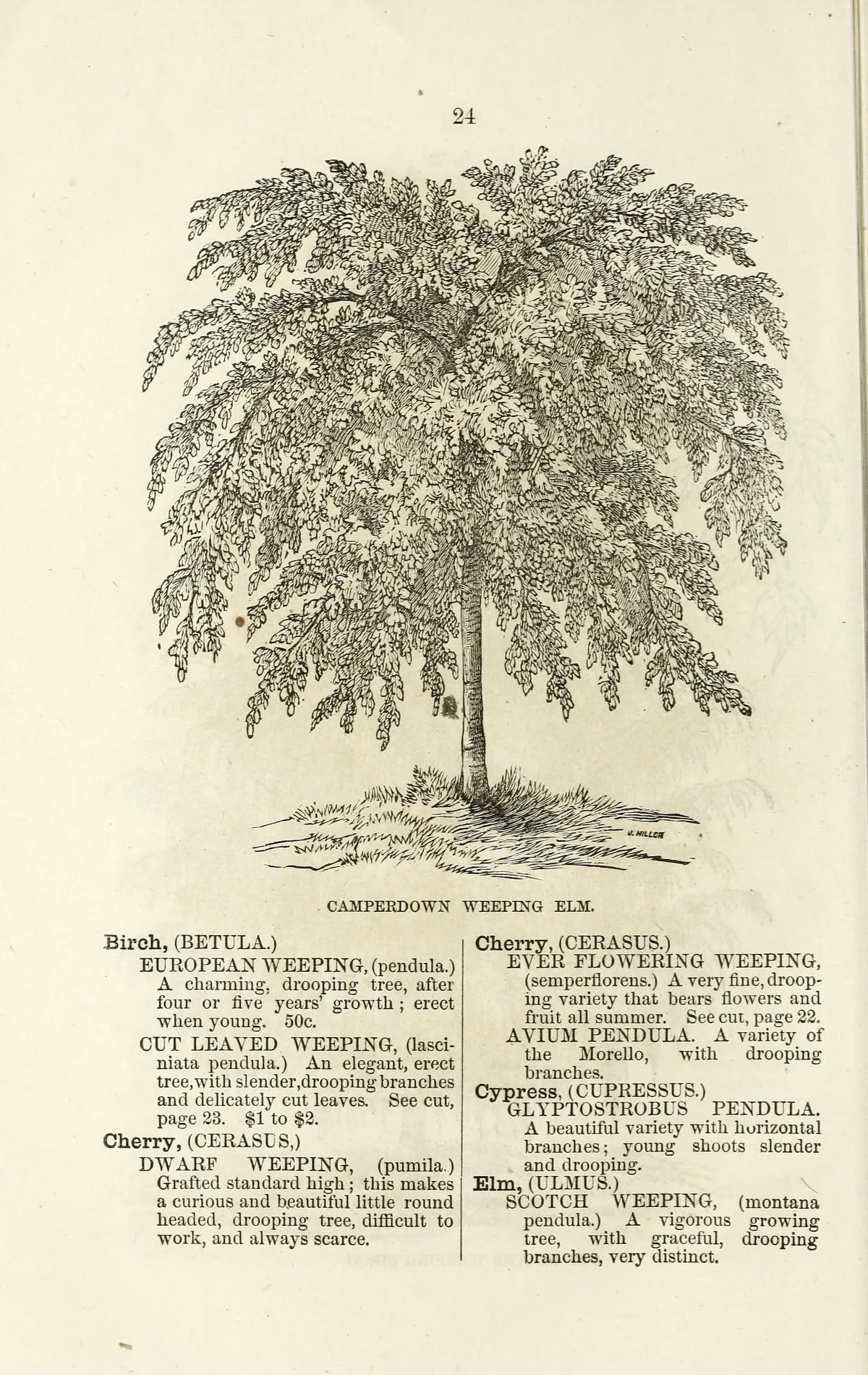
Image source: Wikimedia Commons / Ellwanger & Barry.; Henry G. Gilbert Nursery and Seed Trade Catalog Collection.; Mount Hope Nurseries.
Quick Answer
Cherry tree leaves droop for several reasons. Common causes include drought stress, root rot from overwatering, bacterial canker, pest damage, or weather shock. Check your soil moisture first.
Then inspect leaves, trunk, and roots for other symptoms. The right fix depends entirely on what you find.
The #1 Mistake Most Cherry Tree Owners Make
Here's what we see over and over. Someone notices drooping leaves and immediately grabs the hose. They water heavily, sometimes every day, convinced the tree is thirsty.
Then the leaves get worse. More yellowing. More wilting.
Maybe some branches start dying back.
The problem? They were drowning the tree. Overwatering is actually the most common cause of drooping in cherry trees, especially in areas with clay soil or poor drainage.
When roots sit in saturated soil, they can't take up oxygen. They start to rot. And ironically, a tree with rotting roots can't absorb water properly, so the leaves droop even though the soil is soaked.
Before you add a single drop of water, you need to check what's happening below the surface. A simple soil moisture check at a 6-inch depth tells you more than any guesswork. If it's already moist, watering will only make things worse.
First, Check This Before You Do Anything Else
Grab a trowel or just use your finger. Push it about 6 inches into the soil near the tree's drip line, not right against the trunk. Feel the moisture level.
- Bone dry or crumbly: You're likely dealing with drought stress.
- Damp but not soggy: Moisture is adequate. Look elsewhere for the cause.
- Wet, muddy, or smells sour: Overwatering or poor drainage is your problem.
While you're out there, take a quick look at the pattern of drooping. This matters more than most people realize.
- Whole tree drooping evenly: Usually water-related (too much or too little) or a root issue.
- One side or one branch: Points to bacterial canker, borer damage, or a localized root problem.
- Top of the tree drooping first: Can indicate Verticillium wilt or severe heat stress.
- Bottom of tree drooping first: Often root rot or lower trunk damage.
Also check the time of day. If leaves droop during afternoon heat but perk back up by morning, that's normal heat stress. If they're still wilted first thing in the morning, you've got a real problem that needs attention.
Is It Water, Roots, Disease, or Weather? (How to Tell the Difference)
This is where most people get stuck, because several causes look similar at first glance. Here's a quick diagnostic table to help you narrow it down.
| Symptom | Likely Cause | What to Look For |
|---|---|---|
| Leaves droop in afternoon, recover by morning | Heat stress / normal transpiration | Soil is moist, no other damage |
| Leaves droop and stay drooped, soil is dry | Drought stress | Soil pulls away from roots, dry at 6-inch depth |
| Leaves droop, soil is wet, some yellowing | Root rot / overwatering | Soggy soil, sour smell, mushy roots |
| One branch drooping, gum oozing from trunk | Bacterial canker | Sunken lesions on bark, amber-colored sap |
| Leaves droop with dark spots or holes | Fungal disease or pests | Spots on leaves, insects on undersides |
| Drooping after recent planting or repotting | Transplant shock | Roots were disturbed, timing matches event |
| Drooping after a cold snap | Frost damage | New growth affected, blackened leaf edges |
If you're still not sure after checking these, don't panic. Most cherry tree problems are manageable when you catch them early. The key is matching the treatment to the actual cause, which is what we'll cover next.
Drought Stress vs. Root Rot: Two Opposite Problems That Look Almost Identical
Both of these cause wilting. Both make leaves look sad and lifeless. But the solutions are complete opposites, so getting this right matters.
Drought Stress
Cherry trees need about 1 to 2 inches of water per week during the growing season, especially when fruiting. Young trees (planted within the last 2 to 3 years) have shallow root systems and dry out fast.
Signs of drought stress include:
- Leaves curling inward or downward at the edges
- Leaf margins turning brown and crispy
- Soil pulling away from the base of the trunk
- Drooping that's worse on the sun-facing side
The fix is straightforward. Water slowly and deeply at the drip line, not at the base of the trunk. A drip irrigation system or soaker hose works better than a sprinkler because it delivers water right to the root zone without wetting the foliage.
Apply 2 to 4 inches of organic mulch (wood chips or bark) around the tree, keeping it 3 to 6 inches away from the trunk.
Root Rot
Root rot, most commonly caused by Phytophthora species, happens when cherry tree roots sit in waterlogged soil for extended periods. Cherry trees are particularly susceptible because they prefer well-drained soil and struggle in heavy clay.
Signs of root rot include:
- Wilting despite wet soil
- Yellowing leaves that drop prematurely
- Dark, mushy roots when you dig down (healthy roots are firm and white or tan)
- A sour or rotten smell near the root zone
- Branch dieback that progresses slowly over weeks
If you suspect root rot, stop watering immediately. Improve drainage by aerating the soil around the tree. In severe cases, you may need to carefully excavate the root zone to let it dry.
Fungicide drenches containing mefenoxam can help in early stages, but prevention through proper planting site selection is far more effective.
One important note: if your cherry tree was planted too deep, with the root flare buried below the soil line, it's much more prone to root rot. The root flare, that swollen area where the trunk meets the roots, should always be visible at or slightly above ground level.