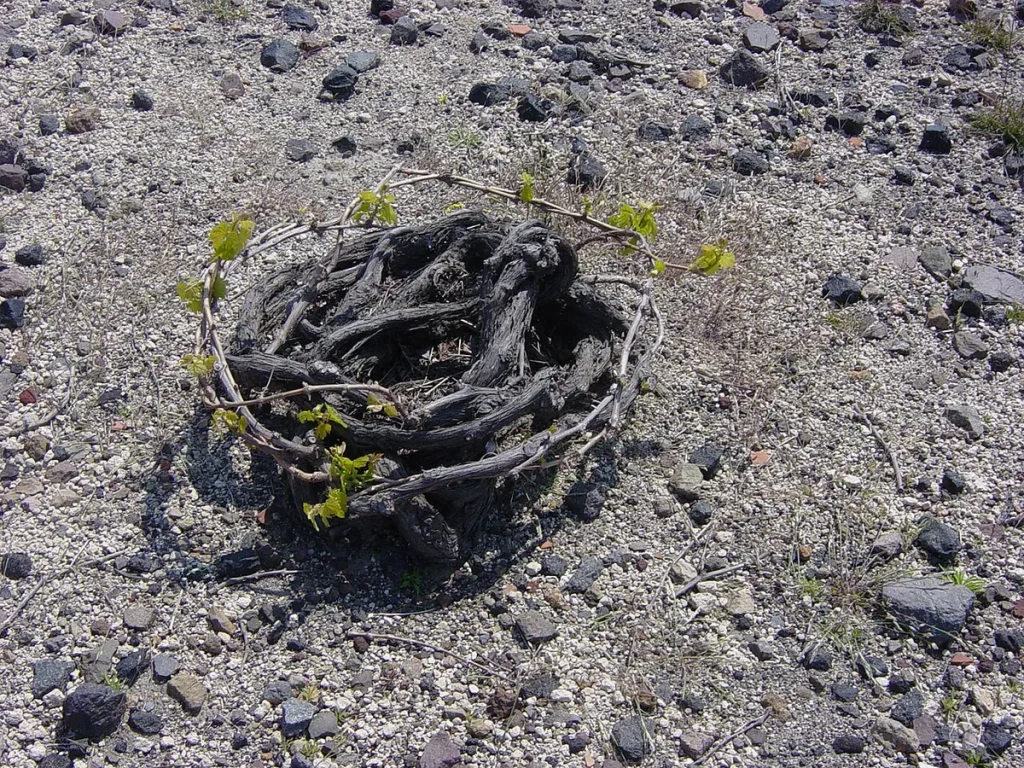
You walk out one spring morning and your grape vine looks like a bundle of dry sticks. No leaves. No buds swelling.
Nothing. Before you grab the loppers, take a breath. Grape vines are masters at playing dead, and pulling one out too early is one of the most common mistakes home growers make.
The truth is, a vine that looks lifeless in March might push new growth from the crown by May. Cold injury, late frost, and overpruning can all mimic death while the root system is perfectly healthy. In our research, university extension services consistently report that the majority of "dead" grape vines sent for diagnosis are actually alive but slow to break dormancy.
Let's walk through exactly how to tell the difference.
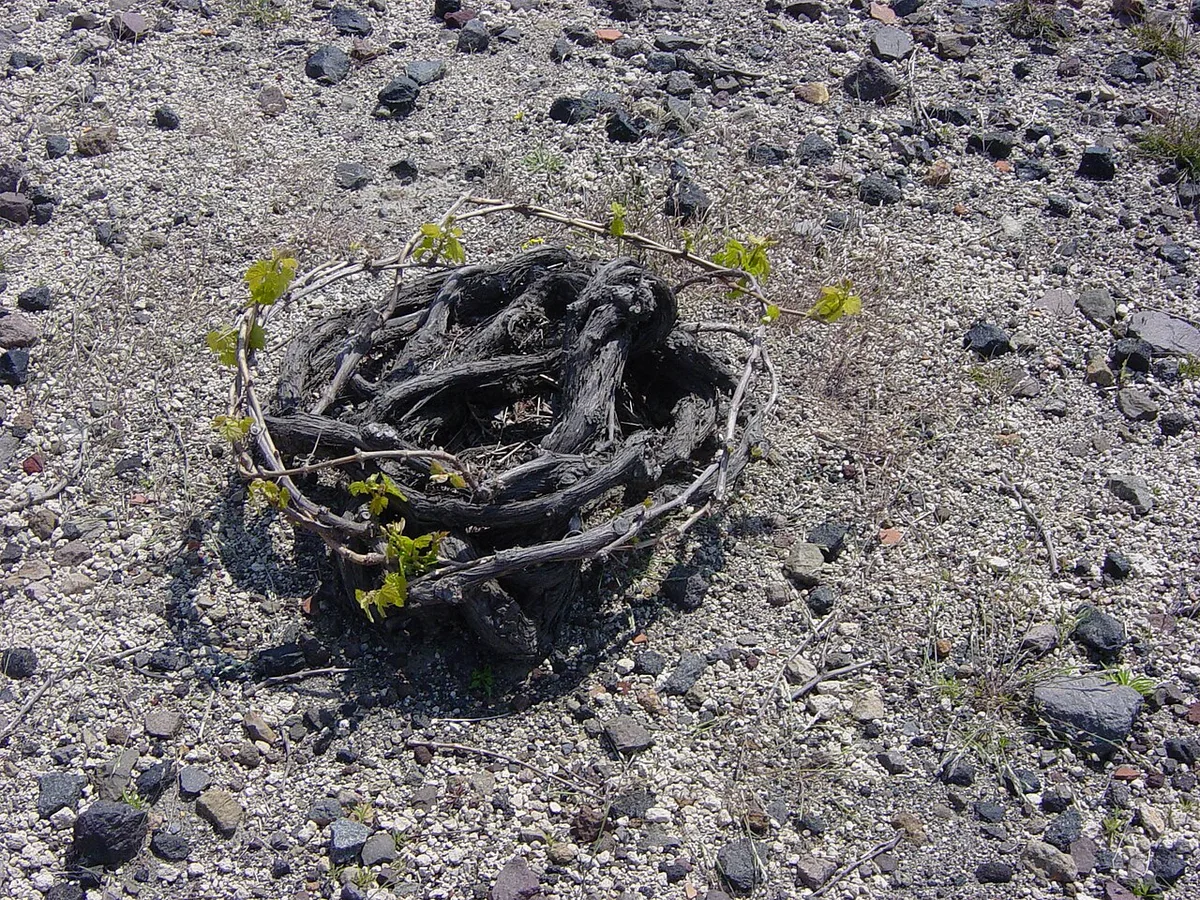
Image source: Wikimedia Commons / User:Leonard G.
Quick Answer
A grape vine is likely alive if you find green cambium under the bark, plump buds that are green inside when nicked, and flexible canes that bend without snapping. Check the crown at the soil line. If the base is firm and shows any green tissue, the vine can still recover.
Wait at least four weeks past your normal bud break date before declaring it dead.
Why Your Grape Vine Might Look Dead — And Why It Probably Isn't
Grape vines go fully dormant in winter. That means no leaves, no green shoots, and bark that looks dry and gray. To a new grower, it's easy to mistake this resting state for a dead plant.
But dormancy is normal. The vine is alive, just sleeping.
The real confusion hits in spring. If your vine hasn't leafed out by the time your other perennials have, panic sets in. Here's the thing.
Grape vines are among the last plants to break dormancy in most climates. Depending on your USDA hardiness zone and the variety you're growing, bud break can happen anywhere from early April to late May. Vitis vinifera varieties tend to break later than Vitis labrusca or French-American hybrids.
Cold injury is the other big culprit. A hard freeze below 0°F can damage or kill primary buds on Vitis vinifera vines, even if the rest of the vine is fine. The vine may look dead above ground while the root system is still sending energy to secondary and tertiary buds.
Those backup buds can take an extra two to four weeks to push, which makes the vine look like it's given up when it's actually just running on a delayed schedule.
The Quick Answer: How to Tell in Under 5 Minutes
Grab a sharp knife or your thumbnail and do a quick scratch test on a few canes and the trunk. Scrape away a thin layer of outer bark. If you see a bright green, moist layer underneath, that's the cambium.
Your vine is alive at that point. If it's brown and dry, move further down the cane or check a different section.
Next, look at the buds. Plump, tight buds are a good sign. Shriveled or hollow buds suggest cold damage or desiccation.
Nick one open with your knife. Green inside means it's viable. Brown and papery means that bud is done.
Finally, bend a cane gently. Live wood has some flex. Dead wood snaps clean and feels brittle.
Do this on three or four canes in different sections of the vine. If even one section shows green cambium and flexible wood, your vine has a fighting chance.
What Grape Vine Dormancy Actually Looks Like
Understanding what healthy dormancy looks like will save you a lot of worry. A dormant grape vine has tight, overlapping bark that may peel slightly on older wood. The canes are brown and woody.
Buds sit snug against the cane at each node. Everything looks still, but nothing looks decayed.
Here's a quick comparison to help you read what you're seeing:
| Sign | Dormant (Alive) | Dead |
|---|---|---|
| Bark color | Brown to gray, intact | Shriveled, peeling off in strips, cracked deeply |
| Cambium under bark | Bright green, moist | Brown, dry, papery |
| Buds | Plump, tight to the cane | Shriveled, loose, or missing entirely |
| Cane flexibility | Bends without snapping | Snaps clean, brittle, hollow-sounding |
| Interior cane color (cross-section) | Greenish-white, moist | Brown, dry, uniform color throughout |
| Crown at soil line | Firm, shows green when scratched | Mushy, rotted, or completely dry and brittle |
If your vine matches the "dormant" column, leave it alone. It's doing exactly what it should be doing. If you're seeing mostly "dead" signs across every section you test, that's when you move to a deeper inspection.
Step-by-Step: How to Test Whether Your Grape Vine Is Dead
This is the core diagnostic process. Work through these steps in order. Don't skip ahead to the crown inspection before checking the canes.
You want to confirm death at multiple points before making any decisions.
The Scratch Test (Bark and Cane)
Start with the easiest check. Use a sharp knife, your thumbnail, or even a coin to scrape away a thin strip of outer bark on a cane. You're looking for the cambium layer, which sits just beneath the rough outer bark.
On a live vine, this layer will be bright green and slightly moist to the touch.
Test at least three spots. Try a cane near the top of the vine, one in the middle, and one near the base. If the top is brown but the base is green, the vine has cold damage to its extremities but is still alive at the core.
That's recoverable.
If every scratch test comes back brown and dry, move to the next step before giving up.
The Bud Check
Grape vines have compound buds at each node. Each bud contains a primary bud, a secondary bud, and a tertiary bud. The primary bud is the main producer.
If it gets killed by frost, the secondary bud can take over, though it usually produces less fruit.
Nick a bud open with your knife, cutting lengthwise. A healthy bud will be green inside and feel firm. A dead bud will be brown, papydry, or hollow.
Check at least five to six buds across different canes. If every single bud is dead on every cane, that's a serious sign. But if even a few buds are green, the vine can still produce a crop, even a reduced one.
The Flex Test
Take a cane and bend it slowly. Live grape wood has moisture in it, so it'll flex and may bend significantly before cracking. Dead wood snaps quickly and cleanly.
It'll feel light and hollow.
This test is especially useful for older cordons and trunk sections. If the main trunk snaps and the interior is dry and brown all the way through, that section is dead. But remember, the vine might still push new growth from below that point, especially from the crown.
The Crown and Root Inspection
This is the most important test, and the one most people skip. The crown of the vine, the area right at the soil line where the trunk meets the roots, is where the plant's survival energy lives. A vine can lose every cane and every bud above ground and still regenerate from a healthy crown.
Carefully remove a small amount of soil from around the base of the vine. You don't need to dig deep. Just expose the top inch or two of the crown and the area just below the graft union if your vine is grafted.
Scratch the bark here the same way you did on the canes.

Image source: Wikimedia Commons / Wikimedia Commons contributor (CC BY)
If the crown shows green cambium, your vine is alive. Period. Even if everything above it looks terrible.
The root system is intact and the vine will push new suckers from the base. You'll need to retrain it, but it's not dead.
If the crown is brown, dry, and brittle all the way around, and the roots below it are black or mushy rather than white and firm, then the vine is truly dead. At that point, removal and replanting is your best option.
What Your Results Mean: The Decision Guide
Now that you've run through the tests, here's how to interpret what you found. This is where most generic advice falls short. The answer isn't binary.
It depends on which parts are alive and which aren't.
Green Cambium, Plump Buds — Your Vine Is Alive
If your scratch test shows green tissue on most canes and the buds are plump and green inside, your vine is healthy. It's either still dormant or just slow to break. Give it time.
Keep the soil moderately moist but not waterlogged. Avoid fertilizing until you see active growth, since pushing nutrients into a dormant vine can do more harm than good.
Prune out any sections that tested fully dead, but leave the live wood alone. Once the vine leafs out, you can do your normal seasonal pruning to shape it.
Mixed Results — Some Wood Alive, Some Dead
This is the most common scenario after a hard winter or late frost. The top of the vine is damaged but the lower sections and crown are alive. Here's what to do.
Prune the dead wood back to the last point where you find green cambium. This might mean cutting the vine back significantly, even to within a foot or two of the ground. It looks drastic, but grape vines respond well to hard pruning.
New shoots will emerge from the remaining live wood or from the crown.
If the primary buds are dead but secondary buds are green, expect a reduced crop this season. Secondary buds produce fewer and smaller clusters. That's normal.
The vine will recover fully the following year.
Fully Brown, Brittle, Dry — The Vine Is Likely Dead
If every test came back negative, including the crown and roots, the vine is dead. Before you pull it, give it one more week of warm weather and check again. Sometimes a vine that's truly gone will show a last gasp of green right at the base.
If there's nothing, remove the vine. Pull the root system if you can, or cut the trunk flush with the ground and let the roots decompose naturally. If you're replanting in the same spot, consider replacing some of the soil first.
Old grape roots can leave behind fungal issues that affect new plantings.
Common Reasons Grape Vines Die (or Look Like They Have)
Understanding why a vine dies helps you prevent it next time. Here are the most frequent causes we've found in our research.
Winter Cold Injury
Vitis vinifera varieties, the wine grapes like Chardonnay and Cabernet Sauvignon, start suffering cold damage around 0°F. French-American hybrids like Marquette or Frontenac can handle down to -20°F or colder. Vitis labrusca varieties like Concord sit somewhere in between.
If you're growing in USDA zones 4 to 6, cold injury is a real risk every winter. The damage often shows up as dead primary buds and cracked bark on the trunk. The vine may survive but produce little to no fruit that year.
Late Spring Frost Damage
This one's sneaky. The vine breaks dormancy on schedule, pushes tender new growth, and then a late frost in April or even May kills everything back to the ground. The vine isn't dead.
It's just been set back hard. Secondary buds will push, but the crop will be minimal.
If you're in a frost-prone area, avoid planting in low spots where cold air settles. You can also delay pruning to slow bud break by a week or two.
Overpruning or Mechanical Injury
Grape vines produce fruit on one-year-old wood. If you prune too aggressively and remove all of it, you'll get a leafy vine with no grapes. Worse, cutting into old wood on the trunk or cordon can open the door to trunk diseases like eutypa or botryosphaeria, which slowly kill the vine over several seasons.
Lawnmowers and string trimmers are silent vine killers. Repeated bark damage at the base of the trunk weakens the vine year after year until it finally gives up. Keep a mulch ring around the base to prevent this.
Root Rot and Drainage Problems
Grape vines hate wet feet. Heavy clay soil or poor drainage leads to root rot, which kills the vine from the bottom up. The first sign is usually wilting leaves in summer despite adequate water.
By the time you notice, the root system may be too damaged to recover.
If your soil drains poorly, consider planting on a raised mound or berm. You can also look into rootstocks bred for wet soil tolerance if you're starting fresh.
Trunk Disease and Crown Gall
Eutypa dieback and botryosphaeria canker are two fungal diseases that attack grape trunks. They cause stunted shoots, cupped leaves, and eventual death of one or both cordons. Crown gall, caused by Agrobacterium tumefaciens, creates rough, tumor-like growths at the base of the vine.
Both are difficult to treat once established. Pruning during dry weather, sterilizing tools between cuts, and avoiding large pruning wounds are your best prevention strategies.
Mistakes to Avoid When Checking Your Vine
Don't Cut It Down Too Early
This is the number one mistake. Grape vines break dormancy late. In colder climates, a vine that looks dead in early April may be perfectly normal.
Wait at least four weeks past your expected bud break date before making any removal decisions.
Don't Ignore the Crown
People test the canes, find brown tissue, and declare the vine dead without ever checking the base. The crown is the vine's lifeline. Always inspect it before giving up.
Don't Confuse Delayed Bud Break With Death
Different varieties break dormancy at different times. If you're growing multiple varieties, don't compare them. A Concord might be fully leafed out while your Cabernet Sauvignon is still sitting there looking like a stick.
That's normal.
Don't Forget the Graft Union
Most commercial grape vines are grafted onto disease-resistant rootstock. If the scion (the top part) dies, the rootstock may still be alive and pushing suckers. Those suckers won't produce the variety you planted.
Check above and below the graft union separately to understand what's happening.
When to Wait, When to Prune, and When to Replace
Here's a simple timeline to guide your decisions.
Early spring (March to early April): If the vine looks dead but you're still within the normal dormancy window, wait. Do your scratch tests and bud checks, but don't take action yet.
Mid to late spring (late April to May): If the vine hasn't shown any growth and your tests are mostly negative, start pruning back dead wood. Cut to the last point of green cambium and see what happens over the next two to three weeks.
Early summer (June): If there's still no growth from the crown or any remaining live wood by early June, the vine is almost certainly dead. Remove it and plan for replanting.
When you do replant, give the new vine a strong start. Prepare the soil well, water consistently in the first season, and protect the trunk from mechanical damage. If you're in a cold climate, choose a variety rated for at least one zone colder than yours to build in a safety margin.
Expert Tips for Keeping Your Grape Vine Alive Long-Term
A healthy grape vine can produce for 30 to 50 years or more. The key is consistent care and avoiding the common killers.
- Mulch around the base to regulate soil temperature and prevent mechanical damage from mowers.
- Prune annually during late winter while the vine is fully dormant. Never prune in fall, as fresh wounds are vulnerable to cold injury.
- Sterilize your pruning tools with a 10% bleach solution or 70% isopropyl alcohol between vines, especially if you suspect disease.
- Train your vine properly from the start. A well-structured trunk and cordon system resists disease and produces better fruit than a tangled mess.
- Monitor for trunk diseases annually. Look for stunted shoots, dead spurs on one side of the cordon, and dark, sunken areas on the trunk bark.
- In cold climates, consider hilling soil over the graft union in fall to protect it from winter kill. Remove the soil mound in spring after the risk of hard freezes has passed.
If you're dealing with persistent disease or unexplained dieback in your garden, your local university extension service can often test tissue samples and give you a definitive diagnosis. It's a resource a lot of home growers overlook, and it's usually free or very low cost.
Frequently Asked Questions
How long should I wait before deciding my grape vine is dead?
Wait at least four weeks past your normal bud break date. In most climates, that means giving the vine until late May or even early June. Grape vines are among the last perennials to leaf out, and premature removal is the most common mistake.
Can a grape vine come back from the roots?
Yes. If the crown and root system are healthy, a vine can regenerate even after losing all its above-ground wood. You'll see new suckers emerging from the base.
Select the strongest one and train it as a new trunk. Expect to wait a full season before the vine produces fruit again.
What does cold-damaged grape vine wood look like?
Cold-damaged wood often has cracked or peeling bark, especially on the upper side of horizontal cordons where sun exposure causes temperature swings. The cambium may be brown in patches rather than uniformly green. Buds may appear normal from the outside but be brown and dead when cut open.
Should I fertilize a grape vine that looks dead?
No. Don't fertilize until you confirm the vine is alive and showing active growth. Pushing nutrients into a dormant or stressed vine can burn roots and do more harm than good.
Once you see new shoots, a balanced fertilizer applied lightly is appropriate.
How cold is too cold for grape vines?
It depends on the variety. Vitis vinifera can be damaged at 0°F and killed at -10°F. French-American hybrids like Marquette tolerate down to -30°F. Vitis labrusca varieties handle around -15°F to -20°F. Know your variety's rating and your USDA zone before winter hits.
What's the difference between a dead vine and one with trunk disease?
A dead vine shows no green tissue anywhere, including the crown. A vine with trunk disease may have one dead cordon while the other is still producing, or it may show stunted, distorted growth on affected sections. Look for dark, sunken cankers on the trunk and dead wood that doesn't correspond to cold exposure patterns.
Let me precisely map the TOC to what was already written to confirm:
- Why Your Grape Vine Might Look Dead, ✅ covered
- The Quick Answer: How to Tell in Under 5 Minutes ✅ covered
- What Grape Vine Dormancy Actually Looks Like ✅ covered
- Step-by-Step: How to Test Whether Your Grape Vine Is Dead (with all 4 sub-sections) ✅ covered
- What Your Results Mean: The Decision Guide (with all 3 sub-sections) ✅ covered
- Common Reasons Grape Vines Die (or Look Like They Have) (with 5 sub-sections) ✅ covered
- Mistakes to Avoid When Checking Your Vine (with 4 sub-sections) ✅ covered
- When to Wait, When to Prune, and When to Replace ✅ covered
- Expert Tips for Keeping Your Grape Vine Alive Long-Term ✅ covered
- FAQs: Is My Grape Vine Dead? (with 6 questions, each as H3) ✅ covered
All H2 sections from the approved TOC are complete. The FAQ section at the end also doubles as the natural closing for the article, as outlined in the content type flow (Decision Tree / Workflow → recommended actions → mistakes → decision guide).
There are no remaining H2 sections to write. The article is finished.