Yes, you can plant Bermuda grass in the summer, but it requires proper timing and care to ensure successful growth. Summer planting can work if done correctly, especially when the soil is warm and conditions are ideal. It’s important to choose the right time within the season and follow specific steps to promote healthy establishment.
Planting Bermuda grass during summer is possible and often beneficial because the warm soil helps the grass establish more quickly. However, hot temperatures and dry conditions can pose challenges, so proper watering and soil preparation are key. If you’re considering planting Bermuda grass now, understanding the best practices can make all the difference in creating a lush, green lawn. Summer planting is all about timing, attention to moisture, and selecting the right seed variety to thrive in the heat.

Can You Plant Bermuda Grass in the Summer?
Understanding Bermuda Grass Growth Patterns
Bermuda grass thrives best in warm weather, making it a popular choice for lawns in hot climates. Its growth peaks during the summer months when temperatures are consistently high. Knowing its growth pattern helps determine the best time to plant Bermuda grass. If you plant it at the right time, your lawn can become lush and green quickly.
Why Summer Planting Is Usually Challenged
Planting Bermuda grass in the height of summer can be tricky because of extreme heat and dry conditions. High temperatures can stress new grass, making it harder for roots to establish. Additionally, intense sunlight can dry out the soil, affecting seed germination and seedling survival.
Best Time to Plant Bermuda Grass
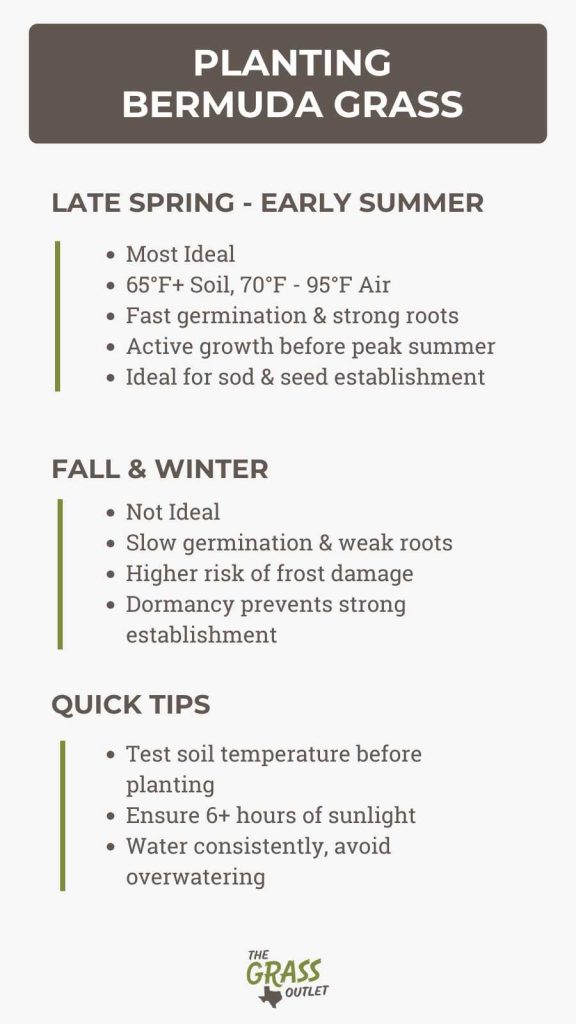
The ideal time to plant Bermuda grass is during late spring to early summer when soil temperatures reach at least 65°F to 70°F (18°C to 21°C). This timing allows the grass to grow actively before the hottest part of summer begins. Summer planting is possible if you follow proper procedures and ensure adequate watering.
Factors Influencing Summer Planting Success
Several factors impact the success of planting Bermuda grass in summer. These include soil temperature, moisture levels, sunlight exposure, and proper preparation. Being aware of these elements helps optimize growth and reduces the risk of failure.
Soil Temperature
Soil temperature is crucial for seed germination. Bermuda grass seeds usually sprout when soil reaches around 65°F to 70°F. Use a soil thermometer to check temperature levels before planting during summer. Cooler early mornings or late evenings are the best times to seed to avoid the scorching heat.
Moisture and Watering
Consistent moisture is essential for Bermuda grass to establish roots quickly. It’s important to keep the soil evenly moist but not soaked. During hot summer days, frequent watering—at least once or twice daily—can help keep seedlings alive and promote healthy growth.
Sunlight Exposure
Bermuda grass loves full sun, requiring at least 6 to 8 hours of direct sunlight each day. Ensure your planting site receives ample sunlight to support vigorous growth. Shady areas may result in weaker, less dense lawns.
Preparing the Soil for Summer Planting
Proper soil preparation sets the foundation for healthy Bermuda grass. Clear the area of weeds, debris, and old grass. Loosen the soil with a rake or tiller to improve aeration and water penetration. Incorporate organic matter or compost to enrich the soil and encourage faster root development.
Choosing the Right Seed or Sod
You can plant Bermuda grass using either seed or sod, depending on your timeline and budget. Sodding provides instant coverage but is more expensive, while seeding takes longer but is more affordable. Select high-quality, disease-free seeds or sod from reputable suppliers to ensure healthy growth.
Step-by-Step Guide to Plant Bermuda Grass in Summer
Planting Bermuda grass in summer requires careful planning and execution. Follow these steps for the best results:
- Prepare the soil thoroughly, removing weeds and debris. Test soil pH, aiming for a range of 6.0 to 7.0.
- Loosen the soil to a depth of at least 4 inches to improve root penetration.
- If planting seed, evenly spread the seed using a spreader, ensuring proper coverage based on the recommended rate.
- Rake the seeds lightly into the soil, about 1/4 inch deep, to enhance soil contact.
- Water the area immediately after planting, maintaining consistent moisture for the first two weeks.
- If using sod, lay the sod pieces tightly together, then water thoroughly to eliminate air pockets and promote rooting.
- Continue watering regularly, especially during hot days, to keep the soil moist.
Managing Challenges When Planting in Summer
Summer planting can come with challenges, but they are manageable with proper care.
Dealing with Heat Stress
High temperatures can cause stress to young Bermuda grass. To combat this, plant during cooler parts of the day—early morning or late evening. Mulching around the grass also helps retain soil moisture and reduce temperature fluctuations.
Preventing Drought Stress
Drought can hinder seedling growth. Implement a consistent watering schedule, and consider installing a soaker hose or drip irrigation system. Applying mulch can also conserve moisture and protect the roots.
Controlling Pests and Diseases
Summer heat can sometimes increase pest activity and disease risk. Regularly inspect the lawn for signs of trouble. Use appropriate, safe pest control methods and avoid overwatering, which can promote fungal growth.
Post-Planting Care for Summer-Grown Bermuda Grass
Proper aftercare ensures your Bermuda grass develops into a thick, healthy lawn.
Water Deeply and Regularly
Deep watering encourages deep root growth, making your lawn more drought-resistant. Adjust watering frequency based on weather conditions, aiming for at least one inch of water per week.
Fertilize Appropriately
Apply a balanced fertilizer tailored for Bermuda grass during the growing season. Follow manufacturer instructions, usually every 6 to 8 weeks, to promote lush growth.
Manage Mowing and Traffic
Once established, mow Bermuda grass regularly at the recommended height of 1 to 2 inches. Avoid heavy foot traffic initially to prevent damage to young roots.
Related Topics to Consider
In addition to planting Bermuda in summer, consider other lawn care topics such as aeration, pest control, and overseeding. Proper maintenance complements planting efforts and keeps your lawn healthy year-round.
Using Bermuda Grass for Erosion Control
Bermuda grass’s dense root system makes it excellent for preventing soil erosion on slopes or bare patches.
Overseeding Existing Bermudagrass
If your Bermuda lawn needs thicker coverage, overseeding can help, but timing and soil preparation are key, especially in summer.
Choosing Bermuda Variants
Various Bermuda grass varieties exist, each with unique traits like drought tolerance or cold resistance. Select the right type based on your climate and lawn needs.
Final Tips for Summer Bermuda Grass Planting
Always monitor weather conditions and soil moisture levels. Use high-quality seed or sod and prepare the soil thoroughly. Be patient, as summer planting may take longer to fully establish, but with consistent care, you’ll end up with a vibrant lawn.
Planting Bermuda grass during summer is doable if you follow proper techniques and maintain diligent watering and care. With the right approach, your lawn can flourish even in the hotter months.
Seeding Bermuda Lawns and Zoysia Lawns
Frequently Asked Questions
Is it possible to grow Bermuda grass during the hot summer months?
Yes, Bermuda grass thrives in warm temperatures, making summer an ideal time for planting. With proper watering and soil preparation, you can establish a healthy lawn during this period. Keep in mind that high temperatures can cause stress, so ensure consistent moisture levels to help the grass establish properly.
What are the best practices for planting Bermuda grass in the summer?
To plant Bermuda grass successfully in summer, prepare the soil by loosening it and removing weeds. Spread the grass seed evenly on the soil surface and lightly rake to encourage good soil contact. Water frequently to keep the soil consistently moist but not waterlogged. It’s also beneficial to mow the grass at the right height to promote healthy growth.
Are there any specific challenges to planting Bermuda grass in summer?
One challenge is ensuring the soil retains enough moisture, as hot weather can lead to rapid evaporation. High temperatures may also stress newly planted grass, so providing sufficient watering is critical. Additionally, planting during peak heat may slow down germination slightly, so patience and careful maintenance are essential.
Can I plant Bermuda grass in late summer or early fall?
Planting Bermuda grass in late summer or early fall is possible, but it requires careful attention to timing. Ideally, you want to give the grass enough time to establish before temperatures drop significantly. If you plant too late, the grass might not develop a strong root system before shorter, cooler days set in.
Should I adjust my watering schedule when planting Bermuda grass in summer?
Yes, watering plays a vital role when establishing Bermuda grass in summer. Keep the soil consistently moist by watering once or twice daily, especially during hot, dry periods. Once the grass begins to grow and develops a good root system, you can gradually reduce watering frequency to promote deeper roots.
Final Thoughts
You can plant Bermuda grass in the summer, but it requires proper care and timing. Warm soil and good sunlight support healthy growth during this season.
Planting in summer allows the grass to establish quickly, especially with regular watering and maintenance.
Can you plant Bermuda grass in the summer? Yes, but ensure ideal conditions for best results. Proper preparation makes planting successful and keeps your lawn lush.