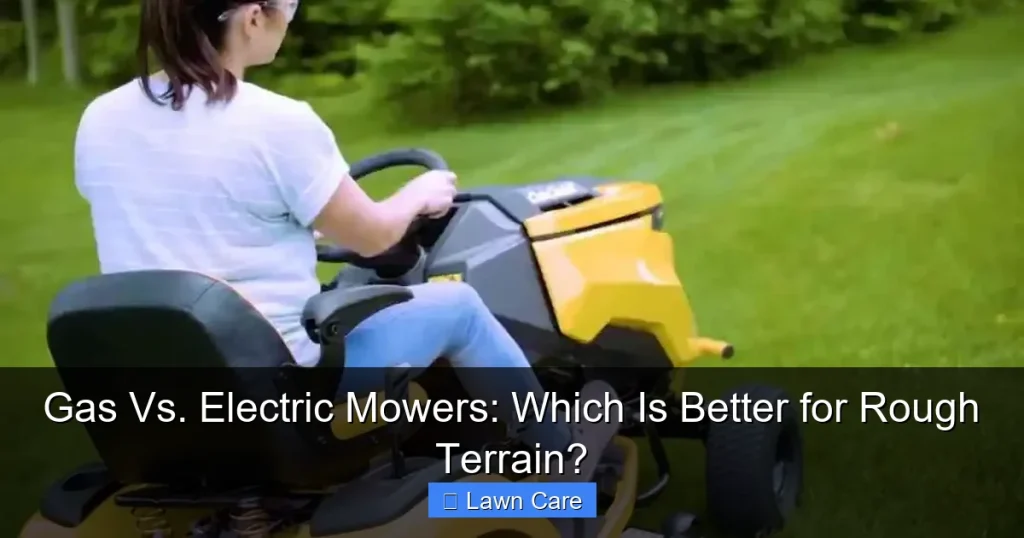
Gas mowers dominate rough terrain with unmatched power and torque, making them ideal for thick grass, slopes, and rocky areas. Electric mowers are improving but still face limits in battery life and power on tough jobs. This guide breaks down which mower type truly wins on challenging landscapes.
Mowing a lawn used to mean rolling out a reel mower, pushing it back and forth with steady rhythm. But today’s yards come in all shapes, sizes, and difficulties. If your yard has steep slopes, thick patches, or rocky patches, you’ve likely felt the struggle of choosing the right mower. Do you go with a gas-powered beast or a quiet electric machine?
The debate between gas vs. electric mowers is nothing new. But when the terrain gets rough, the question becomes even more critical: Which mower type truly handles tough ground better? In this article, we’ll dig deep into how gas and electric mowers perform on uneven, challenging lawns. We’ll compare power, durability, battery life, and real-world usability. By the end, you’ll know exactly which mower to pick—and which to leave behind.
Key Takeaways
- Understanding Gas vs. Electric Mowers: Which is Better for Rough Terrain?: Provides essential knowledge
Quick Answers to Common Questions
Which mower is better for steep hills?
Gas mowers are better for steep hills due to higher torque and sustained power. Electric mowers may stall or lose efficiency on inclines.
Can electric mowers handle rocky terrain?
Some high-end electric mowers can, but they’re less durable than gas models. Gas mowers with reinforced frames handle rocks and roots better.
How long do electric mower batteries last on rough terrain?
Battery life drops significantly on rough terrain. Most electric mowers last 30–45 minutes on hills or thick grass, compared to 45–60 minutes on flat ground.
Are gas mowers louder than electric ones?
Yes, gas mowers are much louder due to internal combustion engines. Electric mowers are quieter, making them better for noise-sensitive areas.
Do electric mowers work on thick grass?
Lightly thick grass is manageable, but electric mowers struggle with dense or overgrown areas. Gas mowers cut through thick grass more easily.
📑 Table of Contents
- Understanding Rough Terrain: What Makes It So Challenging?
- Gas Mowers: The Powerhouse Choice for Rough Ground
- Electric Mowers: Quiet, Clean, But Limited on Tough Ground
- Comparing Performance: Gas vs. Electric on Hills and Thick Grass
- When Electric Mowers Work on Rough Terrain
- Tips for Mowing Rough Terrain
- Conclusion: Which Mower Is Best for Rough Terrain?
Understanding Rough Terrain: What Makes It So Challenging?
Not all lawns are created equal. Some are flat and smooth, perfect for quick passes. Others are a mix of hills, bumps, and thick grass that test even the toughest mowers. So, what makes rough terrain so difficult?
First, steep inclines require more torque. A mower must pull itself upward against gravity. That’s where engine power matters most. Gas mowers usually win here because they deliver consistent torque across RPMs.
Second, uneven ground demands stability. A mower that wobbles or tips over on slopes is not only dangerous—it’s ineffective. Weight distribution and wheel design play big roles.
Third, thick or overgrown grass adds resistance. Electric mowers, especially older battery types, can struggle to maintain speed when cutting through dense blades.
Finally, obstacles like rocks, roots, and roots can damage blades or jam wheels. A mower needs durability to survive these encounters.
Understanding these challenges helps explain why gas and electric mowers behave so differently. Let’s break down each side.
Gas Mowers: The Powerhouse Choice for Rough Ground
Visual guide about Gas Vs. Electric Mowers: Which Is Better for Rough Terrain?
Image source: gardensnursery.com
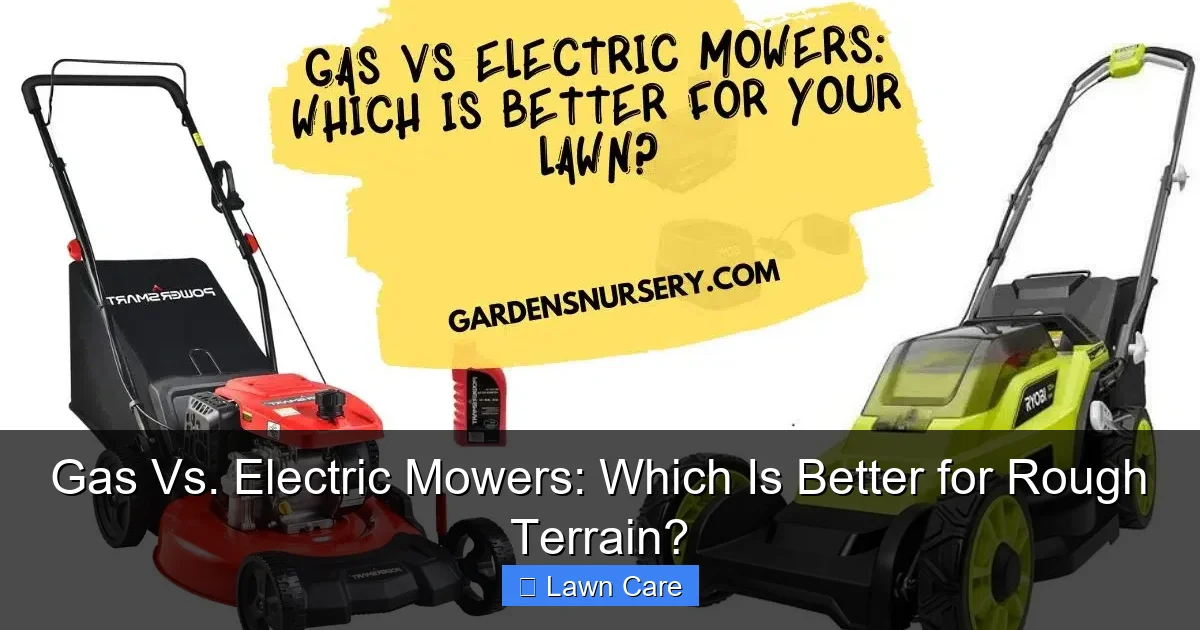
Gas mowers have long been the go-to for tough jobs. With internal combustion engines, they deliver high torque and sustained power. This makes them ideal for steep hills, thick grass, and rocky patches.
Why Gas Mowers Excel on Rough Terrain
Gas engines produce more power per cubic inch than electric motors. This means they can handle heavy loads without slowing down. For example, if you’re mowing a 1-acre yard with a 30% slope, a gas mower with a 200cc engine will climb steadily without stalling.
Torque is key. Gas mowers maintain torque at low RPMs, which helps when starting on an incline. Electric mowers, especially battery types, often lose power as the battery depletes.
Another advantage is runtime. A full tank of gas gives you 45 to 60 minutes of continuous use. That’s enough to tackle large, uneven lawns without interruption.
Durability and Build Quality
Gas mowers are built to last. They feature steel frames, reinforced axles, and heavy-duty wheels. These designs help them withstand impacts from rocks and roots. Many models also have higher ground clearance, letting them glide over bumps without getting stuck.
For instance, a Craftsman M110 gas mower with a 163cc engine and 12-inch wheels handles rocky terrain like a champ. Its weight (around 80 pounds) adds stability, reducing the risk of tipping on slopes.
Maintenance and Fueling
Yes, gas mowers require oil changes and spark plug checks. But fueling is simple. Just pull the cord, and you’re ready to go. No waiting for batteries to recharge. This is a huge plus when you’re mowing a large, uneven yard.
Still, gas mowers aren’t perfect. They’re louder and produce emissions. But for performance on rough ground, they’re hard to beat.
Electric Mowers: Quiet, Clean, But Limited on Tough Ground
Visual guide about Gas Vs. Electric Mowers: Which Is Better for Rough Terrain?
Image source: gardensnursery.com
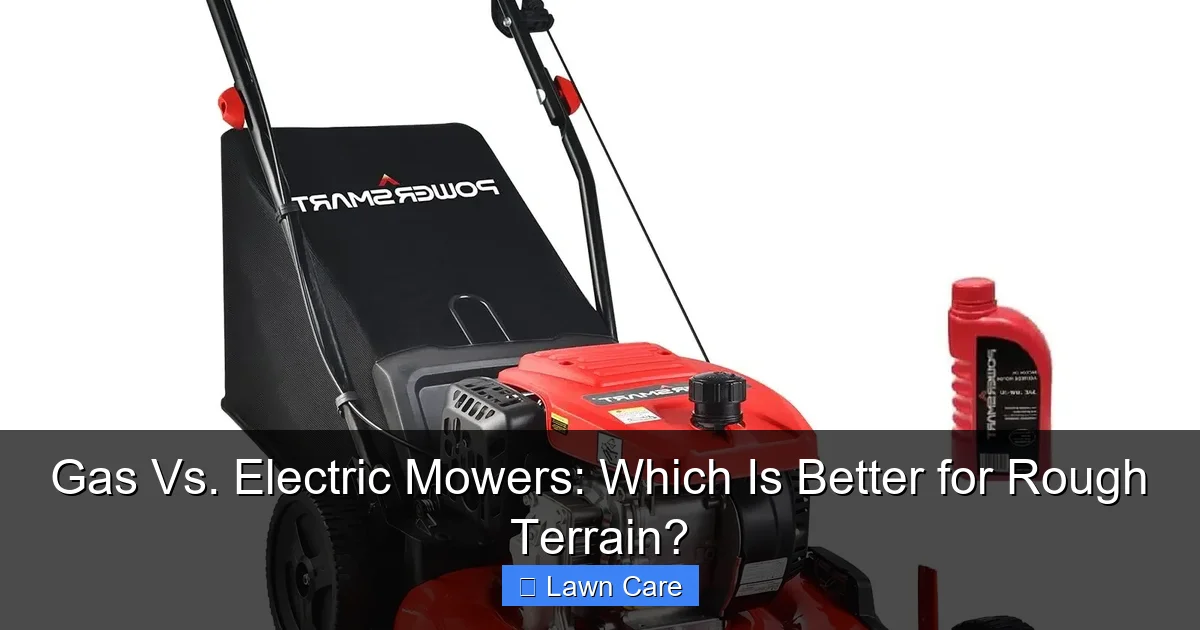
Electric mowers have come a long way. Cordless models now offer 60 minutes of runtime, and some can handle moderate slopes. But when the terrain gets rough, they face real challenges.
Battery Power vs. Gas Power
Battery-powered electric mowers rely on lithium-ion cells. While these are improving, they still can’t match gas engines in raw power. Most struggle on steep hills or thick grass.
For example, a typical 40V battery mower might handle flat lawns with ease. But when you hit a 20% slope with dense grass, the motor slows down. The battery drains faster, and the mower loses cutting efficiency.
Corded electric mowers avoid battery limits—but they’re not practical for rough terrain. The cord restricts movement. If your lawn has hills or obstacles, you’ll spend more time untangling wires than mowing.
Weight and Maneuverability
Many electric mowers are lighter than gas models. While this helps with push mowers, it can hurt on uneven ground. A lighter mower may wobble on slopes or lose traction in mud.
That said, some high-end electric mowers, like the EGO Power+ ST1511, use 56V batteries and have robust builds. They can handle moderate slopes and thick grass—but not as well as gas.
Environmental and Noise Advantages
Electric mowers are quieter and produce zero emissions. This makes them ideal for urban areas or eco-conscious users. But if your lawn is hilly or rocky, these benefits are overshadowed by performance issues.
For small, flat yards, electric mowers shine. But when the terrain turns rough, gas remains the stronger choice.
Comparing Performance: Gas vs. Electric on Hills and Thick Grass
Visual guide about Gas Vs. Electric Mowers: Which Is Better for Rough Terrain?
Image source: gardensnursery.com
Let’s get practical. How do gas and electric mowers stack up in real-world scenarios?
Climbing Hills
Gas mowers win here. Their engines deliver consistent torque, even at low speeds. An electric mower may start strong but slows as the battery loses charge. On a 25% slope, a gas mower will climb steadily. An electric one might stall or require frequent restarts.
For example, a Honda HRX217 handles hills like a pro. Its self-propelled design and powerful engine make short work of inclines. A typical 40V electric mower, by contrast, may struggle to climb even a 15% slope.
Cutting Thick Grass
Thick, overgrown grass demands high cutting force. Gas mowers cut through this with ease. Electric mowers can handle light overgrowth, but they bog down quickly.
A gas mower with a 30-inch deck and mulching kit can shred thick grass into fine clippings. An electric mower with a 21-inch blade may clog or stall.
Maneuvering Obstacles
Rocks, roots, and roots can damage mower blades. Gas mowers, with their heavier frames and reinforced wheels, are more resilient. Electric mowers, especially lighter models, are more fragile.
For instance, a John Deere gas mower with a 22-inch steel deck can handle rough terrain without damage. A lighter electric model might bend or break under stress.
When Electric Mowers Work on Rough Terrain
Electric mowers aren’t all bad on rough ground. Some advanced models can handle moderate challenges.
High-Voltage Batteries
Mowers like the Greenworks 80V or EGO 56V use stronger batteries. These can manage light slopes and thick grass better than older 40V models. But they still can’t match gas in power or runtime.
Self-Propelled and All-Terrain Models
Some electric mowers are designed for hills. Look for models with variable-speed drives and wide wheels. These improve traction and stability.
For example, the WORX WG779 can handle up to 25% slopes. It’s not as powerful as gas, but it’s a solid option for smaller, uneven yards.
Hybrid Solutions
Some mowers use gas engines with electric starters. These combine the power of gas with the convenience of electric ignition. They’re a middle ground, but still gas-powered at heart.
Tips for Mowing Rough Terrain
No matter your mower type, these tips will help you get the job done safely and efficiently.
- Start on flat ground before tackling slopes. This helps the mower gain momentum.
- Mow in the direction of the slope, not against it. This reduces strain on the engine.
- Keep grass at 3 inches to reduce resistance. Taller grass is easier to cut.
- Use a mulching blade to handle thick clippings. This prevents clogging.
- Check the mower’s weight and wheel design. Heavier mowers with wide wheels handle rough ground better.
- Avoid mowing in wet conditions. Mud and moisture reduce traction and increase risk.
For more tips on mower maintenance, check out our guide on Is Conventional Or Synthetic Oil Better For Lawn Mowers.
Conclusion: Which Mower Is Best for Rough Terrain?
After comparing gas and electric mowers on rough terrain, the winner is clear: gas mowers dominate in power, torque, and durability. They handle hills, thick grass, and obstacles with ease. Electric mowers are improving, but they still fall short on demanding jobs.
If your lawn has steep slopes, rocky patches, or dense grass, go with a gas mower. Look for models with high engine power (200cc or more), self-propelled wheels, and steel decks.
For flatter, well-maintained lawns, electric mowers are a great eco-friendly option. But when the terrain turns rough, gas remains the reliable choice.
Still unsure? Check out our detailed comparison of The Pros And Cons Of Electric Vs Gas Lawn Mowers to see all the angles.
Remember: the best mower for rough terrain is the one that gets the job done—safely and efficiently. Choose wisely, and your lawn will thank you.
Frequently Asked Questions
Are electric mowers suitable for rough terrain?
Some advanced electric mowers can handle moderate rough terrain, but most struggle with steep slopes and thick grass. Gas mowers remain more reliable for tough jobs.
What is the best gas mower for hills?
Look for gas mowers with 200cc+ engines, self-propelled wheels, and steel decks. Models like the Honda HRX217 or Craftsman M110 perform well on hills and rough ground.
How do I choose between gas and electric for my lawn?
Consider your lawn’s size, slope, and grass density. For rough or hilly lawns, gas is better. For flat, small yards, electric is a cleaner, quieter option.
Can battery life affect mower performance on slopes?
Yes, as electric mower batteries drain, power output drops. This causes slower speeds and reduced cutting efficiency on slopes and thick grass.
Are self-propelled mowers better for rough terrain?
Yes, self-propelled mowers reduce user effort and improve traction. Both gas and electric models benefit, but gas versions usually offer more power.
Do electric mowers need maintenance?
Electric mowers require less maintenance than gas models. No oil changes or spark plug replacements, but batteries need occasional care and replacement every 3–5 years.