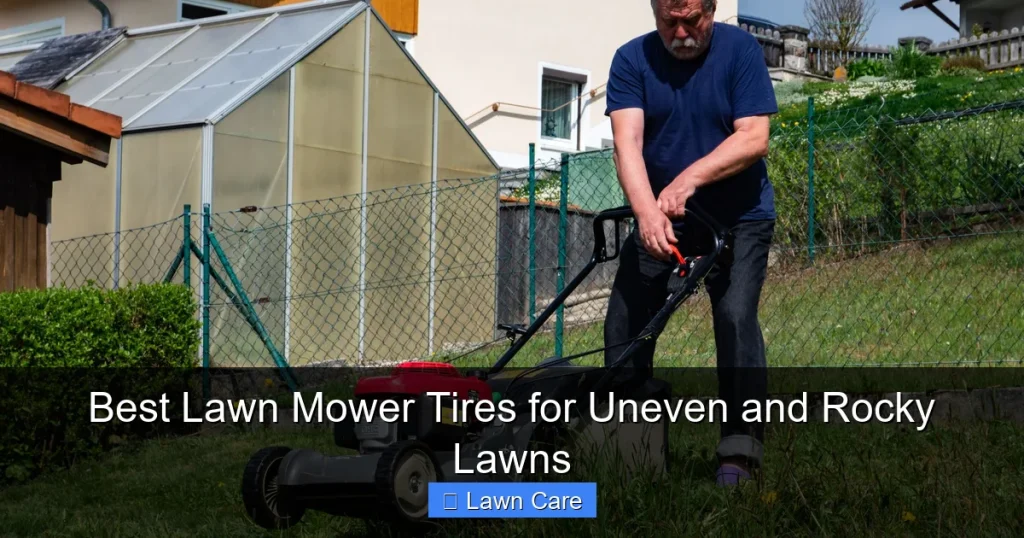
Choosing the right lawn mower tires is essential for navigating uneven and rocky lawns without damage or accidents. Durable, wide-profile tires with deep treads provide better grip, stability, and reduced slippage on challenging ground. Whether you’re mowing over roots, gravel, or slopes, the right tires make all the difference in performance and safety.
Mowing a lawn that’s full of bumps, rocks, and hidden roots can feel like driving a tank across a battlefield. You push the mower forward, only to hit a sudden dip or stumble over a stone—your mower lurches, the blades wobble, and you’re left wondering if you’ll finish before sunset. If this sounds familiar, you’re not alone. Uneven and rocky lawns are a common challenge, especially in older neighborhoods or properties with natural terrain variations.
The secret to tackling these tough yards lies beneath your wheels. The right best lawn mower tires for uneven and rocky lawns can mean the difference between a clean, even cut and a bumpy, frustrating ride. Not all mower tires are built the same. Some are designed for flat, manicured greens; others are engineered to conquer rough, unpredictable ground. In this guide, we’ll walk you through everything you need to know about choosing, maintaining, and upgrading your lawn mower tires so you can mow with confidence—no matter how wild your yard gets.
Key Takeaways
- Wide, deep-tread tires offer superior traction on rocky and uneven surfaces by increasing surface contact and minimizing slippage.
- Inflatable tires absorb shocks better than solid rubber, making them ideal for bumpy terrain and reducing mower stress.
- Tire width matters—wider tires (10–13 inches) distribute weight more evenly, improving stability on hills and loose soil.
- Knobby or lug-style treads are best for rocky lawns, while ribbed treads work well on packed dirt and grass.
- Regular maintenance—checking air pressure, inspecting for wear, and rotating tires—extends tire life and keeps mowing smooth.
- Consider tire material: pneumatic tires offer cushioning, but solid rubber lasts longer on sharp rocks without flats.
- Compatibility is key: Always match tire size and bolt pattern to your mower model to ensure safe operation.
Quick Answers to Common Questions
What type of tire is best for rocky lawns?
Pneumatic tires with deep, knobby treads are ideal for rocky lawns because they offer grip and absorb shocks. For extreme rockiness, solid rubber tires provide puncture resistance.
Can I use regular lawn mower tires on uneven ground?
Standard tires may work on mild slopes, but they often slip or bottom out on rocky or hilly terrain. Upgrading to wide, aggressive tread tires improves safety and performance.
How often should I check tire pressure?
Check tire pressure once a week during mowing season. Proper inflation improves traction, fuel efficiency, and tire longevity—especially important on uneven ground.
Are wider tires better for hills?
Yes. Wider tires distribute weight more evenly, reducing the risk of tipping on inclines. They also prevent sinking into soft or loose soil.
Do I need special tires for a riding mower on rocky terrain?
Absolutely. Riding mowers need durable, wide-profile tires with reinforced sidewalls. Look for models rated for rough terrain to ensure stability and comfort.
📑 Table of Contents
- Why Tire Choice Matters on Rocky and Uneven Terrain
- Types of Lawn Mower Tires for Rough Ground
- Top Features to Look for in Rocky Lawn Tires
- Best Lawn Mower Tires for Uneven and Rocky Lawns (Reviewed)
- How to Maintain and Extend Tire Life
- Upgrading vs. Replacing: What’s Right for You?
- Final Thoughts: Mow Smarter, Not Harder
Why Tire Choice Matters on Rocky and Uneven Terrain
Let’s start with the basics: why does tire type even matter? After all, isn’t it just about rolling over bumps? Actually, no. Tires do far more than move the mower—they affect balance, control, blade alignment, and even fuel efficiency. On rocky or hilly ground, standard mower tires can slip, spin, or bottom out, leading to uneven cuts, engine strain, or worse—tip-overs.
For example, imagine mowing a slope with narrow, low-profile tires. They have little grip and can slide sideways, making steering difficult and potentially causing the mower to flip. Now compare that to wide, knobby tires with deep treads—they dig into the soil, stay planted, and maintain control even on inclines. That’s the power of smart tire design.
Moreover, rocky lawns demand durability. Punctures, cuts, and abrasions are common, so your tires need to resist damage while still offering flexibility. That’s where materials like reinforced rubber and heavy-duty sidewalls come in. And don’t forget comfort: good tires absorb vibrations, so you’re not bouncing around every time the mower hits a root.
Types of Lawn Mower Tires for Rough Ground
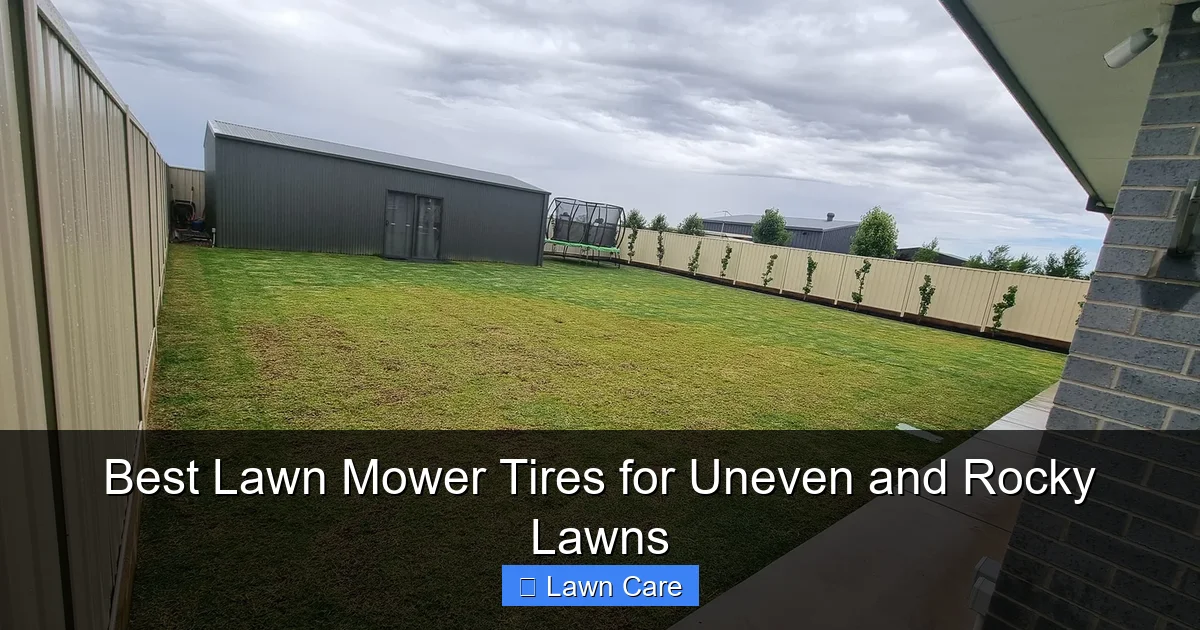
Visual guide about Best Lawn Mower Tires for Uneven and Rocky Lawns
Image source: mowerliving.com
Not all mower tires are created equal, and when your lawn has rocks, dips, and elevation changes, you need specialized options. Let’s break down the main types and what makes them suitable for tough terrain.
Pneumatic vs. Solid Rubber Tires
Pneumatic (air-filled) tires are the most common type. They offer excellent shock absorption, making them ideal for uneven ground. The air inside acts as a cushion, smoothing out bumps and reducing vibration. This comfort also helps protect the mower’s transmission and deck from jarring impacts.
However, they come with one big drawback: susceptibility to punctures. Rocks, thorns, and metal debris can pierce the rubber and cause flats. If you’re constantly dealing with broken tires, solid rubber might be worth considering.
Solid rubber tires don’t go flat, and they’re nearly indestructible on sharp objects. They’re great for rocky lawns where debris is unavoidable. But they lack the cushioning of pneumatic tires, so they transmit more vibration to the mower and operator. For very rough terrain, many users opt for a hybrid approach—pneumatic front tires for grip and rear solid tires for durability.
Wide-Profile vs. Narrow Tires
Narrow tires (6–8 inches wide) are typical on small riding mowers and some push models. While lightweight, they struggle on soft or uneven ground because they sink in and lose traction. Think of them like skinny shoes on muddy trails—they slip and slide.
Wide-profile tires (10–13 inches), on the other hand, spread the mower’s weight over a larger area. This prevents sinking and improves stability. They’re especially useful on hilly or loose soil, where balance is critical. For rocky lawns, wider tires also reduce the chance of getting stuck on roots or stones.
Tread Patterns: Knobby, Ribbed, and Lug-Style
Tread design directly affects how well your mower handles different surfaces:
- Knobby or lug-style treads feature deep, spaced-out grooves. These are perfect for rocky and uneven lawns because they grip loose soil and clear debris easily. They’re aggressive but effective.
- Ribbed treads have continuous bands across the tire. They’re smoother and quieter, making them better for compacted grass or paved paths. Less ideal for rocky ground, but fine on hard-packed dirt.
- Multi-directional treads combine knobs and ribs for all-around performance. These offer decent grip on varied terrain without sacrificing too much speed or smoothness.
For rocky lawns, prioritize knobby or lug-style tires. They bite into the ground and prevent sliding, which is crucial when navigating slopes or gravel patches.
Top Features to Look for in Rocky Lawn Tires
Visual guide about Best Lawn Mower Tires for Uneven and Rocky Lawns
Image source: gardenandyards.com
So how do you pick the best lawn mower tires for uneven and rocky lawns? Focus on these five key features:
Deep, Aggressive Treads
Look for tires with at least 1/2-inch-deep lugs. These help the mower grip loose soil and avoid spinning on rocks or roots. Treads should be spaced out enough to shed mud and debris—clogged treads reduce traction.
Reinforced Sidewalls
Sidewalls protect against cuts and abrasions from rocks. Thick, rubberized sidewalls are a must for rocky yards. Some premium tires include Kevlar or steel belting for extra strength.
Proper Air Pressure
Even the best tires perform poorly if under- or over-inflated. For rocky terrain, slightly lower pressure (around 10–12 psi) can improve grip and shock absorption. Check your owner’s manual for recommendations, then adjust seasonally.
Weight Distribution
Wider tires help balance the mower, especially on hills. A 12-inch-wide rear tire, for instance, keeps the machine from tipping backward when climbing. Front tires should also be wide enough to prevent nose-diving on dips.
Easy Installation and Compatibility
Make sure the tire fits your mower’s axle and bolt pattern. Most riding mowers use standard sizes like 13×5.00–6 or 15×6.00–8, but confirm before buying. Some kits come with hubs and bearings already installed for quick swap.
Best Lawn Mower Tires for Uneven and Rocky Lawns (Reviewed)
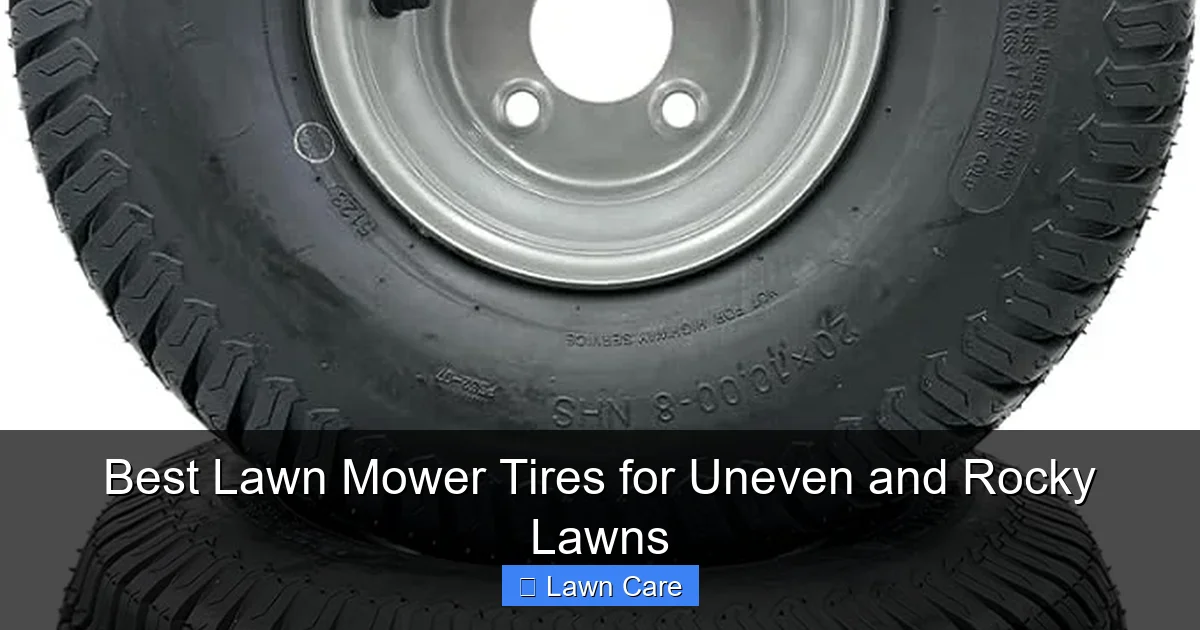
Visual guide about Best Lawn Mower Tires for Uneven and Rocky Lawns
Image source: m.media-amazon.com
Ready to upgrade? Here are five top-rated tires that excel on rough terrain, based on user reviews, durability, and performance:
- Turf Armor Heavy Duty Tire Kit – These 13×5.00–6 tires are made with puncture-resistant rubber and feature deep knobby treads. They’re ideal for rocky lawns and come with sealed bearings. Users praise their stability on slopes and resistance to flats.
- Carlisle Turf Master GT Radial Replacement Tire – A 15×6.00–8 radial tire with wide profile and ribbed tread. Great for mixed terrain—rocky areas and flat sections. Known for long life and smooth ride.
- ToughBuilt Solid Rubber Tire – No air, no flats. These 12×4.00–6 solid tires are tough as nails and perfect for extremely rocky yards. Slightly heavier, but unbeatable durability.
- Greenworks Pro 19-Inch Replacement Tire – For push mowers, this 10×2.5–4 tire has aggressive knobs and fits most self-propelled models. Affordable and effective on uneven ground.
- John Deere OEM Rear Tire – If you own a John Deere riding mower, this original equipment tire offers factory-grade performance. Deep treads and reinforced construction handle rocks and hills with ease.
When comparing prices, remember: cheaper doesn’t always mean better. Investing in quality tires saves money long-term by reducing breakdowns and replacement frequency.
How to Maintain and Extend Tire Life
Even the best lawn mower tires won’t last forever—especially on rocky ground. But with proper care, you can stretch their lifespan and keep mowing smoothly.
Check Air Pressure Weekly
Low pressure increases blowout risk and reduces traction. Use a tire gauge to verify levels monthly. For rocky lawns, slightly lower pressure (10–12 psi) can improve grip, but never go below recommended minimums.
Inspect for Damage
After each mow, look for cuts, bulges, or embedded debris. Remove any rocks stuck in the tread before storage. Damaged tires compromise safety and performance.
Rotate Tires Seasonally
Rotating front and rear tires evens out wear. This is especially helpful if your mower spends more time on one side of the yard.
Store Indoors When Possible
UV rays and extreme temperatures degrade rubber. Store mowers in a garage or shed to prolong tire life.
Avoid Overloading
Carrying extra weight puts strain on tires. Stick to recommended load limits to prevent cracking and premature failure.
By following these tips, your tires will stay strong, grippy, and ready for whatever your lawn throws at them.
Upgrading vs. Replacing: What’s Right for You?
Sometimes, your current mower just isn’t built for rocky terrain. If you’ve upgraded tires multiple times and still struggle, consider whether it’s time for a new mower. For extreme cases, look into models specifically designed for rough terrain—like those with four-wheel drive, high ground clearance, or suspension systems.
But before investing in a new machine, try this: check your current mower’s specs. Does it have enough horsepower? Is the deck height adjustable? Can you add weight to the rear for better traction? Often, simple upgrades—like switching to wide, knobby tires—can transform performance.
If you’re unsure, consult our guide on Best Lawn Mower For Uneven Ground. It covers mower selection, terrain-specific features, and brand recommendations to help you make an informed choice.
Final Thoughts: Mow Smarter, Not Harder
Mowing a rocky, uneven lawn doesn’t have to be a daily battle. With the right best lawn mower tires for uneven and rocky lawns, you can navigate bumps, roots, and slopes with ease. Focus on wide profiles, deep treads, and durable materials. Don’t overlook maintenance—regular checks keep your tires performing at their best.
Remember, the goal isn’t just to get the job done—it’s to do it safely and efficiently. A stable mower means a cleaner cut, less strain on your body, and fewer mechanical issues down the road. So next time you’re shopping for tires, think beyond price and popularity. Choose ones that match your terrain, and you’ll wonder how you ever mowed without them.
And if you’re curious about other tools for tough yards, check out our picks for Best Lawn Trimmer For Uneven Terrain or Best Lawn Leveling Tool For Rocky Soil. Together, these tools can turn your challenging yard into a manageable, beautiful space.
Frequently Asked Questions
Can I use car tires on my lawn mower?
No, car tires are not designed for mower axles or lawn conditions. They’re too narrow, lack proper tread, and can damage your mower. Always use manufacturer-recommended or aftermarket lawn mower tires.
How do I know if my mower tires are worn out?
Look for cracks, bulges, flat spots, or tread depth below 1/4 inch. Also, if the mower slips more often or vibrates excessively, it may be time to replace the tires.
Are tubeless tires better than tube-type?
Tubeless tires are generally easier to repair and less prone to inner tube damage. They also seal small punctures automatically, making them a good choice for rocky lawns.
Can I mix tire brands on my mower?
It’s possible, but not recommended. Different brands may have varying widths, pressures, and tread patterns, which can affect balance and handling. Match tires for optimal performance.
Do tire treads affect mowing height?
Indirectly, yes. Aggressive treads may require slight pressure adjustments, which can influence how the mower glides over grass. However, tread depth doesn’t change the actual cutting height.
How do I store mower tires during winter?
Deflate tires slightly (to reduce rubber stress), clean off debris, and store the mower in a dry place. Consider using tire covers to protect from UV damage and cracking.