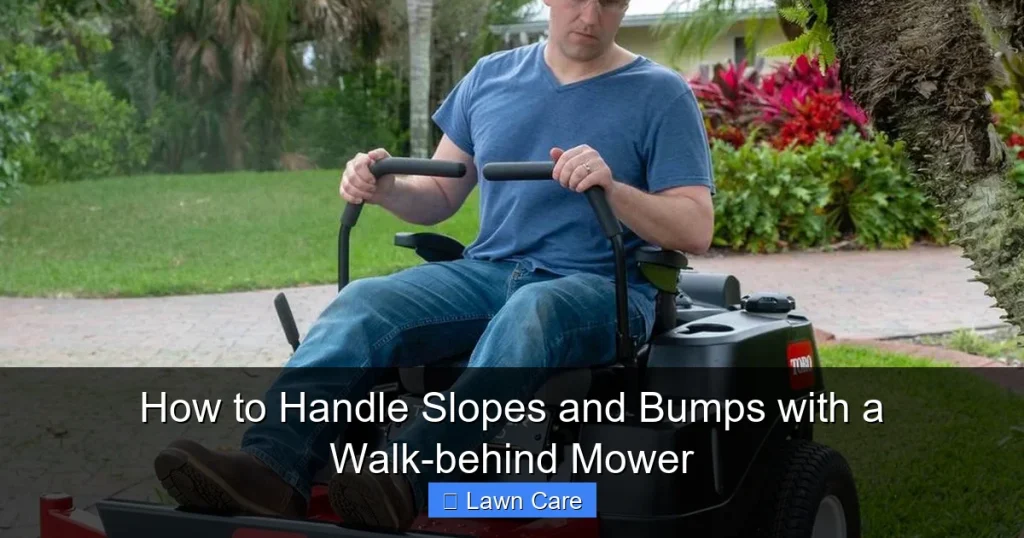
Mowing slopes and bumps with a walk-behind mower can be tricky but totally doable with the right approach. This guide walks you through essential techniques to keep your mower stable, protect your lawn, and extend your equipment’s life. You’ll learn how to adjust your grip, choose the right mower for hilly terrain, and avoid common hazards.
Mowing a sloped lawn used to mean choosing between a patchy-looking yard or risking your safety. But with the right techniques, you can safely and effectively handle slopes and bumps with a walk-behind mower. Whether you’re dealing with a gentle incline or a tricky patch with tree roots, knowing how to navigate uneven terrain makes all the difference. This guide breaks down everything you need to know—from safety tips to mower maintenance—so you can mow confidently, no matter the landscape.
Walk-behind mowers are powerful tools, but they weren’t always built for hills. Unlike riding mowers, they rely on your balance and control. That means a steep slope or unexpected bump can throw you off in an instant. The good news? With preparation and the right approach, you can handle most slopes safely. Let’s walk through the steps to master mowing on uneven ground.
Key Takeaways
- Assess the slope: Only mow slopes up to 15 degrees if your mower is rated for it—most walk-behind models aren’t designed for steep inclines.
- Adjust your grip: Stand sideways on slopes and hold the handles firmly with both hands to maintain balance and control.
- Slow and steady wins: Mow at a slower pace than usual to reduce the risk of tipping or losing traction.
- Use proper mower settings: Lower the cutting height slightly on slopes to prevent scalping and improve stability.
- Inspect before mowing: Check for rocks, roots, or debris that could cause bumps or damage your mower.
- Maintain your mower: Regular maintenance, like sharpening blades and cleaning the carburetor, keeps your mower running smoothly on tough terrain.
- Consider a slope-rated mower: If you frequently mow hilly lawns, invest in a model built for inclines with better weight distribution.
Quick Answers to Common Questions
Can I mow a 20-degree slope with a walk-behind mower?
Most walk-behind mowers are rated for slopes up to 15 degrees. Mowing a 20-degree slope increases the risk of tipping and is not recommended unless your mower is specifically designed for steeper inclines.
What’s the best way to hold a walk-behind mower on a slope?
Stand sideways to the slope and hold the handles firmly with both hands. Keep your body centered over the mower and avoid leaning too far forward or backward.
Should I mow up or down a slope?
Always mow across the slope in a zigzag pattern, not straight up or down. This helps maintain balance and prevents the mower from tipping.
How can I prevent my mower from tipping on hills?
Slow down, mow across the slope, use both hands, and choose a mower with a low center of gravity. Avoid sudden movements and always inspect the area for hazards.
What maintenance helps with mowing on slopes?
Regularly sharpen blades, clean the carburetor, check wheels and axles, and lubricate moving parts. These steps improve control and reduce strain on the engine.
📑 Table of Contents
Understanding Your Mower’s Limitations
Before you even step onto a slope, it’s important to know your mower’s limits. Most walk-behind mowers are rated for slopes up to 15 degrees—anything steeper increases the risk of tipping backward. Look for the manufacturer’s slope rating in your manual. If your lawn has slopes over 20 degrees, consider renting a riding mower or using string trimmer edges instead.
Also, check the weight distribution of your mower. Models with a lower center of gravity and wider wheels perform better on inclines. If your mower feels unstable, it might be time to upgrade. For heavy-duty use on slopes, look for models with anti-vibration handles and reinforced frames.
How to Safely Mow on Slopes
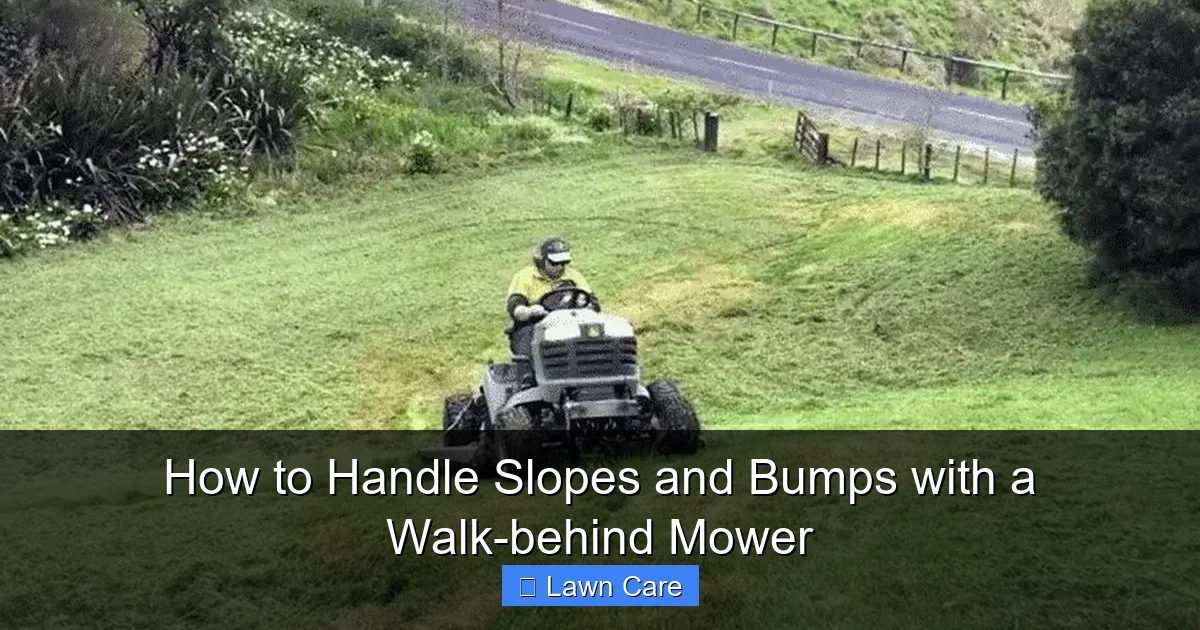
Visual guide about How to Handle Slopes and Bumps with a Walk-behind Mower
Image source: mowersboy.com
Mowing on a slope isn’t just about technique—it’s about physics. When you stand on a hill, gravity pulls you downhill. To stay in control, you need to counter that force.
Stand Sideways and Grip Firmly
Always position yourself sideways to the slope, not facing up or down. This reduces the risk of falling forward or backward. Hold the handles tightly with both hands, and keep your body centered over the mower. Leaning too far forward can cause the back wheels to lift, while leaning back increases tipping risk.
Mow Across the Slope, Not Up and Down
Instead of mowing straight up and down the hill, mow in a zigzag pattern across the slope. This keeps the mower balanced and prevents the blades from digging into the ground on the downhill side. Start at the top and work your way down in overlapping rows.
Slow Down and Take Your Time
Speed is your enemy on slopes. Mow at a slower pace than usual—this gives you better control and reduces momentum. If you feel unsteady, stop and reposition. It’s better to take five extra minutes than to risk a fall or damage.
Handling Bumps and Obstacles
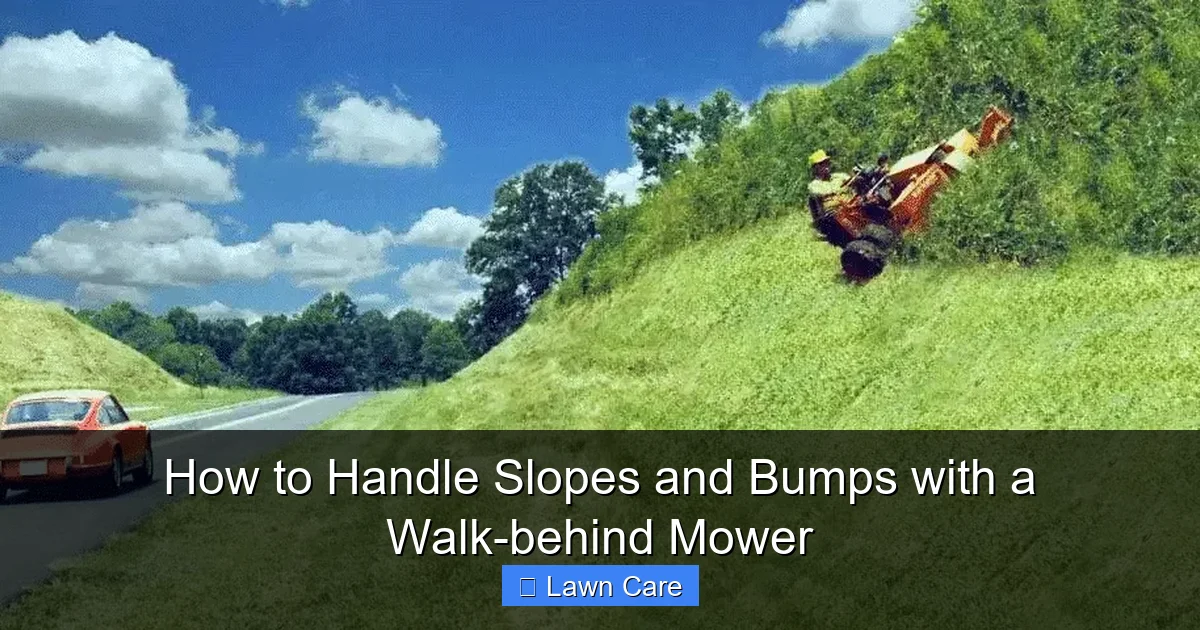
Visual guide about How to Handle Slopes and Bumps with a Walk-behind Mower
Image source: mowersboy.com
Bumps aren’t just annoying—they can damage your mower or throw you off balance. Tree roots, rocks, and raised edges are common culprits on uneven lawns.
Inspect the Area First
Before you start mowing, walk the slope and look for hazards. Remove large rocks or sticks that could damage the blades or cause a jolt. If you can’t remove them, go around them. Small bumps are usually fine, but large roots or holes may require a different tool, like a rake or edger.
Adjust Your Cutting Height
Lowering the cutting height slightly can help your mower glide over small bumps more smoothly. A higher cut also gives you more ground clearance. But don’t go too low—you risk scalping the grass or letting the mower drag on roots.
Use a Light Touch
Let the mower’s wheels handle the bumps, not your arms. If a bump jolts the machine, ease off the handles and let it bounce through. Fighting the motion can lead to loss of control.
Choosing the Right Mower for Slopes

Visual guide about How to Handle Slopes and Bumps with a Walk-behind Mower
Image source: d3k4u3gtk285db.cloudfront.net
Not all walk-behind mowers are created equal when it comes to hills. Some are built for flat lawns, while others are designed with slope mowing in mind.
Look for Slope-Rated Models
Brands like Honda and Toro offer walk-behind mowers specifically rated for slopes up to 15–20 degrees. These models often feature:
– Wider rear wheels for better traction
– Anti-vibration handles
– Lower center of gravity
– Reinforced frames
If you live on a hilly property, investing in a slope-rated mower saves time, reduces effort, and extends the life of your equipment.
Consider Weight and Balance
Lighter mowers are easier to maneuver on slopes, but too light can reduce stability. A good balance is key. Also, check if your mower has adjustable handles or wheels—customizing the setup can improve comfort and control.
Maintaining Your Mower for Hill Mowing
Mowing on slopes and bumps puts extra stress on your mower. Regular maintenance keeps it running smoothly and prevents breakdowns.
Sharpen Blades Regularly
Dull blades tear grass instead of cutting cleanly, which weakens the lawn and strains the engine. A sharp blade handles uneven terrain better and reduces vibration. Check blade sharpness every 10–15 hours of use.
Clean the Carburetor
Slopes and bumps can cause fuel flow issues, especially if the mower sits idle between uses. A dirty carburetor leads to poor performance. If your mower struggles on hills, consider cleaning the carburetor or using a fuel stabilizer to keep the engine running smoothly.
Check the Wheels and Axles
Uneven terrain can bend wheels or loosen axles. Inspect them after every few mowings. Make sure wheels spin freely and are securely attached. Wobbly wheels reduce control and increase the risk of tipping.
Lubricate Moving Parts
Grass clippings, dirt, and moisture can gum up chains, axles, and pivots. After mowing, wipe down the mower and apply lubricant to moving parts. This keeps everything smooth, even on rough ground.
Common Mistakes to Avoid
Even experienced mowers make mistakes on slopes. Here are the most common errors and how to fix them.
Mowing Too Fast
Going too fast is the #1 cause of accidents on hills. Slow down and stay in control. If you feel like you’re losing balance, stop and regroup.
Facing Up or Down the Slope
Always mow across the slope, not perpendicular to it. Facing downhill gives you less control, while facing uphill increases the risk of tipping backward.
Ignoring the Mower’s Rating
Don’t assume all mowers can handle steep slopes. Check the manual and follow the manufacturer’s guidelines. If your mower isn’t rated for slopes, use a different tool for those areas.
Neglecting Maintenance
A mower that’s not well-maintained will struggle on hills. Dull blades, clogged air filters, and dirty carburetors reduce power and control. Make maintenance a regular habit.
When to Use Alternatives
Sometimes, the safest choice is not to use a walk-behind mower at all.
Use a String Trimmer for Edges
For steep or rocky edges, a string trimmer is safer and more effective. It’s lighter and more maneuverable than a mower.
Rent a Riding Mower for Large Slopes
If your lawn has multiple steep slopes, consider renting a riding mower. These machines are built for hills and reduce the physical strain of mowing.
Hand Rake or Edger for Obstacles
For areas with large roots, rocks, or uneven terrain, hand tools are often the best option. They give you full control without risking damage to your mower.
Final Tips for Success
Mowing slopes and bumps doesn’t have to be stressful. With the right mindset and tools, it can become second nature.
– Start small: Practice on gentle slopes before tackling steeper ones.
– Wear proper gear: Sturdy shoes with good grip and long pants protect you from slips and cuts.
– Work in good light: Avoid mowing in the dark or during rain—hills are slippery when wet.
– Take breaks: Mowing hills is physically demanding. Rest when needed.
– Keep the mower clean: After each use, remove grass and debris to prevent clogs and corrosion.
With these tips, you’ll be mowing slopes like a pro. Remember, safety comes first—control, not speed, is what keeps you and your mower intact.
Frequently Asked Questions
How steep can I mow with a walk-behind mower?
Most walk-behind mowers are safe for slopes up to 15 degrees. Check your owner’s manual for the exact rating. Mowing steeper slopes can cause tipping and loss of control.
Do I need a special mower for hills?
Not necessarily, but slope-rated models with wider wheels and anti-vibration handles perform better on inclines. If you mow hills often, investing in a mower designed for slopes is worth it.
Can I use a walk-behind mower on rocky terrain?
It’s not recommended. Rocks can damage blades, clog the mower, or cause injury. Use a string trimmer or hand tools for rocky or uneven areas.
How do I clean my mower after mowing on slopes?
Remove grass clippings, dirt, and moisture. Inspect for damage, lubricate moving parts, and check the carburetor if performance seems off. This prevents corrosion and keeps the mower running smoothly.
What should I do if my mower tips on a slope?
Step away immediately. Never try to grab the handles while the mower is tipping—it can cause injury. Once stable, check for damage and inspect the area for hazards before continuing.
Is it safer to mow early in the morning or late in the day?
Yes. Mowing during cooler hours reduces heat stress and improves visibility. Avoid mowing during rain or when the ground is wet, as slopes become slippery.