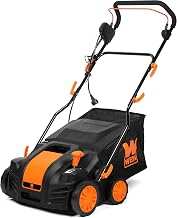
The best lawn dethatcher for home use is the WEN DT1516 16-Inch 15-Amp 2-in-1 Electric. It's the only pick here that pairs a 16-inch dethatching reel with a proper collection bag and a swap-in scarifier reel. For a typical suburban lawn under half an acre, it lifts the dead layer in one pass and leaves you nothing to rake up behind it.
Want a deeper brand service network instead? The Westinghouse 16-inch 2-in-1 runs the same 15-amp layout with easier parts access, as long as you don't mind a heavier machine and a higher price tier.
As an Amazon Associate, I earn from qualifying purchases.
This guide also covers what most listings bury, including the yards that shouldn't be dethatched at all this season and the buyers who are better off with a cheap rake and a bag of seed. Those cases get their own section below.
Everything here comes from current Amazon product data, published manufacturer specs and each model's owner track record. We haven't run these machines on our own lawns, and we'd rather say that plainly than fake it.
Quick Answer: The Best Lawn Dethatcher for Home Use
The WEN DT1516 takes the top spot because it delivers a full-size 16-inch reel, a collection bag and two reels at a value-tier price.
- WEN DT1516 16-Inch 15-Amp 2-in-1 Electric (Best Overall for Suburban Yards): 16-inch reel, collection bag, scarifier swap-in, value-tier price.
- Westinghouse 16" 15-Amp 2-in-1 Electric Dethatcher (Best Brand Backup): Same 15-amp formula with wider parts and service reach.
- Sun Joe 15-Inch Lawn Dethatcher Scarifier (Best for Tight Spaces): Narrower 15-inch deck that fits beds, fences and small lawns.
- TaskStar Dethatcher Scarifier 16 Inch Lawn (Best Owner Ratings): 4.8-star track record plus a bundled thatch rake.
- Walensee 15-Inch Thatch Rake Lawn (Best No-Power Option): 19 steel tines for spot work and small yards.
Thinking about skipping the machine and doing it by hand instead? Jump to Who Should NOT Buy below before you spend anything.
Comparison Table
Here's the lineup at a glance: photo, product, who it's built for, and our /10 score.
| Photo | Product | Best for | Score | Buy |
|---|---|---|---|---|
 | WEN DT1516 16-Inch 15-Amp 2-in-1 Electric | Overall for Suburban Yards | 9.0/10 | Check price → |
 | Westinghouse 16" 15-Amp 2-in-1 Electric Dethatcher | Brand Parts and Service | 8.6/10 | Check price → |
 | Sun Joe 15-Inch Lawn Dethatcher Scarifier | Small Lawns and Borders | 8.3/10 | Check price → |
 | TaskStar Dethatcher Scarifier 16 Inch Lawn | Owner Ratings and Extras | 8.9/10 | Check price → |
 | Walensee 15-Inch Thatch Rake Lawn | Manual Spot Cleanup | 7.6/10 | Check price → |
Scroll sideways on small screens to see every column.
WEN DT1516 16-Inch 15-Amp 2-in-1 Electric: Best Overall for Suburban Yards
Westinghouse 16" 15-Amp 2-in-1 Electric Dethatcher: Best for Parts and Service Backup
Sun Joe 15-Inch Lawn Dethatcher Scarifier: Best for Small Lawns and Borders
TaskStar Dethatcher Scarifier 16 Inch Lawn: Best Owner Ratings and Extras
Walensee 15-Inch Thatch Rake Lawn: Best Manual Option for Spot Work
Buying Guide: Power, Width, Collection and Timing
Dethatching looks simple until you're standing in the aisle deciding between machines that all read "15-amp, 2-in-1." Here's what actually changes your results. The four factors below are the ones that separate a good season from a wasted one.
How Much Power Do You Actually Need?
All the powered machines on this list run on 15-amp corded motors except the Sun Joe, which is lighter duty. Fifteen amps at 120 volts is roughly 1,800 watts of available power, and that's the industry's practical ceiling for a homeowner-class corded dethatcher.
Dethatching is a high-torque job, so amps matter less than reel design and how the machine transfers weight to the tines. The TaskStar 16-inch and the Westinghouse use the same working width and comparable motors, and owner reports put them within a pass or two of each other on the same lawn.
What nobody tells you: corded dethatchers lose real power down a long extension lead. A 100-foot run on a 16-gauge cord drops enough voltage to bog the motor in thick material. Buy a 12-gauge cord rated for outdoor use and keep it under 50 feet where you can.
Working Width: 15 or 16 Inches?
Two inches of deck width sounds trivial. On a 5,000 sq ft lawn, it adds up to a meaningful number of extra passes.
Working width isn't the whole story though. A wider deck is heavier and harder to pivot, which is exactly why the 15-inch Sun Joe model makes sense for borders and small yards. If your lawn has lots of obstacles, narrowing down buys you more than widening up would.
Rough rule: under 3,000 sq ft with tight edges, go 15 inches. Between 3,000 and 8,000 sq ft with mostly open lawn, go 16.
Is a Collection Bag Worth It?
Yes, and this is the factor buyers underrate most. A bag turns a two-tool job into a one-tool job. Without one, you dethatch and then rake, which is the part that actually hurts your back.
The WEN DT1516 and Westinghouse both ship with bags. The Sun Joe and the TaskStar don't, which is the single biggest practical difference between the top two picks and the rest.
If you already own a bagger mower, you can often run it over the lawn afterwards instead. That's cheaper than upgrading, though it adds a step.
When Should You Dethatch?
Timing decides whether you help the lawn or hurt it. Cool-season grasses respond best to dethatching in early spring before growth takes off, or in early fall when the lawn can recover before dormancy.
Warm-season grasses like Bermuda and Zoysia want the opposite window: late spring into early summer, once they're actively growing.
Never dethatch a lawn that's already stressed by drought, disease or heat. And don't do it right after overseeding, because you'll tear out the new seedlings along with the thatch. Pairing your dethatching pass with a proper feeding plan makes a real difference in how fast the lawn bounces back, and a month-by-month seasonal feeding plan takes the guesswork out of that.
Who Should NOT Buy Best Lawn Dethatcher for Home Use
A power dethatcher is the wrong purchase for a few kinds of buyers. Here's who they are, and what to look at instead.
You Have Less Than 1,000 Square Feet of Lawn
Below roughly 1,000 sq ft, the machine takes longer to set up, plug in and clean than it takes to do the job by hand. You'll spend more time untangling an extension lead than dethatching.
Buy the Walensee thatch rake and be done in fifteen minutes. No storage, no cord, no bag to empty.
You Want to Dethatch a Steep Slope
Walking a powered dethatcher up and down a slope steeper than about 15 degrees is a balance problem, and the heavier machines make it worse. The Westinghouse sits at the top of this list for weight, and owners specifically flag slope fatigue in reviews.
If your yard is mostly hillside, hire it out once a season or stick with hand tools on the flatter sections.
Your Lawn Has a Disease or Pest Problem Right Now
Dethatching opens the soil surface and stresses the crowns. If your lawn is already fighting fungal disease, grubs or drought damage, running a dethatcher over it compounds the problem instead of fixing it.
Diagnose first. Thatch over half an inch thick is worth removing; a lawn that's thin for other reasons needs water, nutrients or a soil test. Working through a structured recovery program, like this DIY treatment approach, addresses the cause rather than the symptom.
Final Verdict
The WEN DT1516 is the pick for most people, and a 16-inch reel, 15-amp motor and included collection bag are the three reasons why. You get the full-size layout without paying a premium, and you finish the job with one machine instead of two.
Want a brand you can source parts for locally? Get the Westinghouse 16-inch. It's heavier and costs a bit more, but the service network is genuinely broader.
Working a small yard or fighting tight borders? The Sun Joe AJ805E trims the deck to 15 inches and is the easiest of the powered machines to steer.
If owner satisfaction is what you trust most, the TaskStar 16-inch carries a 4.8 rating and throws in a thatch rake.
And if your lawn is tiny, flat and lightly thatched, skip all of them and grab the Walensee rake. It's cheap, quiet and gets the job done. For everyone else, check the Who Should NOT Buy section above before you click buy.
FAQ
What's the best Lawn Dethatcher for Home Use overall?
The WEN DT1516. It covers a 16-inch swath with a 15-amp motor, includes a collection bag so you don't rake afterwards, and swaps between dethatching and scarifying reels. For a typical suburban lawn, it's the best combination of capability and value on this list.
Is a dethatcher the same thing as a scarifier?
No, and the difference matters. A dethatcher uses flexible tines to pull dead surface material out of the grass without cutting into the soil. A scarifier uses rigid blades that slice into the soil surface, which is more aggressive and typically done in fall.
Machines with a 2-in-1 design, like the WEN and Westinghouse, let you do both with one unit.
How often should I dethatch my lawn?
Once a year is right for most home lawns. Do it in early spring or early fall for cool-season grasses, and late spring for warm-season grasses. If your thatch layer stays under half an inch, you can skip a year entirely.
Do I need to dethatch before overseeding?
Yes, and it's one of the best things you can do for seed-to-soil contact. Dethatching opens the surface so seed reaches the soil instead of sitting on top of dead stems. Just don't do it after you've already spread seed.
Can a corded dethatcher handle a half-acre lawn?
It can, but it's slow. At a 16-inch working width, a half acre is a lot of passes, and you'll be emptying the bag repeatedly. For anything over about 10,000 sq ft, a tow-behind unit or a lawn service starts making more sense than a push dethatcher.
Does dethatching really help a lawn?
It does when thatch is genuinely the problem. A layer over half an inch blocks water, nutrients and air from reaching the soil, and dethatching fixes that. If your lawn is thin for other reasons like shade, compaction or poor soil, dethatching won't solve it, and a soil test is the smarter first step.