Image source: Bing (Web (fair-use with source credit))
What Eats Grubs? A Complete Guide Based on Your Actual Situation
If you've spotted brown patches in your lawn or found curled white larvae in your soil, you're probably wondering what eats grubs and how to put that knowledge to work. The answer isn't a single list of animals. It depends entirely on whether you're trying to kill a lawn infestation, attract wildlife, or find food for a pet.
In our research, we found that most generic advice misses this distinction completely. A homeowner battling skunks tearing up their turf needs a very different solution than someone feeding a bearded dragon. The good news is that plenty of organisms eat grubs, and the right one for your situation is probably easier to deploy than you think.
As of 2026, biological controls like beneficial nematodes have become the go-to recommendation from university extension services across the US, largely because they target grubs without collateral damage to pollinators or pets.
Quick Answer
Birds, skunks, raccoons, beneficial nematodes, and certain bacteria all eat grubs. The best option depends on your goal. Want to eliminate a lawn infestation?
Beneficial nematodes and milky spore bacteria are the most targeted solutions. Hoping to attract natural predators? Robins, starlings, and chickens are voracious grub hunters.
Feeding a pet reptile? Black soldier fly larvae and mealworms are safer than wild-caught grubs.
First, Identify What You're Dealing With
Before you pick a solution, you need to know what you're actually dealing with. Not all grubs are the same, and not all of them cause problems. Some lawns can handle a small grub population without any visible damage.
What Kind of Grubs Are in Your Yard?
White grubs is the common name for the larval stage of scarab beetles. The most common species in North American lawns include Japanese beetles, European chafers, June beetles, and northern masked chafers. Each has a slightly different life cycle, which matters for timing your treatment.
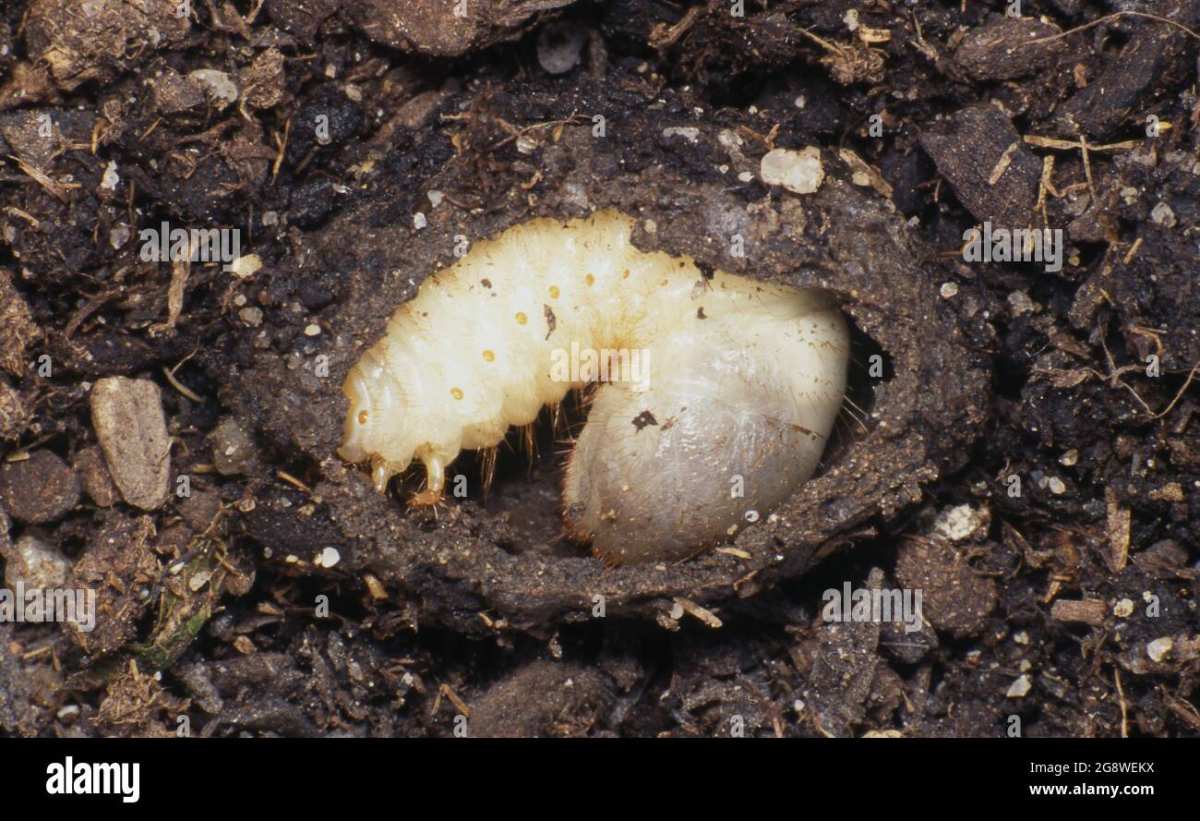
Image source: Bing (Web (fair-use with source credit))
Here's a quick breakdown of the most common species:
| Species | Adult Beetle | Active Season | Grub Cycle |
|---|---|---|---|
| Japanese beetle | Metallic green/copper | June–August | 1 year |
| European chafer | Tan/brown | June–July | 1 year |
| June beetle (June bug) | Large, brown | May–June | 1–3 years |
| Northern masked chafer | Dark brown/black | June–July | 1 year |
| Green June beetle | Large, velvety green | May–August | 1 year |
All of these grubs share the same basic C-shaped body and creamy white color with a brown head capsule. They feed on grass roots, which is what causes the dead, patchy turf you might be seeing. If you're finding grubs in a compost bin or garden bed rather than lawn turf, you might be looking at a different species entirely, like black soldier fly larvae, which are actually beneficial decomposers.
How Bad Is the Infestation?
Not every grub in your lawn requires action. According to extension research from Penn State and the University of Minnesota, cool-season grasses can tolerate about 5 to 8 grubs per square foot without showing visible damage. Warm-season grasses often handle even more.
Here's how to check your grub density. Cut a 1-foot square section of turf about 2 inches deep at the edge of a damaged area. Peel it back and count the grubs in the soil underneath.
Multiply that number by 144 to estimate grubs per square foot, or just use the raw count as a rough guide.
- 1 to 5 grubs per square foot: Usually no treatment needed. Your lawn can outgrow the damage.
- 6 to 10 grubs per square foot: Borderline. Monitor the situation and consider preventive treatment if you've had problems before.
- 10+ grubs per square foot: Treatment recommended. You're likely seeing or about to see visible turf damage.
If you're finding grubs at high densities in spring, those are overwintered grubs that have been feeding since the previous fall. They'll pupate soon, so treatment timing matters less at that point. Late summer and early fall, when new eggs have just hatched into small, actively feeding grubs, is the prime window for most biological controls.
What's Your Goal: Eliminate, Control, or Feed?
This is the question that determines everything else. Your situation falls into one of three categories:
- Eliminate: You have active lawn damage and want to kill the grubs causing it. Biological controls like beneficial nematodes or targeted bacterial treatments work best here.
- Control: You want to keep grub populations manageable long-term without nuking your entire yard ecosystem. Milky spore, preventive nematode applications, and attracting natural predators fit this approach.
- Feed: You're looking for grubs as food for a pet reptile, bird, or fish. You want commercially raised feeder insects, not wild-caught grubs from your yard.
Each path leads to a completely different set of solutions. The rest of this guide walks through each one.
If You Want to Get Rid of Grubs in Your Lawn
This is the most common reason people search for what eats grubs. You've got dead patches, you've dug up some larvae, and you want them gone. You've got several options, and they vary widely in speed, cost, and environmental impact.
Natural Predators That Eat Grubs in Your Yard
Several animals already living in or near your property will eat grubs if given the chance. Robins, starlings, crows, grackles, and blackbirds are the most effective bird species. They probe and scratch at turf to find grubs near the surface, especially in fall and spring when grubs are actively feeding in the top few inches of soil.
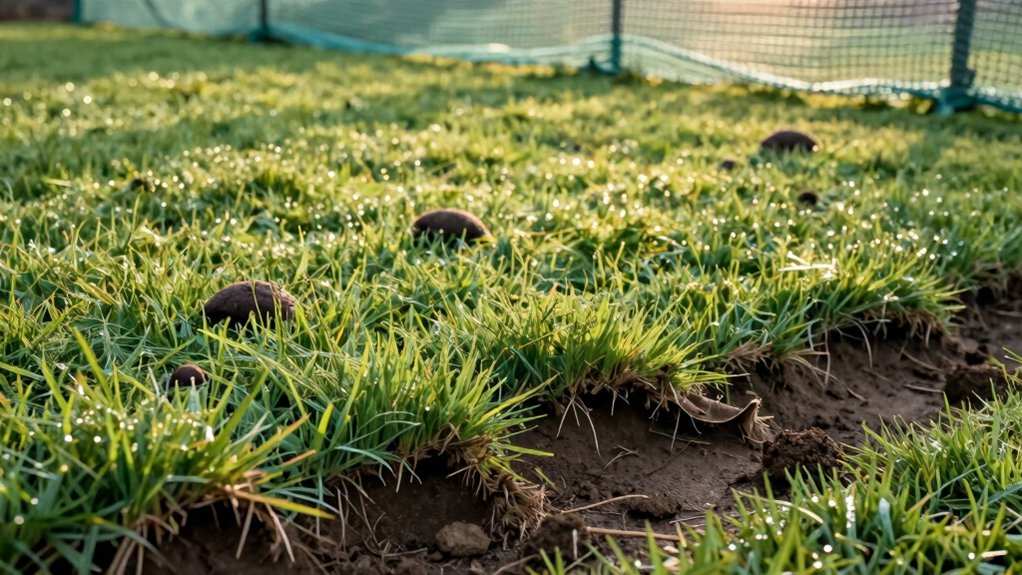
Mammals like skunks, raccoons, opossums, and armadillos (in southern regions) will also dig for grubs. The downside is obvious. They tear up your lawn in the process, often causing more cosmetic damage than the grubs themselves.
If you're dealing with skunks ripping up your turf at night, the grubs are attracting them, but getting rid of the skunks without addressing the grub problem is a losing battle.
Chickens and ducks are among the most effective grub predators available. If you have the space and local ordinances allow it, letting poultry scratch through an infested area can eliminate a significant grub population in days. They'll eat grubs, aerate the soil, and fertilize as they go.
It's hard to beat that combination.
The catch with relying on natural predators alone is that they rarely eliminate an infestation completely. They reduce numbers, which helps, but if grub density is high enough to cause turf damage, you'll probably need a more targeted approach alongside predator attraction.
Beneficial Nematodes: The Most Effective Biological Control
If you want to kill grubs without chemicals, beneficial nematodes are the single most effective option available. These are microscopic roundworms that actively hunt and kill grubs in the soil. The two species most commonly used for grub control are Heterorhabditis bacteriophora and Steinernema carpocapsae, with Heterorhabditis being the preferred species for white grubs specifically.
Image source: Wikimedia Commons / Peggy Greb, USDA Agricultural Research Service, Bugwood.org (CC BY)
Here's how they work. The nematodes enter grubs through natural body openings and release symbiotic bacteria that kill the host within 24 to 48 hours. The nematodes then feed on the bacteria and decomposing grub tissue, reproduce, and release a new generation to hunt more grubs.
It's a self-amplifying cycle as long as hosts are available.
Key application requirements:
- Soil temperature: Must be between 55°F and 85°F (13°C to 29°C) for nematodes to be active. Early fall is ideal in most regions.
- Moisture: Soil should be moist before application and kept consistently moist for 2 weeks after. Nematodes move through water films in the soil.
- Sunlight: Apply in early morning or evening. UV light kills nematodes quickly, so direct sun exposure during application will destroy them before they reach the soil.
- Timing: Late July through September in most of the US, when grubs are small and actively feeding near the surface.
A typical application uses about 1 billion nematodes per 2,000 to 3,000 square feet. They come in a refrigerated package that you rehydrate and apply with a watering can, hose-end sprayer, or pump sprayer. Remove fine filters from your sprayer, since they can trap the nematodes.
Pros and cons of beneficial nematodes:
- Pros: Targeted to grubs and similar soil pests, safe for pets, children, bees, and earthworms, no re-entry waiting period, organic-approved
- Cons: Requires specific temperature and moisture conditions, shorter shelf life than chemical alternatives (typically 1 to 2 months refrigerated), more expensive per application than synthetic insecticides, results take 1 to 2 weeks to become visible
Aggregate user reviews and extension trial data suggest nematodes reduce grub populations by 50 to 80 percent when applied correctly under good conditions. That's often enough to prevent visible turf damage, especially when combined with proper lawn watering and fertilization to help grass recover.
Milky Spore and Bt-G: Long-Term Bacterial Solutions
If you're playing the long game, bacterial treatments offer a "set it and forget it" approach. Two products dominate this space: milky spore (Paenibacillus popilliae) and Bacillus thuringiensis galleriae (Bt-G).
Milky spore is specific to Japanese beetle grubs. It won't touch European chafers, June beetles, or other species. That's its biggest limitation.
If Japanese beetles are your primary problem, milky spore is excellent. The bacteria multiply inside infected grubs, turning their body fluid milky white (hence the name) and releasing spores back into the soil when the grub decomposes.
Once established, milky spore can remain effective in soil for 10 to 15 years. The catch is that establishment takes 2 to 5 years in most climates. During that window, grub populations may not be suppressed enough to prevent damage.
It's a long-term investment, not a quick fix.
Bt-G is a newer option with a broader target range. It's effective against Japanese beetles, European chafers, and several other grub species. Unlike milky spore, Bt-G works on contact when grubs ingest it, so you see results within days rather than years.
It doesn't persist in soil the way milky spore does, so you'll need to reapply annually or as needed.
Comparison at a glance:
| Feature | Milky Spore | Bt-G | Beneficial Nematodes |
|---|---|---|---|
| Target species | Japanese beetle only | Multiple grub species | Multiple grub species |
| Time to results | 2–5 years to establish | 3–7 days | 7–14 days |
| Longevity in soil | 10–15+ years | Weeks (reapply needed) | Weeks (reapply needed) |
| Application frequency | Once (if it establishes) | Annually or as needed | Annually or as needed |
| Organic approved | Yes | Yes | Yes |
| Best for | Long-term Japanese beetle prevention | Multi-species control, faster results | Active infestations, targeted kill |
When Chemical Treatments Make Sense (and When They Don't)
Synthetic insecticides like trichlorfon (Dylox) and carbaryl (Sevin) still have a place in grub management, but that place is narrower than it used to be. These products work fast and kill a high percentage of grubs on contact. They also kill beneficial soil organisms, can harm earthworms, and pose risks to pollinators and pets if misapplied.
The one scenario where chemical treatments make the most sense is a severe, active infestation in late summer or early fall when biological controls can't be applied in time. Trichlorfon is a curative treatment that works on contact and has a short residual, making it useful for knocking back a heavy grub population quickly. It's most effective against young, small grubs.
Imidacloprid and other neonicotinoid insecticides are preventive treatments applied in early summer before eggs hatch. They've come under increasing scrutiny due to their impact on pollinators, and several states have restricted their use. If you're considering a neonicotinoid, check your state's current regulations and weigh the pollinator risk against your grub problem.
Our recommendation based on current extension guidance: try biological controls first. Reserve chemical treatments for situations where nematodes and bacterial options aren't practical or haven't worked after a full season of proper application.
If You Want to Attract Animals That Eat Grubs
Maybe you're not trying to wage war on grubs. Maybe you just want to encourage the natural predators that keep grub populations in check. This approach works best as a long-term strategy combined with other control methods, but it's low-cost, low-effort, and good for your yard's overall ecosystem.
Birds That Hunt Grubs (and How to Bring Them to Your Yard)
Robins are the most visible grub-eating birds in most of North America. They forage on open turf, listening and watching for movement near the surface. Starlings, grackles, crows, and blackbirds also feed on grubs, though they tend to be less selective in their foraging and may cause some turf disturbance in the process.
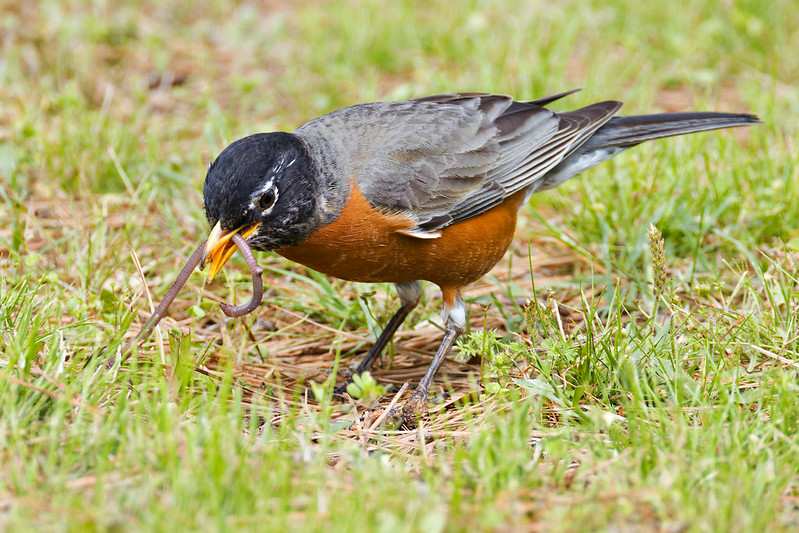
Image source: Bing (Web (fair-use with source credit))
To attract grub-hunting birds to your yard:
- Provide water. A birdbath or shallow water source is often more effective than food for drawing in insectivorous birds.
- Reduce or eliminate broad-spectrum insecticides. If you're poisoning the grubs, you're also reducing the food source that brings birds to your yard in the first place.
- Install nesting boxes. Robins and some other species will nest in open-fronted boxes placed on buildings or posts.
- Plant native shrubs and trees. These support the broader insect ecosystem that insectivorous birds depend on year-round.
- Leave some areas of bare or thin turf. Birds can't probe into thick, healthy sod as easily. They prefer areas where the soil is accessible.
One thing to keep in mind: birds are opportunistic feeders. They'll eat grubs when they find them, but they won't exclusively target grubs or eliminate an infestation on their own. Think of them as one layer of an integrated approach, not a standalone solution.
Using Chickens and Ducks for Grub Control
If you keep poultry or are considering it, chickens and ducks are remarkably effective grub predators. They scratch and peck through soil constantly, and grubs are a natural part of their diet. A small flock turned onto an infested lawn area can significantly reduce grub populations in a matter of days.
Ducks, particularly Indian Runner ducks, are even more targeted than chickens. They're less destructive to turf while foraging and have a strong preference for insect larvae. They won't scratch up your lawn the way chickens will.
The practical limitation is obvious. Not everyone can keep poultry, and many residential areas have ordinances restricting it. If you can, though, it's one of the most effective and satisfying ways to deal with a grub problem.
You get pest control, fertilizer, and fresh eggs all at once.
Mammals That Dig for Grubs (the Good and the Bad)
Skunks are the most common mammal associated with grub digging in lawns. They leave distinctive cone-shaped holes or rolled-back patches of turf where they've been foraging overnight. Raccoons do similar damage, often peeling back larger sections of sod.
Armadillos cause grub-related damage in the southeastern US, and moles tunnel through lawns following grub populations (though moles primarily eat earthworms, grubs are a significant part of their diet too).
If you're dealing with mammal damage, the solution is almost always to reduce the grub population first. Once the food source disappears, the mammals move on. Trying to trap, repel, or exclude skunks and raccoons without addressing the grubs is an exercise in frustration.
Ground beetles (family Carabidae) are another grub predator worth mentioning. These large, dark-colored beetles hunt grubs and other soil pests at night. They're common in healthy lawns and gardens and are a sign of good soil biodiversity.
Avoid broad-spectrum insecticides if you want to maintain ground beetle populations, since they're just as susceptible to these chemicals as the grubs are.
If You're Looking for Feeder Grubs for Pets
This is a completely different situation from lawn control, and it's important to treat it that way. If you own reptiles, amphibians, birds, or aquarium fish, feeder grubs are a nutritious staple. You need safe, commercially raised insects.
You do not want to collect grubs from your yard.
Safe Feeder Grubs for Reptiles, Birds, and Fish
The most common feeder grubs sold commercially include mealworms (Tenebrio molitor larvae), superworms (Zophobas morio larvae), waxworms (Galleria mellonella larvae), and black soldier fly larvae (Hermetia illucens). Each has a different nutritional profile, and the right choice depends on what you're feeding.
| Feeder Grub | Protein | Fat | Calcium | Best For |
|---|---|---|---|---|
| Mealworms | ~20% | ~13% | Low | Bearded dragons, geckos, birds, fish |
| Superworms | ~20% | ~18% | Low | Larger reptiles, adult bearded dragons |
| Waxworms | ~15% | ~22% | Low | Treats only, high-fat content |
| Black soldier fly larvae | ~18% | ~14% | High | Excellent calcium ratio, most reptiles |
| Hornworms | ~9% | ~3% | Moderate | Hydration, picky eaters |
Black soldier fly larvae (often sold under brand names like NutriGrubs or Calciworms) stand out because of their naturally high calcium-to-phosphorus ratio. Most feeder insects are calcium-deficient and require dusting with a calcium supplement before feeding. Black soldier fly larvae don't, which simplifies the routine significantly.
Why You Shouldn't Feed Wild-Caught Grubs to Pets
It's tempting to grab grubs from your garden and toss them to your bearded dragon or chickens. Don't. Wild-caught grubs carry several risks that commercially raised insects don't.
Pesticide exposure is the biggest concern. If you've ever treated your lawn or garden with insecticides, herbicides, or fungicides, those chemicals may be present in or on the grubs. Even if you haven't treated your own property, grubs can migrate from neighboring treated areas.
Parasites are another issue. Wild grubs can harbor internal parasites that may transfer to your pet. Commercially raised feeder insects are bred in controlled environments specifically to minimize this risk.
Nutritional inconsistency is a third factor. The nutritional content of wild grubs varies based on what they've been eating. Commercially raised feeders are gut-loaded (fed a nutrient-rich diet before sale) to ensure consistent nutrition for your pet.
Best Feeder Grub Alternatives
If you're looking to diversify your pet's diet beyond standard mealworms, several options work well. Hornworms are excellent for hydration since they're about 85% water. They grow fast and are great for encouraging picky eaters.
Silkworms offer high protein and low fat with a soft exoskeleton that's easy to digest. Crickets remain a staple for many insectivorous reptiles, though they're noisy and smelly to keep at home.
For fish owners, bloodworms (midge fly larvae) and blackworms are common live food options. These aren't technically grubs, but they serve the same purpose as a high-protein live feeder. Most aquarium shops carry them frozen or live.
How to Choose the Right Approach for Your Situation
You've got a lot of options at this point. Let's narrow them down based on what you're actually dealing with.
Decision Guide: Matching Your Problem to the Solution
If you have visible lawn damage and high grub counts (10+ per sq ft):
Apply beneficial nematodes in late summer or early fall. Follow up with proper lawn care (watering, fertilization, overseeding) to help turf recover. If damage is severe and it's already late fall, wait until the following August for nematode application rather than using chemicals as a last resort.
If you have moderate grub counts (5 to 10 per sq ft) and want long-term prevention:
Apply milky spore if Japanese beetles are your primary species. Use Bt-G for broader species coverage. Attract birds and maintain healthy soil to support ground beetles and other beneficial predators.
If skunks or raccoons are tearing up your lawn:
Reduce the grub population first using nematodes or Bt-G. Once the food source is gone, the mammal damage stops. Exclusion methods like fencing or repellents are temporary fixes at best without addressing the underlying grub problem.
If you want to feed grubs to pets:
Buy commercially raised feeder insects from a reputable supplier. Black soldier fly larvae offer the best nutritional profile for most reptiles. Avoid wild-caught grubs entirely.
If you're managing a farm or large pasture:
Integrated pest management combining rotational grazing, beneficial nematode application, and bird habitat preservation typically outperforms any single approach. Consult your local cooperative extension service for region-specific recommendations.
Timing Matters: When to Treat for Grubs
The single most common mistake people make with grub control is treating at the wrong time. Here's the general timeline for most of the US:
- May to June: Adult beetles fly, mate, and lay eggs in soil. No treatment needed.
- July to August: Eggs hatch into small grubs. This is the ideal window for nematode and Bt-G application.
- September to October: Young grubs feed aggressively near the surface. Still treatable with biological controls.
- November to March: Grubs burrow deep into soil to overwinter. Treatments are largely ineffective during this period.
- April to May: Overwintered grubs return to the surface and feed briefly before pupating. Treatment at this stage is less effective since grubs are large and about to stop feeding.
Soil temperature is the practical trigger. When soil temperatures at 4 inches depth consistently read between 55°F and 85°F, nematodes will be active. Most garden centers sell inexpensive soil thermometers if you want to check precisely.
Common Mistakes That Make Grub Problems Worse
Overwatering after nematode application washes them away from the target zone. Water lightly before and after application, then keep soil moist but not saturated for about two weeks.
Applying nematodes in midday sun kills them before they reach the soil. Always apply in early morning or evening, and water them in immediately.
Using broad-spectrum insecticides eliminates the beneficial predators (ground beetles, parasitic wasps) that were helping you for free. You end up more dependent on chemicals long-term.
Treating in spring when grubs are large and nearly ready to pupate wastes time and money. The window for effective biological control is late summer to early fall.
Confusing grub damage with other lawn problems leads to misdirected treatment. Fungal diseases, dog urine spots, and drought stress can all look similar. Always confirm grub presence by digging before treating.
Costs, Effectiveness, and What to Expect
Let's talk numbers so you can plan your approach realistically.
How Much Grub Control Actually Costs
| Method | Cost per Application | Coverage | Frequency |
|---|---|---|---|
| Beneficial nematodes | $30–$50 | ~3,000 sq ft | Annually or as needed |
| Milky spore | $40–$60 | ~2,000 sq ft | Once (if it establishes) |
| Bt-G | $20–$40 | ~2,000 sq ft | Every 7–14 days during active period |
| Professional chemical treatment | $100–$300 | Full lawn | Annually |
| DIY chemical (trichlorfon) | $15–$30 | ~5,000 sq ft | As needed |
| Attracting birds | $0–$50 | N/A | Ongoing |
| Chickens/ducks | Variable | N/A | Ongoing |
Beneficial nematodes are the most cost-effective biological option for active infestations. Milky spore has a higher upfront cost but pays off over a decade or more if it establishes successfully in your soil.
How Long Each Method Takes to Work
Beneficial nematodes begin killing grubs within 24 to 48 hours of contact, but visible reduction in turf damage takes 1 to 2 weeks. Bt-G works similarly fast, with grubs stopping feeding within hours of ingestion.
Milky spore is the slow option. It takes 2 to 5 years to build up enough spore density in soil to significantly impact grub populations. During that establishment period, you may need to use nematodes or Bt-G as a bridge.
Chemical insecticides like trichlorfon work fastest, often killing grubs within 24 hours. The trade-off is the environmental cost and the fact that they don't prevent future infestations.
Realistic Results: What Success Looks Like
Success doesn't mean zero grubs. A healthy lawn ecosystem has some grubs. Success means grub density stays below the damage threshold and your turf stays green and intact.
After a proper nematode application, expect a 50 to 80 percent reduction in grub numbers. That's usually enough to stop visible damage, especially if you support recovery with proper watering and fertilization. You may need to reapply annually for a few years if beetle pressure remains high.
If you're attracting birds and other predators, think of it as gradual population management rather than elimination. Over several seasons, a diverse predator community can keep grub numbers in check without any other intervention.
Frequently Asked Questions
Do moles eat grubs?
Yes, grubs are a significant part of a mole's diet, though earthworms are their primary food source. If you have a mole problem, reducing grubs may help, but it won't necessarily eliminate moles since they'll switch to earthworms.
Will beneficial nematodes harm earthworms?
No. Beneficial nematodes used for grub control target insect larvae specifically. Earthworms are not affected.
This is one of the major advantages over chemical insecticides, which often kill earthworms along with target pests.
Can I apply milky spore and nematodes at the same time?
Yes, they're compatible and can be applied together. Milky spore provides long-term prevention for Japanese beetle grubs, while nematodes handle the current active population. They work through different mechanisms and don't interfere with each other.
What time of year should I put down milky spore?
Milky spore can be applied any time the ground isn't frozen, but spring and fall are ideal. The bacteria need moisture and moderate soil temperatures to begin establishing in the soil. Once applied, it doesn't require reapplication.
Are grubs harmful to humans?
White grubs don't bite, sting, or transmit diseases to humans. They're harmless to people and pets. The damage they cause is limited to plant roots, primarily grass.
How do I know if my grub treatment worked?
Re-sample the treated area 2 to 3 weeks after application. Cut another 1-foot square of turf and count grubs. A successful treatment should show a significant reduction compared to your pre-treatment count.
Dead nematode-killed grubs will often appear reddish-brown rather than creamy white.
Final Recommendation: What to Do Right Now
If you're reading this during late summer or early fall and you've confirmed grubs in your lawn, order beneficial nematodes today. They have a short shelf life and are most effective when applied while grubs are small and actively feeding. Check your soil temperature, pick an overcast evening, and get them into the ground.
If it's spring and you're seeing damage from last year's grubs, focus on lawn recovery. Aerate, overseed, and fertilize to help grass fill in. Plan a nematode application for August.
If you're dealing with skunks or raccoons, start with grub reduction and the mammal problem will resolve itself. If you're feeding pets, skip the yard entirely and buy from a reputable feeder insect supplier.
The right answer to "what eats grubs" depends on what you need. Now you've got a clear path for each situation.

Image source: Wikimedia Commons / Peggy Greb, USDA Agricultural Research Service, Bugwood.org (CC BY)