If you've ever flipped over a patch of dead turf and found fat, C-shaped larvae curled in the soil, you've probably wondered: are white grubs harmful? The honest answer is that it depends entirely on what species you're dealing with, how many are there, and where you found them. A few grubs in a compost pile are doing useful work.
The same number in a prized Kentucky bluegrass lawn in late August can signal real trouble.
White grubs are the larval stage of scarab beetles, and they feed on the roots of grasses and other plants below the surface. The damage they cause often goes unnoticed until brown patches appear and the turf lifts away like loose carpet. Understanding when grubs cross the line from harmless decomposers to genuine pests is the key to making smart decisions about your lawn and garden.

Image source: Wikimedia Commons / Сарапулов (CC BY)
Quick Answer
White grubs are harmful when their numbers exceed the damage threshold for your turf type. Most cool-season grasses tolerate fewer than 5 to 10 grubs per square foot. Above that, root feeding causes brown, dead patches that peel back easily.
Grubs in compost piles or healthy garden soil are usually beneficial. The real risk depends on species, population density, and the health of your turf.
Are White Grubs Harmful? It Depends on Context
The question isn't as simple as yes or no. White grubs occupy a gray area in the soil ecosystem. In low numbers, they're part of a healthy soil food web, breaking down organic matter and aerating the ground as they move through it.
Birds, skunks, and beneficial insects rely on them as a food source.
The problem starts when populations climb high enough that root feeding outpaces the grass's ability to recover. At that point, you get the classic signs: irregular brown patches that don't respond to watering, turf that lifts away from the soil with almost no resistance, and secondary damage from animals digging for the grubs themselves.
Context matters enormously. Grubs in a compost bin are accelerating decomposition. Grubs in a vegetable garden bed might be feeding on crop roots.
Grubs in a thin, stressed lawn are far more dangerous than the same count in a thick, well-maintained stand of turf. The species also matters, because some are more aggressive feeders than others.
How to Confirm You Actually Have Grubs (Not Something Else)
Before you do anything else, you need to confirm that grubs are actually present and causing the damage. Brown patches in a lawn come from dozens of causes: fungal disease, drought stress, dog urine, chinch bugs, or even irrigation problems. Treating for grubs when you don't have them wastes money and adds unnecessary chemicals to your soil.
The Dig Test
Cut a 1-foot square of turf in a damaged area, about 2 to 3 inches deep. Peel it back and examine the root zone. Count every grub you see in that square foot.
Repeat this in several spots across the lawn, especially along the edges of brown patches where active feeding is most likely.
The Turf Lift Test
Grab a handful of grass in a damaged area and pull gently. If the turf lifts away easily, like peeling back a rug, the roots have been severed. That's a strong indicator of grub activity.
Healthy turf with an intact root system resists lifting.
Soap Flush Method
Mix a couple of tablespoons of dish soap in a gallon of water and pour it over a 1-to-2-square-foot area of suspect turf. Wait a few minutes. Grubs and other soil insects will come to the surface.
This method works well for confirming presence but isn't precise for counting, since it only samples the very top layer.
Know What Species You're Dealing With
Not all white grubs behave the same way. The species determines the feeding pattern, the life cycle timing, and how aggressively they damage turf. Correct identification helps you choose the right treatment window and method.
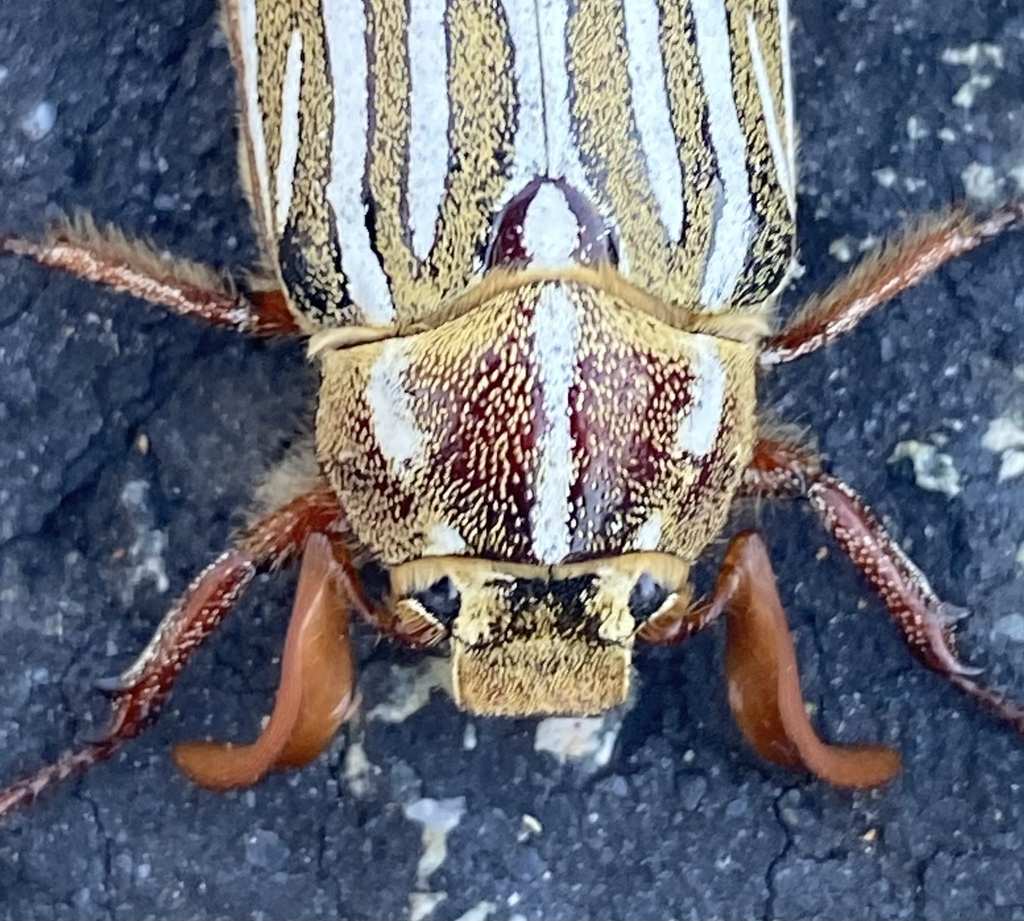
Image source: iNaturalist / Irene
Japanese Beetle Larvae
Japanese beetle grubs are one of the most destructive species in the eastern and midwestern United States. They're widespread and feed heavily on turfgrass roots in late summer and early fall, then again in spring before pupating. The adult beetles skeletonize leaves on over 300 plant species, so the damage isn't limited to the lawn.
European Chafer Larvae
European chafers are particularly aggressive and have expanded their range significantly. They tend to cause damage later into the fall and earlier in the spring than other species because they tolerate cooler soil temperatures. In many areas, they've overtaken Japanese beetles as the primary grub pest.
June Bug / May Beetle Larvae
June bug grubs have a longer life cycle, sometimes taking two to three years to mature. They're generally less damaging on a per-grub basis than Japanese beetles or European chafers, but heavy populations can still cause significant turf loss. They're more common in older, established lawns and pastures.
When Grubs Are Actually Beneficial
In compost piles, garden beds with plenty of organic matter, and naturalized areas, white grubs are doing valuable work. They break down dead plant material and contribute to soil structure. Green June beetle larvae, for example, feed primarily on decaying organic matter and only occasionally cause turf issues.
If you find grubs in a compost bin or a heavily mulched landscape bed, they're almost certainly helping more than hurting.
How Many Grubs Is Too Many?
This is the single most important question for deciding whether action is needed. Grub damage thresholds aren't arbitrary. They're based on research into how many larvae a given turf type can tolerate before visible, lasting damage occurs.

Image source: Bing (Web (fair-use with source credit))
Damage Threshold by Turf Type
| Grubs per sq ft | Risk Level | Typical Action |
|---|---|---|
| 0 to 4 | Low | Monitor, no treatment needed |
| 5 to 9 | Moderate | Depends on turf health and species |
| 10 to 14 | High | Treatment recommended |
| 15+ | Severe | Immediate action warranted |
These numbers are general guidelines for cool-season turfgrasses like Kentucky bluegrass, perennial ryegrass, and tall fescue. Fine fescues and stressed lawns may show damage at lower counts. A thick, well-fertilized, regularly watered lawn can often tolerate 8 to 10 grubs per square foot without visible symptoms.
When Low Counts Still Cause Problems
Even below the standard threshold, grubs can cause noticeable damage if the turf is already stressed. Drought, poor soil, heavy shade, or disease pressure all reduce the grass's ability to compensate for root feeding. In those situations, 5 or 6 grubs per square foot might be enough to create brown patches.
Animal digging is another factor. Skunks, raccoons, and birds target grubs as a food source, and the damage they do tearing up turf in a single night can far exceed anything the grubs themselves caused. Even a moderate grub population can attract enough animal activity to destroy a lawn's appearance.
Sampling Properly Across Your Lawn
Don't just check one spot. Grub populations are rarely uniform. They tend to concentrate in sunny, south-facing slopes, along driveway and sidewalk edges, and in areas with moist, well-drained soil.
Sample at least five to six locations across the lawn, focusing on the transition zones between healthy and damaged turf. Average your counts to get a realistic picture of the overall population.
Assessing the Real Damage
Grub damage has a specific look once you know what to watch for. It doesn't spread in a uniform circle like many fungal diseases. Instead, it appears as irregular, expanding patches of tan or brown turf that often start at the edges of a lawn and work inward.
The affected areas can merge over time, creating large dead sections by late summer.
The key distinguishing feature is the turf's response to a tug test. Grab a handful of grass in a damaged area and pull. If it lifts cleanly away from the soil with almost no resistance, the roots have been chewed through.
That's grub damage. Drought-stressed turf might look brown, but the roots are still intact and the plant resists pulling.
Beneath the surface, cut through the top 2 inches of soil in a damaged zone. You'll often find the thatch layer stripped away and the root system shortened or completely severed. In healthy turf, roots should extend 4 to 6 inches or more into the soil.
Grub-damaged areas often show roots clipped back to less than an inch.
Reading the Signs in Your Turf
Timing matters when you're diagnosing grub problems. Peak feeding for most species happens from mid-August through October, depending on your region. You might not see visible damage until September or even October, even though the larvae have been feeding since July.
Spring damage can happen too, but it's usually less severe because the grubs are mature and preparing to pupate.
Watch for wilting during the day even when soil moisture is adequate. The grass can't take up water effectively with its root system compromised. That's often the first visible clue before the browning starts.
Secondary Damage from Animals
Sometimes the grubs themselves aren't the main problem. Skunks, raccoons, and crows find white grubs irresistible, and they'll tear up sections of lawn overnight to get at them. Skunks peel back turf in neat strips.
Raccoons dig in a more scattered, destructive pattern. Birds leave small probe holes across the surface.
This secondary damage can be worse than anything the grubs caused directly. A lawn with 8 grubs per square foot might show no visible symptoms, but if skunks discover that food source, the cosmetic damage can be severe overnight. If you're seeing animal activity but no obvious turf decline, grubs are likely the attractant and control may be worth considering even at moderate counts.
Grubs in Garden Beds vs. Compost Piles
Finding grubs in a raised vegetable bed is different from finding them in a compost pile. In compost, white grubs are breaking down organic matter and speeding up decomposition. Leave them alone and let them do the work.
In a vegetable garden, especially with young transplants or shallow-rooted crops like lettuce and herbs, grubs can cause real problems. Seedlings wilt suddenly. Established plants show stunted growth.
If you're pulling up plants and finding grubs clustered around the root zone in a garden bed, that's a situation worth addressing.
Your Decision: Treat, Tolerate, or Use Biological Controls
Once you've confirmed grubs are present and counted them, you face a choice. Not every grub population needs a chemical response. The right decision depends on your numbers, your turf's health, your comfort with intervention, and your long-term lawn management approach.
When to Do Nothing
If your counts are below 5 grubs per square foot and your turf shows no visible damage, the best move is usually to wait. A healthy lawn can outgrow low-level grub feeding. Predatory birds, ground beetles, and other natural controls often keep populations in check without any intervention from you.
This is especially true in diversified landscapes where beneficial insects are abundant. Broad-spectrum insecticides kill the predators that would otherwise help manage grub populations for free. If you're not seeing damage, let the ecosystem do its job.
When Curative Treatment Makes Sense
Curative treatment is the right call when you have active, visible damage and counts above your turf's tolerance threshold during the feeding season. This approach uses fast-acting chemistry to knock down the current population. Products containing trichlorfon or carbaryl work within days when grubs are small and actively feeding.
The window for curative treatment is narrow. You need to hit the grubs when they're young and near the soil surface. That typically means August into early September for most species in the northern half of the country.
Once grups burrow deep for winter, curative products lose most of their effectiveness.
When Preventive Treatment Is the Right Call
Preventive treatment makes sense when you've had grub problems in previous years and want to stop them before damage occurs. Products containing chlorantraniliprole (found in GrubEx and similar formulations) are applied before eggs hatch, usually in late June through July depending on your region. They create a protective zone in the soil that kills young grubs as they begin feeding.
This approach requires planning and timing. You're treating a problem that hasn't appeared yet, which takes a leap of faith. But if you've already experienced heavy damage, prevention is almost always more effective and less expensive than renovation after the fact.
Biological Options: Nematodes and Milky Spore
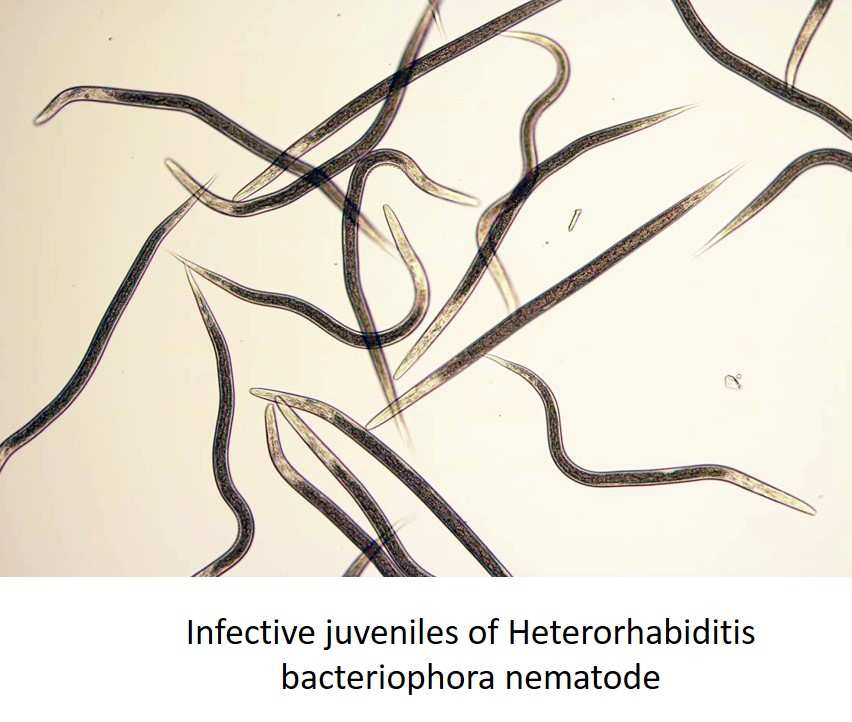
Image source: Bing (Web (fair-use with source credit))
Beneficial nematodes are microscopic roundworms that seek out and kill grubs from the inside. Species like Heterorhabditis bacteriophora are specifically effective against Japanese beetle larvae and other common white grub species. They're applied as a soil drench and need moist conditions and soil temperatures above 55 degrees Fahrenheit to be effective.
The advantage of nematodes is that they target grubs without harming earthworms, beneficial insects, or other soil organisms. The downside is that they're living organisms with a shelf life and specific handling requirements. They need to be applied in the evening or on overcast days because UV light kills them.
And they work best when grubs are small, so timing matters here too.
Milky spore disease (Paenibacillus popilliae) is a bacterial treatment that specifically targets Japanese beetle grubs. When grubs ingest the spores while feeding, they become infected and die, releasing more spores into the soil. Milky spore takes 2 to 4 years to establish fully but can provide control for 10 to 15 years once established.
It's ineffective against other grub species, so species identification matters before you invest.
Getting the Timing Right (This Is Where Most People Fail)
The single biggest mistake people make with grub control isn't choosing the wrong product. It's applying at the wrong time. Grub life cycles dictate when treatments work and when they don't, and missing the window by even a few weeks can mean throwing money away.
Preventive Application Window
Chlorantraniliprole-based products need to be in the soil before eggs hatch and young grubs start feeding. For Japanese beetles and European chafers in the Northeast and Midwest, that typically means late June through mid-July. In warmer southern regions, the window shifts earlier, sometimes into June.
Apply preventive products before an irrigation event or rainfall. The active ingredient needs to move into the root zone where grubs will be feeding. After application, water the lawn with about half an inch of irrigation.
Without that watering-in step, the product sits on the surface and degrades before it reaches the target zone.
Curative Application Window
Curative products work best on young, small grubs that are actively feeding near the soil surface. In most regions, that's mid-August through early September. By October, many grubs have already started moving deeper into the soil for winter.
Trichlorfon-based products begin working within 24 to 72 hours of application. That fast knockdown is the advantage of curative treatment when damage is already showing. But it's also why timing is so critical.
Grubs that are large and nearing pupation stage are much harder to kill with any product.
Why Spring Treatment Usually Doesn't Work
It's tempting to treat in spring when you see the damage from last fall and want to prevent it this year. But spring applications of most curative products are largely ineffective. The grubs present in spring are nearly mature and have stopped feeding heavily.
They're also deeper in the soil where contact with surface-applied products is limited.
If you're going to treat for existing grubs, fall is the time to use curative products. If you want to prevent next year's problems, the following summer is when preventive products should go down. Spring is better spent renovating damaged areas and building turf density so the lawn can handle whatever grubs are out there.
Step-by-Step: Evaluating Your Grub Situation
Here's a practical workflow you can follow the next time you spot suspicious damage in your lawn.
Step 1: Confirm Presence
Cut a 1-foot square in a damaged area and peel it back. Count the grubs in the root zone. Repeat in at least five spots across the lawn, focusing on the edges of brown patches.
Step 2: Count and Sample
Average your counts. If you're finding fewer than 5 grubs per square foot across most samples, your turf is likely tolerating the population without intervention.
Step 3: Identify the Species
Look at the raster pattern on the underside of the grub's tail tip with a hand lens. Japanese beetles and European chafers have distinct V-shaped or parallel row patterns. If you can't identify the species, note the size and timing of when you found them.
Step 4: Assess Damage and Risk
Check whether the turf lifts easily. Look for animal digging. Consider your turf's overall health.
A stressed lawn with moderate grub counts may need action while a healthy lawn with the same counts does not.
Step 5: Choose Your Approach
Below threshold with no damage: monitor and wait. Above threshold with active feeding: treat with a curative product in late summer. History of severe damage: plan preventive treatment the following June or July.
Step 6: Apply and Water In
Use a broadcast spreader for granular products. Water immediately after application with about half an inch of irrigation to move the active ingredient into the root zone.
Step 7: Monitor and Re-Evaluate
Check the treated area two to three weeks later. If damage continues or animal activity persists, you may need a follow-up application or a different approach next season.
Common Mistakes That Waste Money or Make Things Worse
Treating without confirming grubs are actually present is the most expensive mistake. Brown patches come from dozens of causes, and grub-specific products won't fix fungal disease, irrigation problems, or nutrient deficiencies.
Applying at the wrong time is the second most common error. Spring applications of curative products rarely work because grubs are mature and deep in the soil. Preventive products applied after eggs have already hatched miss the window entirely.
Over-treating below threshold wastes money and harms beneficial soil organisms. Earthworms, ground beetles, and predatory insects all suffer from unnecessary broad-spectrum applications. Those organisms provide free pest control and soil aeration that you lose when you treat indiscriminately.
Confusing grub damage with other lawn problems leads to the wrong fix entirely. Chinch bugs, sod webworms, and fungal diseases all create brown patches but require completely different treatments. Always confirm the cause before reaching for a product.
Grubs in Specific Situations: Gardens, Pots, and Indoors
Vegetable Gardens
Grubs in raised beds can damage young transplants and shallow-rooted crops. If you're finding more than a couple per square foot in a vegetable garden, hand-picking during soil preparation or applying beneficial nematodes are effective options. Avoid broad-spectrum insecticides in food-growing areas.
Potted Plants
Grubs in container plants usually indicate contaminated potting soil or soil mixed in from the ground. They can damage root systems in the confined space of a pot. Remove the plant, shake off the soil, and inspect the roots.
Repot with fresh, sterile mix if damage is significant.
Finding Grubs Inside the House
White grubs occasionally show up indoors in basements, garages, or near potted plants brought inside for winter. They're not harmful to humans or pets and won't infest your home. They simply wandered in from nearby soil or emerged from a potted plant.
Remove them and check any indoor plants for additional larvae.
Safety and Environmental Considerations
Read and follow all label directions for any grub control product. Labels specify application rates, personal protective equipment, re-entry intervals, and environmental precautions. These are legal requirements, not suggestions.
Keep pets off treated lawns until the product has been watered in and the grass has dried. Most granular products require pets to stay off for 24 to 48 hours after application. Check the specific product label for exact timing.
Avoid applying insecticides to flowering clover or other blooms in your lawn. Pollinators visit flowering plants in turf, and systemic insecticides can be present in nectar and pollen. Mow flowering weeds before application to reduce exposure.
Some states and municipalities restrict neonicotinoid insecticides like imidacloprid. Check with your state department of agriculture or local cooperative extension before purchasing products containing these active ingredients.
So, Are White Grubs Harmful to You?
White grubs pose no direct threat to human health. They don't bite, sting, or transmit disease. The larvae you find in soil are entirely focused on feeding on roots and organic matter.
The only harm they cause is to plants and turf, and only when populations exceed what the vegetation can tolerate.
For pets, grubs are similarly harmless. Dogs and cats that eat grubs may experience mild stomach upset, but the larvae themselves are not toxic. The bigger concern for pets is exposure to chemical treatments applied to control grubs, which is why following label directions for pet safety matters.
The real question isn't whether grubs are dangerous to you. It's whether they're damaging your landscape enough to justify intervention. In most cases, the answer depends on counting, context, and timing.
Final Decision Guide: What to Do Based on Your Situation
Few grubs, healthy lawn, no damage: Monitor and do nothing. Your turf can handle it.
Moderate grubs, some brown patches, animal digging starting: Apply a curative product in late summer or early fall while grubs are small and feeding near the surface.
History of severe damage, preventive mindset: Apply a chlorantraniliprole-based product the following June or July before eggs hatch.
Grubs in compost or mulched beds: Leave them alone. They're helping.
Grubs in vegetable gardens with visible root damage: Apply beneficial nematodes or hand-pick during soil preparation.
Unsure what's causing brown patches: Confirm grubs are present before treating. If counts are low, investigate other causes like irrigation, disease, or nutrient issues.
Frequently Asked Questions
Are white grubs harmful to humans?
No. White grubs don't bite, sting, or carry diseases that affect people. They live in soil and feed on plant roots.
The only harm they cause is to turf and garden plants when populations are high.
Are white grubs harmful to dogs?
Not directly. Dogs that eat grubs might have mild digestive upset, but the larvae themselves aren't toxic. The bigger risk is chemical exposure from treated lawns, so follow product label directions for pet safety.
How do I know if I have too many grubs?
Most cool-season lawns show damage when grub counts exceed 5 to 10 per square foot. Sample multiple areas by cutting and peeling back 1-foot squares of turf. Average your counts across the lawn.
When is the best time to treat for grubs?
Curative treatments work best in August and early September when grubs are small and actively feeding. Preventive treatments go down in late June through July before eggs hatch. Spring treatments are generally ineffective.
Are grubs in my compost pile bad?
No. Grubs in compost are breaking down organic matter and speeding up decomposition. They're beneficial in that setting and should be left alone.
Will grub damage fix itself?
Minor damage often recovers with proper watering, fertilization, and overseeding in fall. Severe damage where roots are completely severed will not recover on its own and requires renovation.