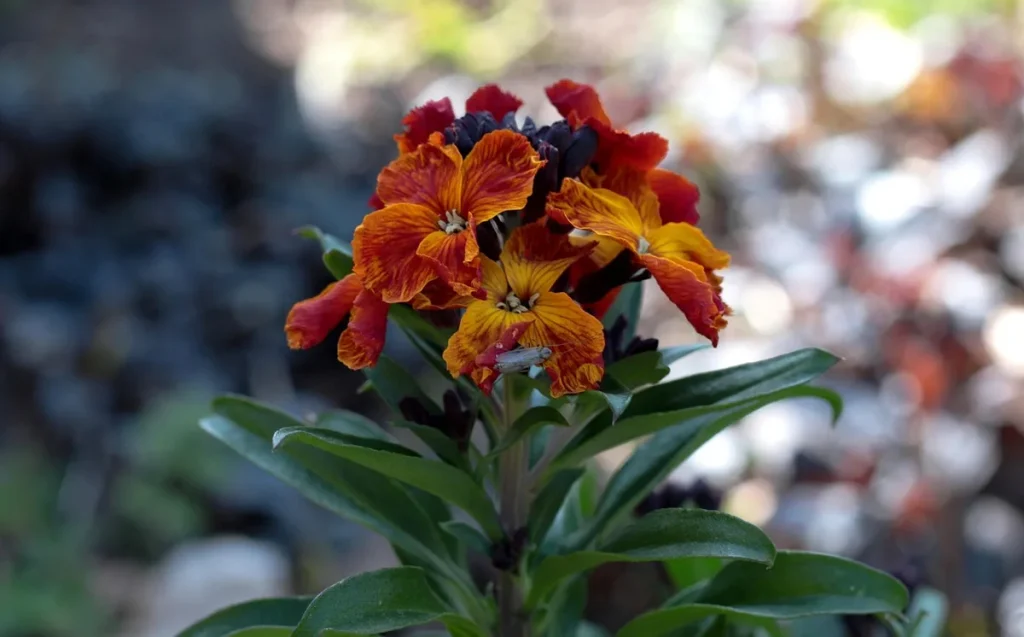
If you've ever caught your cat nibbling on a garden plant and felt that spike of panic, you're not alone. Wallflowers are a staple in spring gardens across the US and UK, and many cat owners want to know whether these colorful blooms pose a real danger. The short answer is that wallflowers (Erysimum cheiri) are considered mildly toxic to cats, but the risk level is far lower than genuinely dangerous plants like lilies or oleander.
Understanding what's actually in these plants, what symptoms to watch for, and how they compare to truly hazardous species will help you make smart decisions for your garden and your pet. As of 2026, the ASPCA Animal Poison Control Center continues to be the most reliable resource for confirming plant toxicity classifications, and their database is where most veterinarians turn when a pet ingestion call comes in.
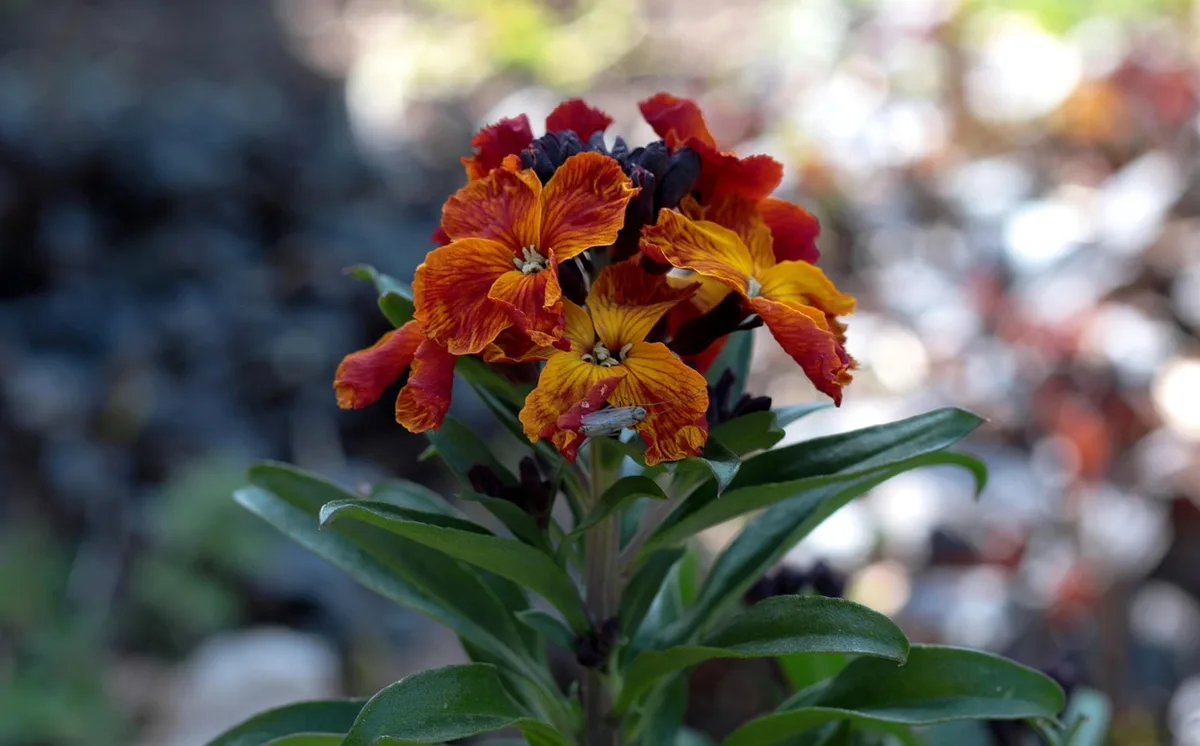
Image source: Pixabay / Sonja-Kalee (Pixabay Content License)
The Quick Answer: Are Wallflowers Toxic to Cats?
Wallflowers are classified as mildly toxic to cats. They contain glucosinolates, which can cause gastrointestinal upset. Some Erysimum species also contain trace cardiac glycosides.
Serious poisoning from wallflowers alone is rare. Most cats experience only mild vomiting or diarrhea. You should still contact your vet if your cat eats any part of the plant.
What's Actually in a Wallflower Plant
Wallflowers belong to the Brassicaceae family, the same plant family as cabbage, broccoli, and mustard greens. The common garden wallflower, Erysimum cheiri (formerly classified as Cheiranthus cheiri), is the species you'll most often encounter in nurseries and garden centers. It's prized for its fragrant clusters of yellow, orange, red, or purple flowers and its popularity as a spring bedding plant.
The primary compounds of concern in wallflowers are glucosinolates. These sulfur-containing chemicals are found throughout the Brassicaceae family and are responsible for the sharp, peppery taste in mustard and horseradish. When a cat chews on plant material containing glucosinolates, enzymes break these compounds down into irritating byproducts that can inflame the gastrointestinal tract.
Some Erysimum species also contain small amounts of cardiac glycosides, specifically a compound called cheirotoxin. These are the same class of chemicals found in foxglove (Digitalis) and oleander, which are extremely dangerous to cats. However, the concentration in wallflowers is significantly lower than in those highly toxic species.
The risk of serious cardiac effects from wallflower ingestion alone is considered low, though it's not zero, especially if a cat consumes a large quantity.
Here's a quick breakdown of the key compounds:
| Compound | Found In | Effect on Cats | Risk Level |
|---|---|---|---|
| Glucosinolates | All Brassicaceae, including Erysimum | GI irritation, vomiting, diarrhea | Mild |
| Cheirotoxin (cardiac glycoside) | Some Erysimum species | Potential cardiac effects at high doses | Low to moderate |
| Isothiocyanates | Breakdown products of glucosinolates | Mouth and stomach irritation | Mild |
The concentration of these compounds varies depending on the plant part. Flowers and seed pods tend to have higher concentrations than stems and leaves. Young, actively growing tissue also tends to be more chemically potent than mature, woody growth.
How Wallflower Toxicity Works in Cats
When a cat bites into a wallflower, the glucosinolates come into contact with an enzyme called myrosinase, which is released when plant cells are damaged. This reaction produces isothiocyanates, the same compounds that give mustard its bite. In a cat's digestive system, these irritants can cause inflammation of the stomach and intestinal lining.
Cats are particularly vulnerable to plant toxins for a few reasons. They lack certain liver enzymes that other animals use to metabolize plant compounds efficiently. Their small body size means even a modest amount of a toxic substance can produce noticeable effects.
And their grooming behavior means they may ingest pollen or plant residue from their fur even without directly chewing on a plant.
The cardiac glycoside concern works differently. These compounds interfere with the sodium-potassium pump in heart muscle cells, which can disrupt normal heart rhythm. In highly toxic plants like foxglove, even a small amount can be fatal.
In wallflowers, the concentration is much lower, so a cat would need to eat a significant quantity of plant material to reach a dangerous dose. That said, individual sensitivity varies, and kittens or cats with pre-existing heart conditions could be at higher risk.
The toxic dose for Erysimum species in cats hasn't been formally established in veterinary literature, which is part of why you'll find conflicting information online. Most reported cases involve mild, self-limiting gastrointestinal signs that resolve within 24 to 48 hours without specific treatment.
Symptoms to Watch For If Your Cat Chews a Wallflower
If your cat has gotten into your wallflower bed, the most likely symptoms are gastrointestinal. Watch for drooling, vomiting, diarrhea, and a reluctance to eat. These signs typically appear within a few hours of ingestion and are the result of the glucosinolate irritation we discussed above.
In rare cases where a cat has consumed a large amount of plant material, especially from a species with higher cardiac glycoside content, you might notice more concerning signs. These include lethargy, weakness, abnormal heart rate (too fast or too slow), and difficulty breathing. If you observe any of these symptoms, treat it as an emergency and get to a vet immediately.
Here's what to monitor in the first 24 hours after suspected ingestion:
- Drooling or pawing at the mouth: Early sign of oral irritation from isothiocyanates
- Vomiting: Usually occurs within 1 to 3 hours; may contain plant material
- Diarrhea: Can develop within a few hours; typically not bloody with wallflower ingestion
- Loss of appetite: Common for 12 to 24 hours after GI irritation
- Lethargy: Mild tiredness is normal; severe lethargy warrants a vet call
- Abnormal heart rhythm: Rare but serious; feel your cat's chest for irregular beats
Image source: iNaturalist / Irene
Most cats that nibble on a wallflower will have a brief upset stomach and then recover fully. The danger comes from assuming every plant is as risky as a lily (which it isn't) or, conversely, dismissing a genuinely toxic exposure because "it's just a wallflower." Knowing the difference is what keeps your cat safe.
How Wallflowers Compare to Truly Dangerous Plants
This is where context really matters. Wallflowers get lumped into "toxic plant" lists alongside some genuinely deadly species, and that can cause unnecessary panic. Let's put the risk in perspective.
Lilies (Lilium and Hemerocallis species) are the most dangerous common garden plants for cats. Even a few grains of lily pollen or a single leaf can cause acute kidney failure. There is no safe level of lily exposure for cats.
Oleander (Nerium oleander) contains potent cardiac glycosides at concentrations far exceeding anything found in wallflowers, and ingestion can be rapidly fatal. Foxglove (Digitalis purpurea) is another cardiac glycoside powerhouse that poses a severe risk.
Wallflowers, by comparison, sit in a much lower risk category. The glucosinolates they contain cause unpleasant but generally self-limiting GI upset. The trace cardiac glycosides present in some species are unlikely to cause serious harm unless a cat eats a very large amount.
No confirmed fatalities from Erysimum ingestion in cats have been reported in the veterinary literature.
Here's how wallflowers stack up against other common garden plants:
| Plant | Toxicity Level | Primary Risk | Severity |
|---|---|---|---|
| Lilies (Lilium spp.) | Extremely toxic | Kidney failure | Life-threatening |
| Oleander | Extremely toxic | Cardiac arrest | Life-threatening |
| Foxglove | Highly toxic | Cardiac arrhythmia | Life-threatening |
| Sago palm | Highly toxic | Liver failure | Life-threatening |
| Wallflower (Erysimum) | Mildly toxic | GI upset | Usually self-limiting |
| Roses | Non-toxic | Thorn scratches | Minimal |
| Sunflowers | Non-toxic | None | Safe |
| Catnip | Non-toxic | Mild euphoria | Safe |
Image source: Pixabay / rihaij (Pixabay Content License)
The takeaway is that wallflowers are not in the same danger league as lilies, oleander, or foxglove. They're closer to the "unpleasant but not deadly" end of the spectrum. That doesn't mean you should be careless, but it does mean you can make informed decisions rather than ripping out every plant that appears on a toxic list.
What to Do Right Now If Your Cat Ate a Wallflower
If you've just caught your cat chewing on a wallflower, don't panic. The first step is to remove any remaining plant material from your cat's mouth and paws. Rinse their mouth gently with water if they'll tolerate it.
This helps wash away residual irritants and reduces further absorption of glucosinolates.
Next, try to identify how much your cat actually ate. A few nibbles on a leaf is a very different situation than a cat that's chewed through an entire flower head. Note the time of ingestion if you know it, and collect a sample of the plant material.
Your vet may want to see it for identification purposes.
Call your veterinarian or the ASPCA Animal Poison Control Center at 888-426-4445. They'll ask about your cat's weight, how much plant material was consumed, and what symptoms you're seeing. For most wallflower exposures, they'll likely recommend monitoring at home for 24 to 48 hours.
In rare cases with significant ingestion, they may advise bringing your cat in for an examination.
Here's a quick action checklist:
- Remove plant material from your cat's mouth and fur
- Rinse mouth with fresh water
- Note the approximate amount consumed and the time
- Collect a sample of the plant for identification
- Call your vet or ASPCA Poison Control
- Monitor for vomiting, diarrhea, drooling, or lethargy
- Do not induce vomiting unless specifically instructed by a vet
One important note: never give your cat milk, salt water, or any home remedy to "counteract" a plant toxin. These can make things worse. Let your vet guide the response based on your cat's specific situation.
Cat-Safe Alternatives to Wallflowers for Your Garden
If you love the look of wallflowers but want to eliminate the risk entirely, plenty of pet-safe flowering plants can give you a similar cottage-garden feel. The key is choosing species that are confirmed non-toxic to cats while still delivering the color and fragrance you're after.
Snapdragons (Antirrhinum majus) are a great substitute. They come in a similar color range to wallflowers, they're easy to grow as spring bedding plants, and they're classified as non-toxic to cats. Zinnias are another excellent option, offering bold, long-lasting blooms in warm tones that pair well with traditional garden designs.
Sunflowers, asters, and roses are all confirmed cat-safe choices that add height and color to garden beds.
For fragrance, consider planting catnip or catmint (Nepeta species). These are not only safe for cats, they're actively attractive to them. That can actually work in your favor, because a cat that's busy rolling in the catmint is less likely to bother your other plants.

Image source: Pixabay / emkanicepic (Pixabay Content License)
Here are some top cat-safe flowering plants that work well in the same garden settings as wallflowers:
| Plant | Flower Colors | Height | Growing Condition | Cat Safety |
|---|---|---|---|---|
| Snapdragon | Yellow, orange, red, pink, white | 6 to 36 inches | Full sun, well-drained | Non-toxic |
| Zinnia | Red, orange, yellow, pink, white | 12 to 36 inches | Full sun | Non-toxic |
| Sunflower | Yellow, orange, red | 2 to 10 feet | Full sun | Non-toxic |
| Rose | All colors | Varies | Full sun | Non-toxic |
| Catmint | Purple, blue, white | 12 to 24 inches | Full sun to part shade | Non-toxic |
| Aster | Purple, pink, white, blue | 1 to 4 feet | Full sun | Non-toxic |
If you already have wallflowers planted and don't want to remove them, consider physical barriers. Low fencing, raised beds, or planting wallflowers in hanging containers can keep them out of your cat's reach while still letting you enjoy the blooms.
Common Mistakes Cat Owners Make with Plant Safety
One of the biggest mistakes is treating all "toxic" labels as equal. A plant listed as toxic can range from mildly irritating to instantly fatal. Wallflowers fall on the mild end, but many cat owners see the word "toxic" and assume the worst.
That leads to either unnecessary panic or, worse, a false sense of security around genuinely dangerous plants because "everything is supposedly toxic."
Another common error is relying on common names rather than botanical names. "Wallflower" is a common name that can refer to different plant species in different regions. Erysimum cheiri is the species we've been discussing, but other plants called wallflower in casual conversation may have different toxicity profiles.
Always check the botanical name when researching plant safety.
Many cat owners also overlook the risk from cut flowers brought indoors. A vase of mixed garden flowers on the kitchen counter is just as accessible to a curious cat as an outdoor garden bed. Wallflowers are sometimes used in cut flower arrangements, and indoor cats may be more likely to chew on houseplants simply because there's less else to investigate.
Here are the mistakes worth avoiding:
- Assuming all toxic plants carry the same level of danger
- Using common names instead of botanical names for identification
- Ignoring indoor plant and cut flower risks
- Waiting too long to call the vet because "it's just a little bit"
- Inducing vomiting without veterinary guidance
- Relying on unverified online lists instead of the ASPCA database
The ASPCA Animal Poison Control Center's online plant database is the gold standard for checking toxicity. It's searchable by both common and botanical names, and it's updated regularly. Bookmark it and use it every time you're unsure about a plant.
Expert Tips for Keeping Your Garden and Cat Safe
The smartest approach is to design your garden with your cat in mind from the start. Place any mildly toxic plants in areas your cat can't easily access, like raised beds, fenced-off sections, or hanging planters. Reserve ground-level planting space for confirmed cat-safe species.
Provide your cat with their own "garden" to explore. A dedicated patch of cat grass (wheatgrass or oat grass) or catnip gives your cat a safe outlet for their plant-chewing instincts. When cats have an appealing alternative, they're less likely to sample the plants you'd rather they leave alone.
Regularly inspect your garden for fallen petals, leaves, or seed pods. Even if your cat doesn't actively chew on a plant, they may ingest plant debris while grooming. Keeping the garden tidy reduces that passive exposure risk.
Train your cat to avoid certain areas using motion-activated deterrents or natural scent barriers. Citrus peels, coffee grounds, and rue (Ruta graveolens) are all scents that most cats dislike. Scattering these around vulnerable plantings can discourage exploration without harming your cat.
Finally, keep your vet's number and the ASPCA Poison Control number saved in your phone. Quick access to expert advice makes all the difference if an exposure does happen. A five-minute phone call can tell you whether you need to head to the emergency clinic or simply keep an eye on your cat at home.
When to Call the Vet vs. When to Monitor at Home
For most wallflower exposures, home monitoring is sufficient. If your cat ate a small amount and is showing only mild drooling or a single episode of vomiting, you can likely watch them at home for 24 hours. Make sure they have access to fresh water and offer a bland meal once their stomach settles.
Call your vet or the ASPCA Poison Control Center if your cat shows persistent vomiting (more than two or three episodes), bloody diarrhea, severe lethargy, refusal to drink water, or any signs of cardiac abnormality like a racing or irregular heartbeat. These symptoms suggest a more serious reaction that may need veterinary intervention.
Kittens, senior cats, and cats with pre-existing health conditions should always be evaluated by a vet after any known plant ingestion, even if symptoms seem mild. Their bodies are less resilient, and a reaction that would be self-limiting in a healthy adult cat could become serious in a vulnerable animal.
If you're ever unsure, make the call. The ASPCA Poison Control team would rather talk you through a minor exposure that turns out to be nothing than have you delay seeking help for a situation that needs attention. There's a fee for the ASPCA consultation, but the guidance is specific to your cat's weight, the plant involved, and the amount ingested.
That's worth far more than a generic internet search.
Frequently Asked Questions
Are all wallflower species toxic to cats?
Most Erysimum species contain glucosinolates, which are mildly irritating to cats. The severity varies by species and the amount consumed. Erysimum cheiri, the common garden wallflower, is the most widely studied and is classified as mildly toxic.
Other ornamental Erysimum species likely carry similar risk levels.
How much wallflower does a cat need to eat to get sick?
There's no established toxic dose for Erysimum in cats. Most reported cases involve mild GI upset after chewing on leaves or flowers. A small nibble is unlikely to cause serious problems.
Large ingestions pose a higher risk, especially for kittens or small cats.
Can wallflower pollen harm my cat?
Wallflower pollen is not considered highly dangerous. The primary risk comes from chewing or eating plant material, not from pollen contact. That said, cats groom frequently, so pollen on fur could be ingested during self-cleaning.
It's a minor concern compared to direct plant consumption.
Should I remove wallflowers from my garden if I have cats?
That depends on your cat's behavior. If your cat tends to chew on plants, replacing wallflowers with confirmed non-toxic alternatives is the safest choice. If your cat ignores garden plants, wallflowers are a low-risk option.
Physical barriers like raised beds can also keep the plants out of reach.
What should I tell the vet if my cat ate a wallflower?
Tell them the botanical name (Erysimum cheiri if it's the common wallflower), the approximate amount consumed, and the time of ingestion. Describe any symptoms you've observed. If possible, bring a sample of the plant.
This helps the vet assess the risk and recommend the right course of action.
Are dried wallflowers dangerous for cats?
Dried wallflower material retains its glucosinolates, so the risk is similar to fresh plant matter. Dried arrangements brought indoors can actually be more accessible to cats than outdoor garden plants. Keep dried floral displays out of your cat's reach, just as you would with fresh cut flowers.
The Bottom Line: Should You Remove Wallflowers?
Wallflowers are mildly toxic to cats, but they're far from the most dangerous plant in your garden. The glucosinolates they contain can cause gastrointestinal upset, and trace cardiac glycosides in some species add a small additional risk. For most cats, a brief nibble results in nothing more than a temporary upset stomach.
If your cat is a known plant-chewer, swapping wallflowers for cat-safe alternatives like snapdragons, zinnias, or catmint is a smart move. If your cat leaves plants alone, wallflowers are a reasonable low-risk choice. Use barriers, keep the ASPCA Poison Control number handy, and always err on the side of calling your vet when you're unsure.
That's the balance between enjoying a beautiful garden and keeping your cat safe.