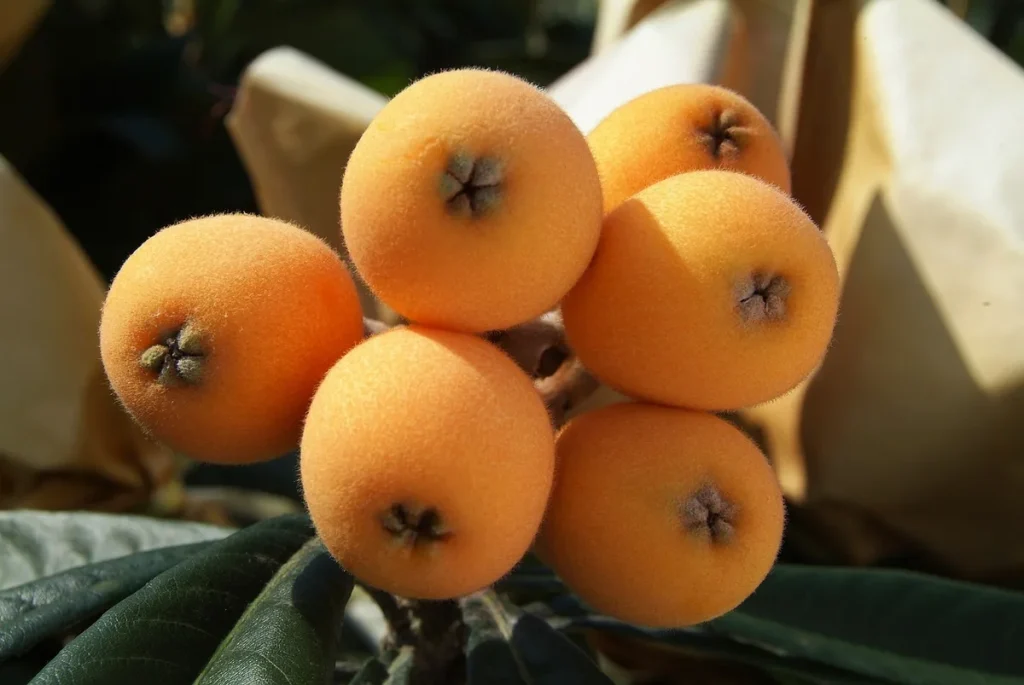
You walk out to your loquat tree one morning and notice the leaves have turned brown along the edges, or maybe they're covered in dark spots. It's a frustrating sight, especially when you've been watering and feeding it regularly. The good news is that loquat leaves turning brown is one of the most common issues growers face, and in most cases, it's fixable once you know what's actually going on.
The cause could be anything from simple watering mistakes to fungal infections or environmental stress. Loquat trees (Eriobotrya japonica) are generally hardy in USDA zones 8 through 11, but they're sensitive to a handful of conditions that show up first in the foliage. Let's walk through how to figure out what's happening to your tree and what to do about it.
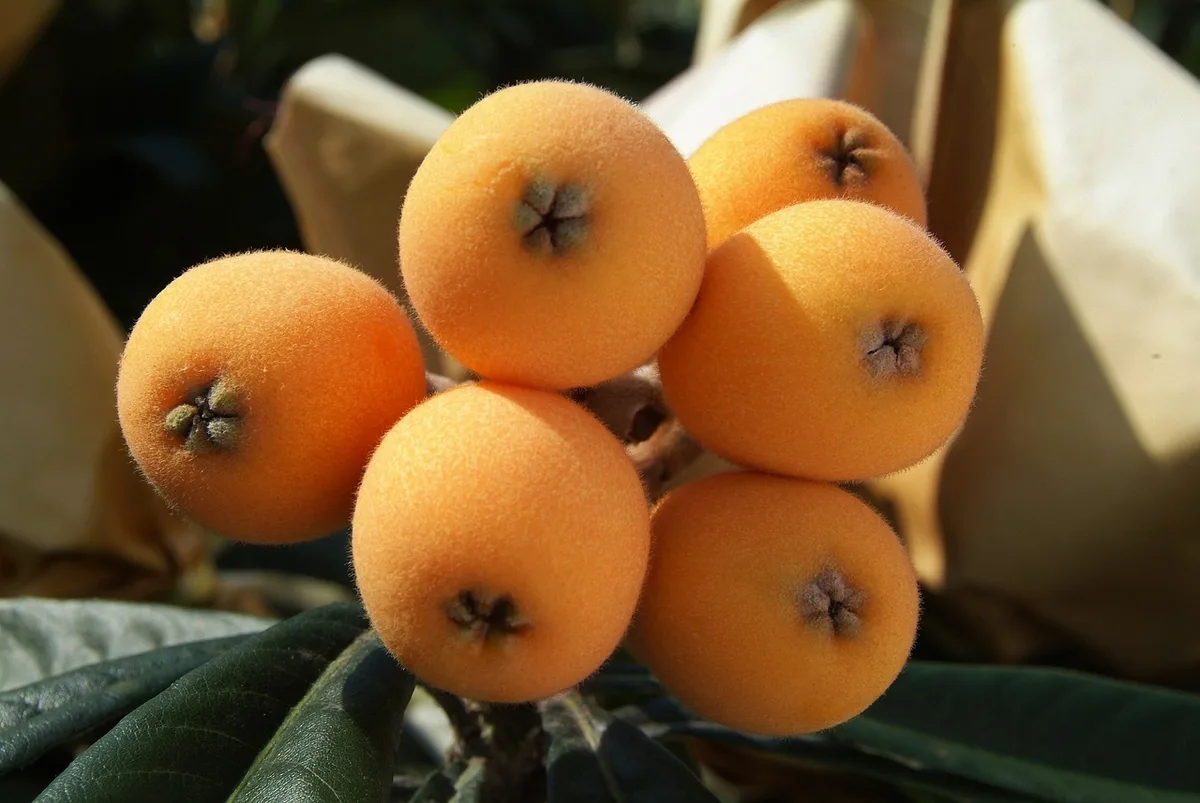
Image source: Pixabay / gi8mail (Pixabay Content License)
Quick Answer
Loquat leaves turn brown from water stress, fungal disease, sun or frost damage, nutrient issues, or pests. Check whether browning appears on leaf margins, tips, or as spots to narrow the cause. Overwatering, underwatering, and fungal infections are the most common culprits.
Correct the underlying issue and the tree usually recovers within a few weeks.
The Most Common Causes — and How to Tell Them Apart
Not all brown leaves mean the same thing. The pattern of browning tells you a lot about the underlying problem before you even touch the soil.
| Browning Pattern | Most Likely Cause |
|---|---|
| Brown, crispy leaf edges and tips | Underwatering, salt buildup, or fertilizer burn |
| Brown spots with yellow halos | Fungal leaf spot (Pestalotiopsis or Colletotrichum) |
| Uniform browning, leaves wilted | Overwatering or root rot (Phytophthora) |
| Brown patches on sun-facing side | Sunscald |
| Sudden browning after cold snap | Frost damage |
| Brown margins on older leaves only | Potassium or magnesium deficiency |
| Browning with sticky residue or tiny insects | Pest infestation (scale, aphids, spider mites) |
Image source: Pixabay / cocoparisienne (Pixabay Content License)
Grab a few affected leaves and look at them closely. Are the edges dry and brittle? Are there defined spots with darker centers?
Is the whole leaf uniformly brown, or just certain sections? That visual inspection alone will point you in the right direction more often than not.
Is It Water Stress? Overwatering vs. Underwatering
Water issues are the number one reason loquat leaves turn brown. Both too much and too little water can produce similar-looking symptoms, which is what makes this tricky.
Underwatering shows up as dry, crispy browning that starts at the leaf tips and works inward along the margins. The leaves may curl slightly and feel brittle. The soil will feel dry several inches down.
Loquat trees prefer deep, infrequent watering, roughly every 7 to 10 days during the growing season, though this varies with climate and soil type.
Overwatering is actually more dangerous. When the soil stays saturated, roots can't take up oxygen, and root rot sets in. The leaves turn a dull brown, often starting with the lower or older foliage, and they may feel limp rather than crispy.
If your tree is in a container, check that drainage holes aren't blocked. If it's in the ground, heavy clay soil is often the culprit.
Push your finger 2 to 3 inches into the soil near the drip line. If it's bone dry, underwatering is likely. If it's soggy or muddy, you've got a drainage or overwatering problem.
A moisture meter takes the guesswork out entirely and costs under ten dollars.
Fungal and Bacterial Infections: Spotting the Real Culprits
If the browning appears as distinct spots rather than edge burn, you're probably dealing with a fungal or bacterial issue. These are common in humid climates or after extended periods of wet weather.
Fungal leaf spot is the most frequent offender. You'll see circular or irregular brown spots, sometimes with a darker border or concentric rings. Pestalotiopsis and Colletotrichum species are the primary fungi involved.
In severe cases, spots merge and entire sections of the leaf die. The University of California Agriculture and Natural Resources program identifies these as the most common loquat leaf diseases in warm, humid growing regions.
Fire blight, caused by the bacterium Erwinia amylovora, is more serious. It causes leaves to turn brown or black as if scorched, and affected branches may curl into a characteristic shepherd's crook shape. Fire blight thrives between 65 and 85 degrees Fahrenheit and spreads rapidly during warm, wet spring weather.
Image source: Pixabay / fotter (Pixabay Content License)
For fungal leaf spot, a copper-based fungicide applied according to label directions is the standard treatment. Remove and dispose of heavily infected leaves. Don't compost them.
For fire blight, prune affected branches at least 12 inches below visible damage, sterilizing your pruning shears with a 10% bleach solution or 70% isopropyl alcohol between every cut. Prune during dry weather to reduce the chance of spreading the bacteria.
Sunscald, Frost Damage, and Environmental Stress
Sometimes the problem isn't water or disease at all. It's the environment.
Sunscald happens when a loquat tree that's been growing in partial shade is suddenly exposed to intense direct sun, often after nearby trees are removed or after a growth spurt opens the canopy. The leaves on the sun-facing side develop large, irregular brown patches. This is especially common in urban settings where reflective heat from pavement or walls amplifies exposure.
Frost damage is straightforward. A late cold snap hits, and within a day or two, leaves turn brown or black, often starting at the tips and outer edges. Young, tender new growth is the most vulnerable.
If you're growing loquats in zone 8, late winter frosts are a real risk. Covering the tree with frost cloth when temperatures drop below about 28 degrees Fahrenheit can prevent most of this damage.
Salt toxicity is another environmental cause that gets overlooked. If you're in a coastal area or using softened water for irrigation, salt buildup in the soil causes marginal leaf browning that looks a lot like fertilizer burn. A soil salinity test, available through your local cooperative extension office, will confirm this.
Nutrient Deficiency or Fertilizer Burn?
Nutrient problems can mimic almost every other cause of leaf browning, which is why they're often misdiagnosed.
Potassium deficiency shows up as browning along the edges of older leaves while the inner leaf stays green. Magnesium deficiency causes browning between the veins, starting on lower leaves. Both are correctable with targeted fertilization, but the fix depends on getting the diagnosis right first.
On the flip side, fertilizer burn happens when too much fertilizer is applied at once, or when it's applied to dry soil. The salts in the fertilizer draw moisture out of the roots, and the result is brown, crispy leaf margins that look almost identical to underwatering. If you fertilized recently and the browning appeared within a week or two, this is likely your answer.
Loquat trees don't need heavy feeding. A balanced, slow-release fertilizer applied once in early spring and again in early summer is usually sufficient. Avoid high-nitrogen formulas, which promote soft, disease-prone growth.
If you suspect salt buildup from over-fertilizing, deep watering to leach excess salts from the root zone can help.
Pests That Cause Leaf Browning on Loquat Trees
If you've ruled out water, disease, and environmental stress, flip some leaves over and look closely at the undersides. Several common pests feed on loquat foliage and cause browning that's easy to misdiagnose.
Scale insects are among the most frequent offenders. They appear as small, flat, oval bumps along stems and leaf veins. You might mistake them for part of the plant at first glance.
They suck sap from the tissue, and heavy infestations cause leaves to yellow, then brown, and eventually drop. A sticky residue on the leaves or the ground beneath the tree is a classic sign. That residue, called honeydew, often leads to sooty mold, which adds a black coating on top of the browning.
Aphids cluster on new growth and the undersides of young leaves. They're tiny, soft-bodied, and usually green or black. Heavy aphid feeding causes distorted, curled leaves that turn brown starting at the edges.
You'll often spot them alongside ants, which farm aphids for their honeydew.
Spider mites are harder to see without a magnifying glass, but their damage is distinctive. Leaves develop a stippled, bronzed appearance that progresses to full browning. In severe cases, you'll notice fine webbing on the undersides of leaves or between branches.
Mite populations explode in hot, dry conditions, which is why they're a bigger problem in inland and desert climates than in coastal areas.
For scale and aphid infestations, neem oil applied every 7 to 14 days is effective for light to moderate populations. For heavy scale infestations, horticultural oil smothers the insects and is best applied during the dormant season. Spider mites respond to a strong spray of water to knock them off the foliage, followed by neem oil if needed.
Avoid broad-spectrum insecticides, which kill the beneficial insects that naturally keep pest populations in check.
Step-by-Step: How to Diagnose What's Happening to Your Tree
Walking through a systematic diagnosis saves you from treating the wrong problem. Here's a practical flow you can follow in about ten minutes.
Step 1: Look at the pattern. Are the leaf margins browning, the tips, or are there defined spots? Use the table earlier in this guide as your reference. Pattern is your single best clue.
Step 2: Check the soil moisture. Push your finger 2 to 3 inches into the soil at the drip line. Soggy means overwatering. Bone dry means underwatering.
Just right means you can probably rule out water stress.
Step 3: Flip the leaves over. Look for insects, webbing, or sticky residue. Check along the stems too. If you see bumps, clusters, or stippling, pests are at least part of the problem.
Step 4: Check the spot pattern. Fungal spots often have defined borders, sometimes with a gray or tan center and a darker ring around the edge. Bacterial infections tend to look water-soaked or greasy before they turn brown.
Step 5: Review recent conditions. Did you fertilize within the last two weeks? Was there an unusual heatwave, heavy rain, or a cold snap? Did you recently move a container-grown tree to a new location?
Context narrows the field fast.
Step 6: Assess the overall tree. Are only the older leaves affected, or is new growth showing symptoms too? Is the browning isolated to one side of the tree, or is it widespread? Localized damage often points to sunscald or a specific injury.
Widespread browning suggests a systemic issue like root rot, overwatering, or a nutrient problem.
Write down what you find at each step. That symptom log makes it much easier to match your tree's condition to the right treatment, or to give useful information to an arborist or extension agent if you need help.
How to Treat Each Cause — What Actually Works
Once you've identified the likely cause, here's what to do about it. Matching the treatment to the diagnosis is where most people go wrong.
For underwatering: Give the tree a deep, slow soak at the drip line, not right against the trunk. A soaker hose left running for 30 to 60 minutes delivers water deep into the root zone. Mulch 2 to 4 inches deep around the base to retain moisture.
Water deeply every 7 to 10 days in the growing season and adjust during extreme heat.
For overwatering and root rot: Stop watering and let the soil dry out. If the tree is in a container, check drainage holes and consider repotting into fresh, well-draining soil. For in-ground trees in heavy clay, amending the surrounding soil with compost improves drainage over time.
If root rot is severe, carefully excavate some roots, trim away any that are mushy or black, and replant.
For fungal leaf spot: Remove and dispose of affected leaves. Apply a copper-based fungicide at the rate specified on the label, typically 1 to 2 tablespoons per gallon of water. Repeat every 7 to 14 days during wet periods.
Improve air circulation by thinning crowded branches.
For fire blight: Prune affected branches at least 12 inches below any visible damage. Sterilize your pruning tools between every cut with a 10% bleach solution or 70% isopropyl alcohol. Copper sprays applied during dormancy can reduce bacterial levels going into spring.
There is no cure for an active fire blight infection, so sanitation and pruning are your primary tools.
For nutrient deficiencies: A soil test through your local cooperative extension office is the most reliable way to identify what's missing. For potassium deficiency, a potassium sulfate amendment is the standard fix. For magnesium, Epsom salt dissolved in water and applied to the soil works well, at about 1 tablespoon per gallon.
For fertilizer burn: Flush the soil with generous amounts of clean water to leach excess salts. Hold off on fertilizing for at least 6 to 8 weeks. When you resume, use half the recommended rate.
For pest infestations: Apply neem oil every 7 to 14 days for scale and aphids. Use a strong water spray for spider mites. Isolate container-grown trees if possible while treating them to prevent pests from spreading to nearby plants.
Mistakes That Make Leaf Browning Worse
The most common mistake is treating every brown leaf the same way. People see browning and immediately either water more, fertilize, or spray a fungicide, any of which can make the actual problem significantly worse. Overwatering a tree that already has root rot accelerates its decline.
Fertilizing a stressed tree causes salt damage on top of whatever was already wrong.
Another frequent error is ignoring tool sanitation. Pruning infected branches with dirty shears spreads fungal spores and bacteria to every cut you make after that. It takes thirty seconds to wipe your blades with rubbing alcohol between cuts.
Those thirty seconds can be the difference between containing a problem and infecting the whole tree.
Over-pruning in response to browning is another trap. Removing more than about 20 to 25% of the canopy at once stresses the tree and can trigger a flush of weak, disease-prone new growth. Prune selectively, removing only clearly dead or diseased tissue, and spread major pruning over two or three sessions.
Many growers apply treatments on a rigid calendar rather than responding to actual conditions. Spraying fungicide every two weeks whether you need it or not leads to copper buildup in the soil, which over time can harm soil biology and even the tree itself. Treat based on symptoms and weather conditions, not the date.
When to Prune, When to Wait
Timing your pruning correctly matters as much as how you prune. For routine maintenance and removal of dead or damaged wood, loquat trees tolerate pruning almost any time of year. But for disease management, timing is critical.
If you suspect fire blight, prune as soon as you identify affected branches. Don't wait for the dormant season. The bacteria spread quickly in warm, wet weather, and delaying even a week can mean losing significantly more of the tree.
Always prune in dry conditions if possible, since moisture helps the bacteria move to new tissue.
For general shaping and thinning, late winter or early spring, before the main flush of new growth, is ideal. The tree can direct its energy into healthy new shoots rather than maintaining branches you've just removed. After a major pruning event, give the tree a deep watering and hold off on fertilizing for about a month.
Image source: Pixabay / gi8mail (Pixabay Content License)
Use sharp, clean bypass pruners for branches up to about three-quarters of an inch. For thicker branches, a pruning saw gives a cleaner cut. Ragged cuts from dull tools create entry points for fungi and bacteria.
Make each cut just outside the branch collar, the slight swelling where the branch meets the trunk or a larger branch. Don't cut flush with the trunk. That collar tissue helps the tree seal the wound naturally.
After any pruning, don't apply wound sealant or paint. Research from university extension programs consistently shows that these products don't prevent decay and can actually trap moisture against the cut, increasing the risk of infection. Let the tree's own defenses do the work.
Preventing Leaf Browning in the Future
Consistent care is the best defense. Mulch 2 to 4 inches deep around the base, keeping it away from the trunk. Water deeply and infrequently rather than giving light daily sprinkles.
Fertilize only twice a year, early spring and early summer, with a balanced slow-release formula. Thin interior branches occasionally to maintain good air circulation through the canopy.
These four habits prevent the majority of loquat leaf problems before they start. A tree that's properly watered, lightly fed, mulched, and well-ventilated is far more resistant to fungal infections, pest infestations, and environmental stress than one that's neglected and then aggressively treated after symptoms appear.
Real Scenarios: What Brown Leaves Actually Look Like and What They Mean
A Southern California homeowner notices crispy brown leaf tips on her 10-year-old loquat tree in late July. The soil is dry 3 inches down, and she's been watering once every two weeks during a heatwave. This is classic underwatering.
After switching to deep weekly watering and adding mulch, new growth comes in green within three weeks.
A container-grown loquat in Texas develops brown spots with yellow halos on several leaves after a stretch of rainy weather. The spots are circular with slightly darker centers. This matches fungal leaf spot.
Removing affected leaves and applying copper fungicide stops the spread, and the tree puts out healthy new foliage by the next flush.
A Florida landscape tree loses new growth to a late February frost. The young leaves turn brown and limp overnight. The mature tree recovers on its own by mid-spring, but the homeowner starts covering it with frost cloth when temperatures are forecast below 28 degrees the following winter.
When to Call in a Professional
Most loquat leaf problems are manageable on your own, but there are situations where expert help is worth the cost. If more than a third of the canopy is affected and you can't identify a clear cause, a certified arborist can diagnose issues that aren't obvious from a visual inspection alone. They can also test soil and tissue samples for nutrient imbalances or pathogens.
If you suspect fire blight and the infection has reached the main trunk or multiple large branches, professional pruning and treatment may be necessary to save the tree. Fire blight can kill a loquat tree if it girdles the trunk, and aggressive management is needed once it reaches that stage.
Your local cooperative extension office is another excellent resource. Many offer free or low-cost soil testing and plant disease diagnosis. Extension agents deal with loquat problems regularly in growing zones where the tree is common, and their advice is specific to your region's conditions.
Frequently Asked Questions
Can loquat leaves recover from browning?
Individual brown leaves won't turn green again, but the tree can produce healthy new growth once the underlying issue is corrected. Remove severely affected leaves to help the tree direct energy toward new foliage.
How long does it take for a loquat tree to recover?
With proper treatment, you should see improvement within 2 to 6 weeks. New growth is the best indicator that the tree has turned a corner. Full canopy recovery may take an entire growing season.
Should I remove all the brown leaves?
Remove leaves that are more than half brown or show signs of fungal infection. Leave partially green leaves in place, as they're still contributing energy to the tree. Don't strip the tree all at once.
Is brown leaf drop normal for loquat trees?
Some seasonal leaf drop is normal, especially in late winter or early spring as older leaves are replaced. Widespread browning and drop outside of this pattern signals a problem that needs attention.
Can I use Epsom salt to fix brown loquat leaves?
Epsom salt helps specifically with magnesium deficiency, which shows as browning between the veins on older leaves. If your issue is caused by something else, Epsom salt won't help. A soil test confirms whether magnesium is actually lacking.
Final Decision Guide: Your Tree's Symptoms Matched to the Right Fix
Here's a quick reference to match what you're seeing to the right action.
Brown, crispy tips and edges, dry soil: Water deeply and mulch. Adjust your schedule to weekly deep soaks during warm months.
Brown, limp leaves, soggy soil: Stop watering and improve drainage. Check for root rot if the problem persists.
Defined brown spots with halos: Remove affected leaves and apply copper fungicide. Improve air circulation.
Shepherd's crook branch tips, scorched appearance: Prune 12 inches below damage with sterilized tools. Apply dormant-season copper spray.
Brown patches on sun-facing side: Provide afternoon shade or relocate container-grown trees.
Sudden browning after cold weather: Wait for new growth in spring. Protect with frost cloth next winter.
Brown edges after fertilizing: Flush soil with water and hold off on feeding for 6 to 8 weeks.
Sticky residue, tiny insects, or webbing: Treat with neem oil or horticultural oil. Identify the specific pest to time treatment correctly.
The key takeaway is simple. Don't guess, diagnose. Spend ten minutes working through the steps in this guide, match your tree's specific symptoms to the cause, and treat accordingly.
Most loquat trees bounce back fully when the real problem is addressed early.