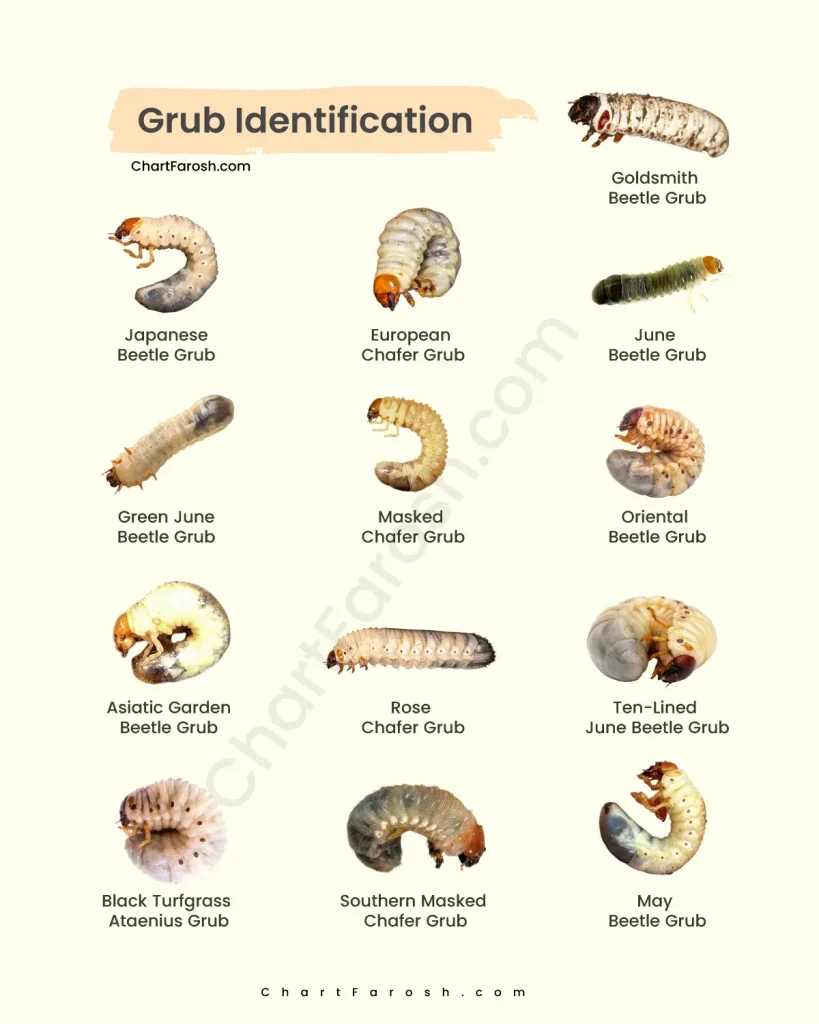
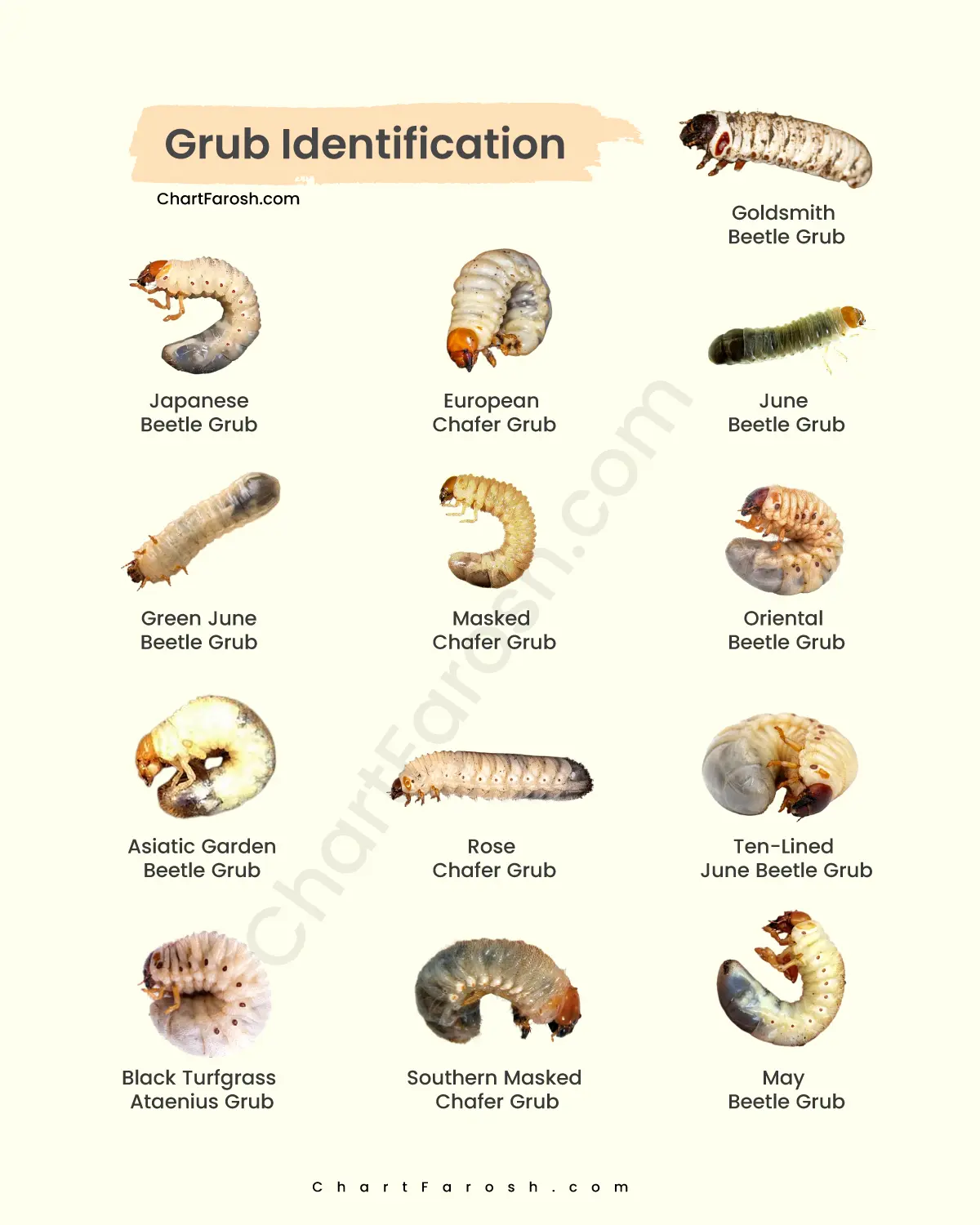
Image source: Bing (Web (fair-use with source credit))
If you've pulled back a patch of dead turf and found fat, C-shaped larvae curled in the soil, you're probably wondering whether these are June bug grubs or something else entirely. The short answer is yes, some grubs are June bug larvae, but not every white grub in your lawn belongs to a June bug. Getting this distinction right is the difference between a treatment that works and one that wastes your time and money.
The problem is that homeowners often grab a generic grub product without identifying what's actually underground. In our research, we've found that Phyllophaga species, the true June bugs, follow a two-year life cycle, while Japanese beetles and European chafers complete theirs in just one year. That timing gap matters enormously when you're deciding when and how to treat.
Quick Answer
Not all grubs are June bugs. "Grub" is a general term for the larval stage of scarab beetles. True June bugs belong to the Phyllophaga genus.
Other common lawn grubs come from Japanese beetles and European chafers. Each species has a different life cycle and treatment window. Correct identification is essential before applying any control method.
Why Getting Grub Identification Right Actually Matters
Here's the thing most product labels won't tell you. If you misidentify the grub species in your lawn, you'll almost certainly treat at the wrong time. That means the product sits in the soil doing nothing, or worse, you apply it after the grubs have already done their damage and moved deeper for winter.
June bug grubs (Phyllophaga species) spend two to three years underground feeding on turfgrass roots. Japanese beetle grubs and European chafer grubs complete their entire life cycle in a single year. That difference changes your treatment calendar completely.
A preventive product applied in midsummer might hit Japanese beetle larvae perfectly but miss the larger, deeper-feeding June bug grubs entirely.
Beyond timing, there's the question of whether you even need to treat. Extension services generally cite a threshold of five to ten grubs per square foot before damage becomes significant. If you've got three grubs per square foot and your lawn is green and healthy, you might be better off leaving them alone.
Skunks and raccoons digging at night are often the first real sign that populations have climbed high enough to warrant action.
Are Grubs June Bugs? The Honest Answer
The word "grub" describes a life stage, not a species. It's like asking whether all caterpillars are monarchs. Technically they're all in the same broad category, but the specifics matter enormously.
True June bugs belong to the genus Phyllophaga, part of the larger scarab beetle family. Their larvae are white grubs, cream-colored with a brown head capsule and three pairs of legs near the head. They curl into that characteristic C-shape when disturbed.
Adult June bugs emerge in late spring, typically May through July depending on your latitude, and the females lay eggs in soil shortly after.
But your lawn could just as easily be hosting Japanese beetle grubs (Popillia japonica), European chafer grubs (Amphimallon majale), or masked chafer grubs (Cyclocephala species). All of them look broadly similar to the untrained eye. All of them feed on roots.
And all of them require different management approaches.
The key takeaway is this. Before you spend a dollar on treatment, you need to know which species you're dealing with. That means getting your hands dirty and actually examining what's living in your soil.
What June Bug Grubs Actually Look Like
June bug grubs are among the larger white grubs you'll encounter. Mature Phyllophaga larvae can reach one and a half to two inches in length. They have a creamy white to pale gray body with a distinctly brown head capsule.
Their bodies are smooth and slightly shiny, and when you place them on the ground, they typically lie on their side in that classic C-curve.
One feature that separates June bug grubs from look-alikes is the raster pattern. That's the arrangement of hairs, spines, and pores on the underside of the abdomen tip. On Phyllophaga species, the raster pattern typically shows two distinct rows of spines that converge toward the center.
You'll need a hand lens or magnifying glass to see it clearly, but this is the gold standard for species-level identification used by entomologists.
June bug grubs also tend to be found deeper in the soil profile than some other species, especially as they mature. During active feeding periods, they'll be in the top two to three inches of soil right at the root zone. But as soil temperatures drop in fall, they can migrate four to eight inches down, which makes surface-applied treatments far less effective late in the season.
Not All White Grubs Are June Bugs – Telling Them Apart
This is where most homeowners get tripped up. Several scarab species produce larvae that look nearly identical at a glance. The differences show up in size, life cycle timing, and that raster pattern we just mentioned.
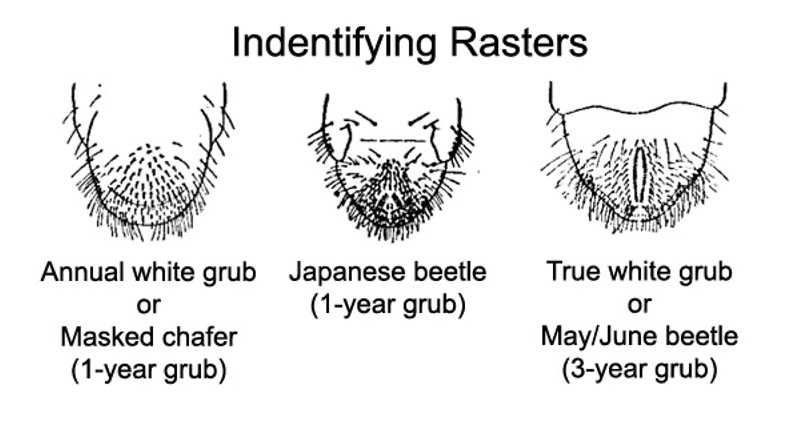
Image source: Bing (Web (fair-use with source credit))
Here's a breakdown of the most common white grub species found in lawns across the United States.
June Bug Grubs (Phyllophaga)
- Life cycle: Two to three years
- Mature size: 1.5 to 2 inches
- Raster pattern: Two parallel rows of spines converging centrally
- Active feeding: Spring through fall, with overwintering at depth
- Geographic range: Eastern and central US, extending into the Midwest
Japanese Beetle Grubs
- Life cycle: One year
- Mature size: Approximately 1 inch
- Raster pattern: Two rows of spines forming a distinctive V-shape
- Active feeding: Late summer through early fall, then deep overwintering
- Geographic range: Eastern US, spreading westward
European Chafer Grubs
- Life cycle: One year
- Mature size: Around ¾ inch
- Raster pattern: Y-shaped anal slit with a single row of spines
- Active feeding: Late summer into fall
- Geographic range: Northeast, Great Lakes region, and parts of the Pacific Northwest
Green June Beetle Grubs
- Life cycle: One year
- Mature size: Up to 2 inches
- Distinctive trait: These grubs crawl on their backs on the soil surface, unlike other species
- Active feeding: Spring through early summer
- Geographic range: Southeastern US
The raster pattern is your most reliable field identification tool. Purdue University's entomology extension program and similar land-grant university resources publish detailed identification keys with photographs that make side-by-side comparison straightforward. If you're serious about getting this right, pull a sample, grab a magnifying glass, and compare what you see against a verified reference image.
The Life Cycle Difference That Changes Everything
Understanding the life cycle of each grub species is the single most important factor in choosing when to treat. This is where most DIY treatments fail, not because the product is bad, but because it's applied at the wrong point in the insect's development.
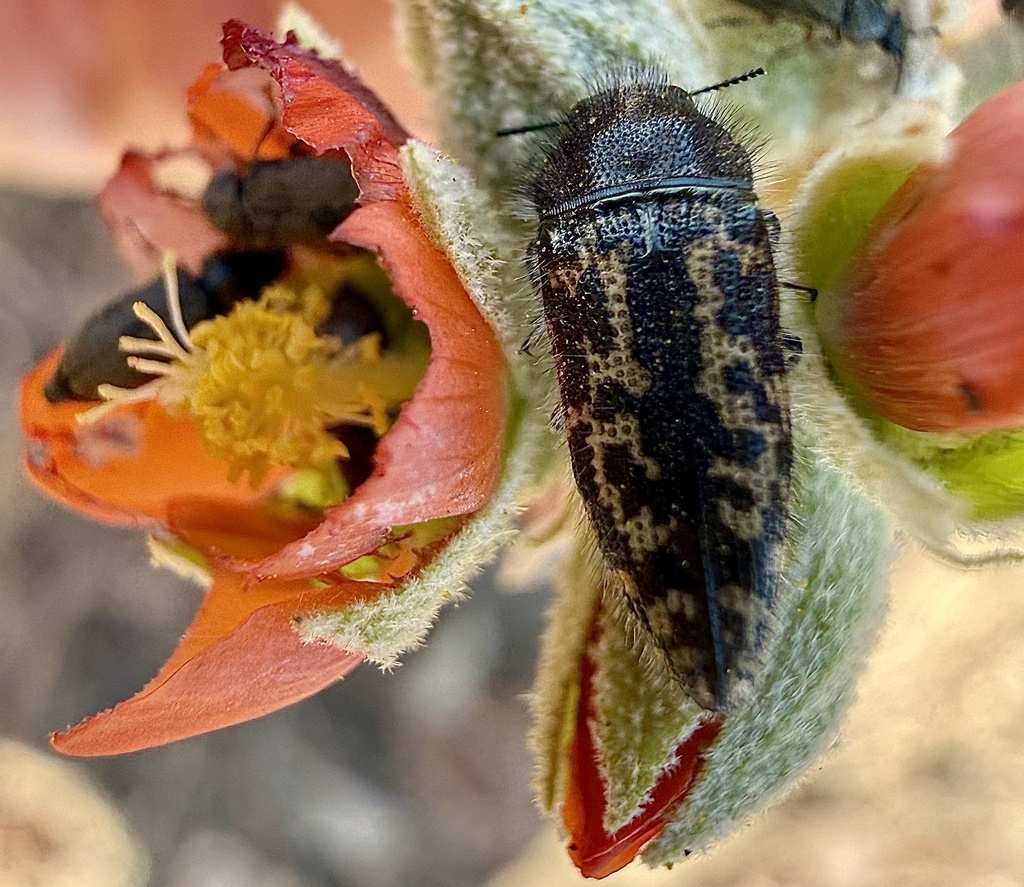
Image source: iNaturalist / Irene
Phyllophaga species, the true June bugs, have a two to three year life cycle. Adult beetles emerge in late spring, mate, and lay eggs in the soil during June and July. Those eggs hatch within a few weeks, and the young larvae begin feeding on roots immediately.
They continue feeding through their first summer and fall, overwinter deep in the soil, then resume feeding the following spring. Some species don't pupate and emerge as adults until their third year.
This extended timeline means you'll find multiple size classes of June bug grubs in the soil at any given time. Small, newly hatched larvae alongside much larger second-year grubs. That complicates treatment because a product effective against small instars may not penetrate deeply enough to reach the larger, older larvae.
Japanese beetles and European chafers follow a tighter one-year cycle. Adults emerge in early summer, eggs hatch by mid to late July, and the grubs feed aggressively from August through October. This narrow window is actually an advantage for homeowners.
You have a predictable, concentrated period when the grubs are small, near the surface, and most vulnerable to treatment.
For preventive control of one-year species, the optimal application window is typically late July to early August, just after eggs hatch. For June bug grubs with their extended cycle, preventive timing is less straightforward, and curative treatment in late summer or early fall often makes more sense when you can confirm active feeding near the surface.
How to Check Your Lawn for Grubs the Right Way
Before you buy anything or spread a single granule, you need to confirm what's actually living in your soil. Grub damage can look a lot like drought stress, fungal disease, or even dog urine spots. The only way to know for sure is to dig.
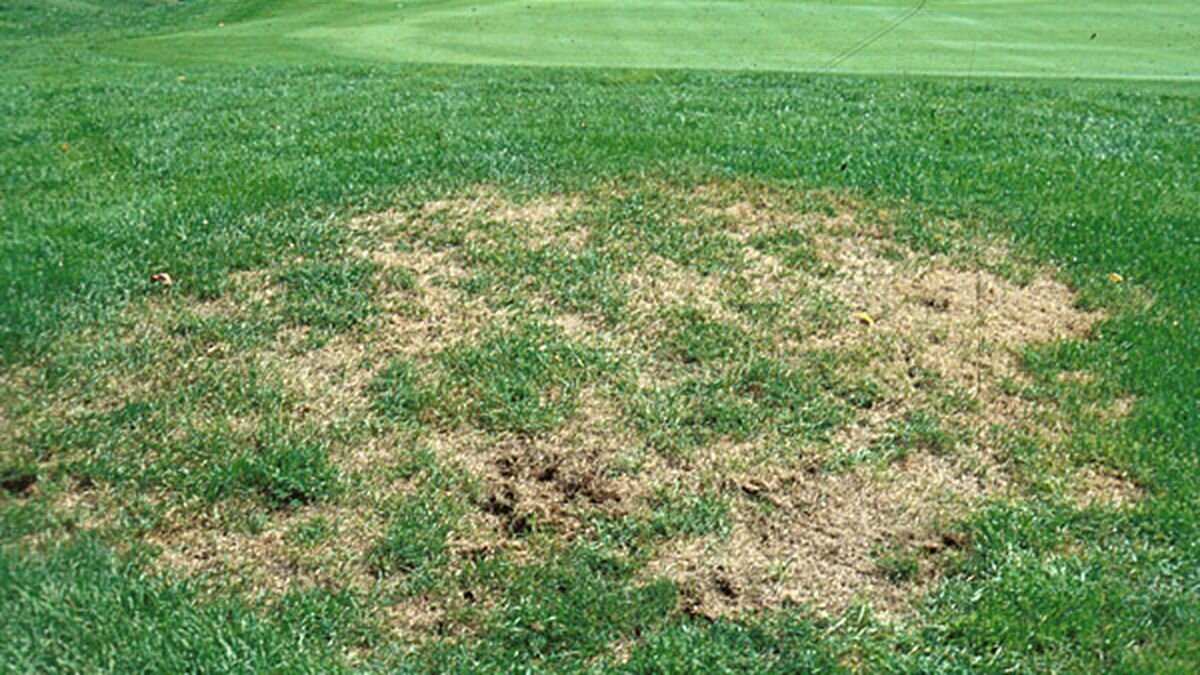
Image source: Bing (Web (fair-use with source credit))
Start by identifying areas of the lawn that look stressed, brown, or spongy underfoot. In our research, the clearest visual indicator is turf that peels back easily from the soil like a loose carpet. That happens because the root system has been chewed away.
If the sod lifts without resistance, grubs are almost certainly the culprit.
Cut a square of sod roughly one foot by one foot and about two inches deep from the edge of a damaged area. The edge is where you'll find the highest concentration of feeding activity. Flip that square over and examine the soil and root zone carefully, counting every grub you find.
Repeat this process in at least three to four different spots across the lawn.
Extension specialists recommend averaging your counts across all sample sites. If you're consistently finding five to ten or more grubs per square foot, treatment is warranted. Below that threshold, most healthy turfgrass can outgrow the damage with proper watering and fertilization.
Pay attention to grub size when you're counting. Small, recently hatched larvae indicate that egg-laying happened recently, which helps you narrow down the species based on the adult flight period. Large, near-mature grubs suggest an older infestation that may have been building for a season or more.
When to Treat Based on What Species You're Dealing With
Timing is everything with grub control, and the right window depends entirely on which species you've confirmed in your lawn. Getting this wrong is the single most common reason treatments fail.
For one-year species like Japanese beetles and European chafers, preventive treatment works best when applied in late July to early August. The goal is to have the active ingredient in the soil when eggs hatch and the tiny larvae begin feeding. Products containing chlorantraniliprole (found in some commercial-grade applications) or imidacloprid target these young instars effectively.
Preventive products work poorly against large, mature grubs because the older larvae are tougher and often deeper in the soil profile.
June bug grubs complicate this picture. Because their life cycle spans two to three years, you'll always have mixed age classes in the soil. The young instars are vulnerable during late summer and early fall, just like one-year species.
But the larger second-year grubs may be too deep or too mature for preventive products to reach effectively.
That's why curative treatment often makes more sense for confirmed June bug infestations. Curative products containing trichlorfon or carbaryl are applied when grubs are actively feeding near the surface, typically August through early September. These act faster and don't require the same precise timing as preventive options.
You're targeting the grubs you can see and count, not guessing when eggs will hatch.
A practical rule of thumb from university extension programs is this. If you identify your grubs as Japanese beetles or European chafers, go preventive in late July. If they're June bugs, wait until you can confirm active feeding in August, then treat curatively.
What Happens When You Misidentify Your Grubs
Treating the wrong species at the wrong time doesn't just waste money. It can actually make the problem worse and create unnecessary chemical exposure in your yard.
The most common mistake we see in our research is applying milky spore (Paenibacillus popilliae) to control June bug grubs. Milky spore is a biological control agent that specifically targets Japanese beetle larvae. It does virtually nothing against Phyllophaga species.
Homeowners spend money on a product, apply it faithfully, and then wonder why their June bug problem persists. The answer is simple. Milky spore was never going to work on that species.
Another frequent error is applying preventive insecticide in September or October, long after the optimal window has passed. By that point in the season, grubs are large and often starting to move deeper into the soil for winter. The product sits near the surface, the grubs are below it, and nothing happens except a lighter wallet and unnecessary pesticide in your soil.
Over-application is a related concern. Some homeowners see a few grubs and panic, applying products at higher than labeled rates or treating the entire lawn when only a few patches are affected. This can harm beneficial soil organisms like earthworms and predatory beetles that naturally keep grub populations in check.
It also increases the risk of chemical runoff into stormwater systems, which is regulated in many municipalities.
The safest and most effective approach is always this. Identify first, then treat if needed, using the right product at the right rate at the right time.
Chemical vs. Biological Control – Matching the Method to the Species
Once you've identified your grub species and confirmed that treatment is necessary, you'll need to choose between chemical and biological control methods. Each has strengths and limitations, and not every option works against every grub type.
Here's a quick comparison:
| Method | Best Against | Timing | Speed of Control | Environmental Impact |
|---|---|---|---|---|
| Chlorantraniliprole (preventive) | Japanese beetle, European chafer | Late July to early August | Slow, preventive | Low toxicity to mammals and birds |
| Imidacloprid (preventive) | Japanese beetle, European chafer | Late July to early August | Slow, preventive | Toxic to pollinators if misapplied |
| Trichlorfon (curative) | All white grub species | August to early September | Fast, 1-3 days | Moderate, breaks down quickly |
| Carbaryl (curative) | All white grub species | August to early September | Fast, 1-3 days | Toxic to beneficial insects |
| Milky spore | Japanese beetle only | Any time, long-term | Very slow, builds over years | Very low |
| Beneficial nematodes (Heterorhabditis) | Japanese beetle, June bug | August to September when soil is warm | Moderate, 1-2 weeks | Very low |
Beneficial nematodes deserve special mention because they're one of the few biological options effective against June bug grubs. Heterorhabditis bacteriophora species are microscopic roundworms that enter grubs and release bacteria that kill the host within 24 to 48 hours. They work best when soil temperatures are above 60 degrees Fahrenheit and the soil is moist but not waterlogged.
The catch is that nematodes are living organisms. They need to be applied correctly, watered in promptly, and applied during conditions that keep them alive. Buy them from a reputable supplier with guaranteed live counts, apply them in the evening (they're sensitive to UV light), and keep the treated area consistently moist for at least two weeks after application.
Milky spore, as we mentioned, only works on Japanese beetle grubs. It's not a waste of money if that's your confirmed species. But for June bug or European chafer infestations, it's simply the wrong tool.
When to Call in a Turf Professional
Sometimes the smartest move is handing this off to someone with the equipment and expertise to handle it properly. A licensed turf professional has access to commercial-grade products that aren't available to homeowners, including some of the more effective preventive compounds used at precise application rates.
Consider calling a professional if your grub counts consistently exceed ten per square foot across most of the lawn. Severe infestations are harder to control with off-the-shelf products, especially if the grubs are large and deep. A professional can also help with species identification using laboratory-grade magnification and reference materials that go beyond what's available to most homeowners.
Another scenario where professional help makes sense is recurring annual damage despite treatment. That pattern suggests a misidentified species, incorrect timing, or an underlying lawn health issue that's making the turf more vulnerable. A turf manager can evaluate soil conditions, irrigation practices, and grass species to address the root cause, not just the symptom.
Finally, if you're dealing with a mixed-species infestation, which is common in many regions, managing it effectively requires targeting multiple life cycles simultaneously. That level of precision often requires the kind of integrated pest management plan that professionals develop based on soil sampling, species confirmation, and local climate data.
FAQs About June Bug Grubs and Lawn Grubs
How do I know if grubs are June bugs or Japanese beetles?
Examine the raster pattern on the abdomen tip using a magnifying glass. Phyllophaga species have two parallel rows of spines converging centrally. Japanese beetles show a V-shaped spine arrangement.
Lifecycle timing also helps, as June bugs take two to three years to mature while Japanese beetles complete their cycle in one year.
Is it too late to treat grubs in October?
For preventive products, yes. By October most grubs are large and may be migrating deeper for winter. However, curative products containing trichlorfon can still work if grubs are actively feeding near the surface.
Check soil temperatures first. If the ground is still above 50 degrees Fahrenheit, treatment is worth attempting.
Do I need to treat if I find just a few grubs?
No. Most healthy turf tolerates five or fewer grubs per square foot without visible damage. Extension programs consistently cite five to ten grubs per square foot as the treatment threshold.
Below that number, proper watering and fertilization will usually compensate for minor root feeding.
Can I use milky spore for June bug grubs?
Milky spore (Paenibacillus popilliae) specifically targets Japanese beetle larvae and has no meaningful effect on Phyllophaga species. It's a common mistake homeowners make. If you've confirmed June bugs, skip milky spore and consider beneficial nematodes or curative insecticides instead.
What attracts June bugs to my lawn?
June bugs are drawn to moist, well-fertilized turfgrass for egg-laying. Overwatering your lawn in June and July creates ideal conditions for female beetles to deposit eggs. Adult beetles are also attracted to outdoor lighting at night, which can concentrate mating activity near well-lit homes.
How long do grub treatments last?
Preventive insecticides like chlorantraniliprole typically provide season-long control when applied correctly in midsummer. Curative products act fast but break down quickly, often within one to two weeks. Beneficial nematodes need repeat applications in some cases.
Milky spore is the exception, as it can persist in soil for years once established.
Bottom Line: What to Do Next
The path forward is straightforward once you commit to proper identification. Pull soil samples, count your grubs, and use a magnified raster pattern check to confirm the species. If your counts exceed five to ten per square foot and you've confirmed June bugs, apply a curative product in August or September when larvae are feeding near the surface.
If you're dealing with Japanese beetles or European chafers, mark your calendar for late July preventive treatment.
Don't skip the identification step. It's the difference between a lawn that recovers and a lawn that keeps dying while you pour money into the wrong solution. When in doubt, contact your local cooperative extension office.
They'll help you identify the species, often for free, and recommend treatment options suited to your region and grass type.
A healthy lawn is more resilient than most people think. Sometimes the best treatment is simply patience, proper watering, and letting nature's own predators do the work.