[CONTENT COMPLETE — all sections below]
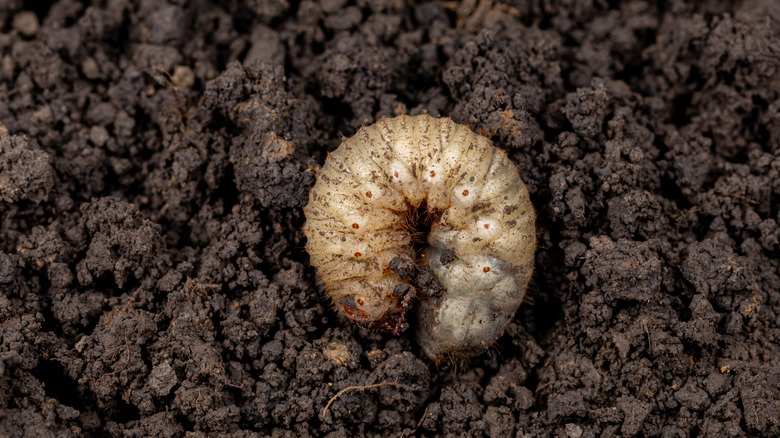
Image source: Bing (Web (fair-use with source credit))
Are grubs good for your garden? The honest answer is that it depends entirely on what kind you have, how many are living in your soil, and what they're actually doing down there. Most gardeners panic the second they flip over a shovelful of dirt and spot those pale, squirmly larvae.
But not every grub deserves an eviction notice.
Some grub species quietly break down organic matter and improve your soil structure. Others will devour grass roots so aggressively that your turf peels back like carpet. The trick is learning which scenario you're dealing with before you reach for a treatment.
In our research, we've found that most grub problems come down to a handful of common scarab beetle species, and the damage threshold where action becomes necessary is surprisingly specific.
Quick Answer
Grubs can be both helpful and harmful in your garden. Beneficial species like ground beetle larvae eat pests and break down organic matter. Pest species like Japanese beetle grubs destroy grass roots and kill turf.
The damage threshold is typically 5 to 10 grubs per square foot. Below that number, most lawns tolerate them without visible harm.
What Grubs Actually Are — And Why It Matters Which Kind You Have
"Grub" isn't a species. It's a life stage. When people talk about grubs in the garden, they're almost always referring to the larval stage of beetles.
The most common culprits in North American lawns and gardens are scarab beetles, which include Japanese beetles, June bugs, European chafers, and May beetles. Their larvae share a similar look: cream-colored bodies, brown heads, three pairs of legs near the thorax, and that distinctive C-shaped curl when disturbed.
But here's where it gets interesting. Not every C-shaped larva in your soil is a scarab. Ground beetles, which are genuinely beneficial predators, also produce larvae that gardeners frequently misidentify as pest grubs.
Rove beetles and some rove beetle relatives live in the same soil zone and do genuinely helpful work. Telling these apart matters enormously because treating beneficial larvae the same as pest grubs wastes money and disrupts a healthy soil ecosystem.
The scarab grub life cycle runs one to three years depending on species and climate. Adult beetles lay eggs in moist soil during mid to late summer. Those eggs hatch within a couple of weeks, and the young larvae begin feeding on roots and organic matter immediately.
They work their way down through the soil profile as temperatures drop, then return to the root zone in spring. This feeding pattern is what causes the visible damage most homeowners notice in late summer and early fall.
The Quick Species ID: Pest Grub vs. Beneficial Larva
Getting the identification right saves you from treating a problem that doesn't exist or ignoring one that does. Here's what to look for when you pull a larva from your soil.
White grubs (scarab larvae):
- Creamy white body with a distinct brown or tan head capsule
- Three pairs of legs clustered near the head
- C-shaped posture when at rest
- Found in the top 1 to 4 inches of soil
- Raster pattern (hair arrangement on the underside near the rear) varies by species and is used for precise ID
Ground beetle larvae (beneficial):
- Darker in color, often brown, black, or dark gray
- Flatter body compared to the plump C-shape of scarab grubs
- More active and faster-moving when exposed
- Prominent mandibles visible from above
- Found in leaf litter and upper soil layers
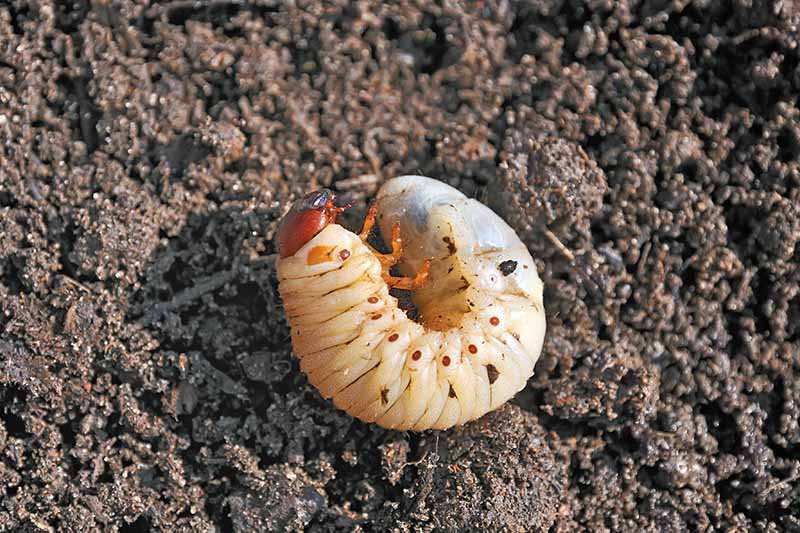
Image source: Bing (Web (fair-use with source credit))
If you're still unsure, university entomology departments offer species identification keys based on the raster pattern. Cooperative Extension Services in most states will also help you identify a specimen, often for free. That step alone prevents a huge number of unnecessary pesticide applications every year.
Spotting Grub Damage vs. Other Lawn and Garden Problems
Grub damage has a look, but it's easy to confuse with drought stress, fungal disease, or dog urine spots. Learning to read the signs correctly keeps you from chasing the wrong fix.
The tug test. This is the single most reliable field check. Grab a handful of brown or thinning grass and pull. If the turf lifts away from the soil easily, like peeling back a rug, grubs have likely severed the root system underneath.
Healthy grass resists. Grub-damaged grass doesn't.
Animal digging. Skunks, raccoons, and armadillos (in southern regions) will tear up lawns overnight to feed on grubs. If you're seeing scattered patches of disturbed sod, especially in the evening or early morning, that's a strong indicator of a grub population worth investigating.
Brown patches that don't respond to water. Drought-stressed grass greens up after a deep watering. Grub-damaged grass stays brown because the roots are gone. If you've been watering consistently and a patch still looks dead, dig a small test hole about 6 inches across and 3 inches deep.
Count the grubs you find.
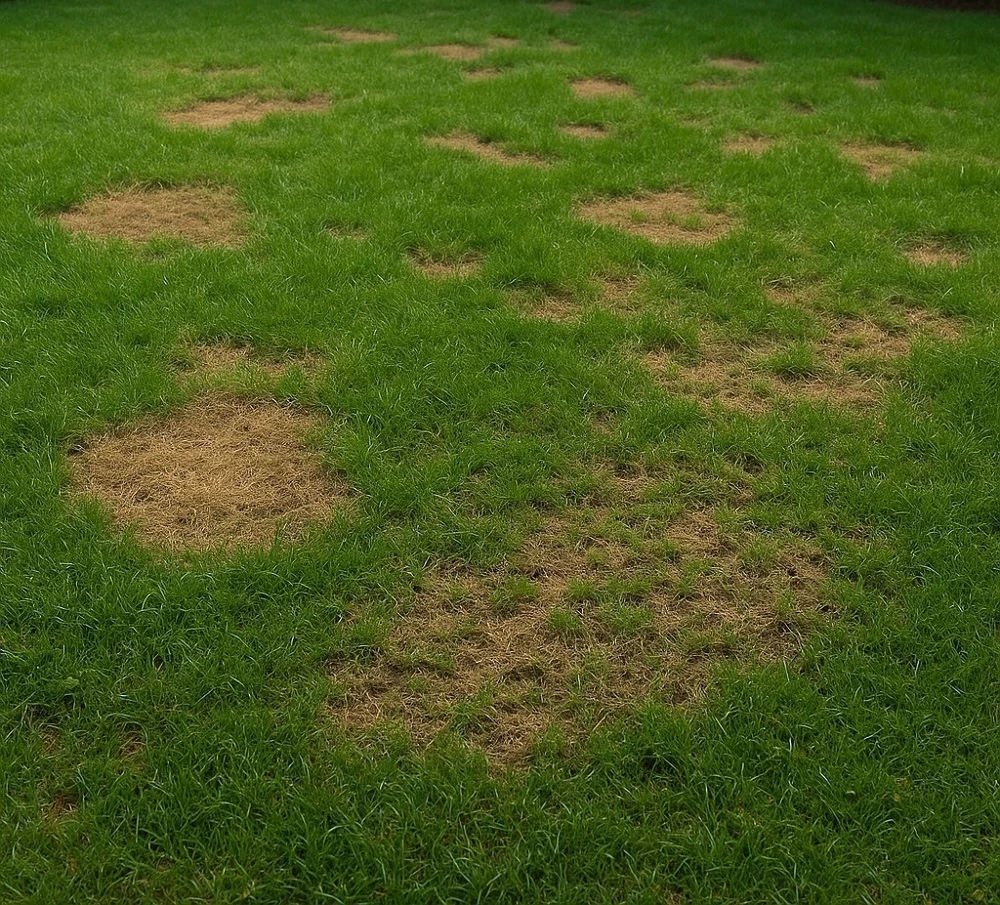
Image source: Bing (Web (fair-use with source credit))
Irrational patterns. Grub damage often starts in sunnier, drier sections of the lawn where soil temperatures favor egg development. It spreads outward from those hot spots. Fungal diseases, by contrast, often show up in shaded or poorly drained areas first.
One important note: grub damage is sometimes mistaken for sod webworm activity. Webworms are caterpillars, not beetle larvae, and they feed above ground on grass blades rather than below ground on roots. The treatment approach differs, so confirming what you're actually dealing with matters.
How Many Grubs Are Too Many? The Damage Threshold Explained
This is where most gardeners get it wrong. They find two or three grubs, assume the worst, and start treating. In reality, a low grub population is normal in healthy soil and rarely causes visible damage.
The widely accepted damage threshold for most cool-season turfgrasses is 5 to 10 grubs per square foot. Warm-season grasses like Bermuda and zoysia can often tolerate slightly higher numbers because of their aggressive root regrowth. Below that threshold, your lawn's root system can generally outpace the feeding damage.
To check your population properly, cut a 1-square-foot sample of sod about 2 to 3 inches deep. Do this in a few different spots, especially in areas showing stress. Peel it back and count the grubs in the soil and root zone.
Multiply your average if you're sampling smaller areas.
Here's a practical breakdown of what the numbers mean:
| Grubs per sq ft | What It Means | Action Needed |
|---|---|---|
| 0 to 4 | Normal background population | None. Monitor next season. |
| 5 to 9 | Approaching threshold | Assess turf health. Consider preventive treatment if grass is already stressed. |
| 10 to 14 | Active damage likely | Treat with appropriate method for your situation. |
| 15+ | Severe infestation | Treat immediately. Expect visible turf loss in affected areas. |
Timing matters for this count. Late July through September is the ideal window because young grubs are small, near the surface, and haven't yet caused maximum damage. By the time you see extensive brown patches in October, the grubs have been feeding for weeks and the population may have already peaked.
One more thing worth mentioning: grub counts can vary dramatically across a single lawn. You might find 12 per square foot near a streetlight (where adult beetles congregate and lay eggs) and zero on the shaded north side. Spot-treating the hot zones is often smarter and cheaper than blanketing the entire yard.
When Grubs Are Actually Helping Your Soil
Not every grub deserves a death sentence. In fact, a healthy soil ecosystem includes a certain amount of larval insect activity, and some of it genuinely benefits your garden.
Ground beetle larvae are voracious predators. They feed on aphids, slugs, cutworms, and other soft-bodied pests that damage vegetable and ornamental plants. A robust ground beetle population in your garden is a sign of good biological diversity.
Killing them with a broad-spectrum pesticide creates the exact problems you're trying to avoid.
Even scarab grubs play a role in organic matter decomposition. As they move through the soil, they break down dead plant material and contribute to nutrient cycling. Their tunneling creates small channels that improve soil aeration and water infiltration.
At low populations, this activity is functionally beneficial.
Earthworms get lumped into this conversation constantly, and for good reason. They're the gold standard for soil health, and their presence often correlates with a balanced grub population. If your soil supports earthworms, it's alive and functioning.
Grubs in that same soil are usually part of a working system, not a crisis.
The key distinction is population density and species. A few scarab grubs per square foot in a diverse, thriving garden? That's background noise.
A dense monoculture of Japanese beetle grubs in a stressed lawn? That's a problem. Context is everything.
Your Decision Flowchart: Should You Treat or Leave Them Alone?
This is where we put it all together into a practical decision framework. Walk through these questions in order.
Step 1: What species are you dealing with?
If you've identified ground beetle larvae or other beneficial predators, stop here. Leave them alone. They're working for you.
Step 2: How many grubs per square foot?
Count using the square foot sampling method described earlier. If you're below 5 per square foot and your turf looks healthy, monitor but don't treat. If you're between 5 and 10, assess your lawn's overall stress level.
If you're above 10, plan to treat.
Step 3: Is your lawn already stressed?
Drought, poor soil compaction, heavy shade, or recent construction damage all reduce your turf's ability to tolerate grub feeding. A stressed lawn at 6 grubs per square foot may show the same damage as a healthy lawn at 12. Factor in your grass's overall condition before deciding.
Step 4: What's your treatment philosophy?
Organic and biological approaches work well but require more patience and precise timing. Chemical options act faster but carry broader environmental trade-offs. Neither is inherently wrong.
The right choice depends on your priorities, your timeline, and your tolerance for visible damage during the treatment window.
Step 5: What season is it?
Late summer and early fall offer the best treatment window because young grubs are small, near the surface, and vulnerable. Spring treatments are less effective because grubs are larger and deeper in the soil. If it's October and you're just noticing damage, your best move is often to plan for preventive treatment next year rather than chasing a population that's already done its worst.
The Right Treatment for the Right Situation
Once you've decided to act, matching the treatment to your specific situation matters more than grabbing the strongest product on the shelf.
Biological Controls
Beneficial nematodes, specifically Heterorhabditis bacteriophora, are microscopic roundworms that seek out and kill scarab grubs. They enter the grub's body and release bacteria that kill it within 24 to 48 hours. Application requires moist soil and soil temperatures above 55°F.
You water them in and keep the area damp for about two weeks afterward.

Image source: Bing (Web (fair-use with source credit))
Milky spore disease, caused by the bacterium Paenibacillus popilliae, targets Japanese beetle grubs specifically. It takes two to three years to establish fully in the soil, but once established, it can persist for a decade or more. This is a long-game solution, not a quick fix.
Bacillus thuringiensis galleriae (BtG) is a newer biological option that works on multiple scarab species. It acts faster than milky spore but slower than chemical insecticides. It's a solid middle-ground choice for gardeners who want effective control without broad environmental impact.
Chemical Options
Curative insecticides containing trichlorfon or carbaryl work fast and kill existing grub populations within days. These are appropriate when damage is active and severe. The downside is that they're non-selective.
They kill beneficial soil organisms alongside the target grubs.
Preventive insecticides with the active ingredient imidacloprid or chlorantraniliprole are applied before grubs hatch, typically in early to mid-summer. They target young larvae during their most vulnerable stage. These products require planning ahead and are not useful for addressing an active infestation in progress.
Follow all label instructions precisely. Pesticide regulations vary by state, and some products are restricted to licensed applicators in certain areas. Check with your local Cooperative Extension Service for current regulations in your region.
Manual Removal
For small garden beds or isolated problem areas, hand removal is surprisingly effective. Dig up the affected soil, remove the grubs by hand, and re-settle the soil. This works best in vegetable gardens or flower beds where you're already turning the soil regularly.
It's not practical for large lawn areas.
Timing Is Everything: When to Act and When to Wait
The single most common mistake in grub management is treating at the wrong time. Here's the seasonal breakdown.
Early summer (June to July): Adult beetles are flying, mating, and laying eggs. This is the window for preventive insecticide applications if you've had grub problems in previous years. The goal is to have the product in the soil before eggs hatch.
Late summer (late July through September): Young grubs are small, feeding near the surface, and most vulnerable. This is the ideal window for curative treatments, whether biological or chemical. Nematode applications work best during this period because soil temperatures are warm and grubs are accessible.
Fall (October through November): Grubs are still feeding but beginning to move deeper into the soil as temperatures drop. Damage becomes most visible now. Treatments are less effective because grubs are larger and harder to reach.
Focus on assessment and planning for next year.
Spring: Grubs return to the root zone and feed briefly before pupating. Spring treatments are generally not recommended because grugs are large, feeding is winding down, and the window for effective control has largely passed.
If you're reading this in October and seeing brown patches, resist the urge to dump a curative treatment on the lawn. Instead, do a population count, note the hot spots, and mark your calendar for next July. You'll get far better results with a well-timed application than a late-season scramble.
Common Mistakes That Make Grub Problems Worse
Even well-intentioned gardeners sometimes make grub issues worse. Here are the patterns we see most often.
Overwatering the lawn. Scarab beetles prefer moist soil for egg-laying. If you're watering your lawn daily or keeping it consistently damp, you're rolling out a welcome mat for adult beetles. Deep, infrequent watering is better for turf health and less attractive to egg-laying females.
Treating without counting. Applying a pesticide because you found three grubs in a shovel of dirt is overkill. Always do a proper population count before treating. You might find that your lawn is well within the tolerable range.
Using broad-spectrum pesticides preventively every year. This kills beneficial insects alongside pests and can actually increase future pest problems by disrupting natural predator-prey dynamics. Reserve preventive treatments for situations where you've confirmed a recurring problem.
Ignoring the root cause of turf stress. Grubs exploit weak grass. If your lawn is thin, compacted, or poorly nourished, even a moderate grub population will cause outsized damage. Improving overall turf health through proper mowing height, aeration, and fertilization is often more effective than any grub-specific treatment.
Applying nematodes in hot, direct sunlight. UV light kills beneficial nematodes quickly. Apply them in the evening or on overcast days, and water the area before and after application. Skipping this step is the most common reason nematode treatments fail.
Prevention: Simple Lawn Habits That Keep Problem Grubs Away
Good lawn management is the most underrated grub prevention tool. Instead of reacting to an outbreak, build conditions that discourage beetles from laying eggs in the first place.
Mow at the recommended height for your grass species. Taller grass shades the soil surface, which discourages adult beetles from laying eggs. For most cool-season grasses, that means 3 to 4 inches.
For warm-season varieties, it depends on the type, but slightly taller is almost always better for grub resistance.
Water deeply and infrequently instead of light daily sprinkles. You want the surface to dry out between waterings. Consistently moist topsoil is exactly what egg-laying females are looking for.
Deep watering encourages deeper root growth, which also helps turf recover from minor grub feeding.
Aerate compacted soil annually. Compacted soil holds moisture near the surface and creates the damp, tight conditions scarab beetles prefer for egg deposition. Loosened soil drains faster and is less attractive as an egg-laying site.
Fertilize appropriately based on a soil test. Over-fertilized lawns produce lush top growth but often have weak root systems, which are more vulnerable to grub feeding. Balanced nutrition produces deeper roots that can tolerate moderate grub pressure.
Real Scenarios: What This Looks Like in Practice
Understanding how grub problems play out in real conditions helps you calibrate your response.
Scenario 1: Low population, healthy lawn. You dig a test hole and find 3 grubs per square foot. Your turf is thick, you mow at 3.5 inches, and there's no visible stress. The correct response?
Nothing. You've got a normal soil ecosystem doing its thing. Monitor next summer just to confirm the count hasn't climbed.
Scenario 2: Moderate population, stressed lawn. You count 7 grubs per square foot in a lawn that's already thin from heavy foot traffic and compacted soil. The grass is showing early brown patches. This is a situation where treatment makes sense, but you should also address the underlying compaction and thinning.
Treat the grubs this fall, aerate in spring, and overseed thin areas.
Scenario 3: High population, active damage. You're pulling up handfuls of dead turf in September and finding 15 or more grubs per square foot. The damage is spreading. Apply a curative treatment immediately to protect what's left of the root system.
Plan a preventive application for next July to break the cycle. Reseed damaged areas in early fall or the following spring.
Scenario 4: Beneficial larvae misidentified as pests. You find dark, fast-moving larvae in your vegetable garden soil and assume they're grubs. After checking an identification key, you realize they're ground beetle larvae. You leave them alone and notice fewer aphids on your tomatoes that season.
This happens more often than most gardeners realize.
Frequently Asked Questions
Can grubs kill an entire lawn?
Yes, a severe infestation of 15 or more grugs per square foot can kill large sections of turf, especially if the grass is already stressed. The damage happens because grubs sever the roots, preventing the grass from taking up water. At that point, the turf dies from dehydration even if the soil is moist.
Do grub treatments harm earthworms?
Broad-spectrum chemical insecticides can reduce earthworm populations along with grubs. Biological controls like beneficial nematodes and milky spore are far more selective and generally don't affect earthworms. If earthworm preservation is a priority, stick with biological options.
How long does milky spore take to work?
Milky spore takes two to three years to establish fully in the soil and reach peak effectiveness. Once established, it can persist for 10 years or more. It's a long-term investment, not a quick solution for an active infestation.
Are natural grub remedies actually effective?
Beneficial nematodes are well-documented as effective against scarab grubs when applied correctly. Neem oil has some repellent properties but is less reliable for established infusions. BtG is a newer option with promising results across multiple scarab species.
All three require proper timing and application to work.
When is the best time to apply grub control?
Late July through September is the optimal window for curative treatments. Grubs are small, near the surface, and most vulnerable during this period. Preventive treatments should go down in early to mid-summer before eggs hatch.
Will grub damage repair itself?
Minor damage often recovers on its own if the grub population drops and the lawn receives proper care. Severe damage where roots are completely severed will not recover without reseeding or sodding. The key is addressing the grub population before the damage becomes irreversible.
Your Step-by-Step Action Plan Based on What You're Seeing
Here's a practical summary you can follow based on your current situation.
If you haven't checked yet: Do a square foot soil sample in a stressed area. Count the grubs. Identify the species using physical characteristics or an Extension Service.
Then decide based on the thresholds outlined above.
If your count is below 5 per square foot: Monitor only. Improve your lawn care practices to build turf resilience. No treatment needed.
If your count is 5 to 10 and your lawn is stressed: Apply beneficial nematodes in late summer. Address underlying lawn health issues like compaction and watering habits. Reassess next season.
If your count is above 10: Apply a curative treatment appropriate for your philosophy and timeline. Reseed damaged areas once the population is under control. Plan a preventive application for the following summer.
If you're seeing animal digging: That's a sign of a significant grub population. Do a count immediately. Animals are often more sensitive to grub presence than our eyes are.
The bottom line is that grubs aren't automatically good or bad. They're part of a living soil system, and your job is to manage the balance. A few grubs mean your soil is alive.
Too many mean it's time to act. The difference comes down to counting, identifying, and responding at the right time with the right tool.