You've probably noticed brown patches spreading across your lawn and wondered if grubs are to blame. The short answer is yes, grubs can absolutely destroy your lawn, but the full picture is more nuanced than most people realize. Not every grub in your soil is a crisis, and treating when you don't need to wastes money and harms the beneficial organisms living in your yard.
White grubs, the larval stage of scarab beetles like Japanese beetles and European chafers, feed on grass roots below the surface. Research from university extension programs consistently shows that a healthy lawn can tolerate roughly 5 to 10 grubs per square foot without showing visible damage. The real trouble starts when populations exceed that threshold, or when secondary damage from skunks and raccoons tearing up your turf in search of a meal makes the problem far worse than the grubs alone would.
Understanding where your lawn falls on that spectrum is the difference between a smart, targeted response and an expensive overreaction.

Image source: Bing (Web (fair-use with source credit))
Quick Answer
Grubs are bad for your lawn when their population exceeds the damage threshold. Most healthy lawns tolerate 5 to 10 grubs per square foot without visible harm. Above that number, root feeding causes brown, dead patches that peel back like carpet.
The key is checking your actual grub count before reaching for any treatment. Unnecessary applications waste money and kill beneficial soil organisms you actually want in your yard.
What Grubs Actually Are (And Why It Matters)
White grubs aren't a single pest. They're the larval stage of several scarab beetle species, and knowing which one you're dealing with affects your treatment timing and method. The most common culprits in residential lawns across the Midwest and Northeast include Japanese beetle grubs, European chafer grubs, and masked chafer grubs.
Each has a slightly different life cycle, and that matters more than most homeowners realize.
All of them follow the same basic pattern. Adult beetles lay eggs in moist soil during mid to late summer. Those eggs hatch into larvae that feed aggressively on grass roots through fall, go deep into the soil to overwinter, feed again briefly in spring, then pupate into adults and emerge to start the cycle over.
The fall feeding period causes the most visible lawn damage because the larvae are larger and consuming more root material.
Here's why species identification matters. Japanese beetle grubs respond well to milky spore, a biological control that doesn't work on European chafers. If you're applying the right product at the wrong time for your specific species, you're essentially watering your lawn with expensive chemicals for no reason.
Extension entomologists at universities like Purdue and Michigan State emphasize that proper identification, or at least knowing which species dominate your region, is the foundation of any effective management plan.
How to Tell If You Have a Grub Problem
Grub damage has a signature look, but it's commonly mistaken for drought stress, fungal disease, or dog urine spots. The key difference is that grub-damaged turf pulls up easily because the roots have been chewed away. If you can grab a handful of brown grass and it lifts like a loose carpet with little resistance, grubs are very likely the cause.

Image source: iNaturalist / Irene
Before you dig up your lawn, look for these warning signs first:
- Brown, irregular patches that start small and expand, often appearing in late summer or early fall when feeding peaks.
- Spongy or loose turf underfoot, where the ground feels less firm than healthy areas because root structure is compromised.
- Animal digging activity, particularly skunks and raccoons tearing up sections of lawn overnight. They're after the grubs, and the collateral damage to your turf can exceed what the grubs themselves caused.
- Increased bird activity on your lawn, especially starlings and crows probing the soil surface.
These signs strongly suggest a grub problem, but they don't confirm it. Fungal diseases like brown patch and dollar spot also cause circular brown areas. Drought stress creates similar discoloration.
The only way to know for sure is to cut a small square of turf, flip it over, and count what's living in the soil. A 1-foot-square section cut 2 to 3 inches deep from the edge of a damaged area gives you a reliable sample. Check at least three or four spots across your lawn, because grub populations are rarely uniform.
The Threshold That Changes Everything
This is where most grub advice goes wrong. Generic recommendations treat every grub as an enemy that needs eliminating. That approach ignores a basic principle of integrated pest management that university extension programs have promoted for decades.
Your lawn has a natural tolerance level, and staying below it means you don't need to do anything at all.

Image source: Bing (Web (fair-use with source credit))
The generally accepted thresholds for cool-season grasses like Kentucky bluegrass, perennial ryegrass, and tall fescue are:
| Grub Count per Sq Ft | Lawn Response | Action Needed |
|---|---|---|
| 0 to 5 | No visible damage | None |
| 6 to 10 | Minor root pruning, usually no symptoms | Monitor, water deeply during dry spells |
| 11 to 15 | Brown patches likely, turf may loosen | Curative treatment recommended |
| 15+ | Severe damage, high risk of turf loss | Immediate treatment, repair likely needed |
These numbers shift slightly based on your grass species, soil health, and moisture availability. A well-watered, deeply rooted tall fescue lawn handles more stress than a thin, compacted bluegrass lawn. Lawns with good organic matter and deep root systems simply tolerate more feeding before showing symptoms.
The practical takeaway is straightforward. If you flip your test squares and count 4 grubs per square foot, your lawn is fine. Spend your money on proper watering and fertilization instead of insecticides.
If you're finding 12 or more, you've got a legitimate problem that warrants action. Everything in between depends on your lawn's overall health and how much risk you're comfortable accepting.
When Grubs Cause Real Damage vs. When They Don't
Grub damage isn't just about numbers. It's about context. A lawn with 8 grubs per square foot during a wet, mild fall might show zero symptoms.
That same lawn with the same grub count during a hot, dry August could develop significant brown patches because the reduced root system can't keep up with moisture demand. The grubs didn't change. The stress level did.
Healthy lawns with deep root systems, proper fertility, and adequate moisture can mask moderate grub feeding. You might never know they're there. The damage becomes visible when the root loss crosses a tipping point where the grass can no longer take up enough water to survive.
That tipping point moves lower when other stressors enter the picture.
Compaction makes everything worse. Soil that's been compressed by foot traffic, mowers, or construction has less pore space and fewer roots to begin with. Even modest grub feeding in compacted soil can push grass past its breaking point.
If your lawn has heavy clay, slopes that shed water, or areas where rain never seems to soak in, those spots will show grub damage first and worst.
Established lawns with a history of good care are more resilient. Newly sodded or recently seeded lawns are far more vulnerable because their root systems haven't fully developed. A population of 6 grubs per square foot that an established lawn shrugs off could kill a first-year lawn outright.
That's why newer lawns deserve closer monitoring and a lower treatment threshold.
Animal damage often exceeds the grub damage itself. A single skunk can tear up more turf in one night than a moderate grub population does in a month. If you're seeing significant digging, the grubs may have been present at a manageable level until the animals turned a minor issue into a major repair job.
In those cases, treating the grubs is still the right move, but you'll also need to address the animal activity to stop the immediate destruction.
Curative vs. Preventive Treatment: Which One You Need
Choosing between curative and preventive treatment depends entirely on what you found when you checked your lawn. If you've already confirmed grub counts above the threshold, you need a curative product that kills existing larvae. If you had damage last year and want to stop a repeat, preventive treatment makes more sense.
These two approaches use different products, different timing, and different logic.
Curative treatments target grubs that are actively feeding right now. The window is narrow. You want to apply when larvae are small and near the surface, typically late July through September depending on your region.
Products containing trichlorfon (Dylox) work fast, often within 24 to 72 hours, and are the go-to choice when damage is already visible. Chlorantraniliprole (Acelepryn) is another curative option with a slightly wider application window and lower toxicity to beneficial insects.
Preventive treatments are applied before eggs hatch, usually late May through early July. These products, typically containing imidacloprid or clothianidin, create a residual barrier in the soil that kills young grubs shortly after they emerge. The tradeoff is timing precision.
Apply too early and the residual breaks down before peak hatch. Apply too late and the grubs are already large enough to cause damage before the product takes effect.
Here's a simple decision framework:
- You found 10+ grubs per square foot right now. Go curative. Use trichlorfon for fast knockdown or chlorantraniliprole for a slightly longer window.
- You had significant damage last year but haven't checked this year. Go preventive in late spring, then verify with a fall check whether it was necessary.
- You found fewer than 5 grubs per square foot. Do nothing this year. Monitor again next season.
Chemical vs. Biological Control: Pros, Cons, and Timing
Not every grub problem calls for synthetic insecticides. Biological controls have improved significantly over the past decade, and for many homeowners they offer a practical first line of defense without the environmental tradeoffs.
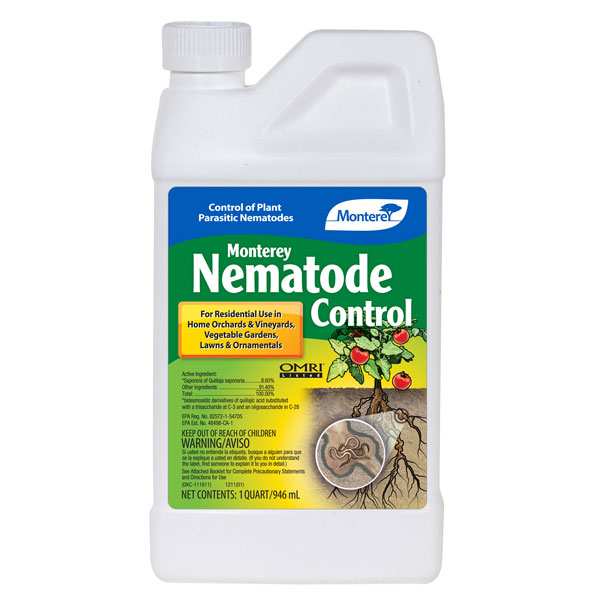
Image source: Bing (Web (fair-use with source credit))
Beneficial nematodes, specifically Heterorhabditis bacteriophora, are microscopic roundworms that seek out and kill grubs in the soil. They're applied as a liquid drench and work best when soil temperatures are between 55 and 85 degrees Fahrenheit. The catch is that they're living organisms.
They have a short shelf life, need to be applied in evening or overcast conditions to avoid UV exposure, and require moist soil to move effectively. Applied correctly, research from Rutgers and other university programs shows they can reduce grub populations by 50 to 75 percent.
Milky spore, caused by the bacterium Paenibacillus popilliae, is another biological option but it's specific to Japanese beetle grubs only. It won't touch European chafers or other species. The advantage is longevity.
Once established in the soil, milky spore can remain effective for 10 to 15 years. The disadvantage is patience. It takes two to three years to build up sufficient levels in the soil to provide meaningful control.
Here's how the main options compare:
| Treatment Type | Active Ingredient | Best For | Speed of Control | Residual | Pollinator Impact |
|---|---|---|---|---|---|
| Curative chemical | Trichlorfon (Dylox) | Active infestation, fast results | 24 to 72 hours | Short (days) | Moderate |
| Curative chemical | Chlorantraniliprole (Acelepryn) | Active infestation, lower toxicity | 1 to 2 weeks | Moderate | Low |
| Preventive chemical | Imidacloprid | Season-long prevention | N/A (prevents feeding) | Months | High concern |
| Biological | H. bacteriophora nematodes | Organic approach, moderate infestations | 1 to 2 weeks | None (one application) | None |
| Biological | Milky spore | Japanese beetle specific, long-term | 2 to 3 years to establish | 10 to 15 years | None |
The pollinator concern with neonicotinoids like imidacloprid is real and worth taking seriously. These systemic insecticides can be expressed in pollen and nectar of nearby flowering plants. Several states and municipalities have restricted their use on residential properties.
If you have flowering gardens adjacent to your lawn, or if you're trying to maintain a pollinator-friendly yard, biological options deserve serious consideration even if they require more patience.
Step-by-Step: How to Check Your Lawn for Grubs
Checking for grubs is straightforward, but doing it right means the difference between an accurate count and a wasted afternoon. Here's the process that extension specialists recommend.
1. Choose your timing. Late August through early October is ideal. Grubs are present and feeding, soil is workable, and you still have time for curutive treatment if needed.
Spring checks work too, but grubs are deeper in the soil and harder to find.
2. Select your sample sites. Pick four to six spots across your lawn, focusing on the edges of damaged areas. Grub populations cluster, so sampling only one spot gives you a misleading picture.
3. Cut your test squares. Use a spade or flat shovel to cut a 1-foot square about 3 inches deep on three sides. Fold the turf back like a hinged flap.
This lets you examine the soil and replace the turf afterward with minimal damage.
4. Count what you find. Count every grub in the exposed soil and root zone. Dig slightly deeper if the soil looks undisturbed, since larger larvae may have moved down.
Record the count for each square.
5. Calculate your average. Add up all your counts and divide by the number of samples. That average is what you compare against the threshold table.
6. Replace the turf. Press each square back into place and water it well. The grass should re-root within a week or two if the roots are still intact.
A garden trowel works fine for small lawns. For larger properties, a dedicated turf probe or cup cutter, available at most garden centers for under 20 dollars, makes the job faster. The whole process takes about 30 minutes for a typical quarter-acre lot.
The Best Treatment Options (And When to Apply Them)
Once you've confirmed you need treatment, matching the product to your situation gets you the best result with the least waste. Here's what the research and field data support for each scenario.
For active damage right now (late summer to early fall): Trichlorfon (Dylox) is the fastest-acting curative option. It kills grubs within one to three days and works well when larvae are small. Water it in lightly after application to move the product into the root zone.
Chlorantraniliprole (Acelepryn) is a better choice if you're willing to wait a week or two for results and want a product that's gentler on beneficial insects. It also has a wider application window, giving you more flexibility if you missed the early fall timing.
For prevention next season (late spring): Imidacloprid applied in June provides season-long protection against newly hatched grubs. The key is applying it two to four weeks before peak egg hatch in your area. Your local extension office can give you the specific timing for your region.
Chlorantraniliprole also works as a preventive and can be applied slightly later than imidacloprid, which is helpful if you're unsure of exact hatch timing.
For organic or pollinator-sensitive yards: Apply Heterorhabditis bacteriophora nematodes in late August or early September when soil temperatures are still warm. Mix them according to package directions, apply with a watering can or hose-end sprayer in the evening, and keep the soil moist for at least a week afterward. Milky spore is worth considering if Japanese beetles are your primary species and you're playing a long game.
Apply it once and let it establish over several seasons.
For severe infestations with turf already dead: Treatment alone won't fix this. You'll need to kill the remaining grubs, then reseed or sod the damaged areas in early fall or the following spring. Applying seed without addressing the grub population first just feeds the next generation of larvae.
Common Mistakes That Make Grub Damage Worse
The most common mistake is treating without checking. Plenty of homeowners see brown patches in August, assume grubs, and apply insecticide. If the real cause is fungal disease or compacted soil, that application does nothing except kill beneficial soil organisms and cost you money.
Always verify grub counts before opening any product container.
Applying preventive products in fall is another frequent error. Imidacloprid and similar preventive insecticides need to be in the soil before eggs hatch in mid-summer. Applying them in September is too late.
The grubs are already large and feeding. You've spent money on a product that was designed for a window that already passed.
Overwatering after nematode application kills the treatment. Nematodes need consistent soil moisture to survive and move through the profile. Letting the top inch of soil dry out within the first week after application dramatically reduces effectiveness.
Light daily watering for seven to ten days makes a measurable difference in results.
Ignoring the animal damage component is a mistake that catches people off guard. You can kill every grub in your lawn, but if skunks are still returning to the same spots out of habit, you'll keep seeing torn-up turf. Motion-activated sprinklers or temporary fencing can break the foraging pattern while your grub treatment takes effect.
Finally, failing to follow label rates is both ineffective and illegal. More product does not mean better control. Over-application increases runoff risk, harms non-target organisms, and wastes money.
The label is a legal document, not a suggestion. Read it, measure carefully, and apply exactly what it specifies for your square footage.
When to Call a Professional vs. Professional lawn care companies bring equipment soil sampling that most homeowners don't have. If your grub count is above 20 per square foot or the damage covers more than 50% of your lawn, a professional application makes sense. They have access to commercial-grade products and calibrated spreaders that ensure even coverage.
For moderate infestations under 15 grubs per square foot, DIY treatment is manageable. The key products are available at most garden centers, and the application process doesn't require special equipment. A hose-end sprayer and a spreader are all you need for most residential lawns.
If you're unsure about species identification or treatment timing, many extension offices offer free or low-cost diagnostic services. A photo of the grub and the damage pattern is often enough for them to point you in the right direction.
Preventing Future Grub Problems
Long-term grub management is about making your lawn less hospitable to egg-laying beetles and more resilient to root feeding. Mowing higher, around 3 to 4 inches, encourages deeper root systems that tolerate more pruning. Watering deeply but less frequently promotes the same root depth.
Beetles prefer moist soil for egg laying. If your lawn has poor drainage or gets irrigated heavily in July and August, you're essentially inviting them to deposit eggs in prime conditions. Cutting back irrigation during peak beetle flight season, without letting the grass go dormant, can reduce egg survival in the top layer of soil.
Overseeding with endophyte-enhanced perennial ryegrass varieties adds another layer of defense. These grasses host a naturally occurring fungus that makes them less palatable to some surface-feeding insects. While this doesn't directly affect root-feeding grubs, it strengthens the overall turf stand so it bounces back faster from feeding pressure.
A fall aeration program helps too. Compacted soil stresses grass roots and makes the damage from grub feeding more severe. Relieving that compaction gives your grass a deeper, more extensive root system that handles moderate grub populations without showing symptoms.
Frequently Asked Questions
Can grubs come back after treatment?
Yes. Treatment kills the larvae present at the time of application. It does not stop next year's beetles from laying eggs in your lawn.
Annual monitoring is the only way to stay ahead of recurring populations, especially in regions with high beetle pressure like the upper Midwest.
Is it safe to apply grub control products around pets?
Most granular grub control products are safe once watered in and the treated area has dried. The label will specify the exact re-entry interval, typically 24 to 48 hours. Nematodes and milky spore are safe immediately, which is one reason pet owners prefer biological options.
Will grub damage repair itself?
Mild damage often recovers with proper watering and fertilization, provided the grub population is brought under control. Severe damage where roots are completely severed will not recover on its own. Those areas need reseeding or sodding in fall or early spring.
Do all lawns need preventive grub treatment?
No. Lawns with no history of grub damage and grub counts below the threshold do not need preventive applications. Blanket treating every lawn regardless of pest pressure wastes money and harms soil biology.
Test first, then treat only when the numbers justify it.