Image source: Bing (Web (fair-use with source credit))
So you've spotted those fat, C-shaped larvae curled up in your soil and you're wondering whether they're about to destroy your garden. It's one of the most common questions gardeners face, and the honest answer isn't a simple yes or no. Whether grubs are bad for your garden depends entirely on how many you have, what species they are, and what you're growing.
Here's what most people get wrong right out of the gate. They see a grub and assume the worst. But in our research, we've found that low populations of white grubs are actually a normal, even beneficial part of a healthy soil ecosystem.
The problems start when their numbers cross a specific threshold, and that threshold varies depending on your grass type, your region, and what's already living in your soil. Let's walk through how to figure out exactly where you stand.
The Quick Answer: It Depends on How Many You Have
Grubs are not automatically bad for a garden. A small number of white grubs in your soil is normal and even beneficial. Problems begin when grub density exceeds roughly 5 to 10 per square foot in most cool-season lawns.
Below that threshold, natural predators and healthy plants can usually keep up. Above it, you'll start seeing real damage to roots, turf, and garden plants.
What Grubs Actually Are (And Why They're in Your Garden)
When we talk about "grubs," we're talking about the larval stage of scarab beetles. The most common culprits in North American and European gardens are Japanese beetle grubs, European chafer grubs, June beetle grubs, and masked chafer grubs. They all share that distinctive C-shaped body, creamy white color, and brown head capsule.
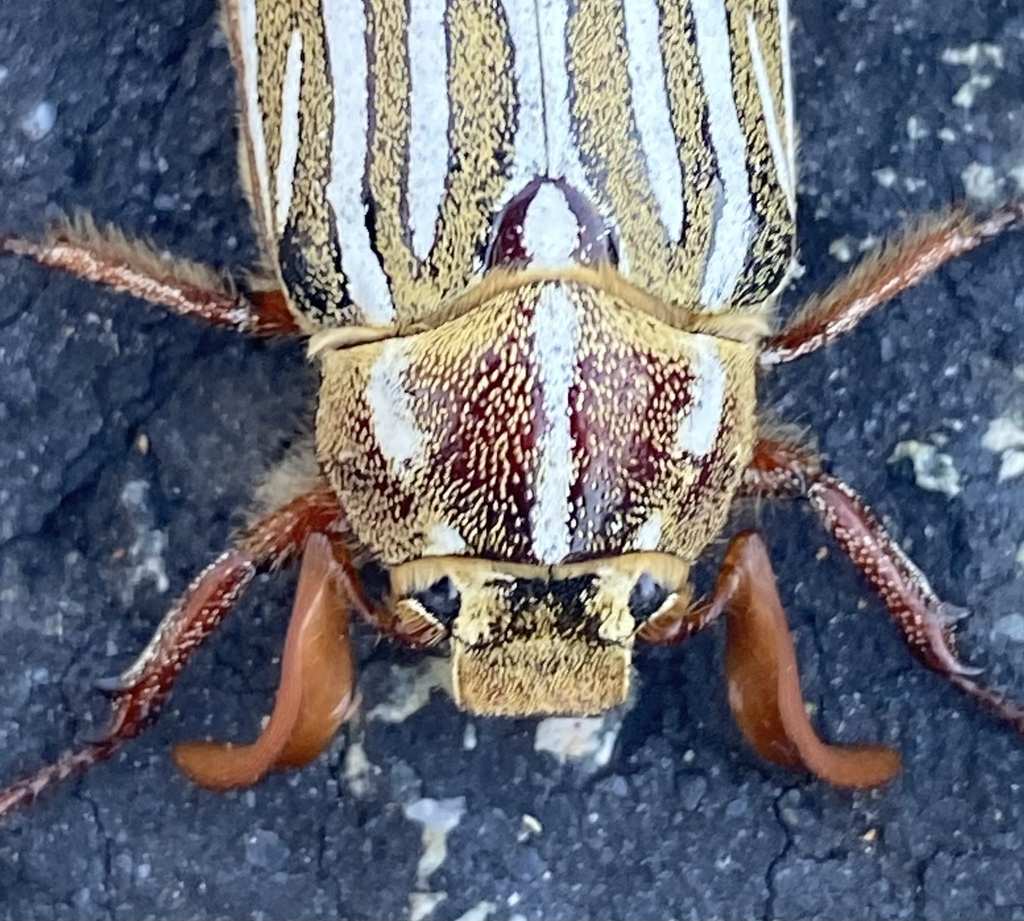
Image source: iNaturalist / Irene
These larvae live in the top few inches of soil and feed on organic matter and plant roots. Their lifecycle typically runs one full year. Adult beetles lay eggs in mid to late summer, those eggs hatch into larvae by early fall, the grubs feed heavily before burrowing deeper to overwinter, then they move back up to feed again in spring before pupating into adult beetles.
That fall feeding period is when they do the most damage. The grubs are at their largest and hungriest right before winter. Spring feeding can also cause problems, especially if the population was high the previous fall.
Not every white grub you find is a turf destroyer, though. Some scarab beetle species feed primarily on decaying organic matter and barely touch living roots. That's why species identification matters if you're trying to decide whether to treat.
University extension services often provide identification guides based on the raster pattern, that arrangement of tiny spines on the grub's underside near the rear end.
How to Tell If Grubs Are Damaging Your Garden
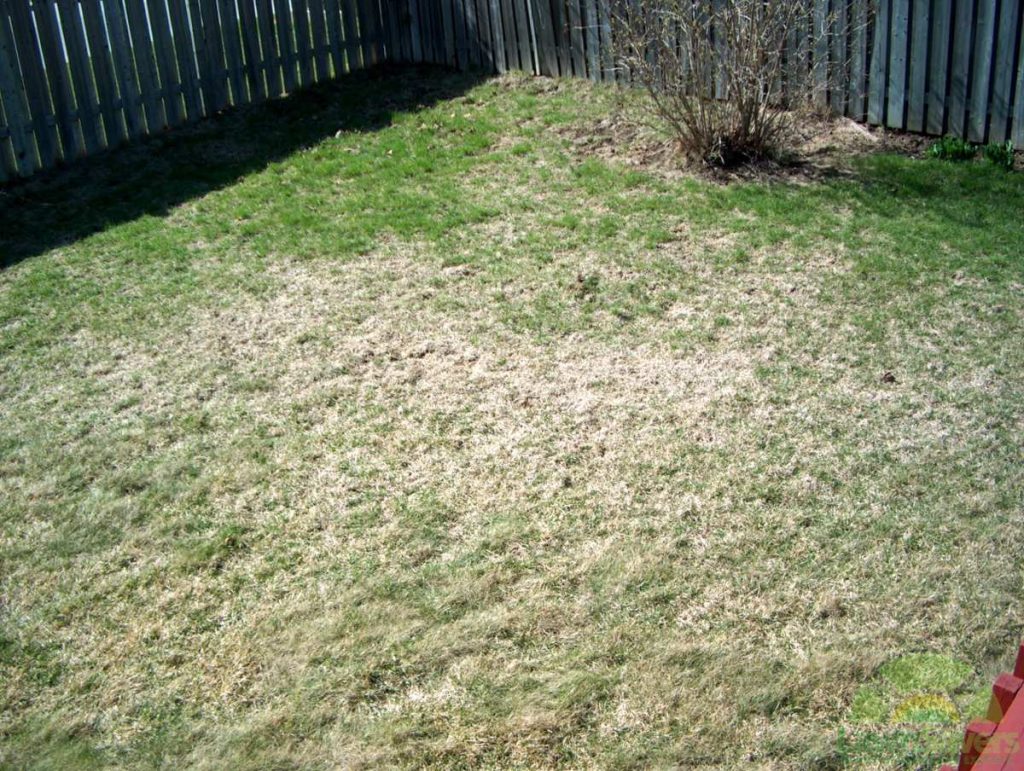
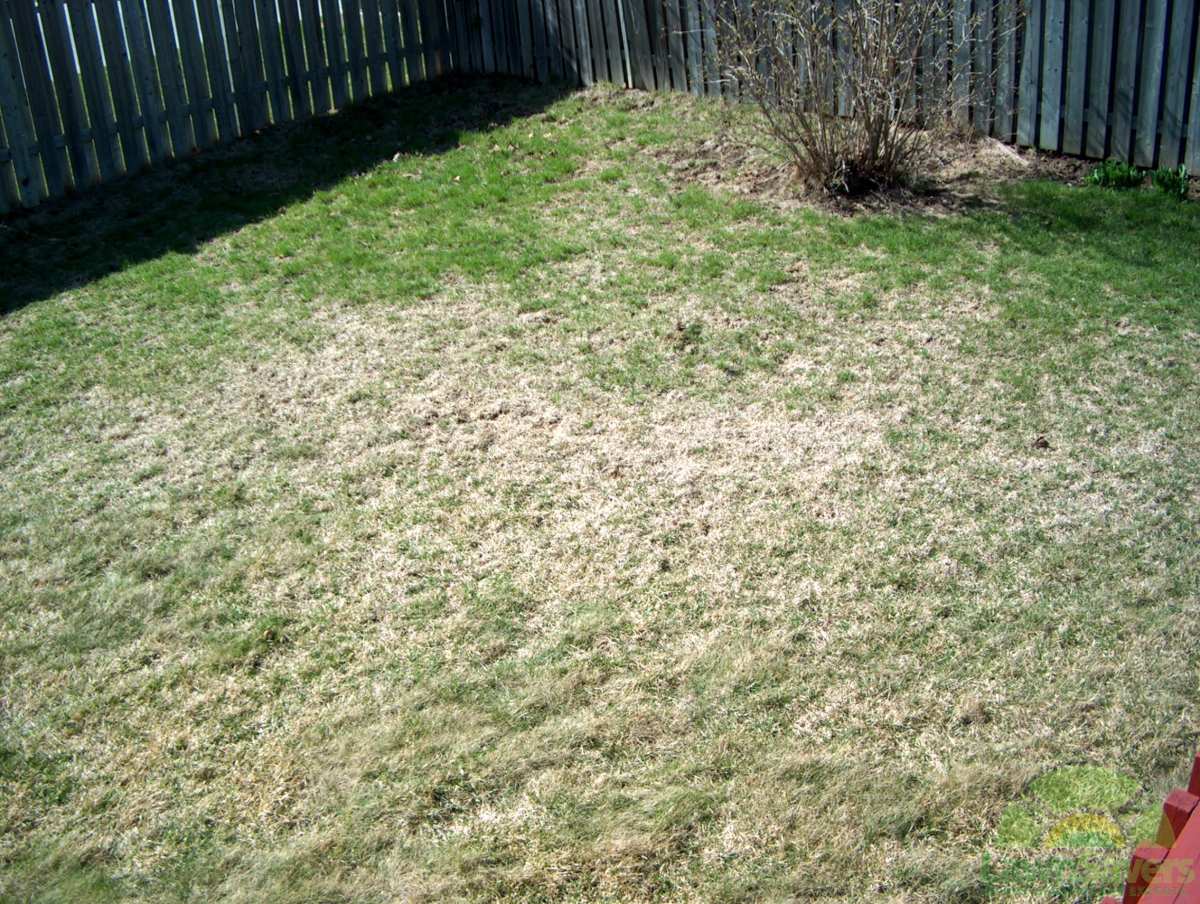
Grub damage has a look that's easy to mistake for other problems. You'll see irregular brown patches in your lawn that peel back easily from the soil, almost like loose carpet. That's because the grubs have severed the roots connecting the turf to the ground underneath.
Plants in garden beds may wilt even when the soil is moist. You might notice increased bird activity, or worse, skunks and raccoons tearing up your lawn at night to feed on the grubs. That secondary damage from foraging animals is often more destructive than the grubs themselves.
But here's the catch. Brown patches in a lawn can also mean fungal disease, drought stress, chinch bugs, dog urine spots, or compacted soil. Wilting garden plants could be a watering issue, root rot, or a nutrient deficiency.
You can't diagnose a grub problem just by looking at the damage above ground. You need to get your hands in the soil and confirm what's actually down there.
The Threshold: How Many Grubs Is Too Many?
This is where most gardeners skip a step and go straight to treatment. They see a few grubs, panic, and dump product on the problem. But treatment thresholds exist for a reason, and they're well-established in university research.
For most cool-season turfgrasses like Kentucky bluegrass, fescue, and perennial ryegrass, the generally accepted treatment threshold is 5 to 10 grubs per square foot. High-maintenance lawns, golf courses, and sports turf often use a lower threshold of 3 to 5 per square foot because the expectations for appearance are higher. Low-maintenance areas and warm-season grasses like Bermuda or zoysia can often tolerate 10 to 15 per square foot before damage becomes visible.
These numbers aren't arbitrary. They come from years of field research at land-grant universities studying the relationship between grub density and visible turf injury. The key takeaway is that finding a handful of grubs in your garden is completely normal.
You only need to act when the population exceeds what your plants and natural predators can handle.
When Grubs Are Actually Helping Your Soil
This is the part most grub articles skip entirely, and it's important. Grubs aren't just root destroyers. In low to moderate numbers, they're doing real work in your soil ecosystem.
Their tunneling activity creates channels that improve soil aeration and water infiltration. They break down organic matter, including dead roots and thatch, and convert it into nutrients that plants can use. They're also a major food source for birds, ground beetles, centipedes, and other beneficial predators that keep other pest populations in check.
A garden with zero grubs might actually be a red flag. It could mean your soil biology is depleted, you've been using broad-spectrum pesticides too heavily, or the ecosystem is out of balance. Healthy soil is alive, and grubs are part of that living system.
The goal isn't elimination. The goal is management. You want enough grubs to support soil health and feed the predators that protect your garden, but not so many that they overwhelm your plants' ability to recover.
That balance is the foundation of integrated pest management, and it's the approach university extension services recommend as of 2026.
The Real Damage: What Happens When Populations Get Out of Hand
When grub numbers climb past that 10 per square foot mark, the damage shifts from cosmetic to structural. The larvae sever so many roots that plants can no longer take up water or nutrients effectively. Turf turns brown in large, irregular patches that don't respond to watering or fertilizing.
In garden beds, vegetables and perennials may stunt, yellow, or die outright.
The secondary damage is often worse. Skunks, raccoons, armadillars in southern regions, and flocks of starlings will tear up your lawn overnight to get at the grubs. A single skunk can destroy a surprising amount of turf in one evening.
Moles, which feed heavily on grubs, will tunnel extensively through infested areas, creating raised ridges and soft spots across the entire yard.
In severe cases, the root damage is so extensive that the turf can be rolled back like a rug with almost no resistance. At that point, you're looking at reseeding or sodding entire sections of lawn, which is expensive and time-consuming. Vegetable gardens can lose entire plantings if grubs go unchecked during the critical fall feeding window.
This is why monitoring matters more than reacting. Catching a population before it reaches damaging levels is far easier and cheaper than repairing the aftermath.
How to Check Your Garden for Grubs (The Right Way)
You can't manage what you haven't measured. The standard method for assessing grub populations is straightforward and takes about five minutes.
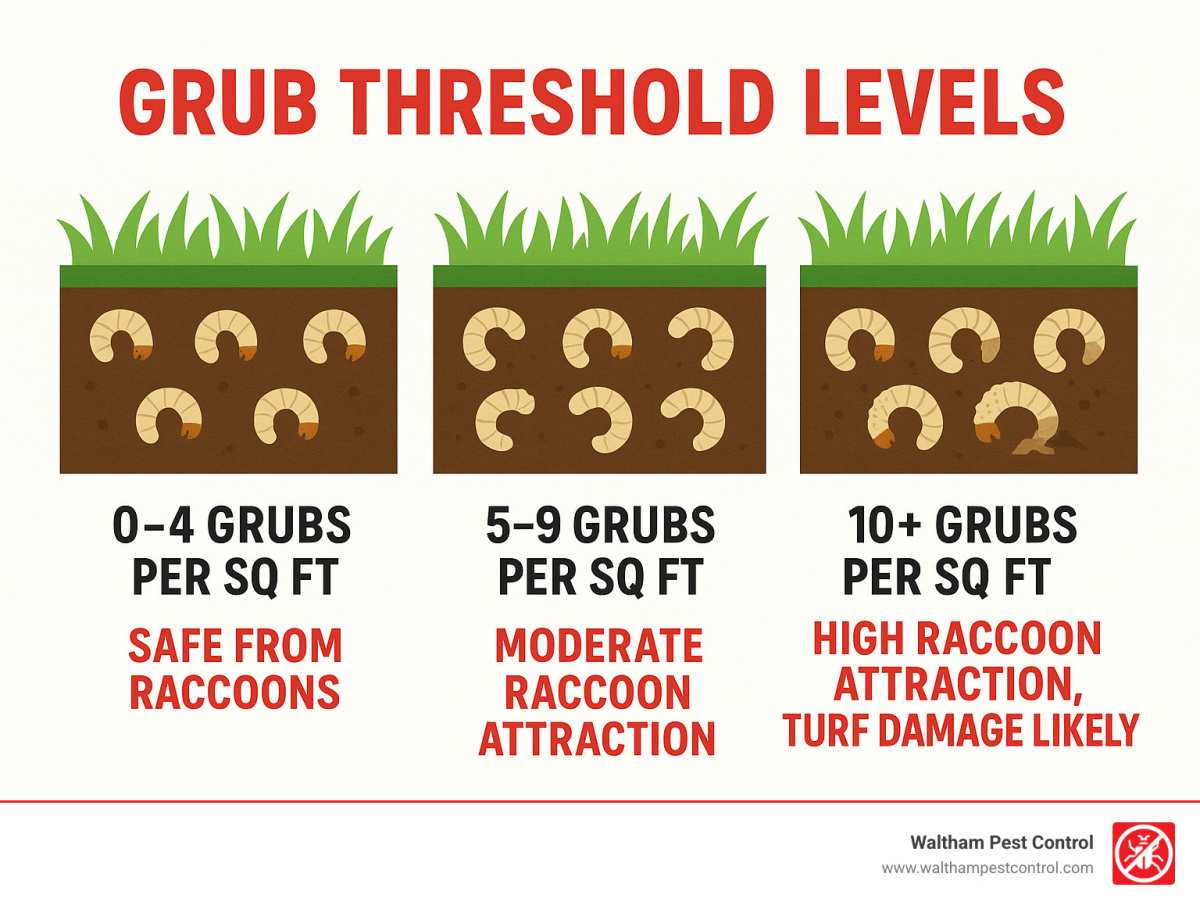
Image source: Bing (Web (fair-use with source credit))
Cut a square foot of sod, about 2 to 3 inches deep, in an area where you suspect grub activity. Peel it back and count the grubs you find in the soil and root zone. Repeat this in several spots across your lawn or garden, especially in areas showing damage.
Then average your counts.
The best time to sample is late August through October, when grubs are actively feeding near the surface and haven't yet burrowed deep for winter. Spring sampling can work too, but grubs are often larger and harder to count because some may have already pupated into adults.
If your average comes in below 5 per square foot, you're in the clear for most lawn types. Between 5 and 10, keep monitoring and watch for animal digging. Above 10, it's time to consider treatment options.
Choosing Your Approach: Treatment Options Compared
If your grub count crosses the treatment threshold, you have several options. Each has different timing requirements, effectiveness windows, and impacts on the rest of your soil biology.
Preventative treatments are applied before damage occurs, typically in late spring to early summer when adult beetles are laying eggs. Products containing chlorantraniliprole, sold under brand names like GrubEx, work by affecting newly hatched larvae. They have low toxicity to mammals and birds but should still be applied according to label directions.
The downside is you're treating based on expectation rather than confirmed need.
Curative treatments are applied when you've already confirmed a damaging population, usually in late summer or early fall. Trichlorfon, found in products like Dylox, acts fast but has a short window of effectiveness. It's one of the few options that works on larger, late-stage grubs.
Carbaryl, the active ingredient in Sevin, is another curative option but has broader toxicity to beneficial insects.
Biological controls take longer to work but are far gentler on the soil ecosystem. Milky spore disease, caused by the bacterium Paenibacillus popilliae, specifically targets Japanese beetle grubs. It can take 1 to 3 years to establish in the soil, but once it does, it provides control for 10 to 15 years or more.
It won't touch other grub species, though.
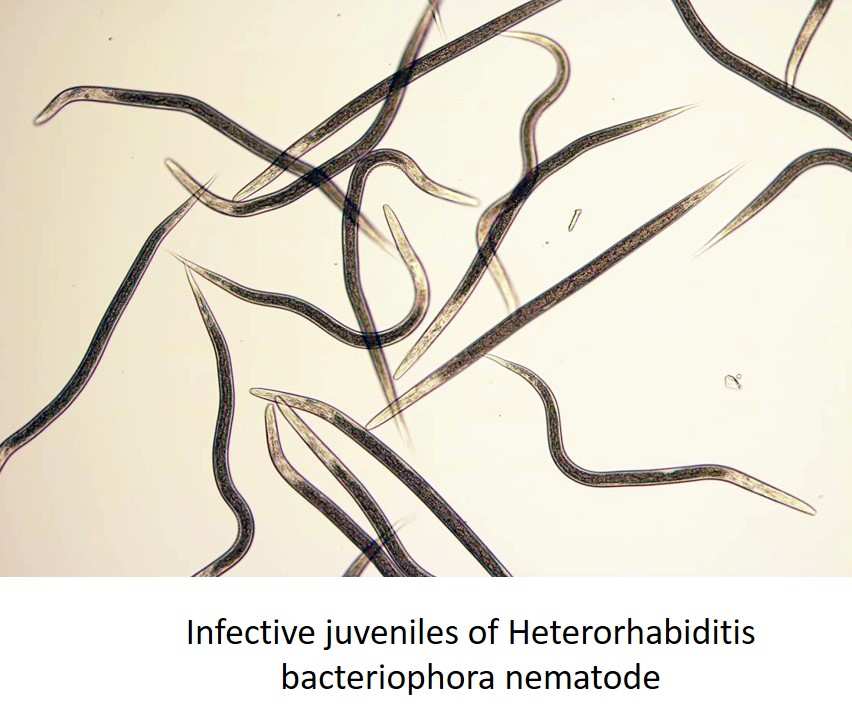
Image source: Bing (Web (fair-use with source credit))
Beneficial nematodes, specifically Heterorhabditis bacteriophora, are microscopic roundworms that seek out and kill grubs in the soil. They're applied as a soil drench in late summer when soil temperatures are above 55°F. They won't harm earthworms, plants, or people, which makes them a strong choice for organic gardeners.
The catch is they need moist soil to move through, and they're sensitive to UV light, so they should be applied in the evening and watered in well.
Neem oil can act as a repellent and growth disruptor for some grub species, though it's less reliable as a standalone treatment. It's best used as part of a broader management strategy rather than a primary control method.
Here's a quick comparison to help you decide:
| Treatment Type | Timing | Speed of Control | Impact on Beneficials | Best For |
|---|---|---|---|---|
| Chlorantraniliprole (preventative) | Late spring to early summer | Slow, preventive | Low | High-risk areas with history of infestation |
| Trichlorfon (curative) | Late summer to early fall | Fast, 1 to 3 days | Moderate | Confirmed damaging populations needing quick control |
| Milky spore | Any time soil is workable | Very slow, 1 to 3 years | None | Long-term Japanese beetle management |
| Beneficial nematodes | Late summer, above 55°F soil temp | Moderate, 1 to 2 weeks | None | Organic gardens, eco-conscious management |
| Neem oil | Late summer | Slow, variable | Low | Supplemental use, mild populations |
When to Treat — And When to Do Nothing
Timing is everything with grub control. Apply a preventative product too late and the grubs are already too large to be affected. Apply a curative product too early and the active ingredient breaks down before the grubs are actively feeding.
For preventative products like chlorantraniliprole, the window is typically April through late May in most regions, right around when adult beetles are flying and laying eggs. For curative treatments like trichlorfon or beneficial nematodes, late August through September is ideal. That's when grubs are small, actively feeding near the surface, and most vulnerable.
Sometimes the right move is to do nothing at all. If your grub count is below threshold, if you're seeing healthy bird and predator activity, or if your plants are growing well despite a few grubs in the soil, let the ecosystem do its job. Natural predation from birds, ground beetles, and parasitic wasps can bring a moderate population back into balance without any intervention from you.
Over-treating is a real problem. Repeated applications of broad-spectrum insecticides kill earthworms, beneficial nematodes, predatory beetles, and other organisms that keep your soil healthy. You end up with a lawn that looks fine on the surface but has dead, compacted soil underneath.
That creates a dependency on chemical inputs and makes future pest problems worse, not better.
Common Mistakes That Make Grub Problems Worse
The biggest mistake we see is treating without confirming. People see brown patches, assume grubs, and apply insecticide. But if the real problem is fungal disease or drought stress, that pesticide application kills beneficial soil organisms for nothing.
Always dig and count before you treat.
Another common error is applying nematodes or biological controls in the wrong conditions. Nematodes need moist soil and temperatures above 55°F to survive and move. Applying them during a dry spell in full sun is basically pouring money into the ground.
Water the area thoroughly before and after application, and apply in the evening to avoid UV exposure.
Using the wrong product for the grub species is another trap. Milky spore only works on Japanese beetle grubs. If your population is mostly European chafers or June beetles, milky spore won't help.
Take the time to identify what you're dealing with, or consult your local extension service for help.
Finally, ignoring the secondary damage problem. If skunks or raccoons are tearing up your lawn, killing the grubs will eventually stop the digging. But in the meantime, you may need to address the animal activity directly through exclusion methods or habitat modification while the grub treatment takes effect.
The Decision Guide: What to Do Based on Your Situation
Here's a straightforward framework for deciding your next move.
If you find fewer than 5 grubs per square foot: Do nothing. Your population is within normal range. Keep an eye on things next season, especially if you noticed adult beetles flying around in summer.
If you find 5 to 10 grubs per square foot: Monitor closely. Check for animal digging and visible turf damage. If predators like birds are active in your yard, give it a few weeks to see if nature handles it.
Consider beneficial nematodes if damage starts appearing.
If you find more than 10 grubs per square foot: Treatment is warranted. Choose your approach based on your garden philosophy. Go with beneficial nematodes for an organic approach, or a curative insecticide like trichlorfon if you need faster results.
Apply in late summer for best effectiveness.
If you have a history of severe grub damage in your area: A preventative application in late spring may be worth it, especially for high-value turf. Check with your local extension service for region-specific timing recommendations.
If you're seeing animal damage but can't find many grubs: The animals may be feeding on grubs that have already burrowed deep for winter, or they may be after earthworms and other soil organisms. Dig multiple test holes in different areas before deciding on treatment.
Frequently Asked Questions
Are all white grubs harmful to gardens?
No. Many white grub species feed primarily on decaying organic matter and do little to no damage to living plant roots. Even root-feeding species like Japanese beetle grubs are only harmful when their population exceeds the treatment threshold of roughly 5 to 10 per square foot.
What time of year are grubs most active?
Grubs are most active in late summer and early fall, typically August through October, when they're feeding heavily before winter. They feed again in spring before pupating, but the fall feeding period usually causes the most visible damage.
Will grub damage go away on its own?
Minor grub damage often recovers naturally if the grub population stays below damaging levels and the turf is otherwise healthy. Severe damage where roots are completely severed will not recover without reseeding or sodding, and the grub population should be reduced first.
Do beneficial nematodes really work on grubs?
Yes, Heterorhabditis bacteriophora nematodes are effective against several common grub species when applied correctly. They need soil temperatures above 55°F, adequate moisture, and should be applied in the evening to avoid UV exposure. Results typically appear within 1 to 2 weeks.
How long does it take for milky spore to work?
Milky spore disease takes 1 to 3 years to establish fully in the soil and provide effective control of Japanese beetle grubs. Once established, it can persist and provide control for 10 to 15 years or longer. It's a long-term strategy, not a quick fix.
Can I use grub control products in a vegetable garden?
Some products are labeled for use around edible plants, but you need to read the label carefully for application rates, timing, and pre-harvest intervals. Beneficial nematodes are safe for vegetable gardens because they're non-toxic to plants, people, and pets. Always follow the product label exactly.
Frequently Asked Questions
Are all white grubs harmful to gardens?
No. Many white grub species feed primarily on decaying organic matter and do little to no damage to living plant roots. Even root-feeding species like Japanese beetle grubs are only harmful when their population exceeds the treatment threshold of roughly 5 to 10 per square foot.
What time of year are grubs most active?
Grubs are most active in late summer and early fall, typically August through October, when they're feeding heavily before winter. They feed again in spring before pupating, but the fall feeding period usually causes the most visible damage.
Will grub damage go away on its own?
Minor grub damage often recovers naturally if the grub population stays below damaging levels and the turf is otherwise healthy. Severe damage where roots are completely severed will not recover without reseeding or sodding, and the grub population should be reduced first.
Do beneficial nematodes really work on grubs?
Yes, Heterorhabditis bacteriophora nematodes are effective against several common grub species when applied correctly. They need soil temperatures above 55°F, adequate moisture, and should be applied in the evening to avoid UV exposure. Results typically appear within 1 to 2 weeks.
How long does it take for milky spore to work?
Milky spore disease takes 1 to 3 years to establish fully in the soil and provide effective control of Japanese beetle grubs. Once established, it can persist and provide control for 10 to 15 years or longer. It's a long-term strategy, not a quick fix.
Can I use grub control products in a vegetable garden?
Some products are labeled for use around edible plants, but you need to read the label carefully for application rates, timing, and pre-harvest intervals. Beneficial nematodes are safe for vegetable gardens because they're non-toxic to plants, people, and pets. Always follow the product label exactly.
The Decision Guide: What to Do Based on Your Situation
Here's the full framework repeated for reference:
If you find fewer than 5 grubs per square foot: Do nothing. Monitor.
If you find 5 to 10 grubs per square foot: Watch closely. Consider beneficial nematodes if damage appears.
If you find more than 10 per square foot: Treat now based on your philosophy: nematodes for organic, trichlorfon for speed, or chlorantraniliprole preventatively next spring. Apply in late summer for best results.
There is nothing left to write within the TOC framework, as every single H2 from the original outline (The Quick Answer, What Grubs Actually Are, How to Tell, The Threshold, When Grubs Are Helping, Real Damage, How to Check, Treatment Options, When to Treat, Common Mistakes, Decision Guide, FAQs) has been completed.