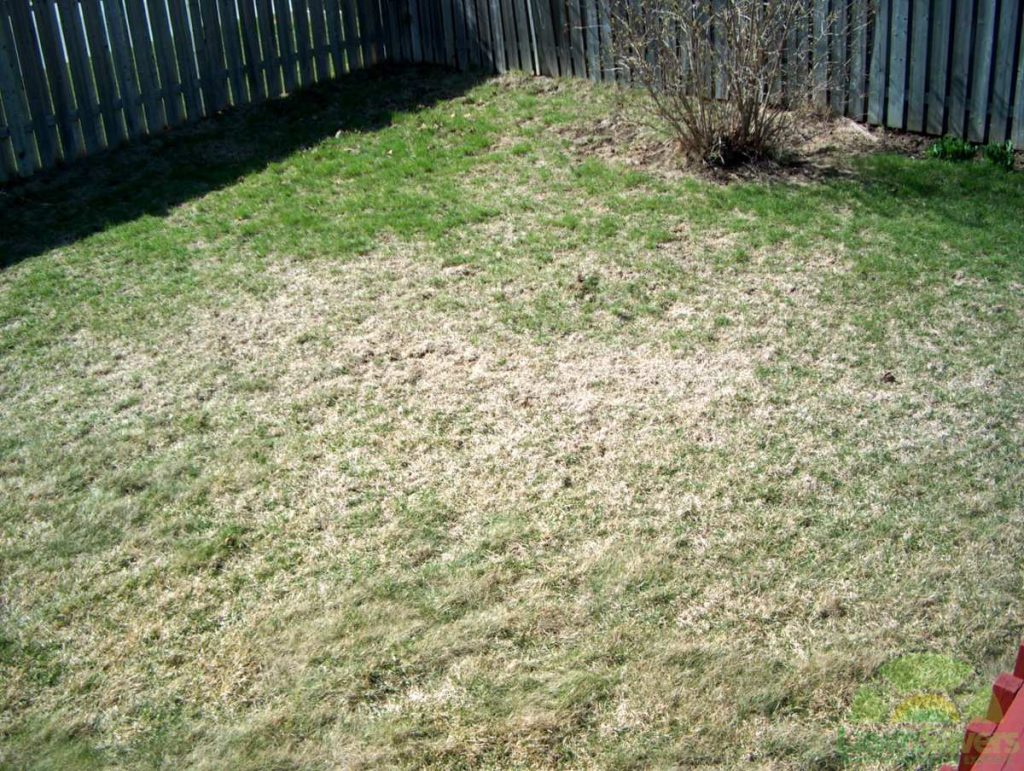
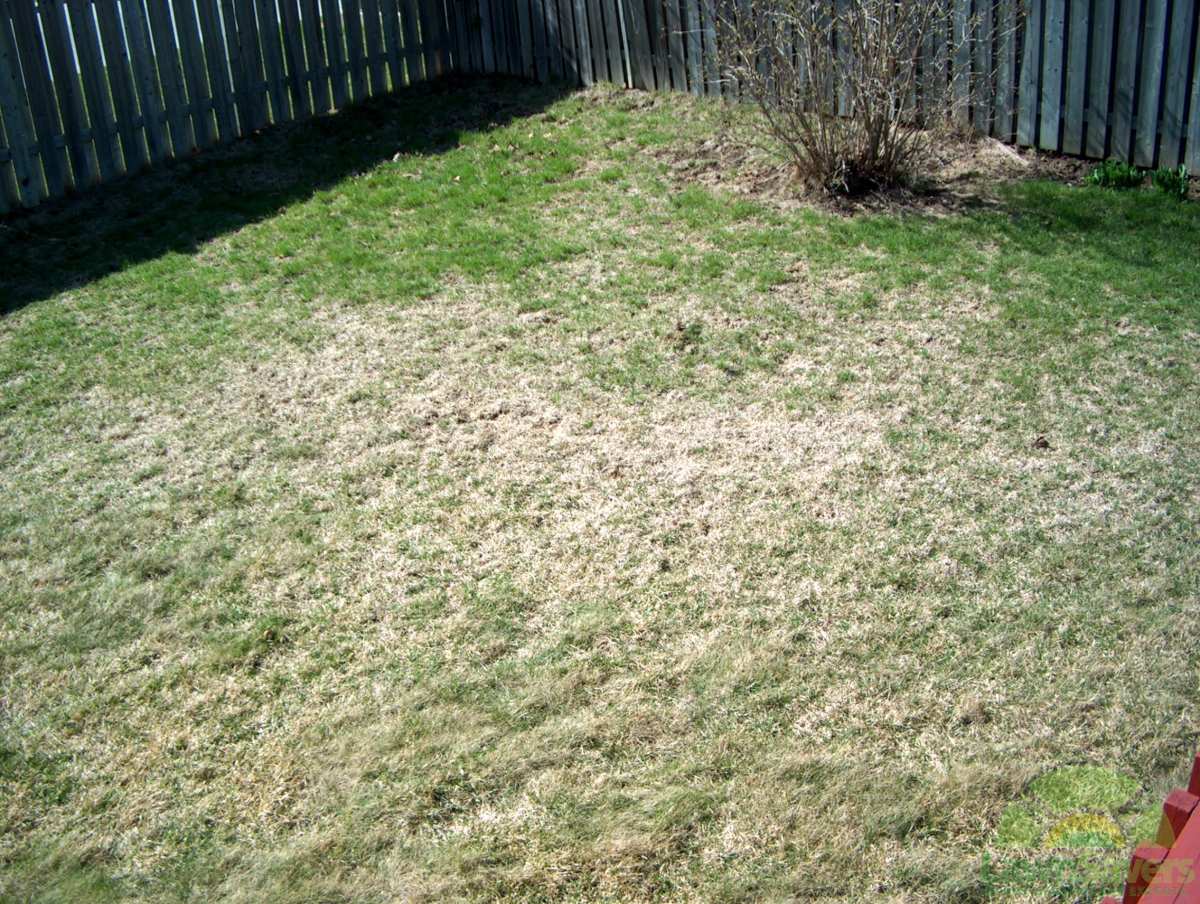
You've probably spotted them while digging in your flower beds or flipping over a patch of dead turf. Those C-shaped, creamy-white larvae lying just under the surface. Are grubs good for a garden?
The honest answer isn't a clean yes or no, and that's exactly why so many gardeners get this wrong.
Whether grubs are working for you or against you comes down to which species you have and how many of them are in your soil. A few Japanese beetle grubs at low densities are functionally harmless, but the same species at 10 to 15 per square foot can destroy a lawn in a single season. As of 2026, cooperative extension services across the eastern and midwestern United States still field more questions about grub identification and thresholds than almost any other lawn pest issue.
So let's break this down the way a turf scientist would. By species, by population, and by what to do once you know what you're dealing with.
Quick Answer
Are grubs good for a garden? Low populations of most grub species are harmless and can even benefit soil biology. Grubs become a problem when they exceed the damage threshold for your turf type.
That threshold is typically 5 to 10 grubs per square foot for cool-season grasses. The species matters. Japanese beetle grubs and European chafer grubs cause the most damage in residential landscapes.
Green June beetle grubs are less destructive to turf and more active in organic matter decomposition.
The Quick Answer: When Grubs Help and When They Hurt
Here's the short version. A small number of grubs in your soil is normal and not worth treating. They're part of a functioning soil ecosystem, they break down organic material, and they feed birds, toads, and ground beetles.
The trouble starts when populations climb past the point where your grass can outgrow the root damage. That tipping point depends on your turf species, your soil moisture, and which grub you're dealing with. A Kentucky bluegrass lawn might tolerate 6 grubs per square foot without visible symptoms.
A stressed fescue lawn in drought conditions might show damage at 3 per square foot.
The other factor is species. Japanese beetle grubs and European chafers are the heavy hitters. They feed aggressively on grass roots in late summer and again in spring.
Green June beetle grubs, on the other hand, spend more time near the surface feeding on thatch and decaying matter. They cause less direct turf damage but can create unsightly soil castings that smother grass.
So the real question isn't whether grubs are good or bad. It's whether your specific grub population has crossed the line from background noise into active damage.
What Grubs Actually Are (And Why It Matters Which Species You Have)
"Grub" is a catch-all term for the larval stage of scarab beetles. That's a massive family with over 30,000 species worldwide. The ones showing up in your garden are almost certainly the larvae of a handful of common North American scarabs.
Here are the species you're most likely to encounter:
- Japanese beetle grubs (Popillia japonica): The most destructive lawn grub in the eastern and midwestern United States. They feed on roots of cool-season grasses and can reach densities of 20 to 30 per square foot in severe infestations.
- European chafer grubs (Amphimallon majale): Common in the Northeast and Great Lakes regions. They're active earlier in spring than Japanese beetles and can cause damage at lower thresholds.
- May/June beetle grubs (Phyllophaga species): Widespread across North America. They have a longer life cycle, often 2 to 3 years, which means they feed on roots for multiple seasons.
- Masked chafer grubs (Cyclocephala species): Smaller than Japanese beetle grubs but can reach high populations in lawns across the Midwest and Northeast.
- Green June beetle grubs (Cotinis nitida): Found primarily in the southeastern United States. They're larger, more surface-oriented, and less damaging to turf roots than other species.
- Black turfgrass ataenius (Ataenius spretulus): A smaller scarab that can damage golf course fairways and home lawns, particularly in the Northeast.
Each of these species has a different feeding pattern, life cycle length, and damage threshold. Treating them all the same is one of the most common mistakes homeowners make.
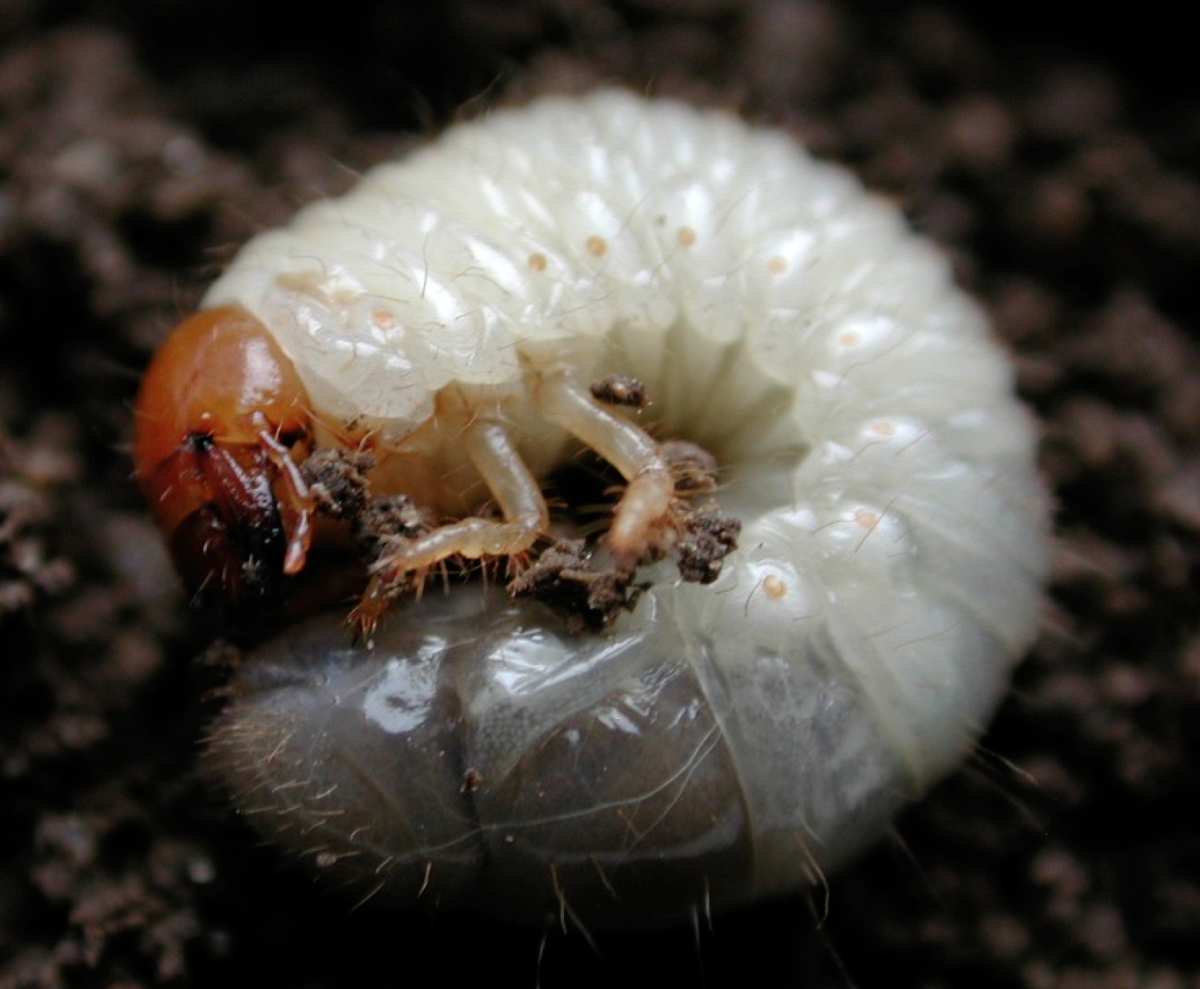
Japanese beetle grubs are the most destructive lawn grub species in the eastern and midwestern United States.
How to Tell If You Have a Grub Problem or Just a Few Harmless Larvae
You can't make a good decision about grubs without knowing how many are actually in your soil. Guessing based on brown patches alone leads to unnecessary treatments and wasted money.
Here's the straightforward method that extension services recommend:
- Pick your worst-looking area. Choose a spot where turf is thinning or browning, ideally near the edge of the damaged zone where grubs are likely feeding.
- Cut a 1-square-foot section. Use a spade to cut three sides of a square about 3 inches deep. Peel back the turf like a carpet.
- Count the grubs. Break apart the soil in that square and count every grub you find. Look in the top 2 to 3 inches of soil and in the thatch layer.
- Check two or three more spots. Grub populations are patchy. Sample at least three areas to get a reliable average.
- Multiply if needed. If you sampled a smaller area, scale up to grubs per square foot for comparison against thresholds.
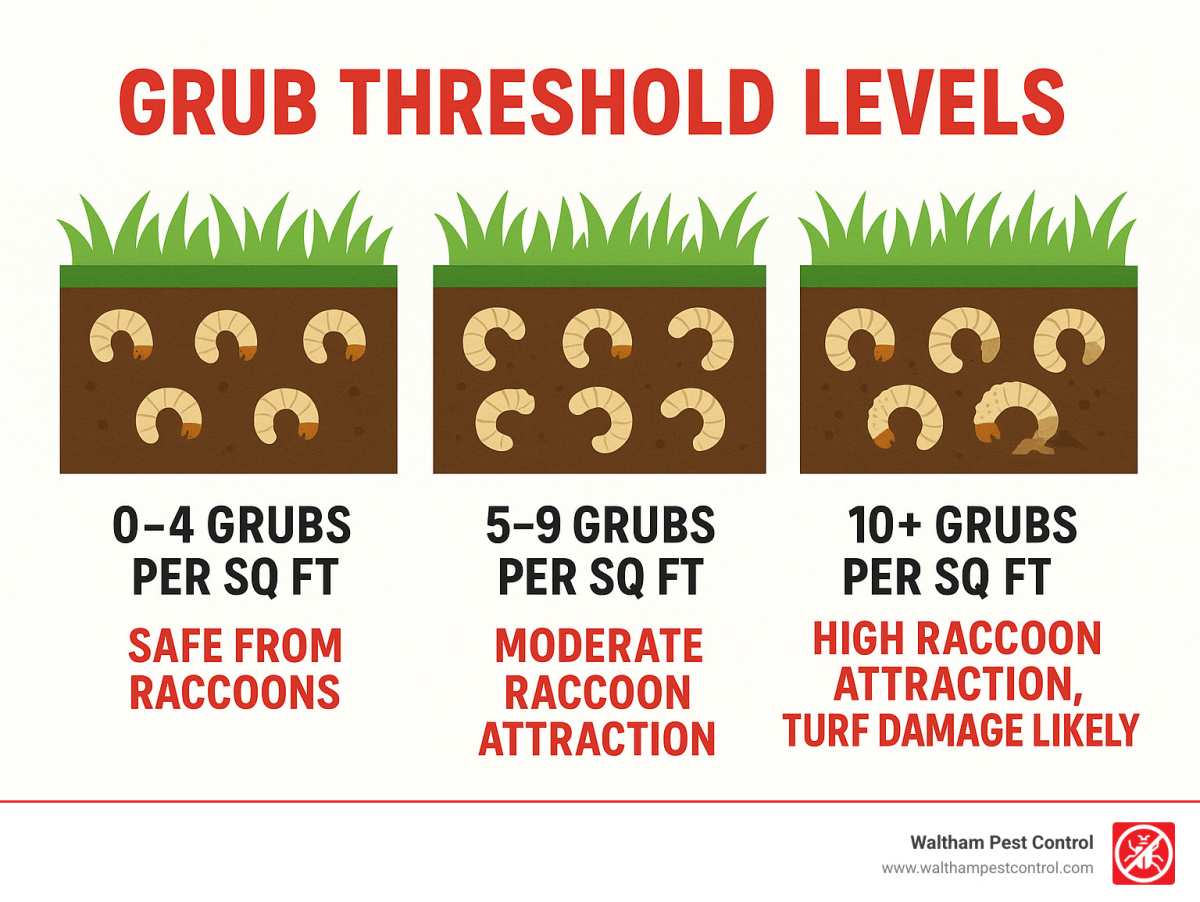
Here's a general damage threshold table for common scenarios:
| Grub Count per Sq Ft | Cool-Season Turf (Bluegrass, Fescue, Ryegrass) | Warm-Season Turf (Bermuda, Zoysia, St. Augustine) |
|---|---|---|
| 1 to 4 | Generally safe, no treatment needed | Generally safe |
| 5 to 9 | Monitor closely, consider treatment if turf is stressed | Usually tolerable |
| 10 to 14 | Treatment recommended | Monitor, treat if damage appears |
| 15+ | Treatment strongly recommended | Treatment recommended |
These numbers shift based on turf health, moisture, and species. A well-watered, fertilized lawn tolerates more grubs than a drought-stressed one. European chafer grubs tend to cause visible damage at lower counts than Japanese beetle grubs because they feed earlier in spring when grass is already vulnerable.
Cutting a 1-square-foot section of turf and counting grubs in the top 3 inches of soil is the standard method for assessing population density.
The Damage Threshold: How Many Grubs Is Too Many?
The concept of a damage threshold is central to integrated pest management, and it's where most grub advice goes wrong. People see one grub and panic. Or they see twenty and assume the lawn will recover on its own.
The threshold isn't a single number. It's a range that depends on several variables:
Turf species and variety. Fine fescues with shallow root systems are more vulnerable than deep-rooted tall fescue or perennial ryegrass. Kentucky bluegrass can sometimes outgrow moderate grub damage because of its rhizomatous spreading habit.
Soil moisture and growing conditions. Grubs do the most damage when grass is already stressed. A lawn under drought stress in August can show severe symptoms at 5 grubs per square foot. The same population in a well-irrigated lawn in May might go unnoticed.
Grub species and size. Young, small larvae in late summer consume far less root tissue than mature larvae in spring. A count of 10 young grubs in August is less immediately threatening than 10 large, mature grubs in April.
Animal digging. Sometimes the first sign of grubs isn't turf damage at all. Skunks, raccoons, and crows tear up lawns overnight to feed on grubs. If you're seeing patches of disturbed sod in the morning, you likely have a significant population even if the grass still looks green.
The practical takeaway: if your count is under 5 per square foot and your lawn is otherwise healthy, you almost certainly don't need to do anything. If you're between 5 and 10, watch the area closely and consider treatment only if you see browning or animal activity. Above 10, it's time to act.
When Grubs Are Actually Beneficial to Your Soil
This is the part most grub articles skip entirely. Grubs aren't inherently villains. In low numbers, they play a legitimate role in soil function.
Soil aeration. As grubs move through the soil, they create small channels that improve water infiltration and gas exchange. This is minor compared to earthworm activity, but it's not zero.
Organic matter breakdown. Green June beetle grubs and some other species feed heavily on decaying plant material in the thatch layer. They accelerate the breakdown of organic matter and return nutrients to the soil.
Food web support. Grubs are a high-protein food source for robins, starlings, grackles, and other ground-feeding birds. They're also prey for ground beetles, parasitic wasps, and toads. A garden with a small grub population supports more biodiversity than one that's been sterilized with routine insecticide applications.
Indicator of soil health. Finding a few grubs while digging tells you your soil has enough organic matter and biological activity to support insect life. Sterile soil isn't the goal. Balanced soil is.
The key word here is "low numbers." A few grubs per square foot are part of a functioning ecosystem. The problem is never the presence of grubs. It's the population density.
Once you understand that distinction, you stop treating every grub as an emergency and start making decisions based on actual data from your own soil.
When Grubs Become a Real Problem
Grubs cross the line from background soil life to genuine pest when their feeding outpaces your grass's ability to regenerate roots. The damage shows up in stages, and recognizing those stages helps you time your response correctly.
Stage 1: Subtle thinning. The turf looks slightly off-color, maybe a dull green or yellowish cast. You might mistake it for fertilizer deficiency or early drought stress. At this point, the grubs have been feeding for a few weeks but the root loss isn't catastrophic yet.
Stage 2: Irregular brown patches. Dead or dying spots appear, usually starting in the sunniest, driest areas of the lawn first. The patches are irregular, not uniform circles. This is the stage where most homeowners finally notice something is wrong.
Stage 3: Sod lifts easily. This is the telltale sign. When root systems are severely compromised, the turf peels back like loose carpet with almost no resistance. If you can grab a handful of grass and lift it clean off the soil, you've got a significant grub problem.
Stage 4: Secondary animal damage. Skunks and raccoons tear up overnight, creating cone-shaped holes or rolled-back sections of sod. Crows and starlings leave small probe holes. Animal damage often causes more visible destruction than the grubs themselves.
The worst-case scenario is a lawn that goes into winter with compromised root systems. Grubs feed actively in fall until soil temperatures drop below about 50°F. If they've already destroyed a large portion of the root mass, the grass enters dormancy weakened and may not survive freeze-thaw cycles.
Spring recovery is slow or nonexistent in heavily damaged areas.
How to Identify What Species You're Dealing With
Not all grubs respond to the same treatments at the same time. Species identification matters, especially if you're considering biological controls like milky spore, which only targets Japanese beetle grubs.
The most reliable way to identify grub species is by examining the raster pattern. That's the arrangement of hairs, spines, and sensory pits on the underside of the larva's last abdominal segment. You need a hand lens or magnifying glass to see it clearly.
Here's a simplified breakdown of the most common species:
| Species | Size (Mature) | Raster Pattern | Key Identifier | Primary Region |
|---|---|---|---|---|
| Japanese beetle | ~1 inch | Two distinct rows of spines forming a V-shape | V-shaped spine arrangement on underside of last segment | Eastern and midwestern US |
| European chafer | ~1 inch | Two rows of spines forming a Y-shaped or open fork | Y-shaped raster pattern, slightly smaller than Japanese beetle | Northeast, Great Lakes |
| May/June beetle | 1 to 2 inches | Scattered spines, no distinct pattern | Larger size, longer life cycle (2-3 years) | Widespread across North America |
| Masked chafer | ~0.75 inch | Scattered spines, similar to May beetle but smaller | Smaller size, often found in high densities | Midwest, Northeast |
| Green June beetle | Up to 2 inches | Scattered spines, similar to May beetle | Large size, surface-dwelling behavior, brown head | Southeastern US |
If you're not comfortable identifying species yourself, most state cooperative extension services offer free or low-cost insect identification. You can collect a few specimens in a sealed container with some soil and drop them off or mail them in. Getting the species right before you treat saves money and prevents unnecessary pesticide applications.
Your Decision Tree: What to Do Based on What You Found
Once you've counted your grubs and identified the species, the path forward becomes clear. Here's the decision framework:
If you have fewer than 5 grubs per square foot:
Do nothing. Monitor the area next season. Your turf can handle this level of feeding without intervention.
If you have 5 to 9 grubs per square foot and turf is healthy:
Watch and wait. Water deeply during dry spells to help grass outgrow the damage. Recheck in 2 to 3 weeks if conditions are stressful.
If you have 5 to 9 grubs per square foot and turf is stressed:
Consider biological control with beneficial nematodes if soil temperatures are between 55°F and 85°F. This is the window when nematodes are most effective.
If you have 10 or more grubs per square foot:
Treatment is warranted. Choose biological control if you're within the temperature window and want an organic approach. Choose chemical control if damage is already visible and you need faster results.
If you have animal digging damage:
Treat promptly regardless of count. Animal activity indicates a population high enough to attract predators, and the secondary damage compounds the problem quickly.
If you identified Japanese beetle grubs specifically:
Milky spore disease (Paenibacillus popilliae) is an option for long-term management. It takes 2 to 5 years to establish in soil but can provide control for 10 to 15 years once established. This is a patience play, not a quick fix.
Biological Controls That Actually Work (And When to Use Them)
Biological controls are the go-to for gardeners who want to avoid synthetic insecticides. But they only work when you match the right organism to the right species at the right time.
Beneficial nematodes (Heterorhabditis bacteriophora):
These microscopic roundworms actively hunt grubs in the soil, enter their bodies, and release bacteria that kill the host within 24 to 48 hours. They're effective against most common grub species, not just Japanese beetles. The critical requirements are soil temperatures between 55°F and 85°F, moist soil before and after application, and UV protection (apply in evening or on overcast days).
Nematodes are living organisms. They need to be stored properly, shipped with temperature control, and applied the same day you receive them. Dead nematodes don't hunt grubs.
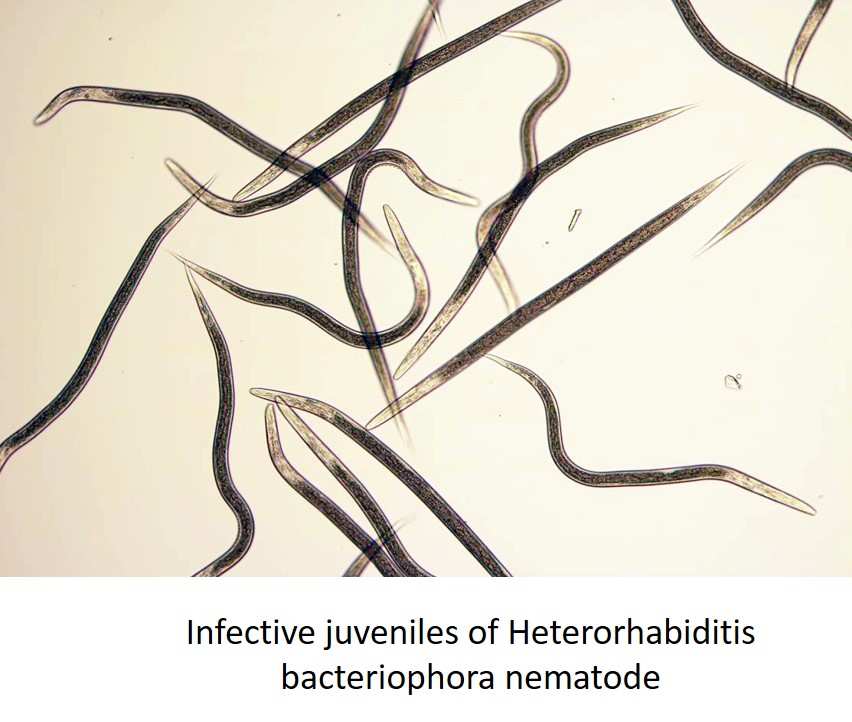
Beneficial nematodes actively seek out and kill grubs in the soil, but they require proper storage, timing, and soil conditions to work effectively.
Milky spore disease (Paenibacillus popilliae):
This is a species-specific bacterial disease that only affects Japanese beetle grubs. When grubs ingest milky spore bacteria while feeding on roots, they become infected and die, releasing billions of new bacterial spores into the soil. The downside is the timeline.
Milky spore takes 2 to 5 years to build up enough concentration in the soil to provide meaningful control. It's a long-term investment, not a rescue treatment. It works best in regions where Japanese beetle populations are well established and soil temperatures stay warm enough for bacterial activity.
Bt galleriae (Bacillus thuringiensis subsp. galleriae):
A newer biological option that targets both Japanese beetle grubs and adult beetles. It works faster than milky spore but slower than chemical insecticides. It's a good middle ground for gardeners who want organic control with reasonable speed.
What doesn't work:
Beauveria bassiana (a fungal pathogen) has shown mixed results in field trials. Diatomaceous earth is ineffective against soil-dwelling grubs. Neem oil has limited efficacy against grubs in the root zone.
Save your money and stick with nematodes or milky spore for biological control.
Chemical Control: When It's Worth It and When It's Not
Chemical grub control has its place, but timing and product selection make the difference between effective treatment and wasted effort.
Preventive insecticides (applied May through July):
Products containing chlorantraniliprole (the active ingredient in GrubEx) are applied before grubs hatch. They target young larvae in late summer when they're most vulnerable. Chlorantraniliprole has a favorable environmental profile compared to older chemistries.
It's less toxic to bees and other non-target organisms. Imidacloprid (the active ingredient in Merit and older Bayer products) is also effective preventively but faces increasing restrictions due to concerns about pollinator exposure and water contamination. Several states have limited or banned neonicotinoid use in residential settings as of 2026.
Curative insecticides (applied July through September):
Trichlorfon (Dylox) is the primary curative option. It kills grubs on contact and works fast, making it the right choice when you've already found damaging populations. It breaks down quickly in soil, which is both an advantage (less residual) and a limitation (shorter window of control).
Apply it when grubs are small and actively feeding, typically late July through August in most regions.
Application tips that actually matter:
- Water the lawn lightly before application to bring grubs closer to the surface.
- Water immediately after application to move the product into the root zone where grubs are feeding.
- Don't apply to saturated or frozen soil. The product won't move properly and runoff risk increases.
- Follow label rates exactly. More product doesn't mean better control. It means more chemical in your soil and water.
When to skip chemical control entirely:
If your grub count is under the threshold, if you're outside the application window, or if you have a small population that beneficial organisms can handle naturally. Routine preventive application every year regardless of grub pressure is unnecessary and contributes to resistance development.
Mistakes That Make Grub Problems Worse
The most common grub mistakes aren't about using the wrong product. They're about timing, identification, and unnecessary treatment.
Treating without counting. Applying insecticide because you found one grub while planting tomatoes is a waste of money and an unnecessary chemical load in your soil. Always sample first.
Applying nematodes in hot afternoon sun. UV light kills nematodes within minutes. If you're applying them at noon in July, you're watering dead organisms into your soil. Evening application on an overcast day is the right call.
Using milky spore for non-Japanese beetle grubs. Milky spore is species-specific. If you have European chafers or May beetle grubs, milky spore won't touch them. Identify before you invest.
Applying preventive insecticide too late. Chlorantraniliprole needs to be in the soil before grubs hatch and begin feeding. Applying it in September when you already see damage is too late for preventive products. Switch to a curative option instead.
Overwatering damaged turf. Brown patches from grub damage look like drought stress, so the instinct is to water heavily. But saturated soil stresses already-weakened grass and creates conditions favorable for fungal disease. Water deeply but infrequently, and let the soil dry between irrigation cycles.
Killing every grub you see. A healthy soil ecosystem includes some grubs. Zero tolerance leads to over-treatment, higher costs, and disruption of beneficial organisms that naturally keep populations in check.
How to Recover Your Lawn After Grub Damage
Once grubs are under control, the focus shifts to turf recovery. Damaged lawns can bounce back, but they need the right conditions.
For moderate damage (patches under 2 feet across):
- Rake out dead debris to expose soil.
- Apply a starter fertilizer with phosphorus to encourage root growth.
- Overseed with a grass variety matched to your existing turf.
- Keep the area consistently moist until germination, then transition to deeper, less frequent watering.
For severe damage (large sections where sod lifts freely):
- Consider sod replacement for immediate results. Reseeding works but takes months to establish.
- If reseeding, use a slit seeder for better seed-to-soil contact.
- Topdress with a thin layer of compost to improve soil structure and moisture retention.
- Delay any further grub treatment until the new grass has been mowed at least three times.
Timing matters for recovery work. Fall is the best window for lawn repair in cool-season grass regions. September soil temperatures support rapid germination, and cooler air temperatures reduce heat stress on new seedlings. Spring works too, but you're racing against summer heat and increased weed competition.
Preventing Grub Problems Next Season
Prevention isn't about applying product on a fixed schedule. It's about monitoring and intervening only when necessary.
Cultural practices that reduce grub vulnerability:
- Mow at the recommended height for your grass species. Taller grass develops deeper roots that tolerate more feeding pressure.
- Avoid excessive nitrogen fertilization in late summer. Lush, fast-growing turf is more attractive to egg-laying beetles.
- Aerate compacted areas annually. Grubs thrive in compacted, thatchy lawns where grass is already struggling.
- Encourage bird habitat. A single robin can consume dozens of grubs per day during peak feeding season.
Monitoring plan for next year:
- Sample soil in late July or early August when young grubs are present and easy to find.
- Track counts year over year. A population that was 3 per square foot last year and 8 this year is trending toward treatment territory.
- Note which areas of your lawn are consistently affected. Grubs often return to the same spots where adult beetles preferred to lay eggs.
When preventive treatment makes sense:
If you've had confirmed damage in the same area for two consecutive years, a preventive application of chlorantraniliprole in May or June can break the cycle. This is targeted prevention based on history, not blanket treatment based on fear.
Frequently Asked Questions
Can I just leave grubs alone and let nature handle them?
Yes, if your count is under 5 per square foot and your lawn is healthy. Birds, ground beetles, and parasitic wasps naturally suppress grub populations. Intervention is only needed when the population exceeds what natural predators and turf resilience can manage.
How long does it take for beneficial nematodes to work?
Nematodes typically kill grubs within 24 to 48 hours of contact. You won't see dead grubs on the surface since they die underground. The best way to assess effectiveness is to sample the treatment area 2 to 3 weeks after application and compare counts.
Will grub damage come back next year?
It can, especially if adult beetles laid eggs in the same area. Grubs often return to favorable sites year after year. Monitoring in late summer and treating only when thresholds are exceeded is the most sustainable long-term approach.
Are organic grub controls as effective as chemical ones?
Beneficial nematodes are comparable to chemical insecticides when applied correctly under the right conditions. Milky spore is effective but slow. Organic controls require more precision in timing and application, but they avoid the environmental concerns associated with synthetic insecticides.
Do grubs come back after treatment?
Treatment kills the existing population, but new beetles can lay eggs in your lawn the following summer. No treatment provides permanent immunity. Annual monitoring is the key to staying ahead of reinfestation.
What time of year should I treat for grubs?
For preventive products, apply May through July before eggs hatch. For curative treatments, late July through early September targets young, actively feeding larvae when they're most vulnerable. Biological controls work best when soil temperatures are between 55°F and 85°F.
The Bottom Line: Your Grub Action Plan
Grubs aren't automatically good or bad for your garden. The answer depends entirely on species, population density, and the health of your turf. A few grubs per square foot are a normal part of healthy soil biology.
Ten or more per square foot of Japanese beetle or European chafer grubs will destroy a lawn in a single season.
The smart approach is simple. Sample your soil before you treat anything. Identify what species you're dealing with.
Compare your count against the damage threshold for your turf type. Then choose the least invasive control method that matches your situation.
If you're under the threshold, do nothing and let natural predators work. If you're in the monitoring zone, water appropriately and recheck in a few weeks. If you've crossed into treatment territory, match your control method to the species and season.
Nematodes for broad-spectrum biological control. Milky spore for long-term Japanese beetle management. Curative insecticide for active damage that needs fast results.
The gardeners who struggle with grubs year after year are usually the ones who either ignore the problem until it's severe or treat preventively without ever checking whether they actually need to. Neither extreme works. Data-driven decisions based on what's actually happening in your soil, that's what keeps lawns healthy and grub populations manageable over the long term.