[ARTICLE_TITLE]
Are Grub Worms Good for Your Garden?
When your garden looks unhealthy or brown patches spread across your lawn, the first question many gardeners ask is "are grub worms good for your garden or are they ruining everything?" The honest answer depends on what species you're dealing with, how many are living in your soil, and what you're growing. White grubs aren't automatically the villain they're made out to be, but they're not universally helpful either.
Understanding the role grubs play takes a bit of context about their lifecycle and behavior. Research on turfgrass ecology shows that some grub species actually support soil health through natural aeration and organic matter breakdown, while others can destroy root systems in a matter of weeks. Let's walk through how to figure out which situation you're actually dealing with.
[IMAGE 1]

Image source: iNaturalist / Irene
The Quick Answer: It Depends on What's Actually Living in Your Soil
White grubs aren't automatically good or bad for your garden. The answer changes based on species, population density, and what you're growing in that soil. Some grub species improve soil structure and support the broader ecosystem through moderate tunneling and decomposition.
Others, particularly at higher populations, can devastate root systems and invite secondary predators that cause their own damage. Your first job is figuring out what's actually down there, not reaching for a treatment at the first sign of brown grass.
What Grub Worms Actually Are (And Why the Name Confuses Everyone)
When people say "grub worm," they're talking about the larval stage of scarab beetles. That's the C-shaped, cream-colored critter curled up just below your soil surface. But here's where it gets tricky: not all white grubs are the same species, and the differences matter enormously for your garden.
The most common lawn and garden grubs in the United States and similar climates fall into a few main categories.
Japanese beetle (Popillia japonica) grubs are probably the most notorious. They're the larvae of those metallic green and copper beetles that skeletonize your roses and grape leaves in summer. Their larvae feed aggressively on grassroots from late summer through fall.
European chafer (Amphimallale majale) grubs look similar but tend to feed earlier in the season and later into fall. They've become a major problem across the Northeast and upper Midwest over the past couple of decades.
June beetle / May beetle (Phyllophaga species) grubs have a longer lifecycle, sometimes staying in the larval stage for two to three years. They're often larger and can cause significant damage simply because of their size and feeding capacity.
Green June beetle (Cotinis nitida) grubs behave differently from the others. They feed more on decaying organic matter and thatch than living roots, which makes them considerably less destructive in most garden settings.
Black turfgrass atenius (Ataenius spretulus) grubs are smaller and tend to show up on golf course fairways and well-maintained lawns, usually at lower populations.
If you're trying to identify what you've got, the key is the raster pattern on the underside of the larva's tail end. That arrangement of hairs and spines is what determines the species and, ultimately, how much of a problem you're dealing with. A hand lens and a comparison chart from your local cooperative extension service can usually get you there.
The Good: How Grubs Can Actually Help Your Garden
This is where most articles skip straight to the extermination talk, but the reality is more nuanced. In low to moderate numbers, white grubs are doing real work in your soil.
They break down organic matter. Grubs feed on dead roots, decaying plant material, and thatch. That decomposition process returns nutrients to the soil and keeps organic matter from building up to unhealthy levels. In a compost pile or heavily mulched garden bed, this is genuinely helpful activity.
They're a natural food source. Robins, starlings, skunks, raccoons, and ground beetles all rely on grubs as a significant part of their diets. If you're gardening in a way that supports wildlife, a healthy grub population feeds the ecosystem above ground. Chicken keepers know this well.
Free-range poultry will spend hours happily scratching through soil full of white grubs.
Their tunneling aerates soil. In low populations, the small channels grubs create as they move through the soil can improve water infiltration and gas exchange. It's not a replacement for proper soil management, but it's a contributing factor in healthy soil structure.
They're part of a functioning soil food web. Healthy soil isn't sterile. It's full of organisms doing different jobs, and grubs are one piece of that system. Eliminating every single grub from your garden would be like removing earthworms on principle.
It's unnecessary and counterproductive.
The key phrase here is "low to moderate numbers." Like a lot of things in gardening, the problem isn't presence, it's population. Which brings us to the flip side.
The Bad: When Grubs Cross the Line From Helpful to Destructive
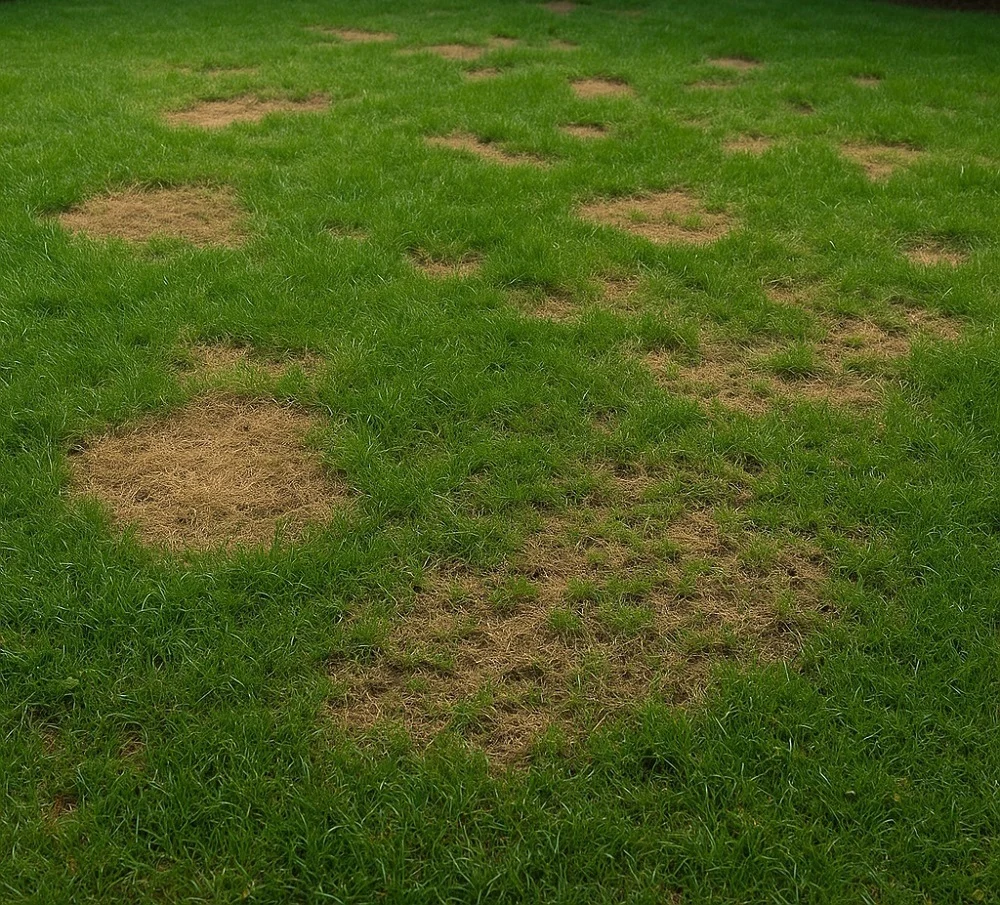
Image source: Bing (Web (fair-use with source credit))
When grub populations climb above certain thresholds, they go from background helpers to active destroyers. And once the damage gets going, it can escalate quickly.
Root destruction is the primary concern. White grubs feed on the root systems of turfgrass, ornamental plants, and some vegetable crops. At high densities, they can sever enough roots that plants can't take up water or nutrients anymore. The plant doesn't just look stressed.
It starts dying from the roots up.
The damage looks like drought. That's what makes grubs so sneaky. Your lawn turns brown and dry-looking, you water more, and nothing improves. The roots are gone.
The turf feels spongy underfoot, and in advanced cases, you can literally roll it back like a carpet because there's nothing holding it to the soil anymore.
[IMAGE 2]
Secondary predators cause their own destruction. When grub populations are high, skunks, raccoons, and armadillos will tear up your lawn digging for a meal. One raccoon can do more visible damage in a single night than months of grub feeding. If you're finding sections of your lawn flipped over or dug up, grubs are probably attracting something that's after them.
Vegetable gardens aren't immune. Root vegetables, seedlings, and young transplants are especially vulnerable. Grubs feeding near the root zone of tomatoes, peppers, and root crops can stunt growth significantly or kill plants outright during peak feeding periods.
The timing matters a lot. Late summer through fall is when most grub species cause the most visible damage. That's when larvae are largest and feeding most aggressively. Spring feeding can occur too, but it's usually less severe because the new generation of grubs is still small.
The takeaway here isn't that grubs are always bad. It's that unchecked populations shift from ecosystem participants to genuine pests. And knowing where that line is requires some actual investigation, not just a guess based on how your lawn looks in August.
How to Tell What Species You're Dealing With
You can't make a good decision about grubs until you know which species you've got. A Japanese beetle grub and a green June beetle grub might look similar to the untrained eye, but their behavior and threat level are quite different.
The most reliable way to identify grub species is by examining the raster pattern on the underside of the abdomen, right at the tail end. This pattern of hairs, spines, and bare spots is unique to each species group. You'll need a hand lens or magnifying glass to see it clearly.
Japanese beetle grubs have a V-shaped raster pattern with two distinct rows of spines that converge toward the rear. They're typically about one inch long when fully grown.
European chafer grubs have a Y-shaped raster pattern with a more random arrangement of spines. They're slightly smaller than Japanese beetle grubs, usually around three-quarters of an inch.
June beetle grubs have two parallel rows of spines across the raster area. They're the largest of the common lawn grubs, sometimes reaching one and a half inches.
Green June beetle grubs are distinctive because they're often found crawling on the surface of the soil rather than curled up below it. Their raster pattern is less distinct, and they tend to be more active above ground than other species.
If you're not comfortable doing this yourself, your local cooperative extension office can usually identify a sample for you. Many offer free or low-cost diagnostic services. Just collect a few specimens in a container with some soil and take them in.
Getting the species right before you decide on treatment saves you time, money, and unnecessary chemical use.
The Threshold Test: How Many Grubs Is Too Many?
This is the number that changes everything. Grub damage isn't about presence, it's about density. A few grubs per square foot is normal and healthy.
A dozen per square foot is a different conversation.
Research on turfgrass management provides some widely accepted thresholds for action.
| Situation | Threshold (grubs per sq. ft) | Action Needed |
|---|---|---|
| Healthy, well-maintained turf | 10 or more | Monitor closely, consider treatment |
| Stressed or drought-affected lawn | 5 or more | Treatment likely warranted |
| Newly seeded or sod lawn | 3 or more | Treat to prevent establishment failure |
| Vegetable garden beds | 5 or more | Treat to protect root systems |
| Compost pile or mulched beds | Any number | Generally leave alone |
These numbers shift a bit depending on the species. Japanese beetle grubs tend to cause visible damage at lower populations than European chafers because of their feeding patterns. Green June beetle grubs, as we mentioned, are less destructive to living roots, so you can tolerate higher numbers before taking action.
Your soil conditions matter too. A lawn with deep, healthy root systems and regular irrigation can handle more grub pressure than a stressed, compacted lawn on a slope. If your turf is already struggling from poor soil, compaction, or drought, even moderate grub populations can push it over the edge.
The key takeaway is simple: don't treat based on a guess. Count what's actually there, then decide.
Step-by-Step: How to Scout and Assess Your Grub Population

Image source: Bing (Web (fair-use with source credit))
Scouting for grubs is straightforward, but you need to do it right. A quick glance at the surface won't tell you anything useful. Grubs live below the soil line, and that's where you need to look.
Step 1: Choose your timing. The best time to scout is late August through October, when grubs are actively feeding and large enough to find easily. Early spring works too, but populations may have been reduced by winter mortality or predation.
Step 2: Pick your spots. Focus on areas where damage is visible or where you suspect problems. Also check a few spots that look healthy for comparison. Sample at least three to four locations across your lawn or garden.
Step 3: Cut your sample. Use a shovel or spade to cut a square of turf about one foot on each side. Go down about two to three inches deep. Peel it back carefully, keeping the soil intact.
[IMAGE 3]
Step 4: Count what you find. Break apart the soil in your sample and count every grub you see. Check the thatch layer and the top two inches of soil, since that's where most feeding happens.
Step 5: Check the roots. Look at the root system in your sample area. Are roots intact and healthy? Or are they chewed, sparse, or missing entirely?
Root condition tells you more about actual damage than grub count alone.
Step 6: Replace the turf. Press your sample square back into place and water it. It should re-root within a week or two if the roots are still viable.
Step 7: Calculate your average. Add up your counts from all sample sites and divide by the number of samples. That gives you your average grubs per square foot, which you can compare against the thresholds we covered earlier.
If you're scouting a vegetable garden rather than a lawn, the process is similar but simpler. Just dig down four to six inches in a few spots near your plants and count what you find. Pay special attention to areas where plants are wilting, yellowing, or failing to thrive despite adequate water and nutrients.
Decision Guide: Should You Treat or Leave Them Alone?
Now you've got your species identified and your population counted. Here's how to make the call.
If your count is below threshold and plants look healthy, leave them alone. You've got a functioning soil ecosystem doing its job. Grubs are part of that system, and treating a low population does more harm than good by disrupting the food web and potentially killing beneficial organisms.
If your count is at or slightly above threshold but damage is minimal, monitor for another week or two. Sometimes natural predation from birds and ground beetles will bring numbers down on their own. If you're seeing increased bird activity in your lawn, they may already be handling the problem for you.
If your count is above threshold and you're seeing visible damage, it's time to act. Brown patches that don't respond to watering, turf that lifts easily, or plants failing despite good care all point to a grub problem that needs intervention.
If secondary predators are tearing up your lawn, treat the grub population. Skunk and raccoon damage is a sign that grub numbers are high enough to attract foragers. Addressing the grub issue stops the digging.
If you're in a newly seeded garden or lawn, treat at lower thresholds. Young plants with underdeveloped root systems can't tolerate the same grub pressure as established plantings. Be more aggressive with treatment in these situations.
If you're managing an organic garden, start with biological controls. Beneficial nematodes and milky spore are effective options that align with organic management practices. Reserve chemical treatments as a last resort.
The worst thing you can do is treat blindly without knowing what you're dealing with. We've seen too many gardeners apply pesticides for a problem that was actually caused by drought stress, fungal disease, or poor soil conditions. Scout first, identify second, treat third.
That order saves you money and keeps unnecessary chemicals out of your soil.
Natural and Biological Control Options That Actually Work
If you've decided treatment is necessary, biological controls should be your first move. They're effective, targeted, and they don't nuke everything else living in your soil.
Beneficial nematodes are the standout option for most gardeners. Heterorhabditis bacteriophora is the species most commonly used against white grubs. These microscopic roundworms seek out grubs in the soil, enter their bodies, and release bacteria that kill the host within 24 to 48 hours. You apply them with a watering can or sprayer in late afternoon or evening, since UV light kills them quickly.
Soil temperatures need to be above 60 degrees Fahrenheit for them to be active, which typically means late August through October in most regions.
Milky spore (Paenibacillus popilliae) is a bacterium that specifically targets Japanese beetle grubs. It won't touch European chafers or other species, so you need to have confirmed your grub species before going this route. Milky spore takes longer to establish, sometimes two to three years, but once it's in your soil it can persist for a decade or more.
Apply it in a grid pattern across your lawn, about three to four feet apart, and water it in.
Neem oil works as a deterrent rather than a killer. It disrupts the feeding and molting cycle of young grubs but won't eliminate an established population. It's most useful as part of a broader management strategy or for light infestations in vegetable gardens where you want to avoid stronger interventions.
Encouraging natural predators is a long-term play that pays off. Birds, ground beetles, and parasitic wasps all feed on grubs at various life stages. Avoiding broad-spectrum insecticides preserves these beneficial populations.
Some gardeners even install birdhouses and baths specifically to attract grub-eating species like starlings and robins.
Chemical Controls: When They Make Sense and When They Don't
Chemical grub control has its place, but it's not the first tool you should reach for. Used at the wrong time or for the wrong species, it's a waste of money and an unnecessary addition to your soil.
Preventive treatments contain active ingredients like chlorantraniliprole or imidacloprid. They're applied in late spring to early summer, before beetle eggs hatch, and they target young grubs in their most vulnerable stage. Chlorantraniliprole has become the preferred preventive option because it's less toxic to pollinators and other non-target organisms than older neonicotinoid products.
Imidacloprid is still effective but faces increasing restrictions in several states and many European countries due to its impact on bee populations.
Curative treatments are designed for active infestations that are already causing damage. Trichlorfon and carbaryl are the main options here. They work fast, killing grubs within days, but they also have a broader impact on soil organisms.
These are best reserved for situations where damage is severe and immediate action is needed.
Timing is everything with chemical controls. Preventive applications need to go down in June or July, depending on your region. Curative applications work best in late August through October when grubs are small and actively feeding near the surface. Applying preventive products in fall or curative products in spring is largely ineffective because you're targeting the wrong life stage.
Read the label completely before applying any product. Application rates, watering requirements, and safety precautions vary significantly between products. Most soil-applied grub controls need to be watered in thoroughly after application to move the active ingredient into the root zone where grubs are feeding.
Mistakes That Make Grub Problems Worse
The most common grub management mistake is treating without scouting. We've seen gardeners apply pesticides because their neighbor did, or because they saw a few beetles flying around in summer. That's like taking antibiotics because someone at work has a cold.
You need to confirm the problem exists and identify what you're dealing with before you act.
Overwatering to compensate for grub damage is another frequent error. When turf starts browning from root damage, the instinct is to water more. But the roots are gone.
The water doesn't help, and the moist soil actually creates better conditions for grub survival and fungal diseases that compound the problem.
Applying preventive treatments too late wastes product and money. If you're using a preventive insecticide, it needs to be in the soil before eggs hatch. By the time you see damage in August or September, preventive products won't help.
You need a curative product at that point, or you need to wait and treat preventively the following spring.
Ignoring secondary predator damage is a missed diagnostic clue. If skunks or raccoons are digging up your lawn, that's telling you something important about what's living below the surface. Address the grub population, and the digging stops.
Repairing the turf without solving the grub problem just invites the animals back.
Using broad-spectrum insecticides as a first resort kills beneficial organisms along with the grubs. Ground beetles, parasitic wasps, and other natural predators that help keep grub populations in check are often more vulnerable to these products than the grubs themselves. You can end up with a worse grub problem the following year because you eliminated the natural controls.
Real Scenarios: What Gardeners Actually Experience
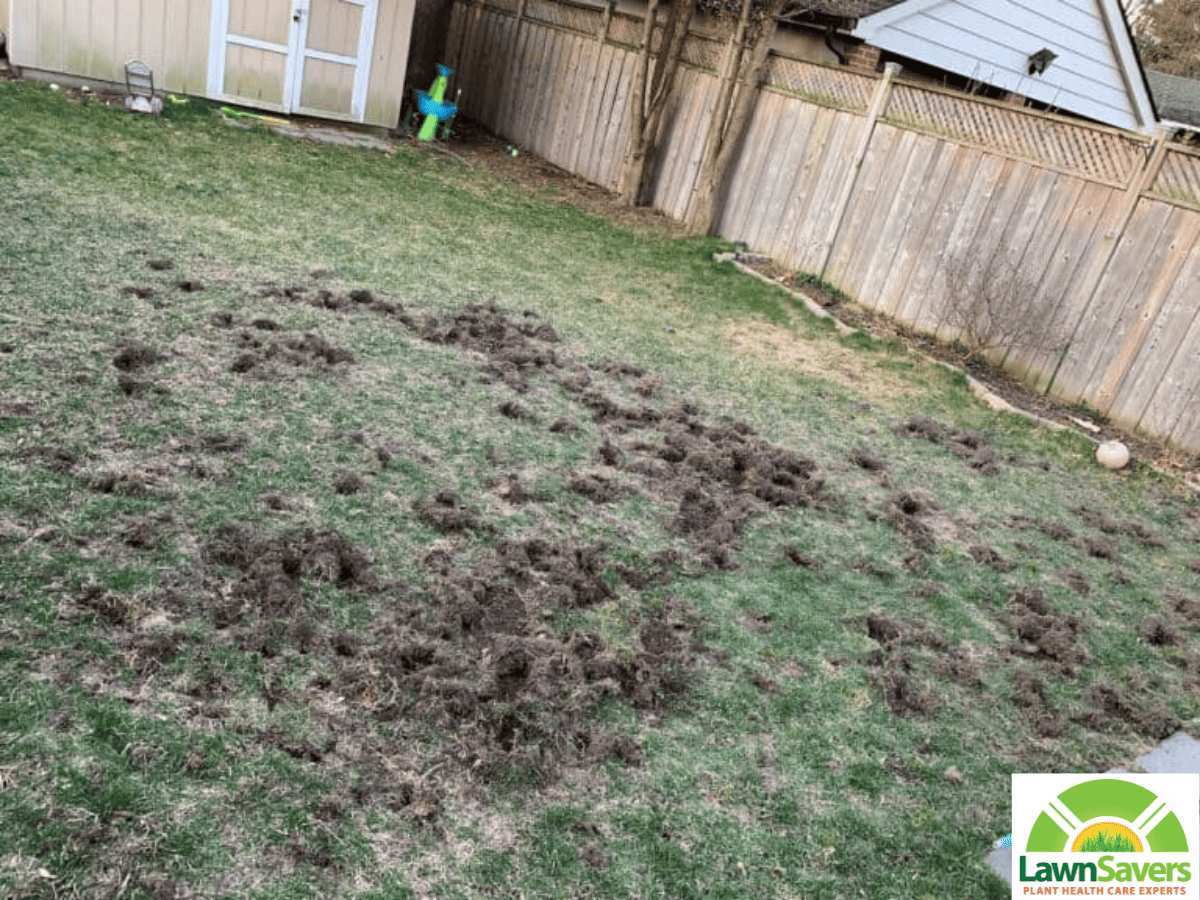
Image source: Bing (Web (fair-use with source credit))
Theory is helpful, but real situations are what most people relate to. Here are some common patterns that show up repeatedly in grub management.
The "mystery brown patch" scenario. A homeowner notices irregular brown areas appearing in an otherwise green lawn in late August. They increase watering, apply fertilizer, and see no improvement. When they finally pull back a section of turf, it lifts easily with no root attachment.
Cutting into the soil reveals eight to twelve grubs per square foot, mostly Japanese beetle larvae. A curative treatment in early September stops further damage, and the lawn recovers with overseeding the following spring.
[IMAGE 4]
The "skunk invasion" scenario. A gardener wakes up to find sections of their lawn torn up overnight. The damage looks far worse than anything grubs could cause on their own. Investigation reveals fifteen to twenty grubs per square foot, attracting raccoons and skunks that are doing the visible destruction.
Treatment with beneficial nematodes in late August reduces the grub population enough that animal activity stops within two weeks.
The "compost pile confusion" scenario. A gardener finds large white grubs in their compost bin and panics, assuming they've got a pest problem. The grubs are actually green June beetle larvae, feeding on decaying vegetable matter and accelerating the composting process. No treatment is needed.
The grubs are doing exactly what you want them to do in that environment.
The "vegetable garden failure" scenario. Tomato plants in a raised bed are wilting despite adequate water and nutrients. Digging near the roots reveals five to six grubs per square foot feeding on the root systems. Hand removal and a neem oil drench resolve the issue without disrupting the broader garden ecosystem.
Frequently Asked Questions
Are grub worms good for compost piles?
Yes, grubs are generally beneficial in compost. Most species found in compost piles feed on decaying organic matter rather than living plant roots. They help break down material and speed up the decomposition process.
Green June beetle grubs are especially common in compost and are considered helpful decomposers.
How do I know if grubs are damaging my lawn versus drought stress?
The test is simple. Grab a section of brown turf and pull. If it lifts easily like a carpet with no root attachment, grubs are likely the cause.
Drought-stressed turf will still have roots holding it in place, even if the grass above ground looks dead. You can also cut a small square and check the soil directly for grubs.
What time of year should I treat for grubs?
For preventive treatments, apply in late spring to early summer before beetle eggs hatch. For curative treatments targeting active infestations, late August through October is the most effective window. Spring treatments are generally less effective because grubs are larger and less vulnerable.
Do beneficial nematodes really work against grubs?
Yes, when applied correctly. Heterorhabditis bacteriophora nematodes are effective against most common white grub species. They need soil temperatures above 60 degrees Fahrenheit, adequate moisture, and protection from direct sunlight during application. Results typically appear within one to two weeks.
Can I have a healthy lawn with some grubs in it?
Absolutely. A low grub population is normal and healthy. Most well-maintained lawns can tolerate five or fewer grubs per square foot without any visible damage.
The goal isn't elimination, it's management. You only need to intervene when populations exceed the threshold for your specific situation.