
You've probably opened a bag of romaine and noticed pale, speckled patches on the leaves. White spots on romaine lettuce are surprisingly common, and most of the time they're harmless. But sometimes they signal something you don't want to eat.
The tricky part is telling the difference.
The FDA's Produce Safety Rule, updated through 2026, sets strict standards for how leafy greens are grown and handled. Still, cosmetic damage and occasional contamination make it to store shelves. Here's what those spots actually mean and how to decide whether your romaine is safe.

Image source: Pixabay / Georg_Wietschorke (Pixabay Content License)
Quick Answer
White spots on romaine lettuce are usually calcium deposits or mild fungal growth. Both are generally harmless on outer leaves. Wet, slimy, or foul-smelling spots mean bacterial contamination.
Discard the lettuce immediately in that case. When in doubt, throw it out.
What Those White Spots on Your Romaine Lettuce Actually Mean
Not all white spots are created equal. Some are purely cosmetic. Others are a warning sign.
The cause depends on the spot's texture, location, and what else is going on with the leaf.
Here are the five most common causes, ranked from least to most concerning.
Calcium Deposits and Tipburn (Harmless)
Calcium deposits show up as small, dry, white or tan specks on the leaf surface. They're concentrated mineral buildup, not a disease. You'll usually see them on the outer leaves or along the midrib.
Tipburn looks similar but appears at the leaf edges. It's a physiological disorder caused by rapid growth and inconsistent water uptake. The tissue dies back, leaving pale, papery patches.
Both are cosmetic. Trim the affected leaves and the rest is perfectly fine to eat.
Downy Mildew (Cosmetic but Watch Closely)
Downy mildew, caused by the oomycete Bremia lactucae, produces pale yellow to white patches on the upper leaf surface. Flip the leaf over and you'll see a grayish-purple fuzzy growth on the underside. That fuzzy layer is the spore-producing structure.
This disease thrives between 50 and 65°F, which is exactly the temperature range of most refrigerators. It's one of the most common post-harvest diseases in romaine.
The lettuce is still safe to eat if you remove the affected outer leaves and the rest of the head looks and smells normal. But if the infection is heavy, the texture will be off and it's not worth eating.
Image source: Pixabay / Sponchia (Pixabay Content License)
Sclerotinia White Mold (Discard Immediately)
Sclerotinia sclerotiorum causes what's called Sclerotinia drop or white mold. It starts as water-soaked lesions near the base of the head, then spreads into a dense, cottony white growth. You might also see small, black, irregularly shaped sclerotia embedded in the mold.
These are survival structures that can persist in soil for three to five years.
This one is a hard discard. The mold produces oxalic acid and other compounds that affect the leaf tissue deeply. Don't try to trim around it.
Bacterial Leaf Spot (High Risk)
Xanthomonas species and other bacteria cause small, water-soaked spots that may appear white or translucent when young, then turn brown or black with a yellow halo. These lesions often start at the leaf margins where water collects.
Bacterial infections are harder to judge by appearance alone. The real concern is that bacteria on leaf surfaces can include human pathogens. If you see wet, spreading lesions with an off-odor, discard the entire head.
Powdery Mildew (Usually Cosmetic)
Powdery mildew, caused by Erysiphe cichoracearum, shows up as white, powdery patches on the leaf surface. Unlike downy mildew, the growth stays on the upper side of the leaf and looks more like someone dusted the leaf with flour.
It's primarily a cosmetic issue. Remove affected leaves and the rest is safe. Powdery mildew doesn't produce the same mycotoxins that some other fungi do.
The 30-Second Safety Check: Should You Eat It or Toss It?
Before you start diagnosing specific diseases, run through this quick decision tree. It covers the most important safety call in under 30 seconds.
Step 1: Smell it.
If the lettuce smells sour, musty, or off in any way, discard it. No exceptions.
Step 2: Feel it.
Slimy or mushy leaves mean bacterial breakdown is underway. Discard the head.
Step 3: Look at the spots.
Dry, flat, white specks on outer leaves only? Likely calcium deposits or mild tipburn. Trim and use.
Wet, spreading, or fuzzy spots? Could be mold or bacterial infection. Remove affected leaves and inspect the rest carefully.
If the inner leaves are clean and crisp, they're probably fine.
Step 4: Check for recalls.
The CDC and FDA maintain active recall databases. If there's an active romaine recall linked to your region or brand, discard it regardless of how it looks.
Step 5: Consider who's eating it.
If the person eating the lettuce is immunocompromised, pregnant, elderly, or very young, the threshold for discarding should be much lower. When in doubt, throw it out.
The 5 Causes of White Spots on Romaine Lettuce
Let's break down each cause in more detail so you can confidently identify what you're looking at.
Calcium Deposits and Tipburn (Harmless)
These are the most common white spots home cooks encounter. Calcium deposits form when calcium oxalate crystals accumulate in leaf tissue. They look like tiny, dry, white or tan dots, often clustered along the midrib or on outer leaves.
Tipburn is related but different. It appears as pale, dry, papery patches at the leaf margins. It happens when the leaf tip outpaces the plant's ability to transport calcium to those cells.
The tissue dies, but the rest of the leaf is unaffected.
Both are purely cosmetic. They don't affect taste or safety. Just trim the spots away or remove the outer leaves.
Downy Mildew (Cosmetic but Watch Closely)
Downy mildew is the most common fungal-like disease in romaine lettuce. The pathogen Bremia lactucae is technically an oomycete, not a true fungus, but it behaves similarly.
On the upper leaf surface, you'll see pale yellow or light green patches that may look white in certain light. The real tell is the underside: a grayish-purple, fuzzy growth. That's where the pathogen produces sporangia, the spore-bearing structures.
This disease is favored by cool, humid conditions. It's a major problem in the field but also develops during refrigerated storage. Spore germination happens between 40 and 70°F, with the sweet spot around 50 to 65°F.
For home consumers, downy mildew is mostly a quality issue. Remove the affected outer leaves. If the inner head is firm and clean, it's safe to eat.
But if the infection is widespread, the texture will be unappealing and it's better to toss it.
Sclerotinia White Mold (Discard Immediately)
Sclerotinia sclerotiorum is one of the most destructive pathogens in lettuce production. It causes a disease called Sclerotinia drop, and it's a serious concern for growers and consumers alike.
The infection typically starts at the base of the plant, where leaves contact the soil. Initial symptoms are water-soaked, pale lesions that quickly develop a dense, white, cottony mycelial growth. As the infection matures, hard, black sclerotia form within the mold.
These structures can survive in soil for years.
For the consumer, the key identifier is the combination of water-soaked tissue, white cottony growth, and the potential presence of black sclerotia. If you see this pattern, discard the entire head. Don't attempt to salvage inner leaves, as the pathogen can spread through the head invisibly.
Bacterial Leaf Spot (High Risk)
Bacterial leaf spot in lettuce is caused by several Xanthomonas species and related bacteria. The spots start as small, water-soaked, translucent lesions, often at the leaf margins. As they age, they may turn brown or black with a yellow border.
The concern here isn't just cosmetic damage. Bacterial-contaminated lettuce can harbor human pathogens like E. coli O157:H7, Salmonella, or Listeria monocytogenes. These organisms don't always produce visible symptoms on the lettuce itself.
The bacterial leaf spot lesions are entry points where human pathogens can establish themselves.
If you see wet, spreading lesions, especially with an off-odor, discard the lettuce. Don't rely on washing to remove bacterial contamination, as bacteria can adhere tightly to leaf surfaces and even enter through stomata and wounds.
Powdery Mildew (Usually Cosmetic)
Powdery mildew is caused by Erysiphe cichoracearum and appears as white, powdery patches on the upper leaf surface. Unlike downy mildew, there's no fuzzy growth on the underside. The powdery coating is the mycelium and conidia (asexual spores) of the fungus.
This disease is more common in warm, dry conditions with high humidity. It's primarily a field problem but can develop on stored lettuce if conditions are right.
Powdery mildew is cosmetic. Brush or wash off the spores, remove heavily affected leaves, and the rest is safe to eat. The fungus doesn't produce harmful mycotoxins in lettuce.
How to Tell the Difference: A Visual Identification Guide
Now that you know the five main causes, here's how to quickly identify what you're dealing with. The key factors are spot texture, color, location, and what the rest of the leaf looks like.
Image source: Pixabay / Hundankbar (Pixabay Content License)
Spot Texture and Color Clues
| Cause | Texture | Color | Moisture |
|---|---|---|---|
| Calcium deposits | Dry, slightly raised | White or tan | Dry |
| Tipburn | Dry, papery | Pale, bleached | Dry |
| Downy mildew | Smooth on top, fuzzy underneath | Pale yellow-white (top), gray-purple (underside) | Dry to slightly damp |
| Sclerotinia mold | Cottony, dense | White with black sclerotia | Wet, water-soaked |
| Bacterial leaf spot | Water-soaked, translucent | White when young, brown-black with age | Wet |
| Powdery mildew | Powdery, superficial | White | Dry |
This table covers the main visual differences. When you're holding a head of romaine, start with texture. Dry and flat is almost always cosmetic.
Wet and spreading means trouble.
Where the Spots Appear on the Leaf
Location matters more than most people realize.
- Outer leaves only: Likely calcium deposits, tipburn, or minor mechanical damage. These leaves take the most environmental stress.
- Leaf margins: Tipburn or bacterial leaf spot. Bacteria love the thin tissue at leaf edges where water pools.
- Leaf underside: Downy mildew. Always flip the leaf over if you see pale patches on top.
- Base of the head: Sclerotinia white mold. This pathogen enters through the lower leaves that contact soil.
- Scattered across upper surface: Powdery mildew. The spores land on the top side of leaves and grow outward.
Smell and Touch: The Other Senses You Should Use
Your eyes aren't the only diagnostic tools. Smell and touch are just as important.
Smell:
- No odor or fresh, green smell: Probably cosmetic.
- Musty or earthy: Fungal growth, likely downy mildew or powdery mildew.
- Sour or rotten: Bacterial decay. Discard immediately.
Touch:
- Crisp and firm: Good sign, even with some spots.
- Slightly wilted but not slimy: Still usable if spots are cosmetic.
- Slimy or mushy: Bacterial breakdown. Discard the entire head.
The combination of visual, olfactory, and tactile checks gives you a reliable assessment in under a minute.
When White Spots Signal a Bigger Food Safety Problem
Most white spots are cosmetic. But romaine lettuce has been linked to more foodborne illness outbreaks than almost any other leafy green. The spots themselves aren't always the problem.
Sometimes they're a clue that conditions were right for dangerous pathogens to take hold.
The Recall Connection: Why Romaine Gets Pulled Off Shelves
Between 2018 and 2023, the CDC investigated multiple multistate outbreaks tied to romaine lettuce. Several were traced to the Yuma, Arizona and Salinas Valley, California growing regions. Contaminated irrigation water was a common factor.
The FDA's Produce Safety Rule requires farms to test agricultural water for generic E. coli. But testing isn't perfect, and contamination events can slip through. When they do, entire regional harvests get recalled.
If you see a recall notice, don't try to inspect the lettuce yourself. The pathogens involved don't always change how the lettuce looks, smells, or feels. Discard it and check the FDA recall database for updates.
Pathogens You Cannot See, Smell, or Taste
This is the part that catches people off guard. E. coli O157:H7, Salmonella, and Listeria monocytogenes don't produce visible spots on lettuce. The leaves can look completely normal and still carry enough organisms to cause serious illness.
The infectious dose for E. coli O157:H7 can be as low as 10 to 100 organisms. That's far too few to see or taste. Washing reduces surface contamination but doesn't eliminate it entirely, especially if bacteria have entered through cut surfaces or natural openings in the leaf.
This is why the 30-second safety check matters. If the lettuce looks and smells fine but there's an active recall, the risk isn't visible. The recall is your signal.
How to Inspect Romaine Lettuce Before You Buy
Catching problems at the store saves you from dealing with them at home. A quick inspection takes less than a minute and can prevent a lot of wasted food.
At the Store: What to Look for in Bags and Whole Heads
For bagged romaine, hold the package up to the light. Check for excessive moisture inside the bag, which accelerates decay. Look for dark or slimy pieces mixed in with the good leaves.
A few pale outer-leaf spots are normal. Widespread discoloration is not.
For whole heads, squeeze gently. The head should feel firm and dense, not soft or hollow. Check the cut end at the base.
If it's brown, dried out, or slimy, the head is past its prime. Flip a few outer leaves and look at the undersides for any fuzzy growth.
Always check the harvest or pack date. Whole romaine lasts about 7 to 10 days when stored properly. Pre-cut or bagged romaine should be used within 3 to 5 days of opening.
At Home: The Full Leaf-by-Leaf Check
Once you're home, do a more thorough inspection before storing. Remove the outer leaves and examine each one individually. Look at both sides.
Feel for sliminess. Smell for anything off.
Separate the leaves gently. Don't rip them, since damaged tissue spoils faster. If you find a few spotted outer leaves, set them aside and keep the clean inner leaves.
If the spots are on multiple layers or near the core, the head may not be worth keeping.
Store unwashed leaves in a clean, dry container lined with a paper towel. The towel absorbs excess moisture and slows bacterial growth. Don't wash until you're ready to use them.
How to Wash and Store Romaine Lettuce to Stay Safe
Proper washing and storage won't fix contaminated lettuce, but they'll extend shelf life and reduce the risk of cross-contamination in your kitchen.
The Right Way to Wash Lettuce (It Is Not What Most People Do)
Most people run lettuce under the tap for a few seconds and call it done. That's better than nothing, but it's not the most effective method.
Start by removing and discarding the outer leaves. These have the most surface contamination. Separate the remaining leaves and rinse them individually under cool running water.
Gently rub both sides of each leaf with your fingers. This mechanical action removes more bacteria and debris than water alone.
Don't use soap, bleach, or commercial produce washes. The FDA doesn't recommend them. Research published in the Journal of Food Protection found that plain running water is just as effective as most commercial produce washes for reducing surface bacteria.
After washing, dry the leaves with a clean towel or salad spinner. Wet leaves spoil faster and don't hold dressing well. If you're meal prepping, make sure the leaves are thoroughly dry before storing them.
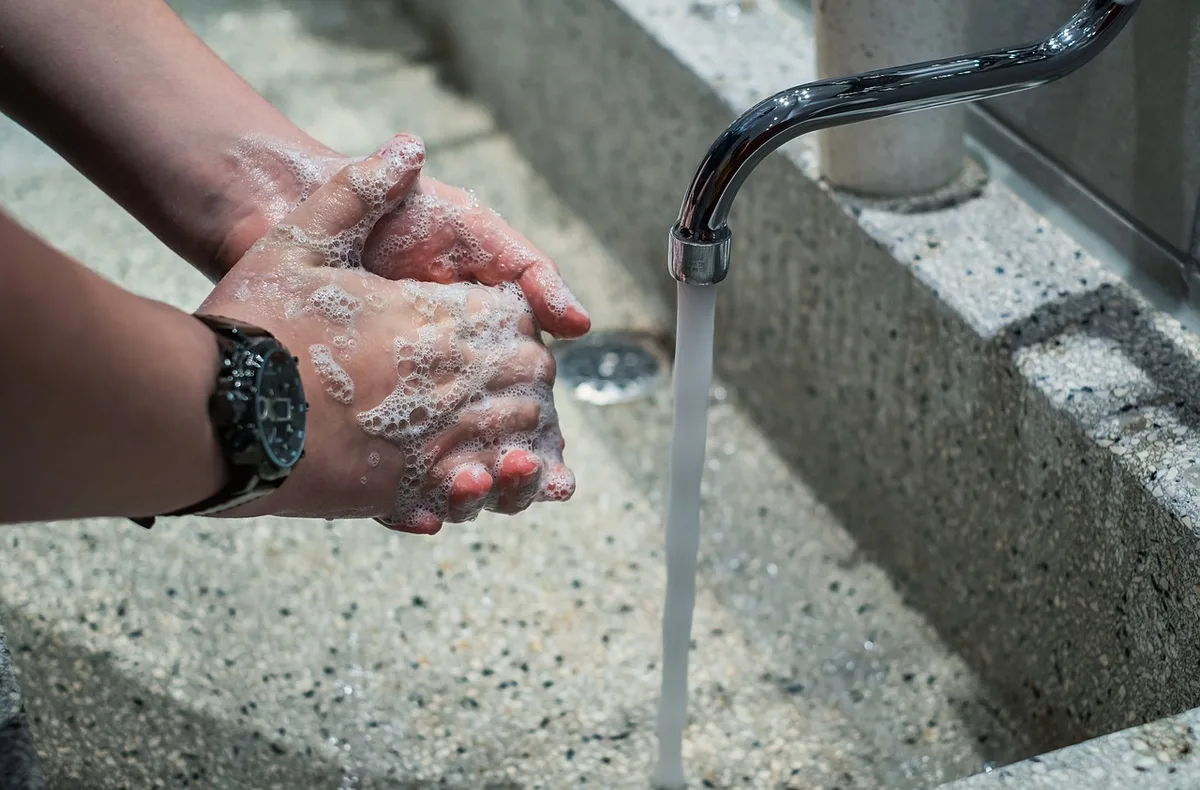
Image source: Pixabay / Couleur (Pixabay Content License)
Storage Rules That Actually Extend Shelf Life
Temperature and humidity are the two biggest factors. Romaine stores best at 32 to 36°F with 95 to 100% relative humidity. Most home refrigerators run around 35 to 40°F, so the crisper drawer is your best bet.
Keep the lettuce away from apples, pears, and other ethylene-producing fruits. Ethylene gas accelerates yellowing and decay in leafy greens. If your fridge has a separate drawer for vegetables, use it.
For whole heads, wrap the base loosely in a damp paper towel and place the head in a perforated plastic bag. For pre-cut leaves, store them in a container lined with dry paper towels. Replace the towels if they become saturated.
Don't wash before storing unless you plan to use the lettuce within a day or two. Excess moisture speeds up spoilage. Wash right before eating for the best results.
Who Needs to Be Extra Careful with Romaine Lettuce
For most healthy adults, a small amount of cosmetic spotting on romaine is a non-issue. But for certain groups, the stakes are higher.
Immunocompromised Individuals and High-Risk Groups
People undergoing chemotherapy, organ transplant recipients, and those with HIV/AIDS have weakened immune systems that can't fight off foodborne pathogens as effectively. For them, even a low dose of E. coli or Listeria can lead to serious complications.
The CDC recommends that immunocompromised individuals avoid raw sprouts entirely and be cautious with pre-cut leafy greens. If you're in this group, buy whole heads of romaine, discard all outer leaves, and wash the inner leaves thoroughly. When in doubt, cook the lettuce.
Sautéed or grilled romaine is a safe alternative.
Young Children and Pregnant People
Children under five are at higher risk for hemolytic uremic syndrome, a serious complication of E. coli O157:H7 infection. Pregnant people are about 10 times more likely than the general population to contract listeriosis, which can cause miscarriage, stillbirth, or newborn infection.
For both groups, the same rules apply. Inspect carefully. Wash thoroughly.
Discard anything questionable. Don't rely on appearance alone, especially during active recall periods.
Common Mistakes People Make with Spotted Romaine
Even careful shoppers get tripped up. Here are the most frequent mistakes and how to avoid them.
Trimming moldy spots and eating the rest. This works for hard cheese, not for lettuce. Fungal hyphae can spread through leaf tissue invisibly. If you see active mold, discard the leaf.
Assuming pre-washed means safe to eat without rinsing. The "pre-washed" label means the processor washed it, not that it's sterile. A second rinse at home adds a layer of safety.
Storing lettuce in the coldest part of the fridge. The coldest zone is often near the back wall or in the meat drawer, where temperatures can dip below freezing. Frozen lettuce cells rupture and become slimy. Keep romaine in the crisper drawer instead.
Ignoring recall notices because the lettuce looks fine. As discussed earlier, pathogens don't always change the appearance of lettuce. If there's a recall, toss it.
Washing lettuce and storing it wet. Excess moisture is the enemy of shelf life. Always dry leaves thoroughly before refrigerating.
Keeping lettuce past its usable window. Even well-stored romaine degrades over time. If it's been more than 7 to 10 days for a whole head, or more than 3 to 5 days for bagged, inspect carefully or discard.
When to See a Doctor After Eating Questionable Lettuce
Most foodborne illness from lettuce causes symptoms within 1 to 3 days. Watch for watery diarrhea, abdominal cramps, nausea, and low-grade fever. These usually resolve on their own within 5 to 7 days.
Seek medical attention if you see blood in your stool, develop a fever above 101.5°F, or can't keep fluids down. These can signal a more serious E. coli infection or dehydration. Young children and elderly adults should be evaluated sooner, since they dehydrate faster.
Pregnant people should contact their provider immediately if they experience any flu-like symptoms after eating recalled or suspect romaine. Listeria infections during pregnancy can be severe even when symptoms seem mild.
Frequently Asked Questions About White Spots on Romaine Lettuce
Are white spots on romaine lettuce safe to eat?
In most cases, yes. Dry white spots on outer leaves are usually calcium deposits or tipburn, both harmless. Remove the affected leaves and the rest is fine.
Discard the head if spots are wet, slimy, or smell off.
Can you cut off the white spots and eat the rest?
For dry, cosmetic spots on outer leaves, trimming works. For mold or bacterial decay, trimming isn't reliable. Fungal hyphae and bacteria can spread through tissue invisibly.
When in doubt, throw it out.
How long does romaine lettuce last in the fridge?
Whole heads last 7 to 10 days when stored properly at 32 to 36°F. Bagged or pre-cut romaine should be used within 3 to 5 days of opening. Always check for sliminess or off-odors before using.
Does washing romaine remove all bacteria?
No. Washing under running water reduces surface contamination significantly but doesn't eliminate all bacteria. Some organisms adhere tightly to leaf surfaces or enter through natural openings.
Washing is one layer of protection, not a guarantee.
Why does my romaine get white spots so fast in the fridge?
Your fridge may be too cold, causing freeze damage that looks like white spots. Or the lettuce was already infected with downy mildew before purchase. Store romaine in the crisper drawer, not against the back wall where temperatures drop lowest.
Should I avoid romaine lettuce altogether because of recalls?
Romaine is safe to eat when handled properly. Check recall notices before buying, inspect heads at the store, wash thoroughly, and store at the right temperature. The nutritional benefits outweigh the risks for most people when you follow basic food safety practices.
The Bottom Line: A Simple Decision Guide You Can Use Every Time
Here's the fastest way to decide whether your romaine is safe.
Dry spots on outer leaves only. Trim and eat. This is calcium deposits or tipburn.
Fuzzy growth on leaf undersides. Remove affected leaves. If the inner head is firm and clean, it's fine. If the infection is widespread, discard.
Wet, slimy, or foul-smelling leaves. Discard the entire head. Bacterial contamination is likely.
Active recall for your region or brand. Discard regardless of appearance.
You're immunocompromised, pregnant, or feeding young children. When in doubt, throw it out. The consequences of getting it wrong are too high.
Romaine lettuce is one of the most nutritious greens you can eat. You don't need to avoid it. You just need to know what to look for and when to walk away.