You're staring at a lawn that's turning brown in patches, and you're not sure if it's grubs, drought, or something else. That's the moment most people start wondering when to use grub control. The honest answer is that timing matters more than the product itself.
Get the window wrong and you've wasted your money. Get it right and you stop the damage before it starts.
Grub control splits into two completely different approaches: preventive and curative. Each one has a distinct application window tied directly to the grub's life cycle. As of 2026, the science on this is well established.
University extension programs across the US have published soil temperature data that pinpoints the exact timing. What follows is the decision framework that takes the guesswork out of it.
Quick Answer
Apply preventive grub control between mid-June and mid-July. Apply curative grub control only in late August through mid-September. The trigger is soil temperature at 4 inches deep reaching 65 to 70 degrees Fahrenheit.
Preventive products stop newly hatched grubs. Curative products kill existing grubs that are already feeding. Never apply grub killer in spring or early summer.
It won't work.
How Grub Lifecycles Actually Determine Your Timing
White grubs are the larvae of several beetle species. The Japanese beetle, European chafer, June beetle, and masked chafer all produce grubs that damage turf. Despite different species, their lifecycles share a common pattern that dictates your treatment window.
Adult beetles emerge from the soil in early summer. They mate, lay eggs in the grass, and die. Those eggs take about two weeks to hatch.
The tiny larvae immediately begin feeding on grassroots. This is your preventive window. The grubs are small, vulnerable, and right near the surface.
Over the next several weeks, the grubs grow through three stages called instars. Each stage means a larger grub eating more roots. By late summer, those grubs are big enough to cause visible damage.
This is your curative window. The grubs are actively feeding and you can still kill them.
Come fall, soil temperatures drop and the grubs burrow deeper to overwinter. They stop feeding entirely. Any chemical applied after that point is useless.
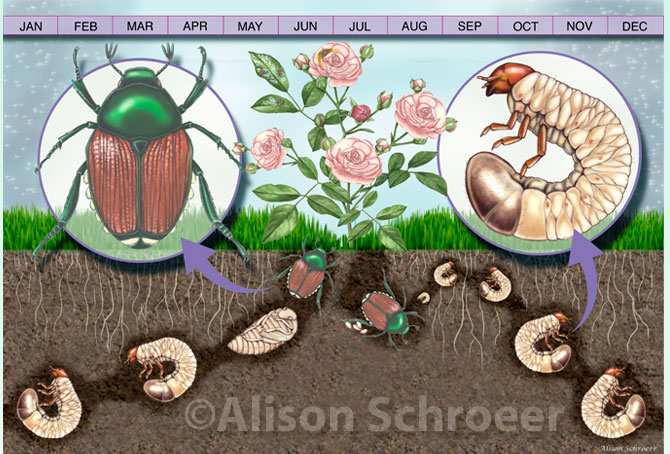
Image source: Bing (Web (fair-use with source credit))
The illustration above shows the complete Japanese beetle lifecycle. Notice where the egg stage and first instar fall on the calendar. That's your preventive trigger point.
The 8 Conditions That Tell You It's Time to Act
Not every lawn needs grub control. Overusing these products wastes money and risks environmental harm. You should only treat when conditions justify it.
Here are the signs that it's time to act:
- Visible brown patches that peel back like a carpet. If you can lift the turf easily, roots have been chewed off.
- Spongy turf that feels loose underfoot. Grubs sever the root system, making the turf detach from soil.
- Skarves of birds or skunks digging in your lawn. Animals know grubs are there long before you do.
- 10 or more grubs per square foot. Dig a 4-inch deep hole, count the grubs, and use that threshold.
- Previous season grub damage. If you had grubs last year, expect them again this year.
- Adjacent lawns with grub damage. Grubs don't respect property lines. Neighbor problems become your problem.
- Irrigated lawn in summer. Moist soil attracts egg-laying beetles. A dry lawn gets fewer eggs.
- Soil temperature reading of 65 degrees at 4 inches. This is your most reliable trigger.
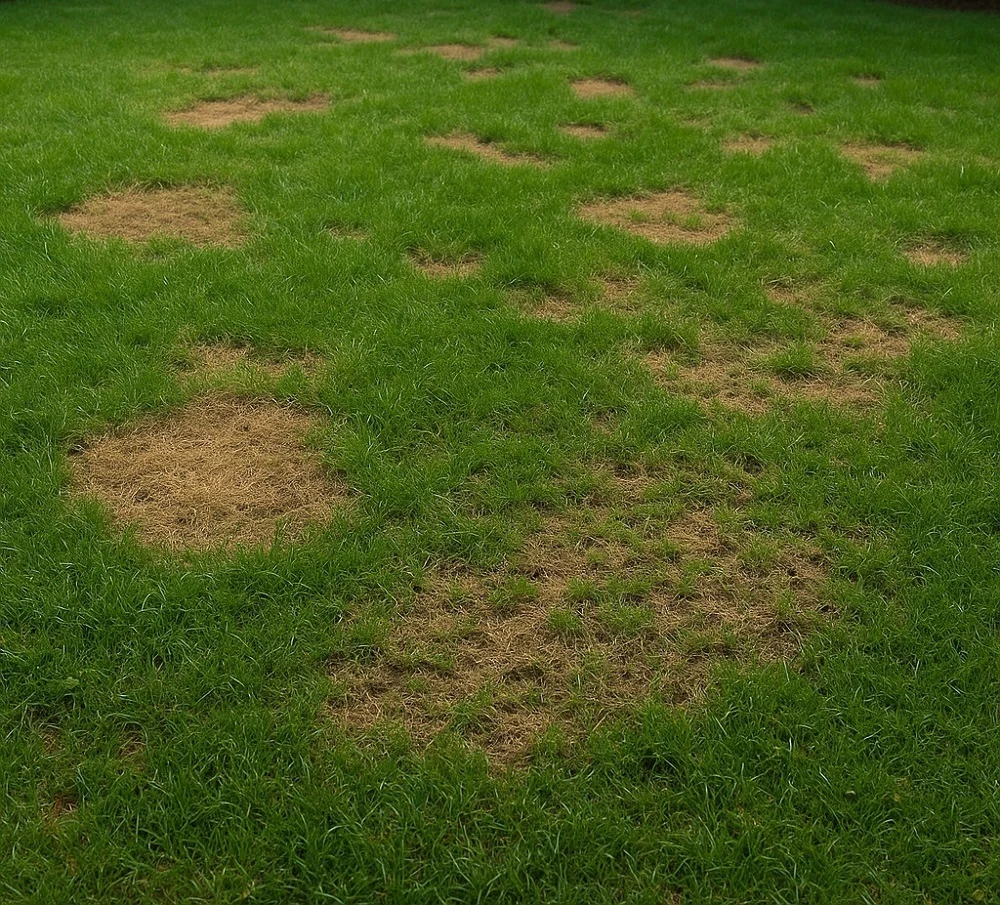
Image source: Bing (Web (fair-use with source credit))
The image above shows the classic brown patches caused by grub feeding. Notice how the damage appears in irregular shapes that grow larger as grubs expand their feeding area.
If you have none of these conditions, you probably don't need grub control this season. A healthy lawn with deep roots can tolerate light grub pressure without treatment.
Preventive vs. Curative: The Fork in the Road
This is the most important decision you'll make. Preventive and curative products work differently. Using the wrong one at the wrong time means zero results.
Preventive grub control uses products containing imidacloprid or chlorantraniliprole. These insecticides linger in the soil for months. They don't kill adult beetles.
They kill young grubs as they hatch and begin feeding. You apply them before the eggs hatch. The product sits in the root zone waiting for the grubs to arrive.
Curative grub control uses products containing carbaryl or trichlorfon. These are fast-acting knockdown chemicals. They kill large, actively feeding grubs within days.
But they break down quickly in sunlight and soil. You can't apply them early and expect them to last.
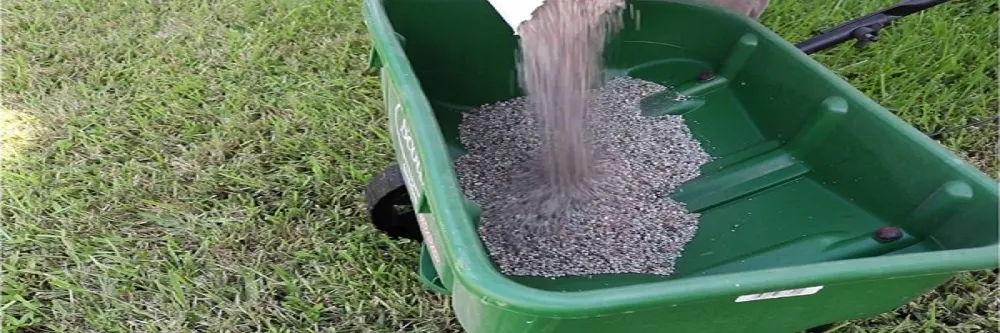
Image source: Bing (Web (fair-use with source credit))
The spreader in the image above is applying granular preventive product. Note the uniform coverage pattern. Even distribution matters more than the product itself.
Here's the decision tree:
| Your Situation | What to Use | When to Apply |
|---|---|---|
| You've had grubs before and want to prevent damage | Preventive (imidacloprid or chlorantraniliprole) | Mid-June to mid-July |
| You see active damage and need to stop it now | Curative (carbaryl or trichlorfon) | Late August to mid-September |
| You're unsure if you have grubs | Do nothing. Test first. | N/A |
| You missed the preventive window but see no damage | Wait and watch. Apply curative only if damage appears. | Late summer if needed |
The Soil Temperature Rule That Beats Any Calendar Date
Calendar dates are a rough guide. Soil temperature is your precise trigger. Beetle eggs don't hatch on July 4th.
They hatch when the soil reaches the right temperature.
Here's the rule: measure soil temperature at 4 inches deep. When it hits 65 degrees Fahrenheit, the eggs are about to hatch. You have a two-week window from that point to get preventive product down.
Why 4 inches? That's where grubs feed. The surface temperature can be 90 degrees while the 4-inch depth is still 60.
You need the measurement where the grubs live, not the air temperature.
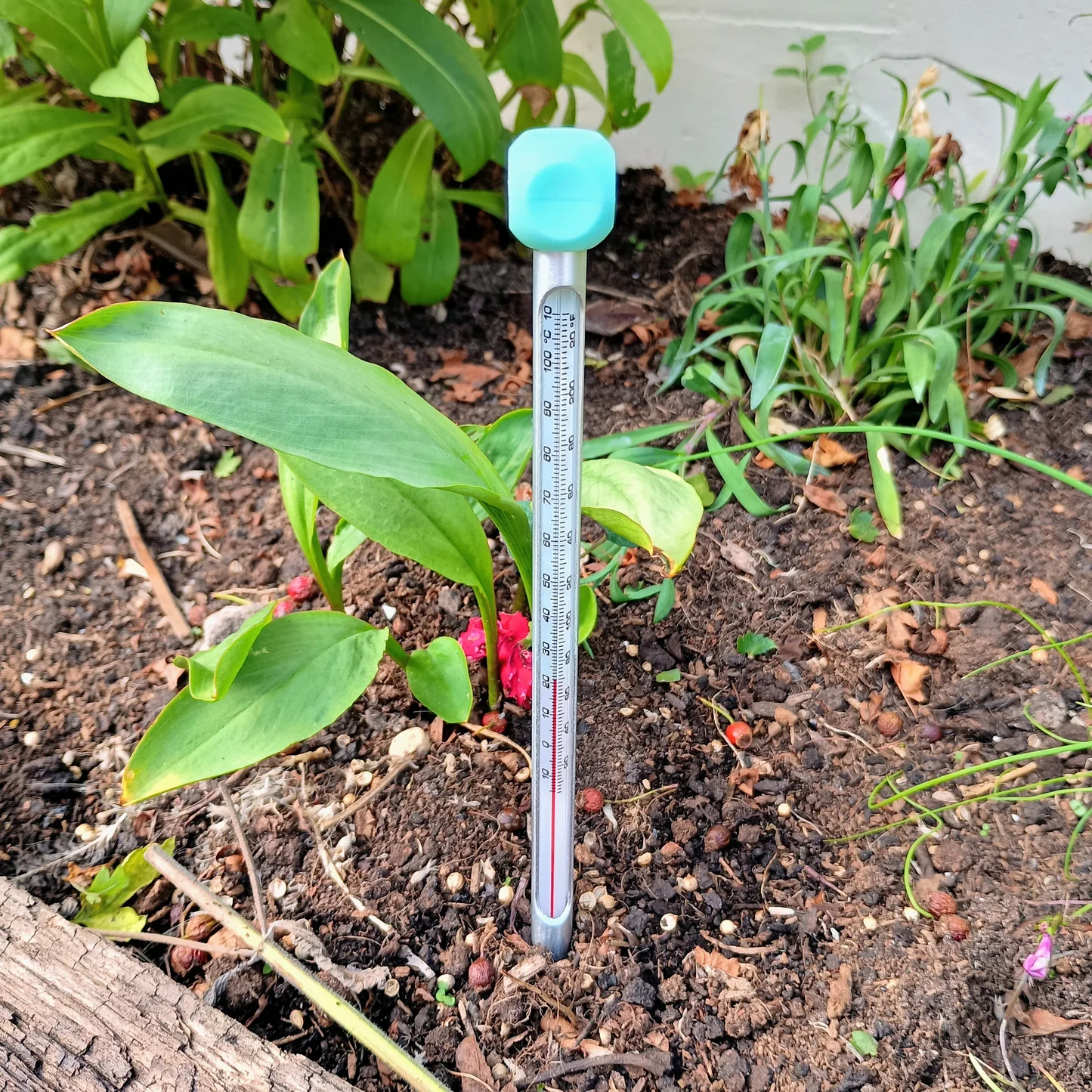
Image source: Bing (Web (fair-use with source credit))
The soil thermometer in the image above is pushed to the correct depth. The dial shows the temperature reading. This is the tool you need before you decide when to apply.
For curative products, the rule is different. You don't need a temperature trigger. You need active grubs.
When you see damage in late summer, the soil is already warm enough. Apply immediately.
The best tool for this job is a simple soil thermometer available at any garden center. Push it 4 inches down in the morning before the sun heats the surface. Take readings three days in a row.
When the average hits 65 degrees, you're in the preventive window.