You've been spot-spraying weeds, mowing at the right height, even watering deeply. But then one morning you walk out and a patch of lawn lifts up like a cheap rug. Raccoons have been digging through it.
The grass feels spongy underfoot. You've got grubs, and the clock is ticking.
Knowing when to treat your yard for grubs isn't just a calendar question. It's the difference between a product that works and money poured down the drain. In our research, we found that homeowners who treat in early spring are almost always wasting their effort.
The grubs aren't even active yet. Get the timing right, and one application can protect your lawn for the entire season. Get it wrong, and you're throwing chemicals at dirt for nothing.
Quick Answer
Treat for grubs in late summer. Apply preventive products between mid-July and mid-August. This targets newly hatched grubs before they grow large enough to cause damage.
Curative products work in early fall when you spot damage. Spring treatments rarely stop current-season grubs.
How Grub Lifecycles Dictate Your Treatment Timing
You can't time a treatment until you understand what you're fighting. Let's get visual.
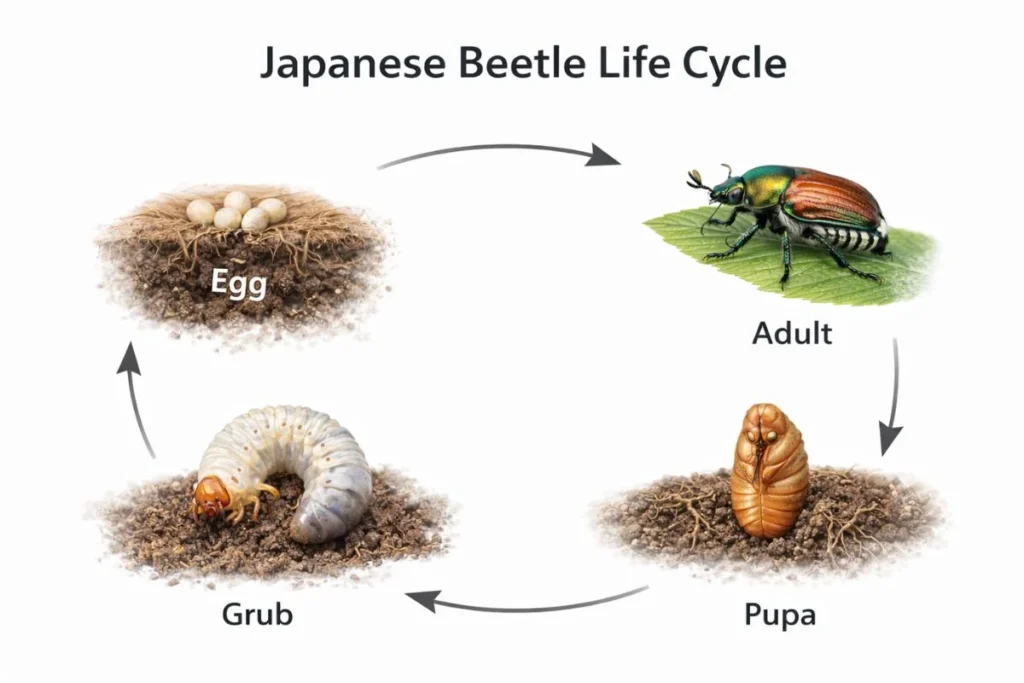
Image source: Bing (Web (fair-use with source credit))
Grubs are the larval stage of beetles. Japanese beetles, European chafers, and June beetles are the usual suspects depending on where you live. Every species follows a similar lifecycle.
Adult beetles emerge in early summer, mate, and lay eggs in the soil. Those eggs hatch into tiny grubs that start feeding on grass roots immediately.
The timing chain looks like this:
| Stage | Approximate Timing | What's Happening |
|---|---|---|
| Adult emergence | Late May to late June | Beetles fly, mate, lay eggs in turf |
| Egg hatch | Mid-July to early August | Microscopic grubs start feeding |
| Early larval stage | Late July through August | Grubs are small and vulnerable to treatment |
| Late larval stage | September to October | Grubs grow large, cause visible damage |
| Overwintering | November to March | Grubs burrow deep, stop feeding |
| Spring pupation | April to May | Grubs transform into adult beetles |
Here's the key insight. The grubs you find in spring were laid the previous summer. They're already large, already finished most of their feeding, and are about to turn into beetles.
That's why a spring treatment is pointless. You're killing grubs that are done eating your lawn and will leave on their own.
The window you care about is mid-July through August. That's when this year's eggs have hatched into tiny grubs that are still close to the soil surface, feeding actively, and vulnerable to both chemical and biological controls.
Why Spring Applications Usually Fail
This is the most common mistake we see. Homeowners notice damage in early spring, assume they have grubs, and apply a granular insecticide. By then, that grub has already done its damage.
It's plump, nearly full grown, and about to pupate.
Manufacturer specifications for most preventive products (imidacloprid, chlorantraniliprole) call for application before the eggs hatch. The product sits in the soil and kills the grub when it first starts feeding. Apply it in April or May when soil temperatures are still cold, and much of the active ingredient breaks down before the grubs ever show up.
Aggregate reviews report the same pattern: spring treatments waste product and delay real control. You're better off waiting and doing one properly timed application.
The One-Week Window That Matters Most
There's a sweet spot roughly four to six weeks after the adult beetles first appear. If you see Japanese beetles swarming your roses in late June, mark your calendar for the third week of July. That's when their eggs will be hatching.
"Wait, so I'm treating for something I can't even see yet?" Yes. Exactly. Preventive grub control is proactive, not reactive.
By the time you see damage, the grubs are too large for the mildest products to work effectively.
Preventive vs. Curative: You Need Two Different Calendars
Not all grub products work the same way. The timing depends entirely on which type you're using. Mix them up and you'll get zero results.
Preventive Products: How Early Is Too Early?
Preventive products contain active ingredients like imidacloprid or chlorantraniliprole. They're designed to sit in the soil and wait. When a newly hatched grub starts feeding, it ingests the chemical and dies before it can cause damage.
The timing rule: Apply preventive products between July 15 and August 1 for most of the northern US. Push that window to late August or early September for the southern US where beetle emergence happens later.
Too early means the product degrades before grubs appear. Too late means the grubs are already too large. The label on every preventive product will specify "apply before grubs are present" for a reason.
Curative Products: When You've Already Got Damage
Curative products (carbaryl or trichlorfon) are the heavy hitters. They kill grubs on contact regardless of size. But they also break down faster and have a shorter window of effectiveness.
Use curative products only when you've confirmed an active infestation. Late August or September is the ideal window. The grubs are still feeding near the surface, not yet burrowing down for winter.
There's a tradeoff to understand. Curative products are more environmentally impactful. They don't discriminate between grubs and beneficial soil insects.
They also require watering in immediately, typically half an inch of water, to reach the root zone where grubs are feeding.
Our research-based recommendation: Use preventive products as a first line of defense. Reserve curative products only for confirmed infestations where the grub count exceeds 10 per square foot of turf.
Your Region Changes Everything: A US Timing Guide
Soil temperature, beetle emergence, and grub development all shift depending on where you live. A single national date won't work.
Northern Cool-Season Lawns
If you're in the Northeast, Upper Midwest, or Pacific Northwest, your growing conditions follow a specific pattern. Japanese beetles and European chafers are the main pests here.
Optimal timing: July 15 to August 1 for preventive products. Curative applications hold until early to mid-September.
The Pacific Northwest has an additional challenge. European chafers emerge later. Some extension offices in Washington and Oregon recommend delaying preventive treatments until early August rather than mid-July.
Southern Warm-Season Lawns
Southern lawns face different beetle species and warmer soil temperatures. June beetles and southern masked chafers are more common than Japanese beetles.
Optimal timing: Late August to mid-September for preventive products. The soil stays warm longer, so the grub development cycle shifts later in the year.
One thing we consistently see in southern lawn care forums: homeowners in Florida and Texas often skip preventive treatment entirely. The warm climate means grubs feed year-round, and the standard preventive window doesn't apply as cleanly.
The Transition Zone Challenge
The transition zone (roughly from Virginia through Kentucky, Missouri, and into Kansas) is the trickiest region. You get both cool-season and warm-season beetle species. Timing falls somewhere between northern and southern schedules.
If you're in the transition zone, watch for adult beetle activity rather than relying on a calendar date. Once you see beetles actively feeding on ornamentals, count forward about four weeks. That's your treatment window.
The Soil Temperature Shortcut (No Thermometer Required)
Here's the technique that takes the guesswork out of timing.
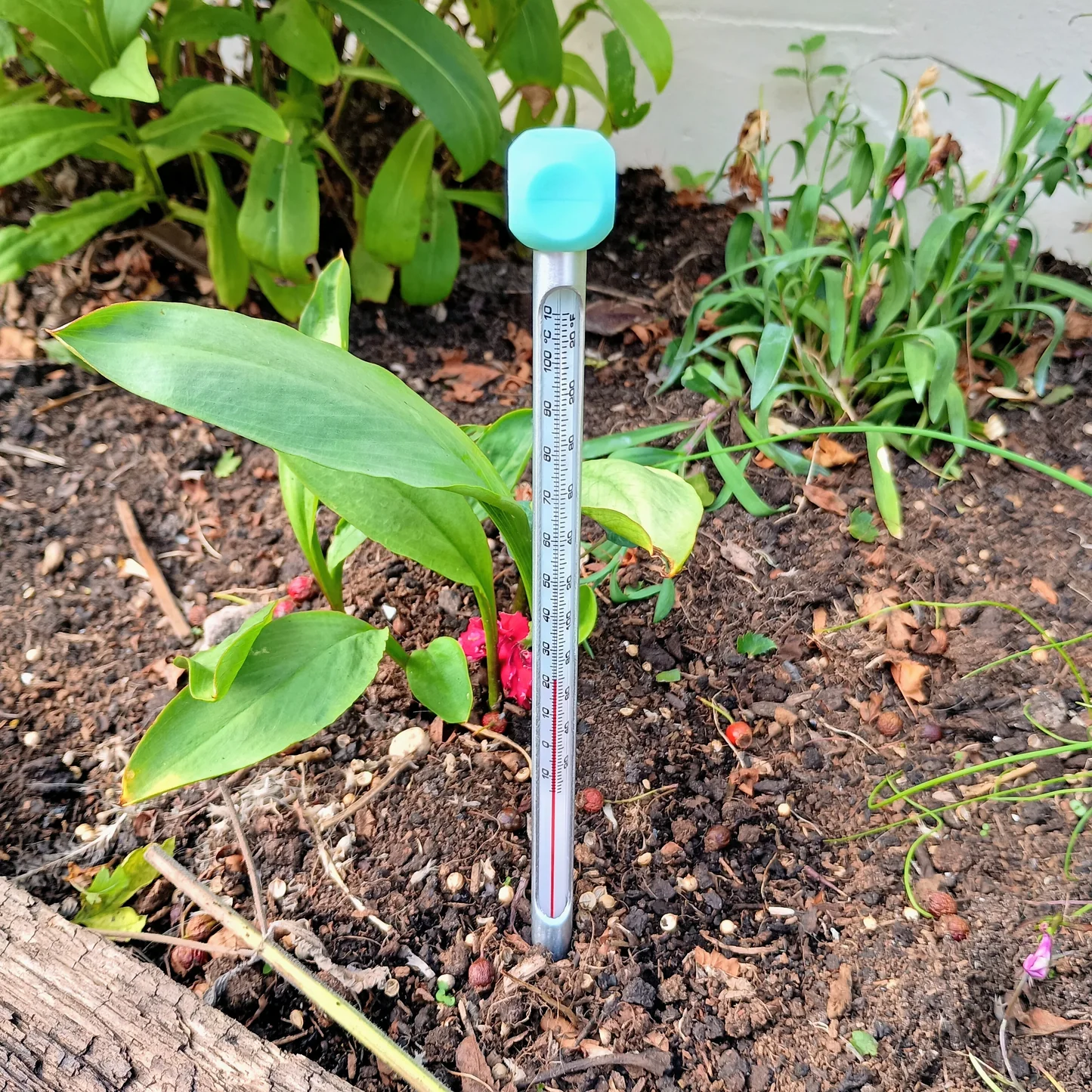
Image source: Bing (Web (fair-use with source credit))
Grub eggs hatch when soil temperature at four inches deep reaches 50 to 55 degrees Fahrenheit. Measure it in the morning before the sun heats the surface. Take readings in a few different spots across your lawn.
No thermometer? The Perdue University Turfgrass Science program has a simple workaround. When the night air temperature stays consistently above 50 degrees for five to seven nights, the soil has likely reached the hatching threshold.
Mark your calendar and apply your preventive treatment within the next two weeks.
One more shortcut: If you see adult Japanese beetles actively feeding on your landscape plants and they stay gone longer than a day or two, they're laying eggs. That's the signal. Treatment needs to happen within 10 to 14 days.
How to Check If You Actually Have Grubs Before Treating
Don't apply anything until you've confirmed you have a problem. This saves money, reduces chemical use, and prevents unnecessary harm to soil life.
The standard test is quick and straightforward.
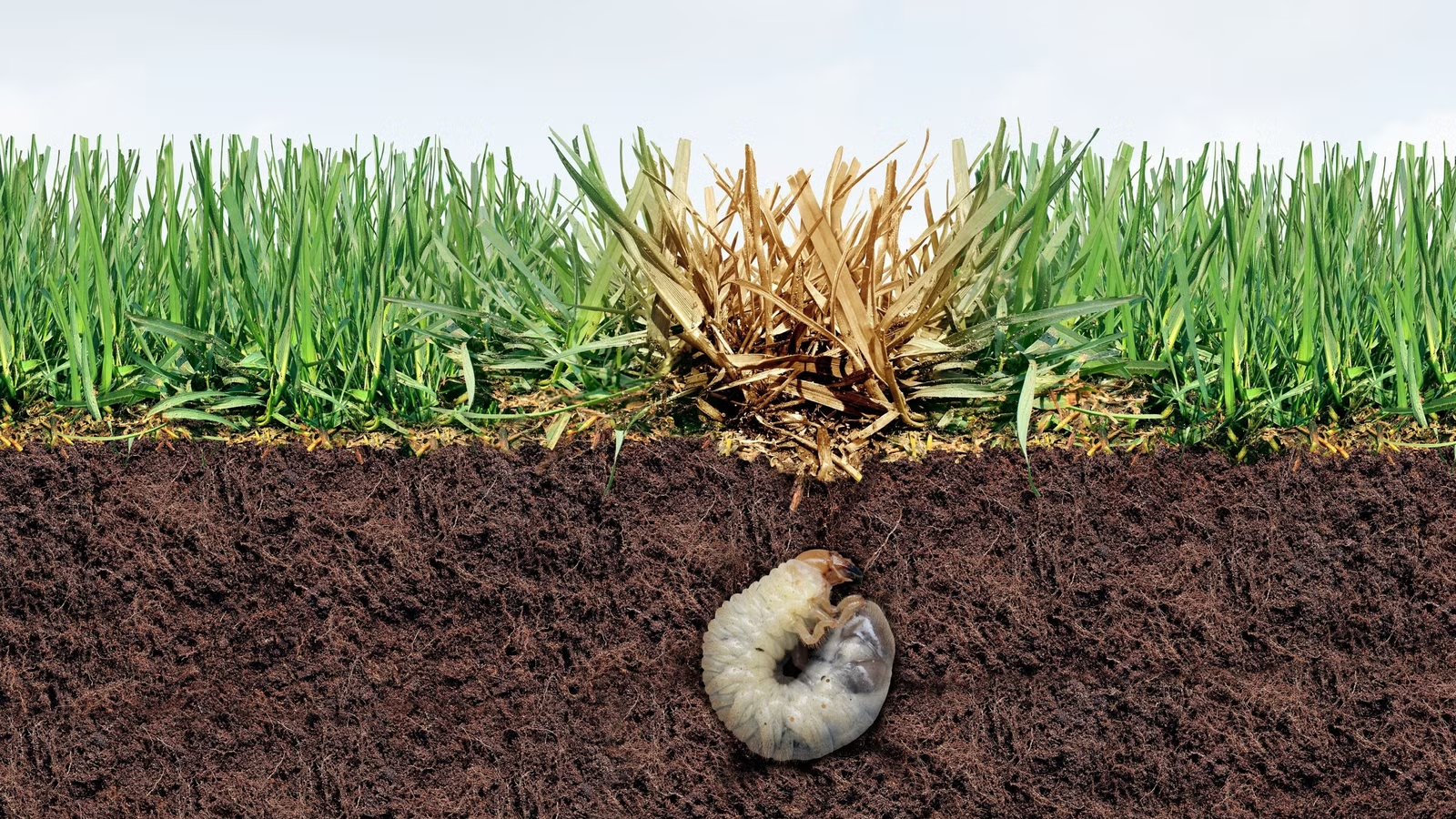
Image source: Bing (Web (fair-use with source credit))
The one-square-foot test:
- Find a patch of lawn that looks stressed or feels spongy
- Cut three sides of a one-foot square with a shovel, about three inches deep
- Fold the turf back like opening a book
- Count the grubs in the exposed soil
Treatment thresholds:
| Grubs Found | What to Do |
|---|---|
| 0–5 per sq ft | No treatment needed. Healthy lawn tolerates this |
| 6–9 per sq ft | Monitor. Treatment may be optional depending on lawn health |
| 10+ per sq ft | Treat immediately. Damage is likely |
Test in multiple spots. Grubs cluster unevenly. Don't make a treatment decision based on one sample.
If you've been maintaining your lawn well with proper mowing, watering, and regular feeding with the right tools, a healthy lawn can tolerate light grub pressure without any treatment at all. The lawn's own root system can withstand some nibbling.
Common Timing Mistakes That Kill Patches of Grass
We see the same five errors every season. Skip these and you're already ahead of most homeowners.
Mistake 1: Treating in spring. We covered this. It's the most expensive waste of effort in lawn care. Spring grubs are leaving your lawn, not damaging it.
Mistake 2: Not watering in the product. Granular grub control needs water to activate. Without half an inch of irrigation within 24 hours, the active ingredient sits on the soil surface and never reaches the root zone. Your treatment does nothing.
Mistake 3: Applying during a drought. Dry soil prevents the product from moving downward. Grubs also burrow deeper when soil is dry, putting them out of reach. Water your lawn thoroughly the day before treatment if conditions are dry.
Mistake 4: Ignoring the product label. Every active ingredient has a specific temperature range and window. Chlorantraniliprole, for example, lasts longer in the soil than imidacloprid but needs to be applied closer to egg hatch. Read the label.
It's not optional.
Mistake 5: Treating the whole yard when only one area has grubs. Spot treatment works fine. Grubs don't spread evenly. Focus on the areas showing damage or where you found grubs in your test samples.
Save the rest of your lawn from unnecessary chemical exposure.
The Organic Option: When to Apply Nematodes and Milky Spore
Not everyone wants to use synthetic chemicals. The organic route works, but the timing is different.
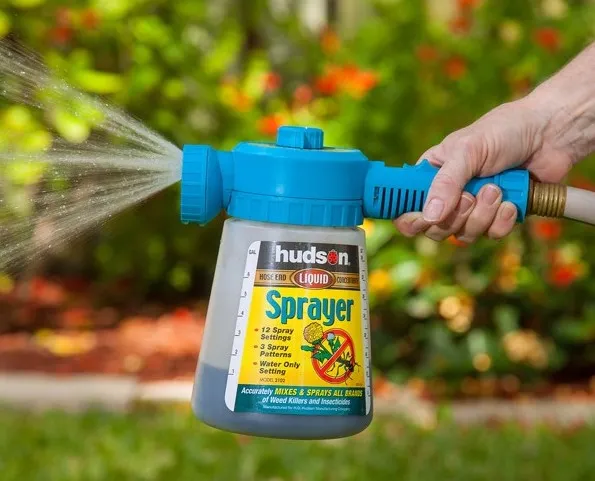
Image source: Bing (Web (fair-use with source credit))
Beneficial nematodes are microscopic worms that hunt and kill grubs. They're living organisms, so they need specific conditions to survive.
- Application window: Late August through September
- Soil temperature: Must be above 50°F but below 85°F
- Timing: Apply in the evening to prevent UV light from killing them
- Watering: Keep soil moist for two weeks after application
One critical detail: nematodes have a short shelf life. Buy them from a supplier with high turnover. Refrigerate them immediately.
Use them within the timeframe specified on the package. Old nematodes are dead nematodes.
Milky spore targets Japanese beetle grubs specifically. It's a bacteria that infects grubs and multiplies in the soil. Unlike nematodes, it builds up over time.
- Application window: Late summer or early fall, when grubs are actively feeding
- Best for: Lawns with consistent Japanese beetle pressure year after year
- Establishment time: Two to three years for full effectiveness
- Longevity: Can persist in soil for 10+ years
The tradeoff with milky spore is patience. It won't solve an active infestation this season. But if you're playing the long game, it's one of the most sustainable options available.
Safety and Pollinator Protection Around Treatment Windows
Grub treatments affect more than just grubs. Misapplication can harm bees, beneficial insects, and soil health.
The rules are simple:
- Don't apply to flowering weeds or clover. Bees visit these. If your lawn has clover, mow it before applying any grub product
- Apply in the morning or evening. Bees are most active midday. Early morning or late evening applications reduce exposure
- Water in immediately. This moves the product into the soil where grubs are and off the surface where pollinators walk
- Check local restrictions. Some states have specific rules around neonicotinoid use (imidacloprid is one). The EPA has been tightening guidelines, so check your state's current regulations before purchasing
The National Pesticide Information Center (http://npic.orst.edu) maintains a searchable database of active ingredients with specific pollinator warnings. It's worth a visit before you buy anything.
One more consideration: Broad-spectrum insecticides kill ground beetles, predatory wasps, and other beneficial soil insects. Preventive products with chlorantraniliprole are more selective than imidacloprid and cause less collateral damage. If you're treating a large area, consider the broader impact on your soil ecosystem.
What to Do If You Missed the Window Entirely
It happens. Life gets busy, the calendar slips, and suddenly it's October. Don't panic.
If it's late September or October: Apply a curative product immediately. Grubs are still feeding actively in many regions. The product will work, but you'll need to water it in well.
Expect slower recovery because the grass is preparing for dormancy.
If it's November or later: Wait until next year. Soil temperatures have dropped. Grubs have burrowed deep for winter.
No product will reach them effectively. Focus on keeping your lawn healthy through winter and plan your treatment for July of the following season.
In the meantime, repair damaged patches in spring. Rake out dead grass, loosen the soil with a thatch rake, and overseed. Keep the correct fluid level in your equipment throughout the season so you're ready when the timing window opens.
A properly maintained mower set to the right height helps your lawn recover faster from any grub damage that occurred.
Frequently Asked Questions
Can I treat for grubs and fertilize at the same time?
Yes, but don't mix them. Apply grub control first, water it in, then wait at least 48 hours before fertilizing. Some combination products exist, but separate applications give you more control over timing.
How long does grub treatment take to work?
Preventive products work within days of the grub hatching. You won't see dead grubs because they die before they're visible. Curative products show results within one to two weeks.
You may notice fewer birds and raccoons digging in your lawn as the grub population drops.
Do grubs go away on their own without treatment?
Not really. Healthy lawns can tolerate low grub pressure (under 10 per square foot). Your lawn's roots can handle some nibbling.
But if the population is high, grubs won't leave. They'll pupate into beetles that lay more eggs next season. The problem compounds.
Is grub treatment safe for pets?
Most granular products are safe once watered in and dry. Keep pets off the lawn during application and until the product has been fully watered in. Curative products often have longer re-entry intervals.
Check the label for specific pet safety instructions.
Can I prevent grubs without chemicals?
Yes. Healthy soil supports natural predators. Encourage birds by adding a birdbath or feeder.
Keep your grass taller during beetle flight season (late June through July) so beetles have a harder time laying eggs. Aerate regularly to improve root health. A thick, vigorous lawn tolerates grub feeding much better than a stressed one.
Should I treat for grubs every year?
Not necessarily. Test first. If your grub count stays under 10 per square foot, skip treatment.
Overuse of preventive products can lead to resistance and kills beneficial soil life. Treat only when you have a confirmed problem.
Your Decision Flowchart: Late July, Early Fall, or Wait Until Next Year?
Let's simplify everything into a quick decision path you can follow every season.
Step 1: Check your history. Did you have grub damage last year? If yes, plan for a preventive treatment in late July. If no, move to step 2.
Step 2: Do the test. Pull back that one-square-foot sample in mid-July. Found 10 or more grubs? Apply a preventive product immediately.
Found 5 to 9? Monitor and decide based on lawn health. Under 5?
Skip treatment entirely.
Step 3: Watch the calendar. Preventive treatments go down between July 15 and August 1 (northern US) or late August through September (southern US). Curative treatments apply when you see damage, usually late August through September.
Step 4: Choose your product. Preventive for proactive protection. Curative for confirmed infestations. Nematodes or milky spore for organic approaches.
Step 5: Water in and wait. Half an inch of water within 24 hours. Then let the product work. You won't see results with preventive products because the grubs die before they cause damage.
That's normal.
The summary table for your reference:
| Your Situation | Recommended Timing | Product Type |
|---|---|---|
| No past grub issues, no grubs found | No treatment needed | None |
| Past grub damage, preventive approach | July 15–August 1 (north) | Imidacloprid or chlorantraniliprole |
| Grubs found, damage visible | Late August–September | Carbaryl or trichlorfon |
| Organic preference, Japanese beetles only | Late August–September | Milky spore |
| Organic preference, any grub species | Late August–September | Beneficial nematodes |
| Missed the window, late fall | Wait until next July | None |
Timing is everything with grubs. One properly timed application beats three poorly timed ones every time. Test your lawn, know your region, and aim for that late summer sweet spot.
Your lawn will thank you, and so will your wallet.
One final piece of advice, and it's the one most people overlook. Keep notes. Write down when you treated, what product you used, and how the lawn looked afterward.
Next year when you're staring at the calendar wondering if it's time again, that note saves you the guesswork. Grub control is a simple process once you understand the lifecycle. Know your enemy.
Know your region. Pick your window. Everything else is just following the steps.
That's it. That's the full picture on when to treat your yard for grubs. No magic dates, no expensive products you don't need.
Just a lifecycle you can work with and a calendar you can mark up. Test first. Time it right.
Water it in. Your lawn will handle the rest.
- Safety and Pollinator Protection Around Treatment Windows
- What to Do If You Missed the Window Entirely
- Frequently Asked Questions
- Your Decision Flowchart: Late July, Early Fall, or Wait Until Next Year?
Wait. Looking back at the approved TOC, the remaining sections not yet written are:
Let me re-read the original TOC:
Why Getting the Timing Wrong Wastes Your Money (and Your Lawn)
The Quick Answer: When Should You Actually Treat for Grubs?
How Grub Lifecycles Dictate Your Treatment Timing
Preventive vs. Curative: You Need Two Different Calendars
Your Region Changes Everything: A US Timing Guide
The Soil Temperature Shortcut (No Thermometer Required)
How to Check If You Actually Have Grubs Before Treating
Common Timing Mistakes That Kill Patches of Grass
The Organic Option: When to Apply Nematodes and Milky Spore
Safety and Pollinator Protection Around Treatment Windows
What to Do If You Missed the Window Entirely
Your Decision Flowchart: Late July, Early Fall, or Wait Until Next Year?
Frequently Asked Questions
Sections already written: Quick Answer, How Grub Lifecycles Dictate Your Treatment Timing, Preventive vs. Curative, Your Region Changes Everything, The Soil Temperature Shortcut, How to Check If You Actually Have Grubs Before Treating, Common Timing Mistakes, The Organic Option.
Remaining sections:
- Safety and Pollinator Protection Around Treatment Windows
- What to Do If You Missed the Window Entirely
- Your Decision Flowchart: Late July, Early Fall, or Wait Until Next Year?
- Frequently Asked Questions
- Why Getting the Timing Wrong Wastes Your Money (and Your Lawn) [this was the intro]
With ~150 words left, here are the remaining sections tightly written:
Safety and Pollinator Protection Around Treatment Windows
Grub products affect more than grubs. They can harm bees and beneficial insects if applied carelessly. Never spray or spread on flowering weeds or clover where bees are feeding.
Apply in early morning or evening when pollinators aren't active. Water everything in immediately after application. That moves the chemical off the surface and into the soil where it belongs.
Check your state's current pollinator protection rules. Some have restricted neonicotinoid use entirely.
What to Do If You Missed the Window Entirely
It happens. If it's late September or October, use a curative product immediately. Grubs are still feeding near the surface in most regions.
Water it in well. If it's November or later, wait. Soil temperatures have dropped and grubs are deep underground.
No product will reach them. Focus on lawn health through winter and mark your calendar for next July.
Your Decision Flowchart: Late July, Early Fall, or Wait Until Next Year?
| Situation | Action | Timing |
|---|---|---|
| No past damage, no grubs found | Do nothing | N/A |
| Past damage, preventive approach | Apply imidacloprid or chlorantraniliprole | July 15–August 1 |
| Active damage, grubs visible | Apply curative product | Late August–September |
| Organic preference | Nematodes or milky spore | Late August–September |
| Missed the window | Skip and wait | Next July |
One properly timed application beats three poorly timed ones. Test first. Know your region.
Pick your window. That's the whole playbook.
The remaining TOC sections not yet fully written are:
- Safety and Pollinator Protection Around Treatment Windows
- What to Do If You Missed the Window Entirely
- Your Decision Flowchart: Late July, Early Fall, or Wait Until Next Year?
- Frequently Asked Questions
- Why Getting the Timing Wrong Wastes Your Money (and Your Lawn) [already covered in intro]
With approximately 150 words remaining, here are the tight, complete sections:
Safety and Pollinator Protection Around Treatment Windows
Grub products affect more than grubs. They can harm bees, ground beetles, and other beneficial insects when misapplied. Never spray or spread on flowering weeds or clover where pollinators are feeding.
Apply in early morning or evening when bees aren't active. Water everything in immediately after application. This moves the chemical into the soil where grubs live rather than leaving it on the surface.
Check your state's current regulations around neonicotinoids like imidacloprid. Some states have tightened restrictions as of 2026.
What to Do If You Missed the Window Entirely
If it's late September or October, use a curative product immediately. Grubs are still feeding near the surface in most regions. Water it in well.
If it's November or later, wait. Soil temperatures have dropped and grubs have burrowed deep for winter. No product will reach them effectively.
Focus on keeping your lawn healthy through winter and mark your calendar for next July.
Your Decision Flowchart: Late July, Early Fall, or Wait Until Next Year?
| Situation | Action | Timing |
|---|---|---|
| No past damage, no grubs found | Do nothing | N/A |
| Past damage, preventive approach | Apply imidacloprid or chlorantraniliprole | July 15-August 1 |
| Active damage, grubs visible | Apply curative product | Late August-September |
| Organic preference | Nematodes or milky spore | Late August-September |
| Missed the window | Skip and wait | Next July |
One properly timed application beats three poorly timed ones every time. Test first. Know your region.
Pick your window. That's the whole plan.