You've spotted brown patches spreading across your lawn. Or maybe you've noticed birds and skunks tearing up the turf in the dead of night. The real question is when to treat lawn grubs because timing is everything.
Get it wrong and you waste money while the damage gets worse.
University research shows that treating at the wrong point in the grub lifecycle can reduce effectiveness by 50 percent or more. The key is matching your treatment to the grub's growth stage and your local soil temperature. Let's walk through the factors that decide your ideal window.
:max_bytes(150000):strip_icc()/what-are-dead-spots-on-lawn-2152737-01-8895e31ce33e4c5fa5c3d8a83ea11d6b.jpg)
:max_bytes(150000):strip_icc()/what-are-dead-spots-on-lawn-2152737-01-8895e31ce33e4c5fa5c3d8a83ea11d6b.jpg)
Image source: Bing (Web (fair-use with source credit))
Quick Answer: When Should You Actually Treat for Lawn Grubs?
Treat lawn grubs when they are small and actively feeding. For most of the US, that means late June through early August. Preventative products go down in late spring.
Curative products work best in late summer. Check your soil temperature before applying anything.
The Real Problem: Why Most Homeowners Treat Too Early or Too Late
Here's the thing about grubs. They don't show up on a fixed calendar date. Their lifecycle depends on soil temperature, latitude, and the specific beetle species in your yard.
Treating in early May when you see the first adult beetles is a common mistake. The grubs haven't even hatched yet.
Most preventative products break down in the soil after about 6 to 8 weeks. If you apply them in April, they're gone by the time the eggs actually hatch in July. You've essentially sprayed your lawn for nothing.
Meanwhile, on the other end, waiting until you see skunks digging up the turf means the grubs are already large and harder to kill.
The sweet spot is narrow. You need to hit the window when eggs have hatched but the grubs are still in their first or second instar stage. That's when they're small, feeding near the surface, and most vulnerable to both chemical and biological controls.
Getting this right also means your lawn can recover faster because the root damage is still minimal.
First, Know Your Enemy: Which Grub Is Eating Your Lawn?
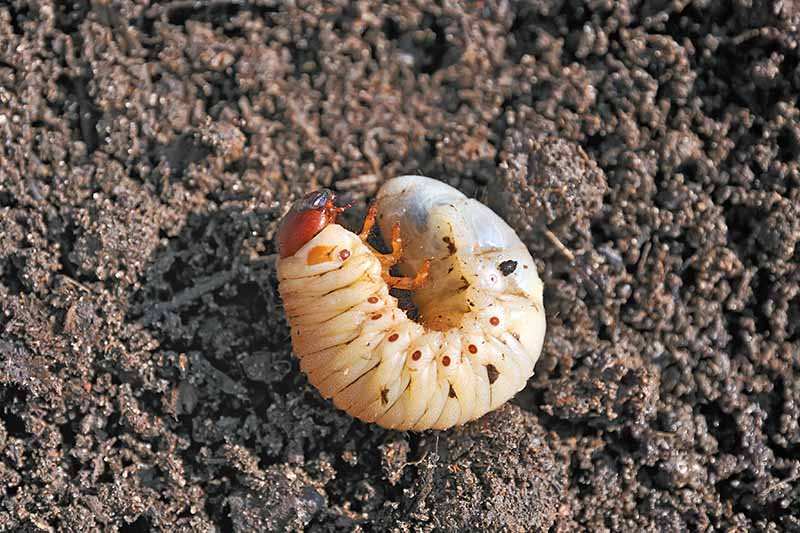
Not all grubs are the same. And the species matters. Japanese beetle grubs, European chafer grubs, and masked chafers all have slightly different emergence schedules.
If you treat for Japanese beetles in August but your yard is full of European chafers, you'll miss the window entirely.
The good news is that all grubs look similar. They're white, C-shaped larvae with a brown head capsule. You'll find them curled up in the top few inches of soil.
The difference is in the timing of their lifecycle. Japanese beetles typically emerge as adults in early summer, lay eggs in July, and the grubs hatch in late July through August. European chafers emerge earlier, often in June, so their eggs hatch earlier too.
If you're not sure what you're dealing with, a quick call to your local extension office can help. Many states have online maps showing the dominant grub species by region. Knowing your enemy is the first step to nailing the timing.
How to confirm you actually have grubs
Dig a small test patch. Cut a square of turf about 12 inches by 12 inches and peel it back like a carpet. Count the grubs you see in the exposed soil.
If you find fewer than 10, you're probably fine. More than 10 per square foot means you've crossed the threshold where treatment is worth it.
The Golden Rule: Soil Temperature Tells You When, Not the Calendar
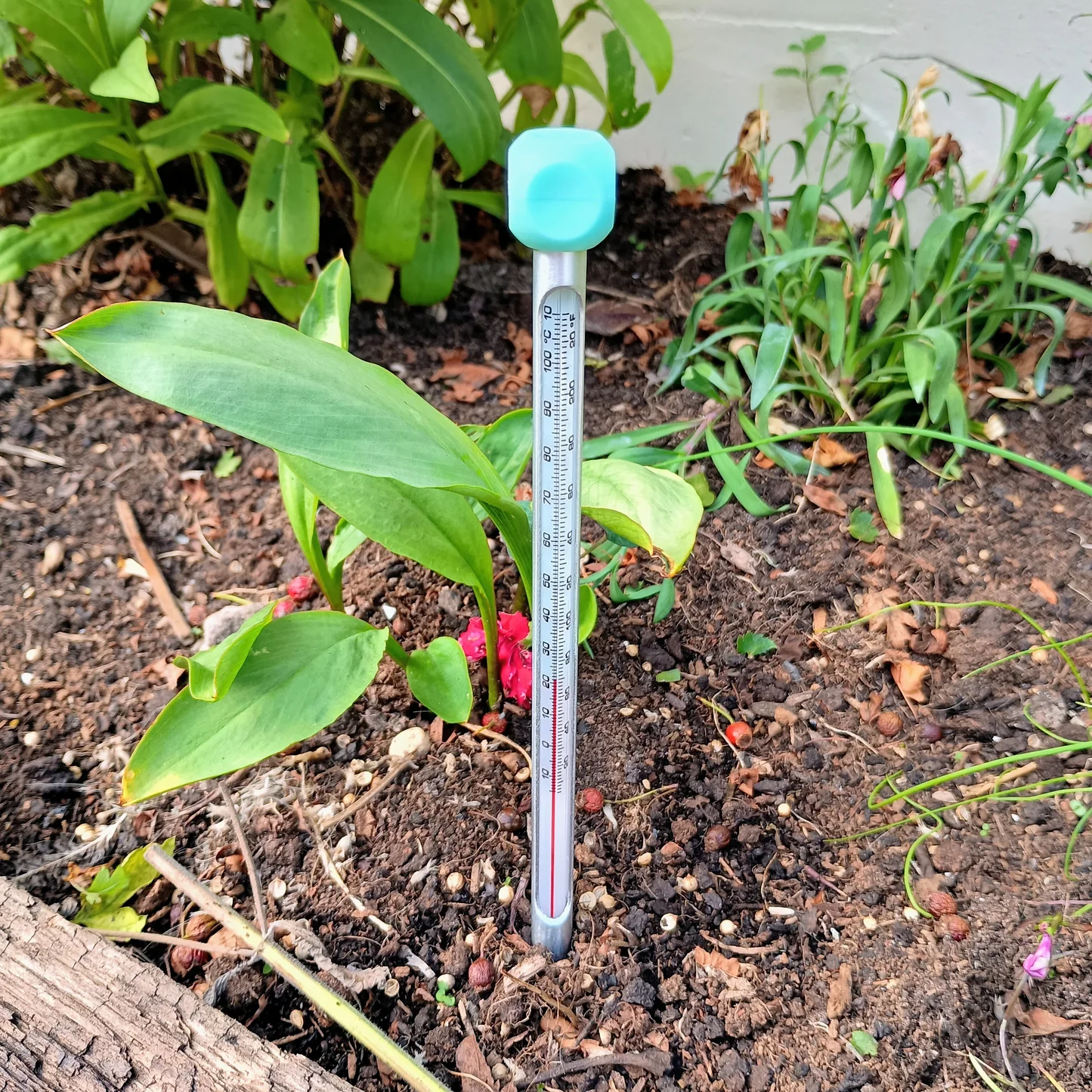
This is the single most important thing to understand. The calendar is a rough guide. Soil temperature at 4 inches deep is the real signal.
Grub eggs don't start hatching until the soil reaches about 64 to 68 degrees Fahrenheit. That's the trigger point.
You can buy a cheap soil thermometer at any garden center. Push it 4 inches into the soil and take a reading in the morning before the sun heats the surface. Track it for a few days.
When it consistently hits that 64 degree mark, you know the eggs are about to hatch.
Research from the University of Minnesota Extension confirms that this temperature threshold is the most reliable predictor across different regions. Using growing degree days (GDD) is even more precise. The target for Japanese beetle egg hatch is roughly 1300 to 1500 GDD.
But soil temperature is simpler and gets you close enough.
Why this matters for your treatment choice
Preventative products like chlorantraniliprole need to be in the soil before the eggs hatch. They work by poisoning the young grubs as they feed. So you apply them 2 to 3 weeks before the soil hits that 64 degree mark.
Curative products like trichlorfon work best when grubs are small and actively feeding near the surface. That's right after the hatch, when soil temperatures are still warm.
The Decision Tree: Are You Being Proactive or Reactive?
This is where the real decision happens. You have three main scenarios. Your choice depends on your history with grubs, the current state of your lawn, and your tolerance for using chemicals.
Branch 1: You've Never Had Grubs Before (Preventative Strategy)
If you're in a region with known grub pressure and you want to stay ahead of the problem, a preventative application makes sense. The ideal window is late June to mid-July for most northern states. For southern states, it shifts to early August because the soil warms up later.
The most effective preventative product is chlorantraniliprole. It's a reduced-risk insecticide that has low toxicity to bees and earthworms. Apply it when the soil temperature is around 55 to 60 degrees Fahrenheit, about 2 to 3 weeks before the eggs hatch.
Water it in immediately with at least half an inch of water. This moves the product down to the root zone where the grubs will feed.
If you're applying granular products, a quality broadcast spreader is essential for even coverage. Without even distribution, you'll have gaps where grubs can survive. A reliable spreader makes the job much easier and saves you from wasting product.
Branch 2: You Already See Damage (Curative Rescue Strategy)
:no_upscale():max_bytes(150000):strip_icc()/GettyImages-944962236-ed3356057ed74a74aa9280d730faf8c1.jpg)
If you're reading this because you've already got brown patches or animals digging up your lawn, you're in rescue mode. Don't panic. You still have a window, but it's narrow.
First, confirm you have grubs. Do the square-foot test. If you find 10 or more, you need to act fast.
Curative products like trichlorfon (Dylox) or carbaryl (Sevin) work best on small, actively feeding grubs. The key is to apply them as soon as you see damage, while the grubs are still in their first or second instar stage.
Apply the product in the late afternoon or early evening. Water it in immediately with half an inch of water. For best results, the soil should be moist but not saturated.
Within 24 to 48 hours, you should see results. The grubs will stop feeding and die within a few days.
Keep in mind that curative products are harsher on beneficial insects. Use them only when you have confirmed damage. If you're regularly treating your lawn with other products, good lawn care habits can help reduce the need for rescue treatments.
Branch 3: You Want Organic Options (Nematodes or Milky Spore)

If you'd rather avoid synthetic chemicals, you have two solid organic options. But they work differently than chemical products, and the timing is just as important.
Beneficial nematodes are microscopic worms that hunt and kill grubs. They need soil temperatures above 40 degrees Fahrenheit, and they work best when the soil is moist. Apply them in late summer, right after the eggs hatch, when the grubs are small and active.
You'll need a hose-end sprayer for even coverage. Nematodes are living organisms, so they have a shelf life. Use them within the season they're shipped.
Milky spore is a bacteria that specifically targets Japanese beetle grubs. It's a long-term strategy. You apply it once, and it builds up in the soil over 2 to 3 years.
The timing is less critical, but applying it in late summer when grubs are feeding gives the bacteria the best chance to establish.
Both options are slower than chemical treatments. They won't save a lawn that's already heavily damaged. But for ongoing maintenance, they're a great choice.
Applying organic matter like compost through a compost spreader can also help improve soil health and make your lawn more resilient to grub damage.
Common Timing Mistakes That Waste Your Time and Money
You'd be surprised how many people spend good money on grub control and get zero results. The issue is almost always timing. Here are the most frequent errors we see in our research.
Treating when adult beetles are flying. You see Japanese beetles on your roses and think it's time to act. Those beetles are mating and laying eggs. The grubs haven't hatched yet.
If you apply a curative product now, it will degrade before the grubs even exist. Wait for soil temperature signals instead.
Applying preventatives too early. Spring is tempting. You're out doing yard work and want to get ahead. But chlorantraniliprole only lasts 6 to 8 weeks in the soil.
Apply it in April and it's gone by the time eggs hatch in July. The recommended window is late spring when soil hits 55 to 60 degrees Fahrenheit.
Skipping the water-in step. This one is huge. Granular products sit on the surface until they dissolve. If you don't water them in with at least half an inch of water, the active ingredient never reaches the root zone.
The grubs are feeding below. Your product is baking on top.
Using curative products on large grubs. Trichlorfon and carbaryl work best on first and second instar grubs. Once grubs reach the third instar, they're bigger, tougher, and often stop feeding to prepare for winter. The chemical won't kill them efficiently.
You've wasted the application.
Treating without checking the threshold. Not every lawn needs treatment. If you dig a test patch and find 3 or 4 grubs, you're fine. Healthy turf can handle that.
Treating unnecessarily kills beneficial insects and costs you money. Always count before you spray.
Forgetting that different species appear at different times. If European chafers are your main pest, your treatment window shifts earlier than for Japanese beetles. If you don't know which grub you have, you're guessing. Contact your local extension office or check their online guides.
The Step-by-Step Timeline: Month-by-Month for Cool-Season and Warm-Season Lawns
Here's a practical month-by-month breakdown. This works for most of the continental US, but adjust based on your local climate and grub species.
Cool-Season Lawns (Northern States)
| Month | What to Do |
|---|---|
| April | Scout for overwintered grubs. Dig test patches on warm days. If you find 10+ per square foot, treat with a curative product immediately. |
| May | Start monitoring soil temperature. When it hits 55°F, it's almost time for preventative application. |
| June | Apply preventative products (chlorantraniliprole) when soil reaches 55–60°F. For most northern regions, this is mid to late June. |
| July | Start scouting for new hatch. Soil should be above 64°F. If you see damage, do the square-foot test. |
| August | Peak treatment window for curative products. Small grubs are active and feeding. Apply trichlorfon if your test shows 10+ per square foot. |
| September | Grubs are larger now. Curative effectiveness drops. Focus on repairing damage and overseeding. |
| October | Grubs move deeper into soil for winter. Stop treating. Apply milky spore if desired. |
Warm-Season Lawns (Southern States)
| Month | What to Do |
|---|---|
| June | Begin monitoring soil temperature. Southern soils warm up later than northern ones in terms of grub lifecycle. |
| July | Apply preventative products. Target window is late July to early August for most warm-season regions. |
| August | Curative window opens. Scout for damage and test squares. Treat with trichlorfon if threshold is crossed. |
| September | Second generation may appear in warmer climates. Check for new damage. Repeat treatment if needed. |
| October | Grubs settle down. Focus on lawn recovery and aeration. |
When You Should NOT Treat (Even If You See Grubs)
This might surprise you. Sometimes the best move is to do nothing. Here's when to step back.
You find fewer than 10 grubs per square foot. Healthy turf can tolerate low grub populations. The grass roots are strong enough to handle a few missing strands. Treating below threshold kills beneficial insects for no gain.
The lawn is already dormant and stressed. Applying chemical products to a lawn that's already struggling with drought or heat can make things worse. The grass can't recover. Focus on watering and healthy growing habits first.
Come back to grubs later.
You're about to reseed or lay new sod. Grub treatments can interfere with seed germination and root establishment. If you're planning a major lawn renovation, treat for grubs first, wait 2 to 3 weeks, then proceed with overseeding.
Grubs have already pupated. Once grubs transform into pupae and then adult beetles, treatments don't work. The insects are no longer feeding. You're spraying dirt.
Wait until the next generation of eggs hatches and treat then.
It's October or later. In most regions, grubs have burrowed deep into the soil for winter. Surface treatments won't reach them. Wait until soil temperatures warm up again in spring and the grubs move back up to feed.
How to Check If Your Treatment Actually Worked
You've applied the product. You've watered it in. How do you know if it worked?
Don't assume. Verify.
Wait 7 to 10 days after applying a curative product. Dig another square-foot test patch in the same area where you originally found grubs. Peel back the turf and count.
If you find fewer than 5 grubs, the treatment worked. If you still find 10 or more, you have a problem.
Common reasons for treatment failure include incorrect timing, insufficient water-in, or using a product that's past its expiration date. Check the label on your product. Some formulations require specific conditions to activate.
For preventative products, you won't see immediate results because you're stopping something before it starts. The best way to verify success is to check in late summer. If your lawn is healthy with no brown patches and no animal digging, the preventative did its job.
Keep records of what you applied and when. This helps you refine your timing for next year. Good record keeping is a simple habit that pays off season after season.
Regional Calendar Cheat Sheet
Grub timing varies by location. Here's a quick reference for the major US regions.
Northern States (New England, Midwest, Pacific Northwest)
Japanese beetle is the dominant species. Treat preventatively in late June to early July. Curative window is mid-August to early September.
Soil temperature at 4 inches should be your guide.
Southern States (Southeast, Texas, Deep South)
Masked chafers and June beetles are more common. Treatment windows shift later. Preventatives go down in late July or early August.
Curative products are most effective in September.
Transition Zone (Mid-Atlantic, Ohio Valley, Upper South)
You can have both Japanese beetles and chafers. Pay close attention to what you find in your test patches. Treat preventatively in late June.
Curative window is August. Some areas may need a second treatment in September.
California and Pacific Coast
Year-round grub activity is possible in warmer parts. Multiple generations can appear. Check soil temperature regularly and treat whenever you find small, active grubs during the growing season.
A single annual treatment may not be enough.
Mountain States (Rockies, High Plains)
Cooler soil temperatures mean a shorter growing season. Grub pressure is generally lower. Focus on preventative applications in late June.
Curative treatments are rarely needed unless you have a specific outbreak.
Expert Tips Most Articles Leave Out
Here are the details that separate effective grub control from wasted effort. Small adjustments make a big difference.
Water deeply before applying granular products. Moist soil helps the granules break down and move into the root zone. Dry soil causes uneven distribution. Water your lawn the day before application to get consistent results.
Apply in the early morning or late evening. This reduces evaporation and gives the product time to soak in before the sun hits. It also protects pollinators. Most insecticides are less harmful to bees when applied outside their active hours.
Don't mow for 2 to 3 days before and after treatment. Freshly cut grass leaves less leaf surface for the product to cling to. Long grass can block granules from reaching the soil. Mow normally, then wait a couple of days.
Use a spreader with a closed hopper between passes. This prevents accidental double dosing. Overlapping coverage is fine. Double dosing creates hot spots that can stress the grass and waste product.
Label your spreader settings. Note the setting you used for each product on the bag. Next year you won't have to guess. Digital photos of the settings work too.
Spreaders vary by brand, and the correct setting changes with different granule sizes.
Test your soil pH before treating. Grubs are less active in soil that is slightly acidic, around 6.0 to 6.5. Adjusting your pH as part of regular lawn care can reduce grub pressure over time. Soil test kits are cheap and widely available.
Final Decision Guide: Your Two-Question Test for Every Season
You don't need a complicated flowchart. Ask yourself two questions before every purchase or application.
Question 1: Have I confirmed grubs with a square-foot test? If the answer is no, stop. Don't treat based on suspicion alone. Visual damage can look like drought, fungus, or pet urine.
Confirm before you spend money.
Question 2: Are the grubs small and actively feeding? First and second instar grubs are about the size of a grain of rice to a small bean. They're near the surface and feeding. If they're large, deep, or the soil temperature is below 50°F, treatment won't work.
If both answers are yes, proceed with the appropriate product for your situation. If either answer is no, wait and monitor. Repeat the test in 2 weeks.
Frequently Asked Questions
Can I treat for grubs in spring?
Yes, but only for overwintered grubs that survived the previous season. Dig a test patch on a warm spring day. If you find 10 or more per square foot, apply a curative product immediately.
If the count is low, skip the treatment and focus on preventative timing in late June.
How late in the season can I treat for grubs?
For most regions, stop treating by mid-October. Grubs have moved deep into the soil by then. Surface applications won't reach them.
If you missed the window, plan your preventative application for the following spring or early summer based on soil temperature.
Will grubs kill my lawn?
A healthy lawn can tolerate moderate grub feeding. The threshold is 10 to 12 grubs per square foot for cool-season grasses. Higher populations can sever enough roots to cause large dead patches.
Animal digging for grubs often causes more visible damage than the grubs themselves.
Do I need to treat every year?
Not if your test patches consistently show low grub counts. Annual treatment is optional in areas with light pressure. If you've had heavy infestations in the past, preventative applications are a good investment.
Rotating between chemical and organic options reduces resistance buildup.
Should I water my lawn after applying grub treatment?
Yes, immediately. Most granular products require at least half an inch of water within 24 hours to move the active ingredient into the soil. Without water, the product sits on the surface and degrades in sunlight.
Postpone treatment if heavy rain is expected within 48 hours.