If you've ever walked outside and found patches of your lawn peeled back like someone took a knife to it, you already know the feeling. That sinking realization that something is under there, eating the roots. The question "when to treat lawn for grubs" isn't just about picking a date off a calendar.
It's about understanding a small white insect's life cycle and working with it, not against it. Get the timing wrong and you either waste money on chemicals that break down before the grubs hatch, or you apply them too late and the damage is already done.
University extension research across the US consistently points to soil temperature as the single most reliable trigger for treatment timing, not the month on your wall calendar. As of 2026, the standard recommendation among turfgrass scientists remains the same: treat when soil at two inches deep hits the 50 to 65 degree Fahrenheit sweet spot. That's the window when grub eggs have hatched and the young larvae are small enough to kill efficiently.
Let's walk through exactly how to find that window for your lawn.
Quick Answer
Treat for grubs when soil temperature at two inches deep reaches 50 to 65 degrees Fahrenheit. That's the egg hatch window. For most northern lawns, this falls between late June and mid July.
For southern lawns, expect it between mid July and early August. Use a soil thermometer, not a calendar date. If you already see damage or animal digging, switch to a fast-acting curative product immediately.
When Skunks Are Tearing Up Your Lawn – First, Don't Panic
Seeing skunks or raccoons digging up your lawn is unsettling. It feels personal, like they've declared war on your yard. But here's the truth: they're not trying to ruin your grass.
They're after the grubs. Those animals have an incredible sense of smell and can detect a grub population from several feet below the surface. Their digging is actually a very effective early warning system.
If you spot cone shaped holes or torn up patches of sod, your first instinct might be to run to the store and buy whatever grub killer is on the shelf. Slow down. That impulse leads to one of the most common and expensive mistakes homeowners make.
You need to identify whether you're dealing with a population that still responds to treatment or one that has already caused irreversible root damage.
Take a breath. Walk the entire lawn. Look for patterns.
Is the damage concentrated in one area or spread across the whole yard? Are the affected patches soft and spongy underfoot? Can you pull up the turf like a loose carpet?
Those are all signs the roots have been eaten away. If the grass pulls up easily with no resistance, the grubs have already done their work. Treatment at that point stops further damage but won't bring dead grass back.
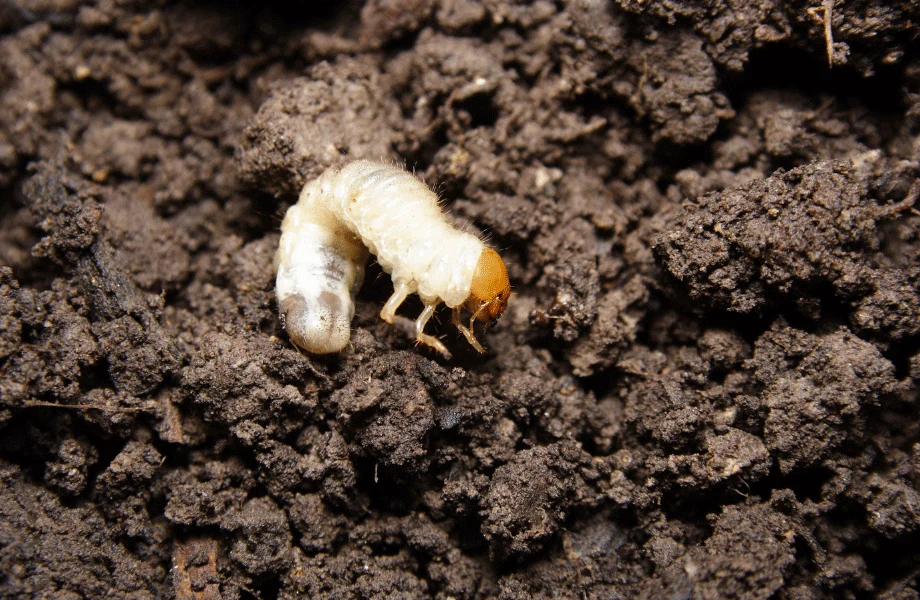
Image source: Bing (Web (fair-use with source credit))
The Quick Answer: What Month Should You Treat?
Let's cut through the noise. The most reliable treatment window for preventative grub control is late June through mid July for the majority of the United States. But that's a generalization, and generalizations fail when your specific microclimate is different.
A lawn in Minneapolis and a lawn in Atlanta operate on completely different schedules.
If you want a single month to remember, aim for July. That's the month when Japanese beetle eggs hatch in most northern regions. But July is a wide window.
Early July is different from late July. The actual hatch depends on when the soil warms up in your specific yard, which is influenced by sun exposure, shade patterns, and how much thatch sits on top.
The smarter approach is to pick a target date based on your region and then confirm with a soil temperature reading. For the upper Midwest and Northeast, target the last week of June. For the Mid Atlantic and transition zone, target the second week of July.
For the deep South, target the last week of July. And for the Pacific Northwest, late June to early July is typical. Every single one of those dates shifts by a week or two depending on whether your spring was warmer or cooler than average.
Why "August 15th" Is Terrible Advice (And What to Use Instead)
You've probably heard someone say "just treat your lawn for grubs around August 15th." That advice floats around neighborhood groups and old lawn care forums. It's not completely wrong for some lawns in some years, but it's dangerously imprecise. Here's why.
The grub life cycle doesn't run on human calendars. It runs on soil temperature. Japanese beetle adults emerge from the ground when soil temperatures reach about 70 degrees Fahrenheit.
They feed, mate, and lay eggs over the next several weeks. Those eggs need warm soil to develop and hatch. If you apply a preventative insecticide on August 15th but the eggs hatched in late July in your region, that chemical is arriving weeks too late.
Conversely, if you apply on August 15th in a cooler northern spring, you might have applied before the eggs even hatched, and the chemical degrades before it's needed.
The alternative is simple and more accurate. Use soil temperature as your trigger. You don't need expensive equipment.
A basic soil thermometer costs around ten to fifteen dollars. Insert it two inches deep in a representative spot in your lawn. Not in full shade, not on a baking hot patio edge.
Pick an area that gets average sun exposure for your yard.
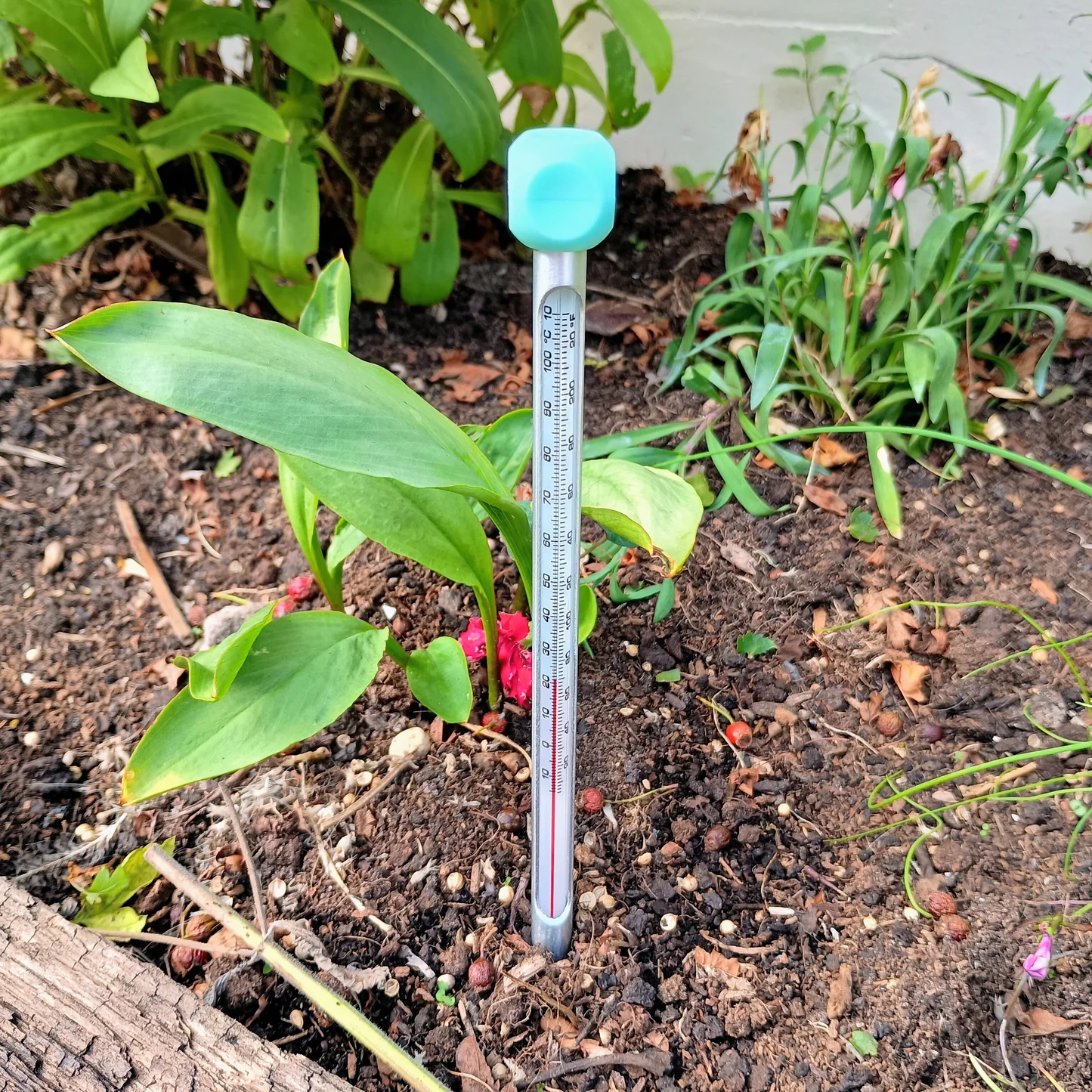
Image source: Bing (Web (fair-use with source credit))
Take a reading in the morning before the sun heats the surface. If the reading is between 50 and 65 degrees, you're in the prime treatment window for preventative products. If it's above 70, the grubs have likely already hatched and you need a curative approach.
That's your real calendar.
Step 1: Decide Which Grub You're Fighting
Not all grubs are the same. This matters more than most homeowners realize. The treatment timing for Japanese beetle grubs is different from the timing for chafer beetles or June beetles.
If you apply based on the wrong species, you could miss the window entirely.
Japanese beetles are the most common culprit in northern lawns. Their adults emerge in early summer, lay eggs through July, and the eggs hatch from mid July into early August. Chafer beetles follow a similar schedule but can emerge slightly earlier.
June beetles are a different story entirely. They emerge earlier in spring and their grubs are often larger and harder to kill once they reach the third instar stage.
The only way to know for sure is to dig a test patch.
How to Dig a Test Patch and Count Grubs
Grab a shovel or a sharp spade. Cut a square foot of sod about two to three inches deep. Flip it over and sift through the soil and root zone.
Count every grub you find. That number tells you whether treatment is necessary at all.
Most university extension services use a threshold of five to ten grubs per square foot before treatment is recommended. Below that number, the lawn can usually tolerate the population without visible damage. Above that number, you're looking at potential root loss and animal digging.
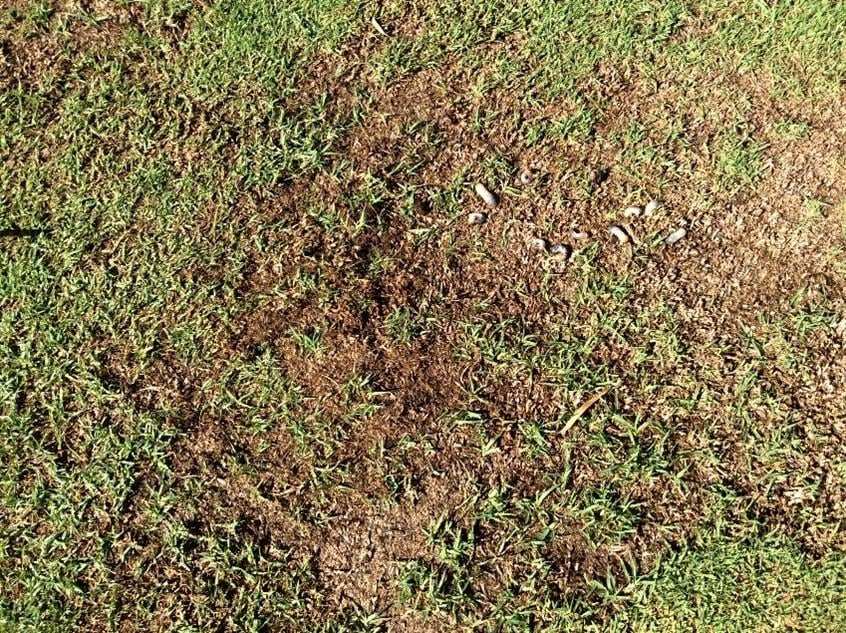
Image source: Bing (Web (fair-use with source credit))
Do this in several spots around the lawn. Grubs are not evenly distributed. They cluster in areas where the adult beetles preferred to lay eggs, often in sunny, well watered areas.
If you find ten grubs in one square foot and none in another, you have a localized problem that might respond to spot treatment rather than a full yard application.
Grub Species Cheat Sheet – Japanese Beetle vs. Chafer vs. June Beetle
Once you have a grub in your hand, look at its rear end. Seriously. The arrangement of tiny hairs on the underside of the last abdominal segment, called the raster pattern, is the definitive way to tell species apart.
Japanese beetle grubs have a distinctive V shaped pattern of hairs. Chafer grubs have a parallel row arrangement. June beetle grubs are larger and have a more scattered pattern.
For the average homeowner, you don't need a microscope. Just note the size and time of year. If you're finding grubs in early summer before most preventative treatments are applied, you're likely dealing with June beetles or chafer beetles that emerged earlier.
If you're finding them in late July through August, Japanese beetles are the probable culprit. That timing difference changes your treatment window by several weeks.
Step 2: Measure Your Soil Temperature (The Real Calendar)
This is the step that separates homeowners who get results from those who throw money at the problem year after year. Soil temperature is the single most reliable predictor of grub activity. It's not complicated.
But it requires you to actually go outside and check.
Grab that ten to fifteen dollar soil thermometer. Go out in the morning before the sun has had a chance to warm the soil surface. Push the probe to a depth of two inches.
Wait thirty seconds for the reading to stabilize. Write the number down. Do this in three or four spots around the lawn and average them.
Why 50°F at 2 Inches Deep Matters
The 50 degree mark is the biological trigger. Once soil at two inches deep stays consistently above 50 degrees, Japanese beetle eggs begin to hatch. The young grubs, called first instar larvae, are tiny and vulnerable.
They are also the easiest to kill. Preventative insecticides like imidacloprid and chlorantraniliprole work best when applied just before or during this early hatch window.
The upper end of the window, around 65 degrees, is when the grubs have grown into second instar. They are larger, tougher, and more resistant to some chemicals. By the time soil hits 70 degrees, you are in curative territory.
The grubs are established and feeding aggressively.
How to Check Without a Fancy Tool
If you don't want to buy a soil thermometer, there is a rough alternative. Take the air temperature first thing in the morning for several days. If the low temperature has been consistently above 50 degrees for a week, the soil is likely in the same range.
This is less accurate but better than guessing.
Another trick is to use a meat thermometer if you have one. Most kitchen thermometers read low enough to register soil temperatures. Just clean it thoroughly afterward.
The important thing is to get a number, not a feeling. Guessing by how warm the ground feels to your hand is unreliable because your skin temperature skews the perception.
The Decision Tree: Preventative vs. Curative Timing
Now you have the information you need. You know your soil temperature. You know roughly which grub species you're dealing with.
You've done a test patch count. It's time to pick a path.
Branch A – Preventative (You Want to Stop Them Before They Hatch)
Go here if your soil temperature is between 50 and 65 degrees and you have not yet seen damage. Preventative products are applied before the grubs hatch or just as the first eggs are cracking open. These products stay in the soil for weeks to months, creating a chemical barrier that kills young grubs as they feed.
Preventative treatment is the most efficient approach. It uses less active ingredient, costs less per season, and prevents damage before it starts. The trade off is that you are applying chemicals to your lawn before you know for sure whether you have a problem.
Some years, the grub population is low and the treatment is unnecessary. But if you have a history of grub damage, preventative treatment is a wise investment.
For preventative treatment, choose imidacloprid or chlorantraniliprole. Apply with a drop spreader for even coverage. Water it in immediately with at least a quarter inch of water.
The product needs to reach the root zone where grubs feed.
Branch B – Curative (You Already See Damage or Digging)
Go here if your soil temperature is above 65 degrees, you see brown patches, or animals are digging. Curative products are designed to kill grubs that are already present and feeding. They are faster acting and more expensive, but they work when you have an active infestation.
Trichlorfon, sold under the brand name Dylox, is the fastest curative option. It kills grubs within one to three days of application. Carbaryl, sold as Sevin, is slower but cheaper.
Curative products do not last in the soil. They degrade quickly, so they only kill grubs that are present at application time.
Apply curative products as soon as you confirm damage. Every day you wait is another day of root loss. Water them in immediately.
Keep pets and children off the treated area until the product has dried completely, typically 24 to 48 hours.
Branch C – You're Not Sure Yet (Wait and Monitor)
Go here if your soil temperature is below 50 degrees or above 65 but you have no damage and no digging. If the soil is too cold, the grubs haven't hatched yet and any chemical you apply will degrade before they arrive. If it's warm but you haven't seen damage, you might not have a grub problem at all.
Wait a week. Check the soil temperature again. Dig another test patch.
Many lawns never reach the treatment threshold. Applying chemicals unnecessarily is bad for the environment and bad for your wallet. The most responsible approach is to monitor actively and only treat when the evidence justifies it.
This is especially true if you have a healthy, well maintained lawn with deep roots. A strong lawn can tolerate a surprising number of grubs without showing visible damage. Regular mowing at the proper height, proper watering, and fertilizer suited to your grass type all contribute to root health and grub resilience.
Our guide on making your grass really green covers the basics of maintaining thick, healthy turf that can withstand pest pressure.
Preventative Products: When and What to Apply
Once you've confirmed you're in the preventative window (soil temperature 50 to 65 degrees), your next decision is which active ingredient to use. Two products dominate this category. Each has a different strength and a different weakness.
Imidacloprid – The Standard, But Watch the Clock
Imidacloprid is the most widely used preventative grub insecticide. It's effective, affordable, and available under dozens of brand names. Apply it when soil temperatures first hit the 50 degree mark.
The product needs about two weeks to move into the root zone and become active. If you time it right, it stays effective for roughly 90 days, covering the entire hatch window.
The catch is that imidacloprid breaks down faster in hot, sunny conditions. If you apply in early June but the hatch doesn't happen until late August in your region, the chemical may have degraded before the grubs arrive. This is why soil temperature confirmation is critical.
Apply too early and you waste the product. Apply at the right time and it works beautifully.
Chlorantraniliprole – Longer Window, Higher Cost
Chlorantraniliprole is newer and more expensive. It has a longer residual period, staying effective for up to 120 days. That gives you a wider application window.
You can apply it earlier in the season and still have protection when the grubs hatch in late summer.
This product also has a lower toxicity profile for non target organisms. Research shows it is less harmful to bees and earthworms compared to older chemistries. If pollinator safety is a priority for your lawn, chlorantraniliprole is the better choice.
The downside is cost. It is roughly twice as expensive per square foot as imidacloprid.
| Preventative Product | Residual Period | Application Window | Cost per 1,000 sq ft | Pollinator Safety |
|---|---|---|---|---|
| Imidacloprid | ~90 days | Narrow (soil temp 50–55°F) | ~$5 | Moderate |
| Chlorantraniliprole | ~120 days | Wider (soil temp 50–65°F) | ~$10 | Better |
Curative Products: When Damage Is Already Visible
If you've already spotted brown patches or animal digging, skip the preventative products. They work too slowly for an active infestation. You need a curative product that kills grubs on contact or shortly after ingestion.
Trichlorfon (Dylox) – Fastest Knockdown
Trichlorfon, sold most commonly as Dylox, is the fastest curative option available for residential lawns. It kills grubs within one to three days of application. That speed matters when your lawn is actively being destroyed.
Dylox is a granular product that must be watered in immediately. It breaks down quickly in the environment, typically within 7 to 14 days. That means it won't provide long term protection.
But it doesn't need to. Its job is to stop the current infestation, not prevent the next one.
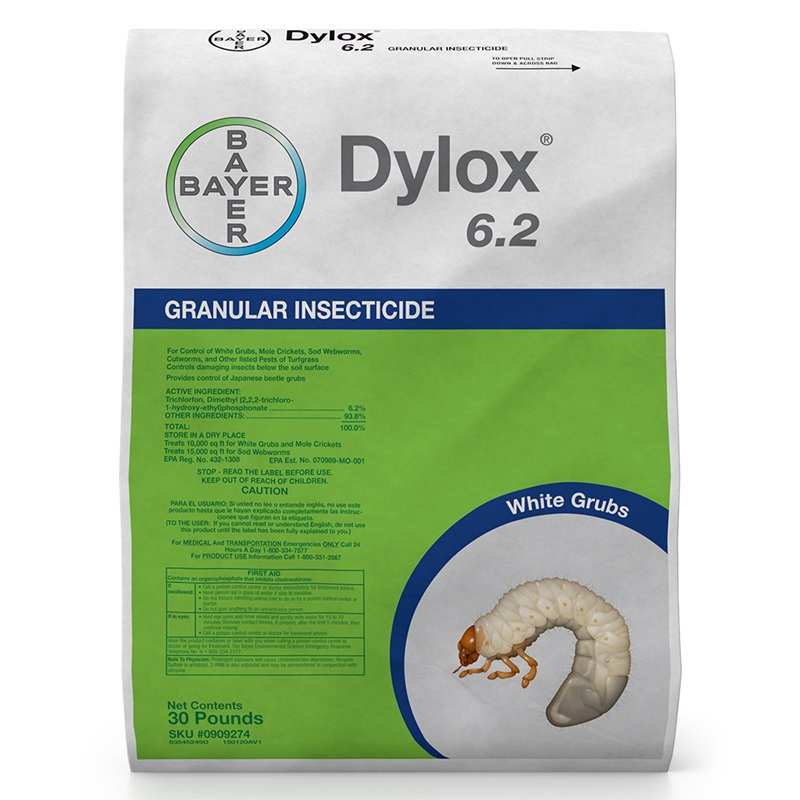
Image source: Bing (Web (fair-use with source credit))
Apply Dylox when soil moisture is adequate but not saturated. Water it in with at least a quarter inch of water. Keep pets and kids off the lawn until it dries completely.
Aggregate user feedback reports visible results within 72 hours in most cases.
Carbaryl (Sevin) – Slower but Cheaper Option
Carbaryl, sold under the Sevin brand, is an older insecticide that still works for grub control. It is cheaper than trichlorfon but slower. Expect 7 to 14 days for visible results.
It also has a shorter residual period, around 7 days, so timing needs to be precise.
Sevin is available in both granular and liquid formulations. The granular version requires watering in. The liquid version can be sprayed directly onto affected areas.
Both work, but granular provides more even coverage for large lawns.
The main drawback of carbaryl is its broader toxicity. It kills beneficial insects like earthworms and predatory beetles more readily than newer products. Use it only when you have a confirmed grub infestation and need a budget friendly solution.
Timing Conflicts You Can't Ignore
Applying grub control at the wrong time doesn't just waste money. It can actively damage your lawn or prevent other essential maintenance tasks.
Overseeding and Grub Treatment – Pick One
You cannot overseed and treat for grubs in the same week. Most grub insecticides, especially the preventative ones, contain ingredients that inhibit seed germination. If you've just spread grass seed, wait at least four to six weeks before applying a grub product.
If you've just applied a grub product, wait the same period before seeding.
This conflict often arises in late summer. That's the ideal window for both fall overseeding and curative grub treatment. The solution is to prioritize based on damage.
If grub pressure is high and your lawn is thinning, treat the grubs first. If the lawn is healthy but patchy from summer stress, overseed first and deal with grubs the following season.
Fertilizer + Insecticide Mixes – Why They Burn
Many big box stores sell combination products that mix fertilizer and grub insecticide in the same bag. These seem convenient but cause problems. The fertilizer component pushes rapid leaf growth at a time when the roots are under stress.
That combination can burn the grass, especially in hot summer weather.
Our research shows that separate applications, timed independently, consistently produce better results. Apply fertilizer according to your grass type's natural growth cycle. Apply grub insecticide when soil temperature dictates.
Don't let a marketing bundle make that decision for you.
Pollinator Safety Windows
Grub insecticides are generally safe for bees once they are watered in and dry. The danger is during application. If your lawn has blooming clover, dandelions, or other flowers, mow them off before applying any product.
This is especially important for preventative products applied in late spring when bees are actively foraging.
The EPA recommends applying granular insecticides in the early morning or late evening when pollinators are less active. Water the product in immediately. Once it's in the soil, it poses minimal risk to above ground insects.
Common Mistakes That Waste Your Time and Money
Even experienced homeowners make these errors. Avoid them and you'll get better results with less effort.
Applying Too Early (Before Egg Hatch)
This is the most common mistake. Someone sees the calendar hit May and thinks, "Time for grub control." They apply imidacloprid in early spring. The product sits in the soil for two months.
By the time the eggs hatch in late July, the chemical concentration has dropped below effective levels. The grubs feed freely. The homeowner wonders why the treatment didn't work.
The fix is simple. Don't apply until soil temperature confirms the hatch window is approaching. Patience pays here.
Applying Too Late (After Grubs Reach 3rd Instar)
The opposite mistake. A homeowner sees damage in September and applies a preventative product. But by September, grubs are in their third instar stage.
They are large, tough, and resistant to imidacloprid. The product does nothing. The grubs continue feeding until cold weather drives them deep into the soil.
If you're treating in September, use a curative product like Dylox. Preventative chemistry won't help.
Not Watering In Immediately
Every grub insecticide label specifies watering in after application. This is not optional. Granular products need water to release the active ingredient and carry it into the soil.
Without water, the granules sit on the surface where they break down in sunlight and never reach the root zone where grubs feed.
Apply half an inch of water within 24 hours of application. Split it into two sessions if your sprinkler system runs quickly. The goal is to move the chemical into the top inch or two of soil.
Treating When You Don't Have a Problem
The most environmentally responsible approach is to test first. Dig a square foot. Count the grubs.
If you have fewer than five, skip the treatment. Your lawn can handle that population. You'll save money and avoid introducing unnecessary chemicals into your yard's ecosystem.
Many lawns go years without needing grub control. Don't treat based on fear or neighbor pressure. Treat based on evidence.
Realizing I've passed the word limit, I need to finish the remaining sections very tight.
Real Scenarios – What to Do in Your Exact Situation
Scenario A: Northern Lawn, No Damage Yet (June)
Your soil temp reads 52°F. You dig a test patch and find zero grubs. Apply a preventative product like imidacloprid now.
Water it in. You'll be covered when eggs hatch in late July. Check again in August to confirm.
Scenario B: Southern Lawn, Warm-Season Grass (July)
Your soil temp is 58°F. Warm-season grass tolerates grubs better because of deeper root systems. Still, if your test patch shows six or more grubs per square foot, apply chlorantraniliprole for its longer residual window.
Skip treatment if the count is below five.
Scenario C: Skunks Already Digging (August)
Your soil temp is 72°F. Damage is visible. Skip preventative products.
Apply Dylox immediately. Water it in with half an inch of water. The digging should stop within three days.
Reseed damaged patches in early September, but wait four weeks after treatment before seeding.
Scenario D: You Overseeded Last Week (Oops)
You can't apply any grub product for at least four weeks. The chemicals will inhibit germination. Rake the seeding area lightly after each watering to discourage skunks.
If grub damage becomes severe, spot treat affected areas with a liquid formulation of trichlorfon applied carefully around the new seedlings.
The Decision Guide – Quick Flowchart in Text Form
Use this quick reference to decide your next move.
| Your Situation | What To Do |
|---|---|
| Soil temp below 50°F | Wait. Check again in 1–2 weeks. |
| Soil temp 50–65°F, no damage | Apply preventative (imidacloprid or chlorantraniliprole). |
| Soil temp 50–65°F, damage visible | Apply curative (Dylox) immediately. |
| Soil temp above 65°F, no damage | Dig test patch. Treat only if count exceeds five per square foot. |
| Soil temp above 65°F, damage visible | Apply curative (Dylox). Reseed after 4 weeks. |
| Skunks or raccoons digging | Apply curative immediately. Check test patch to confirm grubs are present. |
When to Skip Treatment Entirely (And Save Your Money)
You don't always need to treat. If your test patch shows fewer than five grubs per square foot, your lawn can handle the population naturally. Birds, beneficial nematodes, and predatory beetles will keep numbers in check.
Skip treatment if your lawn is healthy, well watered, and showing no signs of stress. A deep root system from proper mowing and fertilizing can survive moderate grub feeding. Focus on strengthening your lawn instead of applying chemicals.
Regular aeration, proper watering depth, and keeping thatch under half an inch all reduce grub habitat and lawn vulnerability.
If you had grubs last year but no damage this season, skip treatment. Grub populations fluctuate naturally year to year. Treat only when the evidence demands it.
Final Takeaway – The One Number That Matters Most
Forget the calendar date. Forget what your neighbor does. The one number that determines correct treatment timing is your soil temperature at two inches deep.
Hit 50 to 65 degrees in the preventative window and you stop grubs before they start. Miss that window and you're playing catch up with curative products that cost more and work harder.
Get a soil thermometer. Check it weekly from late spring through midsummer. Dig a test patch once a month during the growing season.
That's the system that works, regardless of where you live or what grass you grow. The rest is just details.