
If you've ever stared at a brown patch spreading across your lawn and wondered whether grubs are the cause, you know the frustration. The answer to when to treat grubs in lawn isn't a single date circled on a calendar. It shifts based on where you live, what kind of grass you have, and which species of beetle laid eggs in your soil.
Research from university turfgrass extension programs confirms that the treatment window for Japanese beetle grubs, the most common damaging species in North America, opens when soil temperatures at a 2-inch depth reach around 70°F. That's a completely different benchmark than the air temperature on your porch thermometer. Here's what actually drives the timing decision.

The Real Problem: Why Calendar Dates Keep Failing You
The biggest mistake homeowners make is treating for grubs on a fixed date. "I'll put down grub killer in July" sounds reasonable. But it ignores the fact that grub species don't follow the same schedule.
Japanese beetle grubs hatch in late summer, typically August. European chafer grubs hatch earlier, sometimes by four to six weeks. If you treat for Japanese beetles in July but you have European chafer, you've already missed the window.
The grubs are too large for preventive products to work.
Weather also changes the timing year to year. A cool spring pushes everything later. A warm spring pulls it forward.
The calendar doesn't adjust for that. Your lawn's soil temperature does.
The other problem is applying product when no grubs are active. Preventive products break down in soil over time. If you apply them too early, they degrade before the grubs hatch.
You end up with no protection and a wasted application.
Quick Answer: The Three Timing Windows That Actually Matter
Treat grubs preventively in mid-summer before eggs hatch. Use curative products in late summer when you see damage. Biological controls work best in early fall with moist soil.
Check soil temperature, not the calendar, for precise timing. Your region shifts these windows by two to four weeks as of 2026.
Grub Biology 101: What You're Actually Fighting
To get the timing right, you need to understand what you're dealing with. Grubs are the larval stage of various beetles. The most common in North American lawns are Japanese beetle, European chafer, and masked chafer.
All three cause damage by eating grass roots. But their life cycles are not identical.
Different species, different schedules
Japanese beetle adults emerge in early summer, mate, and lay eggs in July. The eggs hatch about two weeks later. The young grubs are tiny at first, barely visible.
They feed near the soil surface through August and September.
European chafer adults emerge a bit earlier. They lay eggs in late June or early July. The eggs hatch sooner, and the grubs grow faster.
By the time you notice damage in late summer, they're already large and harder to kill.
Masked chafer falls somewhere in between. The exact timing varies by region and local climate conditions.
The soil temperature rule (not the calendar)
Soil temperature is the most reliable predictor of grub activity. Beetles don't lay eggs until the soil reaches a certain warmth. Grubs don't hatch until the soil stays warm enough for development.
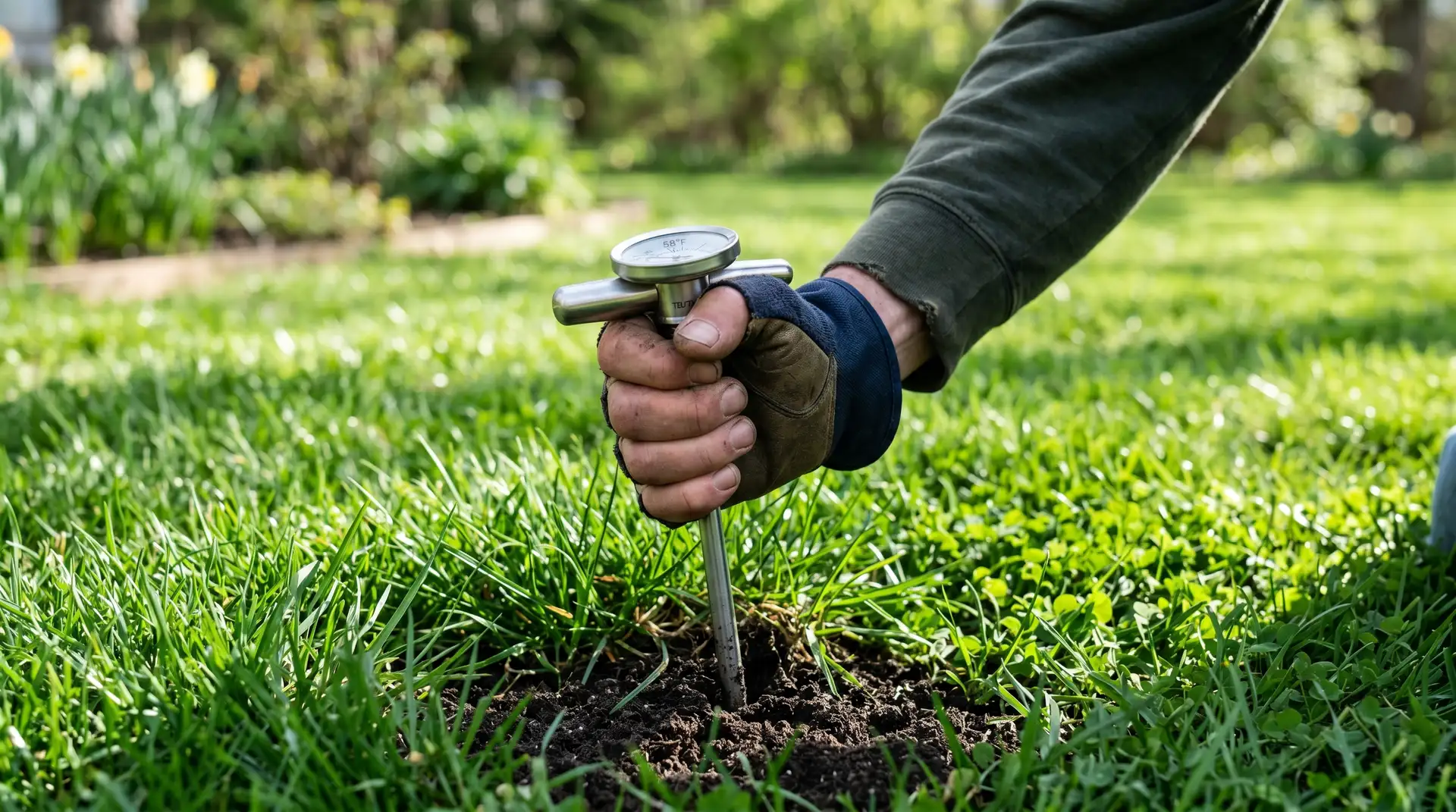
You can buy a simple soil thermometer for under $15. Push it 2 inches into the ground in the morning. Check it a few times over a week.
When the soil stays consistently at 70°F or above, you're in the treatment window for preventive products.
This method works anywhere. It doesn't matter if you're in Minnesota or Texas. The soil temperature tells you when to act, not a date on a wall calendar.
Step 1: Confirm You Have Grubs (Don't Guess)
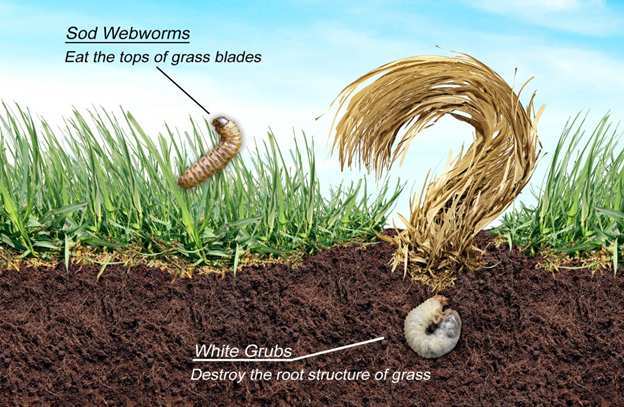
Before you buy any product, make sure grubs are actually the problem. Many lawn issues look like grub damage but aren't. Drought stress, fungal disease, and even dog urine can create brown patches that peel back easily.
The turf peel test
Here's how to check. Take a sharp shovel or knife and cut a square foot of turf, about 3 inches deep. Fold the sod back like a flap of carpet.
Look at the soil and the roots.
Healthy roots hold the sod together. If the roots are chewed off, the sod will peel back easily with little resistance. That's a strong sign of grub activity.
Count the grubs you see in that square foot. Don't just look at the surface. Sift through the top inch of soil.
Grubs are C-shaped, white or cream-colored, with a brown head. They curl up when disturbed.
How to count grubs per square foot
The threshold for action depends on your lawn's condition. For a typical home lawn with cool-season grass, treatment is recommended when you find 10 to 12 grubs per square foot. For warm-season grasses, the threshold is higher, around 15 to 20.
For high-value turf like a front lawn that you baby, you might treat at lower numbers. For a back field that nobody sees, you can tolerate more.
When to ignore a low count
If you find only one or two grubs per square foot, do nothing. That's a normal population. Healthy lawns can handle a few grubs.
The birds and other predators will take care of them.
Treating when you don't need to is wasteful. It kills beneficial insects and earthworms. It also adds unnecessary chemicals to your soil.
Only treat when the count justifies it.
Step 2: Identify Which Grub Species You're Dealing With
This step matters more than most people realize. Different species respond to different products at different times. If you treat the wrong species at the wrong time, you waste money and get no results.
Japanese beetle vs. European chafer vs. masked chafer
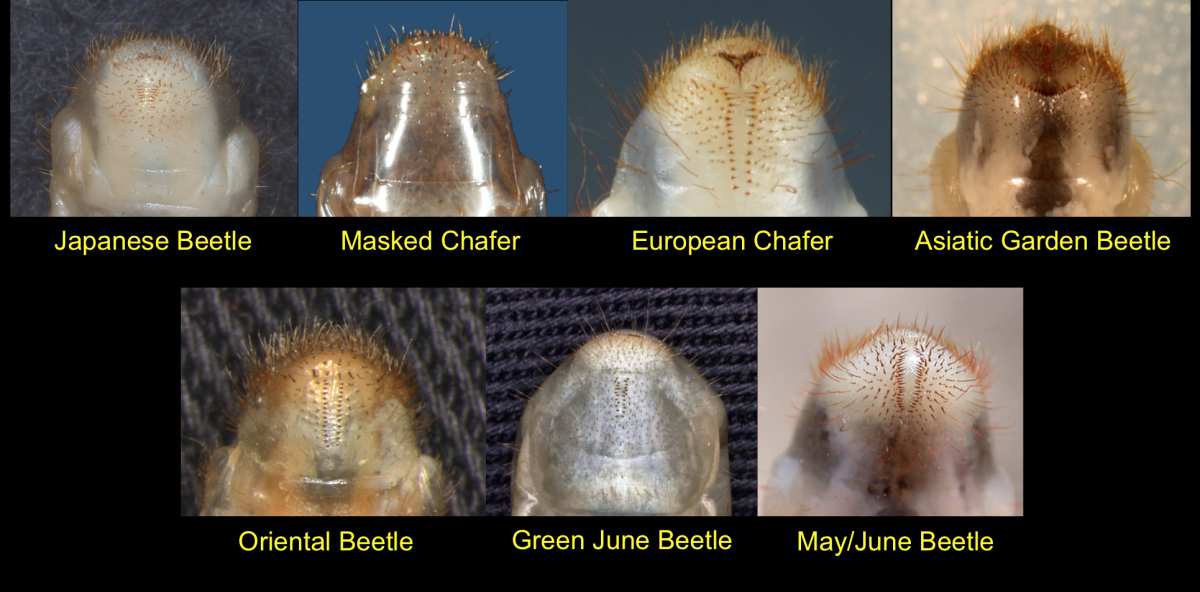
Look at the rear end of the grub. That sounds odd, but it's the best way to tell them apart. The pattern of hairs on the underside of the last segment, called the rastral pattern, is species-specific.
Japanese beetle grubs have a V-shaped pattern of bristles. European chafer grubs have a scattered, random pattern. Masked chafer grubs have a distinct arrangement that falls in between.
You can see these differences with a simple magnifying glass. University extension websites have clear diagrams showing the patterns. The image above shows the key visual differences.
Why species matters for timing
If you have Japanese beetle grubs, your preventive treatment window is mid to late July. If you have European chafer, your window is early to mid July. That's a difference of several weeks.
Using a preventive product too late for European chafer means the grubs are already too large. The product won't be as effective. You end up needing a curative product instead, which is stronger and more expensive.
Knowing the species also tells you about future pressure. Japanese beetles are strong fliers and can come from neighbors' yards. European chafer adults are less mobile.
If you treat your lawn and your neighbors don't, Japanese beetles will return each year. European chafer might not.
This is where a little extra effort in identification pays off. Take a few minutes to look at the grubs you find. Snap a photo and compare it to reference images from your local extension service.
The five minutes you spend now could save you a whole season of frustration.