Getting the timing right is what separates a dead-grub lawn from a wasted Saturday. When to spray for grubs depends entirely on the grub's life stage, the product you're using, and the calendar window for your region. Spray too early and the chemical degrades before the grubs even hatch. Spray too late and the grubs are too big for most products to kill.
There are really two windows that matter: preventive (May through July, before eggs hatch) and curative (August through October, while grubs are small and actively feeding). Which window you're in changes the chemistry you should use. As of 2026, the preventive standard remains chlorantraniliprole-based products (often sold as GrubEx), which have largely replaced older neonicotinoid options in many regions due to their lower toxicity to bees, pets, and aquatic life.
The curative standard is a fast-acting product that must land while grubs are still small. Here's how to know which approach you need and when to act.

Image source: Bing (Web (fair-use with source credit))
Quick Answer
When to spray for grubs depends on your strategy. Apply preventive insecticides between May and July before beetle eggs hatch. Apply curative insecticides between August and October while grubs are still small and actively feeding at the soil surface.
Preventive chlorantraniliprole products will not kill large, established grubs. Curative products will not provide season-long protection.
How the Grub Life Cycle Drives Your Timing
The reason timing comes down to two windows is simple biology. White grubs are the larval stage of several beetles. The adult beetles we see flying around in early summer are your signal that egg-laying is coming.
Once the eggs hatch, the tiny grubs begin feeding on grass roots. As they grow through late summer and fall, they get progressively harder to kill with chemical controls.
Here's the typical cycle for the most common species in the US and southern Canada:

Image source: Bing (Web (fair-use with source credit))
Adult beetle emergence peaks in June and July for Japanese beetles, European chafers, and June beetles. The adults mate and lay eggs in moist soil, usually July through mid-August depending on your region.
Egg to larva transition happens within a few weeks of egg-laying. These newly hatched first-instar grubs are tiny and vulnerable. This prime treatment window typically falls in late July through September.
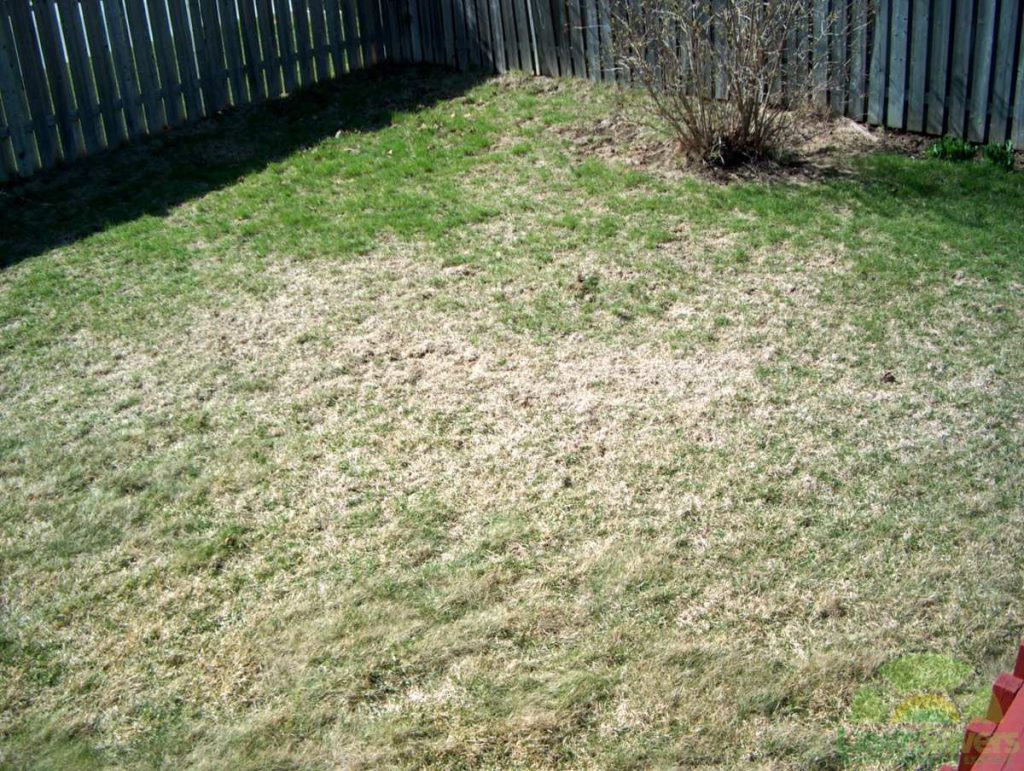
Active feeding period runs from August through October, then again in spring after grubs overwinter deeper in the soil. Fall feeding causes the visible brown patches most homeowners notice in September and October.
Pupation and emergence happens the following late spring or early summer, restarting the cycle.
The product category you choose must align with which stage is active when you apply. A preventive product applied in June sets a chemical barrier in the top inch of soil as eggs hatch. A curative product applied in late August must reach small grubs that are already actively feeding.
Once grubs reach third instar in the fall, most products lose serious effectiveness.
Determine If You Actually Need to Treat
Not every grub in your lawn is a problem. A healthy, well-irrigated lawn can tolerate a surprising number of grubs without visible damage. The damage threshold varies by grass type and lawn health.
The quickest way to answer when to spray for grubs is to first confirm you have enough grubs to justify treatment. Here's how:
- Pick a spot where brown or thinning turf meets healthy green turf. This edge is where grub damage usually shows first.
- Cut a 12-inch by 12-inch square of turf with a spade, going about 2 inches deep.
- Peel back the turf like a carpet and examine the soil and root zone.
- Count all the white, C-shaped grubs you see in the exposed soil and thatch layer.
- Multiply that number by a factor if you're sampling multiple spots to get a square-foot average.
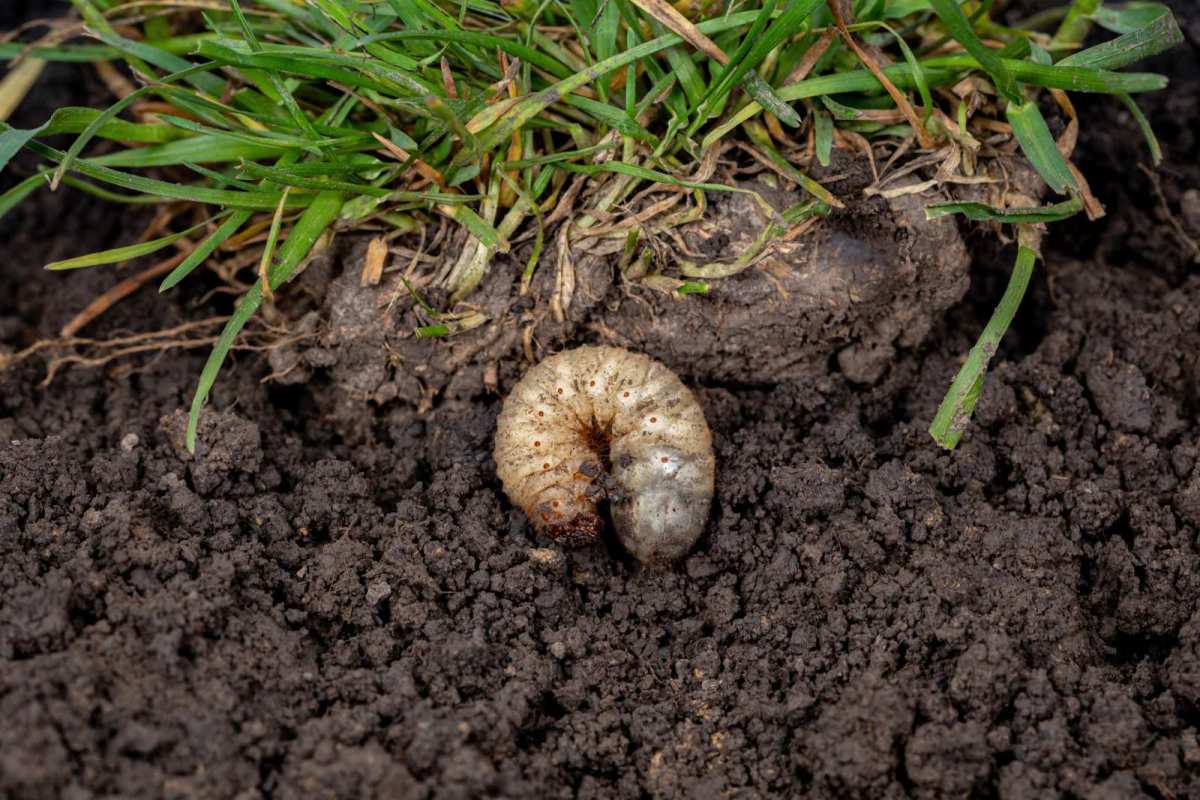
Image source: Bing (Web (fair-use with source credit))
General treatment thresholds:
| Grass Type | Grub Count per sq ft | Action |
|---|---|---|
| Cool-season (well-maintained) | 10 or more | Treat |
| Cool-season (stressed, drought, shaded) | 5 or more | Treat |
| Warm-season (healthy) | 5 or more | Treat |
| Athletic turf / show lawn | 3 or more | Treat |
| Any lawn below these counts | Below threshold | Monitor, do not treat |
If your count is below the threshold for your grass type, skip the spray. Watch the lawn through fall and early spring. Grub counts often don't climb year over year.
Other common causes of brown patches include drought stress, fungal disease like brown patch or dollar spot, and poor irrigation coverage. Grub damage specifically lifts up like loose carpet because the roots have been severed. If the turf doesn't peel back easily, your problem probably isn't grubs.
The Spring and Early Summer Preventive Window (May–July)
If you've had grub damage in the previous year, or your neighbor has, preventive treatment is the most reliable way to stop the cycle before it starts. The goal here is not to kill grubs. The goal is to establish a chemical barrier in the soil that kills newly hatched grubs as they begin feeding, before they ever reach damaging size.
When to apply: Preventive products should go down between May and July in most regions. The exact timing depends on your local adult beetle emergence. A good rule of thumb is to apply within four weeks before peak adult flight.
For Japanese beetles in the Northeast and Midwest, peak flight is usually late June through July. Apply in mid-to-late May through mid-June to get the barrier active before egg-laying begins.
Best chemistry: Chlorantraniliprole is the current standard for preventive grub control. It's the active ingredient in Scotts GrubEx and several generics. Manufacturer specifications and university extension trials consistently show 80, 95 percent control when applied within the correct window.
It has very low toxicity to mammals, birds, and adult bees, making it a good fit where kids, pets, or pollinator gardens are a concern. Its residual activity in soil typically covers four to six weeks, which is why timing matters. Apply too early and the barrier weakens before the last eggs hatch.
Product comparison for the preventive window:
| Active Ingredient | Product Example | Toxicity Profile | Residual | Best Use |
|---|---|---|---|---|
| Chlorantraniliprole | GrubEx | Very low to mammals, pets, bees | 4–6 weeks | Standard preventive |
| Clothianidin | Generics available | Toxic to bees (neonicotinoid) | 4–6 weeks | Preventive where chlorantraniliprole restricted |
Imidacloprid, once the go-to preventive neonicotinoid, has been phased out or restricted for outdoor residential use in several states including Connecticut, Maryland, Massachusetts, and Vermont. Check your state department of agriculture's current pesticide regulations before purchasing any neonicotinoid lawn product as of 2026. Chlorantraniliprole remains broadly available and is the default recommendation from most university extension services for homeowners.
Watering in after a preventive application is essential. The product must reach the top inch of soil and root zone where newly hatched grubs are feeding. For granular products, apply at the labeled rate (typically 2 to 3 pounds per 1,000 sq ft depending on the product) and water immediately with at least a quarter inch of irrigation. If rain is forecast within 24 hours of application, you can hold off on watering.
Do not let granules sit on the surface for days without activation, or you'll lose a significant portion of the product to photodegradation and volatilization.
The Late Summer and Fall Curative Window (August–October)
If you're reading this in August or September and you've already found grubs or noticed spongy, brown patches, you're in curative territory. The preventive window has closed. You need a product that kills existing grubs fast, and you need to act while those grubs are still small and feeding near the soil surface.
When to apply: The curative window opens when eggs have hatched and you're finding small grubs in your test cuts. In the Midwest, Northeast, and Upper South, this is typically August through mid-October. Grubs in the first or second instar are small, pale, and actively feeding close to the surface where the product can reach them.
Once overnight temperatures consistently dip below freezing, grugs migrate deeper into the soil and most surface-applied products can not reach them.
Best chemistry for curative treatment:
| Active Ingredient | Product Example | Speed of Kill | Residual | Notes |
|---|---|---|---|---|
| Trichlorfon (Dylox) | Dylox 6.2 Granular | 1–3 days | Short (1–2 weeks) | Fastest-acting curative option |
| Carbaryl | Sevin Granules | 1–7 days | Short (1–3 weeks) | Widely available, effective on moderate-grub stages |
| Indoxacarb | Provaunt | 3–7 days | Moderate (2–4 weeks) | Lower bee toxicity than carbaryl or trichlorfon |
Dylox (trichlorfon) is generally the top recommendation among extension specialists for a known active infestation because it works fast and can knock down grubs even when they're slightly larger than ideal window stages. The downside is its short residual, meaning it will not prevent a second wave if adult beetles are still laying eggs. Carbaryl (Sevin) is also serviceable but slower and broader in toxicity to beneficial insects, earthworms, and other non-target organisms.
Critical tip on water-in for curative curative applications. Unlike preventives that sit as a barrier, curative products need to reach grubs that are actively moving through the root zone. Water in with at least a quarter inch immediately after application, then leave the lawn alone for 48 hours before resuming normal mowing or foot traffic. Checking effectiveness a week later with another soil sample confirms whether you treated early enough.
If you still find live grubs ten days after application, the grubs were likely too large and too deep. At that point, you've missed the window and should plan for preventive treatment the following spring instead of throwing money at a curative reapplication that likely will not work.

Image source: Bing (Web (fair-use with source credit))