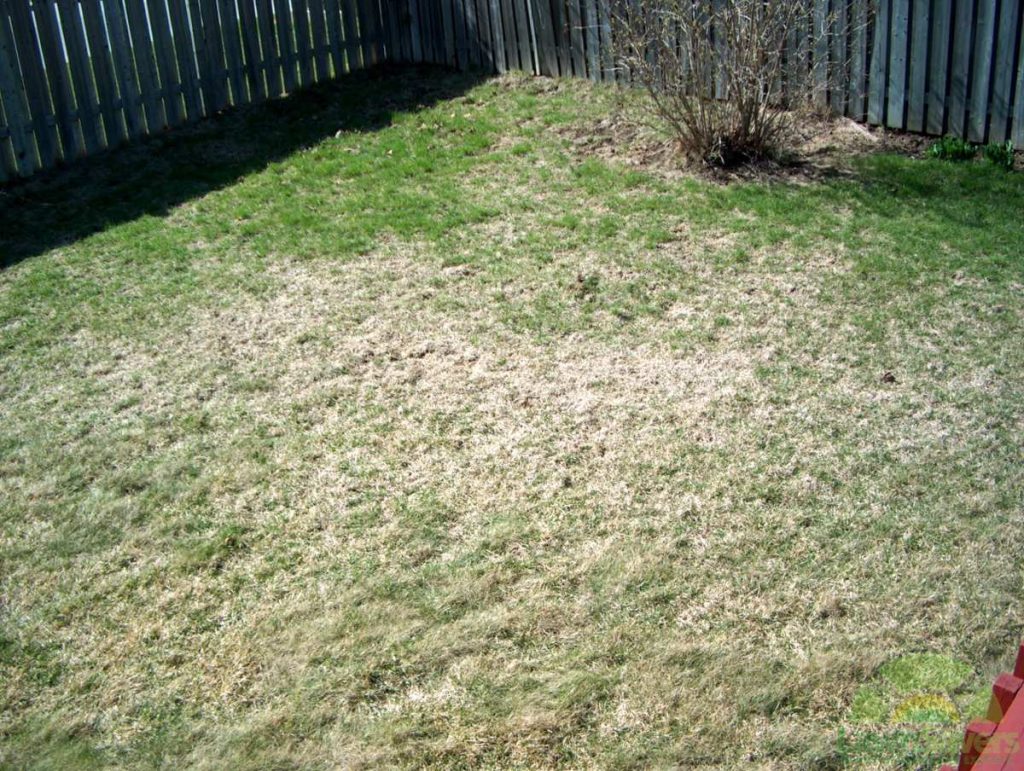
If you've got brown patches rolling through your Missouri lawn every late summer, chances are white grubs are the culprit. Nailing when to apply grub control in Missouri is the difference between stopping them before they start and throwing money at a problem that's already done its damage. The timing isn't one-size-fits-all, and getting it wrong is the number one reason treatments fail.
Here's the short version: Missouri's primary grub species, Japanese beetle and May/June beetle, lay eggs in early summer, and those eggs hatch into feeding larvae by mid-June through early July across most of the state. That narrow window, when grubs are tiny and vulnerable, is when preventive products do their best work. Miss it, and you're switching to a completely different strategy.
Let's walk through exactly how to figure out which situation you're in and what to do about it.

Image source: Bing (Web (fair-use with source credit))
Quick Answer
Apply preventive grub control in Missouri between late May and early July. Southern Missouri should target late May to mid-June. Northern Missouri should target mid-June to early July.
If you're already seeing brown patches in August or September, switch to a curative product immediately. The product type you choose depends entirely on which side of egg hatch you're on.
Why Grub Timing in Missouri Is Trickier Than You Think
Most grub control advice online gives you a single date and calls it done. That doesn't work in Missouri because the state spans two USDA Hardiness Zones, sits squarely in the turf transition zone, and hosts multiple grub species with slightly different lifecycles.
A homeowner in Springfield is dealing with soil temperatures that warm up weeks earlier than someone in Kirksville. That means egg hatch, the critical trigger for timing your application, happens on a different schedule depending on where you live. On top of that, Missouri's common cool-season grasses (tall fescue, Kentucky bluegrass) and warm-season grasses (zoysia, bermuda) have different thresholds for what counts as acceptable damage.
The other wrinkle is product type. Preventive and curative grub controls aren't interchangeable. They work on completely different life stages, and applying the wrong one at the wrong time is like locking the barn door after the horse has already left.
The Two Windows That Matter: Preventive vs. Curative
Everything comes down to two distinct treatment windows. Which one you use depends on when you're reading this and what your lawn looks like right now.
Preventive window (late May through early July): This is where you want to be. Preventive products like chlorantraniliprole (GrubEx) and imidacloprid (Merit) target newly hatched grubs before they grow large enough to do serious root damage. These products need to be in the soil and active when eggs hatch.
Once grubs are mature and actively feeding in August, preventive products lose most of their effectiveness.
Curative window (late July through September): If you're reading this in August and your lawn is already showing damage, you need a curative product. Carbaryl and trichlorfon (Dylox) are the go-to options here. They kill existing grubs on contact or through ingestion, and they work fast, often within 24 to 72 hours.
The tradeoff is they won't prevent next year's generation, and they're harder on beneficial soil organisms.
Here's a side-by-side breakdown:
| Factor | Preventive | Curative |
|---|---|---|
| Best application window | Late May to early July | Late July to September |
| Active ingredients | Chlorantraniliprole, imidacloprid, thiamethoxam | Carbaryl, trichlorfon |
| Speed of kill | Slow (works as grubs feed) | Fast (24-72 hours) |
| Residual protection | Full season | Short window |
| Best for | Stopping damage before it starts | Rescuing lawn already under attack |
| Reapplication needed? | No (one application per year) | Possibly, if damage continues |
What's Actually Happening Underground: Missouri's Grub Lifecycle
Understanding the grub lifecycle is what makes the timing click. Missouri's most common lawn grubs are Japanese beetle larvae and May/June beetle larvae (Phyllophaga species). Their lifecycles follow a similar pattern, with slight timing differences.
Adult Japanese beetles emerge in June and July, feeding on roses, linden trees, and other plants. By mid to late July, females burrow into moist soil and lay eggs, usually in batches of 15 to 20, totaling 40 to 60 eggs per female. Those eggs hatch within about two weeks.
The newly hatched larvae, tiny C-shaped white grubs, start feeding on grass roots in late July and August. They grow quickly through August and September, doing the most damage during this stage. As soil temperatures drop in October, they burrow deeper and go dormant for winter.
They resurface in spring, feed briefly, then pupate and emerge as adults to restart the cycle.
May/June beetles follow a similar pattern but on a slightly longer cycle, sometimes taking two to three years to complete a generation. Their egg laying peaks in May and June, which is why northern Missouri lawns sometimes see a slightly later hatch window.

Image source: Bing (Web (fair-use with source credit))
The key takeaway: eggs hatch when soil temperatures at a 4-inch depth consistently hit 65 to 70°F. In southern Missouri, that often happens by late May. In northern Missouri, it might not happen until mid-June.
That soil temperature trigger is your real calendar, not the date on your phone.
How to Figure Out Which Window You're In Right Now
This is where most people either overthink it or skip the step entirely. You need to answer two questions before you buy anything.
Question 1: What month is it?
- Late May through early July: You're in the preventive window. Buy a preventive product and get it down soon.
- Late July through September: You're in the curative window. If you see damage, grab a curative product.
- October through April: Hold off. Grubs are either too deep or too large for either approach to be cost-effective. Mark your calendar for next May.
Question 2: Does your lawn actually have a grub problem?
Not every brown patch is grubs. Drought stress, fungal disease, dog urine spots, and compacted soil all cause similar-looking damage. You need to verify before you treat.
Here's the simple test: cut a 1-foot square of sod in the damaged area, about 2 inches deep, and peel it back. Count the grubs you see in the soil underneath.
- Fewer than 5 grubs per square foot: No treatment needed. Your lawn can handle it.
- 5 to 10 grubs per square foot: Borderline. Treat if the lawn is high-value or already stressed.
- More than 10 grubs per square foot: Treat. This level of infestation will cause visible damage.
Check three or four spots across the lawn and average your count. Grubs cluster, so one square might have 20 while another has zero. Averaging gives you the real picture.
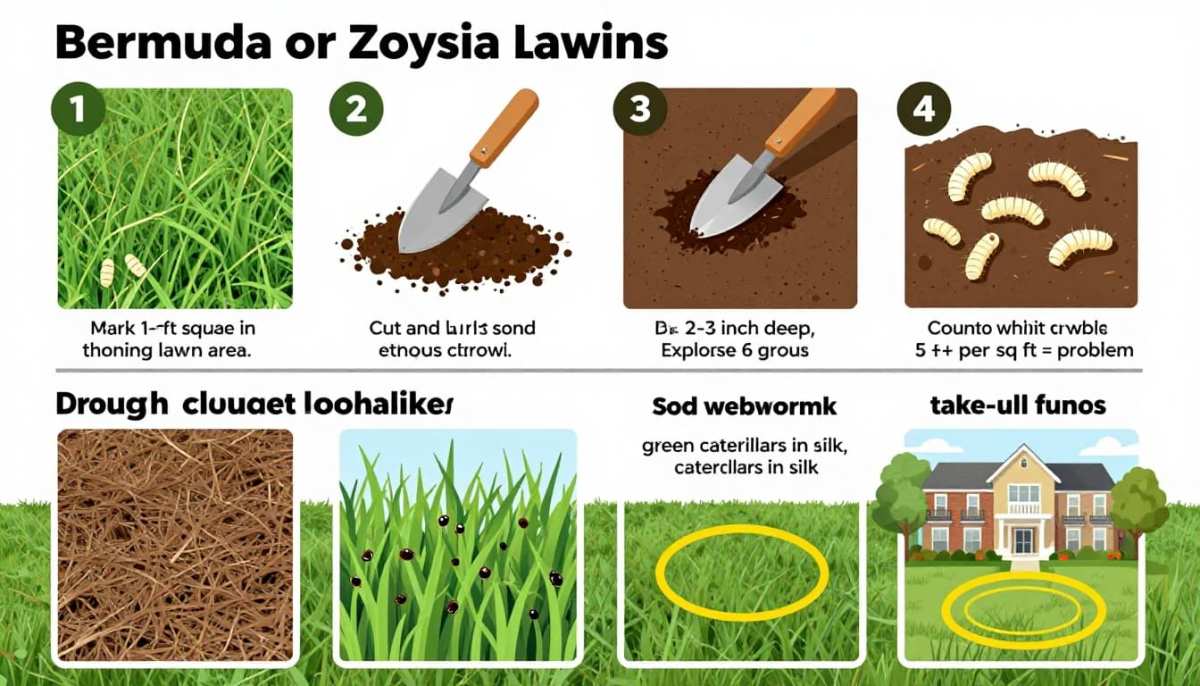
Image source: Bing (Web (fair-use with source credit))
If you're peeling back sod and it rolls up like carpet, that's a classic grub sign. The roots have been chewed away, and the turf no longer anchors to the soil. You might also notice increased animal activity, raccoons, skunks, or birds digging at your lawn overnight.
They're after the grubs, and the secondary damage they cause can be just as frustrating as the grubs themselves.
The Decision Tree: Which Product and When Based on Your Situation
Once you know what month it is and whether you've confirmed grubs, the product choice becomes straightforward. Here's the logic.
If it's late May through early July and you've had grubs before: Use a preventive product. Chlorantraniliprole (GrubEx) is the current standard recommendation from University of Missouri Extension. It's effective at low rates, has a favorable environmental profile compared to older chemistries, and provides season-long control from a single application.
Imidacloprid (Merit) is another solid option, though it has a shorter residual window of about 8 to 16 weeks.
If it's late July through September and you're seeing damage: Use a curative product. Trichlorfon (Dylox) works fast, killing grubs within 24 to 72 hours of application. Carbaryl (Sevin) is another curative option, though it's broader-spectrum and will impact beneficial insects too.
Neither of these will give you season-long residual protection, so they're strictly rescue treatments.
If you want to avoid synthetic chemicals entirely: Beneficial nematodes (Heterorhabditis bacteriophora) can be applied in late August or early September when soil temperatures are still above 60°F. They actively seek out and kill grubs, but they require proper soil moisture and careful handling. Milky spore (Paenibacillus popilliae) is another biological option, though it targets only Japanese beetle grubs and takes two to three years to build up effective populations in the soil.
If it's October through April: Wait. Grubs are either dormant deep in the soil or have already pupated. No product works well at this stage.
Use the downtime to plan your preventive application for spring.
Northern vs. Southern Missouri: Why Your Zip Code Changes Everything
Missouri stretches roughly 300 miles north to south, and that distance matters more than most people realize. The state spans USDA Hardiness Zones 5b in the northern counties to 7a in the Bootheel. That translates to a soil temperature difference of several weeks during spring warmup.
Southern Missouri (Springfield, Joplin, Branson, Cape Girardeau): Soil temperatures at 4-inch depth typically hit the 65 to 70°F egg-hatch threshold by late May. Plan your preventive application for late May through mid-June. If you wait until July, you're likely already too late for preventive products.
Central Missouri (Columbia, Jefferson City, Lake of the Ozarks): The middle ground. Egg hatch usually occurs in early to mid-June. Target your preventive application for early to late June.
Northern Missouri (Kansas City, St. Joseph, Kirksville, Hannibal): Cooler springs push egg hatch later. Mid-June through early July is your preventive window.
You've got a bit more breathing room up here, but don't push it past early July.
A practical tip: if you want to skip the guesswork, check your local soil temperature. The University of Missouri Extension network and the Missouri Mesonet both publish soil temperature data. When your area's 4-inch soil temperature consistently reads 65°F or above, eggs are hatching and it's time to get preventive product down.
How to Confirm You Actually Have Grubs (Before You Spend a Dime)
We covered the sod-cutting test earlier, but there are a few other signs worth watching for. Grub damage often shows up first in the sunniest, driest parts of your lawn because those areas stress fastest when roots are compromised. If you're watering regularly and still seeing brown patches that don't respond to fertilizer, grubs should be on your suspect list.
The roll-up test is the most telling. Grab a handful of turf in a damaged area and tug. If it lifts easily like a loose carpet, the root system has been severed.
Peel it back and look for C-shaped white grubs in the top 1 to 2 inches of soil. They'll have a brown head capsule and three pairs of legs near the head.
Don't forget the animal factor. Raccoons and skunks can tear up a lawn overnight searching for grubs. If you're finding patches of disturbed sod in the morning, especially in a roughly circular pattern, something underground is attracting them.
Birds, particularly starlings and grackles, will also peck at grub-infested turf.
One thing that trips people up: grub damage can look almost identical to drought stress in its early stages. The difference is that drought-stressed turf will perk up after a deep watering. Grub-damaged turf won't, because the roots are gone.
If you're unsure, water a test patch deeply and check it 48 hours later. No improvement means it's time to start digging.
Step-by-Step: Applying Preventive Grub Control the Right Way
Getting the timing right is half the battle. Application technique is the other half. Here's how to make sure the product actually works.
Step 1: Mow first. Cut your lawn to normal height before applying granular products. This helps the granules reach the soil surface instead of getting trapped in tall grass.
Step 2: Check the forecast. You want to apply when no heavy rain is expected for 24 hours. A sudden downpour can wash granules off-target before they have a chance to break down.
Step 3: Calibrate your spreader. Most broadcast or drop spreaders have settings listed on the product label. Set your spreader to the recommended setting and fill it on a hard surface, not the lawn, so you can catch any spills.
Step 4: Apply evenly. Walk at a steady pace, overlapping each pass slightly to avoid streaks. Uneven application means some areas get too much product and others get too little.
Step 5: Water in. This is the step most people skip or do wrong. Granular preventive products need about ¼ to ½ inch of water after application to move the active ingredient into the root zone where grubs feed. Run your sprinklers for about 30 to 45 minutes, depending on your system's output.
Step 6: Keep off the lawn. Most products recommend keeping pets and kids off the treated area until the granules have been watered in and the surface is dry. Check the label for specific re-entry intervals.

Image source: Bing (Web (fair-use with source credit))
One more thing: don't apply preventive products to flowering clover or other broadleaf plants in your lawn. Chlorantraniliprole and imidacloprid can harm pollinators if they contact blooming flowers. If your lawn has clover, mow it first to remove the blooms, then apply.
Step-by-Step: Applying Curative Grub Control When Damage Is Already Showing
If you're in the curative window, speed matters. Large grubs are actively feeding and causing more damage every day. Here's how to handle it.
Step 1: Water the lawn thoroughly the day before. Curative products work best when grubs are actively feeding near the surface. Moist soil brings them up and increases contact with the product.
Step 2: Apply in the evening. Trichlorfon breaks down faster in sunlight, so an evening application gives it more time to work before UV exposure degrades it.
Step 3: Use a granular formulation for ease of application. Spread it evenly across the damaged areas and a buffer zone of about 3 to 5 feet beyond the visible damage. Grubs don't respect property lines, and damage often extends further than what you can see.
Step 4: Water lightly after application. Unlike preventive products, curative products need less water. A light irrigation of about ¼ inch is enough to move granules into the thatch layer without washing them away.
Step 5: Wait and assess. Curative products work fast. You should see reduced animal digging and no new brown patches within a week. If damage continues after two weeks, a second application may be warranted, but check the label for reapplication intervals first.
Step 6: Repair the damage. Once grubs are controlled, you can reseed or patch the bare areas. In Missouri, early fall (late August through September) is the ideal time to reseed cool-season grasses. Warm-season grasses like zoysia and bermuda are better repaired in late spring.
A word of caution: curative products are harder on the broader soil ecosystem. Trichlorfon is an organophosphate and will kill beneficial insects and earthworms along with grubs. Use it only when necessary, and don't make it a routine part of your lawn care program.
The Biggest Mistakes Missouri Homeowners Make With Grub Control
The number one mistake is applying preventive products too late. By the time you see brown patches in August, the preventive window has already closed. You can't go back and apply GrubEx in September and expect it to work.
The grubs are too large, and the product isn't designed for that life stage.
The second mistake is treating when you don't need to. If your sod test shows fewer than five grubs per square foot, your lawn can tolerate that level without intervention. Over-applying wastes money and adds unnecessary chemicals to your soil.
Skipping the water-in step is another common one. Granular products sitting on the surface won't reach the root zone where grubs feed. Without that ¼ to ½ inch of irrigation, you're basically spreading expensive sand across your lawn.
Finally, don't confuse grub damage with other problems. Fungal brown patch, drought stress, and fertilizer burn all look similar. Treat for grubs when the real issue is something else, and you've spent money without solving the problem.
Milky Spore and Nematodes: Do the Natural Alternatives Actually Work?
Beneficial nematodes can work, but they're finicky. Heterorhabditis bacteriophora is the species that targets grubs. You need to apply them when soil temperatures are above 60°F, keep the soil consistently moist for a week after application, and avoid applying in direct sunlight since UV kills them.
Success rates vary, and they tend to work best in smaller, heavily infested areas rather than whole-lawn treatments.
Milky spore is a bacterium that specifically targets Japanese beetle grubs. It builds up in the soil over two to three years and can provide long-term suppression. The catch is it only works on Japanese beetles, not May/June beetles or other species.
If your lawn has a mixed grub population, milky spore alone won't solve it.
Both options are worth considering if you're committed to reducing synthetic chemical use. Just go in with realistic expectations. They're slower-acting and less predictable than conventional products.
What It Costs: Product Prices, Timing, and When to Call a Pro
A bag of chlorantraniliprole-based preventive product typically runs $25 to $40 and covers about 5,000 to 7,000 square foot. For an average quarter-acre lawn, you're looking at $50 to $80 in product per year. Curative products like trichlorfon are similarly priced, around $20 to $35 per bag.
Professional lawn care companies in Missouri generally charge $75 to $150 per application for grub control, depending on lawn size and location. If you're comfortable doing it yourself and your lawn is under a quarter acre, DIY is significantly cheaper.
The real cost consideration is what happens if you do nothing. Re-sodding a badly grub-damaged lawn can run $1,000 or more. A $30 bag of preventive product is cheap insurance by comparison.
Your Missouri Grub Control Calendar: Month-by-Month Game Plan
March through April: No action needed. Plan your approach and check your spreader.
Late May (southern MO) / early June (central MO): Apply preventive product if you've had grub issues before.
Mid-June through early July (northern MO): Apply preventive product.
Late July through September: Monitor for damage. If confirmed, apply curative product.
October through November: Assess damage and plan repairs. Reseed cool-season grasses if needed.
December through February: Rest. Mark your calendar for next spring.
Frequently Asked Questions
Can I apply grub control in the fall in Missouri?
Fall application only works with curative products, and only if grubs are still actively feeding near the surface. By late October, most grubs have burrowed too deep for any product to reach them effectively.
How long does preventive grub control last?
Chlorantraniliprole provides season-long protection from a single application. Imidacloprid lasts about 8 to 16 weeks, so timing matters more with that product.
Will grub control hurt earthworms?
Curative products like trichlorfon will kill earthworms along with grubs. Preventive products like chlorantraniliprole have minimal impact on earthworms at labeled rates.
Do I need to treat every year?
Not necessarily. If your sod test shows low grub counts and no damage, you can skip a year. Annual treatment makes sense if you've had recurring problems or live in a high-pressure area.
Is it too late to treat grubs in September in Missouri?
It's too late for preventive products, but curative products can still work in early September if grubs are actively feeding. Check soil temperatures and grub activity before deciding.