If you've ever rolled back a patch of dead turf and found fat, C-shaped white grubs curled in the soil, you already know the damage they can do. Figuring out when grub control should be put down is the single most important factor in whether your treatment actually works or just wastes your money. The timing isn't one-size-fits-all.
It depends on your grass type, your region, and whether you're trying to prevent an outbreak or stop one that's already happening.
Here's the thing most people miss: the product you choose dictates the timing, not the other way around. Preventive insecticides like chlorantraniliprole (found in products like GrubEx) need to go down before grubs hatch and start feeding. Curative products like trichlorfon (Dylox) target grubs that are already active in the soil.
Get the timing wrong by even a few weeks, and you've missed the window entirely. Let's walk through exactly how to nail it.
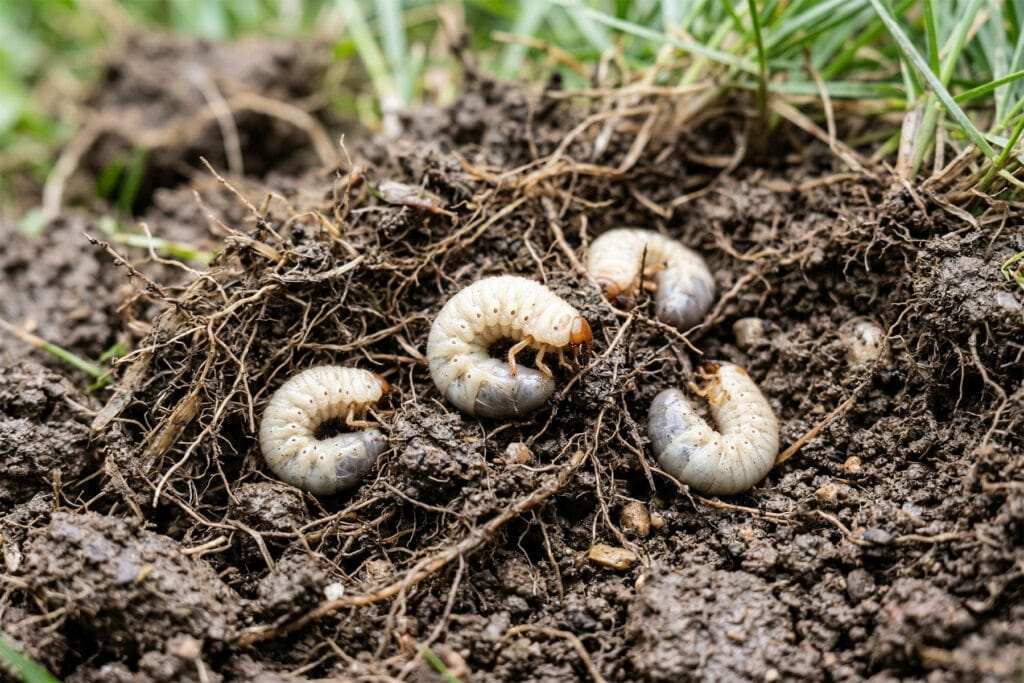
Image source: Bing (Web (fair-use with source credit))
Quick Answer
Preventive grub control should go down in late spring to midsummer, typically June through July in most of the US. This targets newly hatched grubs before they cause visible damage. Curative grub control works best from mid to late summer, roughly July through September, when grubs are small and actively feeding near the soil surface.
Your exact timing depends on your grass type, climate zone, and the product you're using. Soil temperature and beetle flight activity are more reliable triggers than calendar dates alone.
Why Most People Apply Grub Control at the Wrong Time
The biggest mistake we see is homeowners treating for grubs in early spring because they remember seeing damage the previous fall. By spring, grubs are large, nearly mature, and preparing to pupate. Most curative products struggle to kill large, late-instar grubs effectively.
You're essentially spending money on a treatment that arrives too late to matter.
The second common error is applying preventive control in early fall. If you're using a preventive product like chlorantraniliprole, it works by targeting tiny, newly hatched grubs. By fall, those grubs have already been feeding for weeks and may be too large for the product to work.
Preventive products aren't rescue treatments. They're designed to create a barrier in the soil before the next generation of grubs starts feeding.
Then there's the calendar trap. Someone reads that "July is the best month" and applies on July 1st every year without checking what's actually happening in their soil. In southern states like Georgia or Alabama, adult Japanese beetles may be laying eggs in May.
In northern states like Michigan or Massachusetts, that same activity might not peak until mid-July. Your local conditions matter more than any generic advice.
The Core Decision: Preventive vs. Curative — And Why It Changes Your Entire Timeline
Before you pick a date, you need to pick a strategy. These two approaches have completely different timing windows, and choosing the wrong one is the fastest way to waste your effort.
Preventive control means applying an insecticide before grubs hatch and start feeding. The goal is to create a chemical barrier in the soil that kills young grubs as they emerge and begin feeding on roots. Products like chlorantraniliprole (Acelepryn, GrubEx) and imidacloprid (Merit) fall into this category.
These need to be applied in late spring to midsummer, timed to when adult beetles are flying and laying eggs.
Curative control means applying a product after grubs are already present and feeding. The goal is to kill active grubs as quickly as possible to stop ongoing damage. Products like trichlorfon (Dylox) work fast, often killing grubs within one to three days.
These go down in mid to late summer when grubs are small and vulnerable.
Here's the critical distinction: if you had visible grub damage last fall and you're worried about this year, a preventive application this summer stops the next generation. A curative application this summer kills the grubs that hatched from eggs laid by beetles flying right now. You can actually use both in the same season if pressure is high, but they go down at different times.
How the White Grub Life Cycle Drives Your Application Window
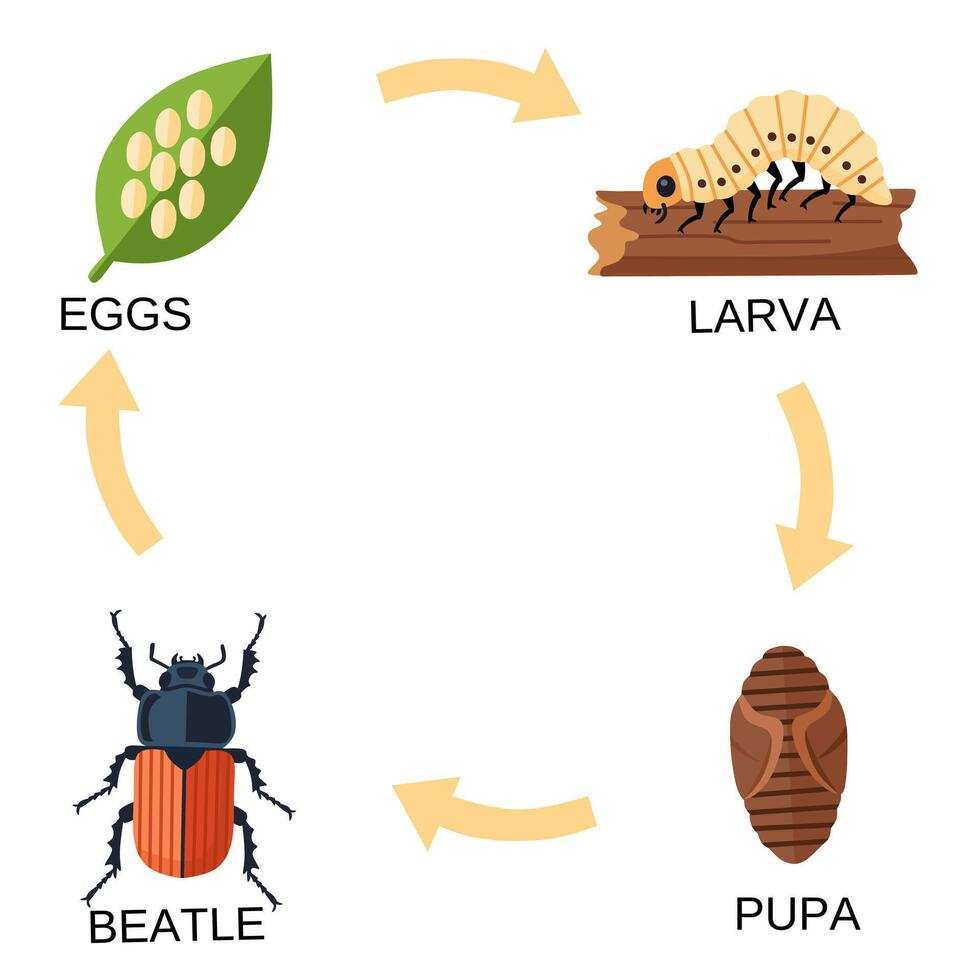
Understanding the grub life cycle is what makes timing click. White grubs aren't just "there" all year at the same stage. They follow a predictable pattern, and your treatment needs to hit the right phase.
Adult beetles emerge from the soil in late spring and early summer. Japanese beetles, for example, typically start flying in June across much of the northern US, sometimes as early as May in southern regions. They feed on ornamental plants, mate, and then females burrow back into the soil to lay eggs.
This egg-laying period is your trigger for preventive control.
Eggs hatch within two to three weeks, depending on soil temperature. The tiny larvae, called first instars, begin feeding on grass roots near the soil surface. This is the most vulnerable stage.
They're small, they're close to the surface, and they haven't built up the body mass that makes older grubs harder to kill. Preventive products target this window.
As summer progresses, grubs grow through second and third instars. By late summer and early fall, they're larger and feeding more aggressively, causing the brown, spongy patches you notice in September and October. This is when curative products work best, ideally while grubs are still relatively small (under about half an inch).
Come late fall, grubs burrow deeper into the soil to overwinter. In spring, they move back up briefly to feed before pupating and emerging as adults. Spring treatments are generally the least effective option because grugs are large, feeding slows as they prepare to pupate, and they're often too deep in the soil for good product contact.
The Two Approaches: When Preventive and Curative Grub Control Go Down
Now let's get specific. Here's how the timing breaks down for each approach, based on research from university extension programs and manufacturer specifications.
Preventive Application Timing (Late Spring Through Midsummer)
Preventive products need to be in the soil and active when eggs hatch and young grubs start feeding. That means applying during or just before the adult beetle flight and egg-laying period.
For most of the US, the preventive window runs from late May through mid-July. In southern states (Zone 8 and warmer), adult beetles may start flying in May, so preventive applications can go down in late May or June. In northern states (Zone 5 and cooler), beetle flight often peaks in late June or July, pushing the preventive window into July.
Chlorantraniliprole-based products like GrubEx offer a wider application window than older neonicotinoids. Research from multiple university extension programs indicates that chlorantraniliprole can be applied earlier in the season and still provide season-long control because of its longer residual activity. Some studies show effective control when applied as early as May in southern regions.
Imidacloprid-based products need to be timed more precisely to egg hatch. Apply too early and the residual may degrade before grubs emerge. Apply too late and grubs may be too large for effective control.
The key trigger isn't a calendar date. It's soil temperature and beetle activity. When soil temperatures at a four-inch depth consistently reach 65 to 70°F (18 to 21°C), adult beetles in most species begin emerging and laying eggs.
That's your signal.
Curative Application Timing (Mid to Late Summer)
Curative products target grubs that are already in the soil and feeding. The ideal window is when grubs are small, actively feeding, and close to the soil surface. That typically means July through September, depending on your region.
In southern states, curative treatments may be needed as early as July. In northern states, August and early September are often the sweet spot. The goal is to treat before grubs grow too large and before they burrow deep for winter.
Trichlorfon (Dylox) is the go-to curative product for most situations. It's a contact and stomach poison that kills grubs quickly, often within 24 to 72 hours. Because it breaks down relatively fast in the soil, timing matters more than with preventive products.
You want it in the soil when grubs are actively feeding near the surface.
One advantage of curative timing is that you can confirm grubs are actually present before treating. If you dig up a square foot of turf and find fewer than six grubs (for warm-season grass) or fewer than ten (for cool-season grass), you may not need to treat at all. Curative timing lets you make that call based on what you find.
How Your Region and Grass Type Change the Timing
Your location and turf type aren't minor details. They can shift your application window by four to six weeks.
Warm-season grasses (Bermuda, Zoysia, St. Augustine, Centipede, Bahiagrass) dominate the southern US. These lawns often face pressure from multiple grub species, including masked chafers and Japanese beetles.
Because southern soils warm up earlier, beetle activity starts sooner. Preventive applications in the South often go down in May or June. Curative treatments may be needed by July.
Cool-season grasses (Tall fescue, Kentucky bluegrass, Perennial ryegrass, Fine fescue) dominate the northern US and transition zone. European chafers and Japanese beetles are common pests here. Soils stay cooler longer, delaying beetle emergence.
Preventive applications in the North often go down in June or July. Curative treatments typically work best in August and September.
The transition zone (roughly Zone 6 to 7, including areas like St. Louis, Louisville, and parts of Virginia) is the trickiest. You may have both warm and cool season lawns, overlapping beetle species, and unpredictable soil temperatures.
In these areas, monitoring soil temperature and adult beetle activity is more important than following a fixed calendar.
Here's a general regional guide based on university extension recommendations:
| Region | Preventive Window | Curative Window | Common Species |
|---|---|---|---|
| Southeast (GA, AL, SC, FL) | Late May – June | July – August | Masked chafer, Japanese beetle |
| Mid-Atlantic (VA, NC, MD) | June – early July | Late July – September | Japanese beetle, European chafer |
| Northeast (NY, PA, MA, CT) | Mid-June – mid-July | August – September | European chafer, Japanese beetle |
| Midwest (OH, MI, IL, IN) | June – July | August – September | European chafer, Japanese beetle |
| Mountain West (CO, UT, ID) | June – July | August – September | May/June beetle, masked chafer |
These windows are starting points, not hard rules. Local conditions vary year to year based on spring temperatures and rainfall. That's why checking soil temperature and watching for adult beetle activity gives you a better read than any table.
Step-by-Step: How to Pin Down Your Exact Application Window
Let's turn this into a practical workflow you can follow each season.
Step 1: Identify Your Primary Grub Species and Grass Type
Different beetle species have slightly different life cycles. Japanese beetles tend to fly earlier in summer. European chafers often fly in mid-summer.
Masked chafers in the South can fly as early as May. Your local extension office or state university turf program typically publishes species-specific timing guides.
Your grass type determines your damage threshold and treatment urgency. Warm-season grasses generally tolerate fewer grubs per square foot before showing damage. Cool-season grasses with deep root systems can sometimes handle slightly higher populations before browning becomes visible.
Step 2: Decide Whether You're Going Preventive or Curative
Ask yourself a few questions. Did you have grub damage last fall? Are you seeing adult beetles on your ornamental plants right now?
Have you had consistent grub problems year after year?
If you have a history of grub damage and want to prevent it, go preventive. If you're seeing brown patches right now and you've confirmed grubs are present, go curative. If you're unsure, dig up a one-foot-square section of turf in a damaged area and count the grubs.
That number tells you whether treatment is justified and which approach makes sense.
Step 3: Use Soil Temperature and Degree-Days as Your Trigger
This is where precision comes in. Soil temperature at a four-inch depth is the most reliable indicator of grub activity. When soil temps consistently hit 65°F (18°C), adult beetles begin emerging.
When they reach 70°F (21°C), egg laying is typically underway.
Growing degree-day (GDD) models take this a step further. Many university extension programs track GDD accumulations and publish real-time updates showing when beetle flight and egg hatch are expected in your area. Check your state extension website starting in late spring.
These models are far more accurate than calendar-based advice.
Step 4: Apply and Water In Correctly
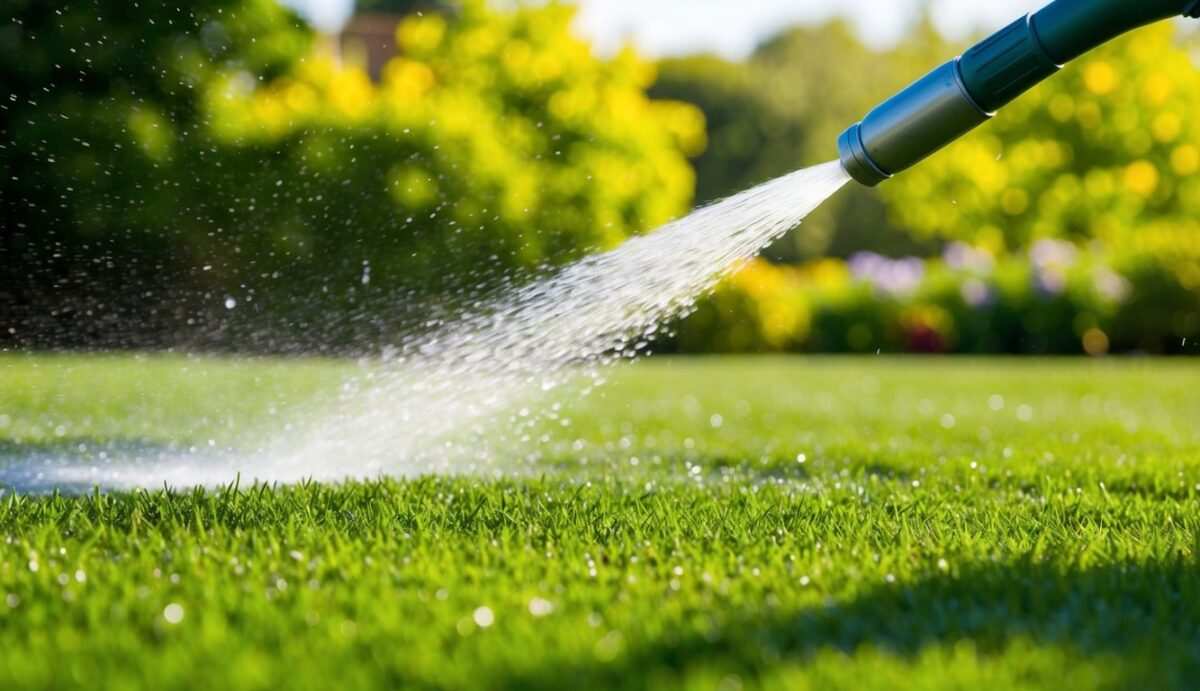
Timing means nothing if the product doesn't reach the soil. Granular grub controls need to be watered in with about a quarter to half an inch of irrigation within 24 to 48 hours of application. This moves the active ingredient off the granules and into the soil where grubs are feeding.
Apply your granular spreader setting according to the product label. Mow before application so granules reach the soil surface instead of getting caught in tall grass. Water thoroughly but not so heavily that you get runoff, especially near storm drains or waterways.
Step 5: Verify Your Timing Worked
About two to three weeks after a preventive application, you can check a few spots in your lawn. Dig up small sections of turf and look for live grubs. If you're not finding any, or if grubs appear sluggish and discolored, the treatment is working.
For curative applications, check within three to five days. Dead grubs often appear shriveled, discolored (yellowish or brown), and may be found near the soil surface. If you're still finding healthy, active grubs after a week, you may need to reevaluate your timing or product choice.
Soil Temperature and Degree-Day Targets: Quick Reference
Here's a practical cheat sheet based on research from multiple university extension programs and entomology studies.
| Trigger | Soil Temperature (4-inch depth) | What's Happening | Action |
|---|---|---|---|
| 55°F (13°C) | Early spring | Grubs moving up from deep overwintering | Too early for treatment |
| 65°F (18°C) | Late spring | Adult beetles beginning to emerge | Start monitoring for flight activity |
| 70°F (21°C) | Late spring to early summer | Egg laying underway | Apply preventive control now |
| 75°F+ (24°C+) | Mid to late summer | Grubs actively feeding, growing | Apply curative control if needed |
| Below 50°F (10°C) | Late fall | Grubs burrowing deep for winter | Too late for effective treatment |
Degree-day models vary by species, but a general benchmark for Japanese beetle egg hatch is around 1,000 GDD (base 50°F) accumulated from January 1st. Your local extension service can provide species-specific GDD targets for your area.
Common Mistakes That Ruin Grub Control Timing
Even when you know the right window, a few common errors can undo your effort.
Applying preventive control in fall. This is the number one mistake. Preventive products target newly hatched grubs. By fall, grubs have been feeding for weeks and are often too large.
You need a curative product at that point, not a preventive one.
Waiting until you see brown patches to treat preventively. Brown patches in August or September mean grubs have already been feeding for weeks. A preventive application at that point is too late. You've missed the window.
Switch to curative mode or plan your preventive application for the following spring or early summer.
Not watering in granular products. Granules sitting on the soil surface or caught in thatch won't reach grubs. Without irrigation or rainfall within a day or two, much of the active ingredient never makes it into the root zone where grubs are feeding.
Ignoring local conditions and following generic calendar advice. "Apply in July" might work in Ohio but be too late for Georgia or too early for Maine. Your soil temperature, beetle species, and local climate matter more than any national recommendation.
Treating when grub populations are below threshold. If you dig up a square foot and find only two or three grubs, treatment probably isn't necessary. Unnecessary insecticide applications kill beneficial organisms and add chemicals to your soil without any real benefit.
Applying curative control in spring. By spring, grubs are large, feeding slows as they prepare to pupate, and they're often deep in the soil. Curative products are far less effective at this stage. If you had damage last fall, plan your preventive application for the coming summer instead.

Preventive vs. Curative: Which Approach Fits Your Situation
Here's a straightforward breakdown to help you choose.
Go preventive if:
- You've had grub damage in the past two years
- You're seeing adult beetles on your plants in late spring or early summer
- You have a high-value lawn and want to avoid any risk of damage
- You're using chlorantraniliprole or imidacloprid-based products
- You're in the June through July window (timing varies by region)
Go curative if:
- You're seeing brown, spongy patches in mid to late summer
- You've dug up turf and confirmed grubs are present above threshold levels
- You're using trichlorfon (Dylox) or another fast-acting product
- You missed the preventive window and need a rescue treatment
- You're in the July through September window
Consider both if:
- You have a severe, recurring grub problem
- You're in a high-pressure area with multiple beetle species
- You're managing a large property or commercial turf
In that case, a preventive application in early summer stops the first wave of grubs. A follow-up curative application in late summer catches any survivors or late-hatching species. This approach uses more product but provides the most complete protection.
Frequently Asked Questions About Grub Control Timing
Can I apply grub control in the spring?
Spring applications are generally not recommended for either preventive or curative control. By spring, overwintered grubs are large, feeding slows as they prepare to pupate, and they're often too deep in the soil for effective contact. If you had grub damage last fall, plan your preventive application for the following summer instead.
What month should I put down GrubEx?
GrubEx (chlorantraniliprole) is a preventive product. Apply it in late spring to midsummer, typically June through July in most regions. In southern states, May or early June may be appropriate.
In northern states, July is often ideal. The key is applying during adult beetle flight, before eggs hatch.
How late can I apply curative grub control?
Curative products work best through September in most regions. Once soil temperatures drop below 50°F and grubs burrow deep for winter, product contact becomes unreliable. If you're finding active grubs in October in a warm fall, a curative application can still work, but effectiveness declines as grubs move deeper.
Do I need to water in grub control after applying?
Yes. Granular grub controls need about a quarter to half an inch of irrigation within 24 to 48 hours to move the active ingredient into the soil. Without watering in, granules sit on the surface and grubs in the root zone never encounter the product.
Liquid formulations should also be watered in lightly according to label directions.
What's the best way to know when beetles are active in my area?
Check your state university extension website. Many publish weekly pest updates during beetle flight season, including degree-day accumulations and first-flight reports. You can also monitor your own landscape.
Japanese beetles feeding on roses, lindens, or grape leaves are a clear sign that egg laying in nearby turf is imminent.
Can I use grub control and fertilizer at the same time?
You can, and many homeowners do. Apply your grub control product first, water it in, then apply fertilizer a day or two later. Some combination products exist, but timing the grub control correctly is more important than convenience.
Don't let a combined product push you to apply at the wrong time just because you're fertilizing.
Your Decision Guide: When to Apply Based on Your Situation
Let's bring it all together into a simple decision framework.
If it's May or June and you're in the South:
Apply preventive grub control now. Adult masked chafers and Japanese beetles are likely already flying. Get chlorantraniliprole-based products down and watered in before eggs hatch.
If it's June or July and you're in the North or transition zone:
This is your preventive window. Monitor soil temperatures. When they hit 70°F at four inches deep, apply your preventive product.
If you're already seeing adult beetles feeding on landscape plants, don't wait.
If it's July or August and you're seeing brown patches:
Dig up a section of turf and check for grubs. If you find more than six to ten per square foot (depending on grass type), apply a curative product like trichlorfon immediately. Water it in well.
You're in rescue mode, so speed matters.
If it's September and you've confirmed grubs:
A curative application can still work, especially during warm falls. But if grubs are already large and soil temperatures are dropping, you may be better off planning a preventive application for next summer and managing the current damage with spot repair.
If it's October or later:
Hold off on treatment. Grubs are heading deep for winter. Mark your calendar for late spring and plan your preventive application then.
Use the off-season to research products, calibrate your spreader, and identify your local beetle species so you're ready when the window opens.
The bottom line is this: grub control timing isn't about finding one perfect date. It's about matching your product to the right life cycle stage, using soil temperature and beetle activity as your guide, and adjusting for your specific region and grass type. Get those three things right, and you'll stop wasting money on treatments that miss the mark.
Following the decision guide above, you've got a clear path based on where you are in the season and what you're seeing in your lawn. The key takeaway is that timing isn't guesswork once you understand the life cycle and match your product to the right stage.
Check your state extension website starting in late spring each year. Many publish weekly pest updates with degree-day accumulations and first-flight reports for your specific area. That local data beats every generic calendar recommendation you'll find online.
Mark your calendar now for next season's window based on your region and grass type. When the time comes, you'll be ready to apply at the right moment instead of scrambling after damage appears.
Frequently Asked Questions
Can I apply grub control in the spring?
Spring applications are generally not recommended. By spring, overwintered grubs are large, feeding slows as they prepare to pupate, and they're often too deep in the soil for effective contact. If you had grub damage last fall, plan your preventive application for the following summer instead.
What month should I put down GrubEx?
GrubEx (chlorantraniliprole) is a preventive product. Apply it in late spring to midsummer, typically June through July in most regions. In southern states, May or early June may be appropriate.
The key is applying during adult beetle flight, before eggs hatch.
How late can I apply curative grub control?
Curative products work best through September in most regions. Once soil temperatures drop below 50°F and grubs burrow deep for winter, product contact becomes unreliable. If you're finding active grubs in October during a warm fall, a curative application can still work, but effectiveness declines as grubs move deeper.
Do I need to water in grub control after applying?
Yes. Granular grub controls need about a quarter to half an inch of irrigation within 24 to 48 hours to move the active ingredient into the soil. Without watering in, granules sit on the surface and grubs in the root zone never encounter the product.
What's the best way to know when beetles are active in my area?
Check your state university extension website. Many publish weekly pest updates during beetle flight season, including degree-day accumulations and first-flight reports. You can also monitor your own landscape.
Japanese beetles feeding on roses, lindens, or grape leaves are a clear sign that egg laying in nearby turf is imminent.