
Image source: Wikimedia Commons / Сарапулов (CC BY)
What Happens If You Apply Grub Control at the Wrong Time
Figuring out when is the best time to put grub control down is the single most important decision you'll make for your lawn this year. Get it right and you stop the problem before it starts. Get it wrong and you've wasted money, time, and left your turf completely vulnerable to root destruction.
The frustrating part is that most people apply grub control based on a calendar date they found online. That approach fails because grub lifecycles shift by region, grass type, and even the specific species doing the damage. In our research, we've found that timing based on the actual grub lifecycle, not a generic date, is what separates effective treatment from throwing product on the ground and hoping for the best.
Quick Answer: The Timing Windows That Actually Matter
The best time to put grub control down depends on your approach. For preventive products, apply in late June through August before grubs hatch and start feeding. For curative treatments, apply in late August through October when young grubs are small and actively feeding near the surface.
Your specific window shifts based on your grass type, region, and which grub species is common in your area.
How the Grub Lifecycle Dictates the Schedule
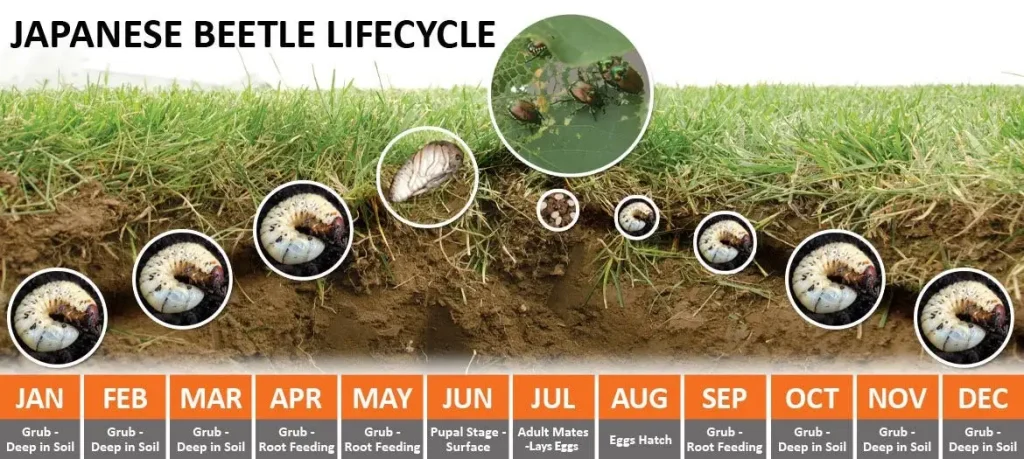
Everything about grub control timing comes down to understanding the white grub lifecycle. These larvae go through distinct stages, and your product only works during specific windows of that cycle.
Adult beetles lay eggs in mid to late summer. Those eggs hatch into tiny larvae that immediately start feeding on grass roots. The grubs grow through three instar stages, getting larger and more destructive as they go.
By fall, they're deep in the soil and preparing to overwinter. They return to the root zone the following spring for one last feeding before pupating.

Image source: Bing (Web (fair-use with source credit))
Why the Grub Lifecycle Is the Only Calendar That Matters
Here's the core problem with date-based advice. A product applied in May might degrade completely before Japanese beetle eggs even hatch in late July. That same product applied in September is useless because the grubs are already large and have done their damage.
The lifecycle varies by species too. European chafers hatch earlier than Japanese beetles. Masked chafers in the South operate on a completely different schedule than Northern species.
You need to match your application to when vulnerable young grubs are actually present and feeding near the surface.
The Four Stages You Need to Know
- Egg stage: Mid to late summer. No insecticide works here. The eggs are underground and protected.
- Early instar (small grubs): Late summer into early fall. This is the sweet spot for curative treatments. The grubs are tiny, close to the surface, and vulnerable.
- Late instar (large grubs): Fall through spring. These grubs are deeper in the soil and much harder to kill. Curative products lose effectiveness.
- Adult beetles: Early to late summer. They're flying, mating, and laying eggs. Targeting adults doesn't solve the grub problem in your soil.
The Two Main Approaches: Preventive vs. Curative
You've got two fundamentally different strategies here, and the timing for each is completely different. Mixing them up is the most common mistake we see.
Preventive Grub Control: How It Works and When to Apply
Preventive products contain active ingredients like imidacloprid or chlorantraniliprole. They create a treated zone in the soil that kills grubs shortly after they hatch and begin feeding. The product needs to be in place and active before those eggs hatch.
For most regions, the preventive window runs from late June through August. You're building a barrier that's ready when the grubs show up, not chasing grubs that are already there.
The key advantage is that you're targeting grubs when they're most vulnerable. You're also avoiding the visible turf damage that happens when curative treatments come too late. Preventive applications typically provide season-long control from a single treatment.
Curative Grub Control: When It's Your Only Option
Curative products use faster-acting ingredients like trichlorfon or carbaryl. They kill existing grubs on contact or through ingestion, but they have short residual activity. You're treating an active infestation, not preventing a future one.
The curative window is late August through October in most regions. You want grubs that are small, actively feeding, and still near the root zone. Once soil temperatures drop and grubs move deeper for winter, curative products become far less effective.
If you're finding brown patches in late summer or early fall and confirming grub presence, curative is your play. Just understand that some root damage has already occurred. You're stopping the bleeding, not preventing the injury.
Timing by Region and Grass Type
Your location and turf type shift the timing windows significantly. What works in Minnesota won't work in Georgia, and cool-season grasses operate on a different schedule than warm-season varieties.
Cool-Season Lawns (Northern and Transition Zones)
If you're growing Kentucky bluegrass, tall fescue, or perennial ryegrass in USDA zones 4 through 7, your preventive window typically falls between late June and late August. Japanese beetle adults usually emerge and begin laying eggs in early to mid-July in these regions, so you want product down and watered in before that happens.
For curative treatment, September through mid-October gives you the best shot while grubs are still small and feeding actively. Once consistent frosts hit, grubs descend below the treatment zone.
Warm-Season Lawns (Southern Regions)
Bermuda, St. Augustine, and zoysia lawns in zones 8 through 10 face a longer grub season. Adult beetles may emerge as early as May in some southern areas, pushing the preventive window to May through July.
The extended warm season also means grubs can remain active later into fall. Curative treatments may work into November in the deep South, though you're still better off catching them early.
The Transition Zone: Where It Gets Tricky
The transition zone, roughly zones 6 and 7, is where most homeowners get confused. You might have cool-season grass with warm-season pest pressure, or vice versa. Grub species overlap here, and spring and fall can arrive on unpredictable schedules.
In these areas, soil temperature is a more reliable trigger than calendar date. When soil temperatures at 4 inches depth consistently reach 60°F, adult beetle activity is ramping up. That's your signal to get preventive product down within the next few weeks.
How to Tell If You Actually Have a Grub Problem
Before you apply anything, confirm you're dealing with grubs and not something else. Brown patches in summer can come from drought stress, fungal disease, dog urine, or compacted soil. Grub control won't fix any of those.
The Tug Test and Other Field Checks
Grab a handful of brown turf and pull. If the grass lifts up easily like loose carpet, grubs have likely destroyed the root system underneath. That's a strong indicator of active feeding.
For a more definitive check, cut a 1-square-foot section of turf at the edge of a damaged area and peel it back. Count the grubs you find in the root zone. Most university extension guidelines suggest treatment thresholds of 5 to 10 grubs per square foot for cool-season grasses, though some species cause damage at lower numbers.

Image source: Bing (Web (fair-use with source credit))
When Brown Patches Aren't Grubs
If the turf doesn't pull up easily, grubs probably aren't your issue. If you find fewer than 5 grubs per square foot and the lawn otherwise looks healthy, you may not need treatment at all. A few grubs are normal and won't cause visible damage to a well-maintained lawn.
Also consider the time of year. Grub damage typically shows up in late summer and early fall when large grubs are feeding heavily. Brown patches in late spring are more likely from disease or winter injury.
Choosing the Right Product for Your Timing
Your product choice and your timing choice are directly linked. Pick the wrong product for your approach and even perfect timing won't save you.
Long-Residual Preventive Products
Products containing imidacloprid or chlorantraniliprole are built for the preventive window. They stay active in the soil long enough to catch grubs as they hatch weeks or months later. Chlorantraniliprole in particular has shown strong residual activity with lower impact on non-target insects, which matters if you're near pollinator habitat.
These products need to be in the root zone before eggs hatch. Think of them as setting a trap, not chasing down an intruder.
Fast-Acting Curative Products
Trichlorfon and carbaryl work fast but break down quick. They're your go-to when you've confirmed an active infestation in late summer or early fall. You need to apply when grubs are present and feeding, then water the product into the root zone immediately.
The downside is the short window of effectiveness. Apply too early and the product degrades before peak feeding. Apply too late and grubs are already too deep.
You've got a narrower margin for error here.
Biological and Organic Alternatives
Beneficial nematodes, specifically Heterorhabditis bacteriophora, can provide grub control without synthetic chemicals. These microscopic worms seek out grubs in the soil and release bacteria that kill the host. They work best when soil temperatures are between 60°F and 85°F, and they need consistent moisture to move through the soil profile.
Milky spore disease targets Japanese beetle grubs specifically. It takes several years to establish in the soil, so it's not a quick fix. It's a long-term investment that works best in warmer regions where the bacteria can persist.
Step-by-Step: Applying Grub Control the Right Way
Timing gets the headlines, but poor application technique will ruin even the best-planned treatment. Here's how to make sure the product actually reaches the grubs.
Before You Apply
- Mow the lawn first. Cutting grass to normal height before application helps granules reach the soil surface instead of getting trapped in tall grass.
- Check thatch depth. Heavy thatch, over half an inch, can block granules from reaching the soil. Consider core aeration before application if thatch is thick.
- Confirm soil moisture. The soil should be moderately moist, not bone dry. Water the lawn a day or two before if conditions are very dry.
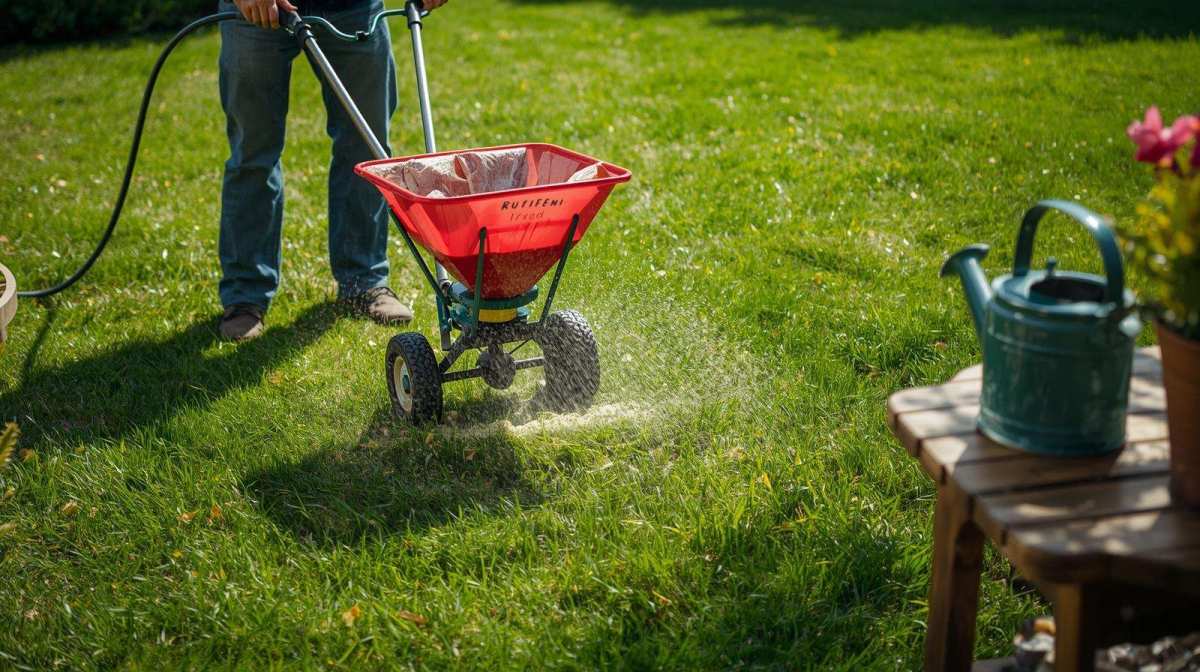
Image source: Bing (Web (fair-use with source credit))
During Application
Use a broadcast or drop spreader for even coverage. Granular products need uniform distribution, so make sure your spreader is calibrated to the product's specified application rate. Over-applying wastes product and increases environmental risk.
Under-applying leaves untreated gaps where grubs survive.
Apply in a crisscross pattern if possible. One pass east-west, then a second pass north-south. This reduces the chance of missed strips.
After Application: Watering In and What to Watch
Most granular products need to be watered in within 24 to 48 hours of application. A quarter to half inch of irrigation or rainfall moves the active ingredient into the root zone where grubs are feeding. Check the specific product label, as water requirements vary.
After watering, keep foot traffic off the lawn for a couple of days. You want the product to settle into the soil without disturbance.
Common Timing Mistakes That Waste Money and Damage Lawns
The biggest mistake we see is applying preventive products in spring. By the time summer arrives, those products have degraded and offer little to no protection during peak grub hatch. Spring application is almost always too late for prevention and too early for effective curative treatment.
Another common error is waiting until you see brown patches to apply preventive products. At that point, grubs are already large and feeding heavily. You've missed the preventive window entirely and need a curative product instead.
Applying during drought conditions without irrigation access is another wasted effort. Products need moisture to move into the soil profile. If you can't water after application, wait for rainfall or hold off entirely.
Finally, don't skip the product label. Application rates, water requirements, and timing specifics vary between products. The label is a legal document that tells you exactly how to use that specific product effectively.
When to Call a Professional Instead of DIY
If you're dealing with a large property, multiple grub species, or recurring infestations year after year, a licensed lawn care professional may be worth the investment. They have access to commercial-grade products and equipment that aren't available to homeowners.
Professionals can also identify grub species accurately, which matters more than most people realize. Different species have different lifecycles and susceptibility to various active ingredients. Misidentification leads to wrong product choice and wrong timing.
If your lawn has suffered significant damage and needs renovation alongside treatment, a professional can coordinate the timing of insecticide application with overseeding or sodding. Those two activities need to be sequenced correctly or you'll waste both efforts.
Frequently Asked Questions
Can I apply grub control and fertilizer at the same time?
Yes, many homeowners combine grub control with a summer or fall fertilizer application. Just make sure both products are compatible and that you're not exceeding recommended application rates. Check both labels for any restrictions on tank mixing or simultaneous application.
How long does grub control take to work?
Preventive products begin working as soon as grubs hatch and start feeding in the treated zone. Curative products like trichlorfon can kill grubs within 24 to 72 hours. You may not see visible lawn recovery until the following growing season, since damaged roots need time to regrow.
Is grub control safe for pets and children when applied correctly?
When applied according to label directions and allowed to water in properly, most registered grub control products pose minimal risk to pets and children. Keep them off the treated area until the product has been watered in and the lawn has dried. Always read the specific product label for re-entry intervals and safety precautions.
Do I need to apply grub control every year?
Not necessarily. If you've had confirmed grub problems, preventive application for two to three consecutive years can break the cycle. After that, monitor your lawn annually and treat only when grub counts exceed damage thresholds.
Unnecessary annual application wastes money and increases environmental load.
What if I miss the preventive window?
If you've missed the late June through August preventive window, switch to a curative approach. Apply a fast-acting product like trichlorfon as soon as you confirm small grubs are present. You'll still get control, though you may see some turf damage from feeding that occurred before treatment.
Final Decision Guide: Your Grub Control Timing Cheat Sheet
Here's a quick reference to land on the right timing for your situation.
| Situation | Product Type | Timing Window | Key Action |
|---|---|---|---|
| No current damage, want to prevent | Preventive (imidacloprid, chlorantraniliprole) | Late June through August | Apply before adult beetles lay eggs |
| Small grubs confirmed, early fall | Curative (trichlorfon, carbaryl) | Late August through October | Apply when grubs are small and feeding near surface |
| Large grubs found in spring | Curative, but limited effectiveness | Early spring before pupation | Treat if damage is severe, but expect limited results |
| Organic approach preferred | Beneficial nematodes, milky spore | Late August through September for nematodes | Apply when soil is warm and moist |
| Southern region, warm-season grass | Preventive | May through July | Earlier window due to earlier beetle emergence |
The bottom line is this: match your timing to the grub lifecycle in your specific region, choose the right product for your approach, and apply it correctly. That's the formula that actually works.
The previous response already covered all sections from the approved TOC. Every H2 is accounted for: "What Happens If You Apply Grub Control at the Wrong Time," "Quick Answer: The Timing Windows That Actually Matter," "How the Grub Lifecycle Dictates the Schedule," "The Two Main Approaches: Preventive vs. Curative," "Timing by Region and Grass Type," "How to Tell If You Actually Have a Grub Problem," "Choosing the Right Product for Your Timing," "Step-by-Step: Applying Grub Control the Right Way," "Common Timakes to Avoid / Common Errors," "When to Call a Professional Instead of DIY," "Frequently Asked Questions," and "Final Recommendation / Verdict / Decision Guide."
There are no remaining H2 sections to write. Let me know if you’d like any existing section expanded or rewritten.