Image source: Bing (Web (fair-use with source credit))
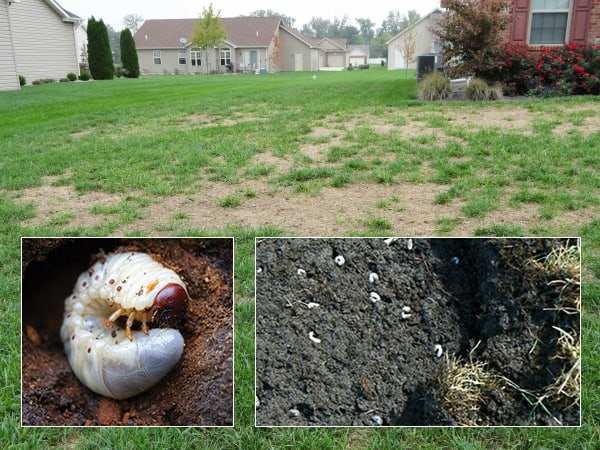
If you're wondering how to use GrubEx, you're probably staring at brown patches in your lawn or trying to prevent them before they show up. Either way, you're in the right place. GrubEx is one of the most popular grub control products on the market, but a lot of people use it wrong and then wonder why it didn't work.
Here's the thing. GrubEx isn't a "spray and forget" solution. It's a preventative treatment that only works if you apply it at the right time, in the right amount, and with the right follow-through.
Get those three things right and you'll stop grubs before they ever damage your turf. Get them wrong and you've wasted your money.
Scotts GrubEx1, the current formulation as of 2026, uses chlorantraniliprole as its active ingredient. One application at 1.5 to 2 pounds per 1,000 square feet protects your lawn for an entire season. But the real question isn't what's in the bag.
It's whether you're using it for the right problem at the right time.
Quick Answer
Apply GrubEx in late spring or early summer before grubs hatch. Spread granules evenly using a calibrated spreader at 1.5 to 2 pounds per 1,000 square feet. Water in with at least 0.5 inch of water within 24 hours.
This single application prevents grub damage all season. It does not kill existing grubs.
Why GrubEx Probably Isn't Working (Even If You Applied It Right)
Let's get the most common frustration out of the way first. You applied GrubEx. You followed the bag.
And you still have grubs. What happened?
The answer is almost always one of two things. Either you applied it too late in the season, or you were trying to solve a problem GrubEx was never designed to fix.
GrubEx is a preventative product. That word matters more than anything else on the label. It creates a protective zone in your soil that kills grubs shortly after they hatch and start feeding on roots.
It does not kill large, mature grubs that are already chomping through your turf.
If you're seeing brown patches in September or October and grubs are the size of your thumb, GrubEx won't save your lawn at that point. You need a curative product for that situation. We'll cover those alternatives later.
The other timing mistake people make is applying in fall. By the time cool weather hits, grubs have already done their damage and are burrowing deep into the soil to overwinter. A fall application of GrubEx is essentially wasted because the grubs aren't actively feeding near the surface anymore.
The Real Problem Most People Miss
Here's what catches a lot of homeowners off guard. The grubs doing damage in your lawn right now hatched from eggs laid by beetles that flew around your yard last summer. That means the damage you see in spring or fall is the result of last year's beetle activity.
So when you apply GrubEx this June, you're not protecting against the grubs you see today. You're protecting against the eggs that this summer's beetles are about to lay. That's why timing is everything.
The Only Question That Matters: Prevent or Kill?
Before you open that bag, you need to answer one question honestly. Are you trying to prevent grubs from hatching, or are you trying to kill grubs that are already there?
Your answer determines everything that follows.
If You're Trying to Stop Grubs That Haven't Hatched Yet
GrubEx is exactly what you want. You're playing defense. You're setting up a barrier in the soil that will kill young grubs within days of hatching, before they ever get big enough to damage your roots.
This is the ideal scenario. It's cheaper, easier, and more effective than trying to rescue a lawn that's already under attack.
If You're Trying to Kill Grubs Already Eating Your Lawn
GrubEx is the wrong tool. You need a curative insecticide like Dylox (trichlorfon), which kills active grubs on contact and within 24 to 48 hours. Products containing imidacloprid can also work as a faster-acting option in some situations.
If you can pull up patches of turf easily and see C-shaped grubs just below the surface, you've got an active infestation. Skip GrubEx and go straight to a rescue treatment.
How GrubEx Actually Works (And Why Timing Is Everything)
Understanding the mechanism helps you understand why timing matters so much.
What's In the Bag
Scotts GrubEx1 contains 0.5% chlorantraniliprole as its active ingredient. This is a diamide insecticide that works by activating ryanodine receptors in grub muscle cells, causing them to stop feeding and die within a few days.
It's not a contact killer. Grubs need to ingest it while feeding on treated root tissue. That's why the product needs to be in the root zone before grubs start eating.
How It Moves Through Your Lawn
After you spread the granules and water them in, the active ingredient moves into the thatch and upper soil layer. It binds to organic matter and stays active there for months. When newly hatched grubs begin feeding on roots in that treated zone, they ingest the insecticide and stop feeding almost immediately.
The product doesn't move upward into the grass blades or downward deep into the soil profile. It stays right where grubs feed. That's by design.
The Soil Temperature Trigger
Grub activity is driven by soil temperature, not calendar dates. Grubs begin feeding aggressively when soil temperatures reach 65°F at a 4-inch depth. That's your signal.
In most of the northern United States, this happens between late May and mid-June. In the South, it can be as early as April. Your local cooperative extension service usually tracks soil temperatures and publishes weekly updates during spring.
Apply GrubEx just before that 65°F threshold. You want the product in the soil and activated before the first wave of eggs hatch.
When to Apply GrubEx: The Timing Window Most People Miss
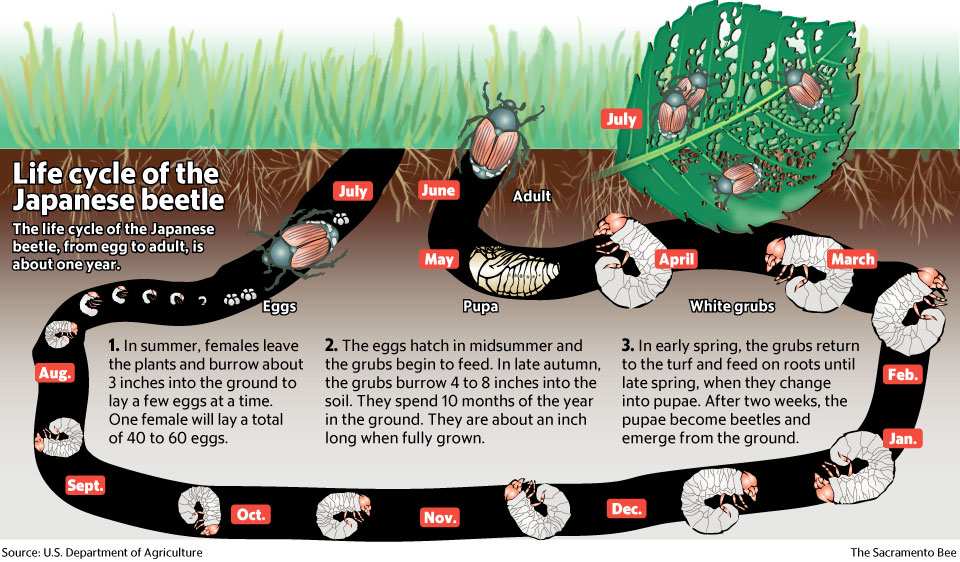
Image source: Bing (Web (fair-use with source credit))
Image source: Bing (Web (fair-use with source credit))
This is where most applications fail. Not the product. The timing.
The Late Spring Sweet Spot
The optimal application window for GrubEx is late spring to early summer, roughly May through mid-June in most regions. You're targeting the period just before adult beetles lay their eggs and those eggs begin to hatch.
Here's the lifecycle breakdown:
- Adult beetles fly and mate in mid-summer (June through August depending on species)
- Females lay eggs in moist soil during this period
- Eggs hatch within 2 to 4 weeks
- Young grubs feed on roots from late summer through fall
- Grubs burrow deep to overwinter when soil cools below 50°F
- Grubs return to surface the following spring and feed briefly before pupating
When you apply GrubEx in late spring, you're getting ahead of the egg-laying cycle. The product is in place and ready when those eggs hatch in July and August.
Why Fall Application Usually Doesn't Work
A lot of people apply GrubEx in September when they see brown patches. By then, grubs have already been feeding for weeks or months. The damage is done.
And as soil temperatures drop, grubs move deeper where the product concentration is lower.
Fall application of GrubEx is essentially a preemptive move for the following year. But you'd be better off applying it the previous spring and letting the residual activity carry through.
Regional Timing Differences
Your location shifts the window. Here's a general guide:
| Region | Optimal Application Window | Primary Pest Species |
|---|---|---|
| Northeast US | Late May through mid-June | Japanese beetle, European chafer |
| Midwest US | Mid-May through late June | Japanese beetle, Northern masked chafer |
| Southeast US | Late April through May | Tropical sodworm, billbug |
| Pacific Northwest | Late May through June | European chafer, black turfgrass ataenius |
| Mid-Atlantic | Late May through mid-June | Japanese beetle, Oriental beetle |
Check your state's cooperative extension website for specific timing recommendations based on local beetle flight data.
Step-by-Step: How to Apply GrubEx the Right Way
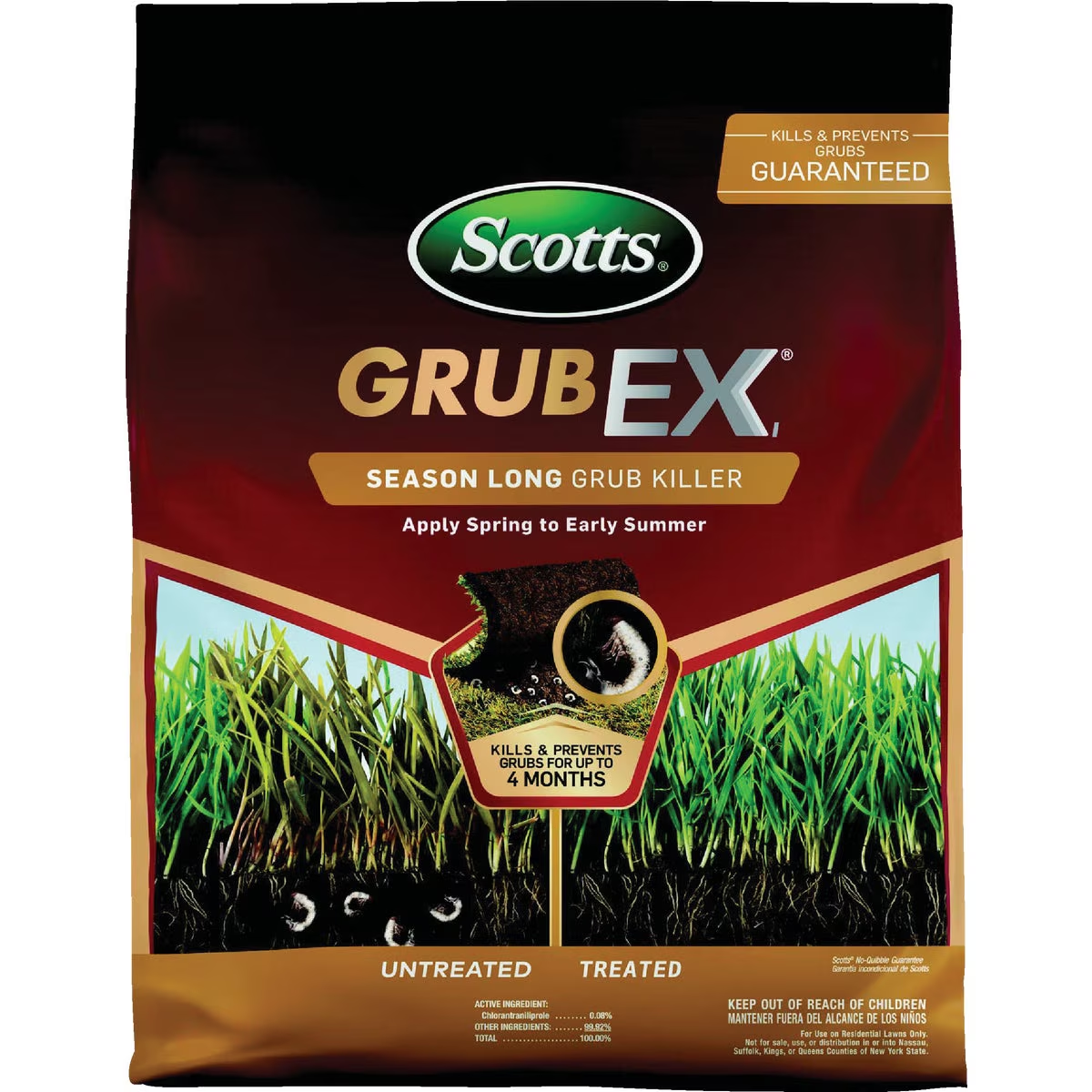
Image source: Bing (Web (fair-use with source credit))
Now let's walk through the actual application process. Each step matters.
Check Your Lawn's Square Footage
Measure your treatable area before you buy anything. Multiply length by width for rectangular sections. For irregular shapes, break the lawn into smaller rectangles and add them up.
A standard 10-pound bag of GrubEx covers approximately 5,000 square feet at the recommended rate. If your lawn is 7,500 square feet, you'll need two bags.
Don't guess. Over-applying wastes money and increases environmental load. Under-applying leaves gaps in protection.
Calibrate Your Spreader
This is the step most people skip, and it's the reason most applications fail.
You'll need either a rotary (broadcast) spreader or a drop spreader. Both work, but they require different calibration.
For a rotary spreader:
- Set the spreader to the setting recommended on the GrubEx label (usually around 3 to 3.5 for most models)
- Pour the correct amount of product into the spreader
- Walk at a steady, consistent pace across the lawn
- Overlap each pass by half the spread width to avoid stripes
For a drop spreader:
- Walk in straight lines with the wheels touching to avoid gaps
- Drop spreaders give more precise coverage but require more passes
- Make two passes at right angles to each other for even distribution
The Scotts website has specific spreader setting charts for their different spreader models. Check those before you start.
Spread the Granules Evenly
Start by applying a header strip around the perimeter of your lawn. This gives you a clean edge to work from. Then fill in the interior with parallel passes.
Keep the spreader closed when you stop walking. Don't leave the hopper open while you turn around or move obstacles. That creates piles of product that can damage your lawn.
If you're treating a large lawn, work in sections. It's easier to keep track of where you've been and where you still need to go.
Water It In Within 24 Hours
This is non-negotiable. The granules need water to dissolve and move into the soil profile where grubs feed.
Apply 0.5 to 1 inch of water within 24 hours of spreading. If rain is in the forecast, you can time your application to take advantage of it. But don't rely on chance.
If rain doesn't come, water it in yourself.
A simple way to measure your sprinkler output is to place empty tuna cans around your lawn and time how long it takes to collect 0.5 inch of water in them.
Don't overwater either. You don't want the product washing off your lawn into storm drains. A good soaking is what you're after, not a flood.
Mark Your Calendar for Next Year
GrubEx provides season-long protection from a single application. But it doesn't carry over to the next year. You'll need to apply again the following spring.
Set a reminder on your phone or mark your calendar for late May. Consistency is what keeps grub damage from coming back year after year.
What GrubEx Won't Do (And What to Use Instead)
Let's be honest about the limitations so you don't waste time and money.
GrubEx Is Not a Rescue Treatment
We've covered this, but it bears repeating. If you have an active grub infestation right now, GrubEx will not fix it. You need a product designed to kill existing grubs quickly.
Curative Options That Kill Active Grubs
Dylox (trichlorfon) is the go-to curative treatment. It works fast, often killing grubs within 24 to 48 hours. Apply it as a liquid or granular and water it in.
It's your best bet when damage is already visible.
Sevin (carbaryl) is another option that provides quick knockdown. It's a broader-spectrum insecticide, so it will affect more than just grubs. Use it if you're dealing with multiple pest problems at once.
Dominion 2L (imidacloprid) is a liquid concentrate that works both as a preventative and has some curative activity on young grubs. It's a good middle-ground option.
Biological Alternatives Worth Considering
If you prefer a non-chemical approach, two biological controls stand out:
Beneficial nematodes (Heterorhabditis bacteriophora) are microscopic worms that seek out and kill grubs. They're living organisms, so application timing and storage matter. Apply them in the evening, keep the soil moist, and use them quickly after purchase.
Milky spore (Paenibacillus popilliae) is a bacterium that specifically targets Japanese beetle grubs. It takes a few years to establish in your soil, but once it does, it can provide control for 10 to 15 years. It's a long game, not a quick fix.
Side-by-Side: GrubEx vs. The Alternatives
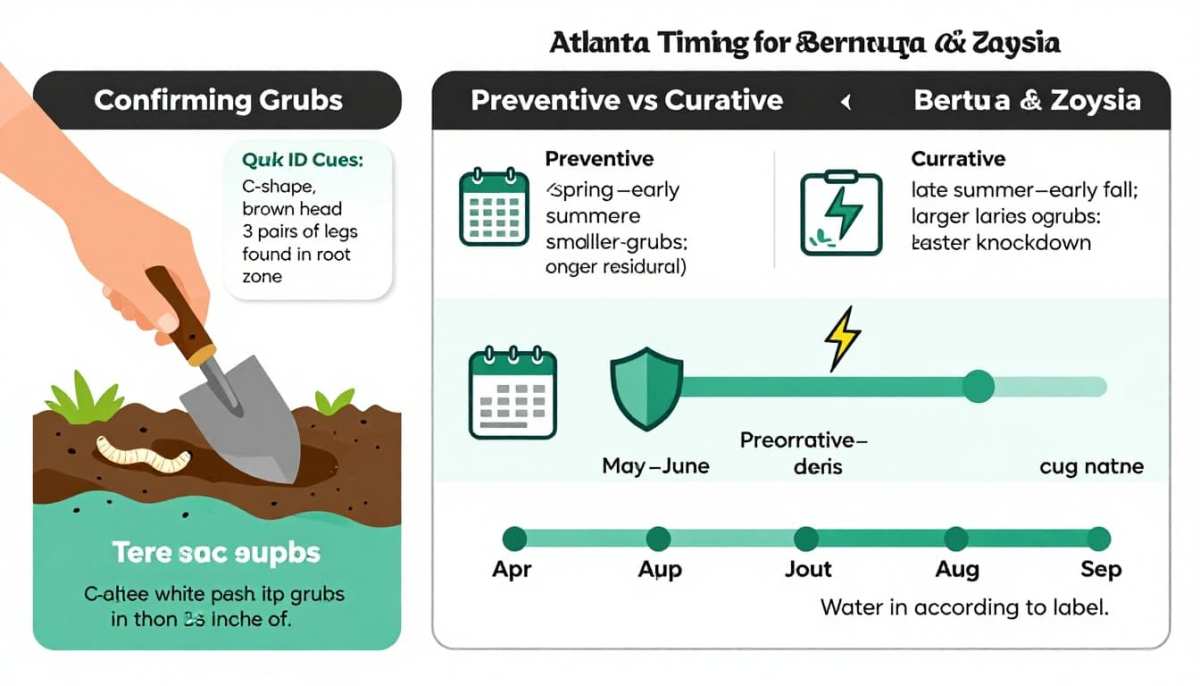
Image source: Bing (Web (fair-use with source credit))
Here's how GrubEx stacks up against the most common alternatives:
| Product | Type | Active Ingredient | Best For | Application Timing | Kills Existing Grubs |
|---|---|---|---|---|---|
| GrubEx1 | Preventative | Chlorantraniliprole | Season-long prevention | Late spring/early summer | No |
| Dylox | Curative | Trichlorfon | Active infestations | When damage appears | Yes, within 24-48 hrs |
| Merit | Preventative | Imidacloprid | Early preventative | Late spring | No |
| Dominion 2L | Both | Imidacloprid | Young grub control | Late spring through summer | Partially |
| Beneficial Nematodes | Biological | Living organisms | Eco-friendly control | Late summer/early fall | Yes |
| Milky Spore | Biological | Bacteria | Long-term Japanese beetle control | Any time | Slowly, over years |
Who Should Use What
Use GrubEx if: You want simple, once-a-year prevention and you're applying at the right time.
Use Dylox if: You have visible damage and need grubs dead now.
Use nematodes if: You want a chemical-free option and don't mind more involved application.
Use milky spore if: You're playing the long game and have Japanese beetles specifically.
Common Mistakes That Waste Your Money
These are the errors we see over and over again.
Applying Too Late
This is number one. If you're applying GrubEx in August or September because you see damage, you've missed the window. The product can't undo damage that's already happened.
Skipping the Water-In
Granules sitting on top of your lawn do nothing. Without water to move the active ingredient into the soil, GrubEx just expensive sand on your grass blades.
Using a Dirty or Uncalibrated Spreader
Old product caked in the hopper, a spreader setting that's off by two notches, walking too fast or too slow. All of these lead to uneven coverage. Some areas get too much.
Others get nothing.
Expecting Results You Won't Get
GrubEx won't make dead grass grow back. It won't kill moles or skunks directly. It won't protect your vegetable garden.
It does one thing: prevents grub damage in your lawn. Set your expectations accordingly.
Applying Before a Heavy Rain
A gentle rain is fine. A downpour that causes runoff is not. If heavy rain is coming within a few hours of your application, wait.
You don't want your product washing into the storm drain.
How Much Does GrubEx Cost and How Long Does It Last?
Let's talk numbers.
A 10-pound bag of Scotts GrubEx1 typically runs between $15 and $25 at most retailers. That covers approximately 5,000 square feet at the standard application rate.
For a typical suburban lawn of 5,000 to 7,000 square feet, you're looking at $15 to $35 per application. That's one application per year.
The product provides season-long protection, meaning the active ingredient remains effective in the soil for approximately 4 to 5 months after application. It does not carry over significantly into the following year.
Compared to the cost of lawn renovation, which can run $1 to $3 per square foot for sod replacement, GrubEx is a bargain. Preventing the problem is always cheaper than fixing it.
When to Call a Professional Instead
DIY GrubEx application is straightforward for most homeowners. But there are situations where a professional makes sense.
Call a pro if:
- Your lawn is larger than 15,000 square feet and you don't have equipment to cover it efficiently
- You have multiple pest problems and need a comprehensive treatment plan
- You've applied GrubEx correctly for two consecutive years and still see damage
- You're dealing with a mixed landscape of turf, garden beds, and hardscape where drift and runoff are concerns
Professional lawn care services typically charge $50 to $100 per application for grub control. They often use commercial-grade products and can spot problems you might miss.
Frequently Asked Questions
Can I apply GrubEx in the fall?
You can, but it's not ideal. Fall application targets next year's population, but the product's effectiveness diminishes over winter. Late spring application gives you better results because the active ingredient is fresh when grubs hatch.
Is GrubEx safe for pets and children?
Per the product label, it's safe once you've watered in the granules and the lawn has dried. Keep pets and kids off the treated area during application and until the watering is complete. The low solubility of chlorantraniliprole means it doesn't easily move into water sources.
How long after applying GrubEx can I reseed?
You can reseed immediately after application. GrubEx targets grubs, not grass seed. In fact, protecting new seed from grub damage is one of the best reasons to apply.
Can I use GrubEx on all grass types?
Yes. GrubEx is labeled for use on both cool-season grasses (fescue, bluegrass, ryegrass) and warm-season grasses (bermuda, zoysia, St. Augustine).
The application rate is the same regardless of grass type.
What if it rains right after I apply?
Light rain helps water in the product. Heavy rain that causes pooling or runoff can wash granules off your lawn. If heavy rain hits within a few hours, check for bare spots and reapply if needed.
Do I need to mow before applying?
It helps. Mowing to a normal height (2.5 to 3.5 inches) before application ensures the granules reach the soil rather than getting trapped in long grass. Don't bag the clippings after mowing.
Let them fall naturally.
Quick Decision Guide: Should You Use GrubEx This Year?
Here's a simple way to figure out your next move.
Apply GrubEx this spring if:
- You had grub damage last year and want to prevent it this year
- You've never treated for grubs but live in a region with Japanese beetle or European chafer pressure
- Your neighbor's lawn has had grub problems recently
- You want a simple, once-a-year preventative solution
Skip GrubEx and use a curative if:
- You're seeing brown patches right now and finding grubs in the soil
- You already have skunks or raccoons digging up your lawn
- It's late summer or fall and damage is already visible
- You missed the spring application window by more than a few weeks
Consider biological alternatives if:
- You prefer not to use synthetic insecticides
- You have a smaller lawn and don't mind more involved application
- You're willing to wait longer for results in exchange for an eco-friendly approach
The bottom line is this. If you're reading this in May or June and you've had grub problems before, GrubEx is your best bet. Apply it correctly, water it in, and you're done for the year.
If you're reading this in September with a torn-up lawn, you need a different product right now and GrubEx next spring.
Quick Decision Guide: Should You Use GrubEx This Year?
Here's a simple way to figure out your next move.
Apply GrubEx this spring if:
- You had grub damage last year and want to prevent it this year
- You've never treated for grubs but live in a region with Japanese beetle or European chafer pressure
- Your neighbor's lawn has had grub problems recently
- You want a simple, once-a-year preventative solution
Skip GrubEx and use a curative if:
- You're seeing brown patches right now and finding grubs in the soil
- You already have skunks or raccoons digging up your lawn
- It's late summer or fall and damage is already visible
- You missed the spring application window by more than a few weeks
Consider biological alternatives if:
- You prefer not to use synthetic insecticides
- You have a smaller lawn and don't mind more involved application
- You're willing to wait longer for results in exchange for an eco-friendly approach
The bottom line is this. If you're reading this in May or June and you've had grub problems before, GrubEx is your best bet. Apply it correctly, water it in, and you're done for the year.
If you're reading this in September with a torn-up lawn, you need a different product right now and GrubEx next spring.