Figuring out when is best time to apply grub control is the single most important decision you'll make for your lawn's health this year. Get it right and you'll never see a grub problem. Get it wrong and you could be looking at dead, brown patches by August that peel back like carpet.
The frustrating part is that most people apply grub control at the wrong time, not the wrong product, and then wonder why it didn't work.
The answer isn't one date on the calendar. It depends on whether you're using a preventative or curative product, what grub species are in your area, and what your soil temperature is doing right now. In our research, we've found that preventative products containing chlorantraniliprole need to be applied roughly 4 to 6 weeks before grub eggs hatch, which means the window opens in late spring for most regions.
Let's walk through exactly how to nail the timing for your situation.
Quick Answer
The best time to apply preventative grub control is late May through early July, depending on your region. Curative grub control works best from early August through mid-October when grubs are small and actively feeding near the soil surface. Soil temperature at 4 inches deep should be around 50°F when adult beetles begin laying eggs.
Missing the preventative window by even two weeks can mean the treatment fails entirely.
Why Grub Control Timing Is the Difference Between a Healthy Lawn and a Dead One
Here's what most people don't realize. By the time you see brown patches on your lawn, the grubs have already been feeding on the roots for weeks. At that point, the damage is done.
You can kill the grubs, but your lawn still has to recover from root loss it already suffered.
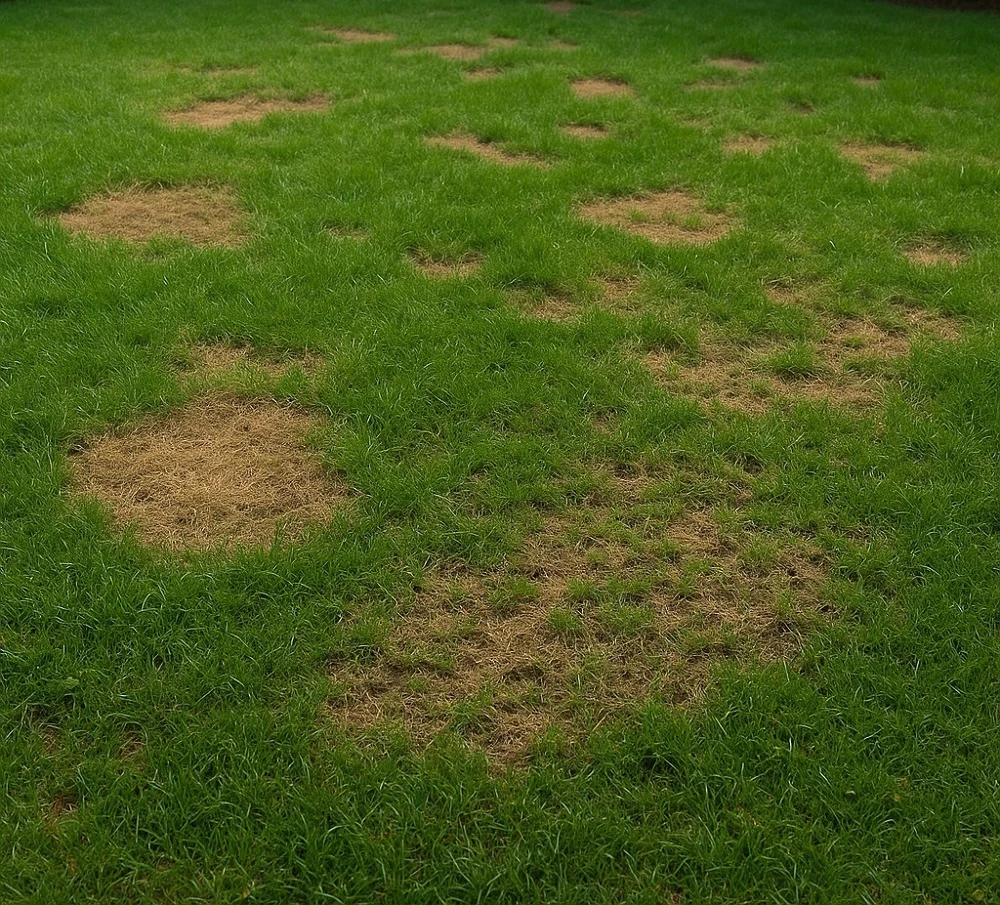
Image source: Bing (Web (fair-use with source credit))
That's why timing matters so much. Preventative grub control creates a protective zone in the soil before the next generation of grubs starts feeding. You're stopping the problem before it exists.
Curative treatments, on the other hand, are reactive. They work, but you're always playing catch-up.
The cost difference is real too. A preventative application typically costs less per square foot than dealing with the aftermath of a full grub infestation. We're talking about reseeding, re-sodding, and the water and fertilizer needed to get damaged turf back on its feet.
Aggregate user reviews and extension service data consistently show that homeowners who time their preventative application correctly spend significantly less over a three-year period than those who wait for damage to appear.
How the Grub Life Cycle Dictates Your Application Date
Everything about grub control timing comes down to the beetle life cycle. Adult beetles emerge from the soil in early to mid-summer, depending on the species and your region. They mate, fly around your landscape, and then lay eggs in moist soil, usually in lawns.
Those eggs hatch within a couple of weeks, and the tiny larvae, which we call white grubs, start feeding on grass roots almost immediately.
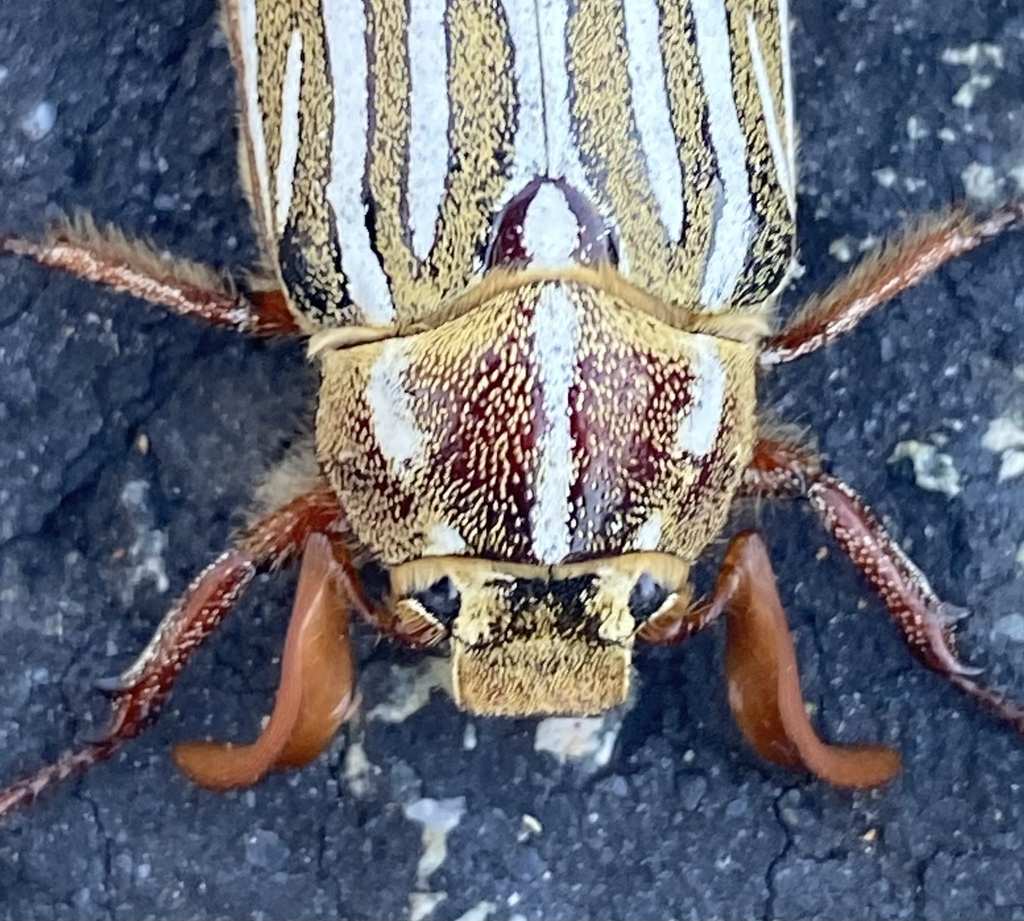
Image source: iNaturalist / Irene
The grubs grow fast. By late summer they're large, deeply buried, and much harder to kill. This is the core problem with curative timing.
The bigger the grub, the more product you need and the less effective it tends to be.
Here's the basic timeline for the most common species in North America:
| Stage | Japanese Beetle | European Chafer | May/June Beetle |
|---|---|---|---|
| Adult emergence | June to July | June to July | May to June |
| Egg laying | July to early August | June to July | May to June |
| Egg hatch | Late July to August | Late June to July | June to July |
| Peak feeding (small grubs) | August to September | July to August | July to September |
| Grubs move deeper | October | September to October | October |
Understanding this cycle is everything. If you're using a preventative product, it needs to be in the soil and active before those eggs hatch. If you're using a curative product, you want to hit the grubs when they're young, small, and feeding close to the surface.
What Type of Grass You Have Changes Everything
Your grass type directly affects both your risk level and your timing window. Cool-season grasses like tall fescue, Kentucky bluegrass, and perennial ryegrass are most vulnerable to grub damage because their peak growth period doesn't align well with grub feeding season. These grasses struggle to recover from root damage in late summer heat.
Warm-season grasses like Bermuda, zoysia, and St. Augustine are also affected, but they tend to have a longer recovery window going into fall. That said, severe grub damage on warm-season turf can still set you back an entire growing season.
If you're in the transition zone, where both cool and warm-season grasses can grow, your timing gets more complicated. You might be dealing with multiple grub species that have different life cycles. In our research, extension services in transition zone states like Missouri, Kentucky, and Virginia recommend splitting the difference and targeting mid-to-late June for preventative applications.
Here's a quick breakdown of risk by grass type:
- Cool-season lawns (fescue, bluegrass, ryegrass): Highest risk. Apply preventative by mid-June to early July.
- Warm-season lawns (Bermuda, zoysia, St. Augustine): Moderate risk. Apply preventative by late May to mid-June in southern regions.
- Mixed or transition zone lawns: Variable risk. Apply preventative in mid-June and monitor closely through August.
The Two Main Approaches: Preventative vs. Curative Grub Control
Before we get into specific dates, you need to understand the two fundamentally different approaches to grub control. They work in completely different ways and have completely different timing requirements.
Preventative grub control uses systemic insecticides that are absorbed into the grass plant or create a treated zone in the soil. When tiny grubs start feeding, they ingest the product and stop feeding within hours. Products containing imidacloprid or chlorantraniliprole fall into this category.
Scotts GrubEx, which uses chlorantraniliprole, is one of the most widely used preventative products on the market as of 2026.
The key thing about preventatives is that they must be applied before the grubs hatch. Once the eggs have hatched and the grubs are actively feeding, most preventatives won't work well. You've missed your window.
Curative grub control uses faster-acting insecticides that kill grubs on contact or through ingestion. Products containing trichlorfon or carbaryl are common curative options. These work best when grubs are small, actively feeding near the soil surface, and haven't yet burrowed deep for winter.
Here's a side-by-side comparison:
| Factor | Preventative | Curative |
|---|---|---|
| Best application window | Late spring to early summer | Late summer to early fall |
| Target grub stage | Eggs and newly hatched larvae | Small, actively feeding larvae |
| Speed of kill | Slow (stops feeding, dies over days) | Fast (kills within 24 to 72 hours) |
| Residual protection | Weeks to months | Days to a few weeks |
| Cost per application | Moderate | Moderate to high |
| Best used when | You had grubs before or live in a high-risk area | You missed the preventative window |
| Bee and pollinator concern | Low with chlorantraniliprole, moderate with imidacloprid | Low (short residual) |
The bottom line is that preventative control is almost always the better strategy if you can plan ahead. It's cheaper, more effective, and gives you season-long peace of mind. Curative control is your backup plan, and it works, but you're fighting an uphill battle against grubs that have already started damaging your lawn.
When to Apply Preventative Grub Control (The Do-It-Right Window)
The preventative window opens when adult beetles start flying and laying eggs. For most of the northern and central United States, that means late May through early July. In the Deep South, where beetles emerge earlier, you might need to apply as early as late April or May.
The sweet spot for most homeowners is mid-June. That gives the product time to distribute through the soil profile before peak egg-laying activity in July. Chlorantraniliprole-based products like Scotts GrubEx need to be watered in after application, so plan for a day when you can irrigate or when rain is in the forecast.
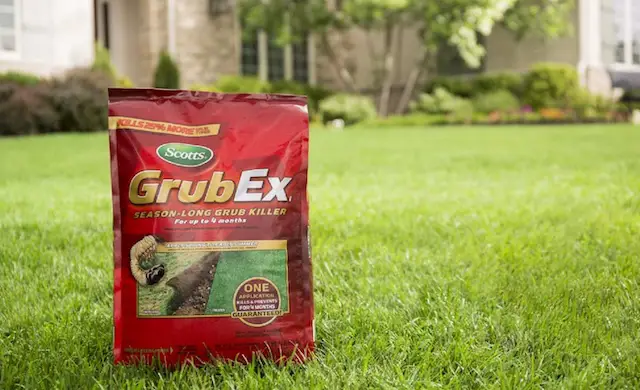
Image source: Bing (Web (fair-use with source credit))
Here's a regional breakdown based on extension service recommendations:
- Northeast and Mid-Atlantic: Mid-June to early July
- Midwest: Early to mid-June
- Pacific Northwest: Late May to mid-June
- Southeast: Late April to late May
- Deep South: Mid-April to mid-May
One thing that trips people up is re-applying too soon. Most preventative products provide season-long control from a single application. If you applied in June and it's now August, you don't need to apply again.
The product is still working. Over-applying wastes money and increases the chemical load in your soil unnecessarily.
When to Apply Curative Grub Control (The Rescue Window)
If you missed the preventative window, curative treatment is your next best option. The ideal time is when grubs are small, actively feeding, and still near the soil surface. That window typically runs from early August through mid-October, depending on your region and when the eggs actually hatched.
The earlier you catch them in this window, the better your results will be. Small grubs under half an inch long are far easier to kill than mature grubs that are an inch or more. By October, many grubs have already started moving deeper into the soil to overwinter, putting them out of reach of most curative products.
Trichlorfon-based products are the go-to curative option because they work fast, usually killing grubs within 24 to 72 hours. Carbaryl is another effective choice. Both have short residual activity, which is actually a benefit here.
You want a quick kill, not long-term soil persistence.
A few rules for curative applications:
- Water the lawn lightly before application if the soil is dry. Grubs in dry soil burrow deeper.
- Apply in the evening when grubs are most likely to be feeding near the surface.
- Water in lightly after application, about a quarter inch, to move the product into the root zone.
- Expect to see results within a few days. If you're still seeing active grubs after a week, a second application may be needed.
How to Use Soil Temperature to Pinpoint Your Exact Application Date
Calendar dates are helpful, but soil temperature is the most reliable indicator of grub activity. Adult beetles begin emerging and laying eggs when soil temperatures at a 4-inch depth reach about 50°F. Grub eggs hatch when soil temperatures are consistently in the 60°F to 70°F range.
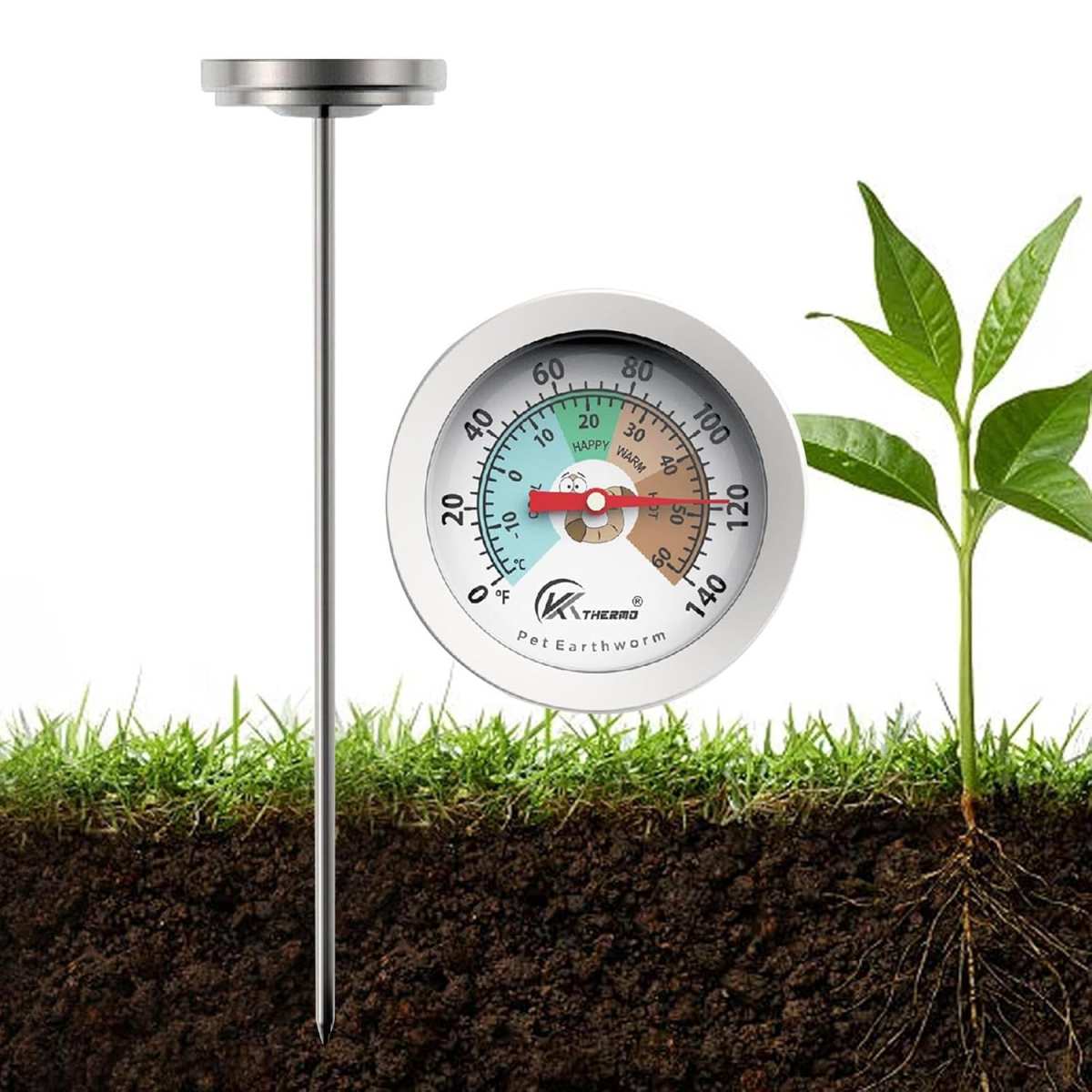
Image source: Bing (Web (fair-use with source credit))
You can pick up an inexpensive soil thermometer at any garden center. Take readings in the morning for the most consistent results. Check a few spots in your lawn since sun exposure can create temperature variations.
Here's how to use soil temperature for timing:
- Soil hits 50°F at 4 inches: Adult beetles are emerging. This is your cue to get preventative product down within the next 2 to 3 weeks.
- Soil holds 60°F to 70°F: Eggs are hatching. If you haven't applied preventative yet, you're cutting it close. Apply immediately.
- Soil drops below 50°F in fall: Grubs are moving deep for winter. Curative treatments become much less effective at this point.
Many university extension services publish soil temperature maps and degree-day models that track accumulated heat units. These tools can predict grub hatch within a few days of accuracy. Check your state extension website for local data, which is far more precise than any national guideline.
Regional Timing Differences: What Changes Based on Where You Live
Your location affects grub control timing more than almost any other factor. The further south you are, the earlier everything happens. Beetle emergence, egg laying, and grub hatch all shift earlier in warm climates.
In the northern tier of the US and southern Canada, you might have until early July to apply preventatives comfortably. In the mid-Atlantic states, mid-June is your target. In the Southeast, you could need to be out there in May.
And in parts of the Gulf Coast, late April might already be too late for preventatives if you're dealing with an early-emerging species.
Altitude matters too. Higher elevations in the Appalachians or Rockies will see later beetle activity than nearby lowland areas. If you live at 3,000 feet or more, push your timing back by a week or two compared to the nearest city at lower elevation.
Local grub species also vary by region. Japanese beetles dominate the Northeast and Midwest. European chafers are common in the Northeast and Pacific Northwest.
The Southeast deals with a wider mix, including green June beetles and sugarcane beetles, each with slightly different life cycles. Your county extension office can tell you which species are most common in your area, which helps you fine-tune your timing.
The Most Common Timing Mistakes That Waste Your Money
The number one mistake we see is applying preventative grub control in August or September. By then, eggs have already hatched and grubs are feeding. The preventative product sits in the soil doing nothing because it was designed to kill tiny newly hatched larvae, not established grubs.
People see brown patches, panic, and apply the wrong product at the wrong time.
The second most common mistake is skipping the watering step. Granular preventative products need to be watered in to move the active ingredient into the soil where grubs feed. If you spread granules on a dry lawn and don't water, most of the product stays on the surface and breaks down in sunlight before it ever reaches the root zone.
Here are the timing mistakes that cost homeowners the most:
- Applying preventative after grub hatch: The product won't work. Switch to a curative product instead.
- Applying curative too late in fall: Grubs are too deep and too large. You'll waste product and get poor results.
- Applying every month "just to be sure": Over-application wastes money and harms soil biology. One well-timed application is all you need.
- Ignoring soil temperature and going by calendar alone: A cold spring delays beetle emergence. A warm spring accelerates it. Soil temperature doesn't lie.
- Treating the whole lawn when only one area has grubs: Spot-treat if damage is localized. There's no reason to treat areas that don't have a grub problem.
The fix for most of these mistakes is simple. Pick the right product type for where you are in the grub life cycle, apply it when conditions are right, and water it in properly. That's it.
Everything else is just fine-tuning.
Chemical vs. Biological Grub Control: Timing Differences You Need to Know
Chemical insecticides get the job done fast, but biological options work too, and their timing requirements are different. Beneficial nematodes, specifically Heterorhabditis bacteriophora, are microscopic worms that seek out and kill grubs in the soil. They need to be applied when soil temperatures are between 55°F and 85°F, which generally means late August through early October in most regions.
Nematodes are a curative option, not a preventative one. They need live grubs in the soil to be effective. Apply them too early and they'll die off before grubs are present.
Water the lawn well before and after application, and apply in the evening since UV light kills nematodes quickly.
Milky spore, caused by Paenibacillus popilliae, is a biological option that targets Japanese beetle grubs specifically. It works best when soil temperatures are between 60°F and 70°F, typically spring or fall. The advantage of milky spore is that it's a long-term solution.
Once established in the soil, it can remain effective for 10 to 15 years. The downside is that it takes 2 to 3 years to build up enough concentration to be effective.
What to Do If You Missed the Preventative Window
Don't panic if you missed the preventative window. Curative products will still work as long as grubs are small and actively feeding. Check your lawn in late July or early August by cutting a square foot of turf and peeling it back.
If you see 6 or more grubs in that square foot, apply a curative product immediately.
Trichlorfon is your best bet for a fast kill. Water the lawn lightly the day before to bring grubs closer to the surface. Apply the product in the evening and water in lightly afterward.
You should see a significant reduction in grub activity within 48 to 72 hours.
If it's already late September or October and you're seeing damage, your options are more limited. At that point, focus on helping your lawn recover. Water deeply, fertilize lightly in fall, and plan to apply preventative grub control next spring at the right time.
How to Tell If You Even Need Grub Control This Year
Not every lawn needs grub control every year. If you've never had a grub problem and your lawn is surrounded by open space rather than beetle-friendly landscapes, you might be able to skip treatment. The threshold for action is roughly 6 to 10 grubs per square foot for cool-season grasses.
Cut a small flap of turf in a few spots around your lawn in early August. Count the grubs you find. If the count is low and your lawn looks healthy, you probably don't need to treat.
Also consider whether animals like skunks or raccoons are digging in your lawn. That's a strong sign grub populations are high enough to attract predators.
Your Grub Control Timing Decision Guide
Here's a simple decision tree to help you choose the right approach:
- Had grubs last year or live in a high-risk area: Use preventative control in late spring to early summer.
- Missed the preventative window and see grubs in August: Apply curative product immediately.
- Prefer organic methods and have Japanese beetles: Consider milky spore in spring or fall, and nematodes in late summer.
- Live in the South with early beetle activity: Move your preventative window 3 to 4 weeks earlier than northern guidelines suggest.
Write down your application date and product each year. That record will help you refine your timing over multiple seasons and build a reliable schedule that works for your specific lawn.
Frequently Asked Questions
Can I apply grub control and fertilizer at the same time?
Yes, many homeowners apply preventative grub control with a late spring fertilizer application. Granular products can be spread together as long as you adjust your spreader settings for each product separately. Water in thoroughly after both applications.
How long does preventative grub control last after application?
Most preventative products provide protection for 3 to 4 months after application. Chlorantaniliprole-based products tend to last the longest, often providing season-long control from a single application.
Is it too late to apply grub control in September?
For preventative products, yes, September is too late. For curative products, September can still work if grubs are small and have not yet moved deep into the soil for winter.
Do I need to apply grub control every year?
If you've had grub problems in the past or live in an area with high beetle pressure, annual preventative application is recommended. If your lawn has been grub-free for several years and you're not seeing animal digging, you may be able to treat on an as-needed basis.
Will grub control products harm earthworms?
Chlorantraniliprole has minimal impact on earthworms when used according to label directions. Imidacloprid can affect earthworm reproduction at high doses, so follow the application rate carefully. Beneficial nematodes and milky spore have no negative effect on earthworm populations.