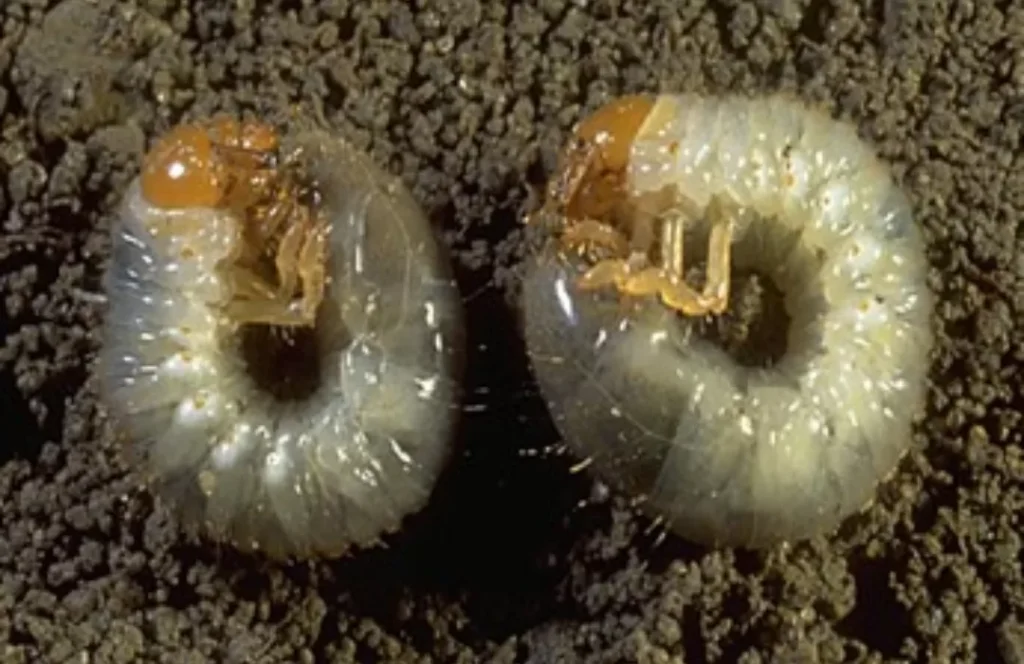
When you're staring at a patchy, brown lawn in August wondering what went wrong, white grubs are almost always the answer. Knowing exactly when to put grub control on lawn is the single biggest factor that separates people who prevent damage from those who are just applying expensive products to already-ruined turf. Get the timing right and one application handles the whole season.
Miss the window and you'll be tearing up dead grass and wondering what happened.
The tricky part is that "grub control" is actually two completely different treatments. Preventive products stop grubs before they cause harm, and they need to go down in late spring or early summer. Curative products kill active infestations in late summer.
The soil temperature thresholds and grub size at each stage dictate everything you need to plan your schedule.

Image source: Wikimedia Commons / Сарапулов (CC BY)
Quick Answer
The best time to put grub control on your lawn is late spring to early summer for preventive products. Apply preventive treatments when soil temperatures at 2 to 4 inches reach 50 to 60 degrees Fahrenheit. This typically falls between April and June depending on your region.
Curative treatments go down from late July through September. Always water in granular products with at least 1/4 inch of water after application. Match your specific timing to your climate zone and grass type rather than following a single calendar date.
Why Grub Control Timing Matters More Than the Product You Choose
People get stuck on brand names and active ingredients. In practice, a well-timed generic preventive works better than a premium curative product applied three weeks too late. The reason is simple biology.
Grubs are most vulnerable to preventive insecticides when they're tiny, newly hatched, and actively feeding near the surface. Once they're fully grown in late summer, they're harder to kill and they've already eaten most of the root system.
This is the distinction that drives the entire decision tree. If you're applying a preventive product like GrubEx (chlorantraniliprole) in August, you've wasted it. The grubs are too large to be controlled at effective rates, and the product is designed to be in the root zone weeks before peak feeding.
Conversely, applying a curative product like Dylox (trichlorfon) in May is premature, the grubs haven't hatched yet, and the product breaks down in the soil before the larvae ever encounter it.
The critical concept is the vulnerable stage. Preventive products work on first and second instar grubs that are smaller than 1/4 inch. Curative products can handle larger third instar grubs nearing 1 inch, but they need to be applied while feeding is still active and soil conditions support fast root zone movement.
Each product class has a specific biological window dictated by the insect's development cycle, not by the calendar.
Region matters equally. Japanese beetles have one generation per year across most of the United States and Canada, but southern masked chafers in the Southeast can produce multiple overlapping broods across an extended season. That difference alone shifts the preventive window and often makes a curative approach the only practical option in Georgia or Alabama.
The One Question That Changes Your Entire Schedule
Before you pick a product or mark a date on your calendar, you need to answer one question: are you preventing grubs or killing an active infestation right now? The answer splits the entire topic into two completely different workflows. Know which one applies to your situation before spending a dollar on product.
Preventive grub control is what you want if:
- You've had grub damage in the previous one to two years
- You live in a region with known Japanese beetle or European chafer pressure
- Your lawn looks healthy today and you want to keep it that way
- You're reading this in spring or early summer (April through July)
- You plan to use low-toxicity products that need lead time to be effective
Preventive products create a treated zone in the root zone that destroys newly hatched grubs when they begin feeding. Imidacloprid products typically provide 8 to 12 weeks of residual protection. Chlorantraniliprole can deliver up to 4 months of control from a single application.
Both require the product to be in place before eggs hatch and feeding begins, regardless of what happens to the adult beetles flying around your yard.
Curative grub control is what you want if:
- You're seeing brown patches in late summer that peel back like loose carpet
- You've counted 6 or more grubs per square foot in damaged areas
- Skunks, raccoons, or birds are digging up your lawn at night
- You're reading this from late July through September
- You need results within days rather than weeks
Curative products use fast-acting chemistry like trichlorfon (Dylox) to stop active feeding damage within 1 to 3 days of application and watering. They are not a next year fix. Curative treatments save what turf is still alive while killing the larvae currently chewing on roots.
The lawn still needs fall overseeding and repair because most of the structural root damage is already done by the time you notice it.
How Grub Life Cycles Dictate Your Treatment Window
Understanding the grub lifecycle reveals why the application windows are what they are. You can see a clear example of the species involved here.
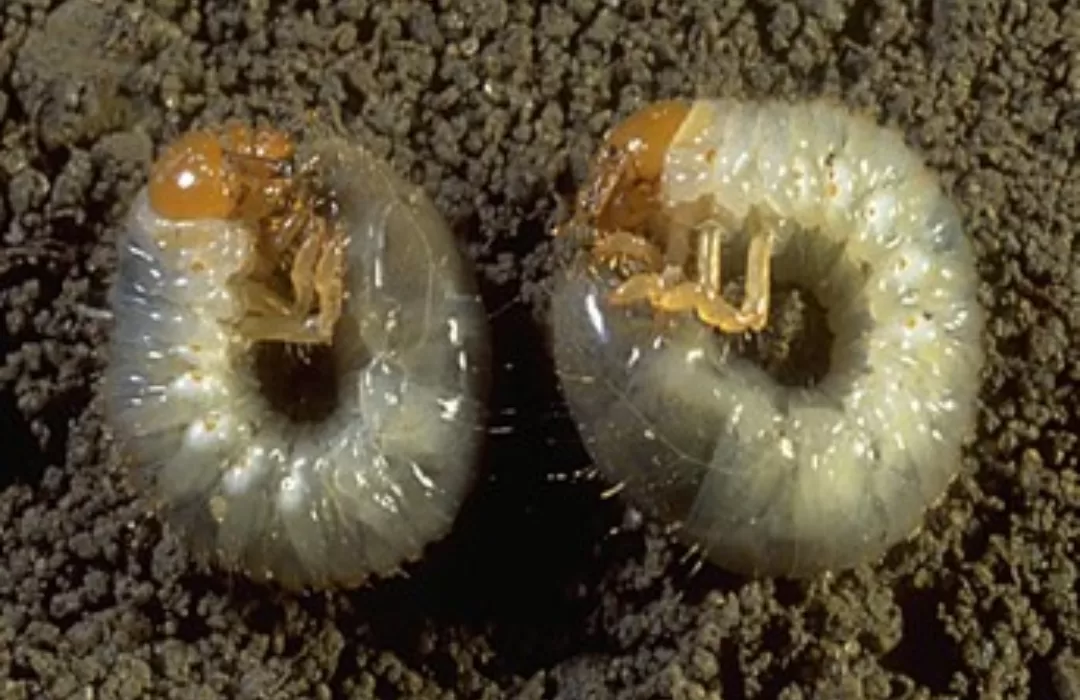
Image source: Bing (Web (fair-use with source credit))
Adult beetles emerge in early summer, feed on landscape plants for a few weeks, then lay eggs 2 to 4 inches deep in moist, irrigated turf. Those eggs hatch into first instar grubs in mid to late summer. The tiny larvae feed aggressively on root hairs until late fall when they burrow deeper and overwinter.
In spring they return to the root zone for a second feeding period before pupating.
The key insight is the size progression. Preventive products are lethal when grubs are tiny because the larvae absorb a lethal dose quickly. By late summer the same grubs are 50 times larger and require higher rates or faster-acting chemistry to achieve the same kill rate.
Regional pressure varies significantly by species. European chafers lay eggs earlier in summer than Japanese beetles, so their grub development runs 2 to 3 weeks ahead. May/June beetles have a multi-year lifecycle, so their grubs persist in the soil for more than one season.
Black turfgrass ataenius is active across an unusually long window. Each species requires understanding its dominant lifecycle pattern to time treatment correctly.
Soil biological activity drives product performance. Microbial breakdown, moisture levels, and soil temperature all influence residual life. That's why relying on a single calendar date without considering soil conditions is less reliable than watching actual soil temperatures or tracking regional degree day accumulations.
Preventive Grub Control (Spring / Early Summer)
Preventive grub control needs to be in the root zone when eggs hatch. For most regions this translates to a window from April through June. Soil temperatures at 2 to 4 inch depth reaching 50 to 60 degrees Fahrenheit are your biological signal.
Apply the product when those temperatures are consistently achieved, not before, to ensure adequate residual activity during peak grub feeding.
Chlorantraniliprole (GrubEx) and imidacloprid (Merit) are the dominant preventive chemistries available to homeowners in 2026. Both are most effective when watered into the top 1 to 2 inches of soil within 48 hours. The product moves into the root zone where feeding grubs encounter treated soil.
Applications made too early may degrade before larvae hatch, especially in warm spring seasons.
Soil moisture at application is critical. A dry lawn at application delays movement into the root zone. Rainfall or irrigation after application completes the process.
If you're applying during a dry spell, manual watering with a sprinkler or hose-end sprayer attachment is essential to activate the product.
Curative Grub Control (Late Summer / Early Fall)
Curative grub control targets active, damaging populations when large brown patches appear in July, August, or September. The products most available to homeowners include trichlorfon (Dylox), which kills via contact and ingestion within 1 to 3 days of application. It's the fastest option, making it the most practical choice when immediate grub mortality is required.
Curative products do not provide long residual control. They kill what's present today, which is exactly what's needed when an active population is damaging turf. Repeated applications may be necessary in high-pressure regions to control continued egg hatch through September and October.
Water application is even more critical for curative products. A half-inch of water ensures contact with grubs actively feeding in the top inch of soil. Without adequate irrigation, the active ingredient remains on the surface where UV exposure begins degrading it within hours.
Why Fall Prevention Doesn't Work
Many homeowners apply grub control in September or October thinking they're doing next year's prevention. This timing is almost entirely ineffective in most regions. The products classified as preventives require weeks to months of persistence in the soil, and cool fall soil temperatures reduce both their movement and biological activity.
Label directions for most preventive products specifically restrict application to spring through mid-summer, because fall applications provide negligible control the following year.
What people are actually seeing in fall is large grub activity visible when they dig. Those large grubs can be effectively killed with curative chemistry, but they won't be controlled by a preventive product going down now. Fall applications of curative products can reduce late season feeding damage and the population going into winter, but this is treating a current infestation, not preventing next year's.
For true fall protection the following year, you'd need the right product at the right time: preventive applications the previous April through June. Fall soil-level adulticide or curative applications can be a secondary management tactic in integrated programs, but they don't replace the spring preventive window.
How Climate, Grass Type, and Grub Species Shift Your Timeline
Your grass type and region determine which grub species are present and how their lifecycle integrates with your preventive and curative windows. A warm-season lawn in Georgia experiences different species pressure, different larval timing, and different stress patterns compared to a cool-season lawn in Michigan.
Cool-season turf response to grub damage tends to be secondary. Tall fescue, Kentucky bluegrass, and perennial ryegrass face adult beetle damage like skeletonized leaves and sun-scorched turf on hot August days. But the root-feeding lifecycle itself doesn't differ from warm-season lawns. The principle of applying preventive control in advance of egg hatch is universal across grass types.
Grass type matters because it determines your renovation and recovery options and how you schedule turf repair following damage, not the fundamental timing of grub control.
Cool-Season Lawns (Northeast, Midwest, Pacific Northwest)
Cool-season lawns dominated by tall fescue, Kentucky bluegrass, and perennial ryegrass experience their primary grub pressure from Japanese beetles and European chafers in most regions. The single-generation lifecycle creates one clear preventive window. The curative window is correspondingly narrow.
European chafers hatch earlier than Japanese beetles in the Midwest. They can be a concern as early as mid-July. Southern masked chafers emerge in late May to early June, and their adult flight overlaps with the tail end of European chafer activity.
Curative applications for late-season infestations from July through September should be timed to match monitoring or visible damage onset. Dylox, which relies on larval contact and rapid ingestion, remains effective into September because the active ingredient isn't degraded by soil microbes the way slower-acting products are. Apply Dylox when you confirm threshold grub counts and see active feeding, regardless of the specific peak egg-laying date.
Warm-Season Lawns (Southeast, Gulf Coast, Southwest)
Warm-season lawns like Bermuda, zoysia, St. Augustine, and centipede have different grub pressures depending on the region. Southern masked chafers and green June beetles are prevalent in many areas.
They lay eggs later than Japanese beetles, often into July.
Warm-season turf can mask early grub damage because the vigorous root system distributes stress across a larger soil volume. By the time symptoms appear, infestations can become severe. Inspect susceptible lawns even if they look healthy.
Species-specific products like milky spore (Paenibacillus popilliae) are used in many southern states specifically for Japanese beetle larvae establishment over multiple years. Southern masked chafers and green June beetles are not effectively controlled by milky spore as its action is restricted to Japanese beetle populations. Other suppression methods including soil management, appropriate irrigation timing, and broad-spectrum preventive treatments cover the full range of species present.
The warm-season preventive window opens earlier in the year. Soil temperatures reach 50 degrees by mid-March in many areas, allowing applications from March through April, and a follow-up in summer may be needed for regions with multiple beetle flights and overlapping broods.
Transition Zone (Mid-Atlantic, Lower Midwest)
The transition zone around Pennsylvania, Maryland, and the Virginia Piedmont is where the most preventive failures occur. Cool-season turf dominates, but summer heat stress masks damage until it's severe. High Japanese beetle pressure combines with overlapping species like European chafers and northern masked chafers that have slightly different timing.
Preventive applications here typically target early to mid-June, when the first species are laying eggs in sensitive fescue and bluegrass lawns. If you're unsure which species are present, apply the preventive when consistent daytime highs reach 85 to 90 degrees, which correlates to flight activity for multiple species.
Curative applications can begin in early August and continue through the month. By late August, enough grubs have reached feeding size to be visible during lawn renovation prep. High year variability in grub pressure means the decision to treat should be based on threshold scouting, not calendar assumptions.
In years with low pressure, skip preventive applications entirely. In pressure years, apply curatives on first confirmation because the transition zone's high temperatures accelerate damage.
The transition zone is also where insect-specific adulticide and trapping programs sometimes look tempting to homeowners. Japanese beetle traps often attract more adults than they kill and raise surrounding grub populations. Avoid them if you're managing grub pressure.
Focus instead on a well-timed preventive and inspect the lawn to confirm whether a curative follow-up is needed.
The Curative Window: How to Know You Need It
The most reliable way to confirm grub trouble is to test the turf. Grab a sharp knife or flat shovel and cut through the brown area. You can see the severity of a typical infestation in this example.
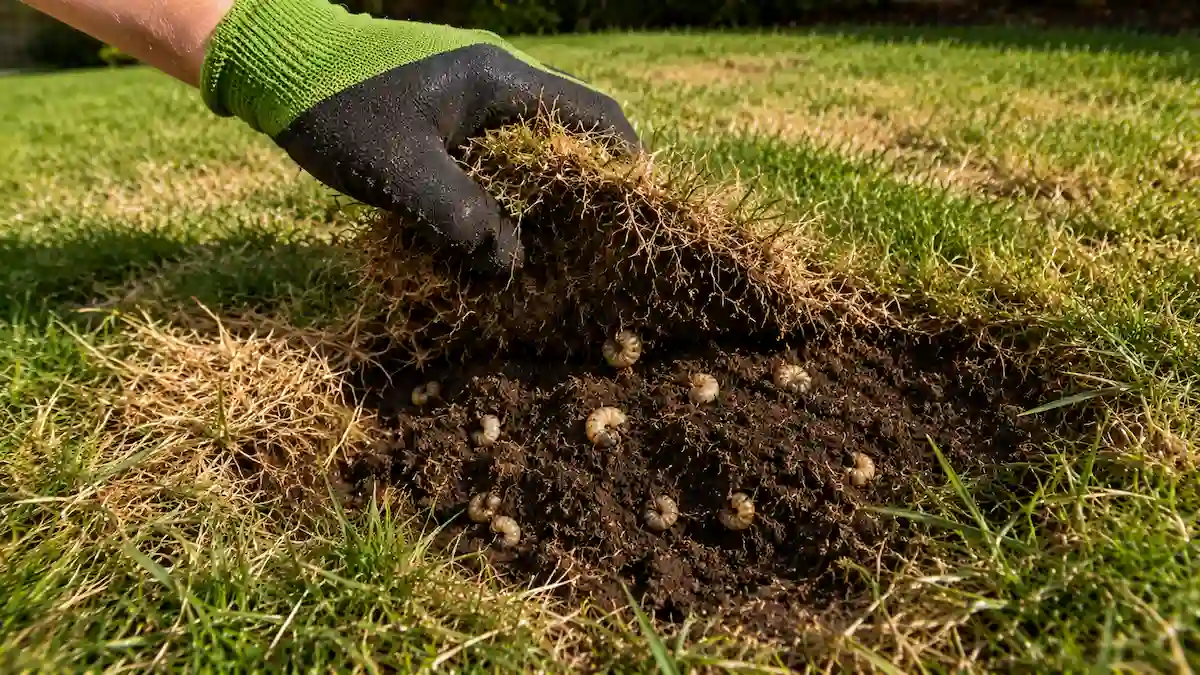
Image source: Bing (Web (fair-use with source credit))
Peel the sod back and count the grubs you find. If you see 10 or more white grubs in that single square foot sample, treat immediately. Curative applications provide the fastest control once you confirm a damaging population.
For sensitive lawns or high-value turf, the treatment threshold may be only 5 to 6 grubs per square foot.
Check multiple areas. Grubs are rarely distributed evenly throughout the lawn. Sample in several spots showing damage and in some undamaged areas nearby.
This helps you map the scope of treatment. You might find all the activity limited to one sunny slope, which would let you treat a smaller area rather than the entire property.
Think about timing within the season. If you discover large grubs in late August and the turf is actively wilting, the damage threshold has already been reached. Apply a curative product as soon as possible.
Don't wait for a cooler weekend. Curative treatments lose effectiveness as grubs stop feeding in late fall. Once soil temperatures drop below 50 degrees, larvae move deeper and become unreachable by surface-applied products.
The Step-by-Step Process: From Decision to Application
After determining that you have white grubs and need treatment, the basic process is straightforward. It follows six logical stages from confirming the problem to monitoring the result.
Step 1: Count Your Grubs
Cut 1 square foot samples in active damage areas using a knife. Peel back the turf and count the grubs in the root zone. Note this number clearly.
It determines whether you treat and which type of product you need. If counts are below 6 per square foot on cool-season turf, skip treatment and focus on lawn health. The grass can tolerate some grub pressure without dying.
Step 2: Match the Timing to Your Region
Check your regional timing window using local extension service guidelines or the soil temperature thresholds discussed earlier. In the Northeast, early to mid-June is typically appropriate for preventive products, with July following in the upper Southeast and Gulf Coast. Confirm actual egg hatch timing by inspecting 2 to 3 inch soil depth temperatures over a weekend with consistent readings.
The best universal signal is consistent soil temperature. Products need time to work before eggs hatch. Tracking forecasting tools and extension calendars through your state university's resources gives you current local timing rather than a general regional average.
Step 3: Choose Preventive vs. Curative Product
Preventive options include products like chlorantraniliprole (GrubEx) for a single-application full-season solution or imidaclidprid-based products for shorter control windows. Both are low-toxicity for birds and mammals and work well when properly watered in. Curative options include trichlorfon (Dylox), which works rapidly and has very short soil life.
Reserve Dylox for active infestations and avoid it as a preventive where long residual control is desired.
Use beneficial nematodes when you need a biological control option or when chemicals are restricted. Heterorhabditis bacteriophora nematodes can show 60 to 80% control when applied correctly in moist, warm soil. But they demand same-day application after purchase and careful watering, so they only fit certain homeowner situations.
Step 4: Apply and Water In
Apply granular product using a broadcast or drop spreader set to the product label rate. Over-application causes waste and runoff risk. Under-application leaves untreated patches where grubs survive.
After spreading, water the entire treated area with at least 1/4 inch of water within 48 hours.

Image source: Bing (Web (fair-use with source credit))
Proper spreader operation matters. Pass the spreader in overlapping patterns to avoid streaking. Measure the total square footage of your lawn, weigh out the required amount of product, and set the spreader accordingly before starting.
Read the label setting chart and verify. Running the spreader too fast creates an uneven banding effect that leaves thin spots untreated.
Step 5: Protect Pollinators and Follow the Label
Keep children and pets off the lawn until the product is watered and has dried. This is standard precaution for all granular pesticides. Do not apply to blooming weeds or adjacent flowering beds during peak bee activity.
Clover under bloom is common in early-summer turf and pollinator protection takes priority over weed aesthetics.
Review all restrictions on the product label every time you apply. Labels change more often than people realize. Check for local restrictions that limit use seasonally or by proximity to water bodies.
Step 6: Monitor and Repair in Fall
After curative treatment, check fresh samples in a week. Dead grubs will shrivel and turn brown. Alive ones will remain active in the soil.
Once treated, repair any remaining damage with fall seeding in September or October. Reseeding or resodding restores the damaged root system that curative treatments could not save.
Overseed after grub kill to give young grass time to establish roots before winter dormancy. Reduce mowing height gradually, keep seedbed moist, and avoid pre-emergent herbicides on newly seeded areas as they will kill the new grass along with weeds.
Preventive vs. Curative: Side-by-Side Comparison
Understanding where preventive and curative approaches work best helps you match the right option to your specific situation.
| Feature | Preventive (chlorantraniliprole) | Curative (trichlorfon/Dylox) |
|---|---|---|
| Application window | Spring to early summer | Late summer to early fall |
| Speed of control | Days to weeks | 1 to 3 days |
| Residual period | Up to 4 months | Minimal to none |
| Grub size effectiveness | First instar only | All sizes including large |
| Mammalian toxicity | Low | Higher, follow label carefully |
| Best for | Regular damage history, known high-pressure areas | Active damage confirmed, high grub counts |
Preventive chlorantraniliprole is the cleanest long-term strategy for homeowners with repeated annual damage history. One application controls the full larval hatch window. Curative trichlorfon is the right answer when you are standing in the lawn right now watching dead grass peel back and need a fast kill.
Most homeowners end up using both in different seasons as part of a rotation cycle, but never in the same year. If spring is coming up or damage was severe last year, take the preventive. If the lawn already has 10 + grubs this morning, grab the curative.
Mistakes That Empty Your Wallet and Waste a Season
Certain errors cause the vast majority of grub control failures. Recognizing these patterns helps you avoid wasting time and money on an application that does nothing.
Fall applications of preventive products are the single biggest mistake. Spring-applied preventives with long residual windows give you coverage when the grubs arrive. Fall treatment is too late for prevention and provides no residual carryover.
Skipping the water-in step is almost as common. Granular product sitting on the surface will not penetrate the root zone where grubs feed. UV light degrades active ingredients.
Without irrigation, most products lose 50 to 75% of their intended activity within the first week. A simple half-hour with the sprinkler after application is all it takes.
Applying during a drought setback limits product absorption. Wait for rain or irrigate dry soil 24 hours before applying, not after. Moist soil at application maximizes product movement into the root zone rather than keeping it locked on the surface.
Organic and IPM Alternatives: What Works and What Doesn't
Your organic options have real limitations compared to synthetic products. If you're managing a high-pressure infestation with visible turf loss, organic methods alone rarely provide adequate control.
Beneficial Nematodes: Can Work If You're Precise
Heterorhabditis bacteriophora nematodes actively hunt and kill grubs in the soil. They provide genuine control potential when applied correctly, but they demand precise handling. Nematodes are living organisms and same-day application after purchase is essential.
They must be watered into moist soil held above 60 degrees Fahrenheit. High UV exposure during application kills them rapidly, so treat at dusk or on fully overcast days.
Their performance is less consistent than chlorantraniliprole. If you're maintaining high-value turf, pair nematodes with cultural practices or repeated applications per season. Some university trials report 60 to 80% control under favorable conditions with proper timing and irrigation.
That figure is useful, not miraculous.
Milky Spore: A Long Game Worth Understanding
Milky spore (Paenibacillus popilliae) is a bacterial disease that targets Japanese beetle larvae exclusively. It works well in that narrow band, but other grub species aren't affected. It also requires several years for the bacterial population to reach suppressible levels in the soil.
That makes milky spore a multi-year investment, not a next-season fix.
If Japanese beetles are your dominant species, milky spore can reduce establishment of new grub larvae in subsequent years. That's a legitimate tool for long-term management, but it won't clarify what to do this August when you're pulling up dead patches today. Strategy depends on whether you're solving a short-term problem or building a long-term foundation.
Costs, Products, and What to Expect
Grub control costs vary based on product and treatment approach. Homeowners applying generic chlorantraniliprole generally spend between 0.15 and 0.40 dollars per 1,000 square feet, which closely matches premium brands like GrubEx. Imidacloprid products can run slightly higher in certain regions depending on distribution.
Some states restrict neonicotinoid-containing products, so product availability may fluctuate by location.
Professional application from a lawn care company typically adds labor and product cost. That price does include professional-grade products in many cases and can be a reasonable value for high-value turf. Beyond that threshold, the product itself is rarely the main cost of the job.
Curative applications often cost less annually because they're used only when confirmed thresholds are exceeded. The tradeoff is potential repair costs for damaged turf over the summer from active infestations. When you inspect and treat early, you'll spend on the product but save on the renovation bill.
When to Call a Professional Instead of DIY
You should bring in a pro when you lack the tools or confidence to diagnose and treat accurately. Call for professional help when grub numbers exceed the threshold but the damage pattern is confused with disease, drought compaction, nematode stress, or all of these at once. Misidentification wastes expensive curative chemistry on the wrong problem.
Also shift to professional service when your property is large enough that spreader calibration, uniform application, and post-treatment irrigation require either equipment or time you don't have on hand. A lawn care operator with a calibrated commercial spreader, correct product selection, and knowledge of local grub cycles can get the job done more efficiently in those cases.
Some regions require commercial pesticide licenses or have restricted-use curative products homeowners can't legally apply. A licensed operator can deploy those materials legally in those markets, which justifies the cost.
Frequently Asked Questions
When should I apply grub control?
Timing depends entirely on which product you're using. Preventive products go down in late spring to early summer when soil temperatures hit 50 to 60 degrees at 2 to 4 inches deep. Curative treatments start in late July and continue through September when you confirm damaging grub populations.
Never apply preventive products in fall, as they won't be effective.
How do I know if I have grubs in my lawn?
Use a knife or shovel to cut a 1 square foot patch of sod in a damaged area and peel it back. Count the white, C-shaped grubs you find. If you see 10 or more per square foot, treat immediately.
Other signs include brown patches that peel back like loose carpet, and nighttime animal digging from skunks or raccoons feeding on the larvae.
Can I apply grub control in the fall?
Fall applications of preventive products do not work because the active ingredient breaks down before the next season's grub hatch. You can apply curative products in early fall if you find active grubs causing damage. Otherwise, mark your calendar for the following spring or early summer and wait for the right window.
What happens if I miss the preventive window?
You switch to curative treatment. If the lawn shows brown damage in mid-summer, perform a square foot grub count, and if the count exceeds threshold, apply a curative product like Dylox immediately. It kills within 1 to 3 days.
Follow up with fall seeding or sodding to repair damaged areas once the threat is eliminated.
Is GrubEx or Dylox better?
GrubEx is superior when you're planning ahead and can apply it in the spring or early summer before eggs hatch. Dylox is better in late summer when you need a fast kill after confirming an active infestation. Apply both at their correct seasonal windows and you'll have a stable long-term grub control program.
Does grub control kill beneficial organisms?
Broad-spectrum products including imidacloprid can reduce beneficial soil organisms to varying degrees. Chlorantraniliprole has lower nontarget impacts. Beneficial nematodes contribute positively to soil health when applied.
Restricting product use to necessary applications and using the right rates helps preserve soil biology.
Real Scenarios: Three Homeowners, Three Schedules
Letting a Wisconsin homeowner handle curative spot-treatments illustrates the difference between regions. A lawn care operator in Milwaukee treats a fescue lawn with recurring Japanese beetle damage. Year one she missed the preventive window, discovering 12 + grubs per square foot in late August.
She treated with Dylox, watered with half an inch of irrigation, and found dead grubs within three days. She reseeded the damaged areas in September and budgeted for a GrubEx application the following year. Her core prescription involves a single preventive application in early June plus regular scouting each season.
A different scenario plays out in Atlanta. A zoysia lawn owner in Georgia faces southern masked chafers with an extended egg-laying window. Preventive application starts in early April, with a follow-up in July for the second generation.
Both treatments used chlorantraniliprole applied on schedule with rigid watering maintenance. No visible grub damage occurred. The homeowner checks the lawn for animal digging in the summer and reviews soil temperature loggers to guide actual timing year to year.
A third case comes out of western Oregon. A want-to-organic homeowner with mixed fine fescue uses beneficial nematodes against European chafers. She buys refrigerated Heterorhabditis from a reputable supplier, applies at dusk on overcast July days, and waters gently afterward.
She accepts 60 to 80 percent control variability in exchange for avoiding synthetic products. Out of three summers, one required spot reseeding where grub damage broke through. She now pairs nematode applications with milky spore and accepts that the program is a multi-year project, not a quick seasonal fix.
Final Decision Guide: Find Your Exact Timing
If you've read this far, you know timing is everything. This final guide distills the decision path into one straightforward workflow.
If it's April through June where you are, apply a preventive product today. Use chlorantraniloprole or imidacloprid based on your state's regulatory restrictions. Calibrate your spreader, water in within 48 hours, and mark the treatment on a calendar.
That single step eliminates most full-season grub risk.
If it's late July or August and your lawn looks suspect, cut a test plug right now. Confirm the grub count. Apply a curative product immediately if you're above threshold.
Mark fall reseeding on your calendar for September. Schedule next year's preventive treatment in your phone for early June and don't miss it again. Build a simple two-year rotation of inspect-treat-prevent over time.