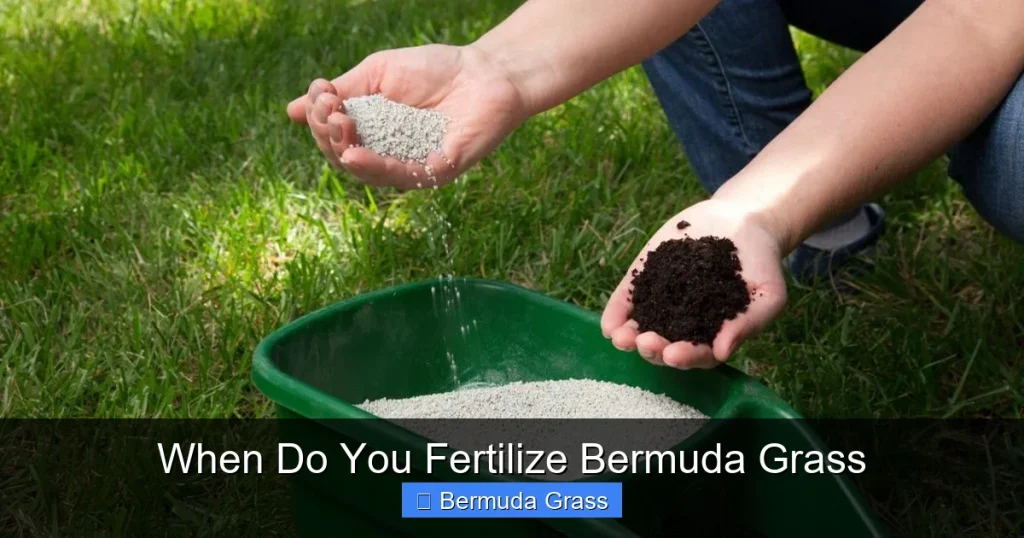
To achieve a vibrant Bermuda grass lawn, timing is paramount. Begin fertilizing when soil temperatures consistently reach 65-70°F in late spring, signaling active growth. Follow with regular applications every 4-6 weeks through summer, using a soil test to guide nutrient choices and avoiding fertilization once dormancy approaches in the fall. This strategic approach ensures robust growth and a resilient turf.
When Do You Fertilize Bermuda Grass
Welcome, fellow lawn enthusiasts! Do you dream of a dense, vibrant, carpet-like Bermuda grass lawn? You’ve come to the right place. Achieving that picture-perfect green often comes down to one crucial element: knowing when to fertilize Bermuda grass. It’s not just about throwing some granules on the lawn; timing and type of fertilizer are everything when it comes to this warm-season superstar.
In this comprehensive guide, we’ll walk you through the precise seasonal schedule for fertilizing Bermuda grass, from its initial green-up in spring to its preparation for dormancy in fall. We’ll cover why soil testing is your best friend, how to choose the right fertilizer, and practical tips to ensure your efforts result in a truly magnificent lawn. Get ready to transform your turf into the envy of the neighborhood!
Key Takeaways
- Soil Test First: Always start with a soil test in early spring or fall to understand your lawn’s specific nutrient needs and pH levels before applying any fertilizer.
- Wait for Green-Up: Do not fertilize Bermuda grass until it has fully emerged from dormancy and soil temperatures consistently reach 65-70°F, typically in late spring or early summer.
- Regular Summer Feeding: Bermuda grass is a heavy feeder. Plan to fertilize every 4-6 weeks during its active growing season (summer) to maintain density and color.
- Choose High-Nitrogen Fertilizer: For established Bermuda, select a granular fertilizer with a high nitrogen (N) content, often a 3-1-2 or 4-1-2 ratio (e.g., 15-5-10 or 16-4-8), preferably with slow-release nitrogen.
- Stop Before Dormancy: Cease all fertilization 4-6 weeks before the first expected frost in your area to allow the grass to prepare for dormancy and prevent winter damage.
- Water After Application: Always water your lawn immediately after applying granular fertilizer to help it dissolve and move into the soil, preventing turf burn, unless the product specifically states otherwise (e.g., some weed-and-feed products).
Understanding Bermuda Grass: A Warm-Season Wonder
Bermuda grass (Cynodon dactylon) is a popular warm-season turfgrass known for its incredible resilience, drought tolerance, and ability to thrive in hot climates. It establishes quickly, forms a dense mat, and can withstand heavy foot traffic, making it ideal for lawns, golf courses, and sports fields across the southern U.S. and similar regions worldwide.
However, Bermuda grass also has a distinct growth cycle that directly impacts when and how you should fertilize it:
- Dormancy (Winter): When soil temperatures drop below 55°F, Bermuda grass goes dormant. It turns brown and stops growing, conserving energy for spring.
- Green-Up (Spring): As soil temperatures rise to 55-65°F, Bermuda begins to emerge from dormancy. It slowly regains its green color.
- Active Growth (Summer): This is Bermuda’s prime time! When soil temperatures consistently reach 65-70°F and above, Bermuda grass enters its most vigorous growth phase. It spreads rapidly, tolerates heat, and performs best. This is when it needs the most nutrients.
- Slowing Down (Fall): As days shorten and temperatures begin to cool, Bermuda’s growth slows as it prepares for winter dormancy.
Because Bermuda grass has such a specific active growth period, fertilizing at the right time—and avoiding the wrong times—is critical for its health and appearance. Fertilizing dormant grass, for instance, is not only wasteful but can also encourage weed growth or even damage your lawn.
Step 1: Always Start with a Soil Test
Before you even think about buying a bag of fertilizer, the single most important step you can take is to conduct a soil test. This isn’t just a suggestion; it’s a foundational step for smart lawn care. A soil test tells you exactly what nutrients your soil has (or lacks) and its pH level.

Visual guide about When Do You Fertilize Bermuda Grass
Image source: trendingsimple.com
Why a Soil Test is Essential
- Identifies Deficiencies: It reveals if your soil is low in essential nutrients like nitrogen (N), phosphorus (P), or potassium (K), or critical micronutrients.
- Avoids Over-Fertilization: Applying too much of a nutrient your soil already has can be harmful to your lawn and the environment.
- Determines pH: Bermuda grass prefers a slightly acidic to neutral pH, typically between 6.0 and 7.0. A soil test will tell you if your pH needs adjusting with lime (to raise pH) or sulfur (to lower pH).
- Saves Money: Why buy and apply fertilizer your lawn doesn’t need?
How to Conduct a Soil Test
- Professional Lab: The most accurate way is to send samples to your local university extension office or a private soil testing lab. They provide detailed reports and specific recommendations. You’ll typically collect samples from several spots across your lawn, mix them, and send a composite sample.
- DIY Kits: Home soil test kits are available but tend to be less accurate. They can give you a general idea but lack the precision of a professional analysis.
When to Test Your Soil
The best times to test your soil are in the fall (after the growing season) or in early spring (before you plan to fertilize). This gives you ample time to receive results and make any necessary amendments before the prime fertilizing window.
Step 2: The Golden Window – First Fertilization (Late Spring/Early Summer)
This is arguably the most critical application of the year. The timing of your first fertilization for Bermuda grass is crucial. Too early, and you’re feeding weeds and potentially stressing your grass. Too late, and you miss out on peak growth.
When to Apply Your First Fertilizer
Wait until your Bermuda grass has fully greened up and is actively growing. This usually happens when:
- Soil temperatures consistently reach 65-70°F (18-21°C) at a 4-inch depth. You can measure this with a soil thermometer, or look for consistent daytime temperatures of 75-80°F and nighttime temperatures above 60°F.
- All threat of frost has passed.
- You’ve mowed your lawn a few times in the spring. This indicates it’s actively growing.
Depending on your climate, this typically falls between late April and early June. For many, Memorial Day weekend is a good benchmark.
Choosing the Right Fertilizer for the First Application
For this initial application, and for Bermuda grass in general, you’ll want a fertilizer that is:
- High in Nitrogen (N): Nitrogen promotes lush, green top growth. Look for a fertilizer with a higher first number in the N-P-K ratio, such as a 3-1-2 or 4-1-2 ratio (e.g., 15-5-10, 16-4-8, 20-5-10).
- Slow-Release Nitrogen: This is highly recommended. Slow-release forms provide a steady supply of nitrogen over several weeks, preventing surge growth, reducing the risk of burn, and extending the feeding period.
Your soil test results will provide specific recommendations for P (phosphorus) and K (potassium), but generally, Bermuda grass needs less P once established and a good amount of K for overall plant health and stress tolerance.
Step 3: Mid-Season Boosts – Maintaining Vigor (Summer)
Bermuda grass is a heavy feeder during its active growth phase in summer. To maintain its vibrant green color and density, you’ll need to provide regular nutrient boosts.
Frequency of Applications
During the peak growing season (typically June, July, and August), plan to fertilize Bermuda grass every 4 to 6 weeks. The exact frequency will depend on the type of fertilizer you use (slow-release versus quick-release) and your lawn’s specific needs, as indicated by its appearance and your soil test results.
- Slow-release fertilizers: Can often extend application intervals to 6-8 weeks.
- Quick-release fertilizers: May require applications every 3-4 weeks due to their shorter nutrient availability.
Fertilizer Type for Mid-Season
Continue using a high-nitrogen, ideally slow-release, granular fertilizer. Your soil test may suggest adjusting phosphorus or potassium levels, but nitrogen will remain the primary nutrient for sustained growth.
Monitor Your Lawn
Pay close attention to your lawn’s color and growth rate. If it starts to lose its deep green color or growth slows significantly, it might be signaling a need for another application. However, never over-fertilize, as this can lead to excessive thatch buildup, nutrient runoff, and even burn your grass.
Step 4: Preparing for Dormancy – Late Summer/Early Fall Application
The final fertilization of the year is just as important as the first. It helps your Bermuda grass build up reserves to endure winter dormancy and encourages strong root development, which is crucial for a robust spring green-up.
When to Apply Your Last Fertilizer
This final application should be applied 4 to 6 weeks before the first expected frost in your area. This allows the grass to absorb the nutrients and use them for root growth before cold temperatures force it into dormancy. Applying too late can stimulate tender new growth that will be easily damaged by frost.
For many regions, this falls between late August and mid-September.
Choosing the Right Fertilizer for Late Season
For this final application, you want to shift away from high nitrogen. Instead, focus on phosphorus and especially potassium, which aids in winter hardiness and root development. Look for a fertilizer with a lower nitrogen content and higher potassium (K). Sometimes these are labeled as “winterizer” fertilizers, but always check the N-P-K ratio.
- Lower Nitrogen: Nitrogen applied too late will promote top growth that will simply die back in winter.
- Higher Potassium: Potassium (the third number in the N-P-K ratio) helps Bermuda grass tolerate cold stress and disease, and supports healthy root systems.
A balanced fertilizer like 10-10-10 or a formulation like 5-10-20 can be appropriate, depending on your soil test results. Some experts even recommend skipping phosphorus if your soil test shows adequate levels, focusing solely on potassium.
Important: Never fertilize dormant Bermuda grass. If your grass has already turned brown, you’ve missed the window. Wait until spring.
Step 5: Choosing the Right Fertilizer for Bermuda Grass
Understanding fertilizer labels is key to success. Fertilizers are labeled with three numbers representing the N-P-K ratio: Nitrogen (N), Phosphorus (P), and Potassium (K).
N-P-K Ratios Explained
- Nitrogen (N): Promotes lush green growth and density. This is the most crucial nutrient for Bermuda grass during its active growing season.
- Phosphorus (P): Essential for root development and seedling growth. Established Bermuda often needs less P, but your soil test will confirm.
- Potassium (K): Enhances overall plant health, stress tolerance (heat, cold, drought), and disease resistance.
For established Bermuda grass, a fertilizer with a higher nitrogen ratio is generally recommended during active growth, such as 3-1-2 or 4-1-2 ratios (e.g., 15-5-10, 16-4-8, 20-5-10).
Slow-Release vs. Quick-Release Nitrogen
- Slow-Release Nitrogen: (e.g., urea formaldehyde, sulfur-coated urea) provides a consistent supply of nutrients over a longer period (4-8 weeks). It reduces the risk of burning and minimizes surge growth, leading to more uniform color. Highly recommended for Bermuda grass.
- Quick-Release Nitrogen: (e.g., urea, ammonium sulfate) delivers nutrients rapidly, resulting in a quick green-up. However, it needs more frequent applications and carries a higher risk of burning if not applied correctly or watered in.
Granular vs. Liquid Fertilizers
- Granular Fertilizers: Most common, easy to apply with a spreader, and often formulated with slow-release nutrients.
- Liquid Fertilizers: Can provide a very quick green-up and allow for foliar feeding (absorption through leaves). They require precise mixing and sprayer application. Often used for quick boosts or specific micronutrient deficiencies.
Weed and Feed Products
These products combine fertilizer with herbicides. While convenient, they have specific application windows. The herbicide component needs to be applied when certain weeds are present or before they emerge, which might not always align with the ideal timing for fertilizing your Bermuda grass. Use with caution and only if you have specific weed problems that match the product’s effectiveness.
Micronutrients
A good soil test will also tell you if your lawn is deficient in micronutrients like iron, magnesium, manganese, or zinc. Iron deficiency often causes yellowing (chlorosis) in Bermuda grass, even when nitrogen levels are adequate. If needed, these can be applied separately as supplements.
Practical Tips for Fertilizing Bermuda Grass
Beyond timing and product choice, the application method is equally important for success.
-
Read the Label:
This cannot be stressed enough. Every fertilizer product has specific application rates and instructions. Follow them meticulously to avoid damaging your lawn or wasting product.
-
Apply to Dry Grass:
For granular fertilizers, apply to dry grass. This prevents granules from sticking to wet blades and causing burn spots.
-
Water Immediately After:
Unless the product specifically instructs otherwise (like some weed-and-feed products that require dry foliage for herbicide absorption), always water your lawn thoroughly after applying granular fertilizer. This helps dissolve the granules and wash them into the soil, preventing chemical burn and making the nutrients available to the roots.
-
Use a Spreader Correctly:
- Calibrate Your Spreader: Before applying, calibrate your spreader according to the manufacturer’s instructions for your specific fertilizer.
- Apply Half the Rate in Two Directions: To ensure even coverage and avoid stripes, apply half of the recommended fertilizer in one direction (e.g., north-south) and the remaining half in a perpendicular direction (e.g., east-west).
- Edge Control: Close the spreader when turning or stopping to prevent spills. Avoid applying fertilizer onto sidewalks or driveways, as it can stain and run into storm drains.
-
Don’t Fertilize Dormant Grass:
As mentioned, fertilizing dormant, brown Bermuda grass is ineffective and potentially harmful. Wait until it shows signs of active growth.
-
Consider Mowing Height:
Maintain Bermuda grass at a low mowing height (0.5 to 2.5 inches) during the growing season. Regular mowing encourages denser growth and helps fertilizer reach the soil.
-
Integrate with Other Practices:
Fertilization is just one part of a healthy lawn care program. Ensure proper watering, regular mowing, and pest/disease control for the best results.
Troubleshooting Common Fertilization Issues
Even with the best intentions, problems can arise. Here’s how to address common issues after fertilizing Bermuda grass:
-
Yellowing or Pale Grass:
- Problem: Your grass isn’t greening up, or it looks pale after fertilizing.
- Solution: This could indicate an iron deficiency, especially if nitrogen levels are adequate. A soil test will confirm. Apply a chelated iron supplement. Alternatively, it might be due to incorrect pH, preventing nutrient uptake, or simply not enough nitrogen for heavy-feeding Bermuda.
-
Brown Spots or Stripes (Fertilizer Burn):
- Problem: Irregular brown patches or distinct stripes appear on your lawn.
- Solution: This is classic fertilizer burn, usually caused by uneven application, applying too much in one area (e.g., spilling granules), or not watering in granular fertilizer adequately. Water the affected areas heavily and deeply to help flush out excess salts. Ensure your spreader is calibrated and you apply evenly next time.
-
Excessive Growth and Thatch:
- Problem: Your lawn is growing too fast, requiring constant mowing, and developing a thick layer of thatch.
- Solution: This often indicates too much nitrogen. Reduce your fertilization rate or extend the time between applications. Dethatching may be necessary if the thatch layer becomes too thick.
-
Weeds Still Present or Increasing:
- Problem: Fertilizing seems to make weeds grow faster, or they’re still abundant.
- Solution: Fertilizer feeds everything, including weeds. If you have a significant weed problem, address it with targeted herbicides or a weed-and-feed product (used at the correct weed-specific timing) before or in conjunction with your fertilization program. A dense, healthy Bermuda lawn, properly fertilized, will naturally outcompete many weeds over time.
Conclusion
Achieving a beautiful Bermuda grass lawn isn’t a mystery; it’s a science combined with observation and consistent effort. The key takeaway from this guide should be that timing is everything when you fertilize Bermuda grass. By understanding its growth cycle, performing regular soil tests, and applying the right type of fertilizer at the right time, you’ll provide your lawn with precisely what it needs to thrive.
Remember to always read product labels, calibrate your spreader, and water thoroughly after application. With this knowledge and a little dedication, you’ll be well on your way to enjoying a lush, resilient, and stunning Bermuda grass lawn year after year. Happy fertilizing!