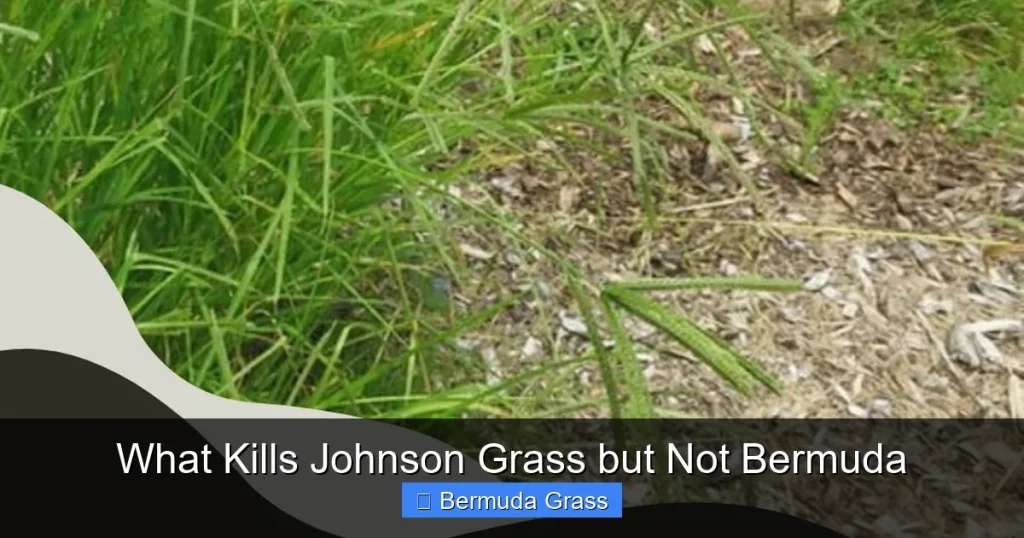
Tackling Johnson grass in your Bermuda lawn can be a challenge, but it’s entirely possible with the right approach. This guide provides comprehensive strategies, focusing on selective herbicides and proper application techniques that effectively eliminate Johnson grass while preserving your Bermuda grass. You’ll learn how to identify, treat, and prevent this invasive weed for a healthier, pristine lawn.
What Kills Johnson Grass but Not Bermuda
Having a lush, green Bermuda grass lawn is a homeowner’s dream. But that dream can quickly turn into a nightmare when an unwelcome guest like Johnson grass decides to move in. This aggressive, fast-growing weed can quickly choke out your beautiful Bermuda, leaving you frustrated and wondering how to get rid of it without destroying your entire lawn.
If you’re facing this common lawn battle, you’re in the right place! This comprehensive guide will walk you through everything you need to know about effectively eliminating Johnson grass while keeping your Bermuda grass healthy and thriving. We’ll explore the best selective herbicides, proper application techniques, and essential cultural practices that will help you reclaim your lawn. Get ready to learn the secrets to a weed-free Bermuda paradise!
Key Takeaways
- Selective Herbicides are Your Best Friend: Utilize post-emergent selective herbicides like Sethoxydim or Fenoxaprop-p-ethyl, which are specifically formulated to kill grassy weeds like Johnson grass without harming established Bermuda grass.
- Timing is Everything: Apply herbicides when Johnson grass is actively growing (typically late spring to early fall) and is still young, before it sets seeds, for the most effective control.
- Accurate Identification is Crucial: Learn to correctly distinguish Johnson grass from your desirable Bermuda grass to ensure you’re targeting the right weed and applying appropriate treatments.
- Always Read the Label: Herbicide labels contain vital information on safe handling, correct mixing ratios, application rates, and environmental considerations. Following them precisely prevents damage and ensures efficacy.
- Combine Methods for Success: For optimal results, integrate chemical treatments with cultural practices like hand-pulling young plants, proper mowing, and maintaining a dense, healthy Bermuda lawn.
- Patience and Persistence Pay Off: Eradicating Johnson grass often requires multiple applications and ongoing vigilance over several seasons due to its aggressive rhizome system and prolific seed production.
- Prevention is a Long-Term Strategy: Implement cultural practices such as regular lawn care, preventing weed seed spread, and promoting dense Bermuda growth to discourage Johnson grass re-establishment.
Understanding Your Opponents: Johnson Grass vs. Bermuda Grass
Before we dive into the “how-to,” let’s take a moment to understand both players in this lawn drama. Knowing their characteristics will help you identify Johnson grass accurately and appreciate why certain treatments work.
Identifying Johnson Grass
Johnson grass (Sorghum halepense) is a warm-season perennial grass, meaning it comes back year after year. It’s often confused with other grassy weeds, but a few key features help it stand out:
- Tall Growth: It can grow quite tall, often reaching 3-8 feet if left unmowed, towering over Bermuda grass.
- Broad Leaves: Its leaves are wider than Bermuda grass, usually about 1/2 to 1 inch across, with a prominent white mid-vein.
- Seed Heads: It produces large, purplish, open, branched seed heads (panicles) in late summer. These seeds are highly viable and spread easily.
- Rhizomes: This is its secret weapon. Johnson grass spreads aggressively through thick, scaly, yellowish-white underground rhizomes (horizontal stems) that can extend several feet. These rhizomes store food and make eradication incredibly challenging.
Why Johnson Grass is a Problem
Johnson grass is considered one of the world’s worst weeds for several reasons:
- Aggressive Growth: It grows rapidly, outcompeting desirable turf for water, nutrients, and sunlight.
- Deep Roots and Rhizomes: Its extensive root system and rhizomes make it incredibly difficult to remove manually and allow it to survive harsh conditions.
- Prolific Seed Production: A single plant can produce thousands of seeds, which can remain viable in the soil for years, leading to continuous re-infestation.
- Herbicide Resistance: Overuse or improper use of certain herbicides has led to resistance in some populations, making control even harder.
The Resilience of Bermuda Grass
Your Bermuda grass (Cynodon dactylon), on the other hand, is a champion of warm-season turf. It’s known for its toughness, drought tolerance, and ability to recover from stress. This resilience is key to why certain selective herbicides can kill Johnson grass without harming your Bermuda. Bermuda grass has a different physiological makeup that allows it to tolerate specific chemicals that are lethal to other grasses. This difference is what we exploit to win the battle.
The Golden Rule: Selective Herbicides for Success
The most effective way to kill Johnson grass without harming your Bermuda grass is through the use of selective post-emergent herbicides. These products are specifically designed to target grassy weeds while leaving your desired turf unharmed.
What are Selective Herbicides?
Selective herbicides work by targeting specific enzymes or pathways found in certain plants but not others. In the case of Johnson grass and Bermuda grass, we look for herbicides that act on annual and perennial grassy weeds (like Johnson grass) but are tolerated by established warm-season turf like Bermuda. These are often called “graminicides.”
Key Herbicides that Target Johnson Grass in Bermuda
Several active ingredients are effective against Johnson grass and safe for Bermuda. Always check the product label to ensure it’s suitable for your specific Bermuda grass variety and local regulations.
- Sethoxydim: Often sold under brand names like Poast Plus, Vantage, or Arrest Max. Sethoxydim is an excellent choice for killing Johnson grass in Bermuda lawns. It’s a grass-specific herbicide that inhibits lipid synthesis in susceptible plants, causing them to stop growing and eventually die. It’s usually safe for established Bermuda grass when applied correctly.
- Fenoxaprop-p-ethyl: Found in products like Acclaim Extra or Puma. This active ingredient is another post-emergent selective herbicide effective against various grassy weeds, including Johnson grass. It also works by inhibiting a key enzyme necessary for plant growth.
- Quizalofop-p-ethyl: Marketed as Assure II or Targa, this is another graminicide that effectively controls Johnson grass and other annual and perennial grassy weeds without injuring Bermuda grass.
Important Note: Always look for products specifically labeled for use on Bermuda grass and for the control of Johnson grass. Generic products may vary in formulation and efficacy.
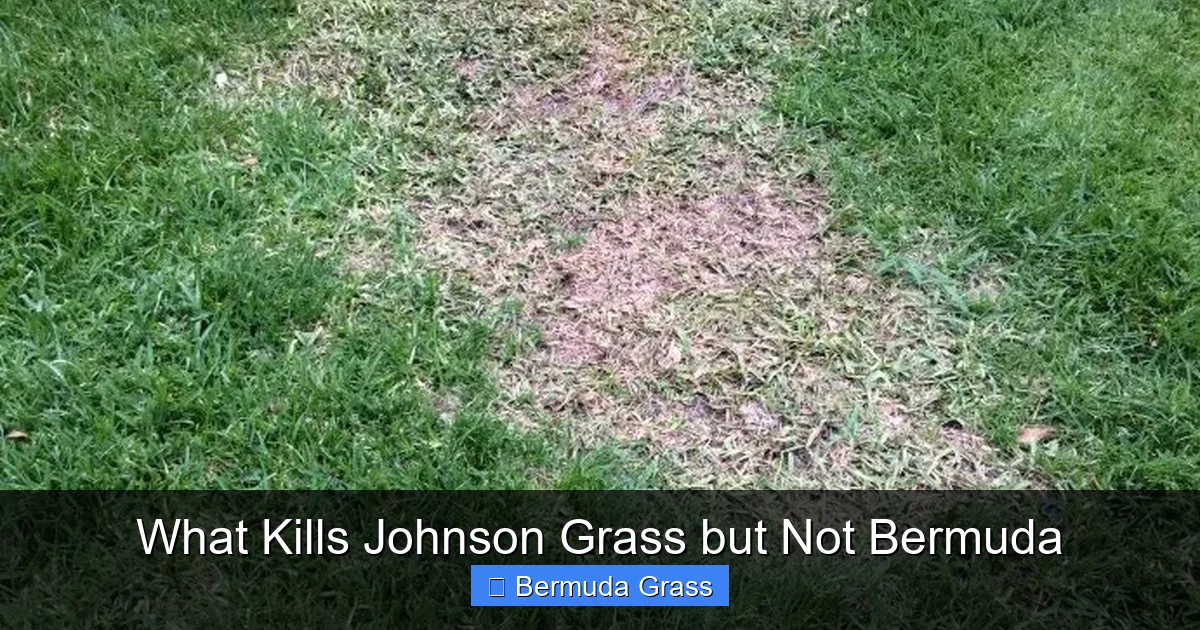
Visual guide about What Kills Johnson Grass but Not Bermuda
Image source: yourgardenshed.co.uk
Important Considerations Before Applying
To maximize the effectiveness of your chosen herbicide and protect your Bermuda, keep these points in mind:
- Growth Stage Matters: Herbicides are most effective when Johnson grass is young and actively growing (usually 6-18 inches tall) but before it has produced seed heads. Applying to mature, stressed, or dormant plants will yield poor results.
- Temperature and Moisture: Most selective herbicides work best when temperatures are between 65-85°F and the grass is not under drought stress. Avoid application during extreme heat or when rain is expected within 24 hours.
- Add a Surfactant: Many herbicide labels will recommend adding a non-ionic surfactant (NIS). This helps the herbicide spread and stick better to the waxy leaves of Johnson grass, improving absorption and effectiveness.
Step-by-Step Guide to Herbicide Application
Applying herbicides correctly is crucial for both effectiveness and safety. Follow these steps carefully:
1. Safety First: Gear Up!
Before you even open the herbicide container, put on appropriate personal protective equipment (PPE). This typically includes:
- Long-sleeved shirt and long pants
- Chemical-resistant gloves
- Eye protection (safety glasses or goggles)
- Closed-toe shoes
- A respirator, if recommended on the product label
2. Read the Label: Your Herbicide’s Bible
This cannot be stressed enough. Every herbicide product is different. The label contains all the vital information you need:
- Mixing ratios for your sprayer type (e.g., spot treatment vs. broadcast)
- Application rates
- Target weeds and safe turf types
- Environmental precautions
- Rain-free periods required after application
- Re-entry intervals (how long to stay off the treated area)
Do not guess or assume. Read and follow every instruction precisely.
3. Prepare Your Sprayer: Accuracy is Key
For most homeowners, a pump sprayer is ideal for spot treating Johnson grass.
- Clean your sprayer thoroughly if it’s been used for other chemicals.
- Carefully measure the herbicide concentrate according to the label’s instructions for the amount of water you plan to use.
- Add the specified amount of water to your sprayer, then add the herbicide. If using a surfactant, add it last.
- Gently agitate the mixture to ensure it’s well-mixed.
4. Spot Treatment vs. Broadcast Application
For most residential lawns with scattered Johnson grass, spot treatment is the preferred method. This minimizes the amount of herbicide used and limits exposure to your healthy Bermuda grass.
- Spot Treatment: Focus the spray directly onto the Johnson grass plants, aiming for full coverage of the leaves but avoiding runoff onto desirable plants.
- Broadcast Application: Only consider this for very widespread, severe infestations, and always use a calibrated sprayer to ensure even coverage and prevent overdosing.
5. Apply Uniformly: Don’t Overdo It
Spray the Johnson grass foliage until it’s wet, but not to the point of dripping or runoff. Over-application can waste product, increase the risk of harming Bermuda grass, and contaminate the environment. Walk at a steady pace, ensuring consistent coverage.
6. Post-Application Care and Follow-Up
- Allow Time: Give the herbicide time to work. It can take 7-14 days for Johnson grass to show signs of wilting and yellowing. Don’t mow for at least 3-5 days after application to allow the herbicide to translocate throughout the plant.
- Observe and Reapply: Johnson grass, with its strong rhizome system, often requires multiple applications. Monitor the treated area. If new shoots emerge from the rhizomes, or if initial treatment wasn’t fully effective, reapply according to the label’s suggested interval (typically 2-4 weeks after the first treatment).
- Clean Sprayer: After each use, thoroughly rinse your sprayer and dispose of the rinse water in an appropriate area, such as on a gravel driveway, not down a storm drain.
Non-Chemical Methods for Johnson Grass Control
While herbicides are highly effective, non-chemical methods can supplement your efforts, especially for small infestations or as part of an integrated approach.
Hand Pulling: For Small Infestations
If you only have a few young Johnson grass plants, hand-pulling can be effective.
- Timing: Pull when the soil is moist, which makes it easier to remove the entire plant, including as much of the rhizome as possible.
- Persistence: Even a small piece of rhizome left behind can sprout new plants, so be diligent. This method is generally not practical for larger infestations.
Mowing Strategies: Weakening the Enemy
Regular mowing will not eradicate Johnson grass due to its rhizomes, but it can weaken the plant and prevent seed production.
- Frequent Mowing: Mow at your Bermuda’s ideal height (1-2 inches) frequently to keep Johnson grass from growing tall and developing seed heads. This starves the rhizomes and reduces seed spread.
- Bag Clippings: If Johnson grass has gone to seed, bag your clippings to prevent spreading seeds around your lawn.
Solarization or Smothering: For Larger Patches (without Bermuda)
For areas heavily infested with Johnson grass where you don’t have established Bermuda grass (e.g., a garden bed before planting, or a completely overrun area), solarization or smothering can be effective.
- Solarization: Cover the area with clear plastic sheeting, securely anchoring the edges. The sun’s heat will cook the weeds and seeds underneath. This works best in hot, sunny conditions over several weeks to months.
- Smothering: Use thick layers of cardboard, newspaper, or black plastic to block sunlight. This method takes longer but can also be effective.
Note: These methods are not suitable for areas where you want to preserve your existing Bermuda grass.
Integrated Pest Management (IPM): A Holistic Approach
The best strategy for controlling Johnson grass in Bermuda is an Integrated Pest Management (IPM) approach. This means combining various control methods for the most sustainable and effective solution.
Combine Chemical and Cultural Controls
Don’t rely solely on herbicides. Use them in conjunction with good cultural practices:
- Mow regularly to prevent seed heads.
- Water deeply and infrequently to encourage deep Bermuda roots.
- Fertilize your Bermuda grass properly to help it grow thick and outcompete weeds.
- A dense, healthy Bermuda lawn is the best defense against weed invasion.
Soil Health and Proper Watering
A healthy soil environment promotes robust Bermuda growth, making it more competitive against weeds.
- Soil Testing: Consider a soil test to understand your soil’s nutrient needs and pH, then amend as recommended.
- Proper Watering: Water your Bermuda lawn deeply and infrequently (e.g., 1 inch of water once or twice a week) rather than shallowly and frequently. This encourages deeper root growth and makes the Bermuda more resilient.
Troubleshooting Common Johnson Grass Problems
Even with the best intentions, you might run into some bumps on the road to a Johnson grass-free lawn.
“Why Isn’t My Herbicide Working?”
If Johnson grass isn’t dying after application, consider these factors:
- Incorrect Identification: Are you sure it’s Johnson grass? Different weeds require different herbicides.
- Wrong Timing: Was the Johnson grass too mature, dormant, or stressed? Herbicides work best on young, actively growing weeds.
- Improper Application: Did you mix correctly? Was coverage adequate? Did you apply during extreme temperatures or just before rain?
- Resistance: In some areas, Johnson grass populations may have developed resistance to certain herbicides. If you’ve tried the same product multiple times without success, consider switching to a different active ingredient (e.g., if Sethoxydim isn’t working, try Fenoxaprop-p-ethyl).
- No Surfactant: If the label recommended one and you skipped it, the herbicide might not have been absorbed properly.
“Oops, I Sprayed Too Much!”
If you accidentally over-applied herbicide or got some on your desired Bermuda grass, don’t panic.
- Water Immediately (lightly): For *non-selective* herbicides or severe overspray, you might try to lightly rinse the area with water to dilute the chemical. However, for selective graminicides safe for Bermuda, this might not be necessary unless you see signs of stress.
- Observe: Watch your Bermuda grass closely for signs of stress (yellowing, stunted growth). If damage occurs, it might recover, but it will take time.
- Good Cultural Practices: Help your Bermuda recover by ensuring it receives proper watering and fertilization. Avoid additional stress like heavy foot traffic.
“Re-emergence of Johnson Grass”
This is very common due to its strong rhizome system and viable seeds.
- Multiple Treatments: Expect to perform multiple herbicide applications over a growing season, and potentially over several seasons. Persistence is key.
- Scout Regularly: Continuously monitor your lawn for new sprouts, especially after mowing or rain, and treat them promptly when they are small.
- Address Seeds: Focus on preventing seed production in any surviving plants to reduce future infestations.
Long-Term Prevention and Maintenance
Once you’ve got the upper hand on Johnson grass, your goal shifts to prevention.
Regular Scouting
Make it a habit to walk your lawn weekly, looking for any new Johnson grass sprouts. Catching them early makes control much easier.
Seed Control
Johnson grass seeds can remain viable for years.
- Mow Frequently: Keep the grass mowed to prevent any surviving plants from producing seeds.
- Bag Clippings: If you suspect Johnson grass has gone to seed, bag the clippings to prevent spreading seeds across your lawn.
- Clean Equipment: Ensure mowers, trimmers, and other equipment are clean before moving from an infested area to a clean area to avoid spreading seeds or rhizome fragments.
Healthy Bermuda Grass is Your Best Defense
A thick, vigorous Bermuda grass lawn will naturally outcompete weeds like Johnson grass.
- Proper Fertilization: Feed your Bermuda grass according to soil test recommendations.
- Appropriate Mowing Height: Maintain your Bermuda at its recommended height (typically 1-2 inches) to encourage density.
- Optimal Watering: Ensure your lawn receives adequate, deep watering.
Conclusion
Eliminating Johnson grass from your Bermuda lawn is a marathon, not a sprint. It requires patience, persistence, and a strategic approach. By understanding the nature of both plants, choosing the right selective herbicides, carefully following application instructions, and integrating sound cultural practices, you can successfully reclaim your lawn. Remember to always prioritize safety, read those labels, and keep a watchful eye for new sprouts. With consistent effort, your Bermuda grass will once again be the envy of the neighborhood, free from the clutches of tenacious Johnson grass. Happy lawn care!