If you've got brown patches rolling through your lawn and the turf pulls up like loose carpet, you're probably dealing with white grubs. Figuring out what is the best grub killer starts with understanding that no single product wins every situation. The right choice depends on when you're treating, what species you're targeting, and whether you're trying to prevent an outbreak or stop one that's already happening.
Here's the thing most people miss. The "best" grub killer in June is completely different from the best one in September. Get the timing right and a single application does the job.
Get it wrong and you'll waste money watching the damage spread.
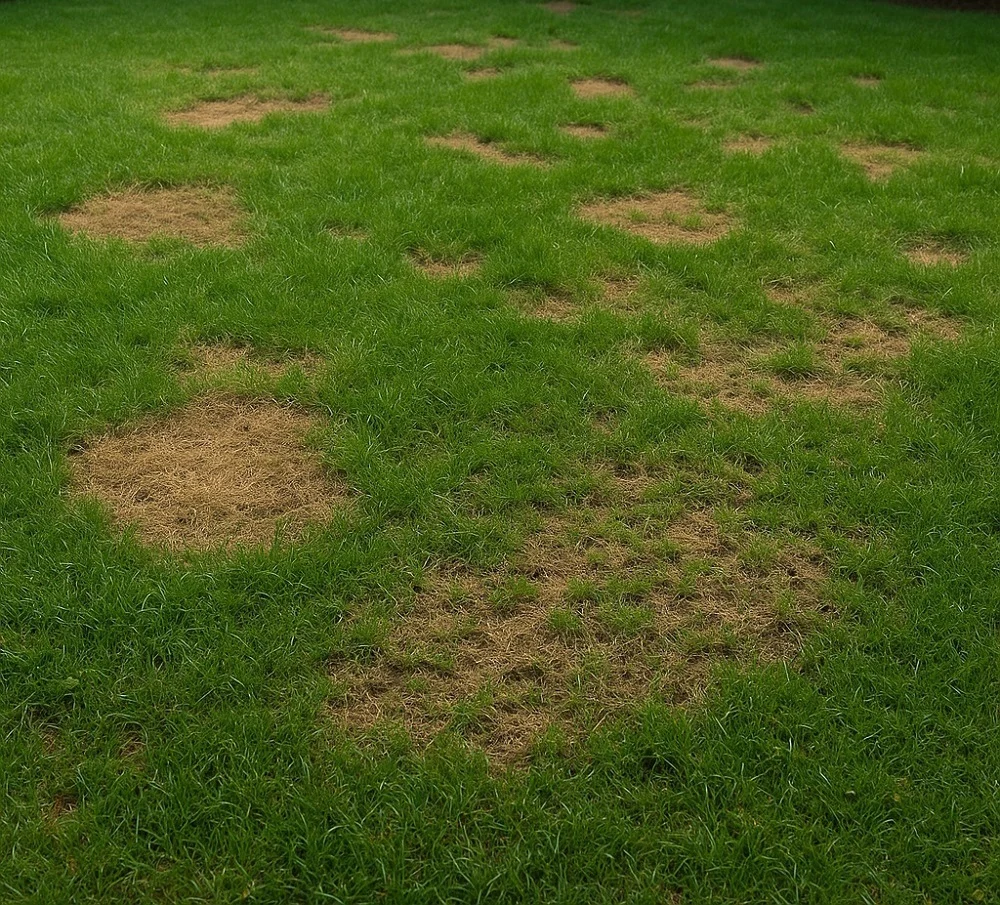
Image source: Bing (Web (fair-use with source credit))
Quick Answer
The best grub killer depends on timing. For preventive control, chlorantraniliprole-based products applied in early summer work best. For active infestations, trichlorfon (Dylox) kills grubs within days.
Milky spore offers long-term biological control but takes years to establish. Always match your product to the grub's life stage and the season.
Why "Best" Depends on Your Situation, Not the Label
Walk into any garden center and you'll see shelves packed with grub control products. They all promise to solve your problem. But here's what the packaging won't tell you: roughly half of them only work if you apply them before grubs cause visible damage.
The split comes down to two categories. Preventive products target eggs and newly hatched larvae. Curative products go after larger, actively feeding grubs.
Pick the wrong category for your timing and you'll get zero results, even with a top-rated product.
Your local climate matters too. In the Northeast, Japanese beetle grubs follow a predictable June-to-September cycle. In the Southeast, you might deal with multiple overlapping species across a longer season.
The product that works perfectly in Michigan could be a poor fit in Georgia.
So before grabbing the first bag off the shelf, you need to answer three questions. What time of year is it? Are you seeing damage right now?
And do you want a quick fix or long-term prevention?
The Real Difference Between Preventive and Curative Grub Killers

Image source: Bing (Web (fair-use with source credit))
This is where most homeowners get tripped up. They see dead grass in August, run to the store, and grab a preventive product. Then they wonder why it didn't work.
Preventive grub killers contain active ingredients like imidacloprid or chlorantraniliprole. These work systemically. The plant absorbs the chemical and kills grubs when they start feeding on roots.
But here's the catch: they're most effective against tiny, newly hatched larvae. Once grubs reach their third instar stage (roughly the size of your thumbnail), preventive products lose most of their punch.
Curative products take a different approach. Trichlorfon, sold under the brand name Dylox, is a contact and stomach poison. It kills grubs within 1 to 3 days regardless of size.
That makes it the go-to when you're already seeing damage and need fast results.
Image source: Bing (Web (fair-use with source credit))
Think of it this way. Preventive products are like getting a flu shot. You do it before exposure.
Curative products are like antibiotics. You use them after you're already sick. Both have their place, but using them at the wrong time defeats the purpose.
The Top Products Worth Knowing About
Let's break down the major options you'll actually find on the market as of 2026. Each one has a specific role, and understanding those roles helps you spend money wisely.
Chlorantraniliprole-based products (Acelepryn, Grub Killer Plus)
This is the current gold standard for preventive control. It targets eggs and early-stage grubs with lower toxicity to bees and other beneficial insects compared to older neonicotinides. One application in June or July provides season-long protection.
It's also one of the few active ingredients still widely available without heavy restrictions.
Imidacloprid-based products (Merit, Dominion 2L, GrubEx)
Imidacloprid has been the workhorse of grub prevention for decades. It works well when applied at the right time. However, several states have restricted neonicotinoid use due to pollinator concerns.
Check your local regulations before buying. Where it's legal, it remains a solid preventive option.
Trichlorfon-based products (Dylox)
This is your curative heavy hitter. When grubs are large and actively feeding in late summer or early fall, Dylox delivers results in 24 to 72 hours. It doesn't linger in the soil, which means no long-term residual.
That's actually a benefit if you're trying to minimize chemical buildup in your yard.
Milky Spore (Paenibacillus popillilliae)
This biological option specifically targets Japanese beetle grubs. The bacteria colonize the soil and can persist for 10 to 15 years once established. The downside?
It takes 2 to 5 years to build up enough population to be effective. It's a long game, not a quick fix.
Beneficial Nematodes (Heterorhabditis bacteriophora)
These microscopic worms seek out grubs in the soil and release bacteria that kill them. They work best in moist, warm soil and need to be applied carefully. UV light kills them fast, so evening applications are essential.
Results vary more than with chemical options, but they fit well into organic lawn programs.
Side-by-Side: How the Major Grub Killers Actually Compare
Here's a straightforward comparison to help you see the differences at a glance.
| Product Type | Active Ingredient | Best Application Window | Speed of Kill | Residual Control | Best For |
|---|---|---|---|---|---|
| Preventive | Chlorantraniliprole | June to July | Slow (weeks) | 3 to 4 months | Season-long prevention |
| Preventive | Imidacloprid | June to July | Slow (weeks) | 2 to 3 months | Budget-friendly prevention |
| Curative | Trichlorfon (Dylox) | August to September | Fast (1 to 3 days) | Short (days) | Active infestations |
| Biological | Milky spore | Spring or fall | Very slow (years) | 10 to 15 years | Long-term Japanese beetle control |
| Biological | Beneficial nematodes | Late August to September | Moderate (days to weeks) | Short (weeks) | Organic programs |
The pattern is clear. If you're reading this in spring or early summer and you've had grub problems before, go preventive. If it's late summer and your lawn is already tearing up, reach for a curative product.
What to Use If You're Seeing Damage Right Now
Let's say it's late August. You've got brown patches that don't respond to watering. You grab a handful of turf and it rolls back like a rug.
Skunks or raccoons have been digging at night. You need something that works fast.
Trichlorfon (Dylox) is your best bet here. It's one of the few products that kills large, late-stage grubs on contact. Apply it according to the label, water it in lightly, and you should see results within a few days.
Dead grubs will often come to the surface, which is gross but confirms the product worked.
Don't bother with preventive products at this point. Imidacloprid and chlorantraniliprole struggle against large grubs. You'd be spending money on a product that can't do the job right now.
One important note: if the damage is severe and it's already October or November in a northern climate, you might be better off waiting. Grubs burrow deep for winter and stop feeding. At that point, focus on repairing the turf in spring and plan a preventive application for next summer.
What to Use If You Want to Stop Grubs Before They Start
Prevention is almost always cheaper and easier than repair. If you've had grub problems in the past, or you live in a high-pressure area, a preventive application makes sense.
The ideal window runs from mid-June through late July in most regions. That's when adult beetles are laying eggs and larvae are hatching. You want the product in the soil before those tiny grubs start feeding.
Chlorantraniliprole-based products are the top recommendation here. They offer strong preventive control with a better environmental profile than older chemistry. One application typically covers the entire grub feeding season.

Image source: Bing (Web (fair-use with source credit))
Apply granular products with a broadcast spreader for even coverage. Water the lawn afterward with about half an inch of irrigation. That moves the active ingredient into the root zone where grubs feed.
Skip the watering and you've basically wasted the application.
If you're on a tighter budget and imidacloprid is legal in your area, it remains a reliable preventive option. Just be aware of the pollinator restrictions in states like Maryland, Connecticut, and Vermont.
The Biological Options: Milky Spore, Nematodes, and When They Actually Work
Not everyone wants to put synthetic chemicals on their lawn. Biological options exist, but they come with trade-offs you should understand upfront.
Milky spore is a bacteria that specifically infects Japanese beetle grubs. You apply it to the soil, it multiplies inside grubs, and it spreads naturally over time. The problem is patience.
It takes 2 to 5 years to reach effective population levels. During that window, you might still need chemical backup.
Beneficial nematodes offer more immediate results but require careful handling. These are living organisms. They die in direct sunlight, they dry out fast, and they need soil temperatures above 60°F to be active.
Apply them in the evening, water the lawn beforehand, and keep the soil moist for a week after application.

Image source: Bing (Web (fair-use with source credit))
Nematodes work best against small to medium grubs in late summer. They're not a silver bullet, but they can reduce populations enough to prevent visible damage. For organic lawn programs, they're one of the most practical tools available.
The honest truth is that biological options require more planning and more tolerance for imperfect results. If you need guaranteed control, chemical products still outperform them. But if you're building a long-term, low-chemical lawn strategy, milky spore and nematodes deserve a spot in your plan.
Timing Is Everything: Why Most People Apply at the Wrong Time
This might be the single biggest factor in whether your grub treatment succeeds or fails. The product matters less than when you put it down.
Here's the typical grub life cycle in most of the United States. Adult beetles emerge in June and July. They mate, lay eggs in the soil, and those eggs hatch within 2 weeks.
The tiny larvae feed on grass roots through late summer. By October, they burrow deep and go dormant for winter.
Preventive products need to be in the soil during that egg-hatch window. Apply too early and the residual breaks down before grubs appear. Apply too late and the larvae are already too large for preventive chemistry to work.
Curative products go down in August and September when grubs are actively feeding near the surface. That's when they're most vulnerable to contact insecticides.
A common mistake is applying preventive products in spring. Grubs aren't hatching in spring. You're putting product down months before it's needed, and it'll be gone by the time it matters.
The Mistakes That Make Any Grub Killer Fail
Even the best product fails if you apply it wrong. Here are the most common errors we see.
Skipping the watering step. Granular products need water to move into the soil. Without irrigation or rain, the granules sit on the surface and grubs never encounter them.
Applying to dry, compacted soil. Hard, dry soil prevents the product from reaching the root zone. If your lawn is compacted, core aerate before treating for better results.
Using preventive products on large grubs. If grubs are already the size of your thumbnail, preventive chemistry won't cut it. Switch to a curative product.
Applying nematodes in midday sun. UV light kills nematodes within minutes. Always apply in the evening or on overcast days.
Treating the whole lawn when only part is affected. If you've got localized damage, spot-treat those areas. There's no need to blanket the entire yard.
Ignoring the grub threshold. Not every grub requires treatment. Extension guidelines suggest treating when you find 5 to 10 grubs per square foot. Below that number, your turf can usually outgrow the damage.
Cost Breakdown: What a Realistic Grub Treatment Costs
Let's talk numbers. Grub control doesn't have to break the bank, but costs vary based on product choice and lawn size.
A typical residential lawn runs 5,000 to 10,000 square feet. Here's what you can expect to spend.
| Product Category | Cost per 1,000 sq ft | Coverage per Package | Total Cost (5,000 sq ft) |
|---|---|---|---|
| Chlorantraniliprole (preventive) | $8 to $12 | 5,000 to 15,000 sq ft | $15 to $30 |
| Imidacloprid (preventive) | $5 to $10 | 5,000 to 15,000 sq ft | $10 to $25 |
| Trichlorfon (curative) | $10 to $15 | 5,000 to 10,000 sq ft | $20 to $40 |
| Milky spore | $25 to $40 | 5,000 to 7,000 sq ft | $50 to $100 |
| Beneficial nematodes | $15 to $30 | 1,000 to 3,000 sq ft | $50 to $150 |
Professional lawn care services typically charge $50 to $100 per application for grub control. That adds up if you're treating annually. For most homeowners, DIY application with a broadcast spreader is straightforward and significantly cheaper.
The real cost isn't the product. It's the lawn renovation you'll face if you ignore the problem. Resodding a damaged area can run $1 to $3 per square foot.
Suddenly, that $20 bag of grub killer looks like a bargain.
What the Experts Actually Recommend
University extension programs and turfgrass researchers tend to agree on a few core principles. These aren't opinions. They're based on decades of field research.
First, identify before you treat. Cut a 1-foot square of turf and peel it back. Count the grubs.
If you're below 5 per square foot, skip the treatment. Your lawn can handle light feeding.
Second, time your application to the grub's life stage. Preventive in June and July. Curative in August and September.
This single decision matters more than which brand you buy.
Third, rotate active ingredients if you treat annually. Repeated use of the same chemistry can lead to reduced effectiveness over time. Alternate between chlorantraniliprole and other modes of action.
Fourth, integrate cultural practices. Proper mowing height, adequate irrigation, and core aeration all help turf outgrow moderate grub feeding. A healthy lawn tolerates more grubs than a stressed one.
Finally, consider whether you even need to treat. Not every lawn with a few grubs needs intervention. Treatment thresholds exist for a reason.
Over-applying pesticides wastes money and adds unnecessary chemicals to your soil.
Your Decision Guide: Which Grub Killer Is Right for You
Let's bring this together into a straightforward decision framework.
If it's June or July and you want to prevent grubs:
Use a chlorantraniliprole-based product. Apply with a spreader, water it in, and you're set for the season. This is the most cost-effective approach for lawns with a history of grub problems.
If it's August or September and you're seeing damage:
Grab trichlorfon (Dylox). It works fast against large grubs. Water it in lightly and expect results within a few days.
Follow up with fall overseeding to repair damaged areas.
If you want a long-term, low-chemical solution:
Start milky spore for Japanese beetle grubs. Pair it with beneficial nematodes for more immediate suppression. Understand that this approach takes years to reach full effectiveness.
If you're in a state with neonicotinoid restrictions:
Chlorantraniliprole is your best preventive option. It's not a neonicotinoid and remains widely available. Check your state's pesticide regulations before purchasing any product.
If you're unsure whether you even need to treat:
Do the square foot test. Cut a section, count the grubs, and compare to the 5 to 10 per square foot threshold. Below that, focus on lawn health instead of chemicals.
The bottom line is simple. There's no universal "best" grub killer. There's only the best grub killer for your specific situation, your timing, and your goals.
Match the product to the problem and you'll get results. Grab the wrong one and you'll be frustrated come fall.
Frequently Asked Questions
When is the best time to apply grub killer?
Preventive products go down in June and July before eggs hatch. Curative products work best in August and September when grubs are actively feeding near the surface. Timing matters more than brand choice.
Can I apply grub killer and fertilizer at the same time?
Yes. Many combination products pair grub control with fertilizer. If using separate products, apply the grub killer first, water it in, then apply fertilizer a few days later for best results.
How long does grub killer last in the soil?
Preventive products like chlorantraniliprole last 3 to 4 months. Curative products like trichlorfon break down within days. Milky spore bacteria can persist for 10 to 15 years once established.
Will grub killer hurt my pets?
Most products are safe for pets once watered in and the lawn has dried. Always read the label for specific re-entry intervals. Keep pets off treated areas for the time specified on the product label.
How do I know if I have grubs or another lawn problem?
Grub damage peels back easily like loose carpet. Brown patches from drought or disease stay anchored. Cut a test section and look for C-shaped white grubs in the top 2 inches of soil.
Is one application of grub killer enough?
For preventive products, one application per year is typically sufficient. Curative products may need a second application 2 to 3 weeks later if grub pressure is heavy.
Your Decision Guide: Which Grub Killer Is Right for You
Let's bring this together into a straightforward decision framework.
If it's June or July and you want to prevent grubs:
Use a chlorantiliprole-based product. Apply with a spreader, water it in, and you're set for the season. This is the most cost-effective approach for lawns with a history of grub problems.
If it's August or September and you're seeing damage:
Grab trichlorfon (Dylox). It works fast against large grubs. Water it in lightly and expect results within a few days.
Follow up with fall overseeding to repair damaged areas.
If you want a long-term, low-chemical solution:
Start milky spore for Japanese beetle grubs. Pair it with beneficial nematodes for more immediate suppression. Understand that this approach takes years to reach full effectiveness.
If you're in a state with neonicotinoid restrictions:
Chlorantiliprole is your best preventive option. It's not a neonicotinoid and remains widely available. Check your state's pesticide regulations before purchasing any product.
If you're unsure whether you even need to treat:
Do the square foot test. Cut a section, count the grubs, and compare to the 5 to 10 per square foot threshold. Below that, focus on lawn health instead of chemicals.
The bottom line is simple. There's no universal "best" grub killer. There's only the best grub killer for your specific situation, your timing, and your goals.
Match the product to the problem and you'll get results. Grab the wrong one and you'll be frustrated come fall.
Frequently Asked Questions
When is the best time to apply grub killer?
Preventive products go down in June and July before eggs hatch. Curative products work best in August and September when grubs are actively feeding near the surface. Timing matters more than brand choice.
Can I apply grub killer and fertilizer at the same time?
Yes. Many combination products pair grub control with fertilizer. If using separate products, apply the grub killer first, water it in, then apply fertilizer a few days later for best results.
How long does grub killer last in the soil?
Preventive products like chlorantraniliprole last 3 to 4 months. Curative products like trichlorfon break down within days. Milky spore bacteria can persist for 10 to 15 years once established.
Will grub killer hurt my pets?
Most products are safe for pets once watered in and the lawn has dried. Always read the label for specific re-entry intervals. Keep pets off treated areas for the time specified on the product label.
How do I know if I have grubs or another lawn problem?
Grub damage peels back easily like loose carpet. Brown patches from drought or disease stay anchored. Cut a test section and look for C-shaped white grubs in the top 2 inches of soil.
Is one application of grub killer enough?
For preventive products, one application per year is typically sufficient. Curative products may need a second application 2 to 3 weeks later if grub pressure is heavy.