[article body]
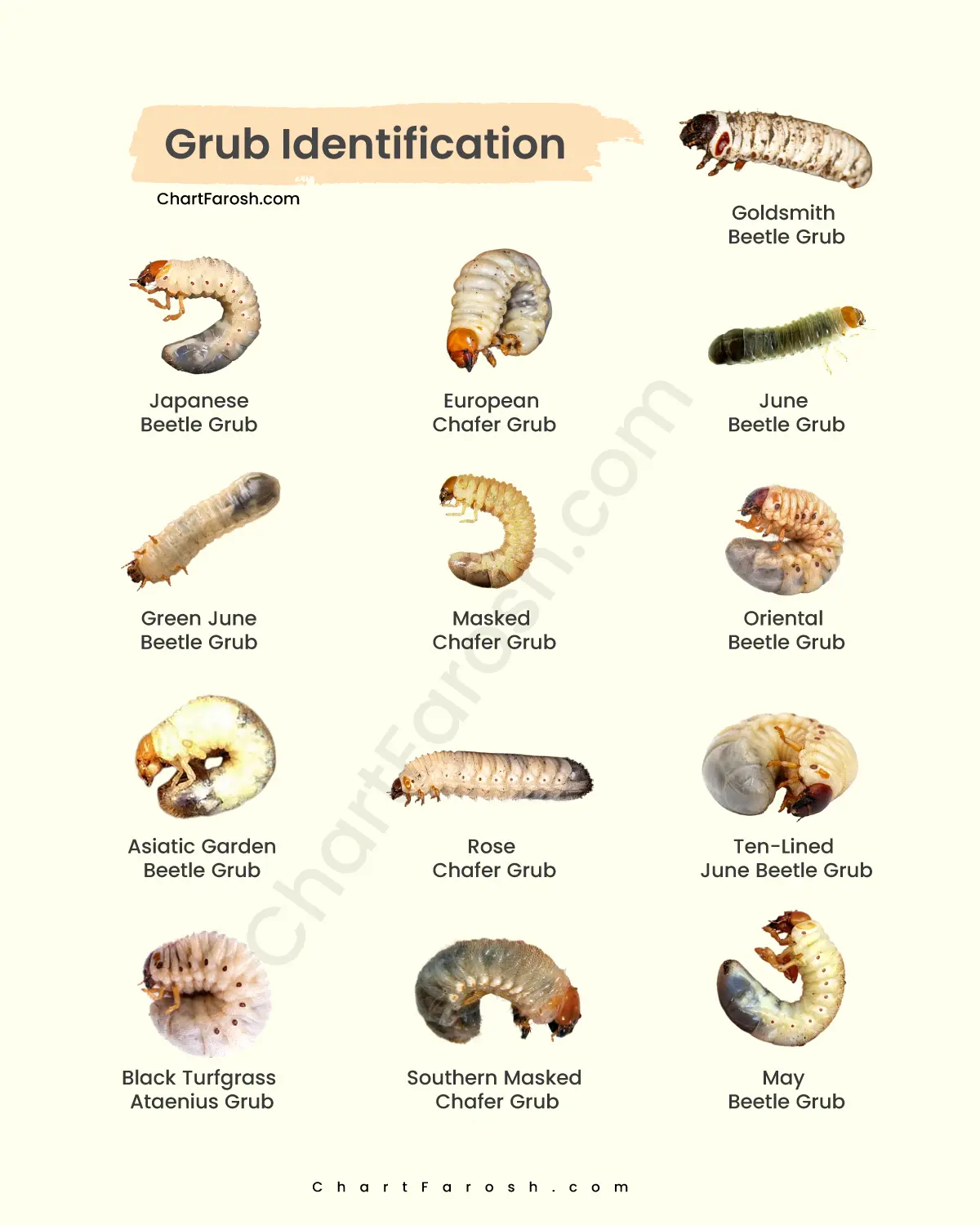
Image source: Bing (Web (fair-use with source credit))
How to Check Your Lawn for Grubs Step by Step
You need to get dirty to know what's actually going on down there. Visual identification happens at ground level.
The quarter test gives you a reliable snapshot. Cut a 1-foot square on three sides, peel the sod back like a carpet, and count what's underneath.
Checking Multiple Areas
Walk your lawn and mark spots where grass looks thinner. Check four to six separate areas, especially near driveways and south-facing slopes where grubs often cluster.
In our research, most people only check the worst-looking spot. That skews your data. Sample random areas too.
Here's the basic process:
- Cut a 12×12 inch square through the thatch and into the top 2-3 inches of soil
- Lift and break apart the section, examining both roots and soil cavity
- Count every grub you find in that square foot
- Replace the sod and water it back in immediately
- Repeat in 4+ locations across the lawn
Aggregate reviews from extension services show the most reliable time to sample is mid-August through September. Grubs at that point are large enough to identify and haven't yet moved deeper for winter.
Don't bother inspecting in late fall after soil temperatures drop below 55°F. The grubs will be 6 inches down or more, wasting your time and effort.
When to Inspect Based on Season and Region
Your timing depends on where you live. The grub life cycle shifts about one month per USDA hardiness zone.
| Region | Primary Inspection Window | Secondary Window | Peak Activity |
|---|---|---|---|
| Upper Midwest, Northeast | Mid-August to late September | Late March to April | August-September |
| Mid-Atlantic, Ohio Valley | Early August to mid-October | March-April | August-September |
| Pacific Northwest | September to October | April-May | September |
| Southeast, Gulf Coast | June-July and September | March-April | June-July and March-April |
In transition zones like Kentucky or Missouri, you're often dealing with multiple species that peak at different times. Check twice if you suspect a problem.
Soil temperature at 4 inches depth is the real trigger. Above 60°F, grubs feed near the surface where you can find them. Below 50°F, they've migrated too deep for practical identification.
What Grub Damage Looks Like vs. Other Lawn Problems
Grub damage develops slowly, then seemingly overnight. Small brown spots in June and July can spread across the whole yard by September. The problem often looks like a water shortage or disease, which is why most people misdiagnose it at first.
Initial signs in early summer:
- Small scattered areas of yellowing grass
- Turf feels spongy or loose underfoot
- Grass wilts even with adequate watering
- Patches resist re-greening compared to the rest of the lawn
Advanced signs by late summer and fall:
- Large irregular dead patches that don't respond to fertilizer
- Grass pulls up easily, revealing severed roots underneath
- Turf rolls back like a carpet with no root attachment
- Wildlife damage from skunks, raccoons, and birds tearing up the lawn
- Mix of green and dead areas that resembles severe drought stress
Differentiating Grub Damage from Other Common Issues
People confuse grub damage with fungal diseases, drought stress, and even dog urine spots. Here's how to tell them apart:
| Issue | Visual Clues | How to Confirm |
|---|---|---|
| Grub damage | Irregular patches, pulls up easily, animal digging | Find grubs in soil, check root condition |
| Fungal disease (brown patch) | Defined circular patches, blade lesions visible | Pull a grass blade, look for spots or lesions on leaf tissue |
| Drought stress | Uniform browning, recovers with rain or irrigation | Check soil moisture, pattern follows sun exposure and sprinkler coverage |
| Dog urine | Concentrated circles with dark green outer ring | History of pets, pattern near walkways |
| Fertilizer burn | Streaked patterns, aligns with spreader passes | Recall recent application, check spreader overlap |
The telltale sign of grub damage is how the grass lifts away from the soil. Root-feeding grubs sever the fine feeder roots that anchor turf. No other common issue produces that combination of easy lift plus visible larvae in the top few inches.
How Many Grubs Is Too Many?
Finding a single grub doesn't demand action. Healthy lawns tolerate low populations without visible damage.
The damage threshold depends on your grass type and local conditions:
- Cool-season grasses (Kentucky bluegrass, tall fescue, perennial ryegrass): 6-10 grubs per square foot typically causes visible damage in normal conditions
- Stressed lawns (drought, heavy traffic, poor soil): As few as 3-5 grubs per square foot causes damage
- Warm-season grasses (Bermudagrass, zoysiagrass): 2-3 grubs per square foot can cause issues given shallow root systems
- Bentgrass on golf greens: Almost any population warrants intervention given the turf's sensitivity
These numbers assume you're seeing white grubs specifically. Other soil-dwelling larvae have different thresholds.
The critical point most people miss: a lawn can look pristine in June and be devastated by September because grub populations and feeding intensity compound through summer. High grub counts in July almost always mean failure later.
What to Do Once You've Found Them
Once you've confirmed grubs and counted them, your next move depends on timing and severity.
If grubs are below damage threshold:
- Monitor the lawn and re-sample in 4-6 weeks
- Reduce night lighting near the property (attracts adult beetles that lay eggs)
- Encourage beneficial nematodes naturally through avoiding broad-spectrum pesticides
If grubs are at or above threshold in August/September:
- Apply curative insecticide immediately while grubs are still feeding near the surface
- Trichlorfon-based products can knock back active infestations within days
- Water granules in well after application to move product into the root zone
If it's May-July and you had grubs last year:
- This is the preventive window for most preventative products
- Chlorantraniliprole and imidacloprid work best when applied before eggs hatch
- Beneficial nematodes applied in late July target young larvae effectively
Don't wait for visible damage to treat a confirmed infestation. By the time you see brown patches, the grubs have already done their worst.
Skip blanket treatments if you only find grubs in one isolated area. Spot-treat that zone instead of the whole lawn. Beneficial insects and earthworms in unaffected areas will thank you.
Visual Identification Cheat Sheet / Reference Guide
Use this mental checklist when you're actually staring at something in your lawn:
Definitely a grub:
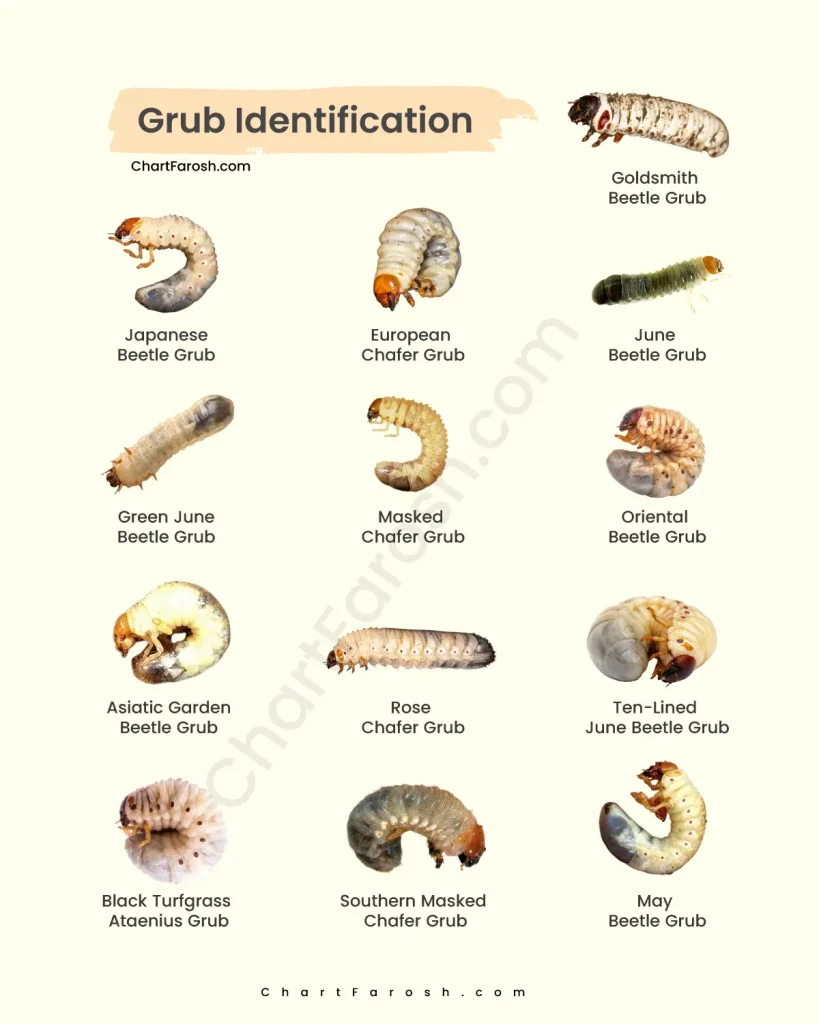
- C-shaped, plump, ¼ to 1½ inches long
- Creamy white to pale gray body
- Brown head capsule clearly visible
- Three pairs of legs just behind the head
- Found curled in top 2-3 inches of soil
- Dark visible gut contents through body wall
Probably something else:
- Elongated and straight (wireworm or centipede)
- Segmented with many legs (millipede)
- Green June beetle grubs crawl on their backs (outside the norm)
- Hard-shelled beetle (adult, not larva)
- Waxy coating or slugs visible (snail or slug)
The C-shape is the single most reliable field marker. Combined with the brown head and location in the root zone, you can confidently identify white grubs in about 95% of cases without a magnifying glass.
Frequently Asked Questions
What months are grubs most active in lawns?
August and September are peak viewing months in most regions. Grubs are largest and closest to the surface during active feeding. Southern regions may see activity in March-April with a second peak in late summer.
Can I identify grubs just by looking at the lawn surface?
You can suspect grub damage from above, but you cannot confirm it without soil inspection. Other issues look similar from ground level. Lift the sod and look.
Do grubs die off in winter?
No. They overwinter as larvae in the root zone, moving deeper as soil cools. They return to the surface in spring to resume feeding.
Treatment timing needs to match their depth in the soil for effectiveness.
How long do I have to treat after finding grubs?
If you've confirmed an active infestation above damage threshold, treat within one to two weeks. Curative products work fast when grubs are near the surface. Past mid-October in northern zones, treatment becomes largely ineffective until spring.
Should I treat my lawn even if I only found one or two grubs?
Generally no. Healthy turf tolerates small populations. Treat when counts exceed the damage threshold for your grass type and conditions.
Over-treating wastes product and harms beneficial soil organisms.
What is the easiest way to tell grubs apart from other white larvae?
The C-shaped body is your primary marker. Wireworms are elongated and tough. Cutworms are not curved.
Grubs have that distinct comma-like curl. Brown head capsule. Three clear leg pairs.
That combination is almost always a scarab beetle grub.
Consider calling your local extension office if you're genuinely unsure. Most provide free identification help and can confirm whether what you're finding needs treatment or is harmless.
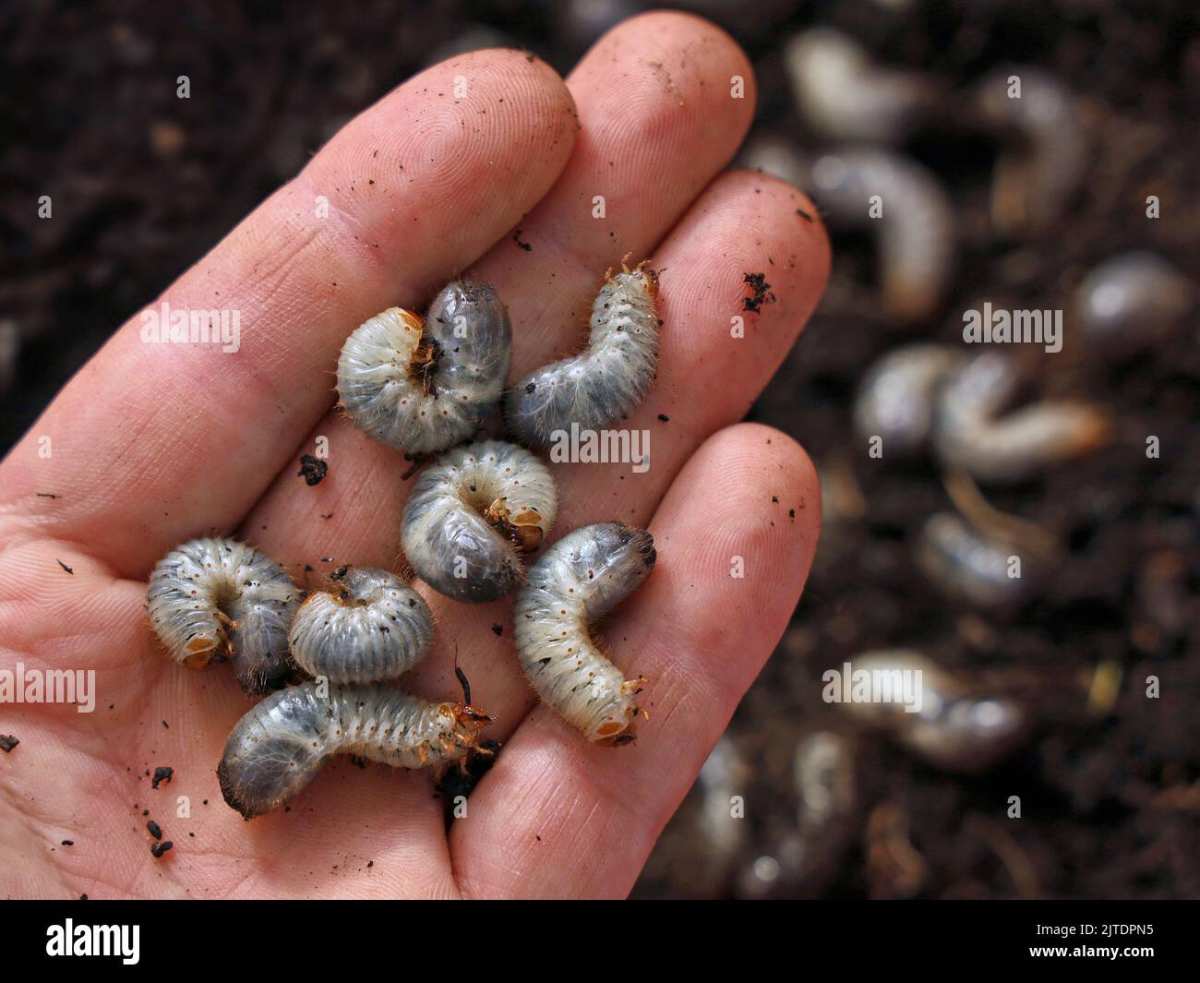
Image source: Bing (Web (fair-use with source credit))
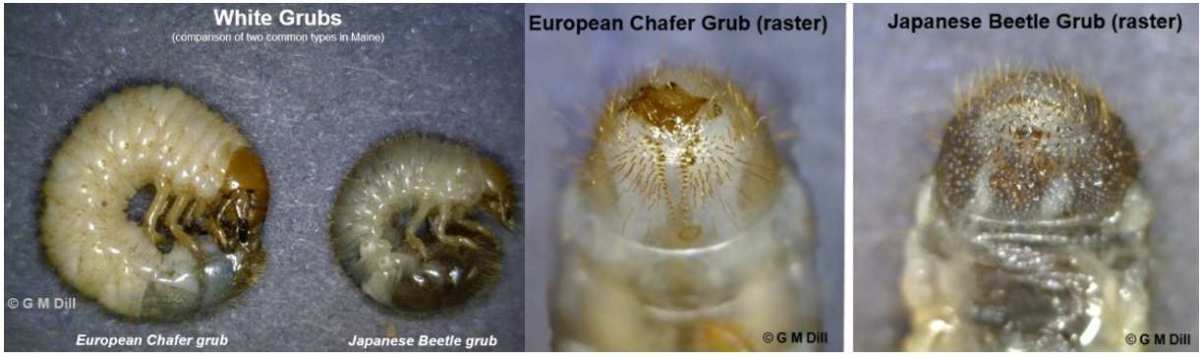
Image source: Bing (Web (fair-use with source credit))
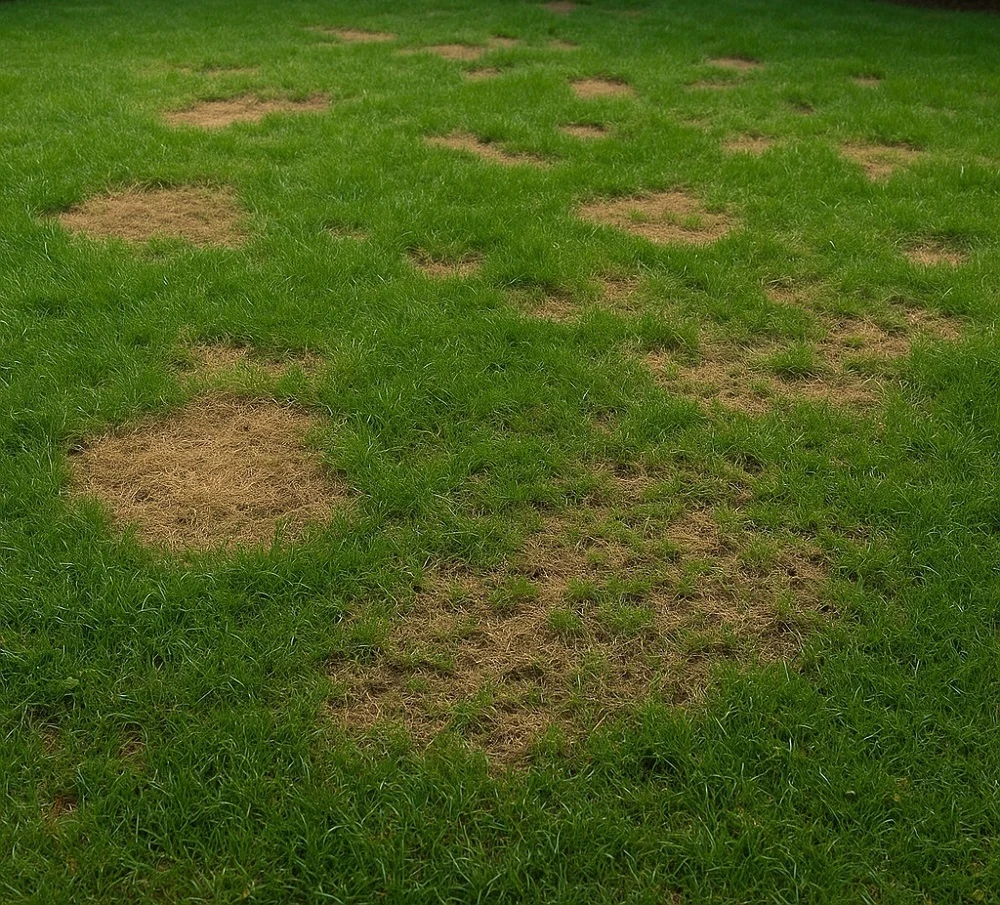
Image source: Bing (Web (fair-use with source credit))