If you've noticed odd brown patches spreading across your turf this time of year, you're probably wondering what grub damage looks like on a lawn so you can rule it out fast. The trouble is, grub damage doesn't always announce itself clearly, and it can look a lot like other common lawn problems at first glance.
Grubs are the C-shaped larvae of scarab beetles (most commonly Japanese beetles and European chafers in the U.S. and parts of the U.K. where they've established). They feed on grass roots just below the thatch layer, cutting the plant off from water and nutrients. Extension guidelines from land-grant universities typically flag 6 to 10 grubs per square foot as the damage threshold for most cool-season turf.
Nail down what you're actually looking at, and you'll waste neither time nor money on the wrong fix.
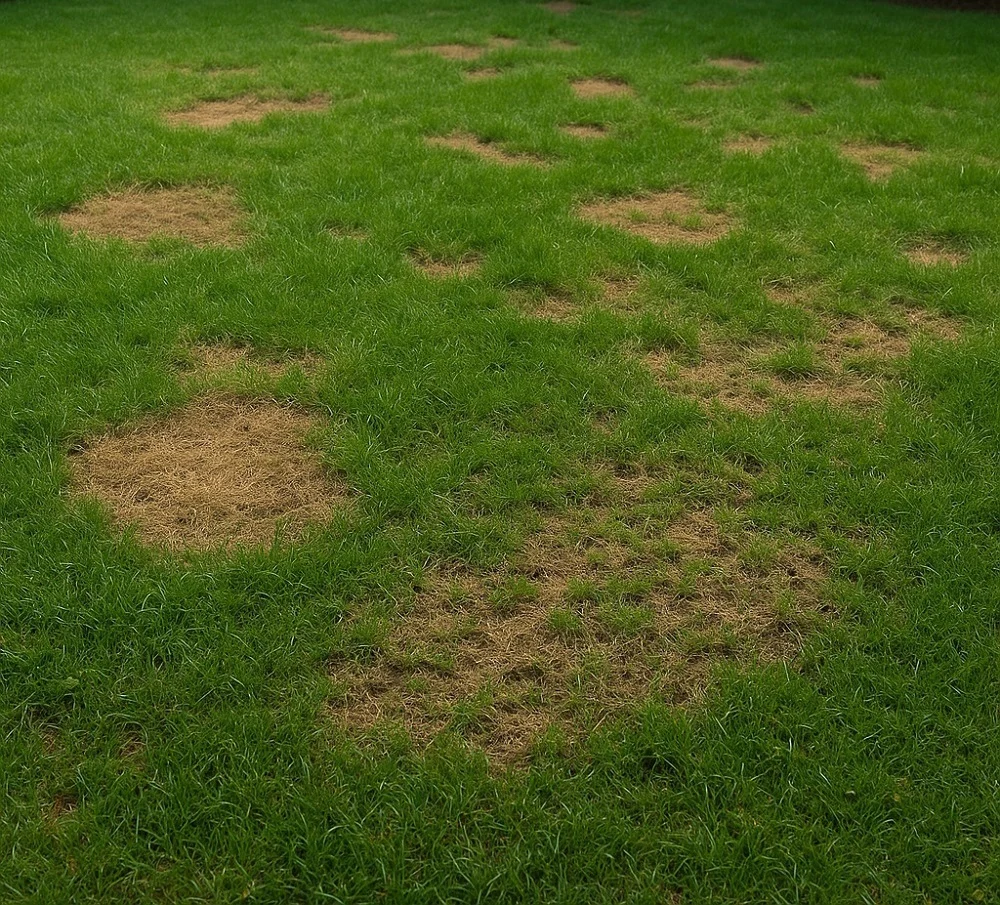
Image source: Bing (Web (fair-use with source credit))
Quick Answer
Grub damage shows up as irregular brown patches that feel spongy underfoot and peel back easily. The grass lifts like a carpet because roots have been severed underneath. Individual grubs are cream-colored with brown heads, C-shaped, and range from ¼ inch to over 1 inch long.
Secondary signs include skunks, raccoons, or birds digging in the lawn at night or early morning.
What Grub Damage Actually Looks Like on a Lawn
Grub damage starts as irregular brown patches that won't green up no matter how much you water. Unlike drought stress, which tends to show up first on slopes, south-facing areas, and spots near pavement, grub damage often appears in seemingly random, healthy-looking sections of turf.
The texture is the giveaway. Walk across a suspicious patch and pay attention to how it feels. Grub-damaged turf feels spongy or loose because the root system has been chewed away.
In advanced cases, you can literally roll the dead sod back with your hands like a carpet.
The patches themselves tend to expand outward over time. What started as a dinner-plate-sized dead zone in August can become a several-foot-wide area by September or October. The edges often blend into surrounding healthy grass in a gradual fade rather than a sharp line, which is one clue that separates grub damage from something like a chemical spill or fertilizer burn.
Color-wise, grub damage passes through stages. You might see a yellowish or straw-colored tint first, then a washed-out green, then full brown. If the lawn has been irrigated consistently and you still see these symptoms in late summer through early fall, grubs should be near the top of your suspect list.
Timing matters. Grub damage becomes most visible from mid-August through October in most northern regions, though warm-season grass areas can see activity as early as July. If brown patches show up in May or June, something else is more likely the cause.
The Quick Ways to Tell If Grubs Are Killing Your Grass
Before you go cutting up the lawn, there are a few fast checks you can do. They won't give you a definitive count, but they'll tell you whether it's worth investigating further.
The Tug Test. Grab a handful of the browning grass at the edge of a patch and give it a firm pull. If the turf lifts easily and comes away from the soil with little root resistance, that's a strong indicator of grub feeding underneath. Healthy grass anchored by intact roots won't budge.
The Visual Walk. Get down to turf level and scan the ground. Early grub damage sometimes shows as a slight unevenness or a looseness in the sod before browning becomes obvious. In severe cases, the turf feels almost like walking on a wet sponge.
Animal Activity. Skunks, raccoons, starlings, and crows are all grub-eating machines. If you're seeing patches of dug-up sod (skunks tend to peel back small sections, raccoons go for larger torn areas, birds leave peck holes), that's a biological red flag pointing directly beneath the disruption.
Irrigation Check. Watering the lawn and watching the response is a simple diagnostic. If deep watering doesn't revive the patch within 3 to 4 days of good soaking, root loss from grubs is more likely than drought or heat stress.
Here is a quick comparison to help you narrow it down:
| Sign | Grub Damage | Drought Stress | Fungal Disease |
|---|---|---|---|
| Patch shape | Irregular, random | Slopes, full sun areas, near concrete | Can have rings or defined borders |
| Turf texture | Spongy, lifts easily | Firm but dry, pulls firmly | May be slimy or matted |
| Response to watering | Minimal to none | Revives within days | May worsen with moisture |
| Time visible | Late summer through fall | Mid-summer heat | Varies by pathogen |
| Animal digging | Common | Rare | Rare |
What Grubs Look Like and Where to Find Them
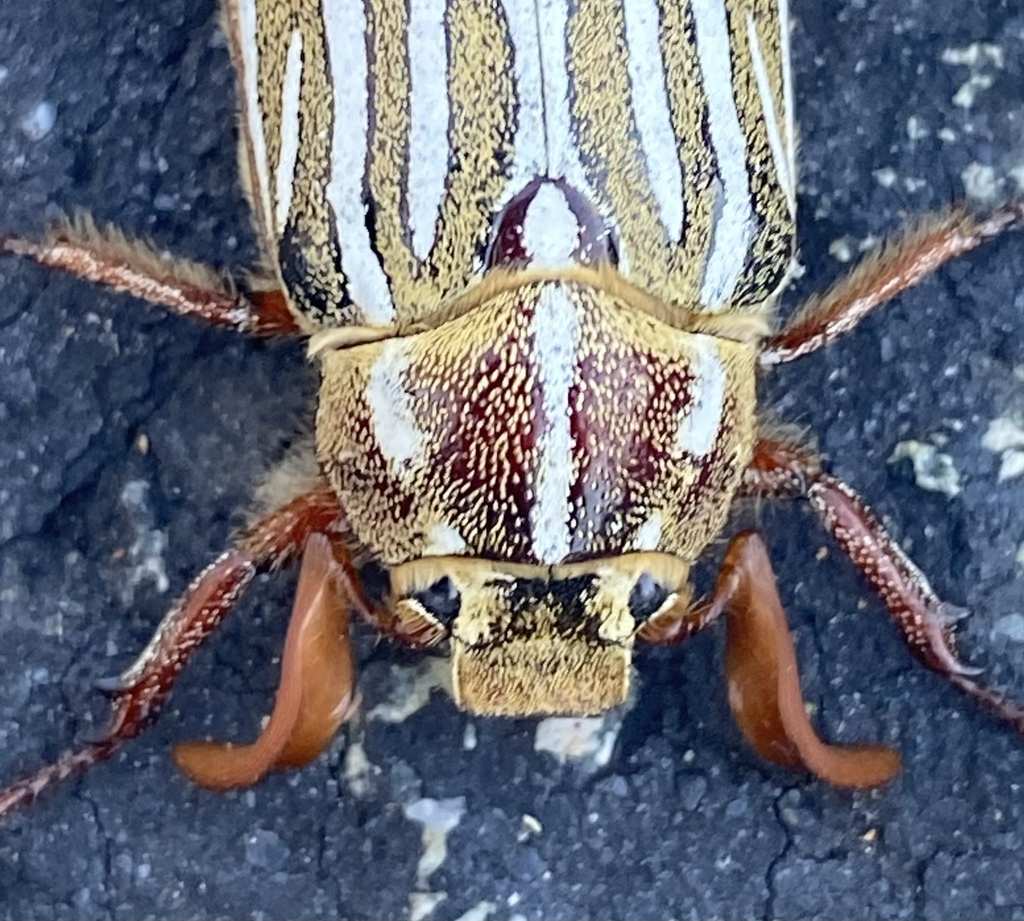
Image source: iNaturalist / Irene
Grubs themselves are fairly distinctive once you know what you're looking for. The larvae most commonly found in residential lawns are cream to white in color with a dark brown or tan head capsule and six small legs right behind the head. They hold that classic C-shape whether they're resting or crawling.
Size varies by species and age. Newly hatched grubs are tiny, about ¼ inch long. Mature Japanese beetle grubs can reach 1 inch or more by late summer.
European chafer grubs are similar in size. Black turfgrass ataenius, a less common but very damaging species in certain regions, stays smaller at about ⅜ inch.
The most common species in North American and U.K. lawns includes:
- Japanese beetle (Popillia japonica): Mature around 1 inch, heavy infestations in the eastern U.S. and spreading westward.
- European chafer (Amphimallon majale): Similar size, highly damaging in the Northeast and parts of the Midwest.
- Northern masked and southern masked chafers (Cyclocephala species): Common across the Midwest and Southeast, with two distinct regional species responsible for most warm-season grass damage.
- June beetle or June bug (Phyllophaga species): Slightly larger, more common in central and southern U.S. lawns.
- Black turfgrass ataenius (Ataenius spretulus): Smaller but capable of doing serious injury on golf courses and closely mowed cool-season turf.
You'll find grubs in the top 1 to 3 inches of soil, right at the base of the grass stems and just below the thatch layer. They cluster in the root zone, so digging at the edge of a damaged patch (where active feeding is usually happening) gives you the best chance of locating them.
Species identification down to the species level isn't usually necessary for treatment decisions. The life cycles overlap enough that management timing is similar across the board. What matters more is how many you find and when you find them.
How to Confirm Grub Damage: The Tug Test and Square-Foot Cut
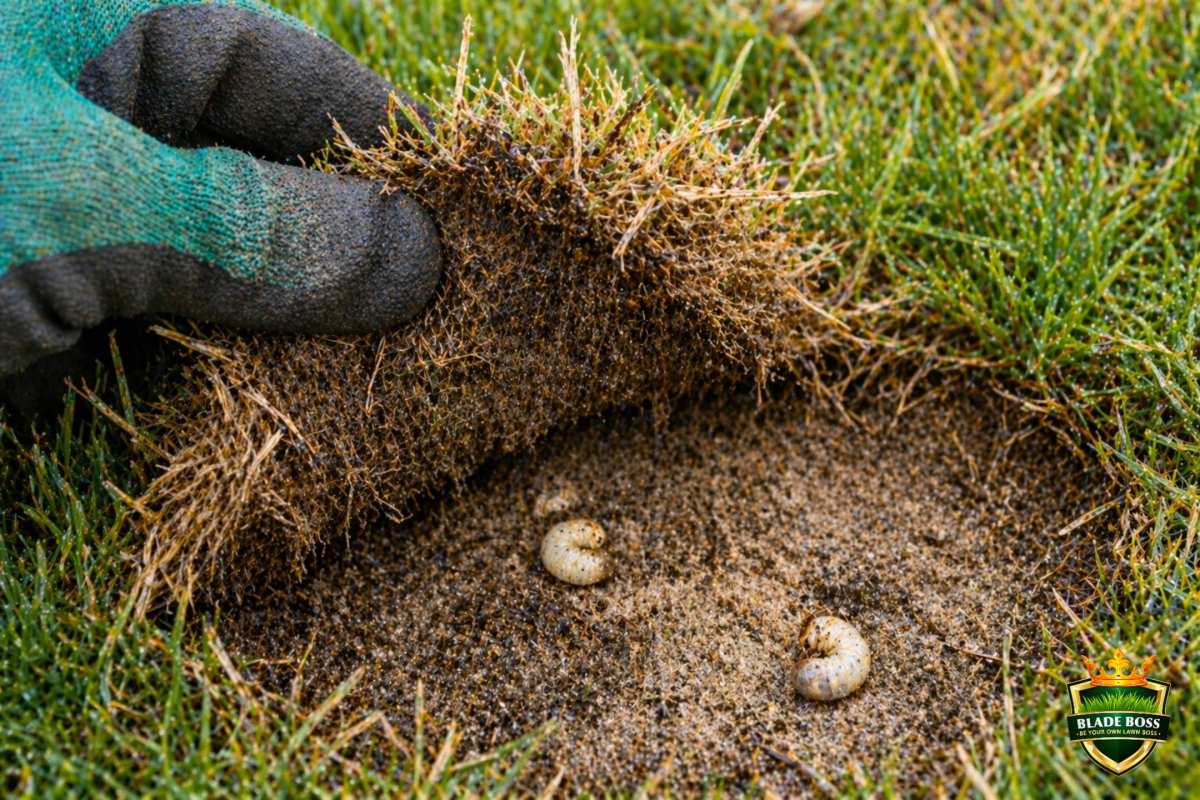
Image source: Bing (Web (fair-use with source credit))
The tug test gives you a fast signal, but a square-foot sample gives you the hard number. Here is the step-by-step process Penn State Extension and several other university turf programs recommend.
- Pick your spot. Cut at the margin of a damaged patch where brown turf meets green. That's where active feeding happens, not in the dead center.
- Cut three sides. Use a spade or sharp shovel to cut a roughly 1 square foot section of sod, going about 2 to 3 inches deep. Leave one side attached so you can fold it back like a flap.
- Peel it back. Lift the cut section and examine the soil and root zone underneath.
- Count the grubs. Count every grub you see in the exposed soil and root mat. Break apart clumps, they hide in the dirt.
- Check multiple spots. Sample 3 to 4 different areas of the lawn, especially separate damaged patches. Averaging across multiple samples gives you a more accurate picture.
- Replace the sod. After counting, press the square back into place and water it. Turf at the edge of a damage zone usually recovers fine if you handle it gently.
Here is a straightforward threshold guide based on research from Ohio State University and other extension sources:
| Grub Count (per sq ft) | Action Needed |
|---|---|
| 0 to 5 | Monitor and recheck in 1 to 2 weeks. Treatment usually unnecessary. |
| 6 to 10 | Curative treatment recommended for most cool-season lawns. |
| 11 to 15 | Treat as soon as possible. Damage will likely worsen. |
| 15+ | Active, severe damage. Treat immediately and plan for fall overseeding or sodding. |
Lower thresholds apply to high-maintenance or irrigated turf. A golf fairway or closely cut sports turf showing symptoms might justify action at just 3 to 4 grubs per square foot. A pushed lawn in a home under moderate stress can usually tolerate a few more before visible injury appears.
Grub Damage vs. Everything Else: Drought, Disease, and Dog Spots
This part trips people up constantly, because brown patches have a lot of potential causes. Looking at a few key details will help you stop guessing.
Grub damage vs. drought stress. Drought-stressed turf turns a uniform blue-green or gray-green first, then goes straw-brown from the top down. Grub-damaged turf usually greens up briefly with rain or irrigation, then browns again quickly. Drought patches follow patterns of sun exposure and soil drainage, whereas grub patches can pop up in shaded or moist areas just as easily.
Grub damage vs. dog urine. Dog spots are typically round, small (a few inches across), and surrounded by a dark green ring where the excess nitrogen acts as fertilizer. Grub damage doesn't show that halo effect. It's also larger and more irregular.
If you have a dog and the spots are concentrated in the paths she uses, urine damage is the more likely culprit.
Grub damage vs. fungal disease. Brown patch (Rhizoctonia solani), dollar spot, and other turf fungi each have identifying features. Brown patch often shows a darker "smoke ring" at the edge of the lesion in the early morning. Dollar spot leaves small, round lesions about the size of a silver dollar.
Grub damage lacks these markings. Fungal diseases also respond (sometimes dramatically) to fungicide applications, whereas grub patches obviously don't.
Grub damage vs. chinch bugs. Chinch bugs cause damage that can look very similar, but they're usually concentrated in the sunniest, hottest parts of the lawn first. They're also active earlier in summer. If you peel back turf and don't see grubs but notice tiny black-and-white insects about ⅛ inch long, chinch bugs may be your problem instead of (or in addition to) grubs.
Grub damage vs. sod webworms. Sod webworms chew grass blades rather than roots, so the turf won't lift like a carpet. You'll see small, irregular chewed patches and might spot the moths fluttering low over the lawn at dusk. Close inspection of the thatch layer reveals silken tunnels, which grubs don't produce.
If multiple symptoms are overlapping (a lawn with both fungal disease and moderate grub pressure, for instance), treat the most urgent threat first. Often, heavy grub feeding opens the door for secondary fungal infection, so getting grubs under control resolves more of the damage than you'd expect.
What to Do With Dead Patches After You've Controlled the Grubs
Once you've confirmed and treated the grub problem, you're often left with bare or thin spots that won't recover on their own. The grass is gone, and the root system underneath has been destroyed. Waiting for those areas to fill in naturally can take an entire growing season, sometimes longer.
Timing the repair. The best window for repairing grub damage is early fall (September into early October) for cool-season grasses in the northern U.S. and U.K. Warm-season lawns are better repaired the following spring (late April through June) when soil temperatures support active root growth.
Overseeding for small to medium patches. If the surrounding turf is still healthy, overseeding the dead areas is usually sufficient. Rake out the dead material to expose bare soil, spread a quality grass seed blend that matches your existing turf, lightly cover with a thin layer of compost or topsoil, and keep the seedbed consistently moist until germination. A starter fertilizer applied at seeding helps root establishment.
Sodding for large or high-visibility areas. When dead patches exceed a few square feet or when the lawn is on a slope where washout is a concern, sod gives you instant results. Cut away the dead turf, prepare the soil base just as you would for a new lawn installation, and lay the sod tightly with no gaps. Water thoroughly and frequently for the first two weeks to establish root contact with the soil underneath.
Preventing reinfestation. Grubs tend to return to the same areas if adult beetles find suitable egg-laying conditions. A preventive grub control product applied the following late spring or early summer breaks the life cycle before new larvae start feeding. Read and follow all label instructions carefully, and check your state's pesticide regulations, as several states have restricted or banned neonicotinoid-containing products as of 2026.
Mistakes People Make When Dealing With Grub Damage
A few common errors cost homeowners time, money, and turf. Avoiding these puts you ahead of most people who tackle grub problems.
Treating too late. Curative products work best when grubs are small and actively feeding. By October in many regions, mature grubs are large and harder to kill. The ideal curative window is late July through mid-September, when second-stage larvae are present but haven't yet reached their most resistant size.
Skipping the count. If you find 2 or 3 grubs per square foot across the whole lawn, that's within normal levels and doesn't justify treatment. Unnecessary pesticide applications waste money and can harm beneficial soil organisms. Counting saves you both.
Confusing the problem. Fungal disease, chinch bugs, and irrigation failure all cause brown patches. People who jump straight to a curative grub product without confirming grub presence are guessing. Spending 15 minutes on the square-foot test is always worth it.
Ignoring preventive timing. Preventive products need to be applied before eggs hatch, typically from late May through early July depending on your region. If you wait until you see damage in August, it's already too late for that season's preventive approach. You'll need a curative product instead.
Overwatering grub-damaged turf. Because the roots aren't functioning, excess water sits in the soil and can suffocate what root tissue remains. Water lightly and frequently if reseeding, but resist the temptation to saturate grub-damaged areas in an attempt to revive them. The grass simply can't take up water without roots.
Mowing too short. Scalping the lawn in late summer compounds the stress on already-weakened turf. Keep your mowing height at the upper end of the recommended range for your grass species (usually 3 to 4 inches for cool-season lawns) until the grass has fully recovered.
Real Scenarios: What Grub Damage Looks Like in Different Grasses and Regions
Cool-season lawns in the Northeast and Midwest. Kentucky bluegrass, perennial ryegrass, and tall fescue lawns in these regions typically show grub damage from September through October. Patches start small and expand rapidly as larvae reach peak feeding size. Japanese beetle and European chafer are the primary culprits.
Skunk damage often accompanies grub problems heavily here.
Warm-season lawns in the Southeast and transition zone. Bermudagrass, zoysiagrass, and St. Augustinegrass can experience grub injury, though the visible damage pattern differs. Instead of obvious brown patches, you might notice thin, weakened turf that doesn't respond well to fertilizer.
White grub species active later into the fall can cause turf to go dormant unevenly. Masked chafers are the dominant species in much of this region.
Sports fields and golf courses. Intensively managed turf with shallow root systems can show damage at lower grub thresholds than a typical home lawn. Black turfgrass ataenius, a smaller and often overlooked species, is a major pest in closely cut cool-season turf on putting greens and fairways. Damage here appears as small, scattered pockmarks rather than large patches.
U.K. and European lawns. European chafer has become established in parts of southern England and mainland Europe. Damage patterns mirror what's seen in North America, with irregular brown patches appearing in late summer. Homeowners there may not immediately recognize grub damage if they've never dealt with it before, so awareness is still growing.
Frequently Asked Questions
At what grub count should I treat my lawn?
Most extension programs flag 6 to 10 grubs per square foot as the threshold for curative treatment on cool-season turf. For warm-season grasses or heavily irrigated lawns, action at 4 to 5 grubs per square foot may be warranted. Below that, natural predators and healthy turf can usually keep populations in check.
Can grub-damaged grass recover on its own?
If grub feeding has stopped and the root crowns are still alive, watering and a light fertilizer application can help turf recover. However, heavily fed-on areas where roots are completely severed will die and need reseeding or sodding. The tug test tells you which scenario you're dealing with.
When is the best time to apply grub control?
Preventive products go down in late May through early July, timed so they're in the soil when adult beetles lay eggs. Curative products are best applied from late July through mid-September, when grubs are small and actively feeding near the soil surface.
Do grub treatments harm earthworms and beneficial insects?
Chlorantraniliprole-based products (often sold as GrubEx) are considered lower risk for non-target organisms like earthworms compared to older active ingredients like trichlorfon (Dylox). Beneficial nematodes target grubs specifically and have virtually no impact on earthworms or other soil life. Always read the product label for specifics on non-target organism safety.
How long does it take after treatment to see results?
Curative products typically stop feeding within 24 to 48 hours, but dead grubs may still be visible in the soil for a week or more. The lawn won't green up immediately because root damage is already done. Recovery depends on reseeding, rainfall, and the remaining grass's ability to spread into treated areas.
Will skunks and birds come back if I don't treat?
Skunks, raccoons, and birds are attracted to the grubs themselves, not the dead turf. Once the grub population is controlled, foraging animal activity typically stops within a few weeks. If animal digging continues after treatment, recheck for remaining grubs or consider that the animals may have found another food source in the same area.
How Bad Is Bad? The Grub Count Threshold That Matters
The square-foot count gives you a hard number, but what you do with that number depends on your grass type and how you manage your lawn. A few grubs per square foot is normal in most regions. Extension entomologists rarely recommend treatment below that 6-grub mark for typical residential turf.
Kentucky bluegrass can often tolerate slightly higher counts than fine fescue because it spreads rhizomatously, filling in behind damaged spots. Perennial ryegrass, which is bunch-type, can't recover as quickly from root loss. Tread lightly with irrigation decisions on ryegrass lawns showing even moderate grub pressure.
Why Skunks and Birds Tearing Up Your Lawn Is a Red Flag
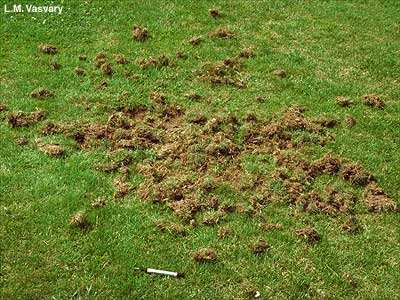
Image source: Bing (Web (fair-use with source credit))
Animal foraging is often the first thing people notice, ahead of the turf damage itself. Skunks feed at night and roll back small sections of sod to reach grubs. Raccoons do the same thing, usually more aggressively.
Birds peck small holes during the day.
If your lawn is suddenly being torn up, don't just patch the turf and hope it stops. Get a sample from the disturbed area. The combination of animal digging plus turf that lifts easily is almost always grubs.
When to Treat: Curative vs. Preventive Timing That Actually Works
Preventive products with chlorantraniliprole go down from late May through early July before eggs hatch. They need to be watered into the soil. Curative products with trichlorfon or carbaryl are best applied in late July through mid-September when larvae are small and active.
Missing these windows is the single most common reason treatments fail.
How to Choose the Right Grub Treatment for Your Situation
If grubs are already causing visible damage this season, reach for a curative product. Trichlorfon-based products work fast but degrade quickly, so timing matters. Plan for preventive treatment the following spring to break the cycle.
Beneficial nematodes work well in the curative window if you prefer a biological option, but they require moist soil and shade to survive in the soil.