You walk outside and notice brown patches spreading across your yard. The grass looks dead in irregular spots, and you're not sure what's causing it. Understanding what does grass look like with grubs is the first step to saving your lawn before the damage gets out of hand.
White grubs are the larval stage of scarab beetles, and they feed on grass roots underground where you can't see them. By the time the damage shows on the surface, they've already been at work for weeks. Most turfgrass species start showing visible stress when grub populations reach just 5 to 10 larvae per square foot, according to university extension research.
Let's walk through exactly what to look for so you can confirm whether grubs are your problem.
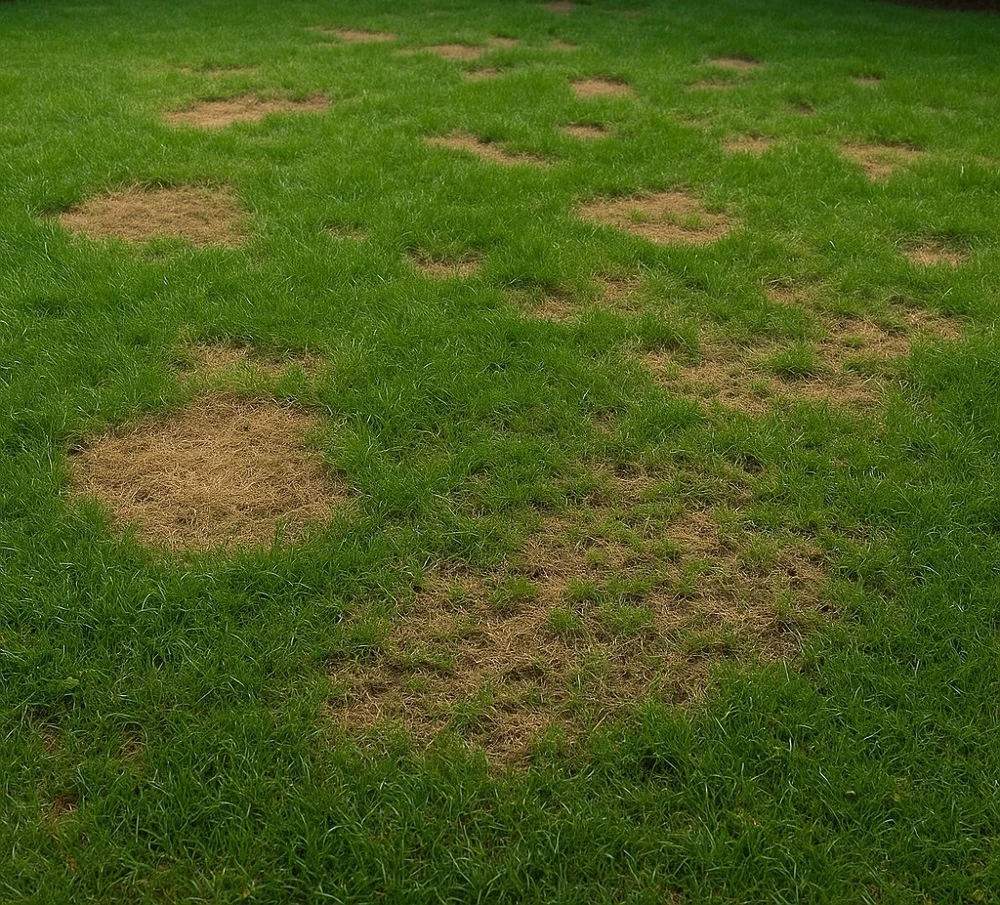
Image source: Bing (Web (fair-use with source credit))
Quick Answer
Grub-damaged grass appears as irregular brown patches that spread over time. The turf feels spongy underfoot and pulls up easily like loose carpet. Beneath the surface, you'll find C-shaped white larvae in the top few inches of soil.
Animals like skunks and raccoons may dig in the damaged areas searching for the grubs.
What Grub Damage Actually Looks Like on a Lawn
Grub damage doesn't look like a clean circle or a neat pattern. It shows up as irregular, spreading patches of brown or dead grass that don't follow any logical shape. The edges blend into healthy turf in a way that looks almost random at first glance.
The color progression tells the story. Grass starts turning yellow or pale green, then shifts to a straw-brown color before dying completely. This isn't overnight.
It happens over two to three weeks as the grubs sever more and more roots.
Here's what sets grub damage apart from other lawn problems. The turf feels spongy or loose when you walk on it. That's because the roots have been chewed away and the sod is barely holding together.
Press your foot down and you'll notice it doesn't have the firm, anchored feel of healthy grass.
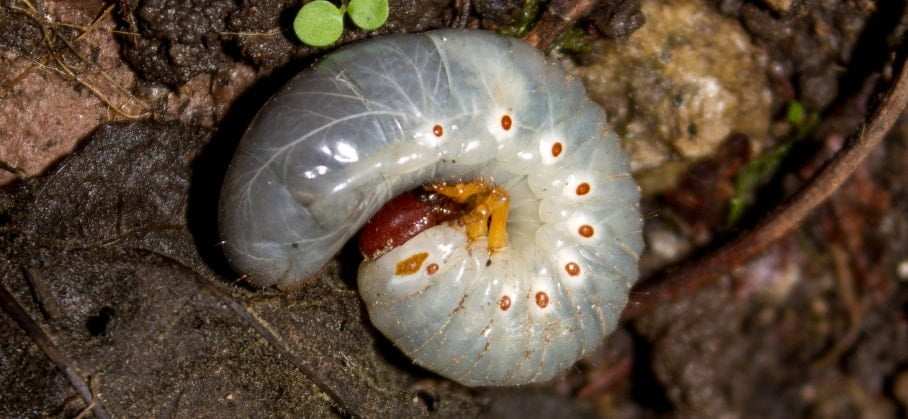
Image source: Bing (Web (fair-use with source credit))
The patches tend to expand outward from a central point. You might see a small dead area in early August that's twice the size by mid-September. Warm-season grasses and cool-season grasses both show this pattern, though the timing varies by region.
Another telltale sign is animal activity. Skunks, raccoons, and birds will tear up your lawn at night or early morning digging for grubs. If you notice chunks of sod flipped over or small cone-shaped holes, that's a strong indicator grubs are present underneath.
The Quick Signs That Tell You It's Grubs
You don't need to dig up your whole lawn to get a sense of what's happening. A few quick visual checks can point you in the right direction before you commit to a full inspection.
Look for these surface-level clues first:
- Irregular brown patches that don't match a uniform pattern like fertilizer burn would
- Spongy turf that feels loose or bouncy underfoot
- Grass that pulls up easily with minimal resistance, like peeling back a rug
- Animal digging in the damaged areas, especially overnight
- Wilted grass in patches even when the surrounding soil is moist
The timing matters too. Grub damage typically becomes visible in late summer and early fall, peaking between August and October in most regions. If your lawn looked fine in June but started declining in August, grubs are a likely culprit.
One thing that trips people up is watering. Grub-daminated grass won't respond to extra water the way drought-stressed grass does. If you've been watering regularly and the brown patches aren't bouncing back, that's a red flag pointing toward root damage rather than dryness.
How to Confirm Grubs Are the Problem
Seeing brown patches isn't enough on its own. You need to get your hands dirty and check what's happening below the surface. The good news is this takes about five minutes and costs nothing.
Start by choosing a spot at the edge of a damaged patch. That's where active feeding is happening and where you're most likely to find grubs. Grab a flat shovel or a sturdy knife and cut a square about 12 inches across and 2 to 3 inches deep.
Flip that square of sod over like you're opening a trapdoor. Peel it back gently and examine the soil and root zone underneath. Count the grubs you see in that square foot of soil.
Here's the threshold that matters:
| Grub Count per Sq Ft | What It Means |
|---|---|
| 0-4 grubs | Usually not enough to cause visible damage |
| 5-9 grubs | Moderate infestation, treatment recommended |
| 10+ grubs | Heavy infestation, damage likely already occurring |
Check three or four spots across your lawn to get an accurate picture. Grubs don't distribute evenly, so one sample might miss a hot spot entirely.
The grubs themselves are creamy white with brown heads and three pairs of legs near their heads. They curl into a distinctive C-shape when disturbed. Size varies by species, ranging from about a quarter inch to over an inch long depending on their age.
What Grub Damage Looks Like vs. Other Lawn Problems
This is where most people get tripped up. Grub damage shares visual similarities with several other common lawn issues, and treating the wrong problem wastes time and money.
Grub damage vs. drought stress. Drought-stressed grass turns a uniform bluish-gray before browning, and the entire lawn tends to show stress at once. Grub damage appears in irregular patches while surrounding grass stays green and healthy. Drought grass also firms up again after watering.
Grub-damaged grass doesn't recover because the roots are gone.
Grub damage vs. brown patch fungus. Brown patch fungus creates roughly circular patches with a darker "smoke ring" border in the early morning when dew is present. The patches tend to be more uniform in shape than grub damage. You might also spot visible fungal threads on the grass blades in humid conditions.
Grub damage vs. dog urine spots. Dog urine creates small, concentrated dead spots surrounded by a ring of dark green grass. The pattern is much smaller and more scattered than grub damage, and you'll usually see dozens of spots rather than a few large patches.
Grub damage vs. chinch bugs. Chinch bugs cause irregular patches too, but they tend to show up during hot, dry periods in full sun areas. The grass turns yellow first, then brown, and you can sometimes see the tiny black-and-white bugs at the base of grass stems if you part the turf and look closely.
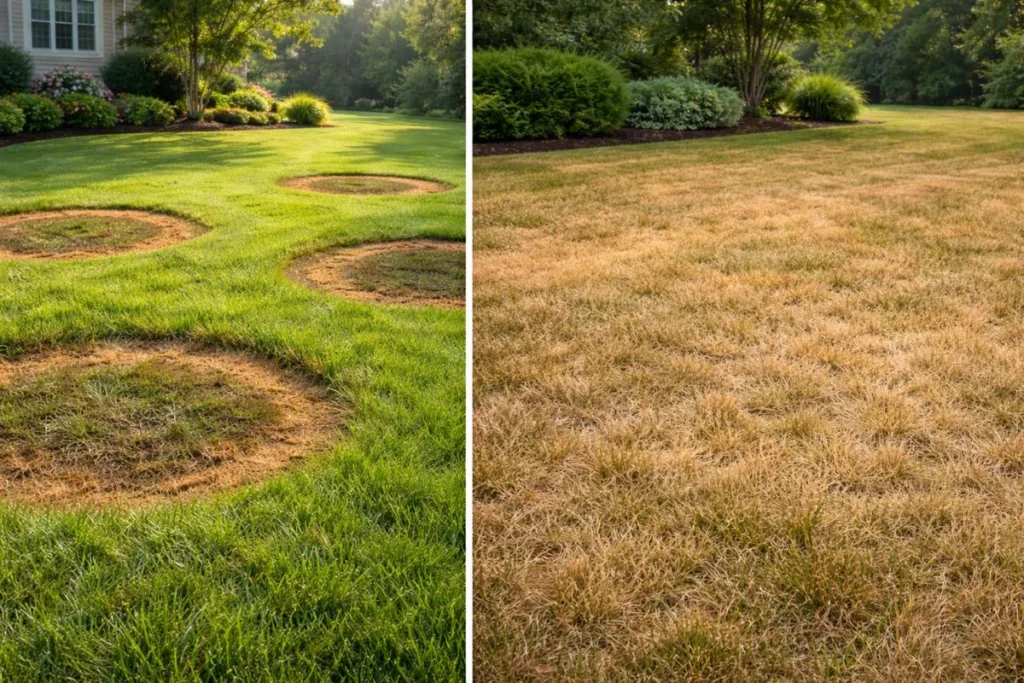
Image source: Bing (Web (fair-use with source credit))
The tug test is your best friend here. Grab a handful of grass in a damaged area and pull gently. If it comes up easily with no roots attached, grubs are almost certainly the cause.
If the grass holds firm, you're dealing with something else.
Why Grub Damage Gets Worse When It Rains
It seems counterintuitive, but grub-damaged lawns often look worse after rainfall than during dry spells. There's a straightforward reason for this.
When grubs sever the roots, the grass loses its ability to take up water and nutrients even when they're available in the soil. Rain saturates the ground, but the damaged grass can't access it. Meanwhile, the surrounding healthy grass greens up from the moisture, making the dead patches stand out even more by contrast.
Heavy rain also softens the soil, making the turf even looser and more spongy. This accelerates the visible deterioration. What looked like a small problem after a dry week can suddenly appear much worse after a soaking rain.
There's another factor at play. Grubs move deeper into the soil during extreme heat or drought, which can temporarily slow surface feeding. When rain returns and soil moisture increases, they move back up into the root zone and resume feeding aggressively.
So the damage you see after rain often reflects feeding activity that happened in the days leading up to the storm.
This is why timing your inspection matters. Checking your lawn a day or two after a good rain gives you the clearest picture of what's happening below the surface. The soil is soft, the grubs are active near the surface, and the damage contrast is at its most visible.
How to Check Your Lawn for Grubs (The Flip Test)
The flip test is the most reliable way to confirm a grub infestation without guessing. It's simple, takes a few minutes, and gives you a definitive answer. Here's exactly how to do it.
Grab a flat-bladed spade or shovel. You want something you can push into the soil cleanly without tearing the turf apart. A sharpened garden spade or even a sturdy putty knife works for smaller spots.
Cut a square of turf about 12 inches on each side. Go down about 2 to 3 inches deep, which is right at the depth where grubs feed. Cut three sides of the square, then use the shovel to peel back that section of sod like opening a book.
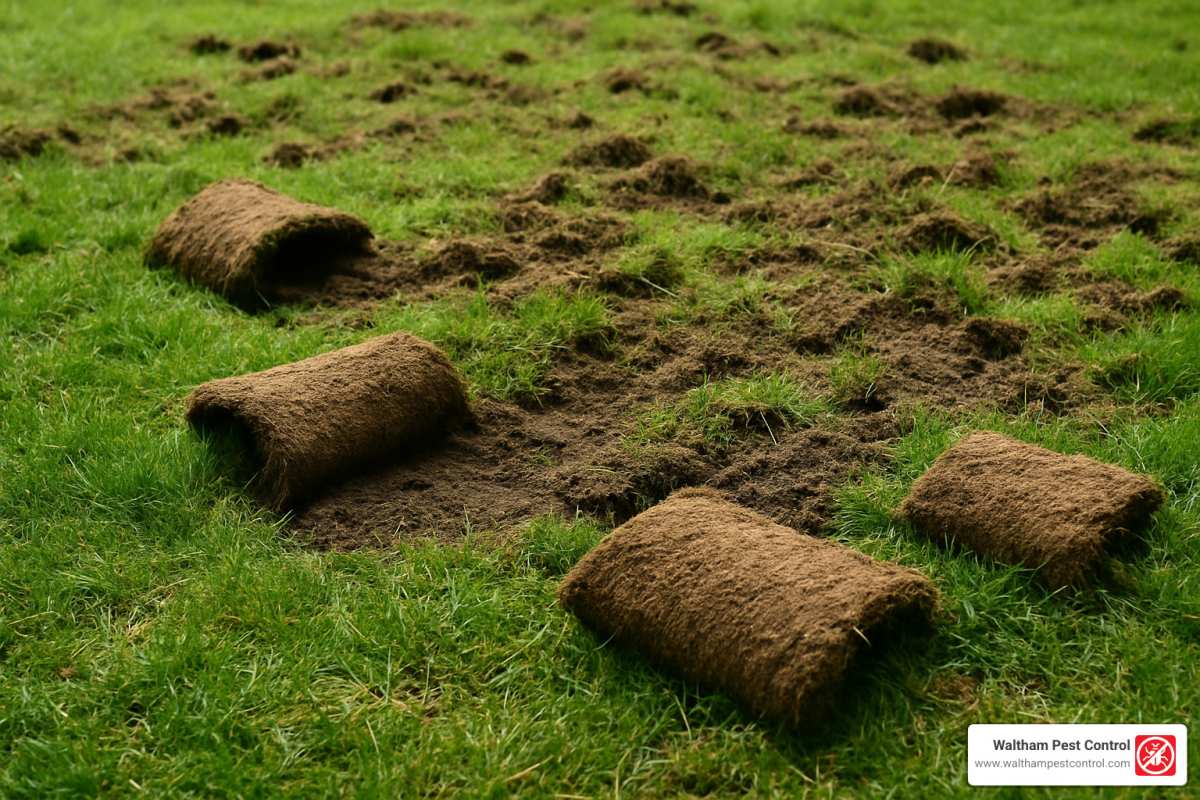
Image source: Bing (Web (fair-use with source credit))
Examine the soil and root zone in that exposed area. Count every grub you see. Then press the sod back into place and water it down so it can re-root.
The turf will recover fine as long as you didn't let it dry out.
Do this in three or four different spots across your lawn. Focus on the edges of damaged patches where active feeding is happening. Skip the center of fully dead areas since grubs may have already moved on.
If you find more than 5 grubs per square foot, treatment is warranted. Below that threshold, your lawn can usually outgrow the damage with proper watering and fertilization.
When to Treat Based on What You're Seeing
Timing your treatment correctly makes the difference between success and wasted effort. Grubs are easiest to control when they're small and feeding actively near the soil surface.
Curative treatments work best in late summer, typically August through early September in most regions. The grubs are young, small, and still close to the root zone where the product needs to reach them. By October, mature grubs start burrowing deeper into the soil to overwinter, making them much harder to kill.
Preventive treatments take a different approach entirely. You apply them in late June to mid-July before adult beetles lay their eggs. These products create a barrier in the soil that kills newly hatched grubs before they can do damage.
Here's the key distinction. If you're seeing brown patches right now, you need a curative treatment. If your lawn looks fine but you had grubs last year, a preventive application next summer stops the cycle before it starts.
| Treatment Type | When to Apply | Best For | Grub Stage Targeted |
|---|---|---|---|
| Curative | August to early September | Active damage, visible patches | Small to medium larvae |
| Preventive | Late June to mid-July | History of grubs, no current signs | Newly hatched larvae |
Check with your local cooperative extension service for region-specific timing. Beetle activity and egg-laying periods vary across climate zones, and getting the window right matters more than which product you choose.
What to Do After You've Found Grub Damage
Once you've confirmed grubs and identified the extent of the damage, you need to act fast. But the steps depend on the severity of what you're dealing with.
For moderate infestations of 5 to 10 grubs per square foot, a curative insecticide application will stop further feeding within a few days. Products containing trichlorfen or carbaryl are commonly used for this purpose. Follow label directions carefully, as application rates and watering requirements vary by product.
After treating, focus on helping your lawn recover. Water deeply but infrequently to encourage new root growth. Hold off on fertilizing until you see green-up returning, since feeding stressed grass can actually set it back further.
For severely damaged areas where the sod lifts away with no roots attached, you may need to reseed or lay new sod in those spots. Fall is the ideal time for this in cool-season grass regions because soil temperatures are still warm but air temperatures are dropping.
Don't forget about prevention going forward. If you've had one grub outbreak, you'll likely see them again. Annual monitoring in late summer catches problems before they spread across your entire yard.
The Most Common Lawn Pests That Get Confused with Grubs
Several lawn pests produce damage that looks similar to grubs at first glance. Knowing the differences saves you from treating the wrong problem and watching the damage continue.
Sod webworms cause irregular brown patches, but the damage appears as closely cropped grass blades rather than roots being eaten. You might notice small holes in the soil surface from their burrowing. The grass doesn't pull up easily the way grub-damaged turf does.
Chinch bugs attack grass stems and suck out moisture, causing yellowing that progresses to brown. They thrive in hot, dry conditions and often damage lawns in full sun first. Unlike grubs, you can sometimes see chinch bugs with a naked eye if you part the grass and look at the soil surface.
Billbugs are another root-feeding insect, but they attack the crown and stems near the soil line. The damage looks similar to grubs, but you'll often find the grass stems are hollow when them open. Adult billbugs are small weevils, and their larvae are legless compared to grub larvae.
Fungal diseases like brown patch and dollar spot create circular or irregular patches that mimic grub damage. The key difference is that fungal patches often show visible signs on the grass blades themselves. Look for spots, lesions, or web-like fungal growth in early morning humidity.
If you're still unsure after your inspection, bring a few grubs and a sample of the damaged turf to your local extension office. They can identify the pest and recommend the right treatment approach for your specific situation.
Frequently Asked Questions
How many grubs per square foot is considered a problem?
Most turfgrass can tolerate 4 or fewer grubs per square foot without visible damage. Once you hit 5 to 9 grubs per square foot, treatment is generally recommended. At 10 or more, you're looking at significant damage and should act quickly.
Can grub-damaged grass recover on its own?
Mild damage with low grub counts can recover with proper watering and fertilization. If the roots are completely severed and the sod pulls up with no resistance, those areas won't grow back without reseeding or new sod.
What time of year do grubs cause the most visible damage?
Late summer through early fall is when damage peaks. Grubs feed most actively in August and September, and the cumulative root loss becomes visible as the grass goes dormant or faces heat stress.
Do all grubs turn into Japanese beetles?
No. Japanese beetles are just one species that produces white grubs. European chafers, May beetles, June beetles, and masked chafers all produce grubs that damage lawns.
The C-shaped larvae look similar across species.
Will killing grubs stop my lawn from turning brown immediately?
No. Killing grubs stops further damage, but the already-damaged grass won't green up on its own. Those patches need new growth from reseeding or time for surrounding healthy grass to fill in the dead areas.
Does dog urine damage look the same as grub damage?
Dog urine creates small dead spots, typically under 6 inches across, surrounded by a ring of darker green grass. Grub damage produces much larger, irregular patches without the urine spot's characteristic green border.