What causes grubs in your lawn is almost never one single thing. It's usually a combination of beetle activity, soil conditions, and lawn care habits that create the perfect environment for these larvae to thrive. Understanding how that chain of events works is the first step toward stopping the damage.
White grubs are the larval stage of scarab beetles, and they feed on turfgrass roots just below the soil surface. In our research, state extension services consistently cite 5 to 10 grubs per square foot as the threshold where cool-season lawns start showing visible injury. The tricky part is that the conditions attracting adult beetles to lay eggs in your yard months earlier set the stage long before you ever see brown patches.
Quick Answer
Grubs appear in lawns when adult beetles lay eggs in moist, well-maintained turf during midsummer. Eggs hatch into larvae that feed on grass roots below ground. Overwatered lawns, heavy thatch, and certain grub species make the problem worse.
The beetles are attracted to irrigated green lawns for egg-laying. High soil moisture helps eggs survive and larvae thrive.
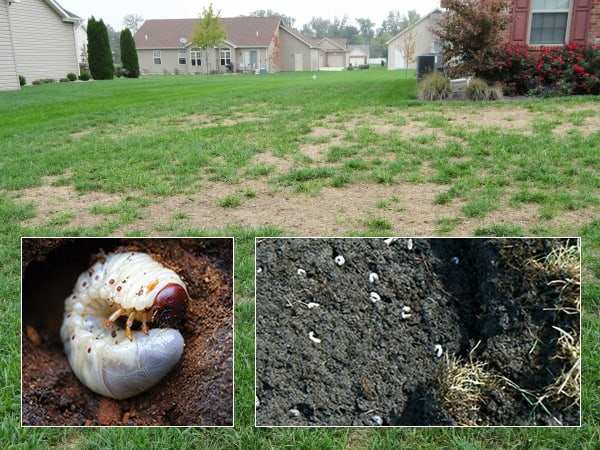
Image source: Bing (Web (fair-use with source credit))
What Are Grubs and Why Are They in Your Lawn?
White grubs are C-shaped larvae with brown heads and three pairs of legs clustered near their front end. They live in the top few inches of soil and feed exclusively on grass roots. When they sever enough roots, the turf loses its ability to take up water, and that's when you see the browning.
Here's how the cycle works. Adult beetles emerge from the ground in early to midsummer, depending on species and region. They feed briefly on foliage, then females burrow back into the soil to lay eggs.
Those eggs hatch within a few weeks, and the young grubs begin feeding on roots almost immediately. They continue feeding through fall, move deeper into the soil to overwinter, and resume feeding the following spring before pupating.
The beetles don't choose your lawn at random. They're specifically attracted to certain conditions, and that's the heart of what causes grubs in the lawn. If your yard matches what they're looking for, you become a target.
The Real Reasons Grubs Show Up (It's Not Just Bad Luck)
Several specific conditions make your lawn much more likely to attract egg-laying beetles and support grub survival. It's rarely just one factor stacking up. It's usually three or four working together.
| Condition | Why It Attracts Grubs |
|---|---|
| Overwatering | Moist soil makes egg-laying easier and increases egg survival rates |
| Heavy thatch (over ½ inch) | Provides a protective buffer layer where beetles prefer to lay eggs |
| Well-fertilized, lush turf | Large root mass and green attractiveness draw adult beetles |
| Sandy soil | Easier for beetles to burrow into for egg-laying; drains quickly so soil stays workable |
| Adjacent lighting | Outdoor lights attract adult beetles at night, concentrating them near your lawn |
| New construction areas | Disturbed soil is more attractive to egg-laying females for several years |
Penn State Extension notes that Japanese beetle females show a strong preference for irrigated turf over dry turf when selecting egg-laying sites. That means a well-watered summer lawn, the kind most homeowners pride themselves on, is exactly the target.
Thatch plays an underrated role too. A moderate thatch layer insulates the soil surface, keeps moisture more consistent, and gives beetle larvae a more stable environment once they hatch. If your thatch exceeds about half an inch, you're essentially rolling out a welcome mat.
Which Grub Species Is Damaging Your Lawn?
Not all grubs are the same, and knowing which species you're dealing with directly affects when and how you treat. In cool-season grass regions, a handful of species cause the vast majority of damage.
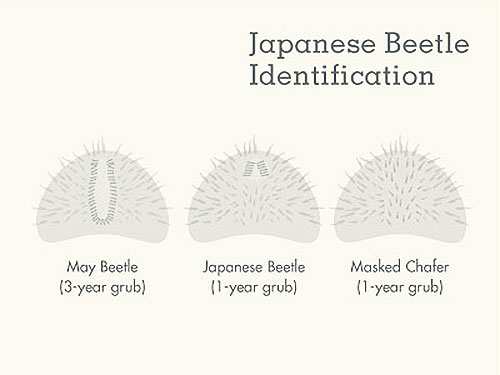
Image source: Bing (Web (fair-use with source credit))
Here are the most common culprits and when adults are typically active:
- Japanese beetle, Adults fly mid-June through July in most northern states. This is probably the most widespread culprit. The raster pattern on the grub's underside (the arrangement of hairs near the rear end) is V-shaped.
- European chafer, Adults fly in late June and July, often in large numbers around sunset. Common in the Northeast and Great Lakes regions. Grubs hatch early, so feeding damage can show up by mid-August.
- Masked chafer, Similar timing to European chafer but slightly smaller. Common across the Midwest and Northeast.
- June bugs / May beetles, Larger grubs with a longer life cycle, sometimes taking two years to complete development. More common in established, undisturbed lawns.
- Black turfgrass ataenius, A smaller species that can produce two generations per year. Often found in golf course turf but shows up in residential lawns too.
If you're not sure which species you have, your state extension office can help with identification. Many offer photo submission programs or local clinic services.
How to Tell Grub Damage Apart From Everything Else
This is where most homeowners get tripped up. Grub damage looks a lot like other lawn problems, and treating for the wrong cause wastes time and money. Here's how to narrow it down.
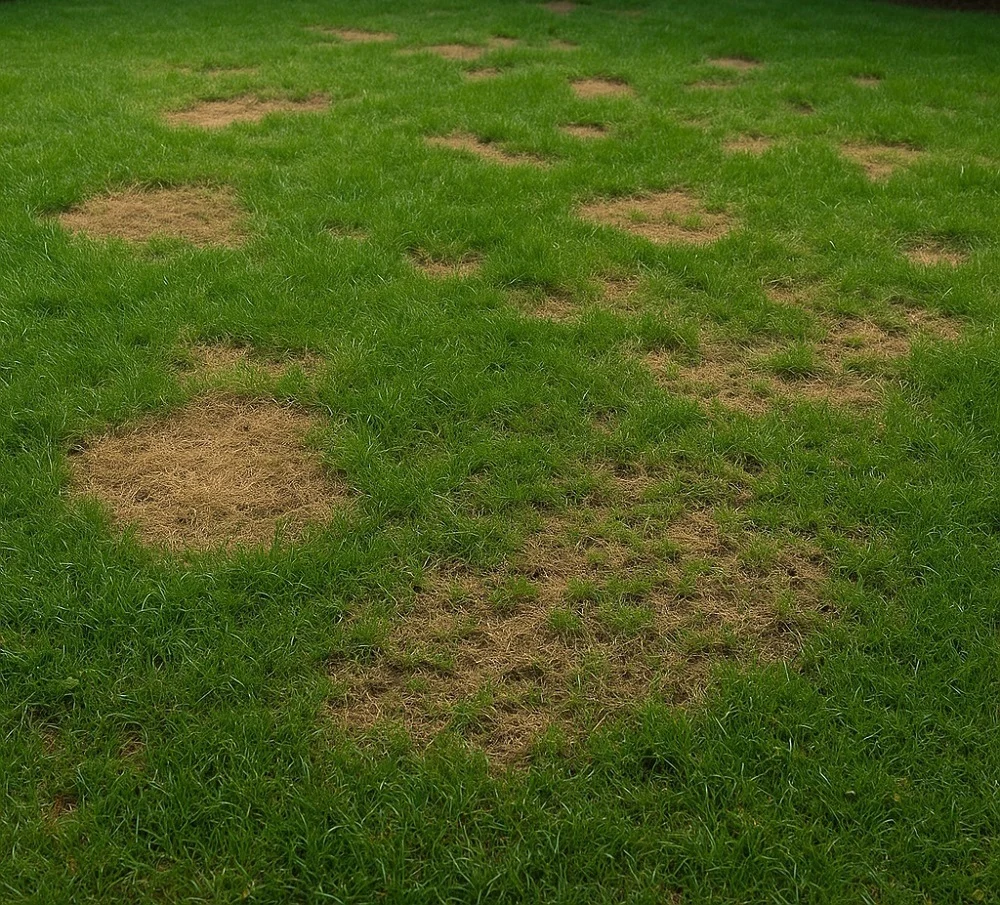
Image source: Bing (Fair-use with source credit)
Grub damage typically appears as irregular brown patches that start small and expand. The key diagnostic feature is that affected turf lifts up easily because the roots have been severed. If you can peel back a section of brown lawn like a carpet and the soil underneath is full of C-shaped white larvae, you've confirmed it.
Look for these distinguishing signs that separate grub damage from fungal disease or drought:
- Spongy turf feel, Walk across the damaged area. Grub-damaged turf feels loose and spongy underfoot because the root structure is gone.
- Ease of lifting, Grab a handful of brown grass and pull. If it comes up with almost no resistance, grubs are likely the cause. Drought-stressed turf still has roots anchoring it.
- Animal activity, Skunks, raccoons, and birds digging at your lawn, especially at night or early morning, are a strong indicator. They're after the grubs as a food source.
- Patch shape, Grub damage is usually scattered and irregular, not in the circular patterns typical of fungal diseases. Dollar spot and brown patch tend to form more defined rings or circles.
- Timing of appearance, Damage typically shows up in late August through October, or in spring if grubs were active the previous fall and resumed feeding after winter. Drought symptoms appear during extended hot, dry spells.
One common mistake is confusing grub damage with dog urine spots. Urine damage creates a bright green ring surrounding a dead brown center. Grubs don't produce that ring pattern.
When to Act: Preventive vs. Curative Timing
Timing is everything with grub control, and this is where understanding the life cycle pays off. There are two completely different approaches, and using the wrong one at the wrong time means wasted effort.
Preventive treatment targets eggs and newly hatched grubs before they can do significant root damage. The window runs from late June through July for most products, depending on your region and the dominant beetle species. Imidacloprid-based products need to be applied before or just as beetle flight peaks so the active ingredient is in the root zone when eggs hatch.
Curative treatment targets grubs that are already present and feeding. This works best when grubs are small, typically August through early September. Larger, mature grubs in late fall are much harder to kill and may have already done the bulk of their damage.
If you missed the preventive window and find grubs in August, trichlorfon (Dylox) is the go-to curative option because it acts fast and doesn't rely on the grub being in an early developmental stage. Just know that by the time you can see visible damage, the grubs have likely been feeding for weeks.
Here's a practical timeline based on the typical Japanese beetle cycle in cool-season grass regions:
| Life Stage | Approximate Timing | What's Happening | Treatment Window |
|---|---|---|---|
| Adult flight | Mid-June through July | Beetles feeding on foliage, mating | Preventive zone opens |
| Egg-laying | Late June through early August | Females burrowing into soil | Best preventive timing |
| Egg hatch | Late July through August | Tiny grubs begin root feeding | Curative window opens |
| Active feeding (small grubs) | August through September | Peak vulnerability for curative products | Prime curative window |
| Mature grub feeding | October through November | Heavy damage possible, harder to kill | Late curative, lower success |
| Overwintering | November through March | Grubs move deep into soil | No effective treatment |
| Spring feeding | April through May | Grubs resume feeding before pupation | Curative possible if caught early |
One thing many people overlook. If you had significant grub damage last fall, the adults that will emerge this summer developed from those same grubs. That means untreated infestations tend to rebuild year after year without intervention.
How to Check Your Lawn for Grubs (The Right Way)
You don't need to guess. A simple physical inspection tells you exactly what's happening below the surface, and it takes about five minutes.
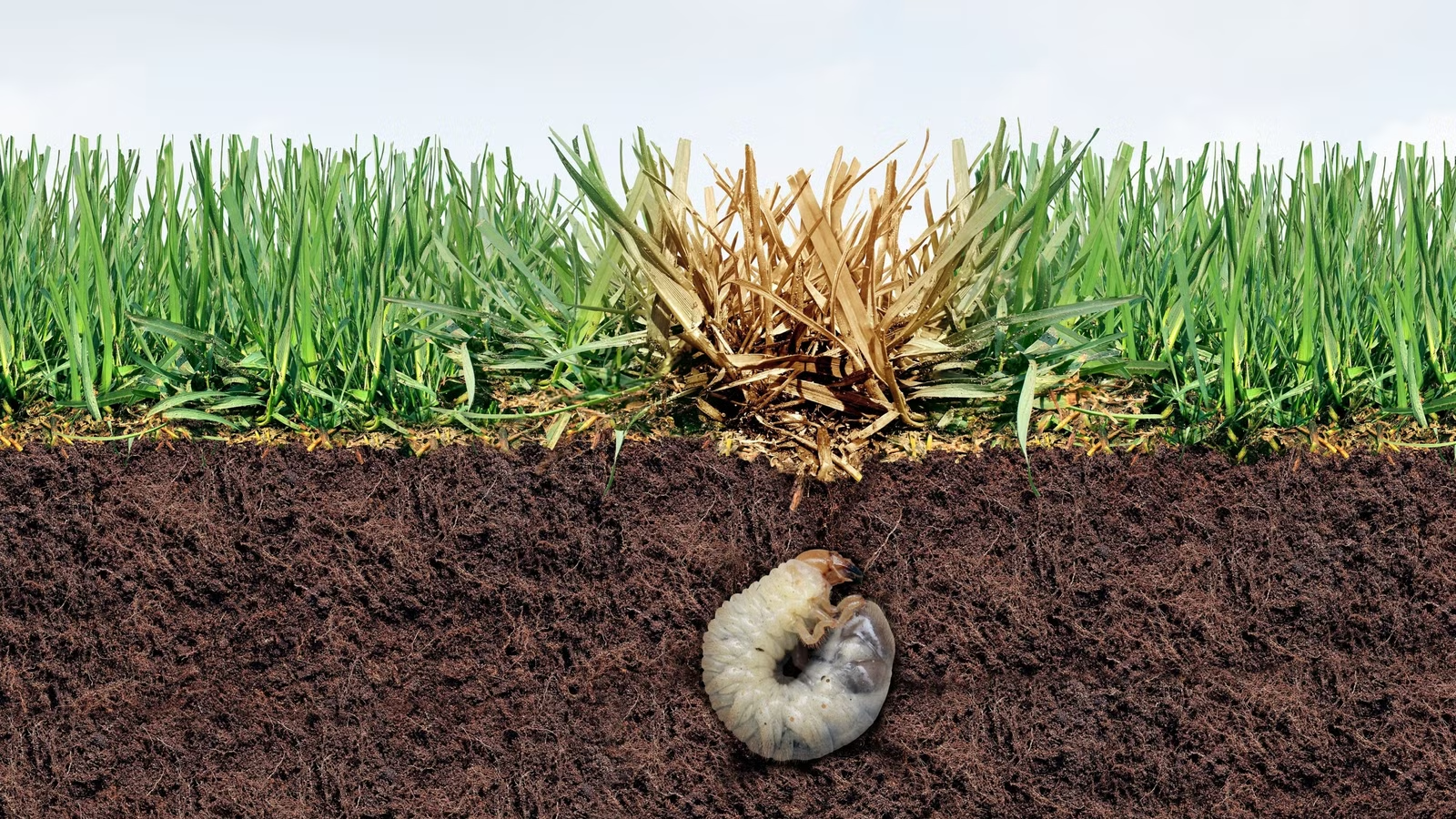
Image source: Bing (Web (fair-use with source credit))
Here's the method extension services recommend. Cut a square flap of sod about 1 foot by 1 foot in an area where brown patches meet healthy turf. That transition zone is where grubs are most concentrated because they feed outward from a central point.
Peel back the flap and examine the top 2 to 3 inches of soil. Count every grub you see.
If you find 10 or more grubs in that single square foot, treatment is warranted for most cool-season grasses. For warm-season species like Bermuda or zoysia, the threshold drops to about 3 to 5 per square foot because those grasses have thinner root systems and less tolerance.
After counting, press the sod flap back into place and water it. It will re-root within a week or two. Don't leave the soil exposed or you'll create a new problem.
If you don't see grubs in the first spot, check two or three more areas. Grub populations are often patchy, and one square foot might not represent the whole lawn.
Treatment Options: What Actually Works and When
Not every product works at every stage of the grub life cycle. Matching the right product to the right timing is what separates effective control from wasted money.
Preventive products are designed to be in the root zone before eggs hatch. Imidacloprid is the most widely used active ingredient for this approach. It needs to be watered in after application so it reaches the root zone where young grubs feed.
Apply it in late June through July, timed to adult beetle flight in your area.
Curative products target grubs that are already present. Trichlorfon (Dylox) works fast and doesn't require the grub to be in an early developmental stage, which makes it useful when you discover an infestation in August or September. It breaks down quickly in soil, so timing matters more than with preventive options.
Biological controls offer a longer-term, lower-toxicity approach. Beneficial nematodes, specifically Heterorhabditis bacteriophora, are microscopic worms that seek out and kill grubs in the soil. They need to be applied when soil temperatures are above 55°F and the soil is moist.
Milky spore disease (Paenibacillus popilliae) targets Japanese beetle grubs specifically and can persist in the soil for years once established, though it takes 2 to 4 years to reach full effectiveness.
Here's a quick comparison of the main approaches:
| Approach | Best Timing | Target Stage | Speed of Control | Persistence |
|---|---|---|---|---|
| Imidacloprid (preventive) | Late June through July | Eggs, newly hatched grubs | Moderate | Several weeks |
| Trichlorfon / Dylox (curative) | August through September | Small to medium grubs | Fast (1 to 3 days) | Short (days) |
| Beneficial nematodes | August through early September | Active grubs | Moderate (5 to 10 days) | Limited, single season |
| Milky spore | Spring or fall application | Japanese beetle grubs only | Very slow | Years once established |
One important note on neonicotinoid products. Several states and municipalities have restricted imidacloprid use due to concerns about pollinator exposure. Check your state department of agriculture's current regulations before purchasing.
These restrictions typically apply to application timing or proximity to blooming plants, not outright bans, but the rules vary.
Mistakes That Make Grub Problems Worse
The most common mistake is treating at the wrong time. Applying a preventive product in September is too late. The grubs are already large and feeding heavily, and preventive products don't work well on established larvae.
You've spent money and gotten little result.
Another frequent error is treating without confirming grubs are actually present. Brown patches have multiple causes. If you apply insecticide to a lawn with fungal disease or compacted soil, you've added chemicals for no reason and potentially harmed beneficial soil organisms.
Overwatering after application is another problem. Granular products need about ½ inch of water to move the active ingredient into the root zone. But saturating the lawn pushes the product past the target zone and into groundwater.
A light irrigation or timing the application before a moderate rain event is the right approach.
Using the same product every year can also reduce effectiveness. While documented resistance in lawn grubs isn't as widespread as in some agricultural pests, rotating between chemical classes is a sound integrated pest management practice. If you've used imidacloprid for several consecutive years, consider switching to a different active ingredient or incorporating biological controls.
Finally, ignoring the thatch layer undermines every other effort. If thatch is over ½ inch thick, core aerate before treatment. Products need to reach the soil, not sit on top of a dense mat of organic debris.
How to Stop Grubs From Coming Back Next Year
Breaking the grub cycle requires addressing the conditions that attracted beetles in the first place, not just killing the larvae already in the ground.
Start with irrigation habits. If you're watering daily or keeping the surface constantly moist through July and August, you're creating ideal egg-laying conditions. Deep, infrequent watering keeps the root zone healthy without saturating the surface where beetles burrow.
Aim for about 1 inch of water per week, applied in one or two sessions rather than light daily sprinklings.
Manage thatch proactively. If your thatch layer exceeds ½ inch, dethatch or core aerate in early fall. This removes the protective buffer beetles prefer and improves overall soil health.
Consider a preventive treatment plan if you've had confirmed grub damage. One well-timed application in late June or July, matched to the dominant beetle species in your area, prevents the cycle from restarting. You don't need to treat every year forever.
Monitor grub counts in late summer and treat only when populations exceed thresholds.
Encourage natural predators. Ground beetles, parasitic wasps, and birds all feed on grubs or adult beetles. Avoid broad-spectrum insecticide applications that kill these beneficial organisms along with the target pests.
A diverse lawn ecosystem is more resilient than one dependent on chemical inputs.
If you're in a newly developed area, be aware that beetle pressure is often higher for the first 3 to 5 years after construction. Disturbed soil and the absence of established predator populations create a temporary imbalance. Preventive treatment during those early years is often more cost-effective than dealing with recurring damage.
When to Call a Professional
If your grub count exceeds 20 per square foot, or if damage covers more than 40 percent of your lawn, a licensed lawn care professional can apply commercial-grade products and equipment that aren't available to homeowners. They also have access to chlorantraniliprole-based products, which offer strong preventive control with a lower environmental impact profile than older chemistries.
Professionals are also worth calling if you've tried DIY treatment for two consecutive years and grub populations aren't declining. That usually means a timing issue, a product selection problem, or an underlying condition like excessive thatch that needs addressing first.
Get a written treatment plan that specifies the product, application rate, timing, and follow-up evaluation. Any reputable company should be willing to do a grub count before and after treatment so you can verify results.
Frequently Asked Questions
Do grubs come back every year?
They can if the conditions that attracted adult beetles remain unchanged. Female beetles return to the same type of environment to lay eggs. If your lawn stays heavily irrigated and thatched through midsummer, you're likely to see recurring populations.
Breaking the cycle requires adjusting those conditions or applying a well-timed preventive treatment.
Can my lawn recover from grub damage?
Yes, if the roots haven't been completely severed and you address the problem quickly. Lightly damaged areas often recover with adequate watering and fall fertilization. Severely damaged sections where turf lifts easily may need reseeding or sodding in early fall.
The key is confirming the grubs are gone before investing in renovation.
What time of year are grubs most active?
Grubs feed most aggressively in two windows. Late August through October is the primary period when young larvae are growing fast and consuming the most root material. A second feeding period happens in April and May after they emerge from overwintering, though spring feeding is usually less damaging than fall.
Are grub treatments safe for pets?
Most granular grub control products are safe for pets once they've been watered in and the treated area has dried. Always read the specific product label for re-entry intervals. Some labels specify keeping pets off the lawn for 24 to 72 hours after application.
Beneficial nematodes and milky spore pose no risk to pets at any point.
How do I know if I need preventive or curative treatment?
If you've confirmed grub damage in previous years, preventive treatment in late June through July stops the next generation before it starts. If you're discovering grubs for the first time in late summer, curative treatment with a fast-acting product is the right call. The size of the grubs you find during inspection tells you which approach fits.
Small grubs under ½ inch mean curative products will work well. Large grubs near an inch long suggest the window for easy control is closing.