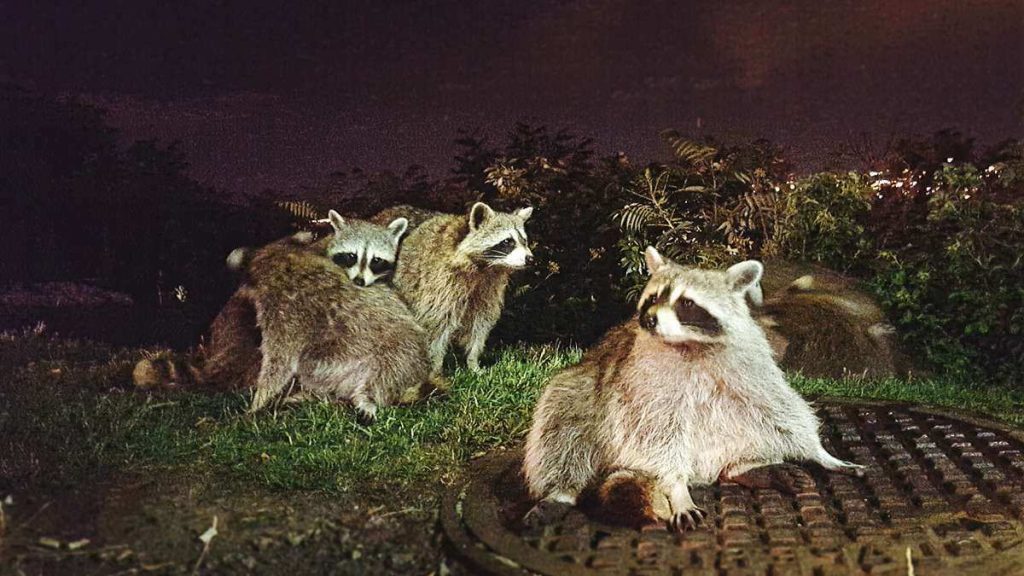
If you've woken up to rolled-back turf, scattered soil, or cone-shaped holes across your yard, you're probably wondering what animals eat grubs at night and how to stop them. The short answer is that several common nocturnal animals actively hunt grubs in lawns and gardens, and they can do serious damage to your turf while doing it. The tricky part is figuring out exactly which critter is responsible, because the fix depends entirely on who's showing up after dark.
Grubs, the C-shaped larvae of beetles like Japanese beetles and June bugs, live just below the soil surface and serve as a high-protein food source for a surprising number of animals. Once you know which species is working your lawn, you can choose a targeted approach that actually solves the problem instead of just chasing animals around your property.
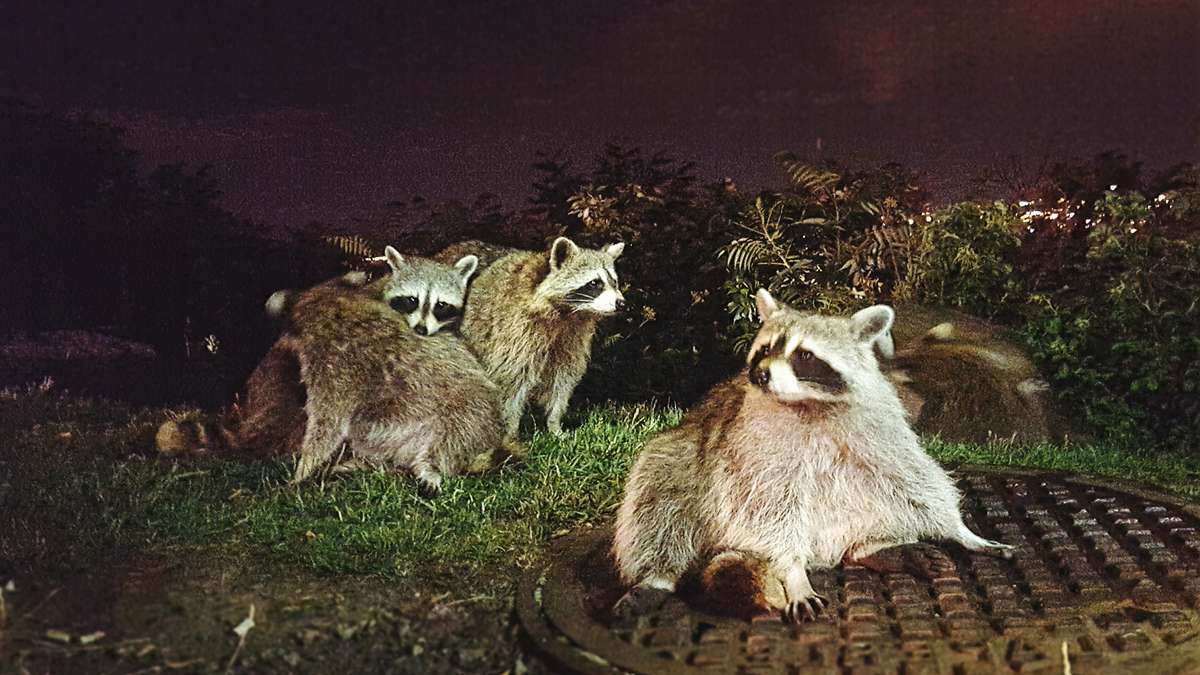
Image source: Bing (Web (fair-use with source credit))
Quick Answer
Several animals eat grubs at night, including raccoons, skunks, opossums, moles, and armadillos. Birds like robins and starlings also feed on grubs, mostly during daylight hours. Beneficial nematodes attack grubs underground without disturbing your lawn.
Identifying which animal is active in your yard determines the right control strategy.
Why Animals Are Tearing Up Your Lawn at Night
The connection between grubs and nighttime lawn damage is straightforward. Grubs sit in the top few inches of soil, packed with protein and fat, making them an easy meal for any animal that can dig or probe for them. When grub populations cross a certain threshold, typically around 6 to 10 grubs per square foot, they start attracting predators from a wide area.
Here's what most people miss. The damage you see in the morning is rarely caused by the grubs themselves at that point. It's caused by the animals hunting them.
A single raccoon can tear up 100 square feet or more of lawn in one night once it learns your yard is a reliable food source. Skunks are more precise but still destructive, leaving small cone-shaped holes wherever they sniff out a grub.
The cycle tends to get worse over time. Animals remember productive feeding spots and return night after night. They also teach their young, so a problem that starts with one skunk in August can become a family operation by September.
Breaking that cycle means either removing the food source, making your yard harder to access, or both.
The Main Animals That Eat Grubs After Dark
Not every grub predator leaves the same kind of damage, and not every animal on this list lives in your region. Here's a breakdown of the primary nighttime grub hunters and what sets each one apart.
Raccoons are probably the most destructive grub feeders in suburban areas. They peel back sections of turf like a carpet using their dexterous front paws, exposing the grubs underneath. Raccoons are strong, smart, and persistent.
Once they find a productive spot, they'll return repeatedly.
Skunks take a more surgical approach. They use their noses to locate grubs, then dig small cone-shaped holes about 1 to 3 inches across to extract them. Skunk damage is less dramatic than raccoon damage but can still leave a lawn looking pockmarked after a few nights.
Opossums will eat grubs when they find them, but they're less dedicated diggers than raccoons or skunks. Opossum damage tends to be scattered and shallow. They're opportunistic feeders, so grubs are just one item on a long menu.
Moles are insectivores that actively tunnel through soil hunting grubs and earthworms. Their damage looks different from surface digging. You'll see raised ridges or mounded tunnels across your lawn rather than holes or peeled-back turf.
Moles can do significant root damage even when grub numbers are relatively low.
Armadillos are a major grub predator across the southern and southeastern United States, and their range has been expanding northward. They dig shallow, conical holes similar to skunks but often larger and more numerous. A single armadillo can leave dozens of holes across a yard overnight.
Groundhogs and foxes occasionally dig for grubs, but they're not primary grub predators. Groundhogs prefer vegetation, and foxes typically hunt larger prey. If you're seeing significant digging, one of the animals above is the more likely culprit.
How to Tell Which Animal Is Actually Doing the Damage
Identifying the animal matters because the solution changes depending on who you're dealing with. Each species leaves a distinct signature, and learning to read those signs saves you time and money on the wrong approach.
Here's a quick field guide to common damage patterns:
| Damage Type | Likely Animal | Key Identifiers |
|---|---|---|
| Rolled-back turf sections | Raccoons | Large patches peeled back, sod looks like it's been unrolled |
| Small cone-shaped holes (1-3 inches) | Skunks | Neat, conical holes scattered across lawn |
| Shallow, scattered digging | Opossums | Less organized, often near edges or under trees |
| Raised tunnels and ridges | Moles | Subsurface tunnels, no open holes, mounded soil |
| Multiple conical holes, 3-5 inches | Armadillos | Larger than skunk holes, often in clusters |
| Small probing holes, surface pecking | Birds | Tiny holes or bare patches, mostly daytime activity |
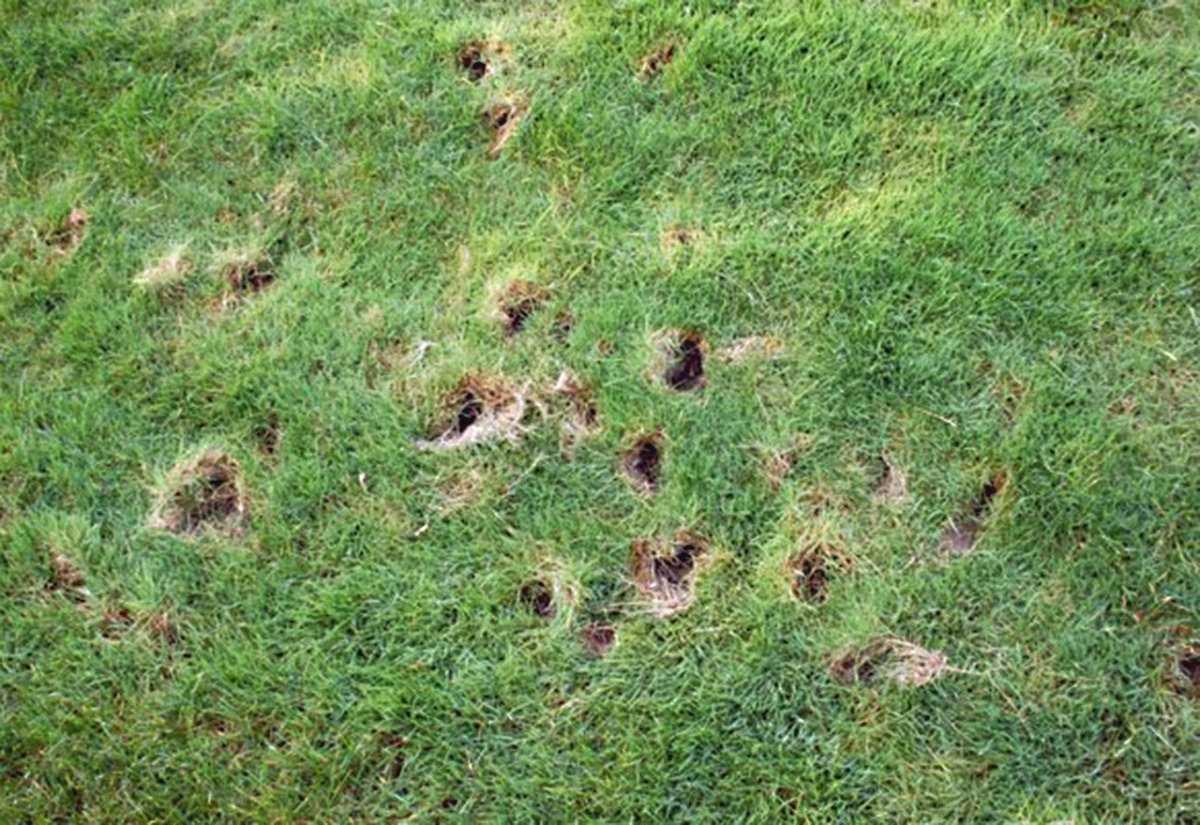
Image source: Bing (Web (fair-use with source credit))
Time of activity also helps narrow things down. Raccoons and skunks are strictly nocturnal, so damage appears overnight. Birds like robins, starlings, and blackbirds feed on grubs during the day, leaving small probing holes or pulling up loose turf in daylight hours.
If your damage shows up fresh every morning, you're dealing with a nighttime forager.
Location matters too. Skunks tend to work open lawn areas where they can smell grubs easily. Raccoons often start near tree lines or structures and work outward.
Armadillos favor soft, moist soil and are most active near gardens, mulch beds, and irrigated areas.
What to Do Based on Your Specific Situation
There's no single fix that works for every yard and every animal. The right approach depends on what's causing the damage, how severe it is, and what your tolerance is for sharing space with wildlife.
If raccoons are your problem, the most effective strategy is reducing the grub population so the raccoons lose interest. Beneficial nematodes applied in late summer or early fall can cut grub numbers significantly. You can also use temporary fencing or motion-activated deterrents, but raccoons are clever and often figure out simple barriers within a few nights.
If skunks are digging, the same grub-reduction approach works well. Skunks are less persistent than raccoons once the food source dries up. Reducing outdoor lighting near the lawn can help too, since lights attract the beetles that lay grub eggs in the first place.
If moles are tunneling, you need to decide whether the grub population is actually high enough to warrant treatment. Moles eat earthworms and other soil organisms too, so eliminating grubs won't necessarily send them away. Trapping is the most reliable mole control method, but it requires patience and proper placement.
If armadillos are active, exclusion fencing is the most practical long-term solution. Armadillos are difficult to deter with repellents or scare tactics. A fence buried 6 inches into the soil and angled outward at 45 degrees can keep them out of specific areas.
If birds are the main grub feeders, you actually have the easiest situation. Bird damage is usually minimal, and birds provide ongoing pest control. Encouraging birds with native plants, water sources, and nesting habitat can keep grub populations in check naturally.
The common thread across all of these situations is that reducing the grub population at the source is almost always more effective than trying to exclude or repel the animals after they've established a feeding pattern.
The Best Natural Grub Control Options That Actually Work
If you want to stop the nighttime digging without resorting to broad-spectrum chemical insecticides, two biological controls stand out for their effectiveness and specificity.
Beneficial nematodes, specifically Heterorhabditis bacteriophora, are microscopic roundworms that seek out grubs in the soil and release bacteria that kill them within 24 to 48 hours. They're one of the few biological controls that consistently deliver results comparable to chemical treatments when applied correctly.
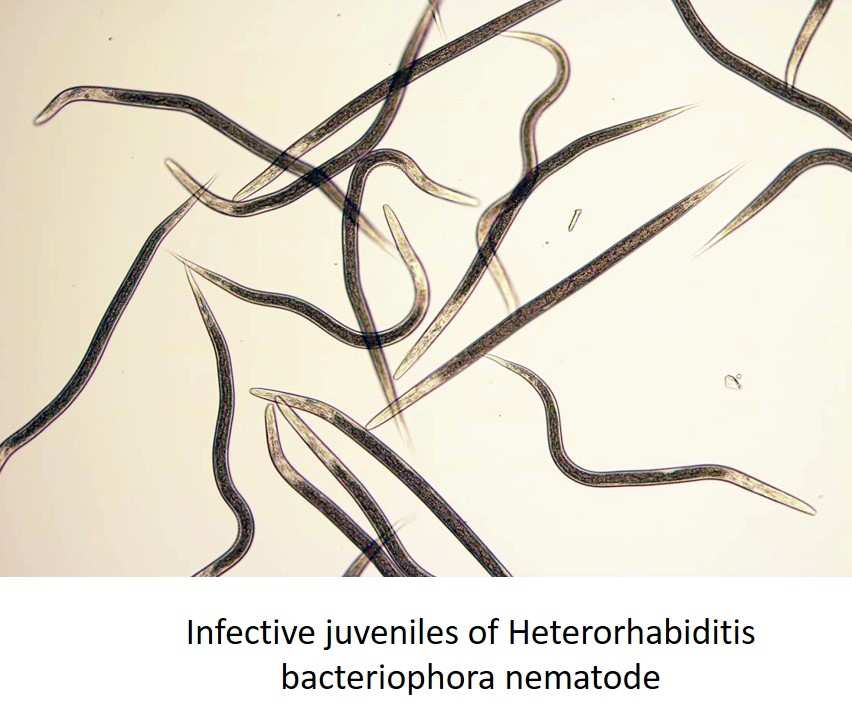
Image source: Bing (Web (fair-use with source credit))
Key points for nematode success:
- Apply when soil temperatures are between 55 and 85 degrees Fahrenheit
- Target late summer or early fall when grubs are small and actively feeding near the surface
- Water the lawn before and after application to keep nematodes mobile in the soil
- Use approximately 1 billion nematodes per 3,000 square feet of treated area
- Apply in the evening or on overcast days, since UV light kills nematodes quickly
Under optimal conditions, beneficial nematodes can reduce grub populations by 60 to 80 percent. They're safe for pets, children, and beneficial insects, and they're exempt from EPA pesticide registration requirements.
Milky spore disease, caused by the bacterium Paenibacillus popilliae, targets Japanese beetle grubs specifically. It takes longer to establish, typically 2 to 3 years, but can persist in the soil for 10 to 15 years once established. Milky spore works best in regions where Japanese beetles are the dominant grub species and where soil temperatures stay above 60 degrees Fahrenheit during the active season.
Encouraging natural predators is a longer-term strategy but worth pursuing. Ground beetles, predatory wasps, and certain bird species all contribute to grub population management. Maintaining diverse habitat around your property, reducing pesticide use, and avoiding excessive thatch buildup all support these beneficial organisms.
Chemical insecticides like imidacloprid and trichlorfon are still available for grub control, but they come with trade-offs. They kill beneficial soil organisms along with grubs, and their use is restricted in some areas due to environmental concerns. For most homeowners dealing with animal damage, biological controls offer a better balance of effectiveness and ecological impact.
When to Use Beneficial Nematodes vs. Encouraging Predators
Choosing between applying beneficial nematodes and building a habitat for natural predators comes down to timing, severity, and how quickly you need results.
Beneficial nematodes are the right choice when you have an active grub problem and animals are already damaging your lawn. They work fast, killing grubs within a day or two of contact. If you're seeing fresh digging damage in August or September, nematodes give you the best chance of stopping the cycle before animals establish a permanent feeding pattern.
They're also the better option when grub populations are well above the action threshold and you need a significant reduction in a single season.
Encouraging natural predators is a long-term investment. Birds, ground beetles, and other beneficial organisms take time to establish and won't deliver the immediate knockdown that nematodes provide. But once they're in place, they offer ongoing, self-sustaining grub management without repeated applications.
This approach works best when grub numbers are moderate and you're willing to think in terms of seasons rather than days.
Many experienced turf managers use both strategies together. They apply nematodes to address the immediate crisis, then build habitat to maintain lower grub populations going forward. This layered approach is the core of integrated pest management, and it tends to produce the most stable results over time.
Mistakes That Make Nighttime Grub Damage Worse
A few common missteps can turn a manageable grub problem into a full-blown lawn disaster. Knowing what to avoid is just as important as knowing what to do.
Treating grubs in late spring is one of the most frequent mistakes. By May or June, grubs have grown large and are preparing to pupate, making them much harder to kill. Nematodes and most other controls are far more effective against small, young grubs in late summer and early fall.
Timing your treatment window correctly makes a bigger difference than which product you choose.
Overwatering your lawn creates ideal conditions for grub survival. Beetles prefer to lay eggs in moist soil, and grubs thrive when the top few inches stay consistently damp. If you're running sprinklers daily during summer, you're essentially rolling out a welcome mat for the next generation of grubs.
Water deeply and less frequently instead.
Using broad-spectrum insecticides kills beneficial organisms along with grubs. Ground beetles, parasitic wasps, and other predators that naturally suppress grub populations die right along with the target pests. This often leads to a rebound effect where grub numbers come back higher the following year because the natural controls are gone.
Ignoring the damage and hoping it stops rarely works. Animals that find a reliable food source return consistently and bring others with them. A skunk that finds 50 grubs in your lawn tonight will be back tomorrow, and its kits will learn the same feeding pattern.
Early intervention breaks this cycle before it becomes entrenched.
Applying nematodes in direct sunlight kills them before they ever reach the soil. Nematodes are highly sensitive to UV light and desiccation. Always apply them in the evening, on overcast days, or with a follow-up watering that washes them into the soil quickly.
How to Stop Animals From Coming Back Night After Night
Once you've reduced the grub population, the next step is making your yard less attractive to returning animals. This is where physical and behavioral deterrents come into play.
Motion-activated sprinklers are one of the most effective tools for discouraging raccoons, skunks, and opossums. They deliver a sudden burst of water when triggered by movement, which startles animals without harming them. Most animals associate the unpleasant experience with your yard and start foraging elsewhere within a few nights.
Reducing outdoor lighting near the lawn cuts down on beetle activity at night. Adult beetles are attracted to lights, and fewer beetles mean fewer eggs laid in your soil. Switching to amber or warm-colored bulbs, or simply turning off unnecessary lights during peak beetle season in summer, can reduce the next year's grub population.
Temporary fencing works for persistent diggers like armadillos. A fence that extends 6 inches below the soil surface and angles outward at 45 degrees creates a barrier that most animals won't bother trying to cross. For skunks and raccoons, a simple electric fence strand set a few inches off the ground can be surprisingly effective.
Removing other food sources from your property eliminates secondary attractions. Open compost bins, fallen fruit, pet food left outdoors, and unsecured trash all draw animals into your yard. Once they're there, they'll investigate the lawn for grubs even if you've already treated.
Clean up these attractants and you reduce the overall animal traffic significantly.
Consistency matters with deterrents. Animals test barriers and ignore devices that don't deliver a consistent negative experience. If you set up a motion-activated sprinkler, leave it running every night for at least two weeks.
Sporadic use gives animals time to learn when it's safe to return.
Regional Differences: What's Grabbing Grubs in Your Area
The animals hunting grubs in your yard depend heavily on where you live. Understanding your regional wildlife helps you narrow down the culprit faster and choose the right control strategy.
In the northeastern and midwestern United States, raccoons and skunks are the primary nighttime grub feeders. European chafer and Japanese beetle grubs are the dominant species in these regions, and they tend to reach high densities in lawns with heavy clay soils and consistent moisture.
In the southeastern and southern states, armadillos join the list as major grub predators. Their range has been expanding steadily northward, and they're now regularly found as far north as southern Illinois and Indiana. Armadillo damage is often mistaken for skunk activity, but the holes tend to be larger and more numerous.
In the western United States, moles are often the primary concern. The soil conditions in many western lawns favor mole activity, and their tunneling can cause significant root damage even at moderate grub densities. Badgers also dig for grubs in some western regions, though they tend to favor open fields over residential lawns.
In the United Kingdom and Europe, hedgehogs, badgers, and foxes are the main nocturnal grub feeders. Hedgehogs are protected in the UK and provide valuable pest control, so encouraging their presence is generally preferred over exclusion. Badgers can cause extensive digging in lawns where chafer grubs are present.
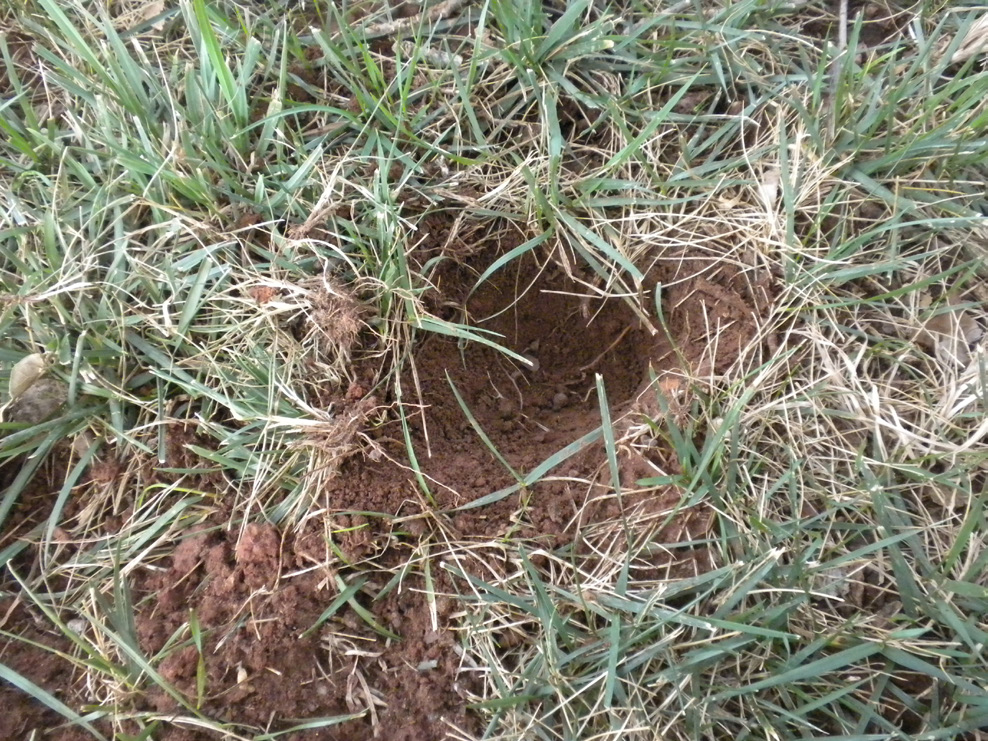
Image source: Bing (Web (fair-use with source credit))
Climate also affects the timing of grub activity and animal feeding. In warmer regions, grubs may feed actively well into November, extending the window of animal damage. In northern areas, grubs move deeper into the soil by late October, which reduces surface feeding but doesn't eliminate mole activity entirely.
When to Call a Professional vs. Handle It Yourself
Most grub and wildlife situations are manageable on your own, but there are clear signs that it's time to bring in a professional.
Handle it yourself when grub numbers are moderate, damage is limited to one area of the lawn, and you can identify the animal responsible. Beneficial nematodes, cultural practices, and basic deterrents are all within reach of a motivated homeowner. If you're seeing scattered skunk holes or a few raccoon dig sites, start with the approaches outlined above and give them two to three weeks to work.
Call a professional when damage is widespread and accelerating despite your efforts. If you've applied nematodes correctly and animals are still tearing up the lawn nightly, there may be a larger underlying issue like an unusually high grub population or a den site on your property. Wildlife control professionals can assess the situation, identify all active species, and implement exclusion or removal strategies that go beyond what's available to homeowners.
Also consider professional help when you're dealing with protected species or animals that pose safety risks. Raccoons, skunks, and foxes are rabies vector species in many areas, and handling them without proper training and vaccination is risky. Many states also have specific regulations around trapping and relocating wildlife, and a licensed professional knows how to stay compliant.
The cost of professional wildlife removal typically ranges from $200 to $600 for a single visit, depending on your location and the complexity of the situation. For severe or recurring problems, ongoing service contracts may be more cost-effective than repeated emergency calls.
Quick Decision Guide: Your Situation, Your Solution
Here's a straightforward decision framework that matches your specific situation to the right solution.
If raccoons are peeling back your turf, start with beneficial nematodes in late summer, then add a motion-activated sprinkler for two weeks to break the feeding pattern. If skunks are leaving cone holes, treat grubs the same way and remove any outdoor food sources that brought them in initially. If moles are tunneling, assess grub density first, since moles eat earthworms too, and consider professional trapping if tunneling persists after treatment.
If armadillos are active in the southern US, exclusion fencing angled outward is the most reliable fix, combined with nematode application to reduce the food supply. If birds are the main grub feeders, encourage them with native plantings and water sources, and consider yourself lucky.
The most effective approach almost always combines grub reduction at the source with temporary deterrents that break the animal's feeding habit. Treating grubs alone stops future damage but won't immediately discourage animals that have already learned your yard is productive. Using deterrents without reducing grubs just pushes animals to a different section of the lawn.
Frequently Asked Questions
How do I know if I have grubs in my lawn?
Cut a 1-square-foot section of turf and peel it back. Count the grubs in the exposed soil. Six to 10 grubs per square foot is the typical threshold where treatment makes sense.
You can also look for irregular brown patches that lift easily, since grub-damaged roots can't hold the sod in place.
Can I apply beneficial nematodes myself?
Yes, beneficial nematodes are available from garden suppliers and can be applied with a standard watering can or hose-end sprayer. Keep them refrigerated until use, apply in the evening or on cloudy days, and water the lawn before and after to help them move into the soil.
Will treating grubs stop the animal damage immediately?
Not immediately. Animals that have established a feeding pattern may continue visiting for a week or two even after grub numbers drop. That's why pairing grub treatment with deterrents like motion-activated devices produces faster results than either approach alone.
Are chemical grub treatments safer than letting animals dig?
Chemical insecticides carry their own risks to beneficial soil organisms, pollinators, and waterways. Biological controls like beneficial nematodes target grubs specifically without those broader impacts. For most situations, nematodes offer a better balance of effectiveness and environmental safety.
Is it legal to trap and relocate skunks or raccoons?
Regulations vary significantly by state. Many states require a wildlife control license for trapping and prohibit relocation of animals without permits. Rabies vector species like skunks and raccoons often have additional restrictions.
Check with your state wildlife agency before attempting any trapping or relocation on your own.